Tag: writing

  • Snow on the Mountaintop: From Passo della Calla to Premilcuore

    The unrelenting rain made the path treacherous, and I got lost, only to re-find myself again with new friends eating pecorino.
    It wasn’t easy to leave the luxurious round bed this morning, but the weather forecast predicted rain from about midday. The earlier I left, the less chance I’d have of repeating yesterday’s wipe out. 

    To leave early and avoid the rain or stay in bed and walk for a while beneath the drizzle, that was the question. 

    I took the middle ground. 

    I took my breakfast of a rather disappointing raspberry tart at around 8.30am – my one disillusionment with an otherwise exceptional hotel – and was on the road by 9am. 

    I’m a savory breakfast kind of girl and one of my only gripes with Italy is the madness of calling a cornetto or croissant a morning meal. Oh no. I’m a vegetarian but I need sustenance – cheese, bread, eggs. 

    I thought back to the yearly hiking trips I would do in the Lake District with my folks and two other families: the Halsteads and the Milns. Well, the men would go hiking and the women would go to Lakeland Plastics to buy kitchenware. The exception was Barbara. She was, and remains, a badass. 

    At the Red Lion hotel in the morning before we set off, we’d all have a full English. When I’d ask for the ‘Walker’s Breakfast but without the sausage and black pudding the heavily mustached waiter would respond, 

    ‘But then it’s not a walker’s breakfast, is it?’ 

    Everyone around the table would guffaw. It was an annual joke, and I took pleasure in the familiarity of the routine.

    I was dreading the prospect of the 3.5 kilometre hike up the winding road back to the path and had been told the shuttle bus wasn’t running out of season. Still, when I exited the hotel I met Giovanni, the grandfather of six-year-old the Desire with whom I’d exchanged conversation and giggles the evening prior. 

    ‘I don’t suppose if I give you 10 Euros, you’d be willing to give me a lift back up to the trailhead?’ I cheekily proposed.

    ‘But of course!’ came his reply. ‘And don’t be daft about the money.’

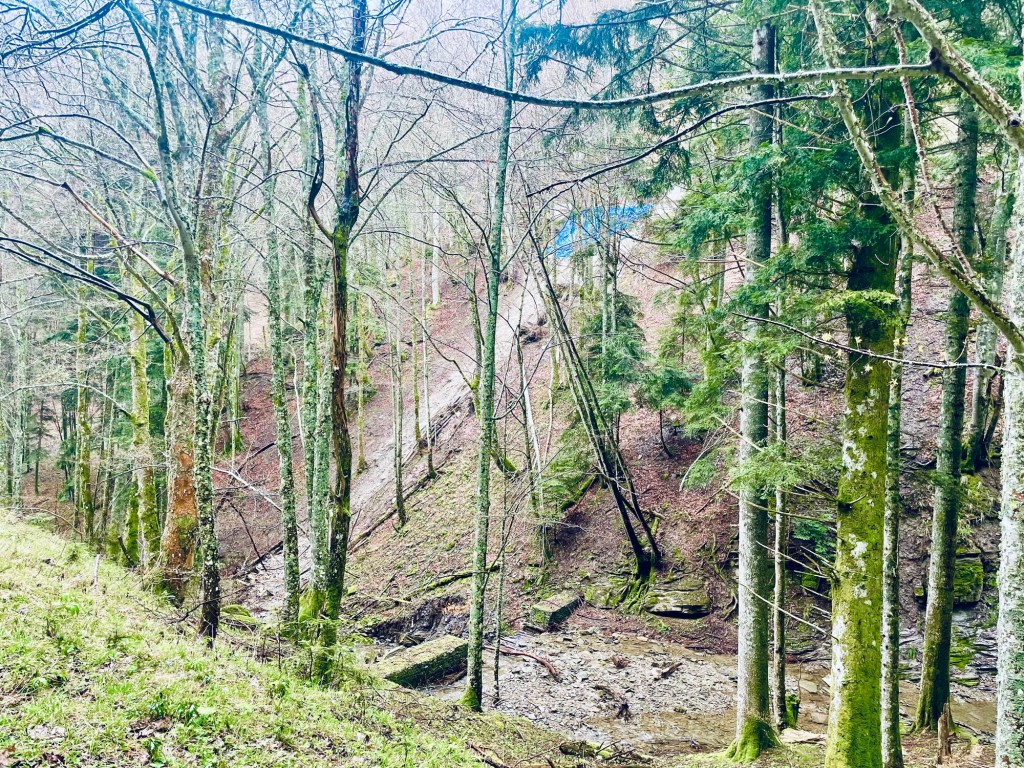
    On the way up in his cream leather upholstered 4-by-4, Giovanni pointed out the landslide to one side of the road where men were working to resecure the road. Temporary traffic lights had been installed to aid their toil. 

    He also remarked on the high number of trees that had been damaged or toppled over.

    ‘It’s the weight of the snow,’ he explained, ‘the trees have been here for centuries, but they’re not used to these new extreme climate conditions.’ 
    Climate change is an issue that increasingly surfaces in my research with refugees. In my work in Guatemala and Mexico, I found that failing crops are a significant reason alongside poverty and natural disasters why some Indigenous families migrate upwards in search of better opportunities. It’s like the Grapes of Wrath but tipped sidewards on a diagonal axis. 

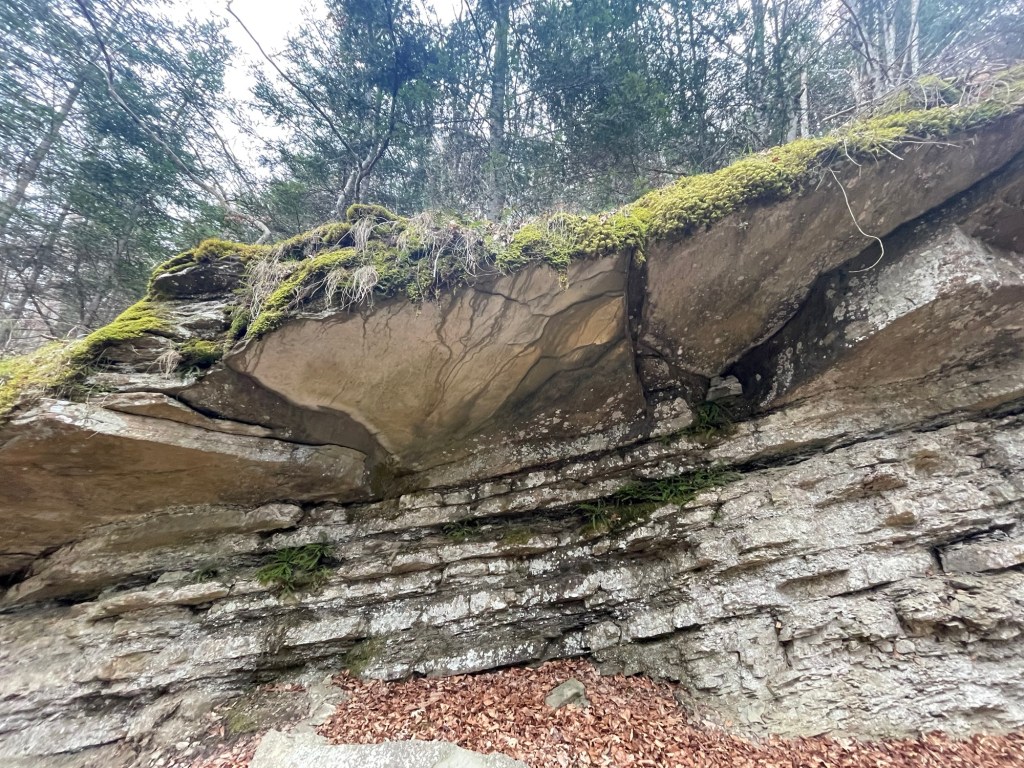
    Landslides were nevertheless also a feature of Dante’s time. In fact, he was pretty into Geology. In the Divine Comedy he mentions earthquakes, rivers, the shape of mountains and landslides, a desert of hot sand and some types of rocks (like the marble of Carrara).

    The circles that make up Dante’s Hell gradually become smaller with less circumference, as Inferno is depicted like an inverted cone in a sphere, protruding towards Earth’s core. This image is based on calculations of Greek philosophers.

    Virgil explains to Dante that the cone in the planet’s surface into which they descend formed when Lucifer, the fallen angel, fell to Earth. Indeed, the impact was so great that it shaped Earth’s surface, with continents formed on the northern hemisphere and the southern hemisphere covered by the sea (Dante didn’t know of the existence of the southern continents of Australia and Antarctica). 

    In the south, Dante depicted only the mountain of Purgatory. Purgatory, together with the holy city of Jerusalem, forms an axis passing Earth, where Lucifer’s belly sits at the centre. It’s an allegoric image, since Lucifer is damned as far as possible away from the sun and divine light.

    In Canto 12 of Inferno, the travelers face a difficult climb down a steep and mountainous rock face. The terrain is passable, albeit tortuous, as if the travelers were making their way in the wake of an alpine landslide. They must climb down a rockslide in order to access the first ring of the seventh circle.

    Virgil calls this rocky mass questa ruina (this ruin) and explains to Dante that the ruins of Hell were caused by Christ’s Harrowing of Hell: they are places where the infernal infrastructure was destroyed by the earthquake that preceded Christ’s arrival. Thus, the ruins are a continual witness to Hell’s defeat, its impotence in the face of an all-powerful divinity.

    ‘The place that we had reached for our descent
    along the bank was alpine; what reclined
    upon that bank would, too, repel all eyes.

    Just like the toppled mass of rock that struck—
    because of earthquake or eroded props—
    the Adige on its flank, this side of Trent,

    where from the mountain top from which it thrust
    down to the plain, the rock is shattered so
    that it permits a path for those above:

    such was the passage down to that ravine.
    And at the edge above the cracked abyss,
    there lay outstretched the infamy of Crete.’

    And with that, Dante and Virgil encounter the minotaur.

    It is hypothesized, David Bressan relates, that the landslide is based on the a 3,000 year old landslide near the Italian city of Trento. Dante maybe visited this site, as he lived for a time in the nearby city of Verona. 

    After thanking Giovanni, I made the steep climb upwards to Mount Falco, passing a Madonna of the Forest. 

    Angel fibre was draped over the distant trees that peeked out between trunks. And higher still were more rounded clouds like those in Renaissance paintings. For a moment I imagined that I was in the world of Sonic the Hedgehog, like you could just jump and land on one of them to reach a new level.

    The path expanded into a big field strewn with tiny blue wild flowers and animal droppings the size of olives. An army base sat to my left. I nearly took wrong path but I double checked after yesterday’s 3-kilometre detour.
    The moss, like socks, covered the trees’ stems in a vibrant green. 

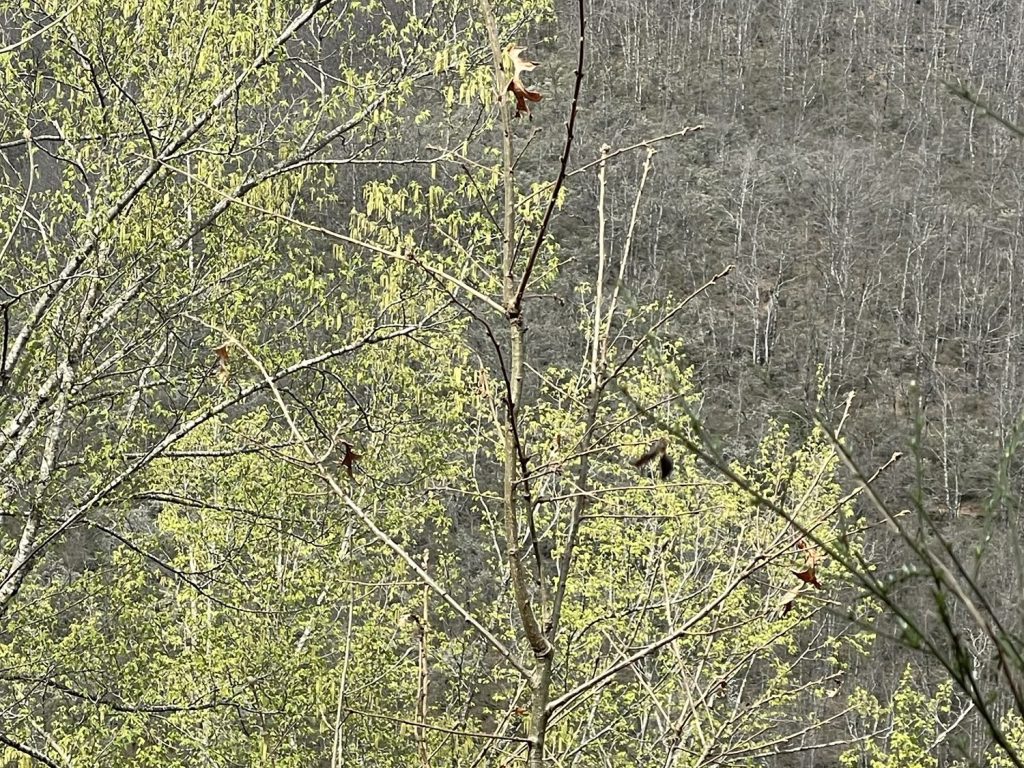
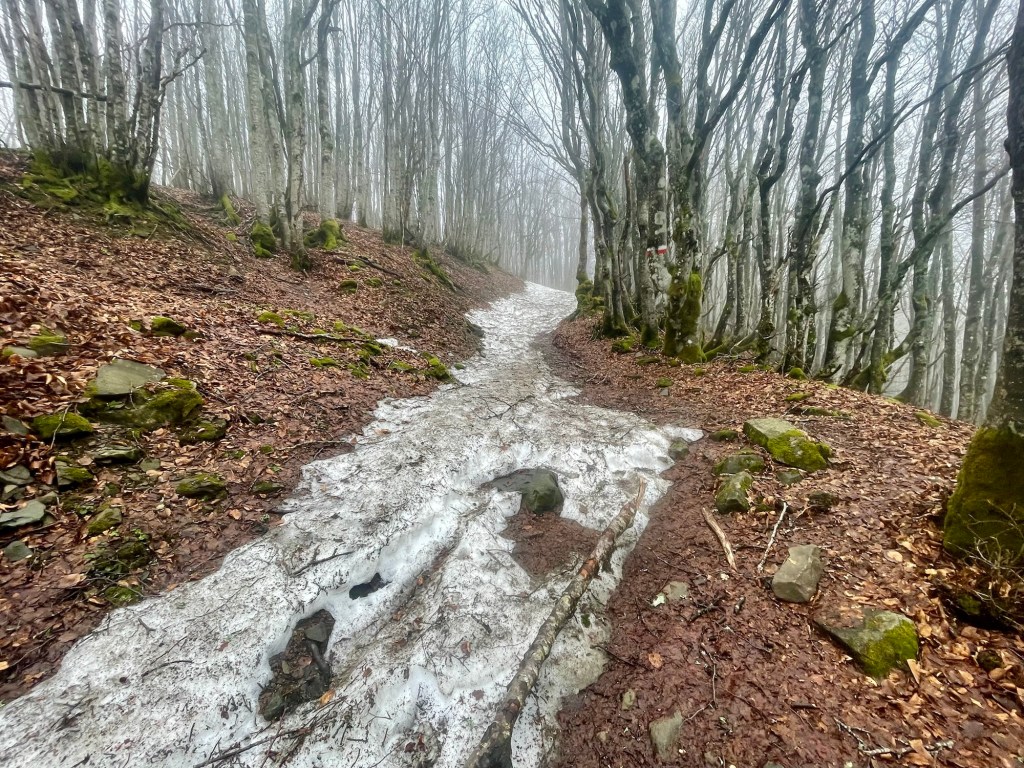
    And then I suddenly found myself in a snowy landscape. 

    Using the compass on my phone I decided to head back down to where I’d come from and just walk off piste in the direct of Fiumicello. I would give it 30 minutes and if I hadn’t re-found the path, I would have to give up and face the unappealing four hour hike back up the path I’d made back to Passo della Callo and call today a write off. Tears pricked at my eyes. I hated the thought of defeat. 

    With a foot of snow beneath me, I dug my heels in to keep my balance as I descended. Crocuses pushed up through snow, determined to mark the Spring.

    The snow made it hard to make out the path, obscuring the tracks of pilgrims prior. Moreover, the rain in the night had formed a thin skin of ice over the terrain. Now I really was skiing – reliant on my sticks not to fall forward. 
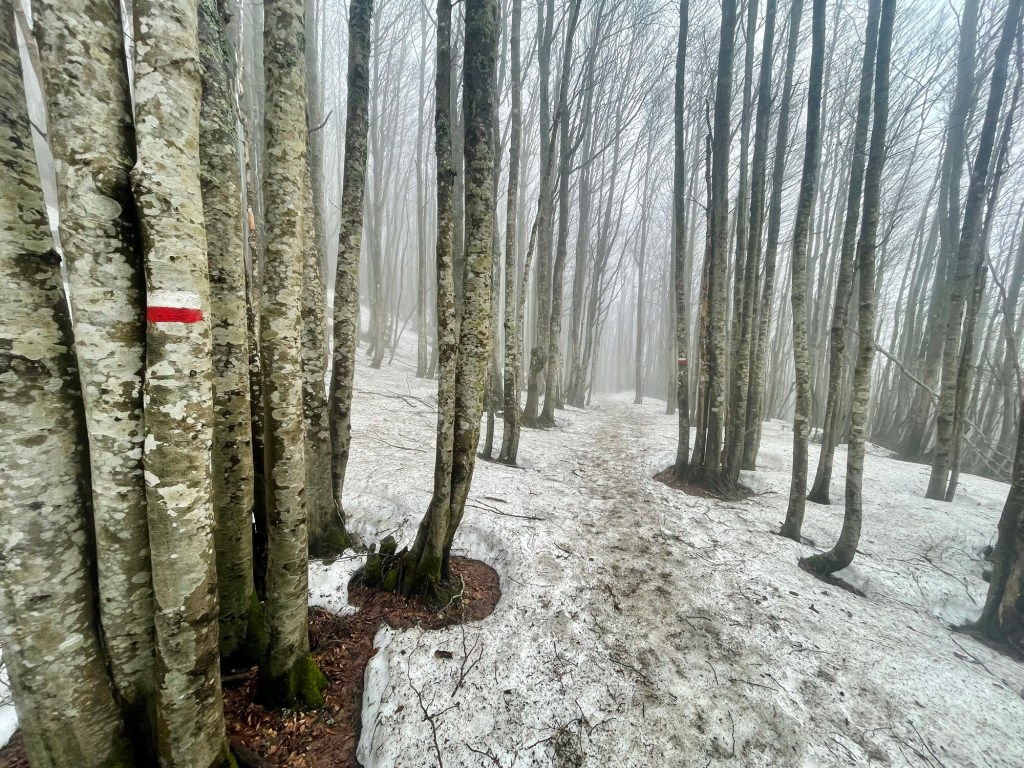
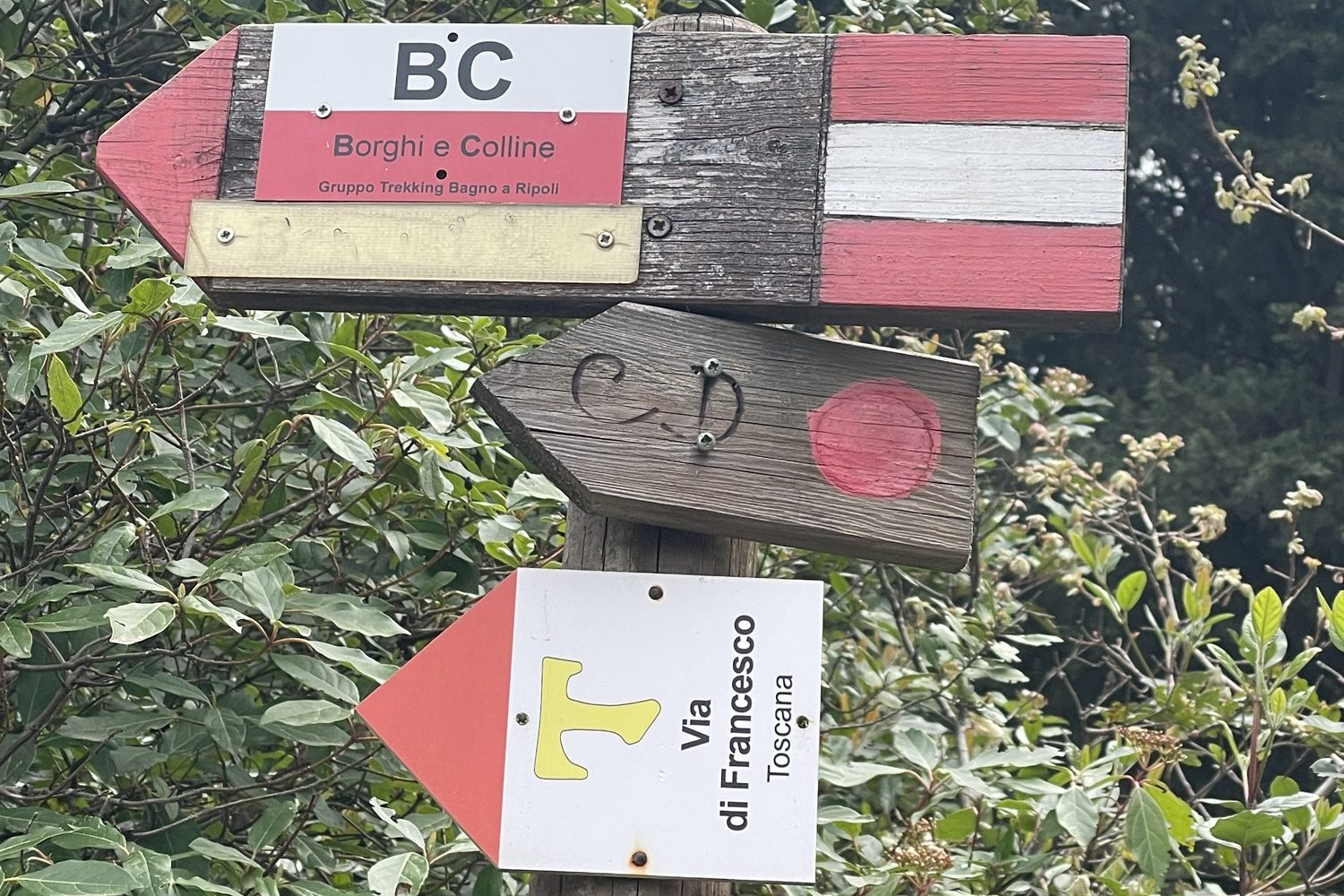
    I followed the signs that looked like the polish flag, red and white, and proceeded tentatively to the sound of birdsong. 

    The snow soon soaked through my boots and there began seven hours of squelching forward with saturated socks and shoes. The water in my boots bubbled through the top of the canvas, reminding me of the jacuzzi I’d luxuriated in last night which now felt a world away.

    In these treacherous conditions, it took me nearly 2 hours to descend 5 kilometers.
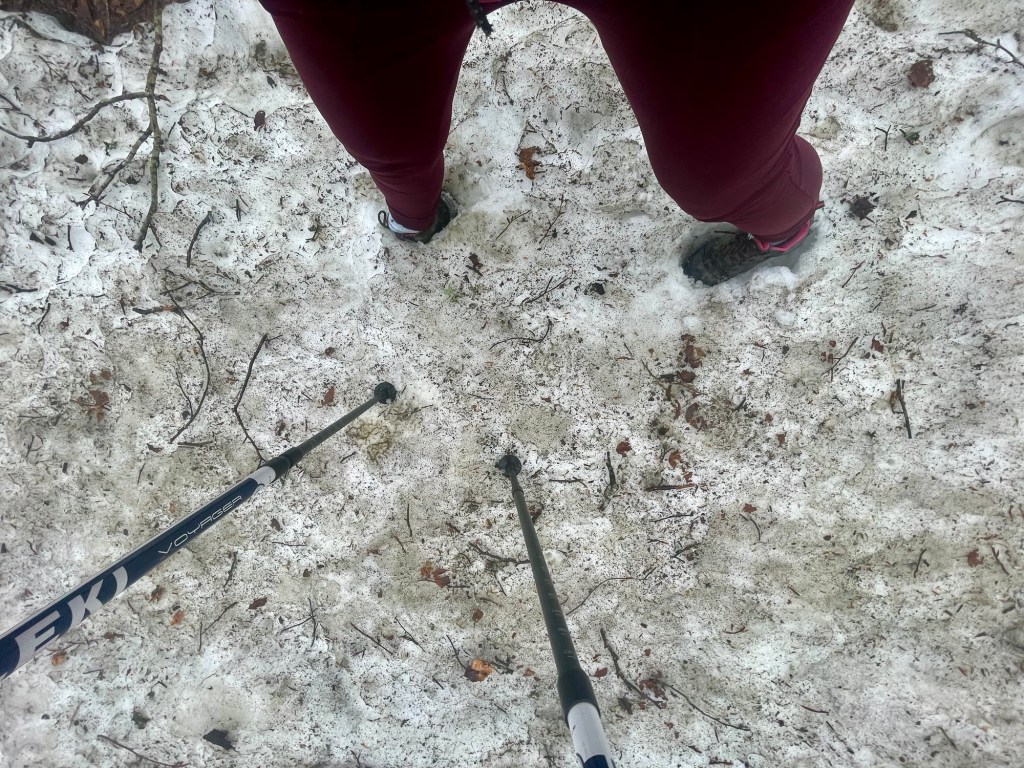
    I wasn’t cold until the rain came at around 10.30am. My hood up, I reflected on the epicentre of Dante’s Hell where we meet Satan writhing in a lake of ice. Unlike many popular depictions of the time, Dante’s Hell was not all fire and brimstone. Rather, while we encounter fire in the higher spheres, the more serious crimes are punished by a frozen sense of total immobility.

    In the belly of Hell are Judas, Brutus and Cassius who each writhe in one of Satan’s three mouths. 
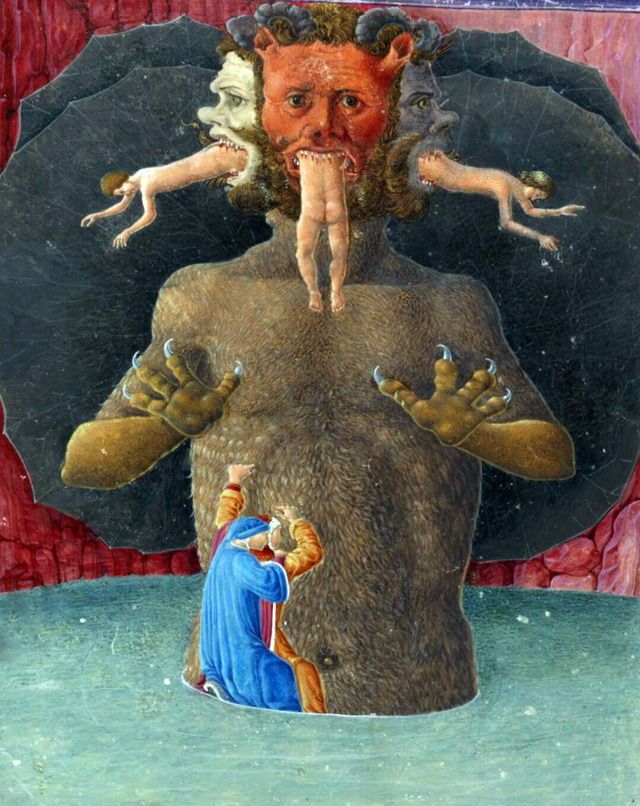
    For Dante, the very worst sin was to betray one’s hosts like they did – perhaps something informed by his refugee experience.

    I’m sorry to be the one to tell you, but the commonly cited proverb attributed to Dante that ‘the deepest parts of Hell are reserved for those who stay neutral in times of conflict’ is simply not true. 

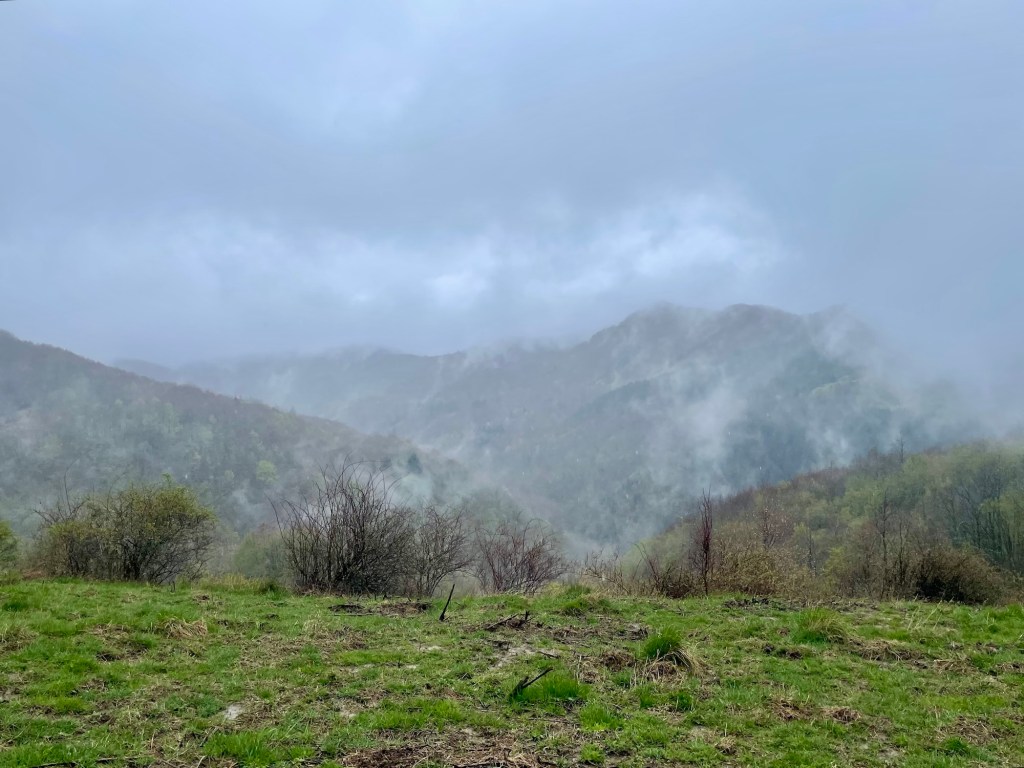
    I stuck to the side of the path where the snow was thinner and, without phone signal, I blindly carried on. The fog was now so thick that anything more than five metres away was obscured. 

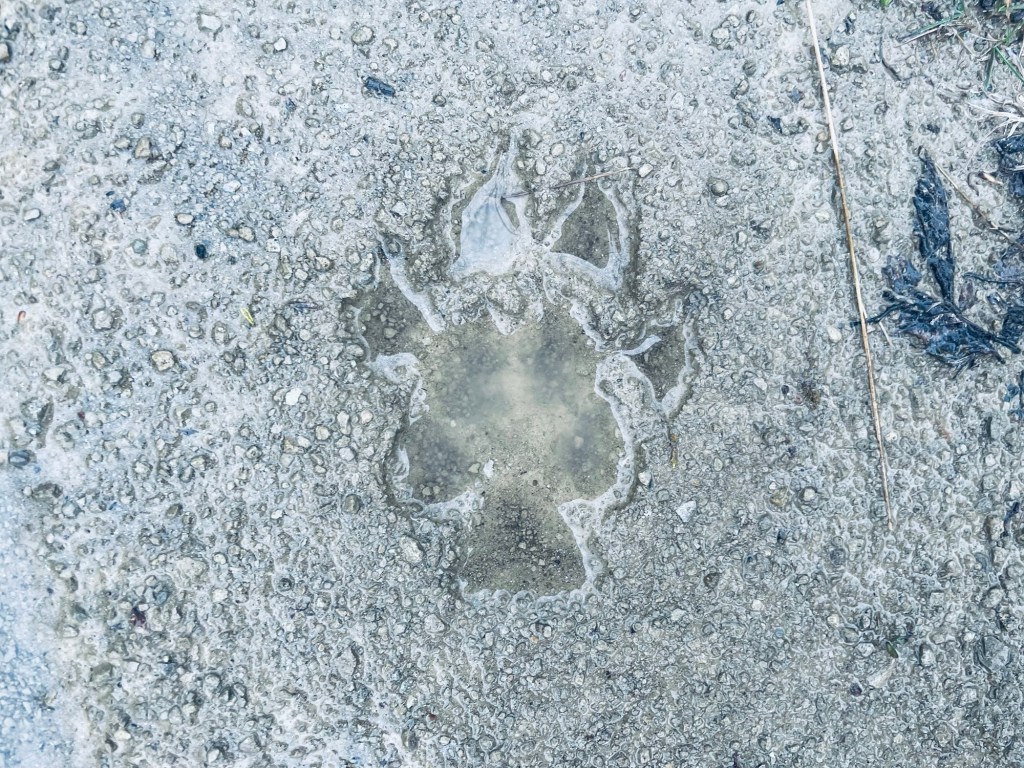
    I eyed a footprint which appeared to be fox, or a wolf perhaps, and another that looked like a deer. 
    When I came to a steel barrier in the path with barbed wire either side, I shimmied my body around the side of it, clinging to the metal frame. I was back in a videogame.

    Without peering down at the precipitous drop, I carried on. There is no public right of way in Italy as in England, but I’d learnt in my six days of the cammino that to make progress, ‘no entry’ signs on this trail are largly to be ignored.
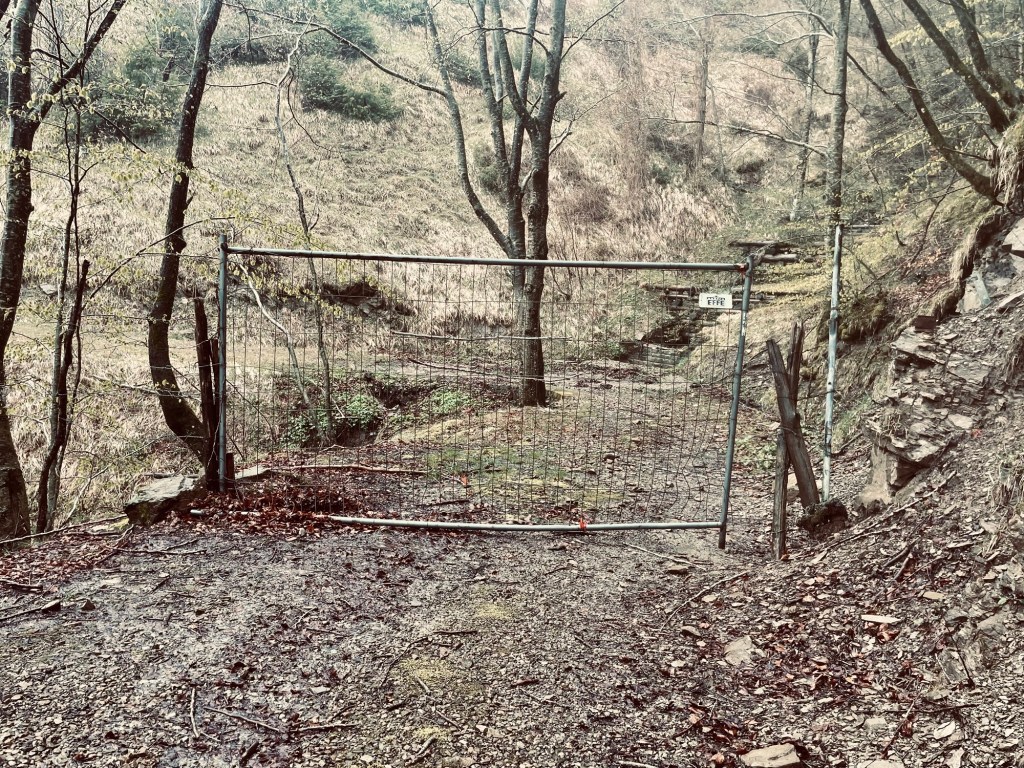
    I soon came to doubt this fact and felt foolish as I followed signs into a huge prairie where the straight path was well and truly lost.

    Still with no phone signal and with my hard copy map of little use for its sparse detail, I spent about an hour circumventing the huge stretch of grass looking out for a red and white sign. There was nothing to be found. I heaved my body and rucksack up to the top of the hill to see if the advantage point would reveal the path but alas, there was nothing. I was well and truly fucked. 
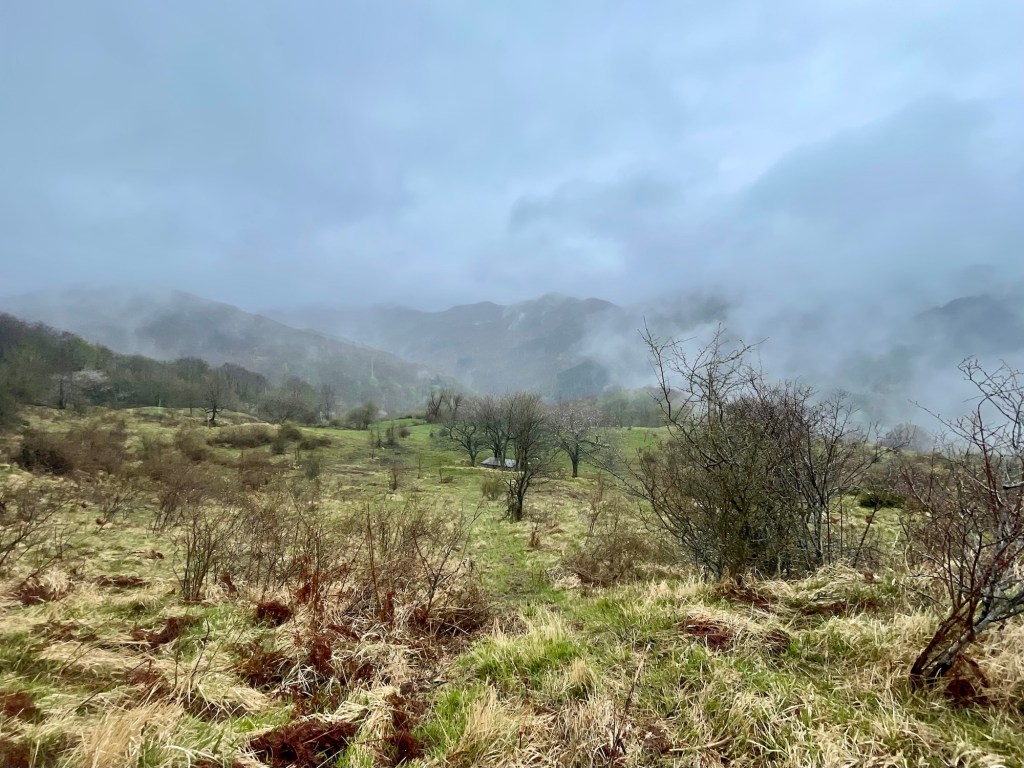
    The anti-anxiety drugs I am currently taking helped me resist the temptation to panic, though my heartbeat was still racing at twice its normal speed. I could see tracks running here and there, but the mud and pools of water made the animal and human tracks indistinguishable.

    Worried about water getting into my phone again, I used my chest as a ledge to protect it, walking forwards like a hunchback one step at a time. I found myself crossing my fingers and suddenly, out of the mist, there is appeared! A red and white lick of paint on a tree.

    Hallelujah!

    A few metres after that I saw a Cammino di Dante sign and, by God, I have never been more relieved to see a little block of wood – thank you Oliviero for your toils!

    I took a deep breath but couldn’t stop to process recent events since the rain was now pouring and there was absolutely nothing in the way of shelter at any point today on the route. I had told my therapist Hugh that one of my fears for the walk was that an annoying fellow hiker might attach themselves to me, but in that moment, I would have given anything for a companion. I felt utterly and completely alone to face my fears. I had a first aid kit and a tinfoil blanket, but I hadn’t even thought to bring emergency flares with me. What was I thinking?
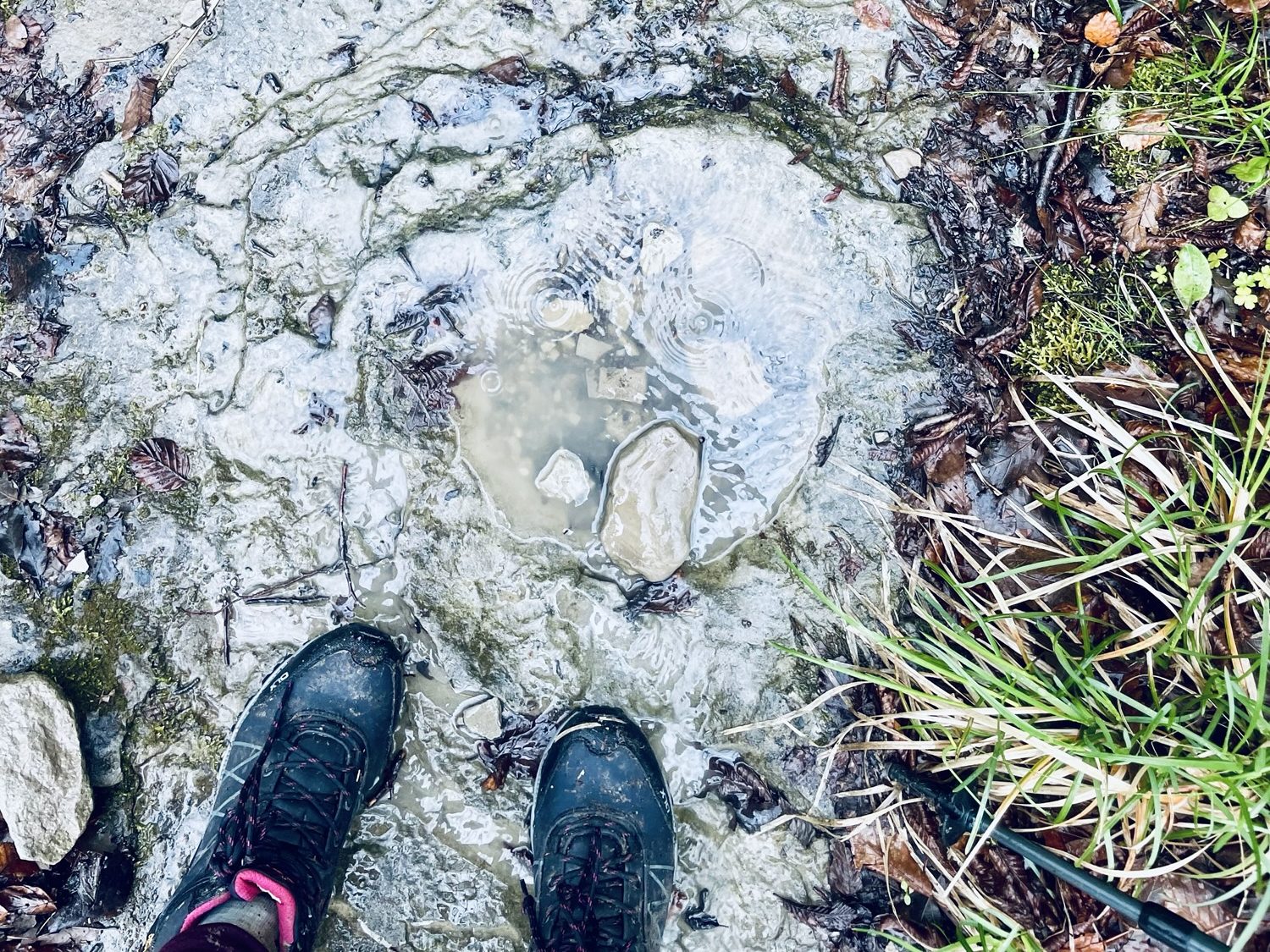
    The path for the next three hours was literally just like sliding down a waterfall. I slipped about five times and banged by arm on a rock but the damage was superficial. The bank was so steep that with one proper fall you would go hurtling down the mountain side.

    I had to balance pulling out my iPhone from my bra for directions with the risk of water damage and, since the charge had run out, I also had to plug it into my power bank which I tucked into my pocket. The cable caught up in the necklace Alina had gifted me and now I thought of her words of encouragement as I navigated the puddles and the precipitous edge. Forza, Jenny, forza! ‘You are destined to complete this trail.’

    I’d gone from digging my heels into the snow this morning to walking sideways in a snowplow to try and defeat the soggy leaves which collected at the bottom of my poles like I was a garbage collector. My fingers had become like prunes and my boots thudded on the rocks for the extra weight of the water they had accumulated. 
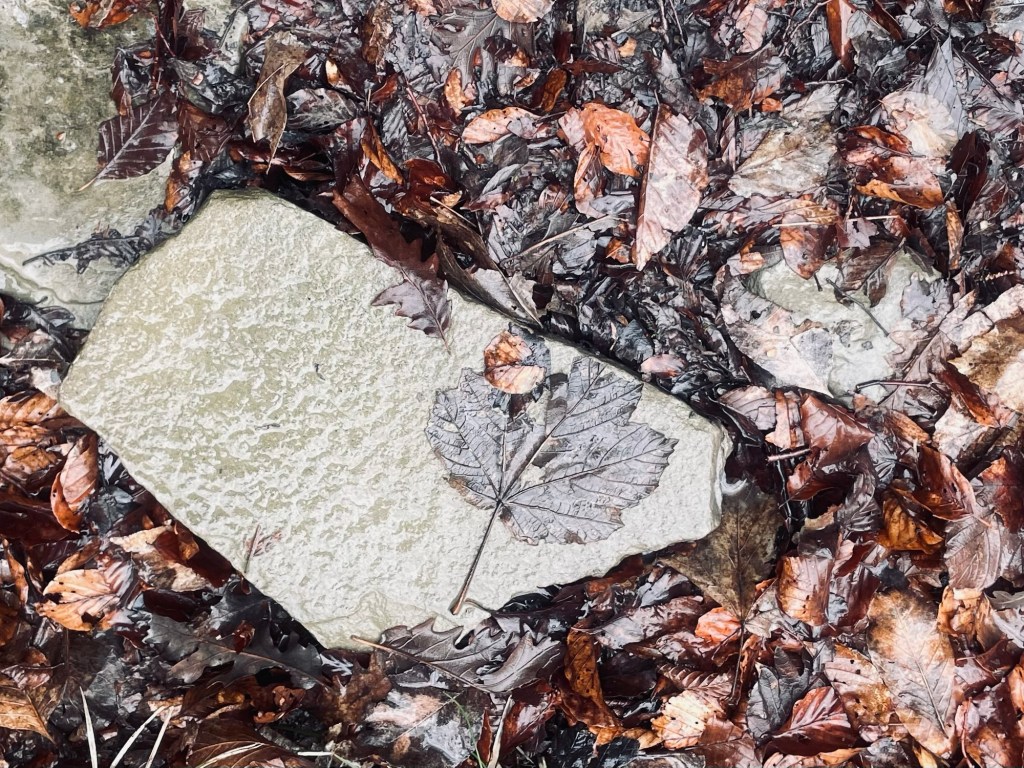
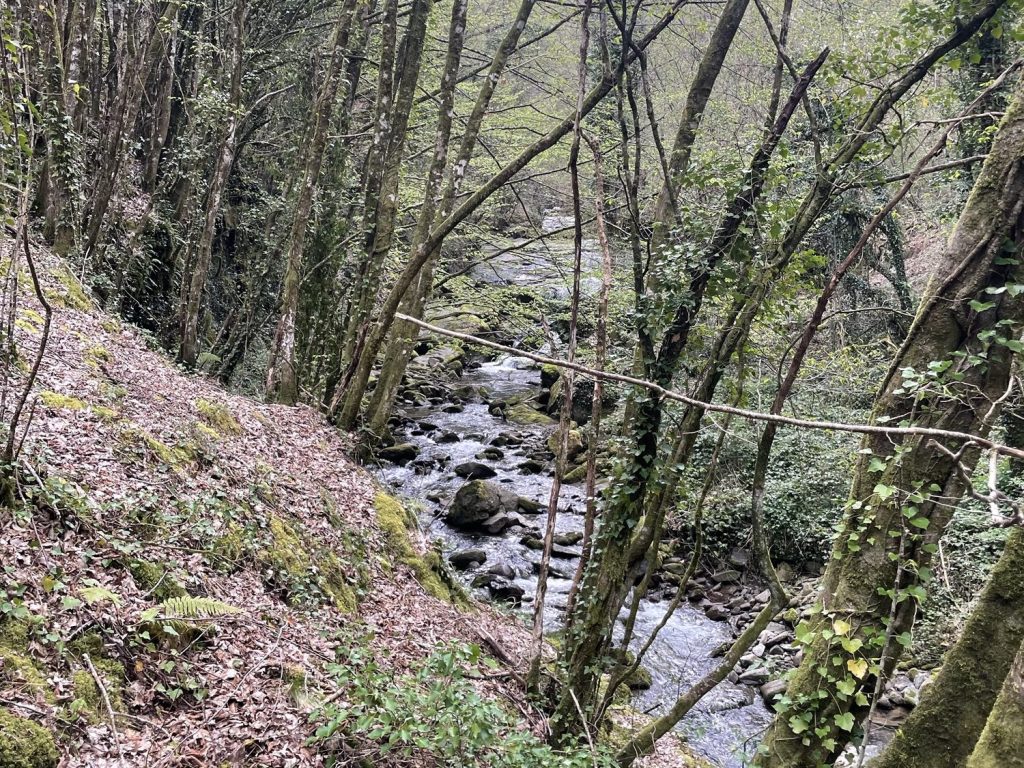
    As I descended into Fiumicello – literally meaning little river – the muddy banks of the stream on my right side had given in so that to walk through the path was to walk through water. 

    I finally found some shelter under the porch of a house in the tiny hamlet of Fiumicello and untangled my iPhone cable which had stopped charging from the power pack. I had noted that the plastic was coming loose yesterday and now, though I’d applied an ample amount of the cellotape Alina had left me from her Mary Poppins style bag this morning, it was doggedly refusing to function. 

    Hopefully I’d have enough battery to make it the further 5 kilometers to Premilcuore, then I didn’t know what I’d do about the charger. Perhaps tomorrow would be a write off. I’d have to spend it getting a bus to the nearest supermarket in a larger town? I felt defeated.
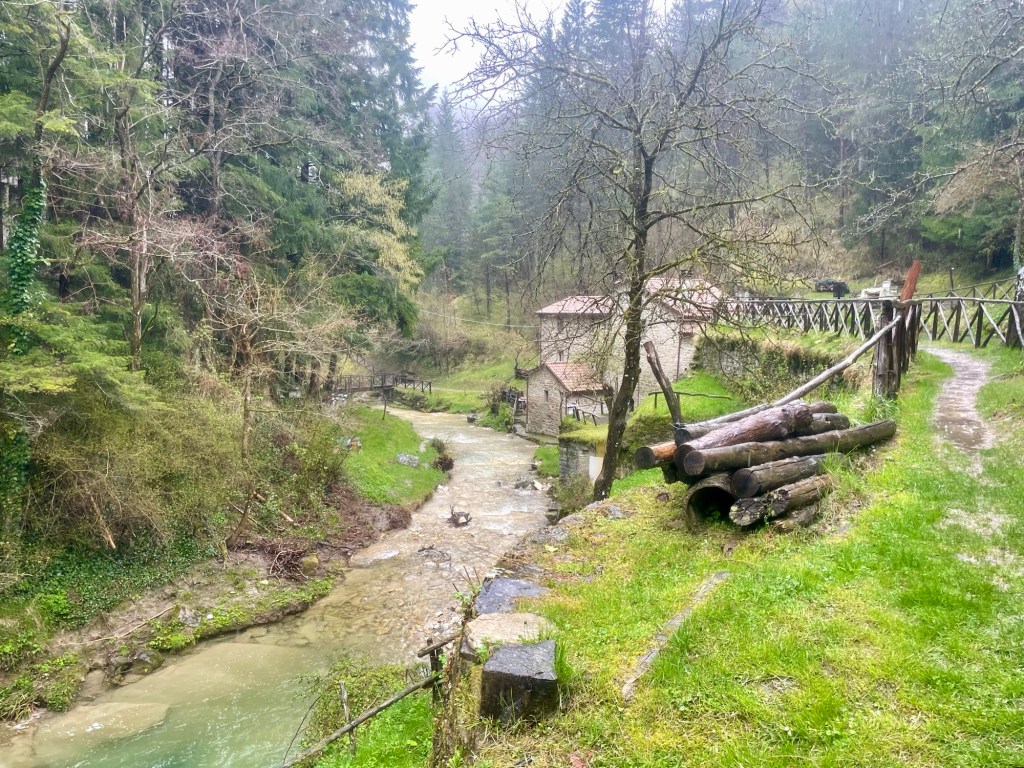
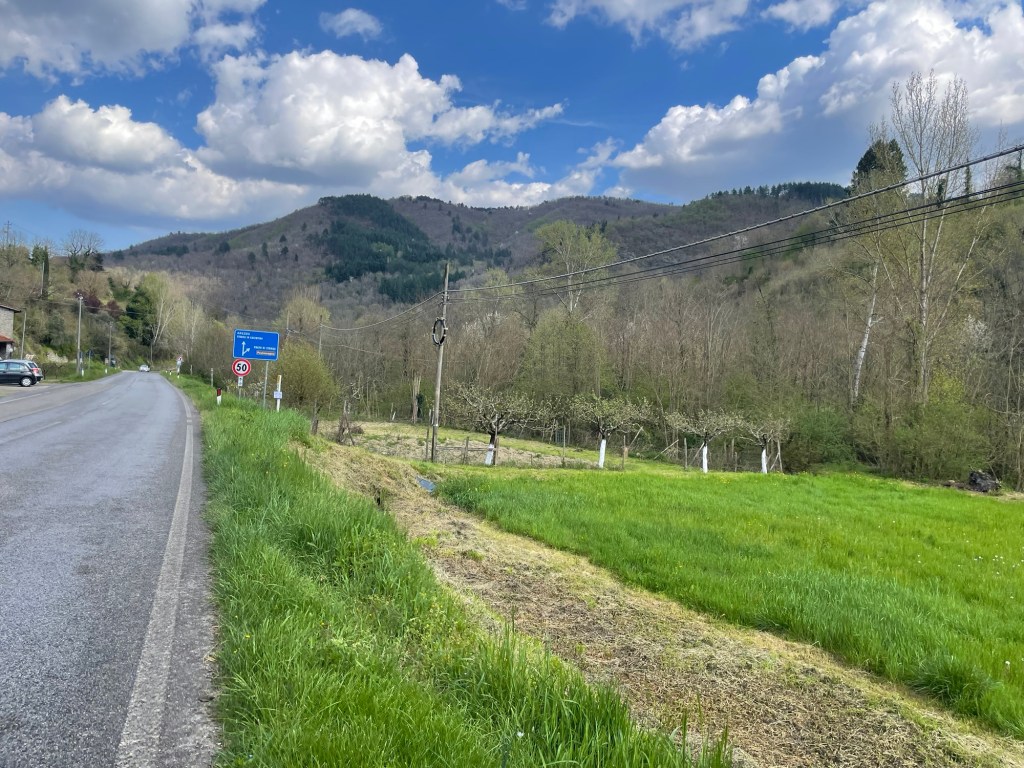
    As I walked along the road from Fiumicello to Premilcuore I passed the stations of the cross and towering cliffs in which the rocks had been confined to cages to avoid damage to the path. 

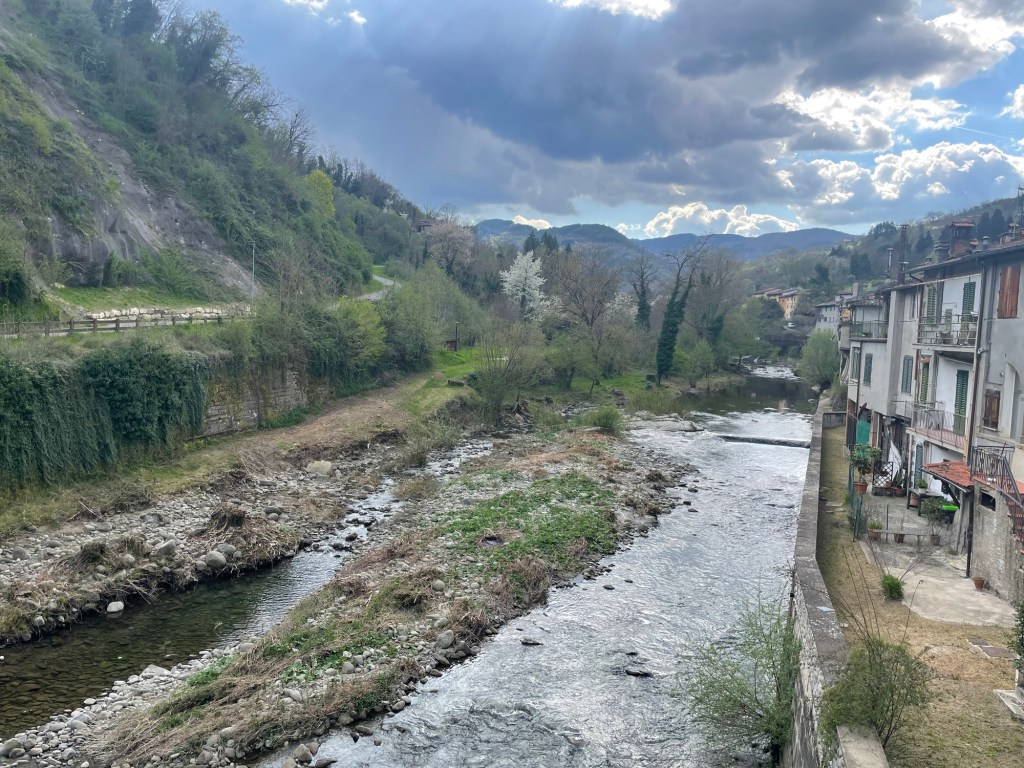
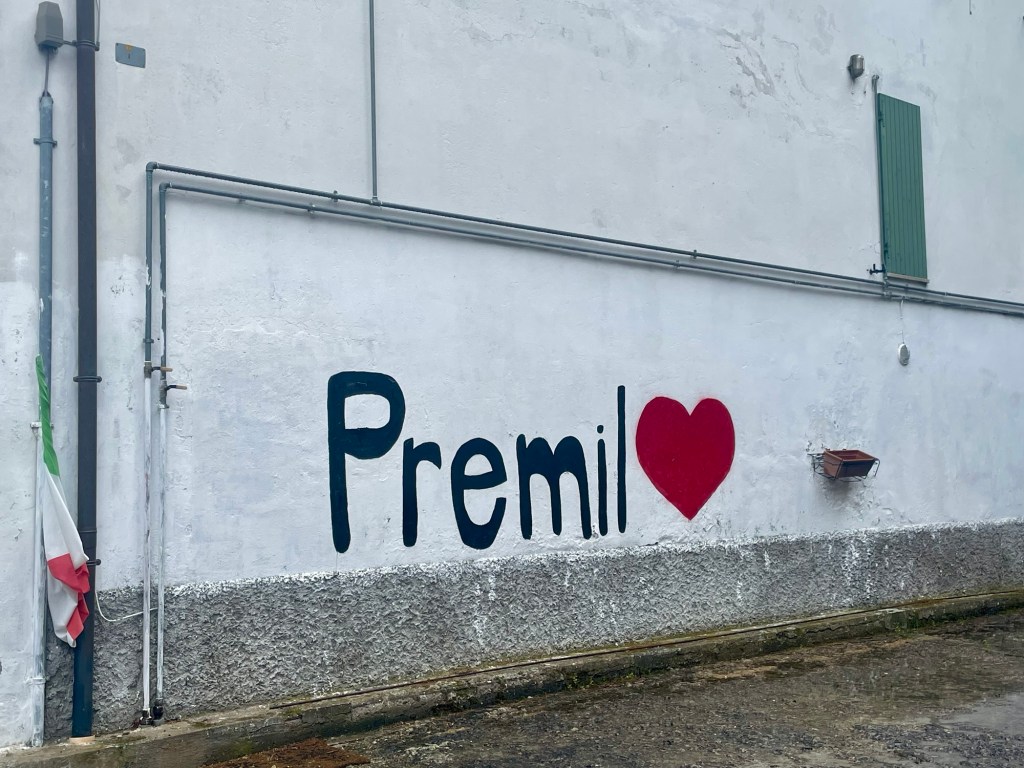
    Finally, I descended into the charming little town of Primilcuore – meaning squeeze heart – and was somewhat surprised that the first person I’d seen all day was wearing a hijab. 
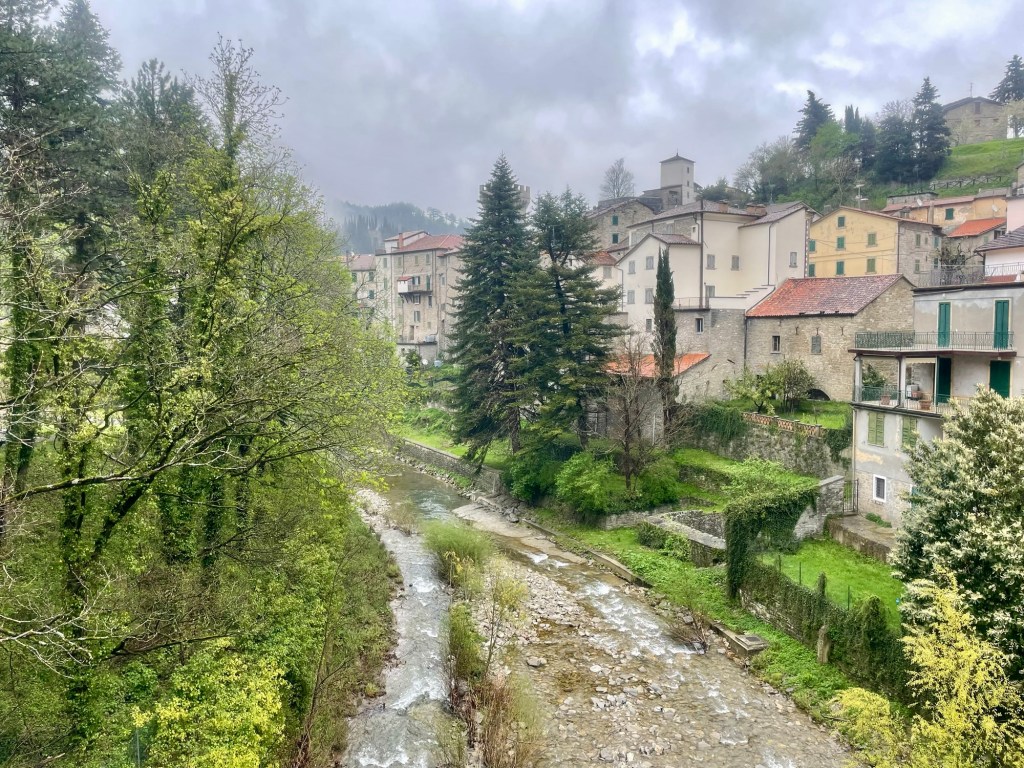
    I easily found my B&B, la Rosa della Rabbia, where my hostess Nadia could not have been more welcoming. When I asked about the iPhone charger she calmy replied,

    ‘No worries! You can use mine or else they sell hem in that tiny Tobacco shop just down the street.’

    I could not believe my luck. I headed straight there and purchased a golden thread of cable that was labelled as ‘extra resilient.’ I breathed a huge sigh of relief. An older lady in the shop was playing lotto. 

    ‘Long day?’ she asked me.

    ‘Just a bit,’ came my reply.
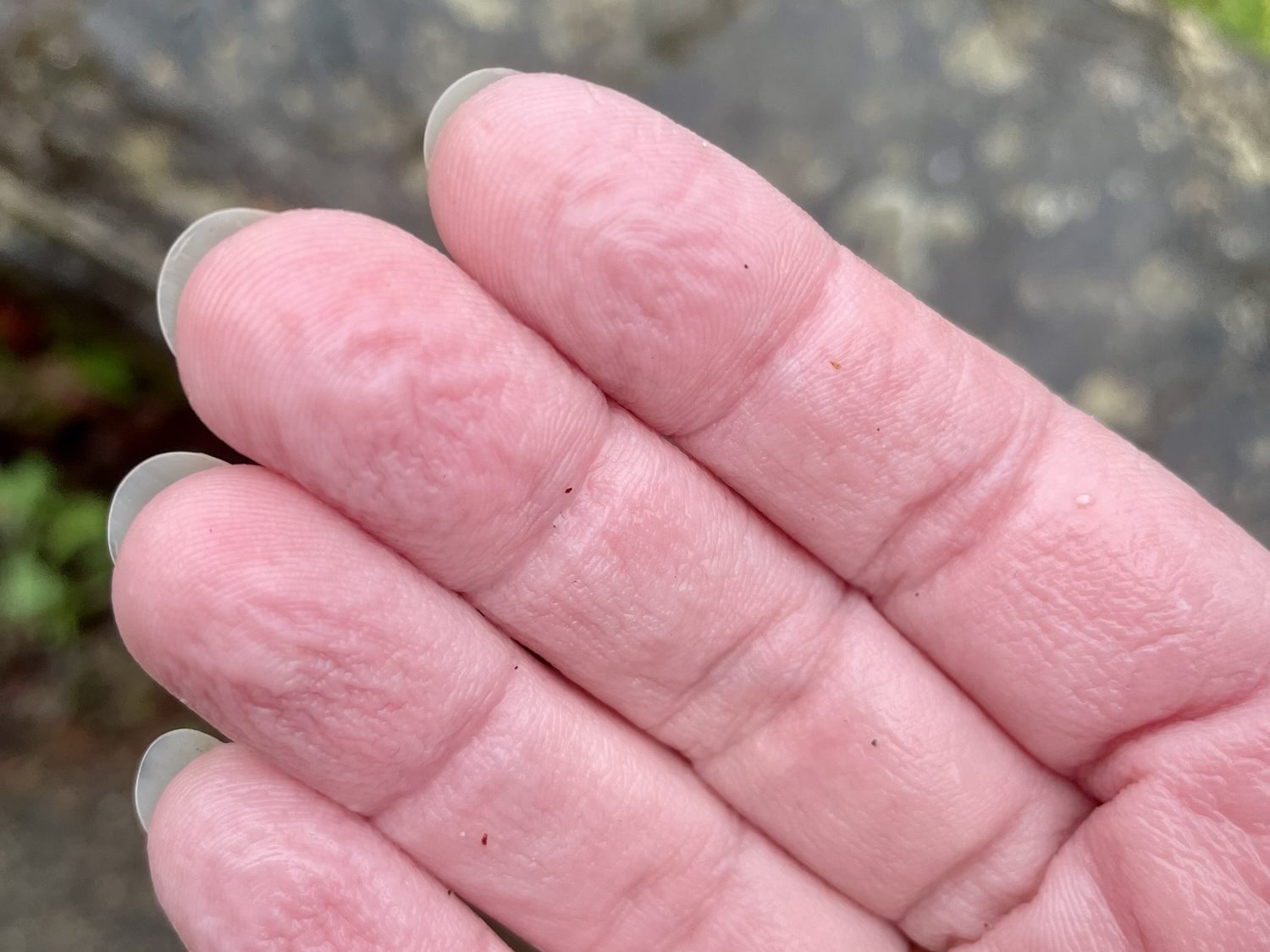
    Back in my room I peeled off my shoes and socks to reveal heels turned white from eight hours of soggy walking. They were cratered with little marks like the surface of the moon. 

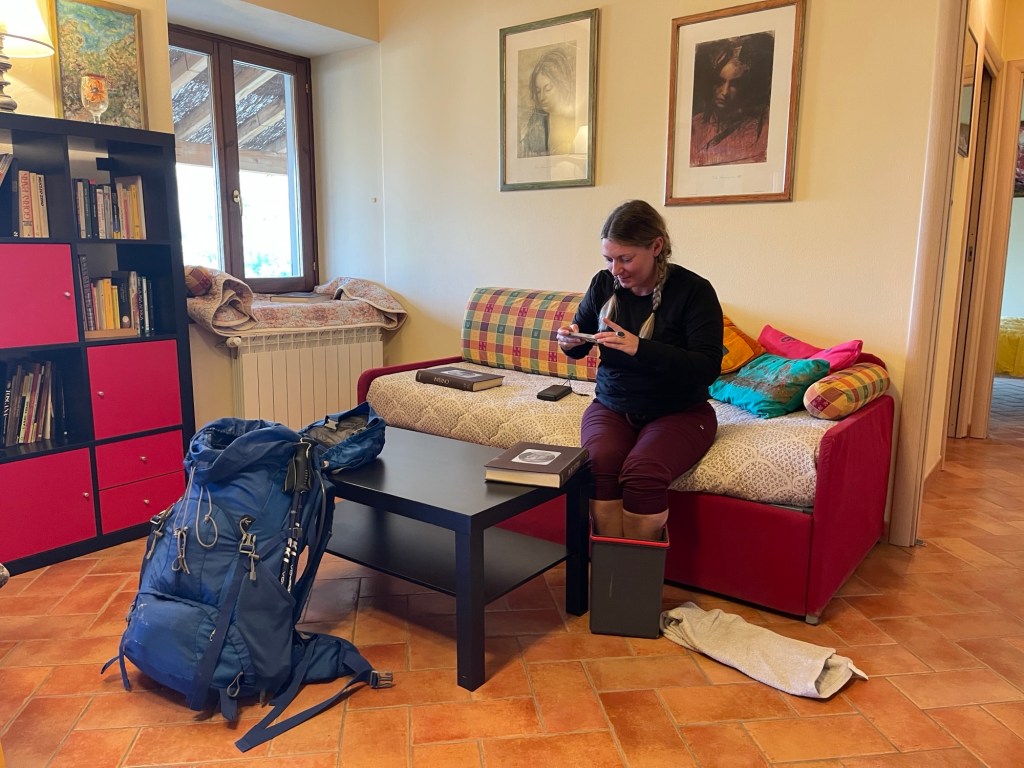
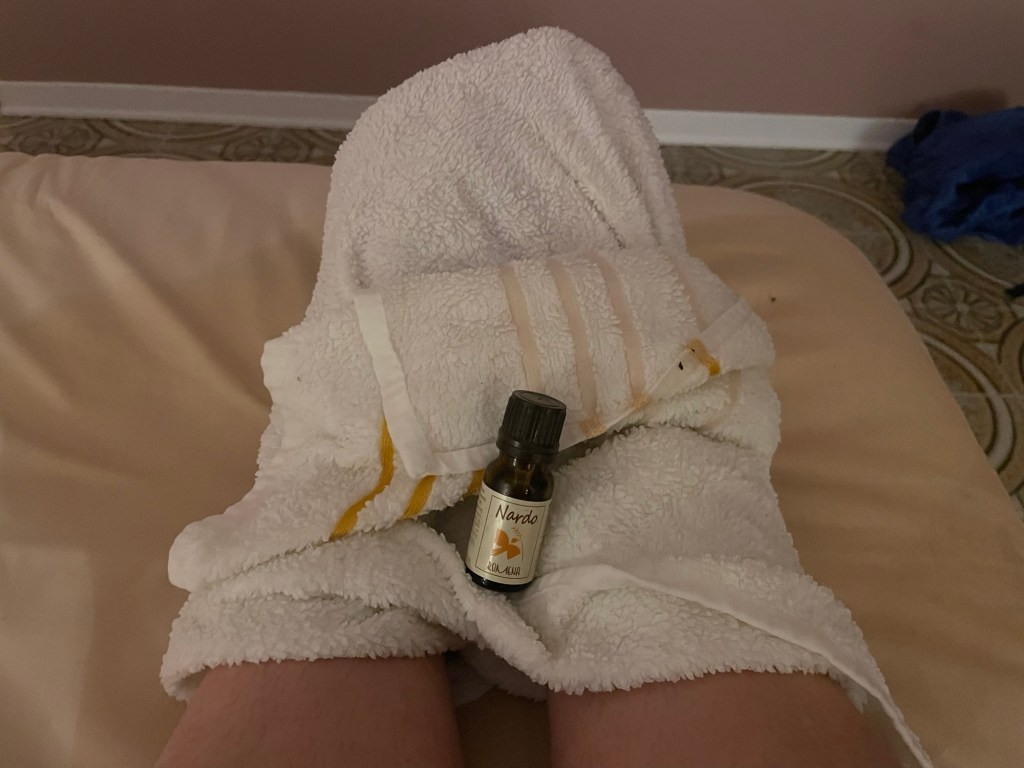
    Eyeing up the bin I was disappointed that it looked more akin to the size of a mug so there would be no foot bath for me today. Instead, I bundled myself into the shower and held the nozzle up close against my toes, spraying them, one-by-one, back to life. Then, at my mum’s advice I wrapped my feet in a warm towel with Nardo oil.  
    Emptying the contents of my rucksack, the coffee I had packed had exploded and the dried spaghetti was now moist in the bottom of my bag. I threw on my spare pair of clothes that had only got partially wet and went next-door for an onion and cheese Piadina, an Italian sandwich made with soft flat bread.

    As I ate, I got talking to a friendly local man, Alim, of Moroccan origin, who was sipping on a white Russian – ‘like coffee, but a cocktail’ – he informed me. He was wearing a fashionable adidas tracksuit and fixed eye contact as he spoke to me. 

    I told him I had been surprised to see the lady with the hijab on my entrance into the village.

    ‘Oh yes, we’re quite a few here,’ he replied. ‘The first Arabs came in 1989.’

    We exchanged some conversation in Arabic, at which he seemed at once delighted and surprised. Alim had five kids and was a social worker who supported the elderly and people suffering from poor mental health. 

    ‘You have to speak to old people and poor people if you want to understand life,’ he said.

    On his neck were three tattoos of stars which increased in size as they reached his earlobe. 

    I told him I had visited Morocco and had good friend, Fatima-Zohra, in Fez, where there exists one of the oldest universities in the world. 

    There followed a heated discussion between myself, Alim and Nadia about whether social sciences were worth studying at all – Nadia had an undergraduate and masters in Sociology and Criminology, the specialism of the department where I teach at the University of Birmingham. Alim also sought to convert me to religion.

    ‘You cannot read Dante or any philosophy for that matter and not be religious,’ he insisted, ‘we never have an original thought, we just receive it.’

    His speech was strewn with adages and beautiful words,

    ‘Poetry,’ he remarked, ‘is the skin of a language that you cannot graft or translate…sorry, when I drink, I become a philosopher.’

    We discussed all things abolishing the police – or not, and Nadia told me about her thesis on the mafia in the region we were now in, Emilia Romana, and dreams of pursuing further studies in psychology. Her boyfriend listened in but did not engage in the conversation. 

    As I munched on rosemary flavoured crisps, Alim chastised me and bought me a plate of local pecorino – ‘much healthier,’ he said. ‘Do you like tequila?’

    It was 10pm when I left the restaurant. I’m not sure I managed to convert Alim to the delights of social sciences, just as he made little headway in converting to me religion, but the next day I received a text from Nadia,

    ‘Thanks for everything, and especially for giving me hope in pursuing my passion,’ it read. 
    Recommended reading: KNOW Your Rights: A Critical Rights Literacy Framework Based on Indigenous Migrant Practices across Guatemala, Mexico, and the United States (available in English and Spanish): http://collections.unu.edu/view/UNU:9673#viewAttachments

    Recommended reading: The Grapes of Wrath: https://en.wikipedia.org/wiki/The_Grapes_of_Wrath
  • An Infinite Spring: From Castel San Niccolò to Casalino

    The expansive green landscapes and spectacular church complex of Romena will have you dreaming.

    The first thing I did in the morning was to line my eyes with a thick rim of turquoise eye liner I had purchased along with sun cream in the town pharmacy yesterday. Meeting Anna in Montemignaio had left a big impression on both of us with her organic, healthy way of life and I sought to emulate something of her serenity. I wouldn’t be able to keep sheep with my work schedule and pickling my own walnuts appeared too much labour, so make-up seemed like a good enough place to start. 

    Sei Bellissima,’ said Alina. And with that, we grooved on down to the song of the same name by Annalisa. 

    Then she introduced me to her chat GBT mentor. He’d searched me up online and recited a shockingly accurate amount of information in a friendly tone. 

    I’m a luddite. On this trip she is teaching me how to use the new technology my students swear by.

    We had another delicious breakfast of pesto toast on the patio in the rising sun and were up and at ‘em and back on the Dante trail by 8am. We passed houses where dried grain hung outside the porch. It shone golden in the sunlight. A child who looked about 8 sped past on a motorbike.

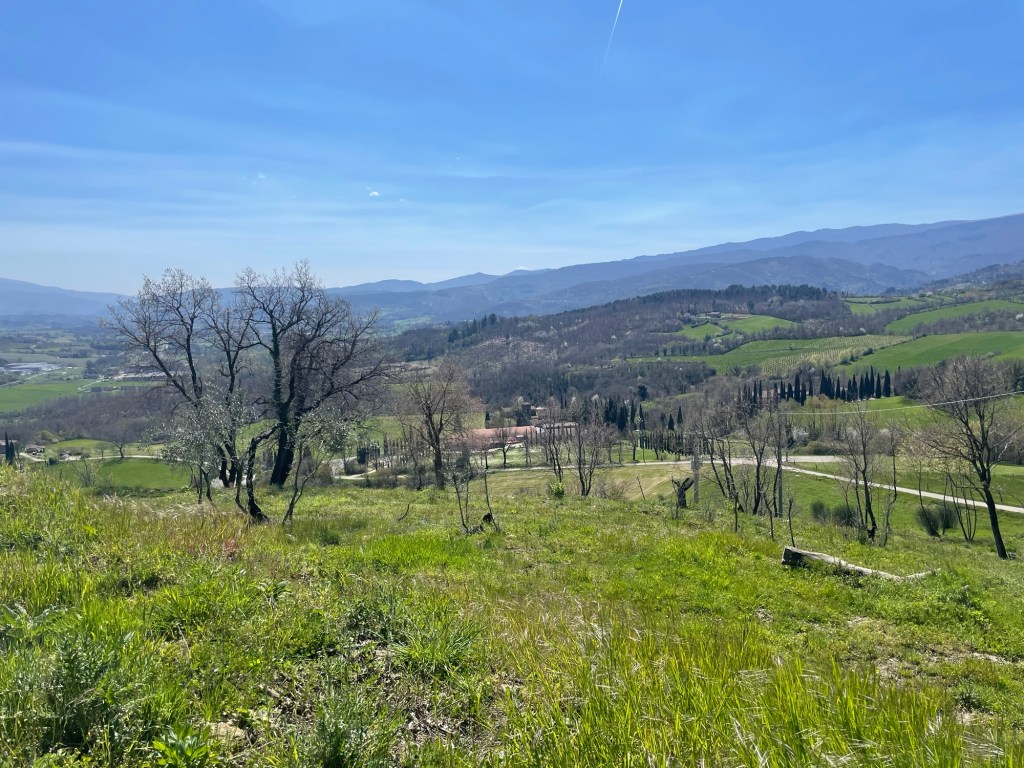
    The stunning hilly scenery around Castel San Niccolò is interrupted by industry. The path is thick with hoof prints and acorn shells and lined with buttercups, dandelions and grape hyacinth. Butterflies and petals from the blossoming trees sweep across on the wind. 
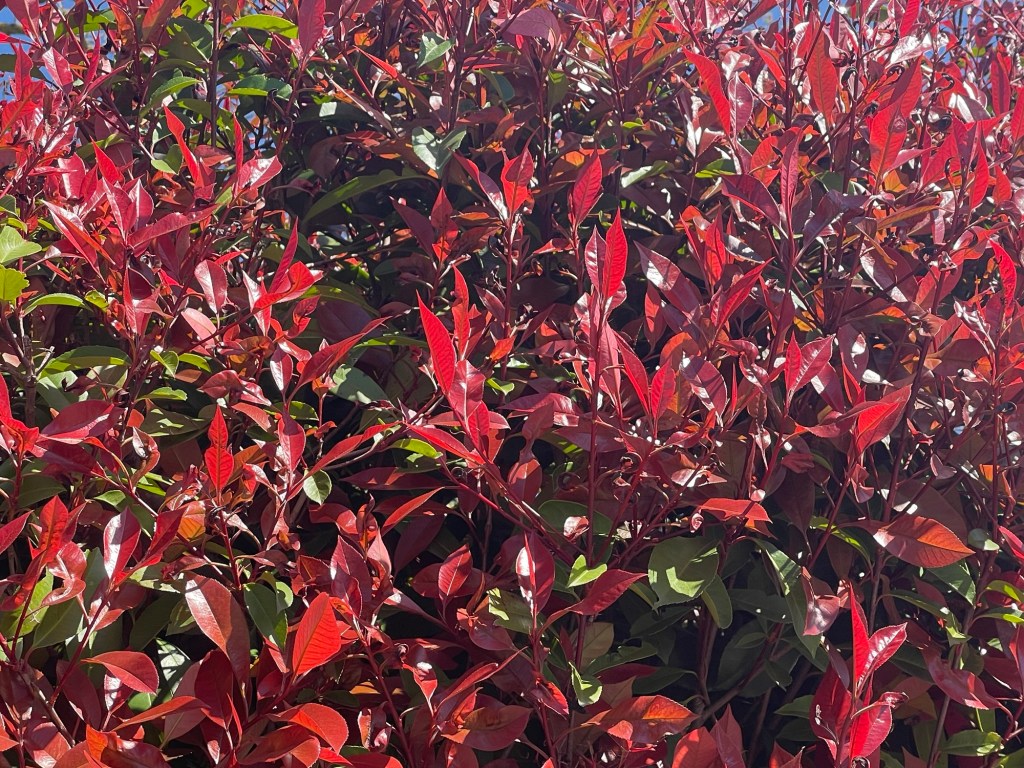
    Interrupting the hedgerows are flaming trees the colour or Alina’s hair. 

    We saw the first cows of our trip, stopped to pet a number of horses and were hissed at by geese who appeared menacingly above the fence like the three-headed Cerberus. 

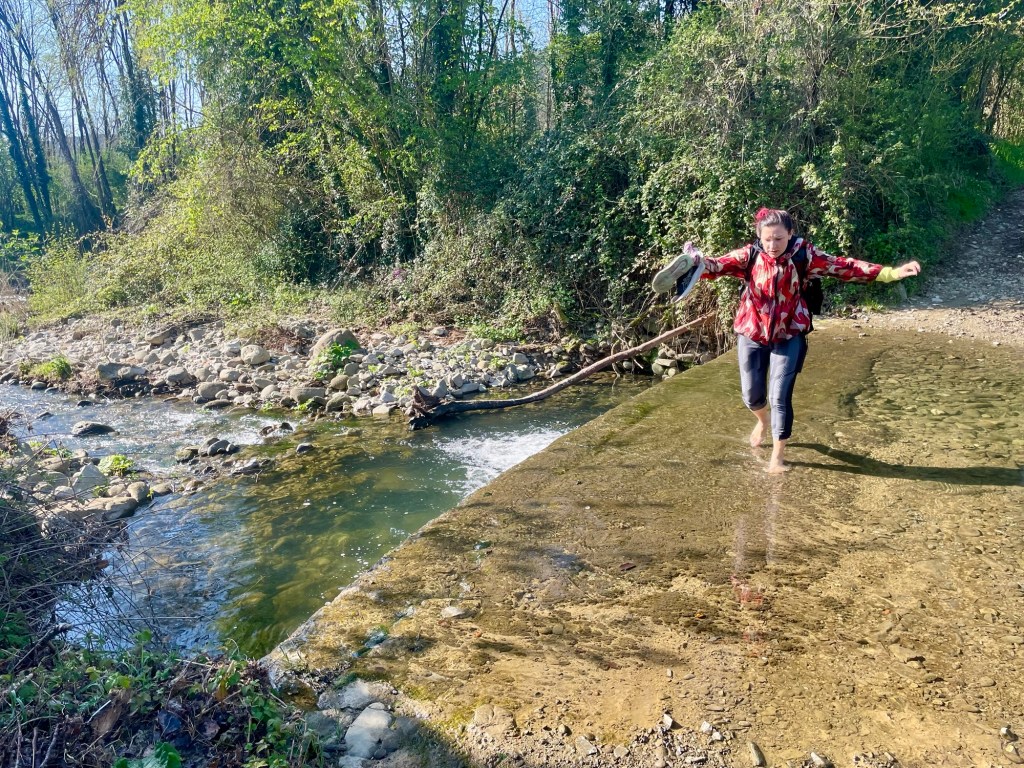
    On our way out of the town we crossed a stream. Alina had the sense to remove her trainers and traverse it barefoot. 

    I got wet feet. 

    I feel like Virgil would have chastised Dante for this stupidity as he does many times on their journey together through Hell and Purgatory. Alina just laughed. 

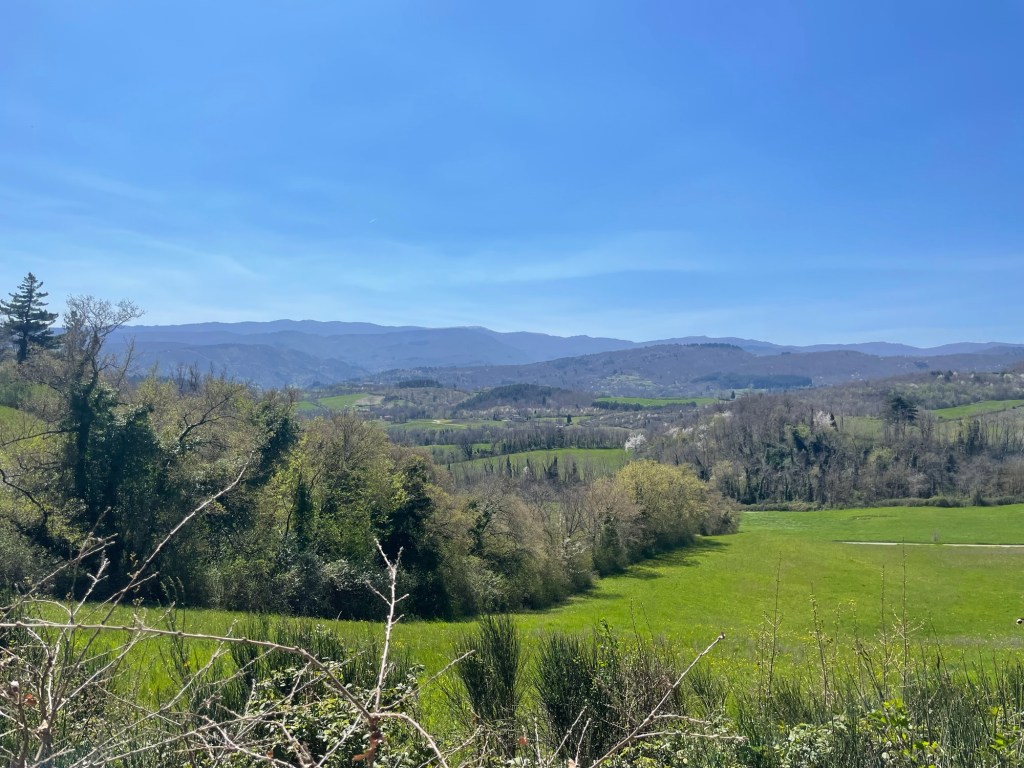
    We’d spent the last couple of days crunching through brown leaves in a climate that could have been mistaken for autumn if it were not for the primroses. But exiting the forest today, it felt like Spring had truly come. A gentle hike up afforded expansive views across the surrounding hills. The sun shone brightly on our faces and now it was my turn to be reminded of England. Alina said it also recalled Crimea where she would spend her holidays as a child.

    As we stopped in a field next to a towering hay bale which was taller than me at five foot two, I was reminded of the poem L’Infinito  by Giacomo Leopardi, an Italian poet born in 1798 in Naples. 

    The Infinite

    ‘This solitary hill has always been dear to me
    And this hedge, which obscures from me
    The endless horizon. 
    But when I sit and gaze, I imagine, in my thoughts,
    Endless spaces beyond the hedge,
    An all-encompassing silence and a deeply profound quiet,
    To the point that my heart is quite overwhelmed. 
    And when I hear the wind rustling through the trees
    I compare its voice to the infinite silence. 
    And I recall eternity, and all the ages past,
    And the present time, and its sound. 
    Amidst this immensity my thought drowns:
    And to flounder in this sea is sweet to me.’

    ‘Sempre caro mi fu quest’ermo colle,
    e questa siepe, che da tanta parte
    dell’ultimo orizzonte il guardo esclude.
    Ma sedendo e mirando, interminati
    spazi di là da quella, e sovrumani
    silenzi, e profondissima quïete
    io nel pensier mi fingo, ove per poco
    il cor non si spaura. E come il vento
    odo stormir tra queste piante, io quello
    infinito silenzio a questa voce
    vo comparando: e mi sovvien l’eterno,
    e le morte stagioni, e la presente
    e viva, e il suon di lei. Così tra questa
    immensità s’annega il pensier mio:
    e il naufragar m’è dolce in questo mare.’

    Once again, I’ve taken a stab at my own translation. ‘Naufragar’ – to flounder or to drown? I wish I had Anna’s Zingarelli dictionary.

    The poem, written in the Marche region in 1819, is a prescient nod to the modern mindfulness movement. This is something my colleague Will at the University of Birmingham refers to in a recent work as ‘McMindfulness’ for its ubiquitousness in social prescribing. Every other person seems to have an app on their phone, but how mindful are we really? 

    Leopardi’s poem reminds us that contemplating the infinite nature of the horizon when in nature can return us to a sense of peace. It’s not quite the same as having a low-pitched American drawl telling us to ‘feel our feelings and let them drift by like clouds in the sky’, but it’s something akin to it and dare I say superior?

    Alina and I spent a moment of silence contemplating the hedges and horizons around us and were quietly moved. 

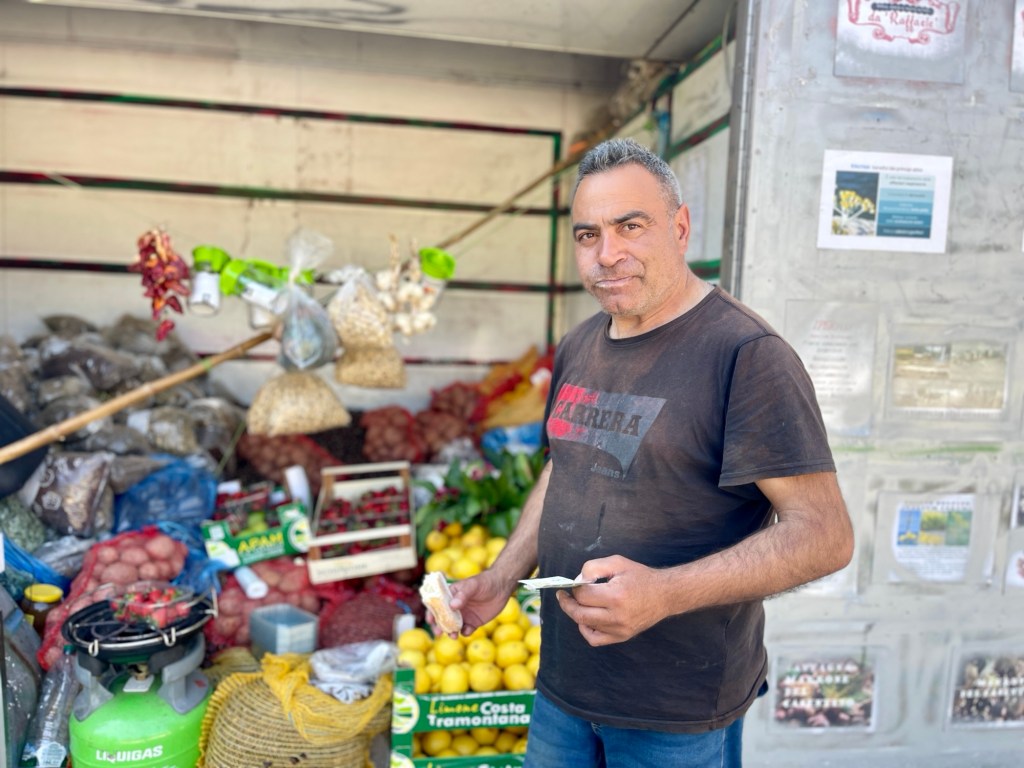
    Walking up to the steep path to the rural church and complex of San Pietro a Romena, we were greeted by a man selling groceries from a battered old vehicle. At first, I thought it was an ice-cream van – damn. But it turned out to be a worthy pit stop anyway. 

    ‘Where are you from?’

    We replied.

    ‘Oh shit, there’s a war in your country,’ he told Alina.

    ‘Thanks for letting me know,’ she said. 

    Bastardi, those who make war should make love,’ he continued, a look of lust creeping over his narrow eyes.

    Raffaele was eating straight from a can of tuna from which the tin lid flapped like a fin over the side. He had breadcrumbs around what he called his ‘muzzle’ and beseeched us to ‘stop and eat something with me!’ 

    He had a fuel stove and paper plates in his van. 

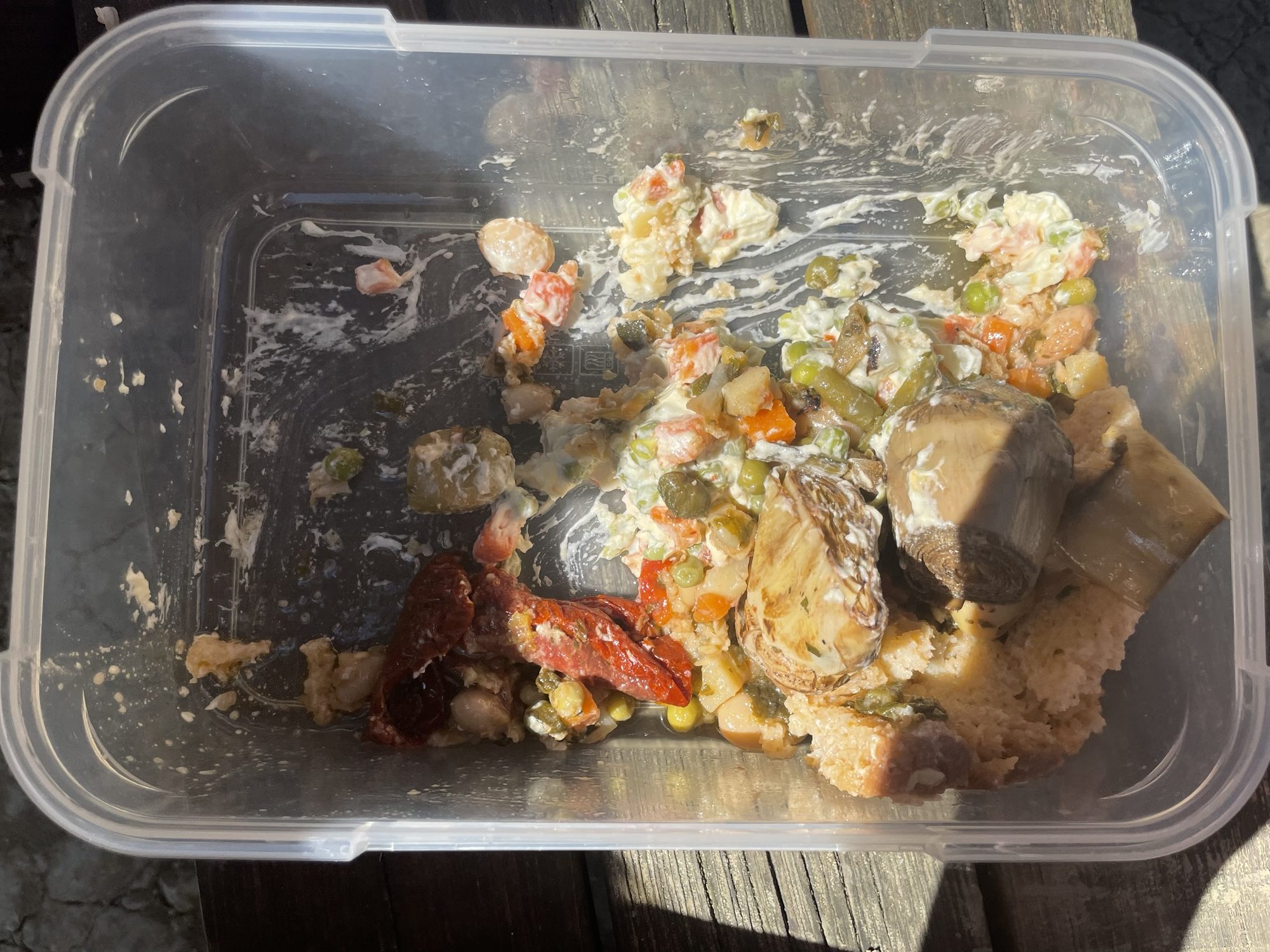
    We kindly refused the offer – we had a Tupperware full of treats from the deli yesterday to attend to. Alina said the way the salads had mixed together reminded her of the first day of January in Ukraine where you eat all the leftovers. She is a stickler for not wasting food.

    We purchased fresh strawberries and a huge bag of peanuts in their wrinkly shells for 5 euros and went on our way after exchanging a sweaty, and perhaps slightly too familiar, hug.

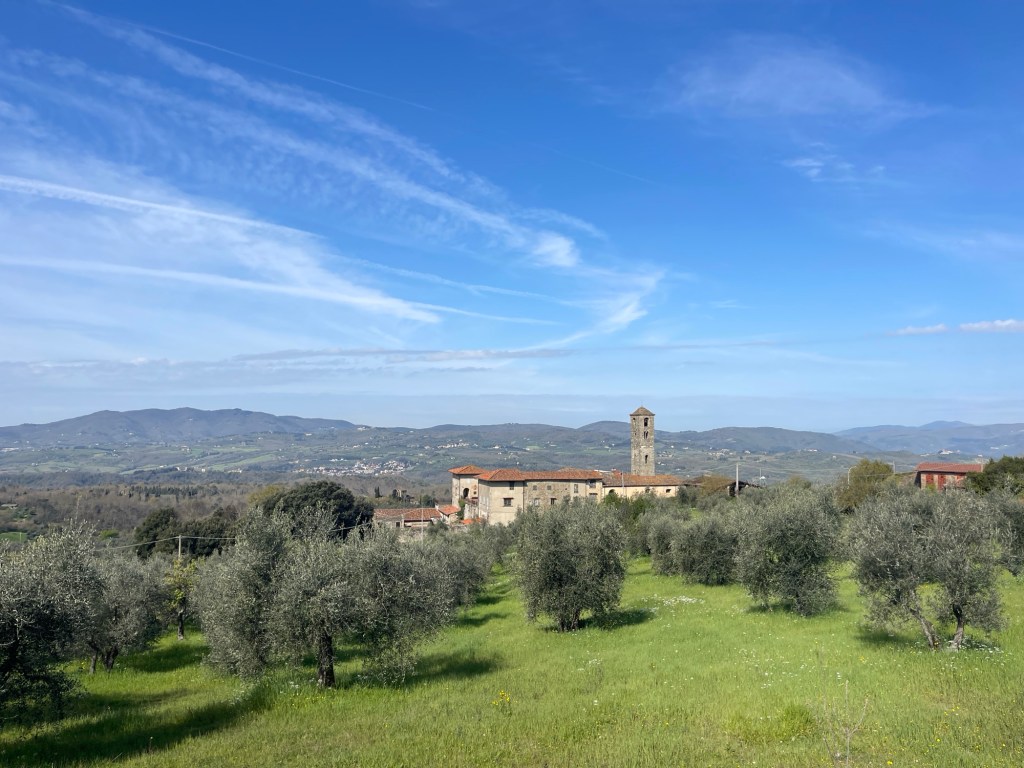
    San Pietro a Romena is a tranquil oasis which extends way beyond the Parish church over the cascading fields. 

    Located on the slopes of the hill dominated by the remains of the castle of the Guidi Counts, on the right bank of the Arno, in the territory of the municipality of Pratovecchio Stia, the baptismal church is a masterpiece of Romanesque architecture. 

    The building, declared a national monument for its importance, was built in 1152. The place name of Etruscan origin, Romena probably already housed a temple that was readapted in Roman times. A Christian building later rose on the pagan building. 

    Descending under the staircase on the right wall, you can admire the traces under the present raised presbytery of an early medieval church built between the eighth and ninth centuries.

    Art adorns the church, though it is simple: rustic tapestries and painted wooden panels.

    Volunteers were cleaning and delicately placing olive branches in preparation for Palm Sunday. 

    Surrounding the church is a range of art, a conference suite, a meditation room, a café, bookshop, and gardens containing medicinal herbs and olive groves. There is no escaping the sense of tranquility afforded by the expansive complex. 

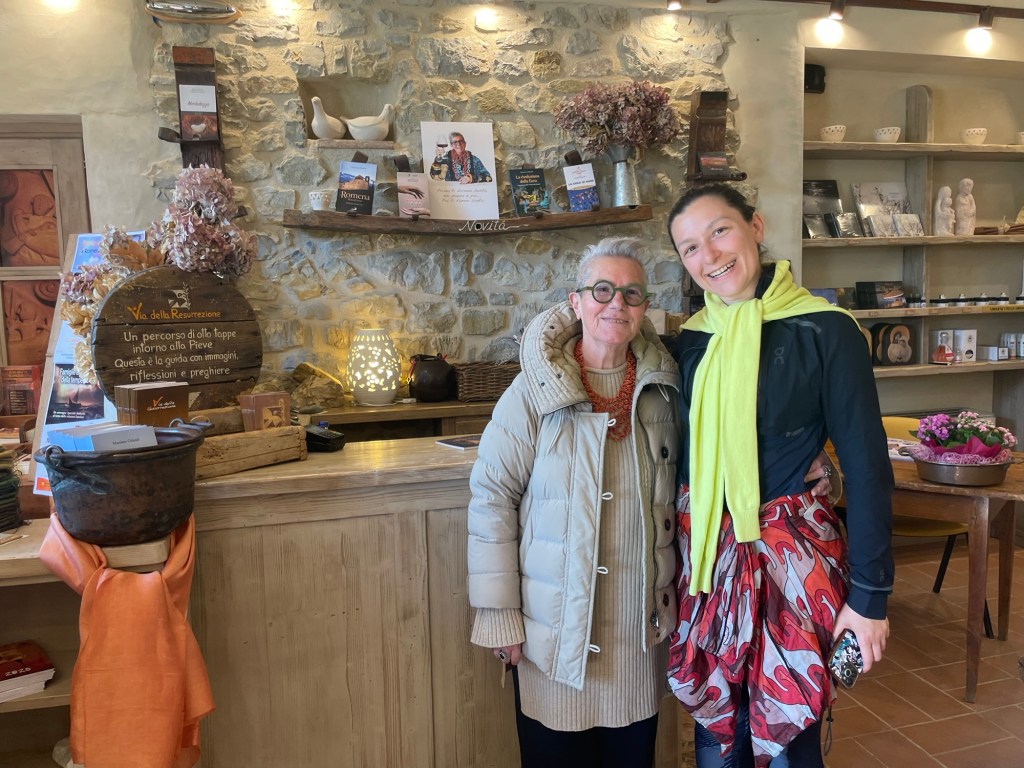
    A blend of Tracy Chapman and reggae played in the background as we perused the gift shop which was run by another spectacular 80-year-old woman who wore fashionable round, green glasses and a coral necklace. Behind the till, on the wall, friends had photoshopped her face and a glass of wine onto an image of the fashion icon, Iris Apfel with the quote, 

    ‘First they say enough, you’re crazy, then they make you a saint.’ 

    We admired her massive rings. One was made of silver, transformed into a circle of beads that encased a large labradorite. 

    ‘Oh cool,’ came the voice of Alina as she pawed a book about one of her favourite singers, Gianmaria Testa. It turned out he had performed here. The singer and guitarist, who died in 2016, is something of an Italian Leonard Cohen, though in his lifetime he didn’t receive the same critical acclaim.

    Throughout his musical career, Testa continued to work as a station master at the train station in Cuneo. One quote from the book read,

    ‘Poetry is literature’s form of combat.’

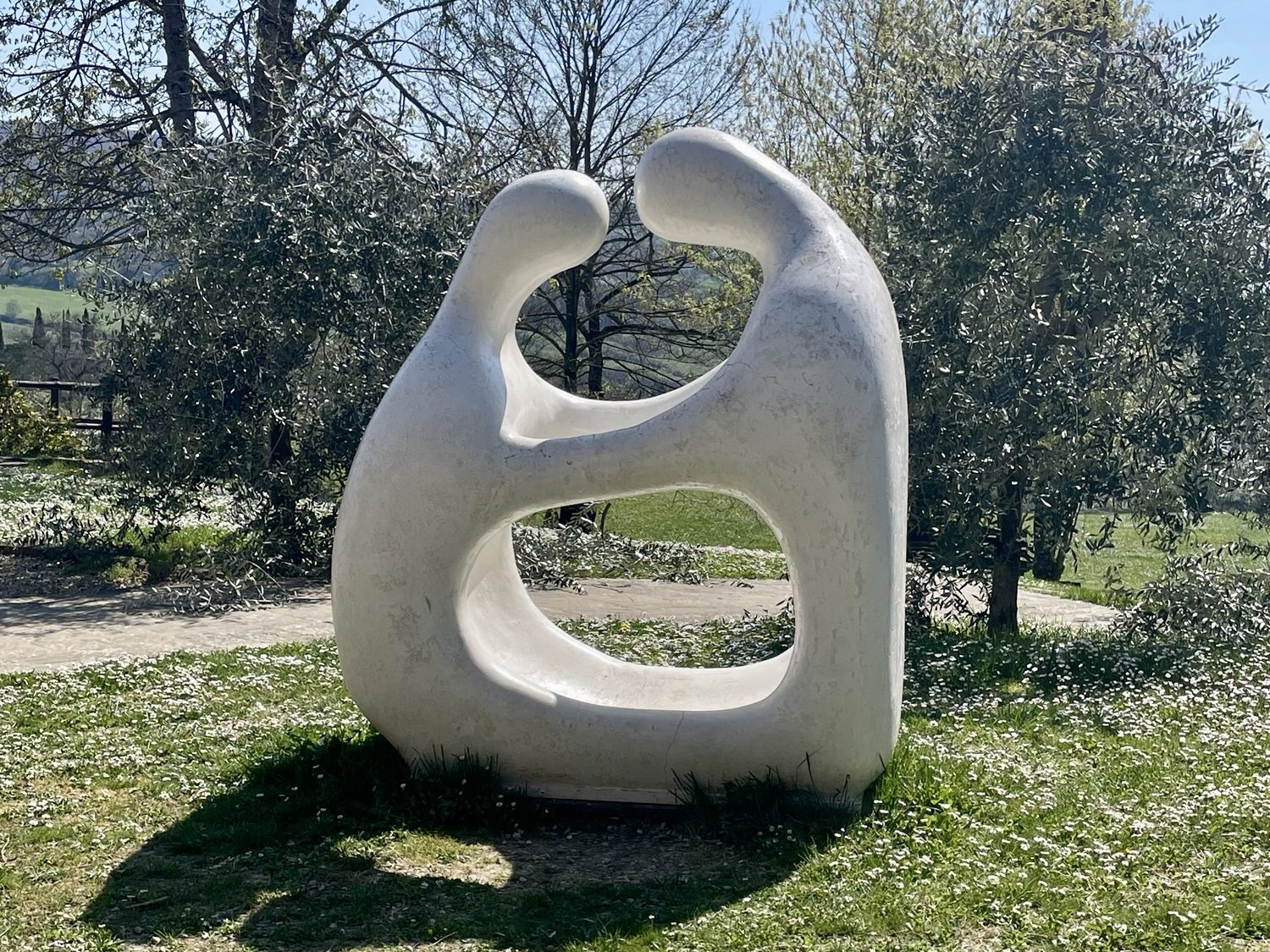
    A dozen other quotes and pieces of art were scattered across the complex. These included a steel silhouette of Banky’s Girl with Balloon and a beautiful white sculpture of a couple embracing.

    On an old door there appeared the words,

    ‘Everyone is looking for a bit of bread, a bit of affection and to feel at home somewhere.’

    The place was very quiet, but we were informed that on Sundays it attracts up to 1,000 people, as we would soon find out.

    ‘The door is always open’, the lady in the café informed us.

    A wooden placard beside the door displayed a quote by Marcel Proust,

    ‘Real travel doesn’t mean looking for new lands, but having new eyes.’

    A sign in the café read,

    ‘A coffee, 3 euros’

    ‘A coffee please, 2 euros.’

    ‘Hello, may I have a coffee please, 1 euro.’

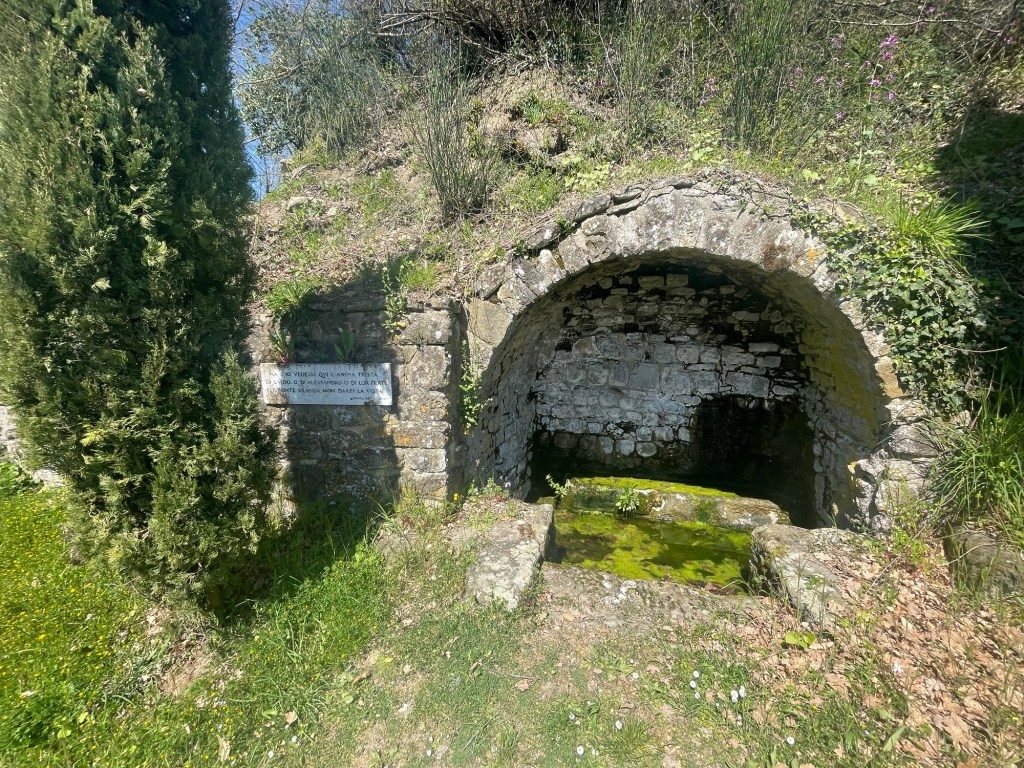
    After a peaceful break, we hiked up the hill to Branda font. It is referenced by Dante in Inferno, canto 30 which depicts mutilated souls who, as follows the principle of contrapasso whereby the sin becomes the punishment, have been damned for representational and economic fraud.

    Dante was clearly struck by the streams and hills of the Casantino landscape too and likely stayed in the castle on the hill. He writes of one soul from Romena who counterfeited money,

    ‘The rivulets that fall into the Arno
    down from the green hills of the Casentino
    with channels cool and moist, are constantly

    before me; I am racked by memory—
    the image of their flow parches me more
    than the disease that robs my face of flesh.

    There is Romena, there I counterfeited
    the currency that bears the Baptist’s seal;
    for this I left my body, burned, above.’

    Dante then stages a meeting with Guido, Alessandro, or their brother,

    ‘I’d not give up the sight for Fonte Branda.’ He writes. Dante also mentions the Castle of Romena where the forger Adamo produced his florins.

    The punishment of those in Hell is that they are perpetually tormented by memories of their past lives without being able to move forward. 

    Alina and I moved forward, walking past the castle through an avenue of lego green cyprus trees.

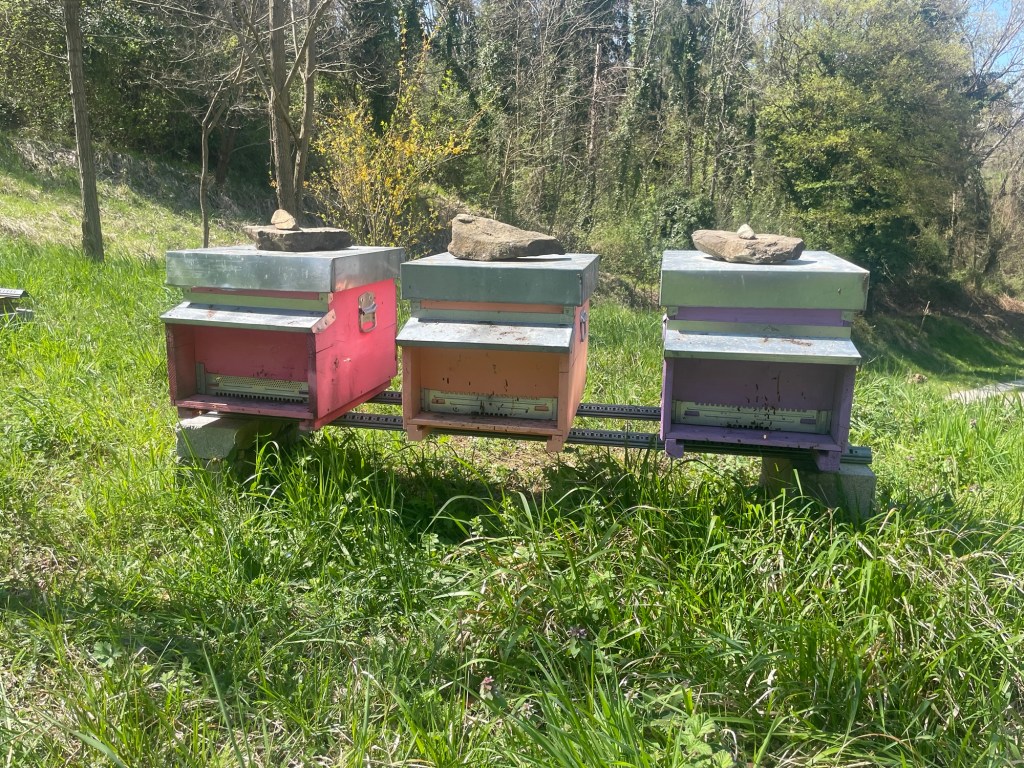
    On our descent into the town of Pratovecchio, we encountered rusty tractors pulling ploughs in fields and beehives buzzing with life. It was easy to imagine Dante here, sat beside one of the many streams. Time seemed to have stopped in this part of Tuscany, if it were not for the electric cables and roar of motorbikes on the asphalt road.

    In Prato Vecchio, known for the swallows that inhabit its grand porches, we stopped for a drink in a small café where we met a musician, theatre producer and yogi from the south of Italy, called Massimo Kyo. He had medium-long hair which was half tied back and kind eyes. He told us his second name had come to him in a dream. 

    Like Raffaele, Massimo Kyo also asked us where we were from. But he was somewhat more diplomatic in his reply when Alina responded with ‘Ukraine.’

    ‘Oh…I mean, how do you feel?’

    She was surprised at the question – ‘no one ever asks me that,’ she said. 

    During the next hour of casual conversation he informed us that ‘Casentino is a magical place where you meet the people you have to meet’.

    When we shared that we were on the Dante trail he offered up the theory that Dante had experimented with natural drugs to enter his imaginative afterlife. 

    ‘Young people here go and look for mushrooms that grow in cow shit nearby,’ he explained.

    Massimo kindly offered for us to use any of his music or jingles we liked for the podcast we have been recording as we walk and invited us to spend the next day together, saving Alina’s number in his phone as ‘Alina walker’.

    I went to pay in the bar, commenting that I liked the tattoos of the bartender, one of which showed the stylized outline of a little girl holding her mother’s hand. 

    ‘Oh, this is my little girl who never was,’ she explained.

    ‘She’s beautiful,’ came my reply.

    The toilet was an old school squat. 

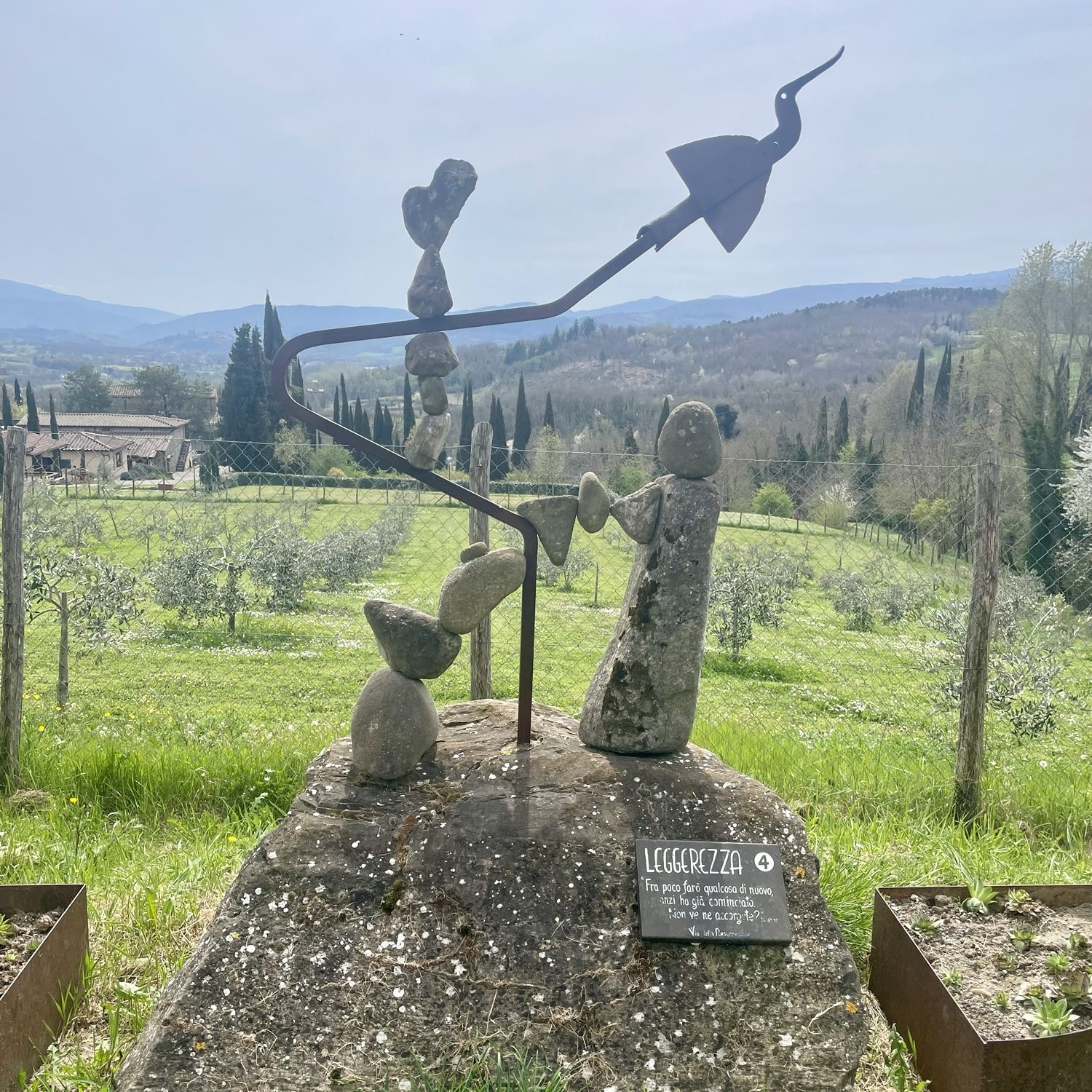
    We spent Sunday, our rest day, with Massimo, returning to Romena where he showed us his favourite spots. They included the Via della Resurrezione – the Path of Resurrection. On the way a sign read,

    ‘Before long you will do something new, in fact you’ve already started, don’t you see it?’

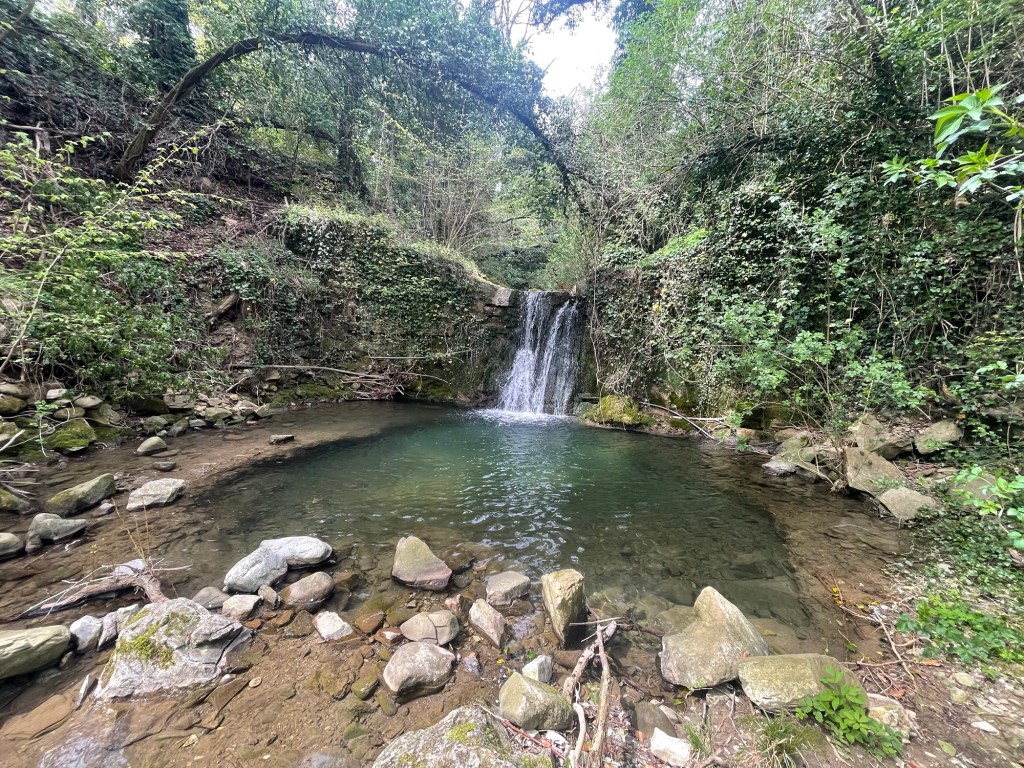
    The path ,which was pitted with art, flowed through the olive groves , ending in a stunning waterfall that fell into a turquoise pool the colour of my eyeliner. We sat and Massimo asked if we’d like to sing some mantras together.   

    We did.   

    I was taken back to Sri Lanka and to Tye, my mantra teacher who would bring us all to tears with her harmonium singing the Ganesh Maha Mantra, Om Gam Ganapataye Namaha.

    Thereafter we discussed our hopes and dreams. I shed a tear as I declared that one of mine was to finish the cammino. 

    ‘You will,’ Massimo sagely confirmed. 

    Though I don’t believe in God and think this life is all we have to make what we can of it, I really did feel like a pilgrim.

    Perhaps I do have a latent spiritual side after all. 

    Before we left, we returned to the giftshop where I bought Alina the Gianmaria Testa book and, at Massimo’s advice, some ‘nardo’ oil, made at the property.

    Known in English as Spikenard, nard, nardin, or muskroot, nardo is a class of aromatic amber-colored essential oil that comes from a flowering plant in the honeysuckle family. The oil has been used over centuries as a perfume, a traditional medicine, or in religious ceremonies across a wide territory, from India to Europe. It is said that the Virgin Mary used it to anoint the body of Jesus when he was removed from the cross.

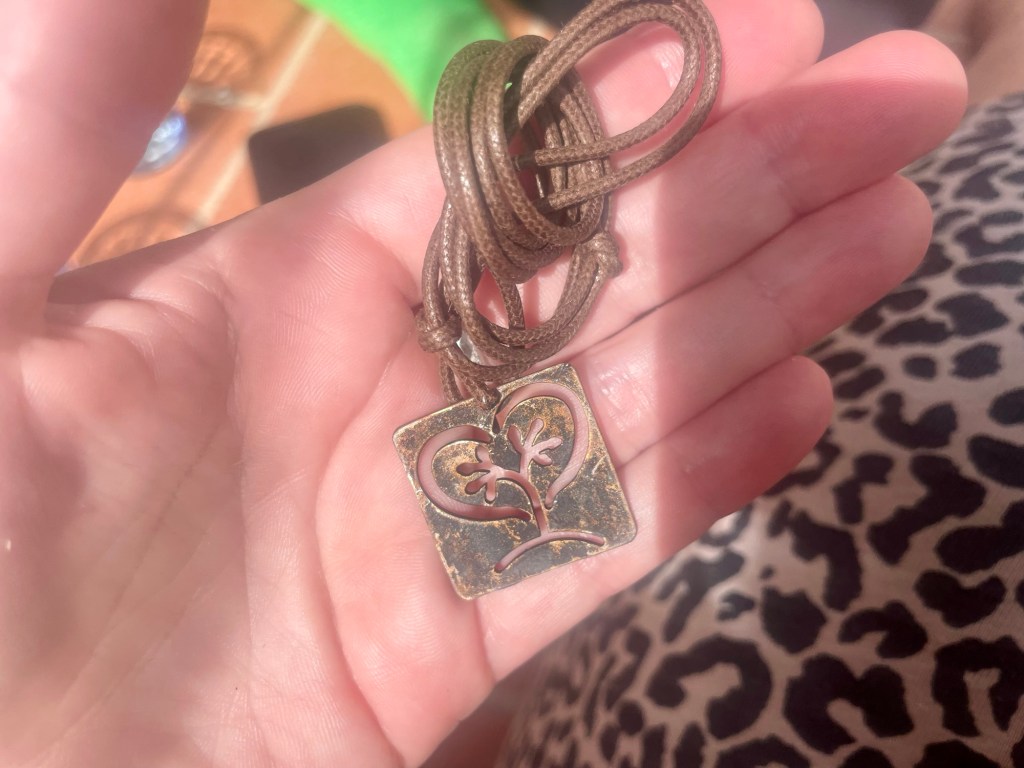
    Back outside, Alina gifted me a beautiful artisanal necklace that she had bought which depicts an almond tree. The accompanying card contains a quote from Luigi Verdi,

    ‘Like the almond tree, you are the first to flower and the last to give fruit.’

    ‘It reminded me of you and your Dante book,’ Alina explained. ‘You’re flowering now, and you have to trust that the fruit will come.’

    On the way back, Massimo took us to the supermarket, kindly relieving us of the one hour hike up to Casalino we had done yesterday which would have been strenuous with shopping bags, however beautiful with its surrounding fields and pathway through the ‘park of endangered fruit trees’. Alina had experienced foot cramps on the steep hill and so we’d stopped to record our podcast overlooking the fertile valley which was lit up by the sunshine like a strip light over a painting in a gallery. 

    I bought Massimo a little succulent with three buds,

    ‘It’s us,’ I said. 

    He blinked a few times and smiled.

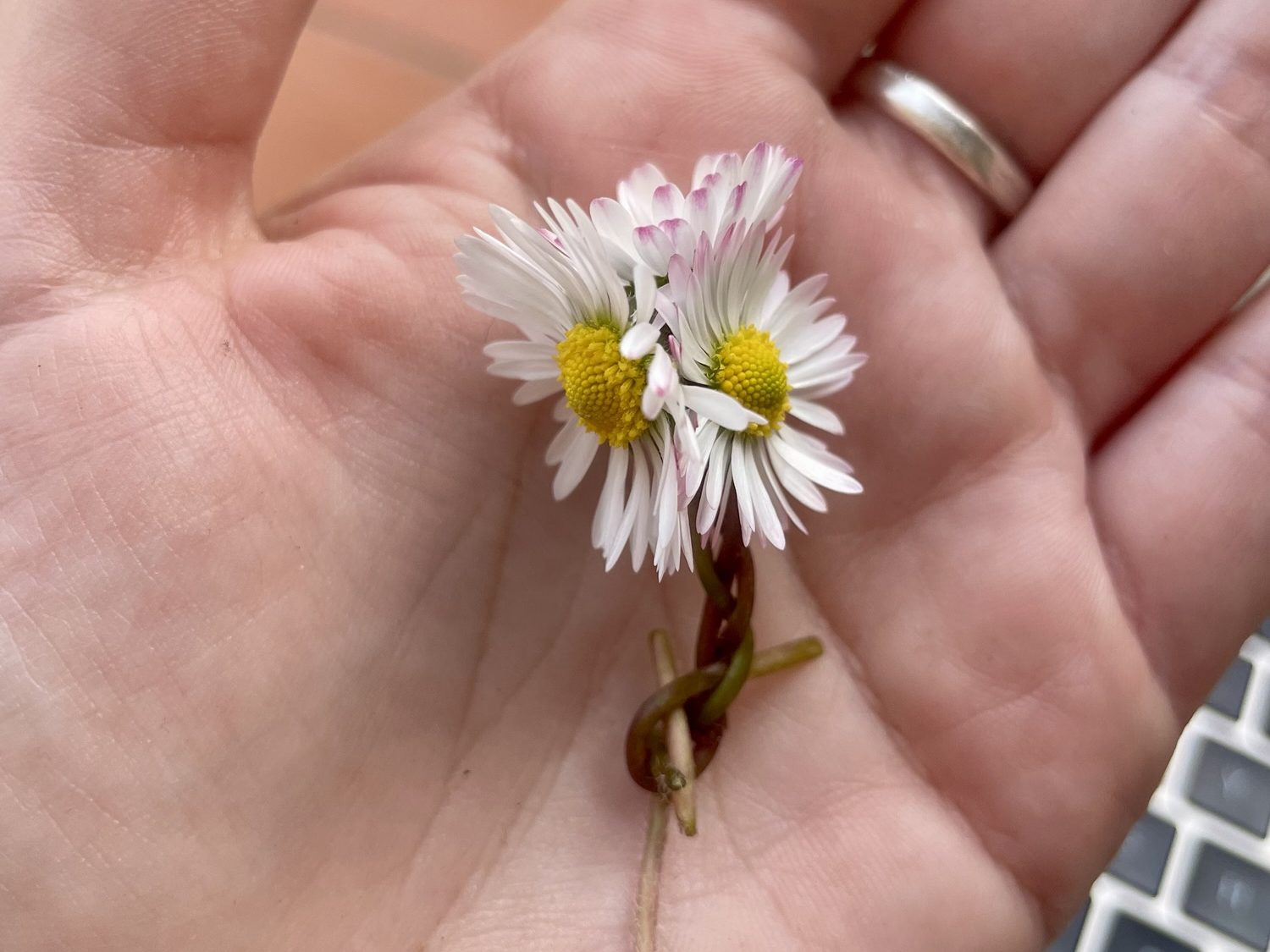
    Back at our air b and b we had an aperitivo with a selection of regional cheeses and made daisy chains in the pretty garden which we accessed from our apartment, number 74, via terracotta steps. 

    Alina’s method involved plaiting the flowers together whereas mine relied on poking holes in the stems and threading them through. I was thrilled to do this since as I child I bit my nails and was unable to do so. 

    I was reminded of Dante’s dream in Canto 27 of Purgatorio where he encounters the Old Testament characters of Leah and Rachel who were traditionally interpreted allegorically by the Church as figures of the active and contemplative life. Dante writes,

    ‘… in my dream, I seemed to see a woman
    both young and fair; along a plain she gathered
    flowers, and even as she sang, she said:

    “Whoever asks my name, know that I’m Leah,
    and I apply my lovely hands to fashion
    a garland of the flowers I have gathered.

    To find delight within this mirror I
    adorn myself; whereas my sister Rachel
    never deserts her mirror; there she sits

    all day; she longs to see her fair eyes gazing,
    as I, to see my hands adorning, long:
    she is content with seeing, I with labor.’

    We drank hot water, a habit Alina had picked up in her decade in China. She looked lovely in a forest themed patterned cotton top and trousers made by her fashion designer mum.

    ‘How have you packed all this into such a small bag!’ I exclaimed. ‘You’d make a good refugee.’ 

    We both laughed. This is the kind of dark humour that keeps me sane.

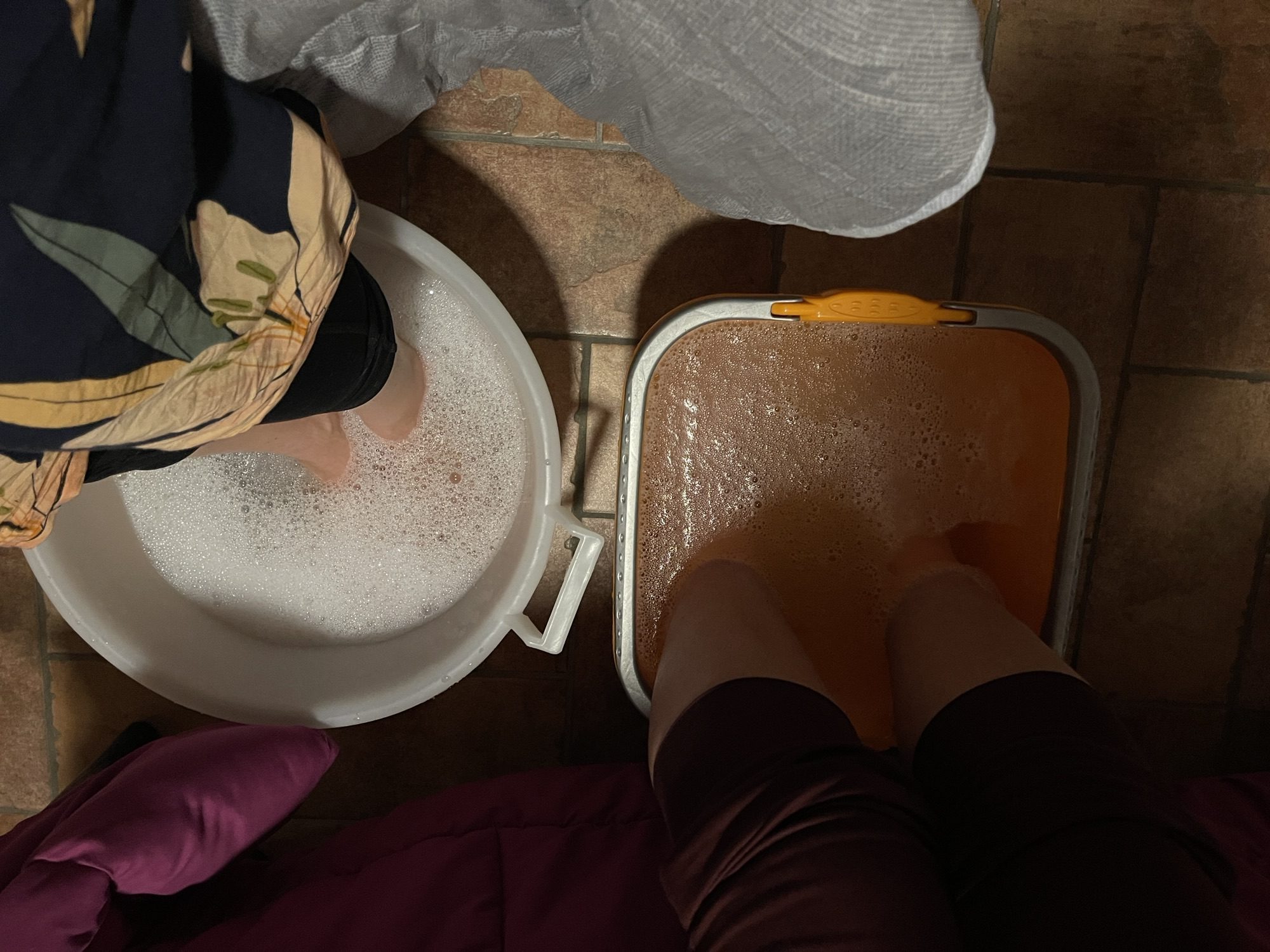
    After a simple dinner of spaghetti and green beans, we were delighted to discover not just a bin but a bucket and washing up basin into which Alina and I placed our aching feet in hot soapy water as has become tradition.

    Before bed, we sat outside and contemplated the full moon. 

    ‘You know no woman has ever walked on the moon?’ I said

    ‘Yet,’ replied Alina. ‘Who knows what wonders the future holds.’

    I held my necklace in my hand and made a wish. 

    Recommended listening: music by Massimo Kyo: https://open.spotify.com/artist/72MZKpGf1ARioeXiHAWXCw?si=4CfTY_SbTk2KGSCMCRCPWw

    Recommended listening: the music of Granmaria Testa: https://youtu.be/4f_4HW340Cw?si=JRfV45WqVPUDwt0B

    Recommended using: Nardo oil: https://en.wikipedia.org/wiki/Spikenard#:~:text=Spikenard%2C%20also%20called%20nard%2C%20nardin,Nepal%2C%20China%2C%20and%20India.

  • Mushrooms, Bees and Fallen Leaves: Montemignaio to Castel San Niccolò

    The Tuscan landscape with its dandelions, daisies and cultivated fields has echoes of Ukraine where war still rages on.

    Today we woke up leisurely and made the 13-kilometre trek to Castel San Niccolò from Montemignaio. 

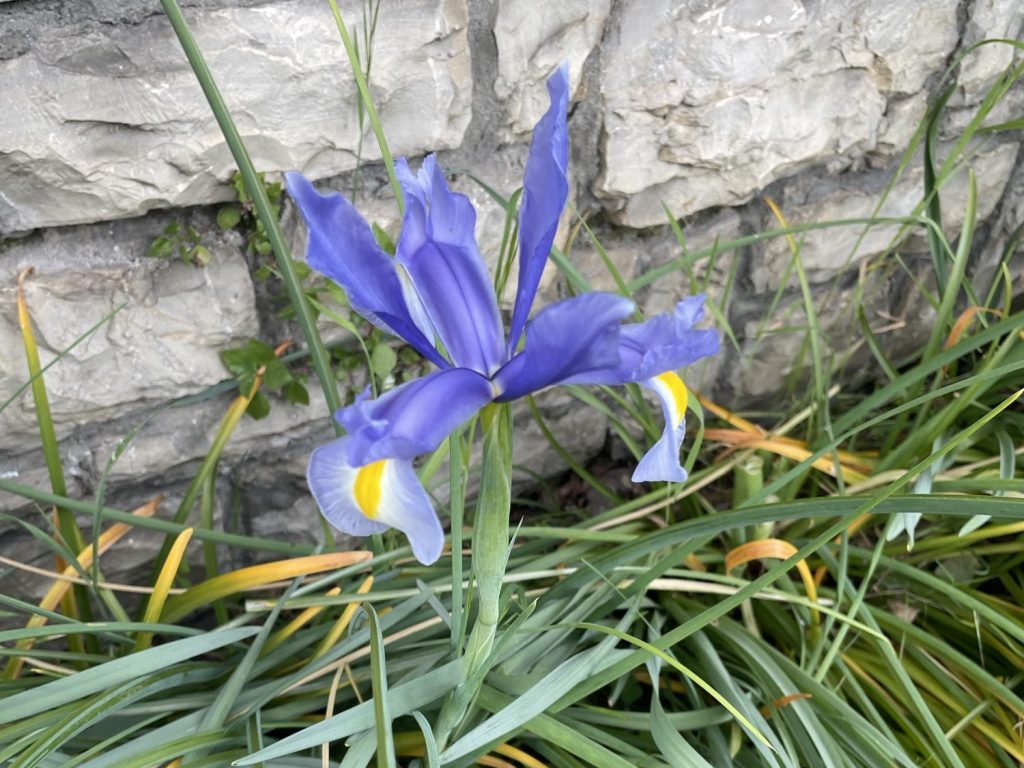
    As we munched on basil pesto on toast for breakfast, Alina showed me videos from the cities of Ukraine, Lviv – city of the lion, and of the epic landscape of the Carpathian Mountains. She has been commenting a lot in the last three days on how the landscape reminds her of Ukraine: a dandelion, a freshly ploughed field, an iris tentatively spreading its pastel petals in the Spring breeze. 

    The emotion is raw. Watching the camera pan over the hills and churches we both had tears in our eyes. 

    ‘We’ll go and hike there one day’, we both agreed. 

    Alina is getting a taste for the sweet ache of long-distance walking.

    She’s hardly hiked before and her life in Italy is largely restricted to Rome where she runs the holistic creative agency Sensi and fights to thrive in a context that would have her live on a meagre allowance a month. This is money incidentally that hasn’t even reached her account in recent months because of bureaucratic delays. She’s nothing if but a fighter. As she hopped over logs today in soggy trainers she was on the phone doing business. 

    ‘This walk is like metaphorically walking through my homeland’, she remarked today as the rain began to fall and the scent of freshly cut grass and quarry dust mingled in the air. 

    The first part of our walk was uphill through dense forest. The leaves that blanketed the floor crunched beneath our feet. They were interspersed with primroses the colour of Sicilian lemons, violet flowers and patches of moss an emerald shade of green. 

    Some of the trees seemed strangely out of place with their brown flesh shedding into the wind. 

    After talking with Alina about the war this morning, I was reminded of the poem ‘Soldati’ by the Italian poet Ungaretti:

    ‘They hover like

    The leaves 

    Of autumn

    On the trees’

    Si sta come 
    d’autunno 
    sugli alberi 
    le foglie.’

    I remember I was given this poem at my interview at Oxford University when I auditioned to read French and Italian. I was quite stunned to read it then and it moves me now in its simplicity. The verb ‘stare’ connotates a sense of temporariness that I’ve tried to capture with the word hover in my translation. 

    ‘How do we mourn so many dead?’ asked Alina.

    ‘I feel like this trip is a very healing space. Like we’re doing it here but the impact touches back home.’

    As we were speaking, a Whatsapp message pinged into a group I share with university friends. 

    ‘Will’s been got!!!’ It read.

    Will is the co-head of the charity Greenpeace UK and one of my dearest friends. It transpired that he had been arrested for pouring biodegradable blood-red dye into a pond outside the US embassy in London. He was among five people put in cuffs when the large pond outside the embassy was turned red in what Greenpeace said was a protest at the US government’s continued sale of weapons to Israel.

    Will had been arrested on suspicion of conspiracy to cause criminal damage, which carries a maximum sentence of 10 years in prison. Four other activists were also arrested near the embassy.

    I’ve become used to friends being arrested in the last two decades. A lot of my acquaintances are activists and I’ve come to know the deep belly fear of not knowing how the UK’s increasingly repressive government will punish them. Once, we recorded a whole audiobook for my friend Danni, fearing the worse when she was on trial for ‘aggravated trespass’ for occupying a runway to protest climate change and the new Heathrow runway. Luckily, she got off, but the terror was real. 

    How, my mind repeated. How do we mourn so many dead. 

    The chestnut shells were crispy at our feet, their hairy bodies split open by the footsteps of previous pilgrims. Though it must be said that whoever had come before us also had their work cut out. The path today was riddled with fallen trees and prickly thorns that sought to impede our route. We only got lost once, a move remedied by a twenty-minute dance over dead trees and waterfalls. I went ahead, whistling to orientate Alina with my two fingers tucked tightly into my mouth the way my Granny taught me as a child.

    As we approached another ascent, we played 90’s pop songs on our phones to maintain our mood. And then came the relief of the classic anthem by Paul Johnson, ‘Get Get Down’. And down we went, tottering with aching feet on the rocky terrain. 

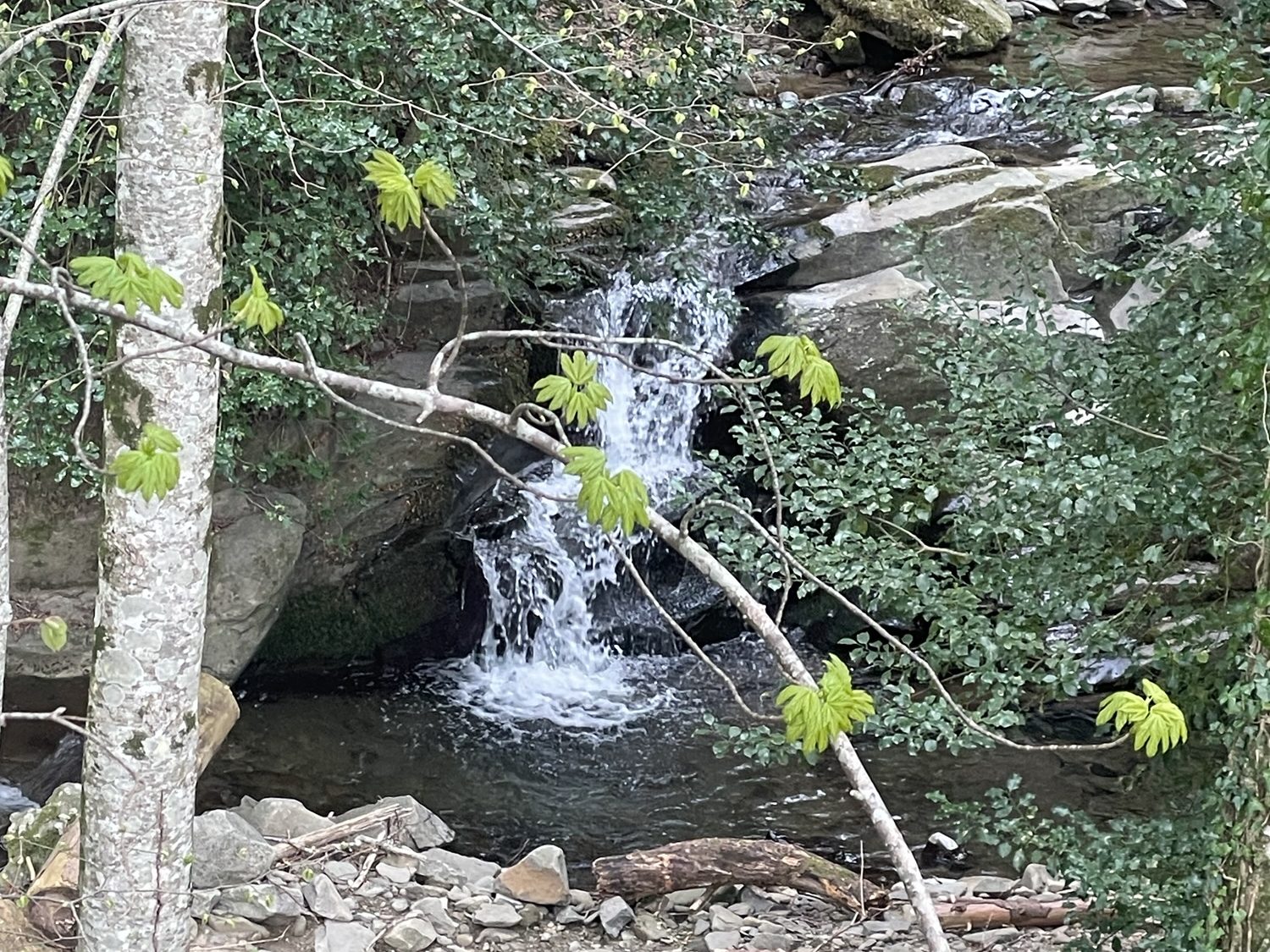
    The sound of flowing water accompanied us today as we passed by numerous cascades and then arrived at the river. The town of Prato di Strada is well named – it is quite literally ‘lawns’ by the side of a major ‘road’ with the river bubbling by to the right of it. Stones line the sides of its path, worn smooth by the flow of the years.

    To look up was to see tin beehives in multiple colours and stone terraced houses tucked neatly into the folds of the hills. Smoke rose into the grey sky from farmhouses lacing the air with the scent of charred oak which was mingled with manure. 

    As we trod the difficult terrain Alina repeated her refrain, 

    XiaoXin (小心) – careful! 

    It literally means ‘little heart’ in Mandarin Chinese.

    We talked about how we both use these little phrases stolen from the various countries we have lived in. I say ‘oopla’ like a French woman when I tumble and ‘Alhamdulillah’ when we re-find the path from which we’ve strayed. Once I thanked Allah at a dry cleaner in Queensway, London after they managed to get a particularly difficult stain out of my then husband’s trousers. The Moroccan owners were so tickled they offered me the service for free. This is how we move through the world as global citizens. 

    Alina lived in China as a fashion designer for ten years before the war when she moved to Rome as a refugee. Like Dante, she was made an exile in absentia. Yesterday she’d told me about the richness of her experience in fashion and production: an apprenticeship at Alexander McQueen in London and then years spent in industry in China and the Middle East, including – a stint that tickled me – designing costumes for humans and animals alike for the world’s largest circus,

    ‘You know it’s quite a feat to measure the inner thigh of an elephant,’ she quipped. 

    The extraordinary variety of scenery we have passed in these three short days gives a sense of the topography of Dante’s Hell: towering banks from which he and Virgil stare down at sinners; streams made sinister by the force of gravity that has the water hiss like a serpent as it falls. 

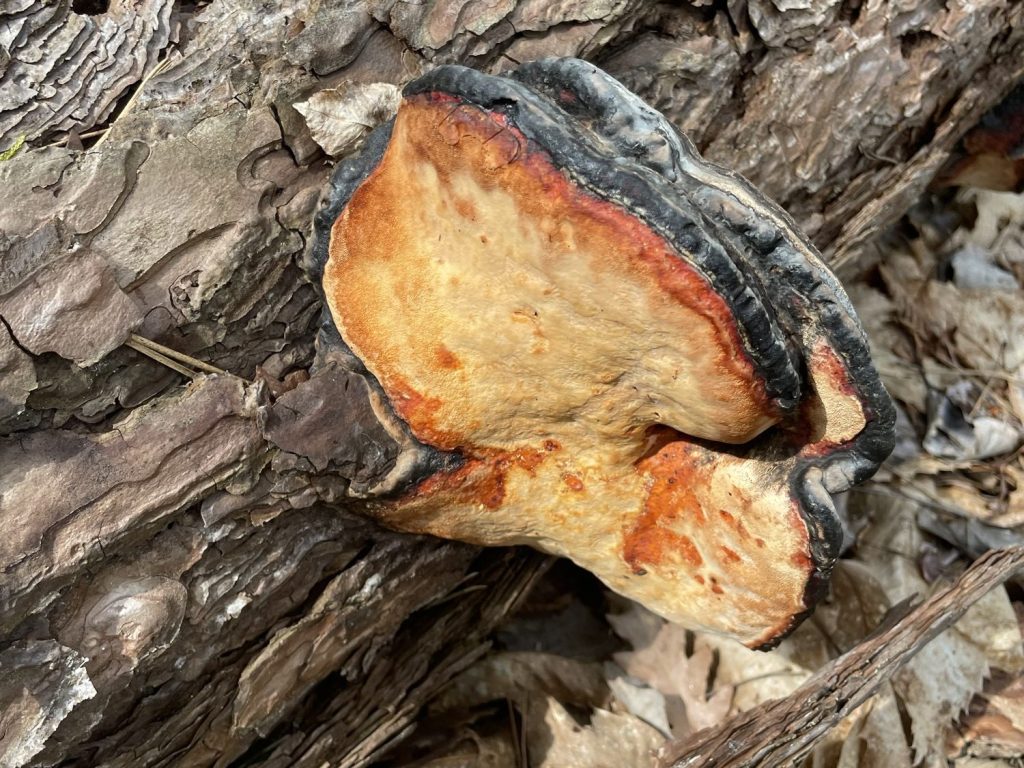
    He makes little mention of the vast array of neon mushrooms, palm sized lizards. The ubiquitous caterpillars and butterflies are also absent from his infernal landscape. 

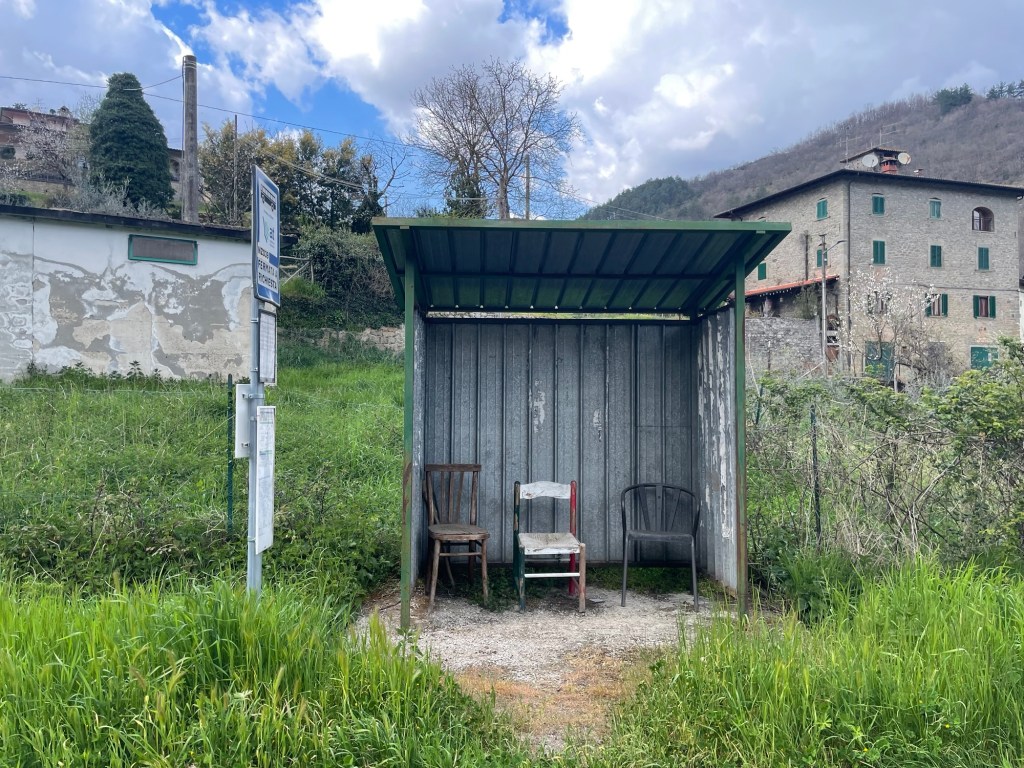
    We passed by horses in a field. A bus stop casually erected with three unmatching chairs beneath a tin canopy. We hugged the river until we arrived at our destination of Castel San Niccolò from where we faced another up-hill hike to our air b and b.

    At the end of the second part of the Divine Comedy, Purgatory, Dante drinks from two rivers, the Lethe and then the Eunoe. I wondered whether the River Solano with its gentle banks had inspired him. Today it is hard to access due to the phalanx of ‘no fishing’ signs. 

    We went a bit wild in the grocery store and purchased local pecorino, marinated artichokes and some Tuscan ribollita, a soup made with left over vegetables and stale bread typical of Florence. The server was tickled by the way Alina and I spoke to each other in a mix of Italian and English. When we arrived back at the house to unpack our spoils, we found she’d tucked in some extra aniseed buns, on the house. 

    Many people greeted us in the town,

    ‘Salve!’

    ‘Buon cammino!’

    Anna’s house’, was hard to find but once we arrived it afforded rewarding views of the valley and surrounding town. I sat on the doorstep with a cup of tea as Alina snuggled her slim body into the window ledge, reading out loud from the copy of Paradiso that was tucked into one of the bookshelves. 

    ‘What’s the Empyrean?’ she asked. 

    In Dante’s cosmology, the Empyrean Heaven, Empyreal or simply the Empyrean, was the place in the highest heaven.

    Speaking of heaven – though somewhat less glamorous. In the absence of a bathtub, as Alina read on contently in her nook, I took out one of the recycling bins and filled it with hot water.

    Adding some shower gel, I slowly placed inside, one by one, my aching feet. The top of my toes were raw with blisters and my heels appeared to have swelled in size from the rub, rub, rub of my walking boots. The feeling of the warmth gave me an immediate dopamine boost and I heaved a peaceful sigh. 

    Alina had put on music. 

    Leonard Cohen’s ‘Famous Blue Raincoat’ rang out into the evening air as swallows circled the sky and a neighbour’s cat walked curiously by. 

    ‘Every house should have a copy of the Divine Comedy,’ Alina said.

    Recommended reading: Activists disguise as delivery riders to pour blood-red dye into US Embassy pond in London: https://www.standard.co.uk/news/london/met-police-blood-red-dye-us-embassy-pond-israel-arms-sales-london-b1221715.html

    Recommended viewing: video of the Ukrainian Carpathian Mountains: https://www.youtube.com/watch?v=gBW7EFfYGI0

    Recommended listening: Leonard Cohen’s ‘Famous Blue Raincoat’: https://www.youtube.com/watch?v=ohk3DP5fMCg

  • Living Well and ‘Leidenschaft’: From Pieve a Pitiana to Montemignaio

    The way up was steep, but inspiring company and a delicious supper awaited.

    I awoke at 2am to refuel the log burner in the community arts room where we were lodging and there followed a difficult but warm night of sleep. My day started at 7am when I rose to write and check work emails. It felt like breathing a new kind of air to have the time to write as the birds chirruped outside the window. 

    At 9am we were packed and having a breakfast of cereal and yoghurt with Stefano and his youngest son. My placemat read, ‘today is a good day to…love nature’. It felt prescient. 

    Alina and I said our goodbyes to our hosts and headed uphill for what was supposed to be a much easier day of the cammino. 

    The sight of the church slowly disappeared from view as we climbed up the road which hugged sinuous vineyards. After yesterday’s experience and reflection on Dante’s wood of suicides, I found myself noticing each tree and wondering what kind of soul would be trapped within it. This one, here, with its gnarled roots and stubby fingers; and there, an oak with its sturdy frame. 

    Although the path uphill was quite straightforward, we missed a turning and ended up in the small, deserted town of Saltino (the official and much shorter route threads an arch to the side of it.).

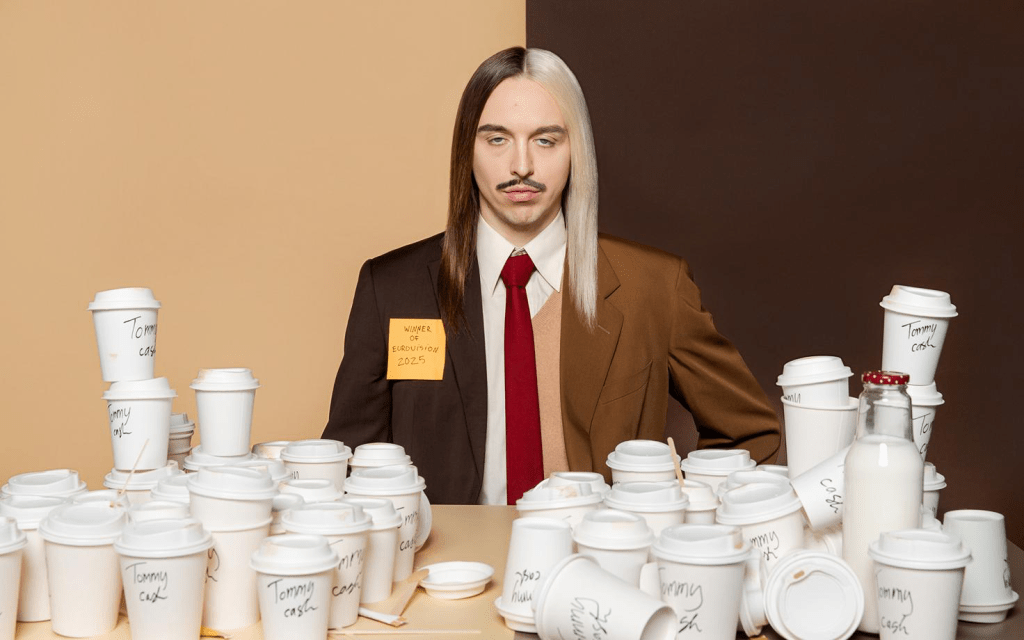
    The village appeared post-apocalyptic except for a bar where a lady with bleach blonde hair served us drinks – a cappuccino for Alina and an espresso macchiato for me. Alina introduced me to the song, Espresso Macchiato which is this year’s Estonian Eurovision song context entry.

    ‘Life is like spaghetti, it’s hard until you make it,’ sings Tommy Cash. 

    Eurovision has always been a big part of my life. I love the campness and the way that the heavy burden of nation states and regional strategizing is rendered playful, all accompanied in England by the teasing commentary of TV personalities Graham Norton and the late Terry Wogan. My sister-in-law, Jenny, is Swedish, and, in Sweden, Eurovision means business!

    In recent months, after making a new year’s resolution to spend more time with my niece and nephew in light of the realization that I likely won’t have kids of my own, I’ve been driving the two hours in my blue Mini every month to visit them. This has included joining them in watching the Swedish nationals where viewers vote for this year’s entry. It’s a hyper produced show and luckily you don’t need to speak Swedish to enjoy it. I felt a stab of pride as my 12-year-old niece Louisa fluently translated the commentary for me. Oh, to be raised bilingual.

    The winner of this year’s Swedish nationals who will travel to Basel, Switzerland for the competition in May is the Finnish band, KAJ, whose song, Bara Bada Bastu is about the joys of the sauna. It’s a catchy, extravagant number which will, for sure, give Estonia a run for its money. 

    Now here comes a fun fact I bet you didn’t know. Eurovision song contest entries don’t have to be from the country they represent. In 1988, Canadian artist Celine Dion represented Switzerland and won with the banger, ‘Ne partez pas sans moi’. Check out the video – she sports a tutu and a military jacket, quite the contrast to her sleek performance at the 2024 Paris Olympic Games (yes, I cried at it too). 

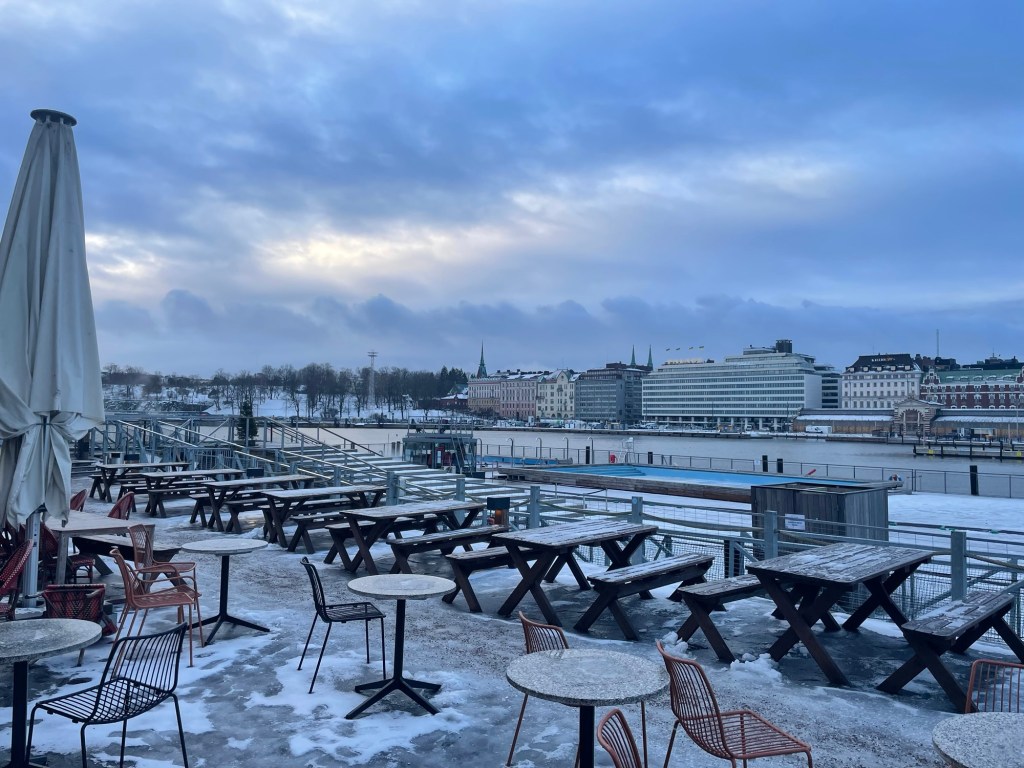
    I had the opportunity to travel to Finland myself in November last year during a research project for Save The Children on violence against children at EU borders. Between interviewing refugee children in reception centres, I had the pleasure of indulging in my own sauna experience. After singeing my skin red, I dived from Helsinki’s dock into the ice-cold ocean. Well, I say dive. In reality, I awkwardly and tentatively made my way down the metal steps until my body was under. Then my neck. Then my head. 

    Whoosh. The feeling was intoxicating, something between an orgasm and being burnt at the stake. I can see why the Fins are such a prosperous nation. 

    Saunas are such a big part of Finnish life that even one of the reception centres I visited had a sauna where a 17-year-old Colombian girl who was waiting on the result of her family’s asylum application told me she liked to spend time with her friends. I could imagine the Daily Mail headlines – ‘now SAUNAS for refugees!’ It made sense to me. It was freezing cold and in Finland, sauna equals life.

    On our departure from the town up to Vallombrosa we passed a sign warning cars to slow down for migrating frogs. 

    The expansive abbey loomed over the surrounding landscape which included an empty water feature which was also signaled, ‘no fishing’. Italians in these parts seem to really like their public signs. 

    ‘Sti Italiani!’ repeated Alina with her Roman lilt.

    From there it was a steep climb up what seemed like one thousand stone steps which looked over one of several waterfalls we would cross today. Each corner of the cliff was marked by a little shrine. 

    At the start of Dante’s journey, he meets three beasts in the woods: a leopard, a lion and a female wolf that represent his fears. Readers have argued for centuries about what they signified for him – pride, lust, greed? 

    As we climbed, we distracted ourselves by discussing what our three beasts would be. Mine were fear of dying without realizing one’s talents and potential, perfectionism, and the terror that assails me from time to time that I might not be the good person people think I am. Alina is a Jungian. She reminded me, in a chastising tone, that ‘we all have shadow selves. Me, I can’t get enough of you.’

    We are recording parts of our conversation as we walk for a future podcast since, to add to her already impressive portfolio of creative talents, Alina is currently studying sound design. As I adjusted my bra strap to ease the rub of my backpack, the portable microphone Alina had brought with her nearly went careering over the steep edge. Luckily it just fell a short way into the leaves where is disturbed a dozing lizard. 

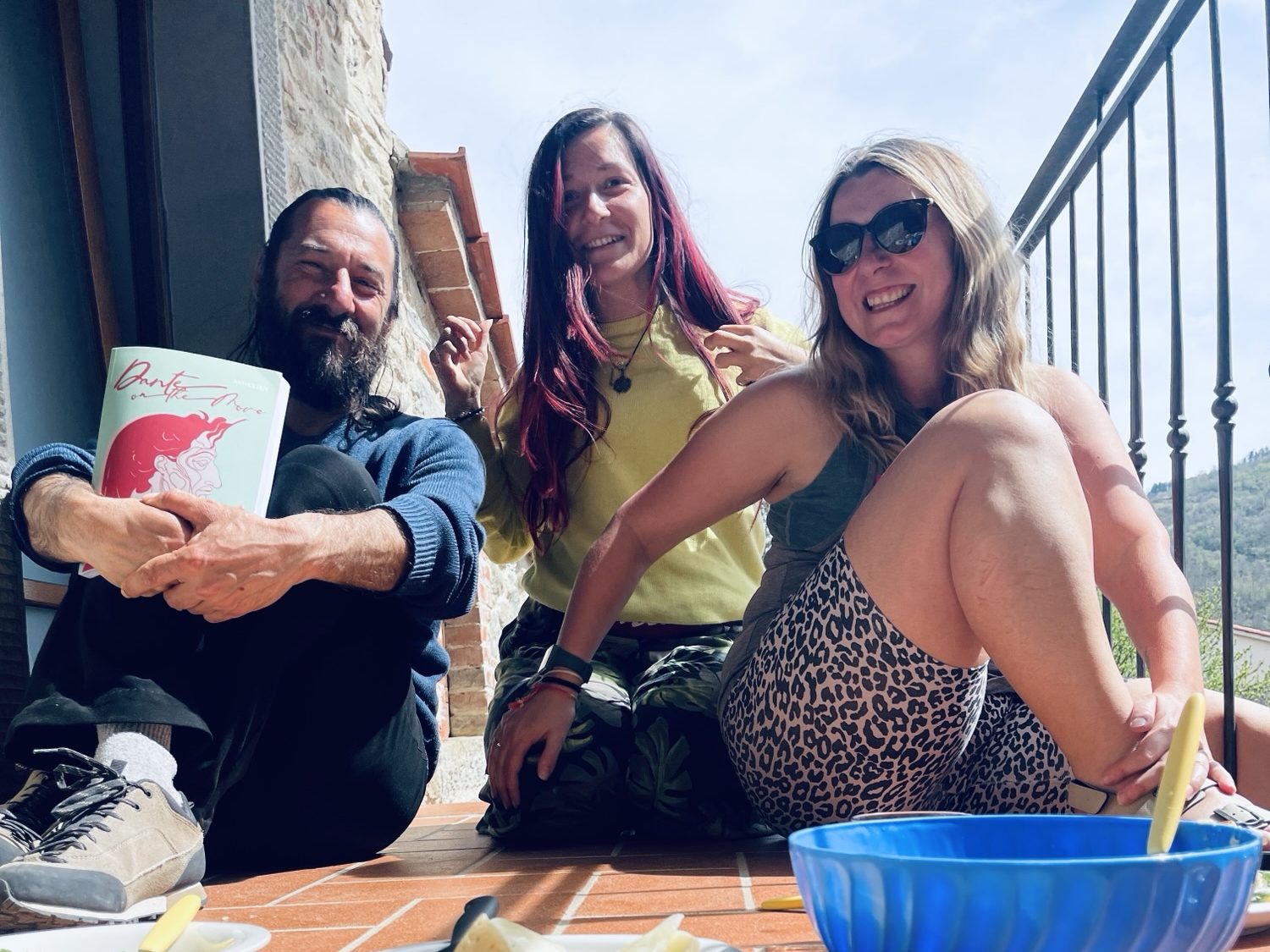
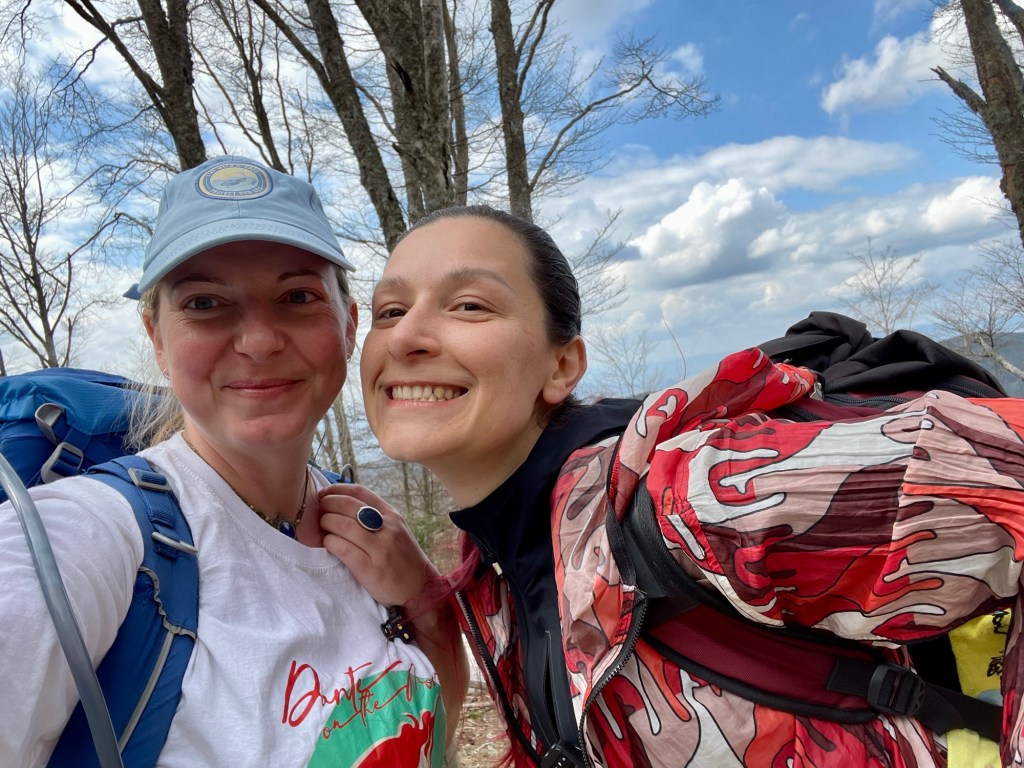
    Alina and I have different body temperatures. I was sweating into my t-shirt, a gift from her which read Dante On the Move after our anthology of the same name, while she was wearing two jackets with a yellow jumper the colour of primroses tied around her neck like a scarf. 

    ‘This was meant to be the easy day!’ exclaimed Alina.

    We were rewarded with sweeping views across the surrounding hills. Then came the steep descent. It felt like we were walking down into Dante’s Inferno, each circle lined with ridges from which I could imagine Dante and Virgil looking down at the sinners below. 

    The sound of a stream accompanied our pilgrimage. 

    Animals have been a big part of our trip: we stop to pet every cat and salute every barking dog. But upon entering the town of Montemignaio we were greeted by two friendly sheep.

    ‘Salve!’ cried the owner who was walking them along a small lawn which was dotted with daisies. 

    ‘Buona sera’ we replied.

    ‘Would you like to see where they live?’ asked the friendly lady. We did.

    There followed an extraordinary evening.

    First, Anna showed us the beautiful paddock in which the sheep resided at night to protect them from local wolves. It was built to specification, she proudly declared, by a shamanic Venetian man who spent three years alone in the virgin forest of Bolivia, where he acquired much of his knowledge and wisdom. Inside the straw was fresh and dry and the circular structure had a domed ceiling crafted with all the care of a Florentine cathedral. Alina and I joked that we could have happily spent the night there instead of continuing to our air b and b. 

    Then came the chickens, equally spoiled in a bountiful enclosure on the hillside, made out of all organic materials.

    Anna had a way with the animals. She hugged them to her chest with a filial warmth. 

    As we were petting the sheep, a handsome stranger wearing an embroidered scarf and long leather boots made his way through the front gate to join us.

    ‘Ciao, Anna!’

    ‘Ciao, Matthias!’

    They embraced.

    Matthias, it turned out, was a fellow German. A writer who had moved to Montemignaio some eight months ago where he now runs a hostel for pilgrims, Frate e Sole

    ‘So, you’ve met the wonderful Anna!’ he exclaimed. 

    They clearly had a bond. She traded with him ‘happy chicken’ eggs, fresh vegetables from her garden and her homemade walnut liquor. 

    When asked about what we would be eating tonight, we replied that we hoped to pick something up at the village shop. Anna and Matthias exchanged raised eyebrows. 

    ‘But it’s Wednesday,’ came their response. As if, of course, logically, on Wednesday the shop would be closed.

    ‘Sti Italiani!’ repeated Alina playfully.

    We were contemplating the prospect of dining on unsalted bread and cereal bars when Matthias invited us to spend the evening together. 

    ‘It will be a simple fare, but healthy,’ he counselled. We were in. 

    Matthias bid us farewell for now and Anna invited us in. 

    Next to a beautifully landscaped vegetable garden sat Anna’s home, an old stone building which she’d had renovated. When Covid hit in the year 2020, she had relocated from her native Germany.

    It was simple but spectacular. Every room was full of ornate bespoke wooden furniture that had been made for her great grandfather – a wardrobe, desk, sideboard – all had been shipped over at great expense from Germany. Anna was in no two minds. This was now her home. And she was ‘living well’ here.

    Over the next hour, Anna shared insights from 82 years of life experience as we listened eagerly to her perfect English. Though she was born in the war in 1942, she looked not a day over 60. She radiated peace around her. The secret to being happy, she advised us, is to be grateful and to live in the moment. Her home had a traditional Etruscan metal handrail and organic earthen tiles the colour of doves. 

    In one room there greeted us the sight of marinating eggs and vegetables, in another vegetable seeds sprouted in tiny pots and here, in the bathroom, were a range of tinctures and ointments that she had made by hand. She showed us her traditional copper Florentine bed and her office which consisted of a shelf with an old Nokia mobile phone, an address book and a paper and pen. 

    ‘This is why I look young!’ she chortled, entreating us to follow her into the next room which contained a small library and more budding seeds. 

    It turned out Anna carried the seeds around with her throughout the day to make sure they were always at the optimum temperature,

    ‘This is my little kindergarten’ she explained with glee. ‘Right now, some are sleeping but tomorrow, who knows!’

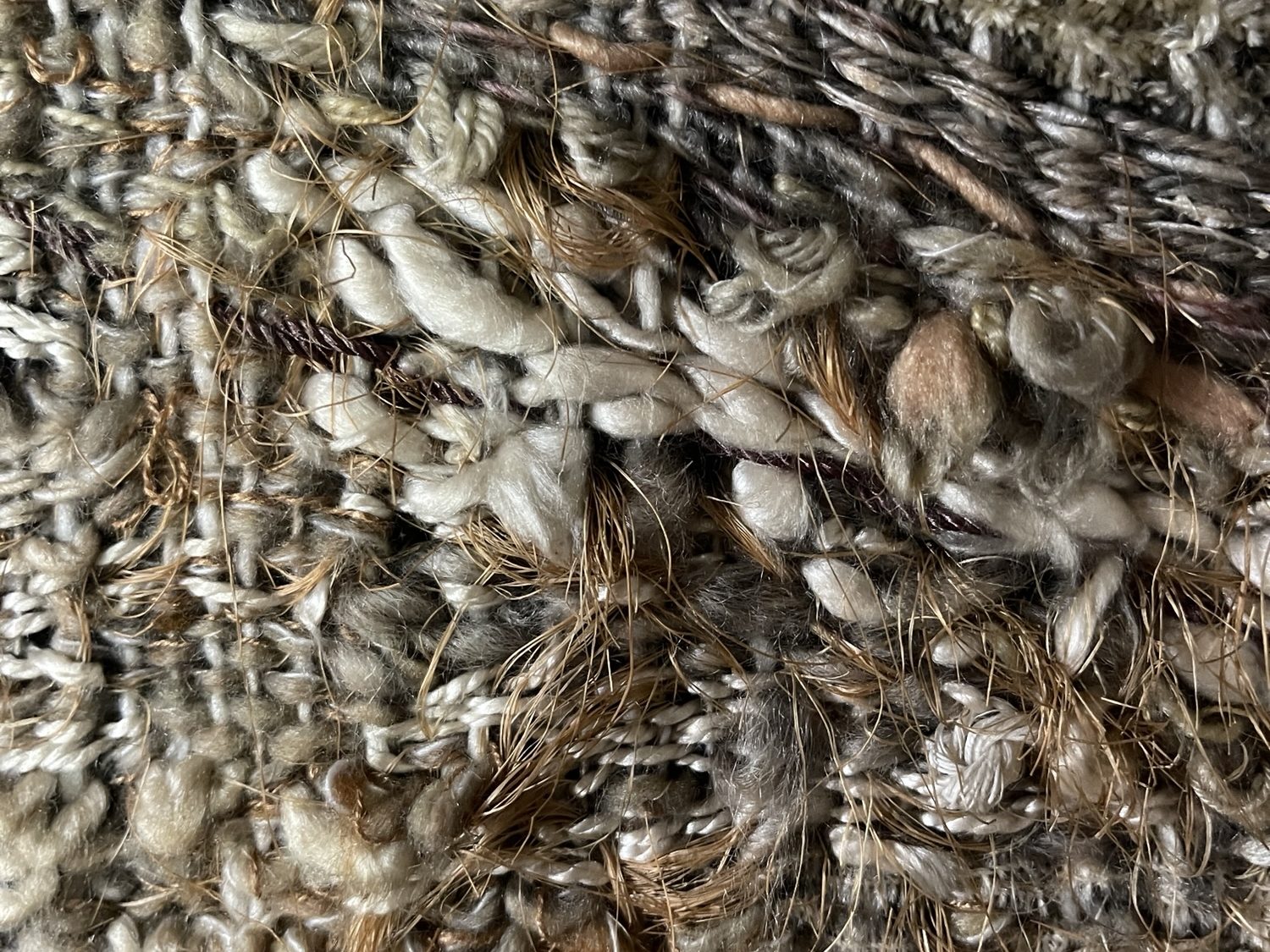
    Anna shared with us some of her prized possessions. A steel candlestick holder from the war, a signed Zingarelli Italian dictionary and a book she had made herself with thick marbled Tuscan paper containing photographs from her collection – she was an artist too, it seemed. Alongside each photo was a short description which mindfully described the scene. One showed a rag rug made out of old textiles.

    The accompanying text which was tucked into a pocket, sewn into the page of the book, read:

    ‘After

    All those clothes

    Sewn, worn and torn,

    After being woven into this mat,

    After the passage over it

    Of so many feet, big and small…

    Now, finally:

    Loosen the grip,

    Gracefully dissolving

    Into a harmony of fading colours’

    Anna was dressed like a farmer in a pink jumper and dungarees and she had circled her eyes with a turquoise eye liner. It looked magnificent. It reminded me of my late Italian teacher, Andi Oakley, who would line her eyes in a glittering violet hue.

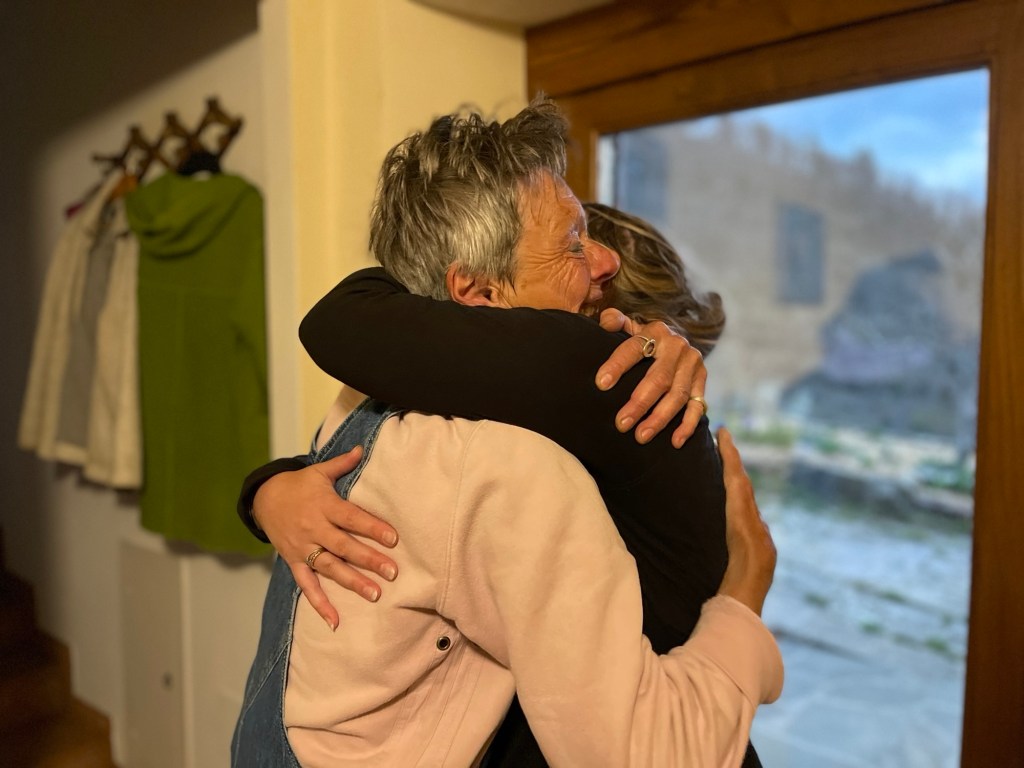
    As we parted ways, Anna gave us a bottle of her homemade walnut liquor and a dozen eggs and hugged us the way I haven’t been hugged in a long time. Her arms, strong with the labour of running her little farm, held me tightly while her calloused fingers caressed my back. 

    Of course, we were late to dinner, but we knocked on the way down and gave Matthias the heads up. 

    ‘We’ve been with Anna,’ we explained, and he immediately understood.

    After a quick turnaround, we arrived at his homely place where he’d lit a roaring fire. We found a table set with plates and crystals that glowed in the throw of his Himalayan salt lamp. The green man watched over us.

    While Anna’s walls had been bare, here art and tapestries occupied the space: Monet, Van Gogh, Kandinsky. I was quite impressed that, between us, Alina and I managed to identify nearly all of them. Next to the fire was a bible. Matthias had moved to the town after doing the St Francis’ Way, or the Via di Francesco, which runs from Florence to Rome and shares some of the same route of the Cammino di Dante, including passing through this magical town. 

    Matthias explained how he sought to integrate the teachings of Saint Francis into his own life: living simply, staying humble, being kind to those in need (and saving hiking strangers from starvation because the bloody shop was closed.) He made his money writing short stories for German magazines. 

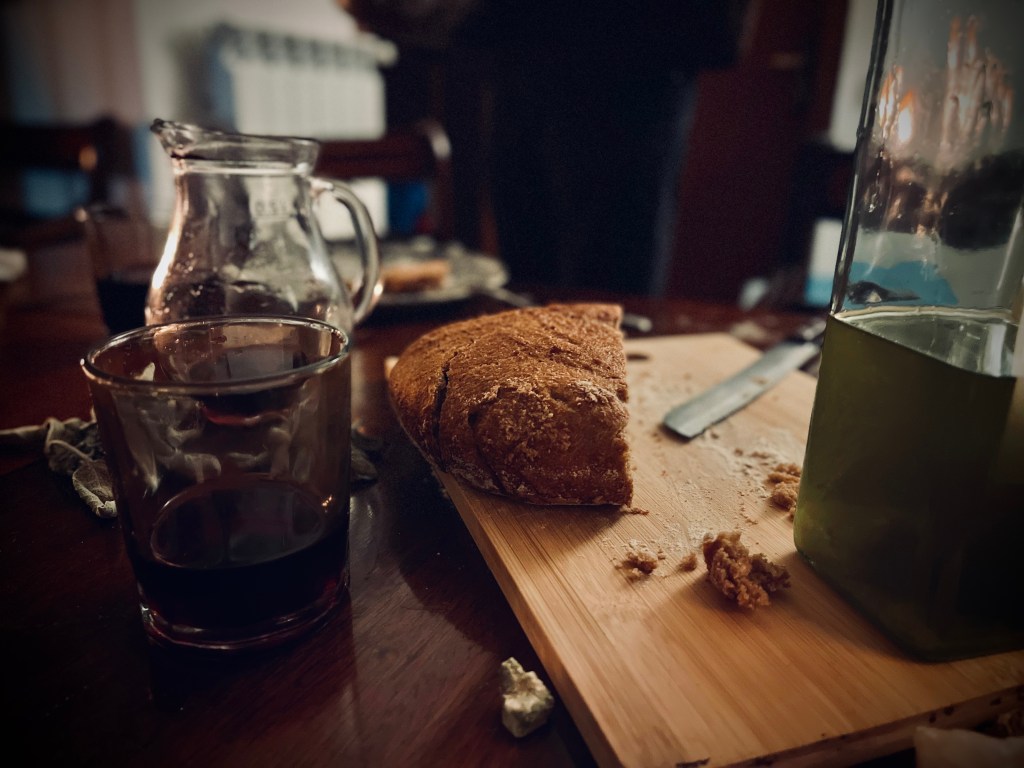
    We ate a delicious but humble meal of homemade bread which he’d taken 24 hours to prepare using a local method he’d learnt from Anna with flour from the local mill. The salad contained fresh beetroot and the garlicy local leaf known as ‘erba orsina’, a name that refers to the fact that a bear (orso), awakening in springtime after his winter sleep, goes for this herb in order to get strong and potent again.

    We discussed our mutual love of Erich Maria Remarque (Alina) and Stefan Zweig (me) and Alina read one of the poems from her new collection called, Why Do We Choose To Suffer. We discussed the meaning of leidenschaft – as artists, there is passion in a certain kind of suffering, we agreed.

    This was something our feet knew all too well as we climbed back up the hill to the welcoming Agriturismo di Mela where we were greeted with milk for our morning coffee, supplies for an emergency dinner – which thankfully we didn’t need – and soft sheets. 

  • In the Distance: Florence to Pieve a Pitiana

    Renaissance paintings line the route, but be wary of getting lost in the wood of suicides.

    Though I remain determined it is what Dante would have wanted, starting my pilgrimage in Florence, Dante’s birthplace, rather than his site of exile and death, Ravenna, had the drawback of beginning with what is said to be the hardest day of the cammino: 30 kilometres with an ascent of 895 metres. Though I’ve been training back in the UK in the Peak District near my home, I was somewhat daunted as to how the day would unfold.

    I woke around 7am to the sound of birds singing and the chiming bells of Santa Spirito, the ‘church across the river’. I left Anna and her family sleeping soundly as I packed up my bag and tried discretely to exit the jewelry studio through the glass double doors that opened onto the quiet street. Succulents a hue of pink and green occupied window boxes along the cobbled passage into which the sun was sneakily smuggling its first rays of the morning. 

    In Santo Spirito square the market sellers were already setting up their stalls: leggings, knickers, pot plants, copper bracelets and beaded earrings the size of oranges. Two dogs – one caramel and fluffy, one white and slick – frolicked by the central fountain while their owners puffed on cigarettes and made casual conversation.

    I took an espresso macchiato and looked across at the church. Among other delights, it contains the Madonna with St. Catherine of Alexandria and St. Martin of Tours by Filippino Lippi. The altarpiece is also known as Pala de’ Nerli from the name of the commissioners, Tanai de’ Nerli and his wife Nanna, who are shown in donor portraits at the sides – the Renaissance equivalent of a selfie. 

    The painting was commissioned by the church in 1494, so some 100 years after Dante walked the squares of Florence. Lippi’s style is sensual. Gone are the 2D Giotto era portraits of Jesus looking like an adult squeezed into a baby-sized body. Lippi was a contemporary of Botticelli whose fleshy Madonnas continue to mesmerize visitors to the Uffizi with their delicate features. 

    The Uffizi Gallery literally means ‘offices’. It is named after the seat where the city’s rulers used to conduct their affairs. Once business was conducted in the Bargello, now an art gallery home to dozens of Donatello sculptures where Dante would have served as a member of the political elite. 

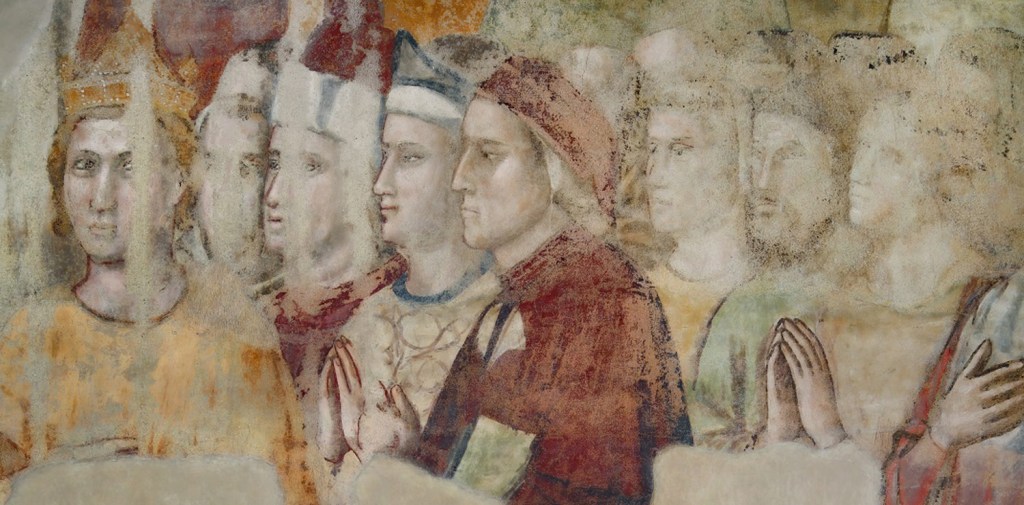
    The Bargello is the ideal venue to trace the complex relationship between Dante and his home city. In the Sala dell’Udienza of the then Palazzo del Podestà (today the Salone di Donatello), on 10 March 1302, the poet-politician was condemned to exile. In the adjacent Cappella del Podestà, a few years later, Giotto and his school portrayed Dante’s face for the first time, including him in a fresco among the ranks of the elect in Paradise. It is said to be the first ever portrait of Dante.

    The façade of the Santo Spirito Church is striking in its simplicity. As I passed and continued towards the Ponte Vecchio, runners wove in and out of my path and trucks disembarked cargo to one of Florence’s hundreds of eateries. One box read, ‘Lobsters and fresh mussels.’ 

    An Asian couple were taking wedding photos on the famous bridge which connects the Uffizi Galleries to the Pitti Palace which the Medici once called their home. Her veil glittered in the morning sunlight as the photographer insisted they ‘kiss, kiss, kiss!’

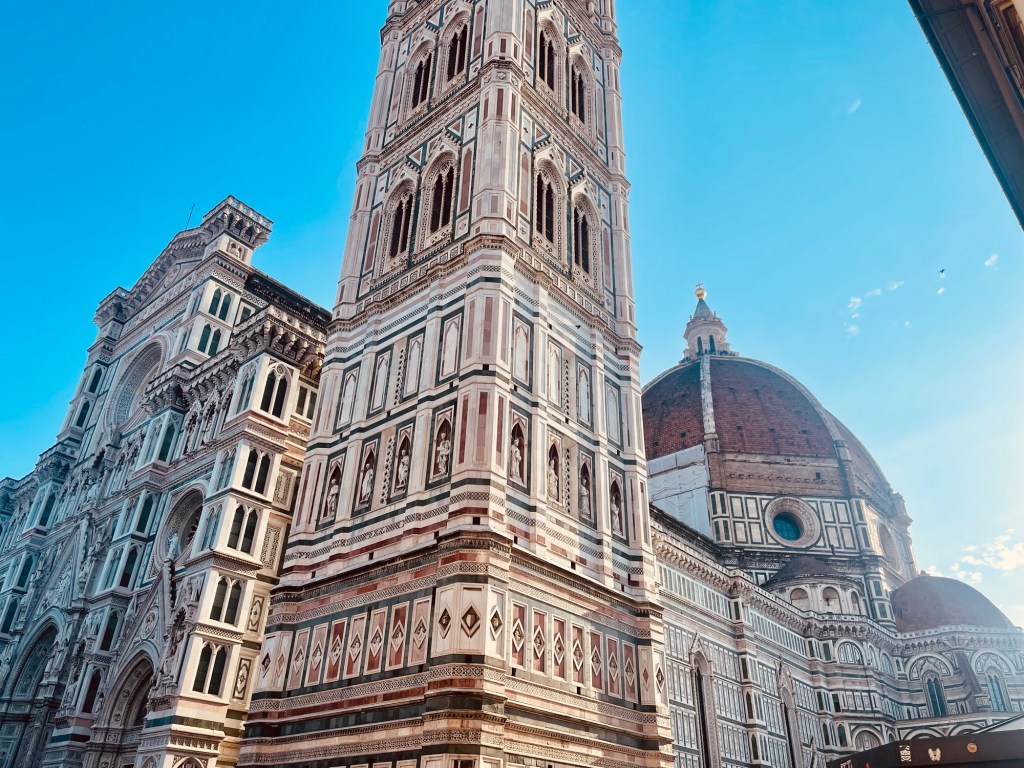
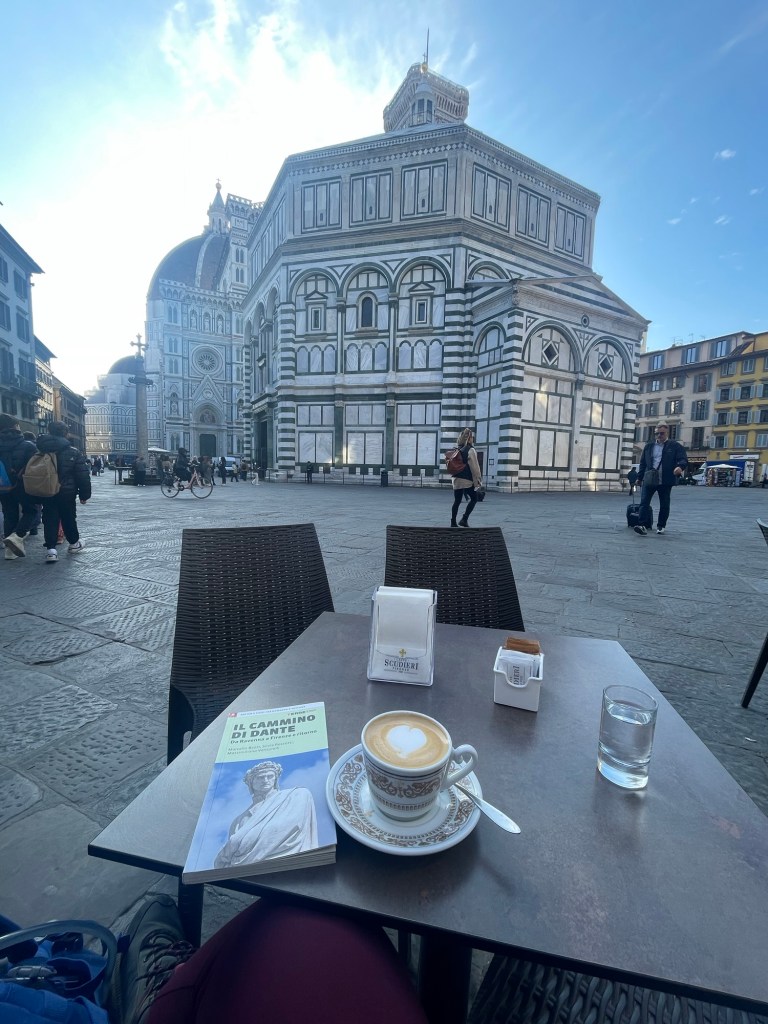
    I took a second coffee when I reached the Piazza del Duomo which, unlike the rest of the still sleepy city was bustling with life. Tour groups followed umbrellas like leaf cutter ants and carriages pulled by horses escorted tourists through the narrow streets. In Venice, the streets are known colloquially as ‘rughette’ or ‘little wrinkles’. I smiled as I recalled this fact, spreading wrinkles across my own face.

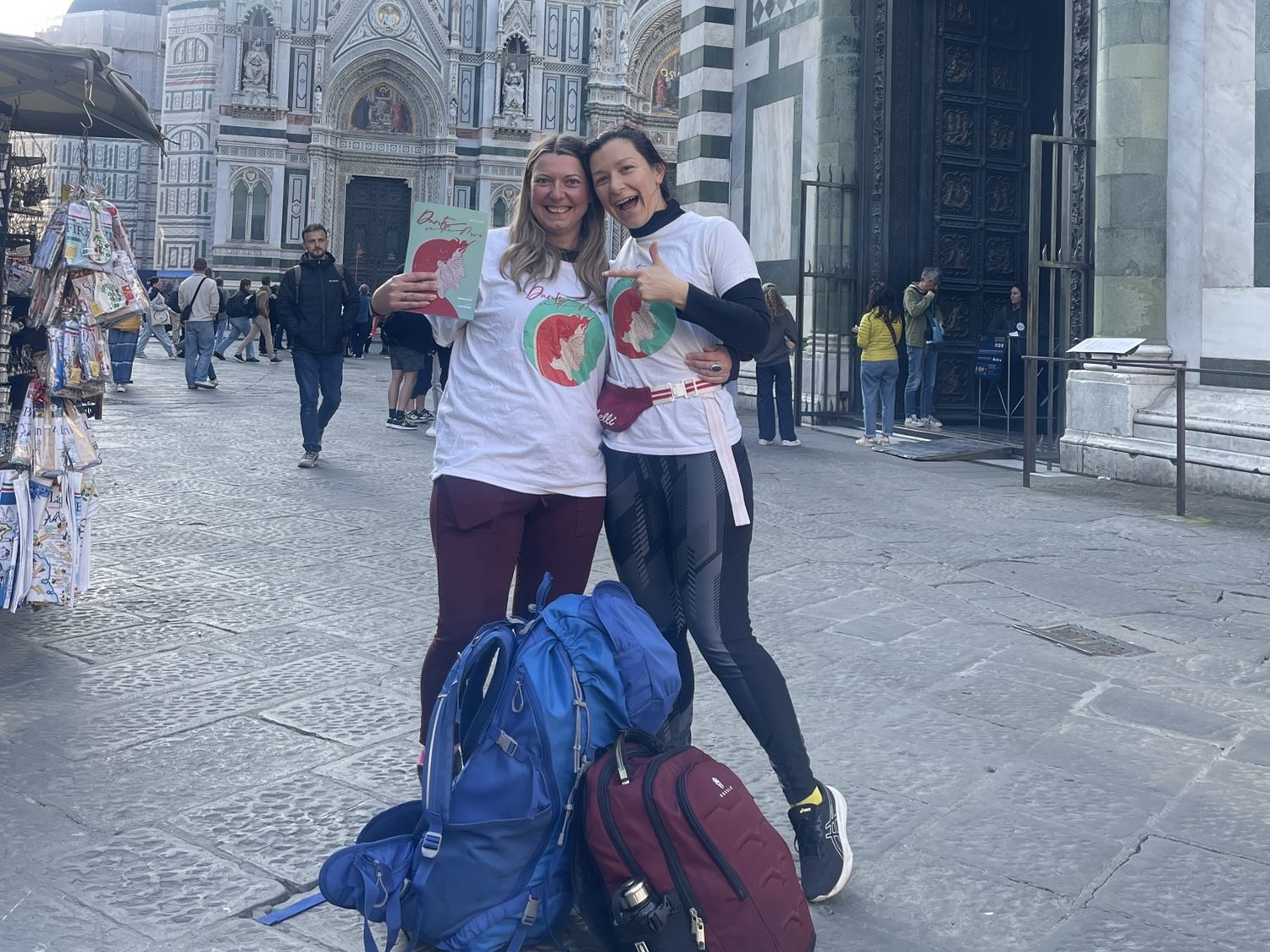
    Then came the time for our meeting. 

    Alina arrived, her flaming red hair licking her collarbone and cascading over her shoulders.

    She was wearing a beautiful black coat over sweatpants and a running jacket designed by one of the fashion houses for whom she had previously laboured. She had succeeded in stashing a huge amount into her small backpack.

    ‘That’s what comes with moving around a lot,’ she said. ‘And the coat? Well, if you invite a refugee on a walk, they likely only have one coat, and this is it.’

    We hugged tightly, shedding the first of what would be several tears over the coming days, and reached out and touched the walls of the baptistry where Dante had been immersed in 1265 and to where he had hoped one day to return as a poet post-exile. In Paradiso canto 25 he writes,

    ‘If it should happen . . . If this sacred poem—

    this work so shared by heaven and by earth

    that it has made me lean through these long years—

    can ever overcome the cruelty 

    that bars me from the fair fold where I slept,

    a lamb opposed to wolves that war on it, 

    by then with other voice, with other fleece,

    I shall return as poet and put on,

    at my baptismal font, the laurel crown .’

    Se mai continga che ’l poema sacro

    al quale ha posto mano e cielo e terra,

    sì che m’ha fatto per molti anni macro, 

    vinca la crudeltà che fuor mi serra

    del bello ovile ov’io dormi’ agnello,

    nimico ai lupi che li danno guerra; 

    con altra voce omai, con altro vello

    ritornerò poeta, e in sul fonte 

    del mio battesmo prenderò ’l cappello . ‘                        

    It is tradition to depict poets in Italy with laurel crowns, one now adopted by students who port the symbol on graduation day. When we completed our Reading Dante with Refugees course in Rome, I made sure that all of the students received from Stephan, the Director of the Trinity College Rome Campus that hosted us, a laurel crown. 

    Alina, a Ukrainian refugee fashion designer turned feminist activist, was one of the eleven refugee students who took my class. For her final project she imagined her own journey from Inferno to Paradiso through the lens of the Italian bureaucracy. In the short film she made for the course, Paradise of Exiles, she shows herself moving from the dark wood (she literally, set off at 2am to shoot in woods outside of Rome) followed by the Purgatory of refugee status determination and the eventual Paradise of finding peace in Rome’s art scene. She filmed the final scenes at an exclusive shoot at the Galleria Borghese where my friend Stefania Vannini is a curator. She looks resplendent with her red hair against the green walls. I’m there in the background cheering her on.

    Since the course finished two years ago, I have become somewhat of a mentor to Alina, even though she is only five years younger than me. I know the value of mentorship having experienced it first-hand myself so many times over: Julie, Andi, Janey, Joyce – you know who you are.

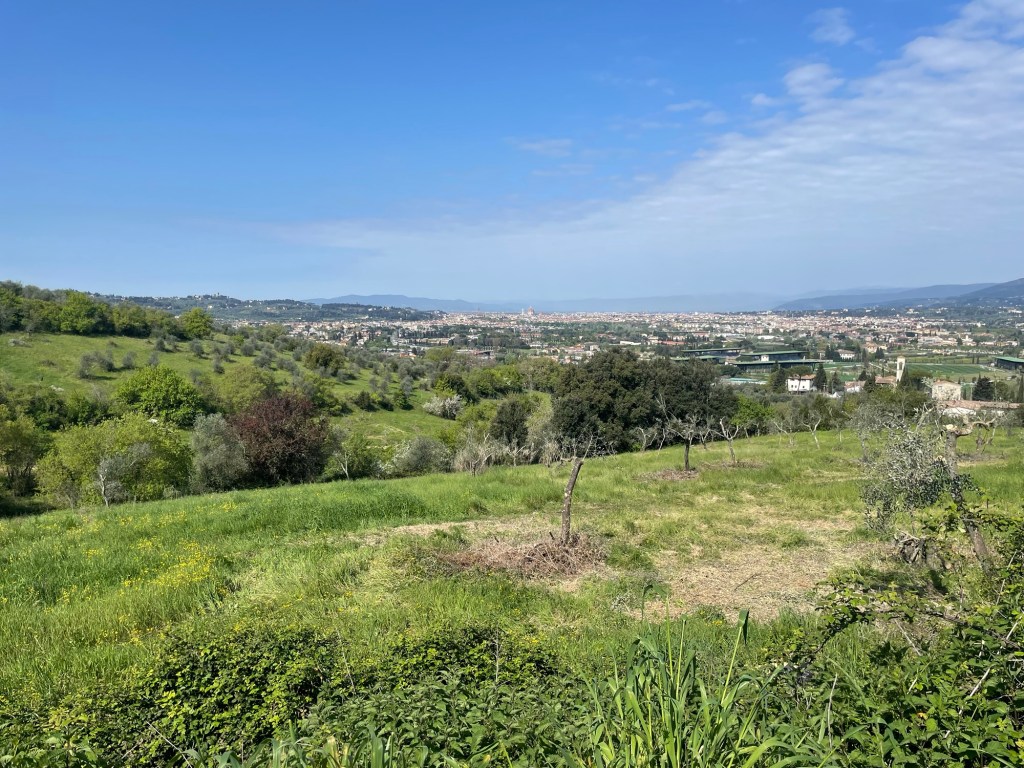
    We took our time winding through the bustling morning streets before passing to the river, beside which we hiked a good few kilometres before turning up a road that led us outside of the city. For the entire morning, the Florentine landscape peaked out behind us like a jester egging us on. Each time we turned around she was more distant. I thought of Dante and how close he would have come in his exile. While we know, as this trek honours, that he dwelled at several lodgings by the river Arno, did he get close enough to see the cityscape which then would have been teaming with medieval towers and devoid of today’s famous domed landscape curated by Brunelleschi and Giotto?

    Swallows sprung from under bridges and inside cemeteries, disturbing the air with the gentle flap of wings. Street corners were embellished with Madonna and child.

    Alina and I chatted fluently in our colloquial mix of Italian-English as we followed the path up, up, up and left the gilded city in our trail. At 11.30 on the dot we stopped at a bench overlooking the city for her to join a call with two interns working for her holistic creative agency, Sensi, who were running an event on refugee wellbeing. I took the time to check our route and enjoy the delicate scent of crocuses that filled the spring air. 

    Despite her small bag, Alina had packed in an impressive amount of food including ‘unsalted bread’ from her local Bangladeshi deli. I was relieved to find that I was able to stomach dates again after a traumatic incident in Syria where I spent a 12-hour bus journey to Jordan munching on a bag-full only to find, upon sunrise, that it was also filled with ants. Oh well, protein is protein.

    Alina shared her news and I caught her up with my life. We’d both spent depressive winters hiding beneath the sheets of our beds and were grateful, like the crocuses, to be coming back to life. I had nominated Alina to be part of the Nobel Women’s Initiative Sister to Sister mentorship programme in 2023 and now she’d been invited to participate in a peacekeeping mission to Ukraine. It’s a funny kind of pride I felt as both a teacher and a friend. 

    ‘It’s about time women got some coverage in the Ukrainian-Russian conflict in Britain,’ I commented. ‘Too true,’ she observed.

    Once we had taken in the last glimpse of the Duomo it was after lunch. We ate schiacchiata sandwiches, a Florentine delicacy which literally means ‘squashed together’.

    The day was hot.

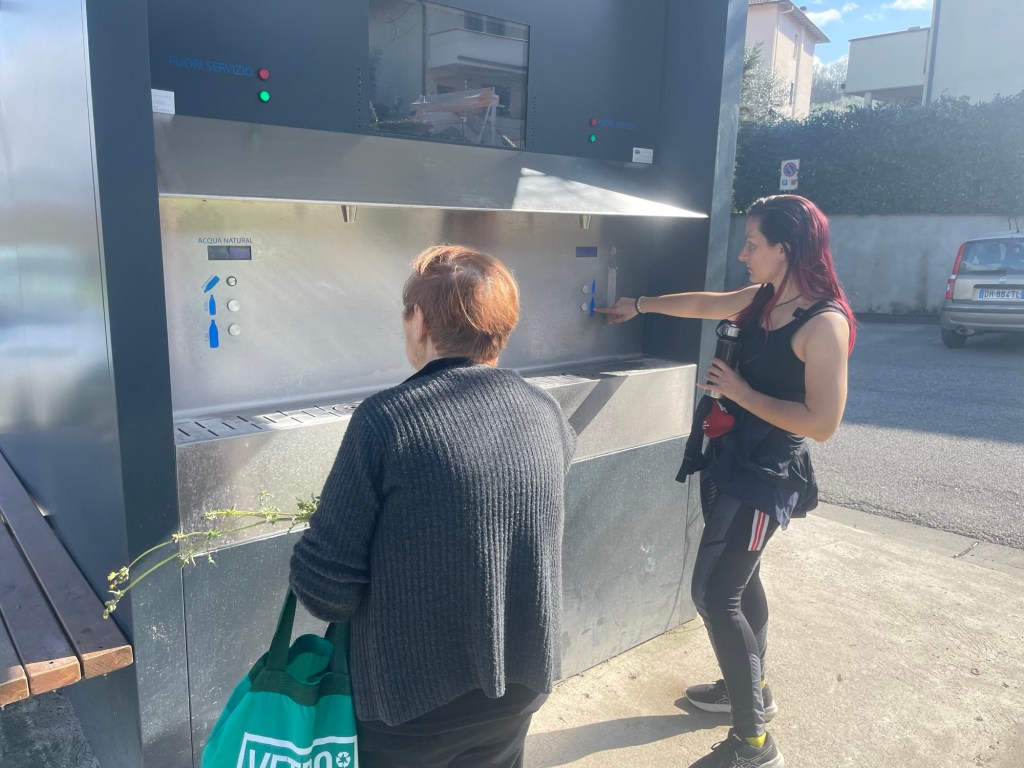
    In the town of Bombone we stopped to refill our water bottles and I marveled at the fact that the town council had voted to put in a well that featured not just purified still, but fizzy water. I made the mistake of filling my camel drinking pouch with it, only for it later to explode inside my bag. Luckily though my bum got soaked, my laptop survived.

    We met a kind faced 80-year-old lady who Alina showed how to use the fountain,

    ‘In all these years, I’ve never known,’ she said. ‘Buon cammino!’

    A lot of Alina’s utterances start with the phrase ‘before the war’, just as mine do with ‘before my divorce’. Before long we were completing each other’s sentences. 

    ‘Before the war, I got my eyebrows done.’ 

    ‘Before the war, I worked for Alexander McQueen.’

    ‘Before my divorce, I worked for openDemocracy

    ‘Before my divorce, I thought that by simply loving people I could change the world.’ 

    Perhaps something of the latter is still true.

    Mum dropped me a text asking how it was going, addressing me as ‘her Marco Polo’. 

    Benissimo,’ I replied.

    I was so happy to see Alina. 

    Despite her slender Ashtanga yoga and capoeira molded frame and my own body, bloated with anti-depressants, she was less trained for the hike than I was. She pushed on honorably in her sneakers rarely complaining or even stopping to drink water. Layers were taken off and on as we moved in and out of the sun. 

    ‘I can’t get over the fact someone has gone to all this effort to mark this trail!’ I kept repeating, euphoric that someone out there might be more obsessed by Dante than me. Each sign post for the Dante trail had been marked with a red sticker on a lamppost or a wooden sign with the letters CD singed into it by hand by the trail’s father, Oliviero Resta, who I hope to meet in person in Ravenna.

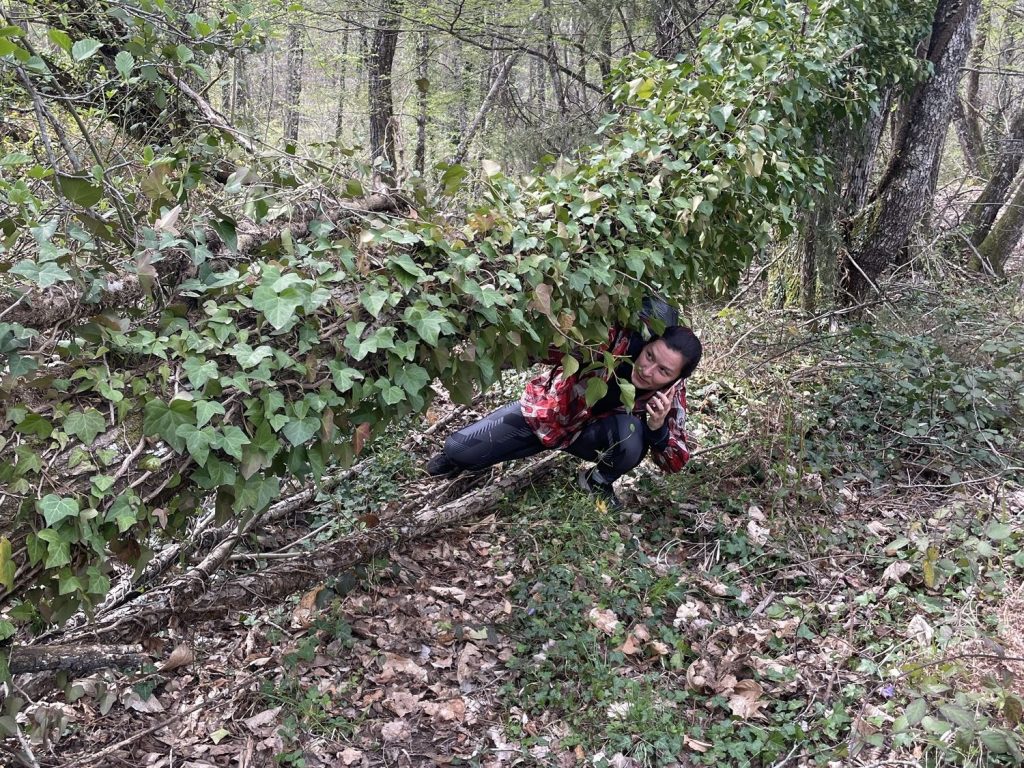
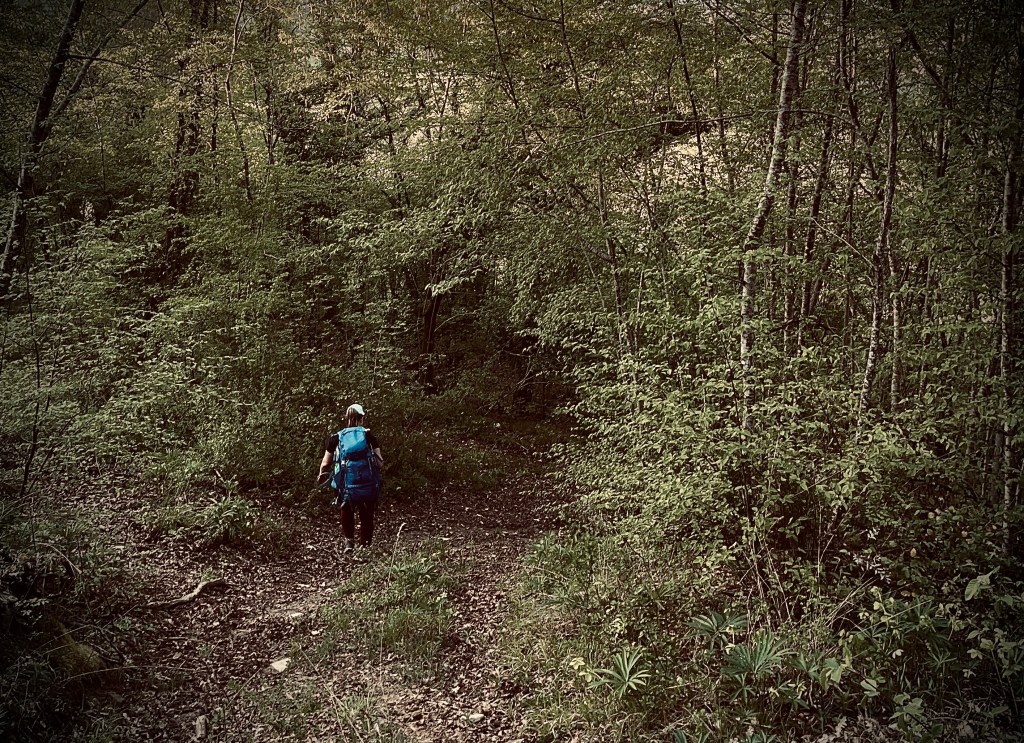
    I would say it was hard to get lost if it were not for the half an hour detour we took tumbling down a dark forest following the GPS and ignoring the very clear ‘no trespassing’ sign. It turned out we were right, but the forest spooked us both. As we crossed the barbed wire and our feet became trapped in brambles, I thought of the documentary, Green Border, I recently watched about refugees seeking to cross the Belarussian-Polish frontier at the edge of Europe.

    ‘You can imagine Dante feeling a little shitty here, eh?’ we remarked. 

    Finally, arms shredded with brambles we were back on solid ground.

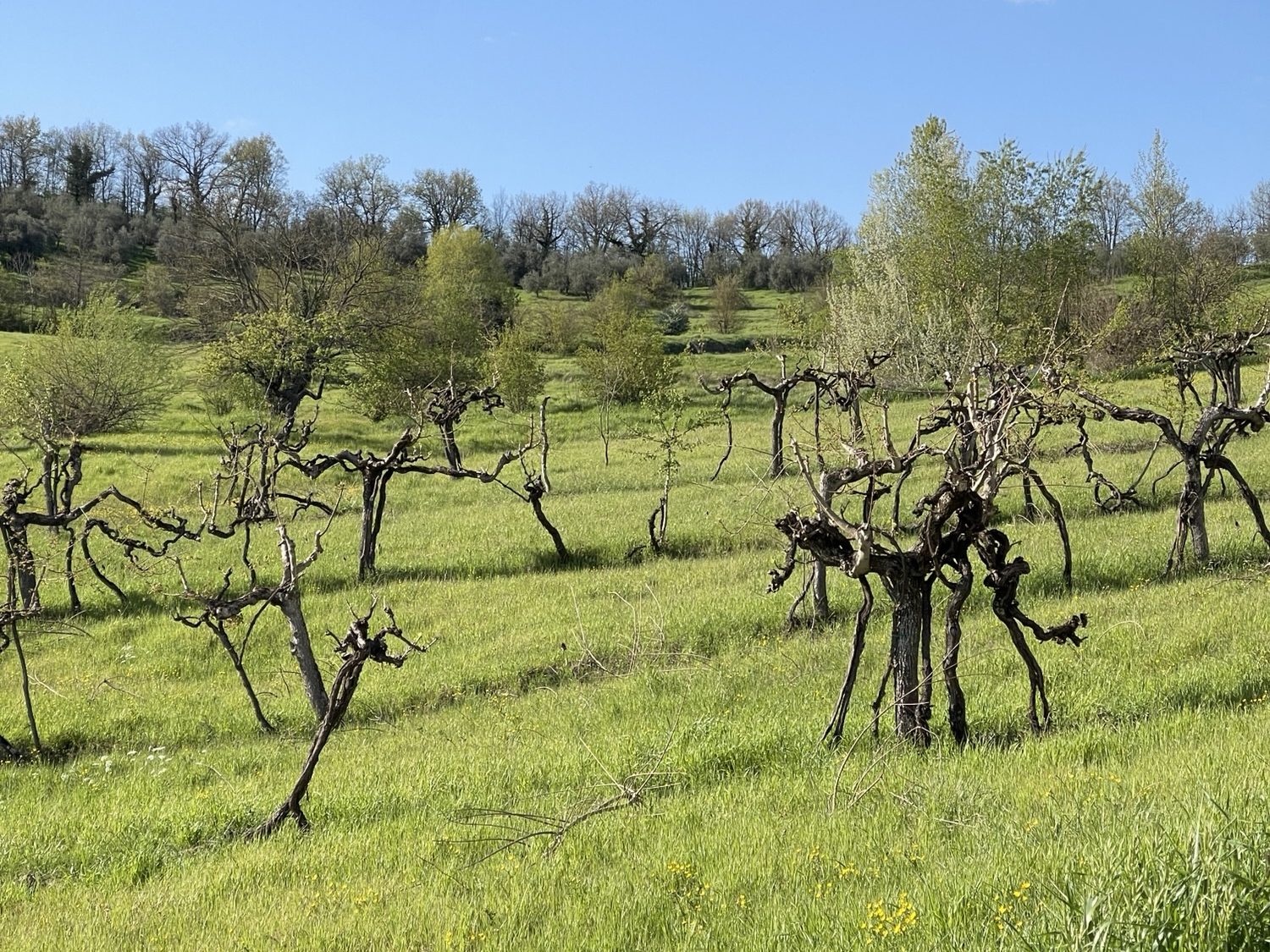
    We passed fields of tortured vines that provided a rich supply of local wine and stopped at a vineyard called Fattoria Pagnana to taste the local fare and buy a bottle for tonight’s hosts, a family of six who look after the local church. While much of today consisted of being barked at by aggressive guard dogs, at the winery the two brown dogs approached us tails wagging and tongues lolling out of their mouths, desperate for a touch. Alina like me is an animal lover. 

    ‘Don’t lick my face!’ She squealed.

    They licked her face.

    At 5pm, our host, Stefano offered to pick us up in the neighbouring village but we were insistent that we would carry on. We resisted the temptation to stay in Rignano sull’Arno for a Palestine solidarity music night and arrived at Pieve a Pitiana at around 8 in the evening with the sun setting behind us. 

    We had both been spooked by getting lost in the forest earlier in the day and now as the sun set, the sun kissed vines metamorphosed into Dante’s wood of suicides.

    In Canto 13 of Inferno, Dante encounters those who have taken their own lives, following on from Canto 12 where he depicts those who have been violent towards others or their possessions. The canto is heavy with negativity:

    ‘No green leaves in that forest, only black;  

    no branches straight and smooth, but knotted, gnarled;  

    no fruits were there, but briers bearing poison.’  


    ‘Non fronda verde, ma di color fosco;

    non rami schietti, ma nodosi e ’nvolti;

    non pomi v’eran, ma stecchi con tòsco.’

    Dante is remarkably kind to the souls, much to Virgil’s chastisement, asking after them and their stories. Virgil encourages him to snap a branch off one of the oaks from which blood drains and the soul within orates. This is how he meets Pier della Vigna, an advisor to Frederick II who killed himself when his reputation was ruined by false rumors. Frederick asks for Dante to heal his reputation on earth, because this is the only part of him that survives outside of Hell. Though encouraged by Virgil to interrogate the tree like an asylum seeker on trial, Dante is so stirred by pity that he says he cannot think of anything more to ask the soul.

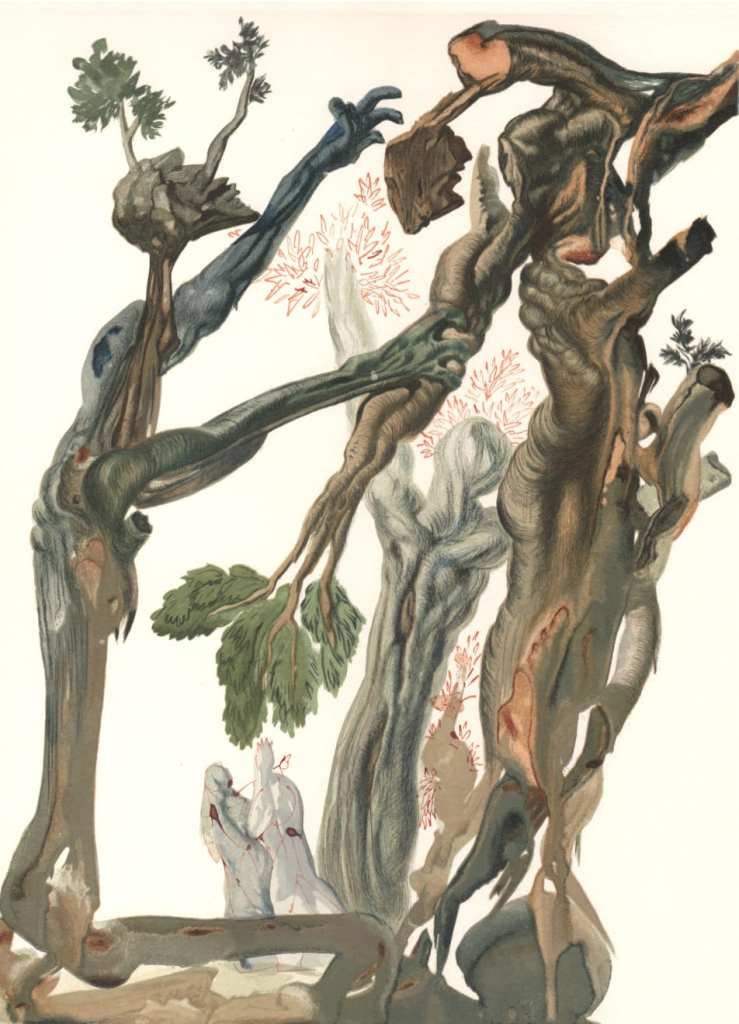
    Dante describes the tortured woodland as infested with harpies who abuse the souls by ripping off their branches. In an act of symbolic retribution, it is said that when each of the blessed and damned will return with their body from the Last Judgment, those damned for suicide will not re-inhabit their bodies but instead hang them on their branches, both because they denied them in their final act of life and as a reminder of what they denied themselves. Salvador Dalí depicted this starkly in one of his many paintings of the Commedia.

    As I mentioned above, Alina and I had spoken over the course of the day frankly about our own very difficult winters. Previous experiences of depression and suicidal thoughts had also weaved their way into our casual conversation, as they had many times before. It felt concrete and somewhat scary to see this fictitious scene brought to life. 

    We arrived at the church of Pieve a Pitiana to a roaring fire and an equally warm welcome from our host Stefano, his wife Giorgia, Stefano’s mother and their three bubbly kids. Anna, the middle girl-child was excited to practice her English, asking us about our favourite sports, meanwhile the youngest boy was keen to discuss all things Pokémon, later gifting us each a precious Pokémon card (I got Chansey, super power level 80. Get in!)

    He had been off school sick and held his arm in a sling made from a shredded blanket. 

    ‘You look like a Roman wearing a toga!’ I commented, at which he giggled. His dimples pitted his face like someone had imprinted it with little olive pips. 

    We ate a simple meal of pasta al pomodoro with eggs from the three happy free-range hens that were the family pets and aubergine marinated by Stefano’s mother. Stefano and Giorgia talked to us about the 600-year-old house and the church that had even longer foundations. They had met in Peru. Their oldest son Michael was a bit timider but cited to us the first verse of the Divine Comedy after remarking, 

    ‘Wow, you guys are like really, really into Dante!’

    I think they were glad to have someone to talk to.

    After dinner there followed a private tour of the church where we were able to marvel at the paintings of Ghirlandaio, an early Renaissance painter of the Florentine school noted for his detailed narrative frescoes. One had been stolen, Stefano explained, and a replacement had been installed. He was careful to put on the alarm before we left. Alina said a short prayer. 

    The house sits beside an NGO that works with local migrant children and the two stories Alina and I shared were strewn with half-finished craft projects and colourful drawings on the walls. Since we both work with refugee children, it was a sight familiar to us both. They marked a stark and stunning contrast with the 14th century stonework which peaked out at points from beneath the pastel plaster. 

    With full tummies, Alina and I headed to our bunks in the arts room, sleeping beside loo roll easter bunnies and papier mâché masks. A warm shower was most welcome. My inner heels had developed thick blisters while Alina’s little toes looked like they had come down with plague sores.

    An open fire kept us warm and dried our soap rinsed socks and knickers as we snuggled into our blankets and rested our weary limbs. 

    Apparently, I screamed out at one point in the night but this I don’t recall.

    Recommended watching (turn on subtitles): Paradise of exiles: https://www.youtube.com/watch?v=-o-lUZq_71E

    Recommended watching: Green Border: https://www.imdb.com/title/tt27722543/

    Recommended reading: openDemocracy 50.50: https://www.opendemocracy.net/en/author/jennifer-allsopp/