Tag: travel

  • ‘New Life’: From Pontassieve to Florence

    On my final day, I met a lovely couple who invited me for lunch and felt the warm embrace of the sun and of friends which filled me with new life. 

    I slept badly, waking up every two hours. I was worried about my broken toes and how they’d manage the 21 kilometres I would have to face to make it back to Florence and complete the ring of the Dante trail. The very prospect had seemed near impossible when I had shared my wish with Massimo Kyo and Alina in the tranquil oasis of San Pietro a Romena two weeks ago, and then again two days ago in the Hermitage of Santa Maria. Now I was so close and the end was in sight. Yes, I was doing it.

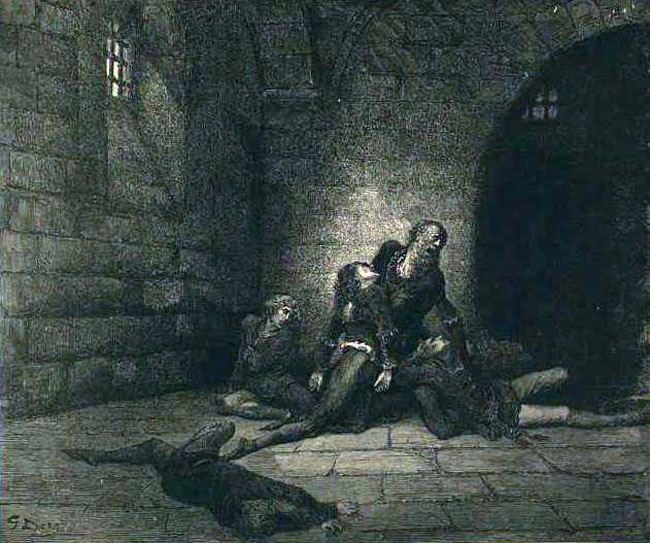
    I tried to summon up Virgil’s words of encouragement to Dante in canto 24 of Inferno when he becomes weary as they pass through the bolgia of the thieves:

    ‘“Now you must cast aside your laziness,”
    my master said, “for he who rests on down
    or under covers cannot come to fame;

    and he who spends his life without renown
    leaves such a vestige of himself on earth
    as smoke bequeaths to air or foam to water.

    Therefore, get up; defeat your breathlessness
    with spirit that can win all battles if
    the body’s heaviness does not deter it.

    A longer ladder still is to be climbed;
    it’s not enough to have left them behind;
    if you have understood, now profit from it.”’

    I would rise up like Dante and take on the steep climb up to the Convento dell’Incontro:

    ‘Then I arose and showed myself far better
    equipped with breath than I had been before:
    “Go on, for I am strong and confident.”’

    On my way out of the town at around 9am I stopped momentarily to watch a tall man pruning an olive tree on a ladder. It was a sunny day, perhaps the sunniest so far on the cammino. Despite this, I wore my long-sleeved black top in order to protect my new tattoo from the rays. The purple stencil had already started to disintegrate rendering the terracotta outline clearer. I loved it. 

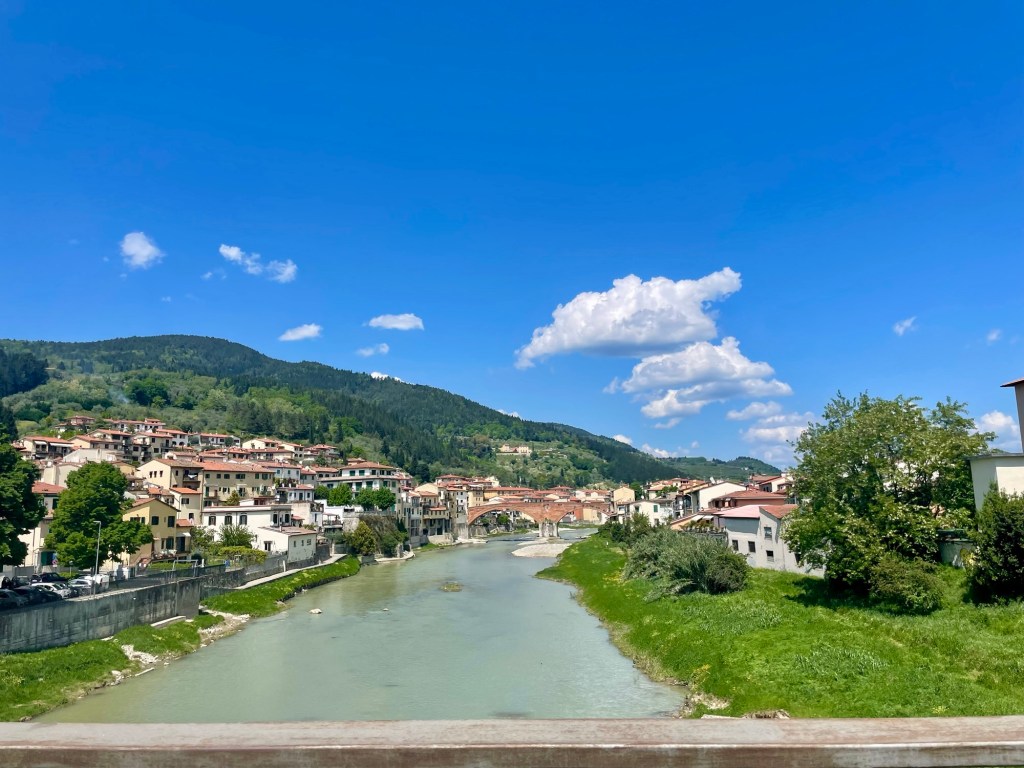
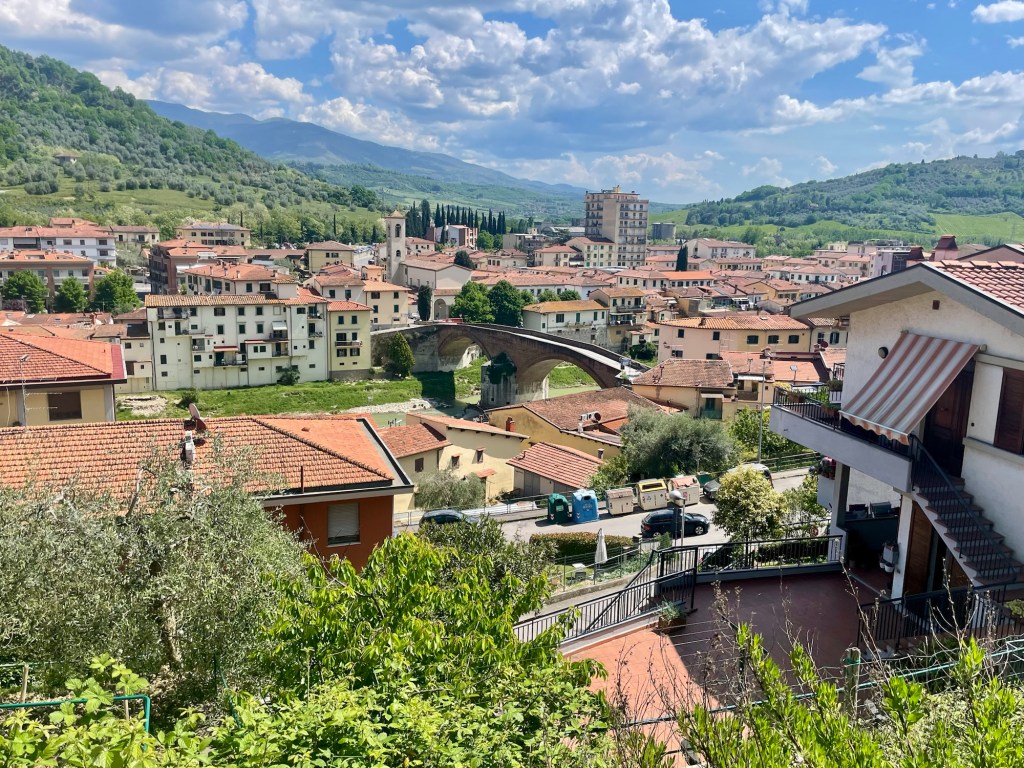
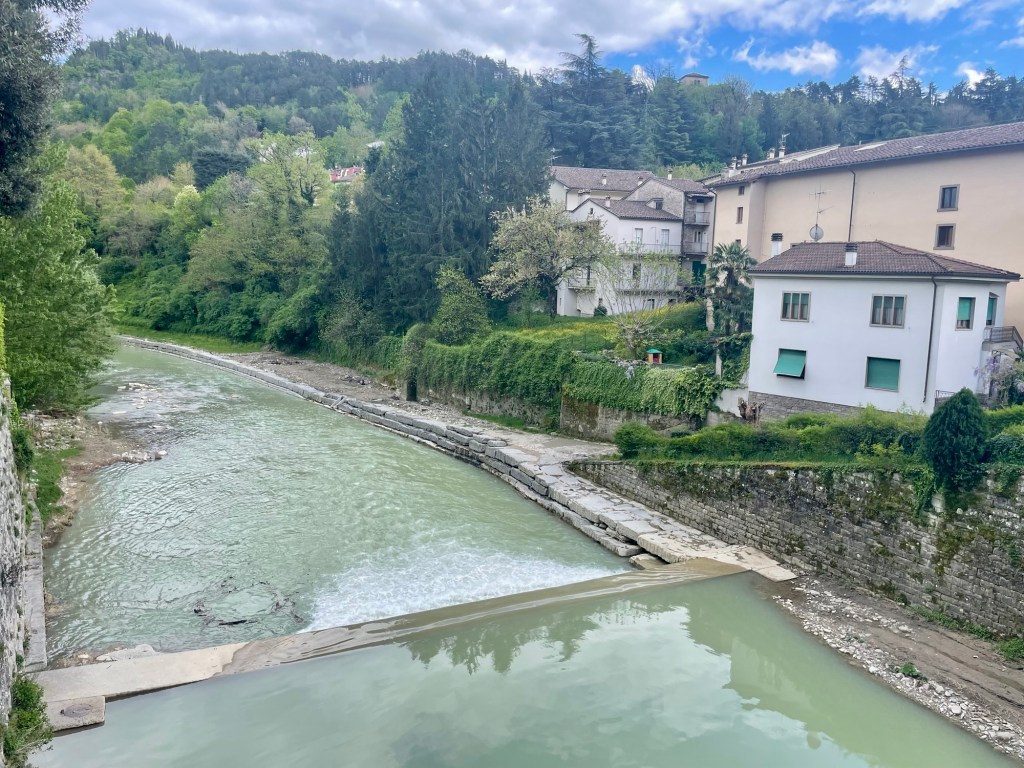
    I went down the hill past the beautiful medieval bridge that had been damaged in the recent floods and stopped at an old bakery to purchase some pizza and fizzy water. The streets were bustling with people and, despite my fatigue, I found myself whistling in good cheer. 

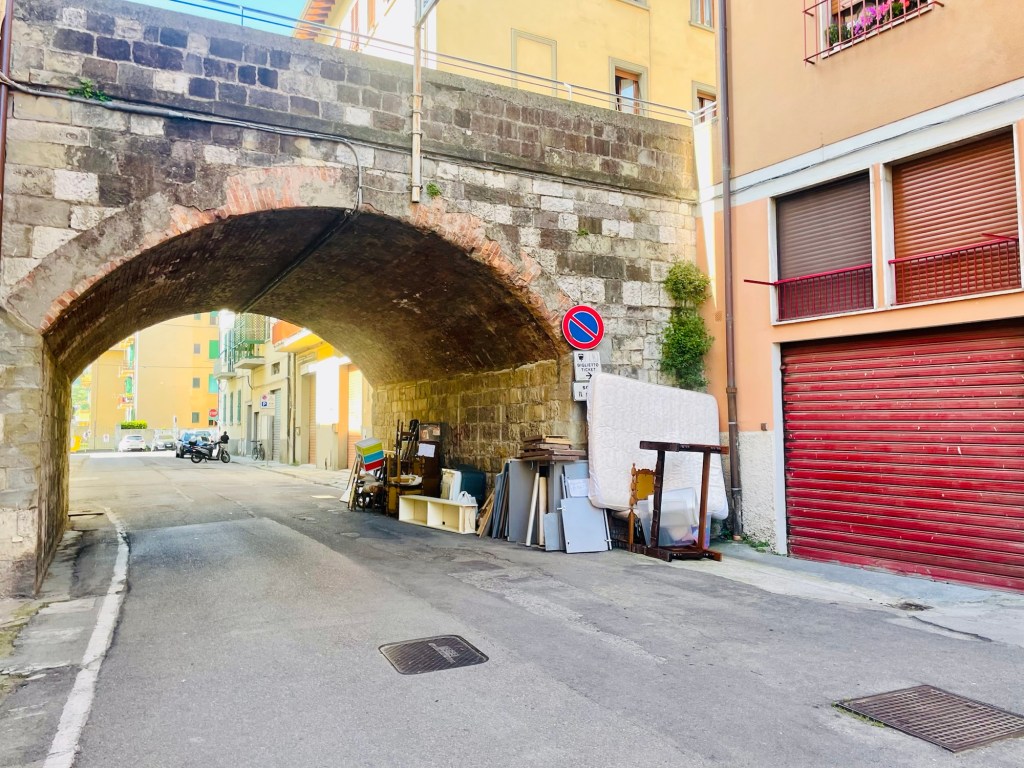
    I passed a police officer who was giving a black man a car ticket and saluted Asia who I had met the previous evening in the tattoo parlour. A swallow flew inches from my face as I passed under the bridge which was cluttered with antique furniture. It looked like everybody was spring cleaning. There were up turned stools, desks devoid of drawers. Two sagging single mattresses framed the display on either side like columns.  
    It was nice to be walking along the river. The fresh graffiti contrasted with the muted tones of the brick walls. A man passed with a shopping trolly and a flight of joggers zig-zagged along the narrow path. I thought back fondly of running along the river Charles when I had lived in Cambridge, Massachusetts, and hoped that my foot wouldn’t give me too much bother so that I could be up and running myself again soon.
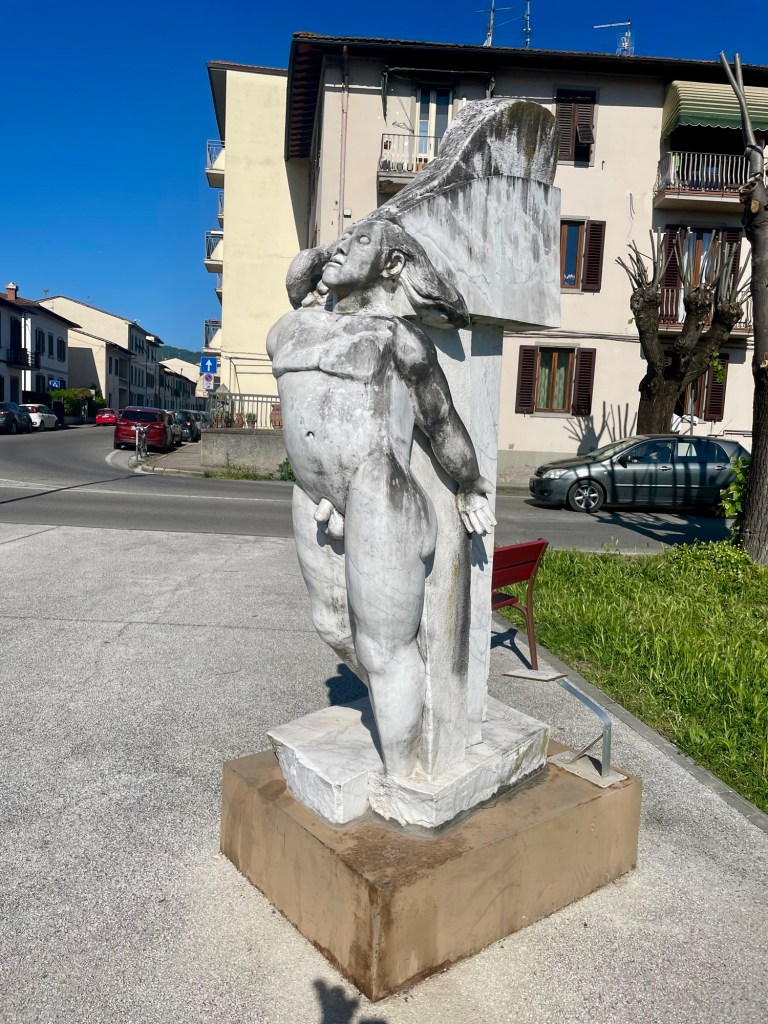
    To the right of the path was a sculpture of a man striding forth from a rock. I was reminded of the engravings that Dante sees on the terrace of the proud in canto 10 of Purgatory which are so lifelike that they seem to speak to him of acts of humility:

    ‘There we had yet to let our feet advance
    when I discovered that the bordering bank—
    less sheer than banks of other terraces—

    was of white marble and adorned with carvings
    so accurate—not only Polycletus
    but even Nature, there, would feel defeated…

    This was the speech made visible by One
    within whose sight no thing is new—but we,
    who lack its likeness here, find novelty.’

    Thus was the power of great art. 

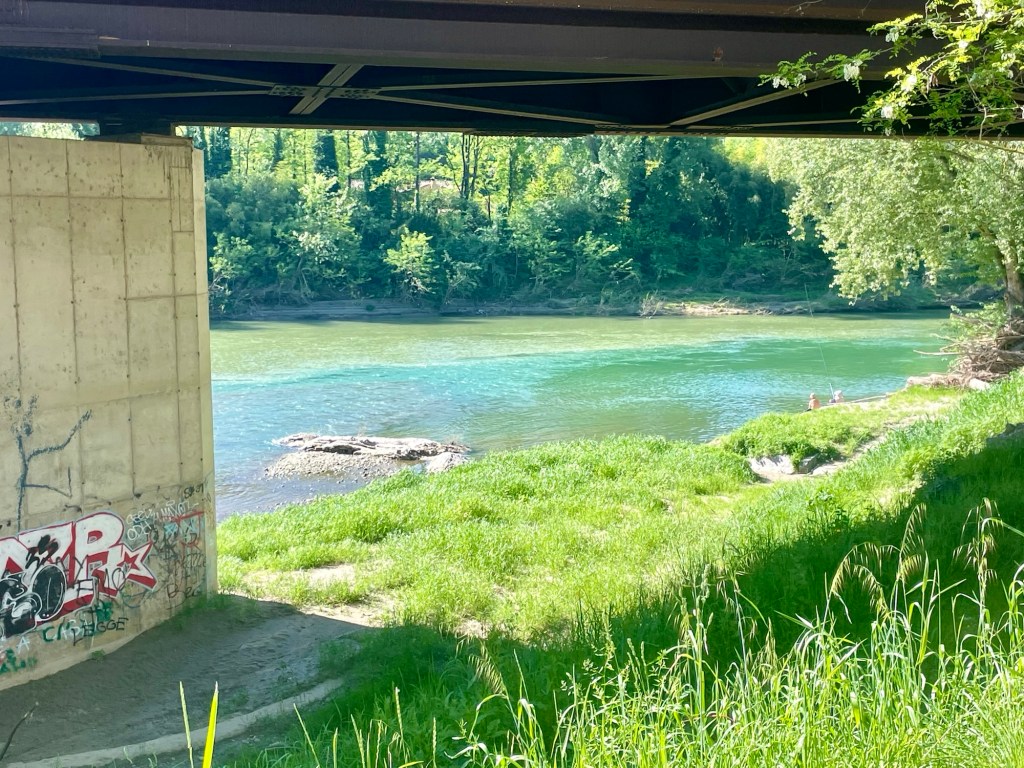
    A sign said ‘no fishing’.

    Two men were fishing. 

    The water ran aquamarine. 

    I was saluting everyone on the path, including a new mother who was stroking her baby’s fine hair on a picnic blanket beside the river. The hawthorn petals were a perfect white and exuded an almond-like perfume. 
    The recreational path soon gave way to allotments which featured a variety of vegetables and flowers that were being carefully attended to by a diverse group of local citizens. It was the first time I’d seen yellow irises, and here was a line of Romagnolo artichokes in their characteristic bruised purple and green. 

    I crossed the river over an iron bridge. The pathway was perforated with little holes so that you felt you might fall down at any point. It reminded me of being scared, as a child, that I would slip between the staggered metal stairs at the council flats where my school friends had lived back in Milton Keynes.  

    I was slightly haunted by the size of the hill ahead of me and though it was only 10:15am, I was already hot.

    I stopped to check directions with a man who was cutting grass. It looked like he’d put henna on his hair the way some older Indian men do. It was a livid orange.

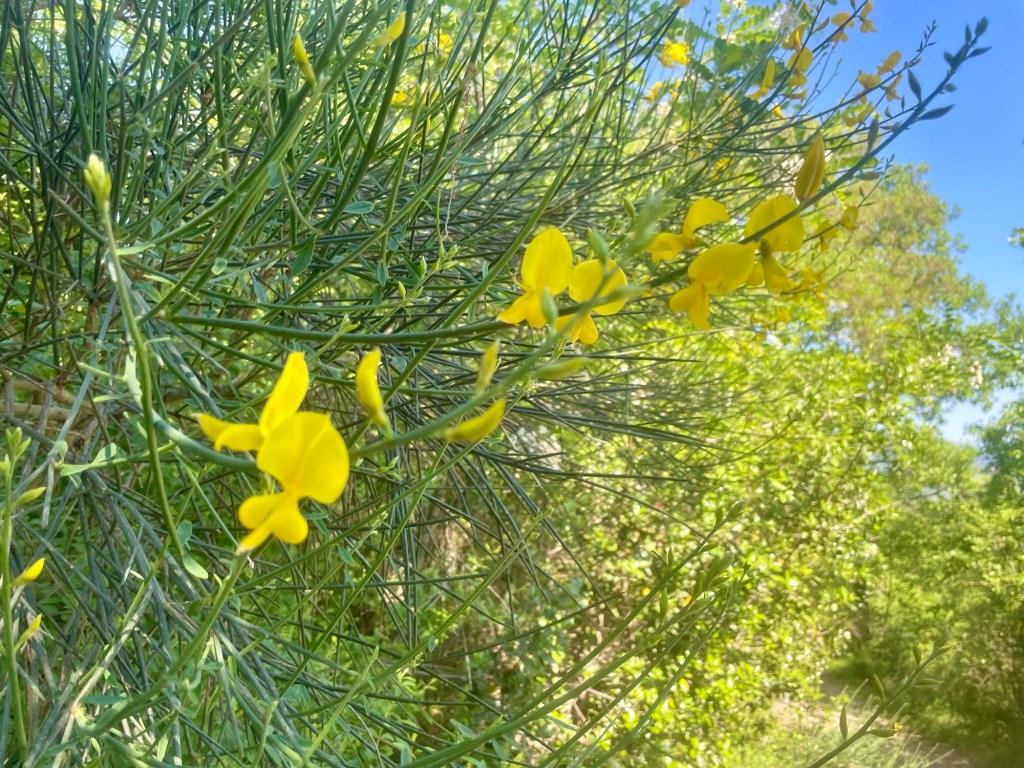
    The yellow broom smelt buttery and delicious.
    I passed a church on the right and took a wrong turn which afforded a beautiful view back over the city. I then retraced my steps to take the steep climb of the wooden bank off to the left of the road. The foliage was intruding onto the path in thick tendrils causing me to duck and dive. A spider web was suspended in the sunlight, diaphanous. 

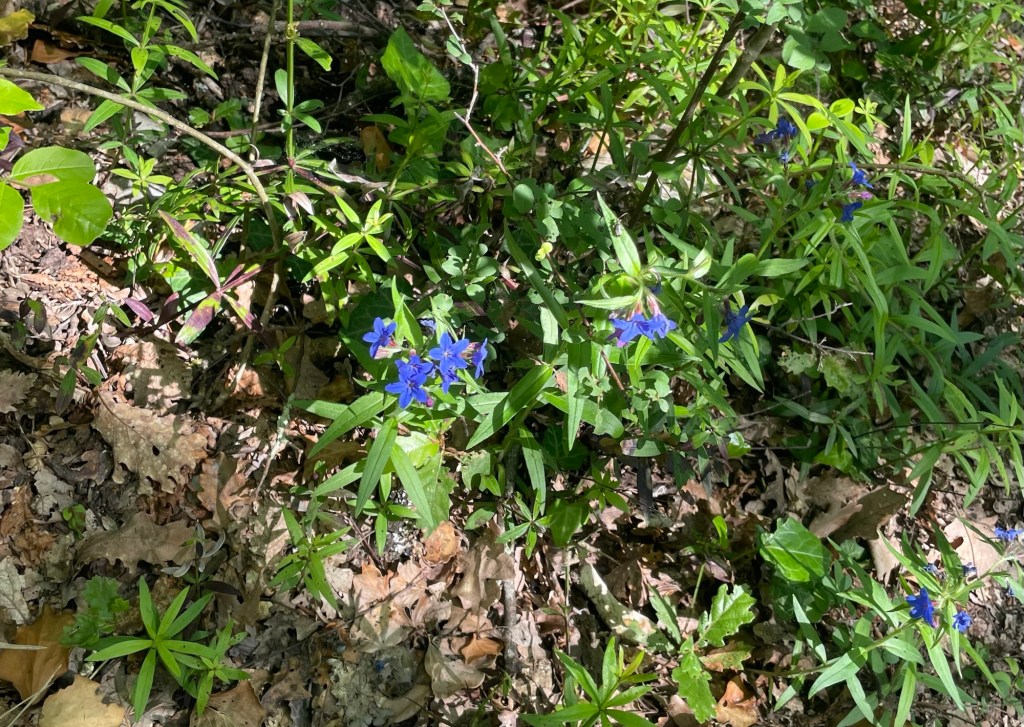
    I could feel the weight of not having slept with every step up the woodland pass but the shadow of the trees was merciful. I was rewarded by the sight of a kaleidoscope of tiny flowers. Here some purple gromwell creeped along the ground, sending out long trails of dark green matt leaves sprinkled with gentian-blue flowers. And there were pink prongs of common sainfoin. I recalled how Dante described being drawn to beauty in Purgatorio, canto 18:

    ‘The soul, which is created quick to love,
    responds to everything that pleases, just
    as soon as beauty wakens it to act.

    Your apprehension draws an image from
    a real object and expands upon
    that object until soul has turned toward it;

    and if, so turned, the soul tends steadfastly,
    then that propensity is love—it’s nature
    that joins the soul in you, anew, through beauty.’
    As I exited the woods, I passed a tennis court which seemed unusually located on the rocky terrain. Two men were working out how to get a van along the path. The one who seemed to be in the more authoritative position was wearing blue overalls. Now it was nearly 12 o’clock and the sun was beating down on me. Soon I’d stop for my lunch of the remaining pizza. 

    But I didn’t have pizza for lunch after all. Instead, I chanced upon Matthew, an English man from Derby, near where I live, who was outside his house performing chores. His sweet dog Paloma had come to greet me and when I’d saluted her back in English, Matthew asked me if I’d like some water. 

    I gratefully accepted. 

    And this wasn’t just water, it was fizzy water – ice cold and from a Soda Stream.

    We soon got deep into conversation about all things Oxford where he’d also studied, and rowing, which I had not, and, with that, conversation turned into lunch. 
    Matthew was an environmental engineer while his Italian wife, Nicoletta, who he’d met at language school, worked in fashion. Florence in the summer was too busy for them with tourists, they said; they liked their hillside retreat. I was reminded of summers in Oxford when I would angrily ping my bell as foreign exchange students would stray into the cycle lane. I had been so lucky to live in Florence during the winter when the whole city had felt manageable and somehow my own. 

    Nicoletta had prepared a delicious quiche and focaccia which we ate with a salad and local pecorino cheese.

    ‘I’d offer you chedder, but that seems unfitting,’ Matthew quipped. 

    As I told them about my journey, I noticed that Nicoletta had tears in her eyes. She was a fellow Dante aficionado and was deeply moved by the fact that I had embarked on this pilgrimage. We began citing Lorenzo di Medici’s famous poems, finishing the sentences of one another:

    ‘How wondrous beautiful is youth, 

    yet fleeting, so soon gone, in truth!

    He who will, let happy be, 

    The morrow has no certainty.’

    I told her how instead of the Backstreet Boys I’d had a poster of Lorenzo di Medici on my wall as a teenager. She could relate. She explained that she’d just got round to unpacking a box of books including a compendium of Italian verse which she was devouring.

    There was a princess crown in a bowl with walnuts that belonged to their daughter who was named Florence Rose. They had lived in the house three and a half years and done a spectacular job of restoring it. It even had a bathtub! How very unItalian, came my immediate thought.

    Their ample garden was rich with almonds, walnuts, figs and cherry sized plums. There was a peach tree that Matthew had just planted beside their pool and rows upon rows of olive trees from which they harvested their own oil. The key to pruning them, Matthew explained, is to hollow out the inside so that the tree looks like a donut. I thought about my own short-lived time as an apple tree pruner on a farm in California. How I had romanticized and then so quickly come to detest that slow labour.
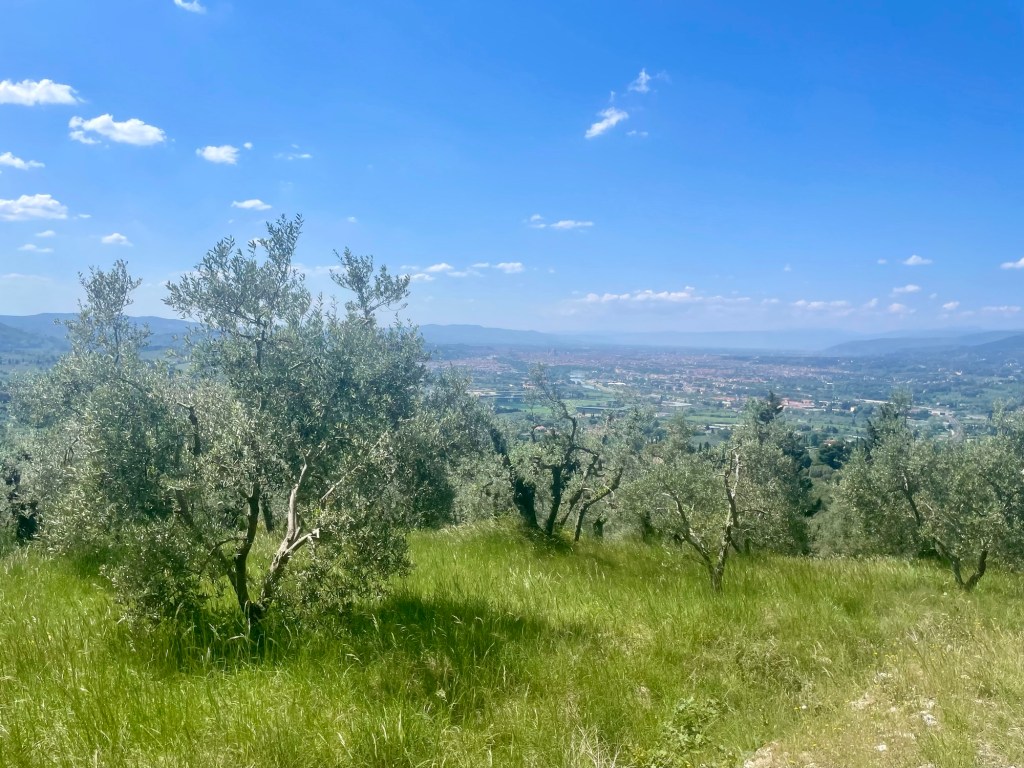
    I spent about an hour with Mathew and Nicoletta sitting on sunbeds by their pool chatting leisurely. Then, I took my leave, explaining that I had friends who would be waiting for me in Florence that evening. 

    ‘You must come back!’ said Nicoletta as I heaved back on my rucksack and headed down the dusty drive. I very much hoped I would.

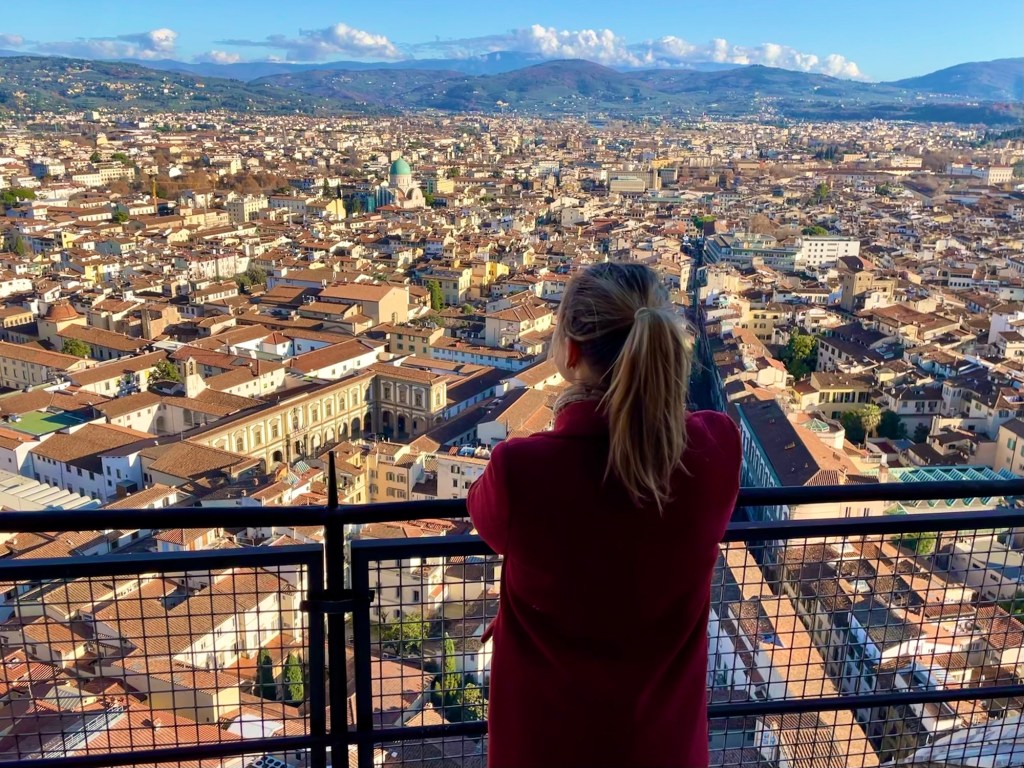
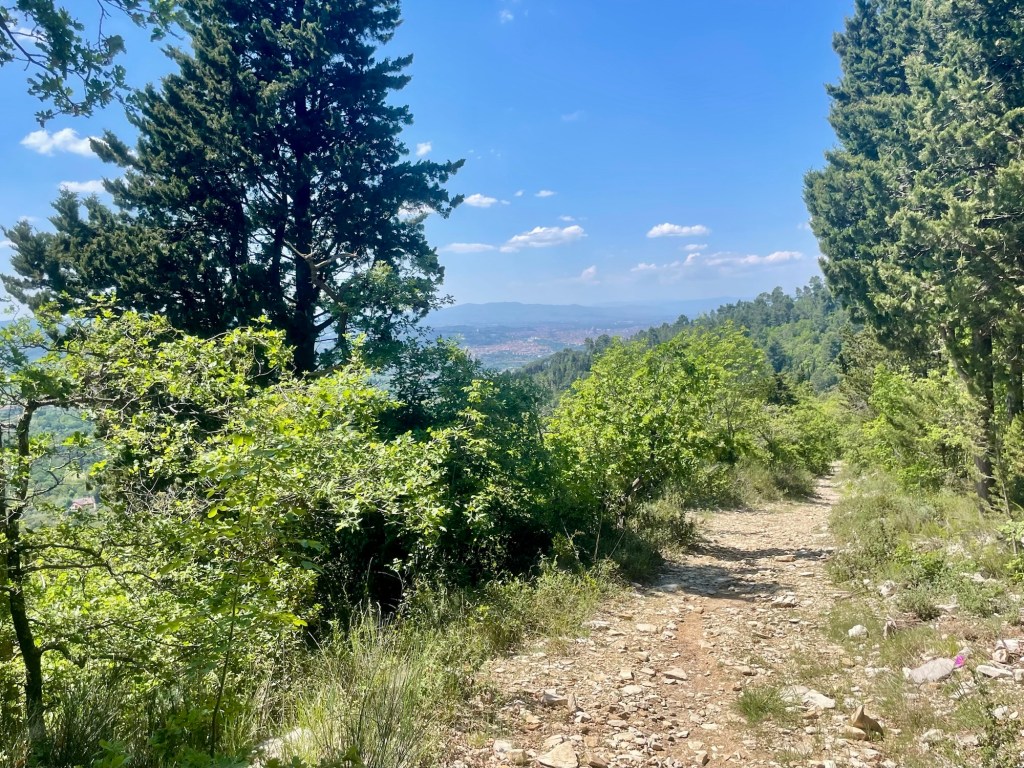
    After a steep ascent up to the Convento dell’Incontro, I got my first sight of her. There she was before me once more with a skyline woven in orange thread: Florence, the most beautiful city in the world. There was the Duomo, San Lorenzo and Giotto’s tower. And there, somewhere in the hazy distance, were Alina and Kelsey who had travelled specially to Florence to meet me at the end of my cammino. 
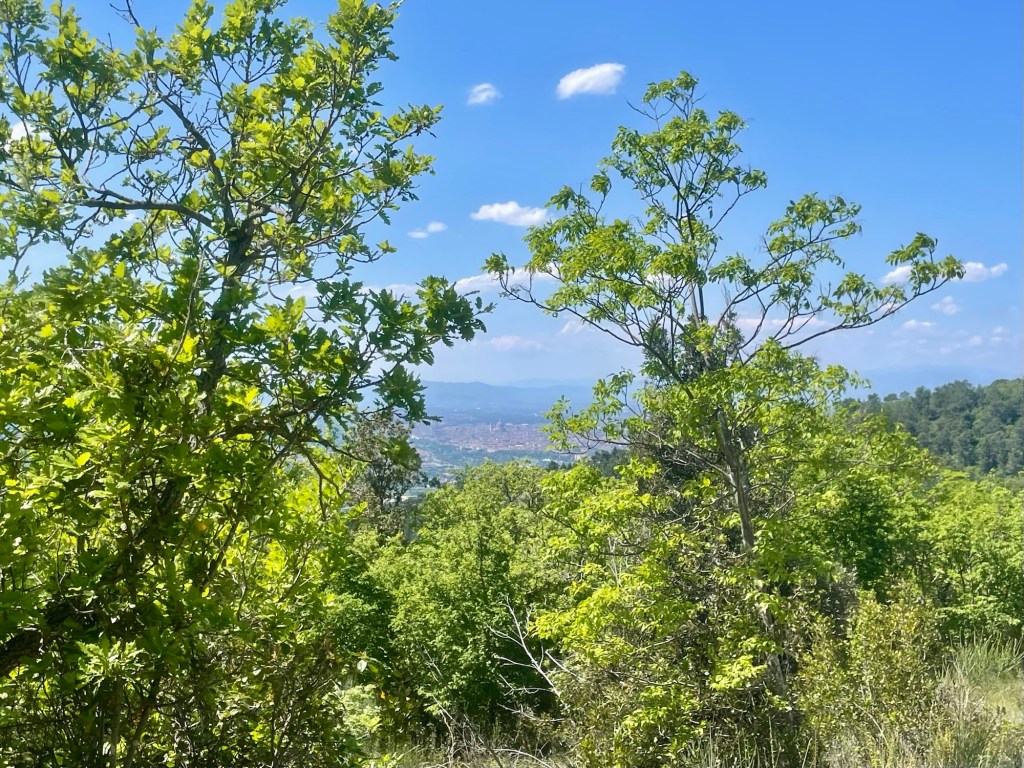
    I thought I’d better get a move on, but at the same time something about today made me cherish each individual step. I was slower on foot not because of my broken toes, but because this was my last day of a three week long cammino and I knew how much I’d miss the tread. 

    I didn’t put on an audiobook or music, I just wanted to be at one with my thoughts and reflect on what I had achieved: the highs and the lows, literally and metaphorically. 

    A fellow hiker who looked North American was walking the other way. I saluted her – she was as pink as I was in the afternoon sun. I noted that one of the cuts on my hand might be infected and applied some ayurvedic balm. A bright green caterpillar dangled on a thread.

    The descent was without shadow, a combination of brushland and road. I breathed in the sweet scent of wild sage as sweat accumulated in my philtrum and then spilled over onto my lips. I could hear the blood pumping in my ears. I couldn’t imagine doing this hike in the summer months.

    I was trying to walk on my heels as much as I could as the pain in my toes grew more insistent. 

    With each corner, Florence emerged again in all her splendor, framed by a variety of species of trees. I thought of Dante’s poem ‘Three women have come round my heart’ which he wrote from exile, longing for a view as close as this. 

    ‘They each seem sorrowful and dismayed, 

    like those driven from home and weary, 

    abandoned by all, their virtue and beauty 

    being of no avail. 

    For though we are wounded now, we shall 

    yet live on, and a people will return 

    that will keep this arrow bright. 


     And I who listen to such noble exiles 

    taking comfort and telling their grief 

    in divine speech, I count as an honour 

    the exile imposed on me; for if judgement 

    or force of destiny does indeed desire 

    that the world turn the white flowers 

    into dark, it is still praiseworthy to fall 

    with the good. And were it not that the fair 

    goal of my eyes is removed by distance 

    from my sight – and this has set me on fire –

    I would count as light that which weighs on me.’

    With each careful step I was just that bit closer to San Giovanni where I would lay my rose from Ravenna at Dante’s place of imagined return. It had gone a bit moldy in my bag if truth be told but it was the thought that counted. And over the last three weeks I had given this important step of my literary pilgrimage a lot of thought indeed. I was nothing if not a terrible romantic. 

    I had prepared well for the trip, but had I prepared myself for it to end? What would I do without that familiar sound of the cuckoo and the butterflies dancing before me along the path? The pretty purple wildflowers and all those hundreds of barking dogs?

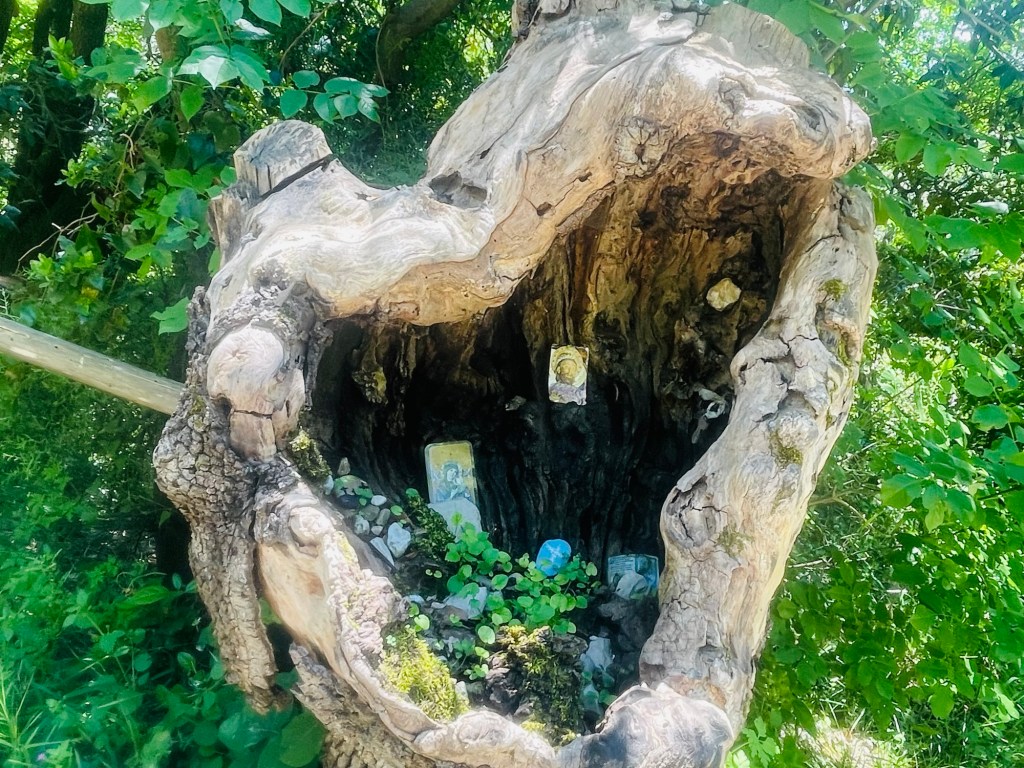
    Florence felt so near that it was as if I could reach out and touch her, but she was still 10 kilometres away. I passed a shrine that someone had embedded in a tree and took a moment to make a wish before spontaneously embracing it. Then I stopped for a little rest. 
    I reached the first open bar at around 3pm and delighted in downing some more fizzy water. 

    Then, after half an hour more, I’d reached the river Arno. It looked like reflective glass. I thought about Giordano and his Monet Lake made out of mirrors. Anna, Massimo Kyo, Rossella, Enrico, Oliver, Paulo – what people I had met on my way!

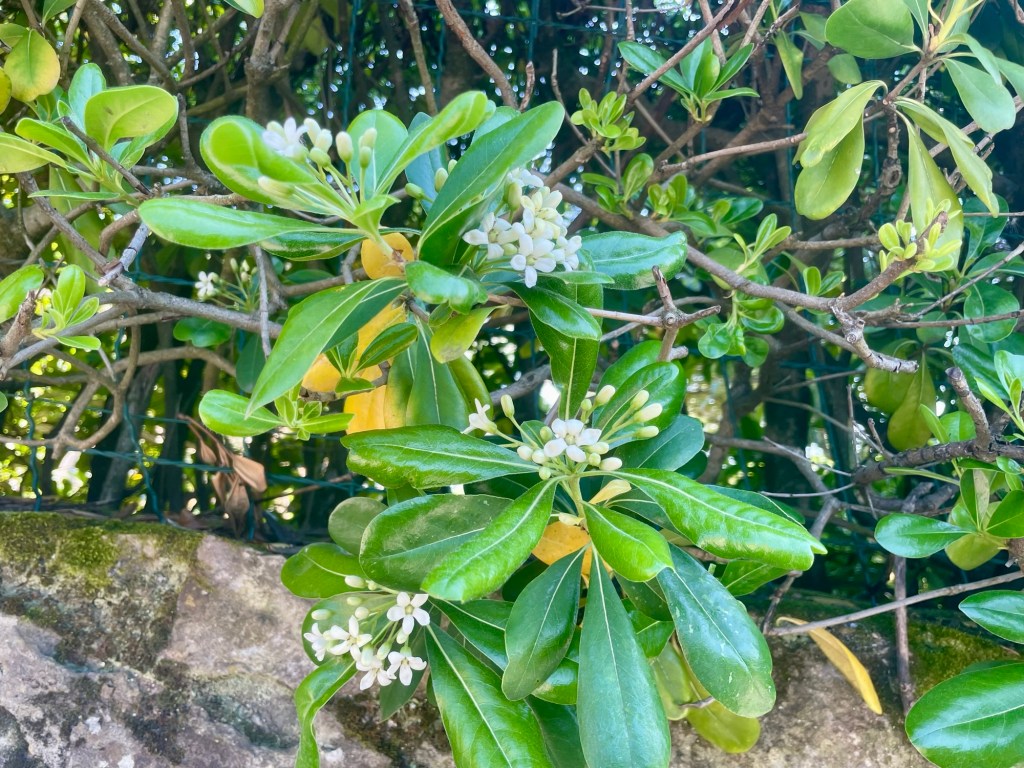
    I passed a hedge of Japanese cheesewood whose flowers smelt citrusy and vibrant. I took a sprig and held it to my nose, inhaling every last hint of perfume. I picked some wild garlic and smelled the oil heavy on my hands. There was so much here you could make a whole batch of pesto, I thought. 
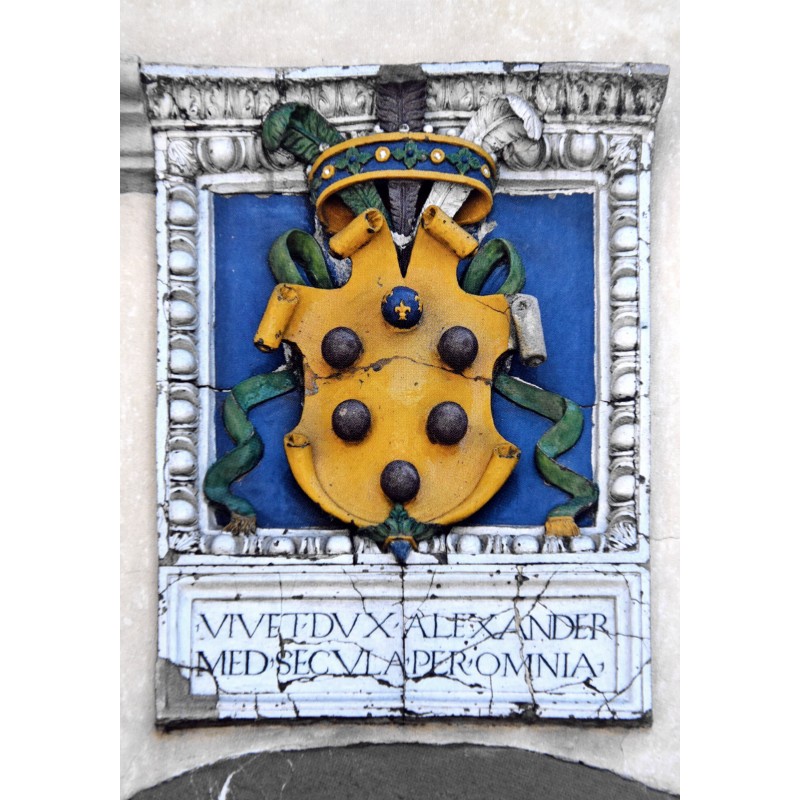
    I was getting into the suburbs now. I passed the Florentine Equine School and a Business Centre for Young Doctors which had a crest decorated with half of the Florentine lily and half of the Medici shield.  

    The landscape had flattened out and I heard children playing in a schoolyard. It was strange to use a zebra crossing and be amongst so many cars. I was now just over 90 minutes away and would reach the baptistry by five. 

    I caught sight of myself in one of the corner mirrors on the road. I hadn’t washed my hair in five days and my braids were fraying at the edges. But I looked well. I looked really well. As Dante had written over 700 years ago, this was a ‘vita nuova’, a ‘new life’!

    As I traced the path along the Arno, a form of blossom like sheep’s wool collected at my feet, causing me to sneeze. Some people were sunbathing next to the weir. I remembered running up there in those precious three months I had spent in Florence as a Visiting Professor. Someone was sitting on a plastic chair in the middle of the water, of course. A lone woman was kayaking down the river.
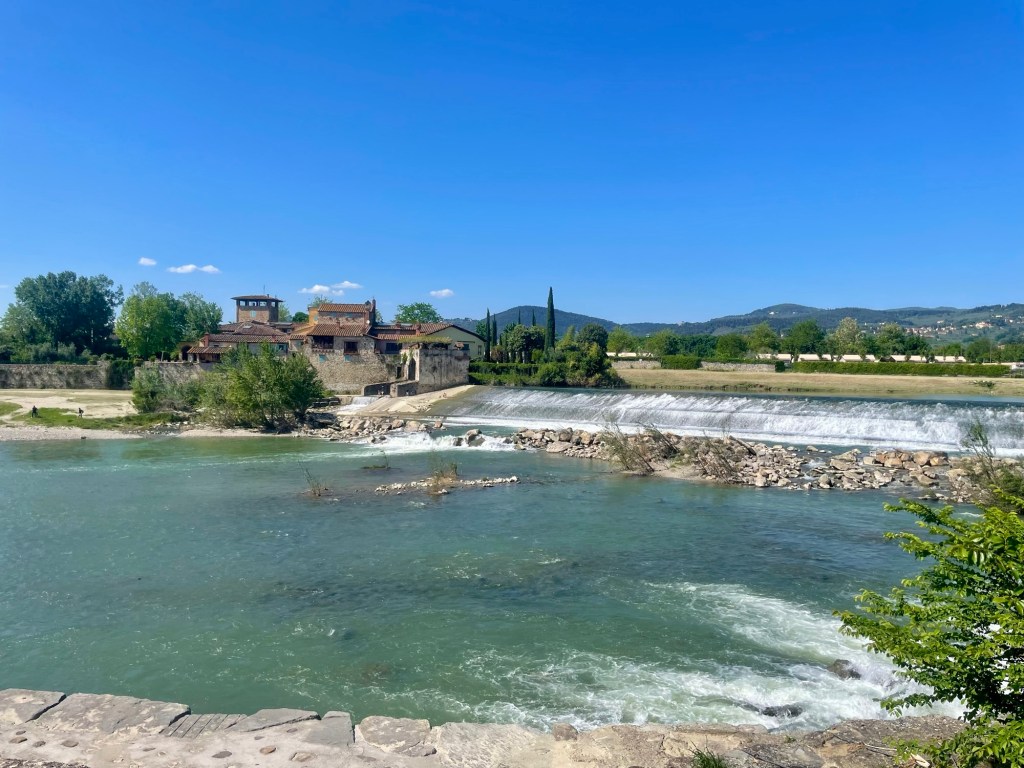
    I kept my eyes peeled, recalling the time I’d taken the group of refugee students to Florence and my co-facilitator, Mortezza, had spotted an otter in the bullrushes. 

    ‘It looks just like the emoji!’ Mihal from Venezuala had exclaimed.  

    I’d also spotted kingfishers several times.

    I retraced the path of the beginning of the cammino which I’d hiked with Alina at my side, recalling the same beehives, hens and the same random upturned table in the middle of a lawn. 

    My inner world had changed profoundly and my outer body too – I had thick calves and my behind seemed to have moved up an inch. But here much was the same. A young woman in fashionable sunglasses walked past me with a Calvin Klein bag; another woman with neon pink lightening earrings rode by on an electric scooter. Two female lovers sat opposite one another on a bench with their legs intertwined.
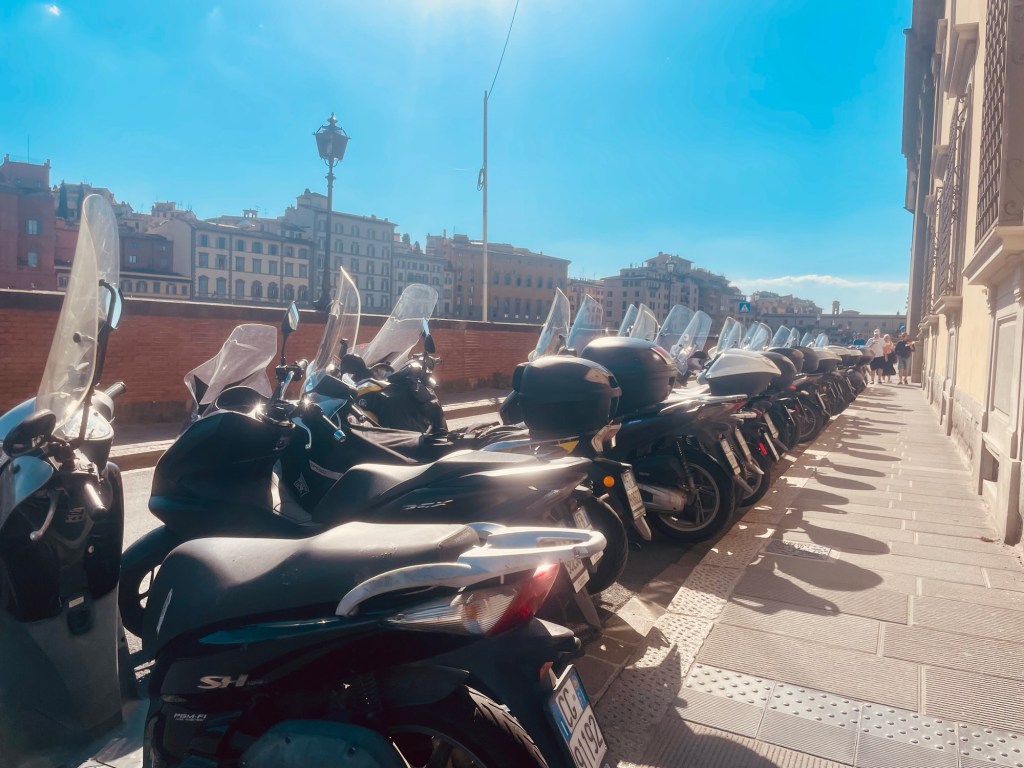
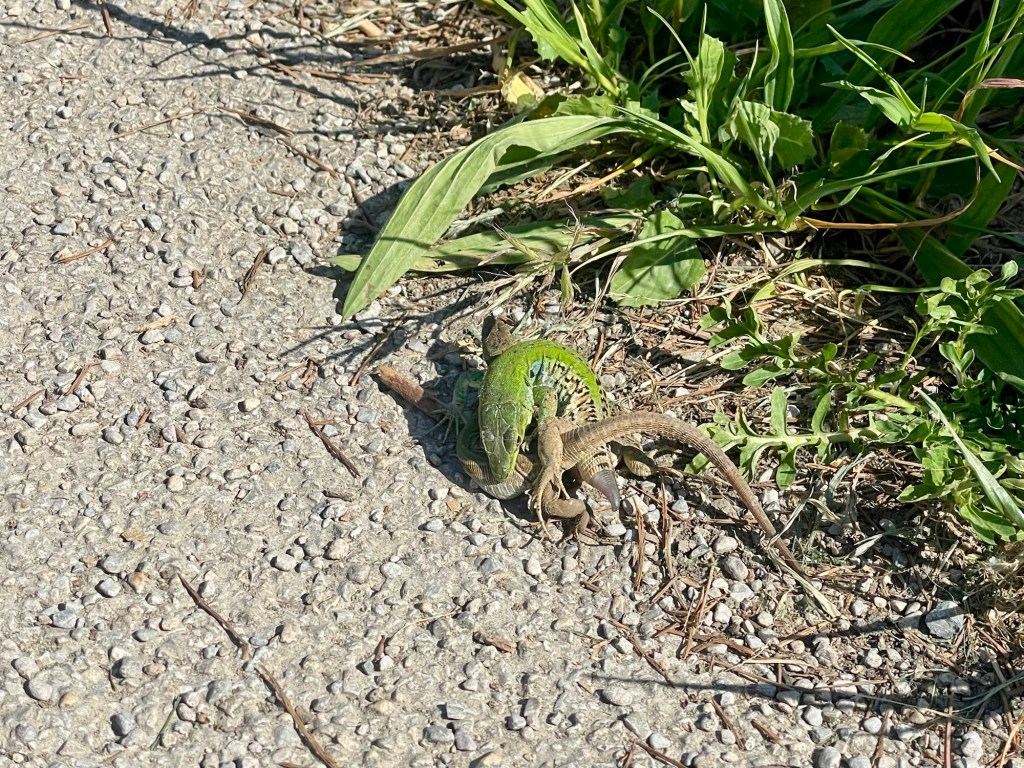
    And now I was in the city in earnest. The dum dum dum of music with a heavy base played out from somewhere to my right and several joggers ran topless in the sun. Tour coaches lined the streets with signs reading promises such as ,’Experience Pisa and Florence in a Day.’ I stopped to observe a lizard biting another’s tail.
    ‘Have you come far?’ asked an elderly gentleman.

    I had, I replied. 

    ‘Porca puttana miseria’ came his response, ‘good for you!’

    I passed the canoe club and the bridge off to Piazza Michelangelo from where, on several occasions, it had been a delight to watch the sunset. I passed through the remnants of the old city walls. 

    Florence had always seemed like such a small city to me, but suddenly it seemed so big.

    Here and there were grids covered by the familiar ugly orange netting. But now it didn’t mean that there had been a landslide, it meant roadworks.

    Two people walking with audio guides around their neck nearly walked into an open drain as they passed a stall selling suggestive aprons stamped with the statue of David. 

    I didn’t need a map now. I was on home turf.
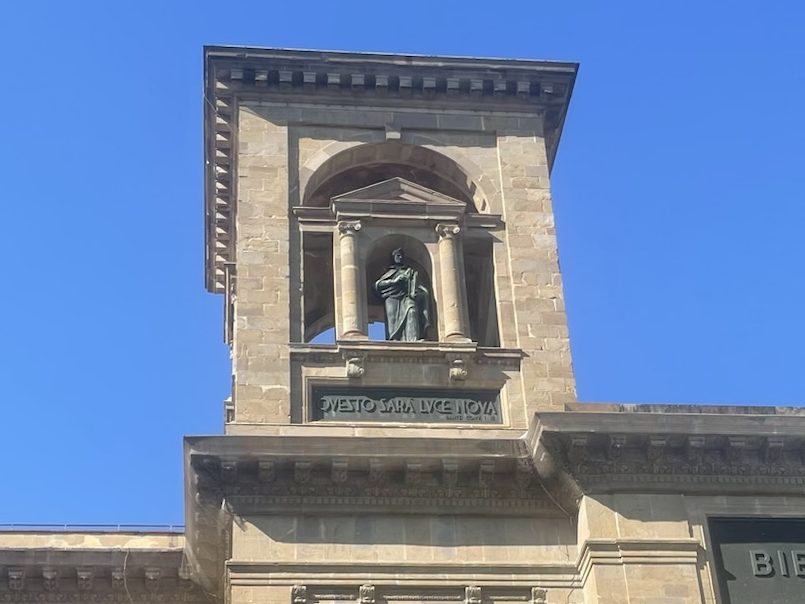
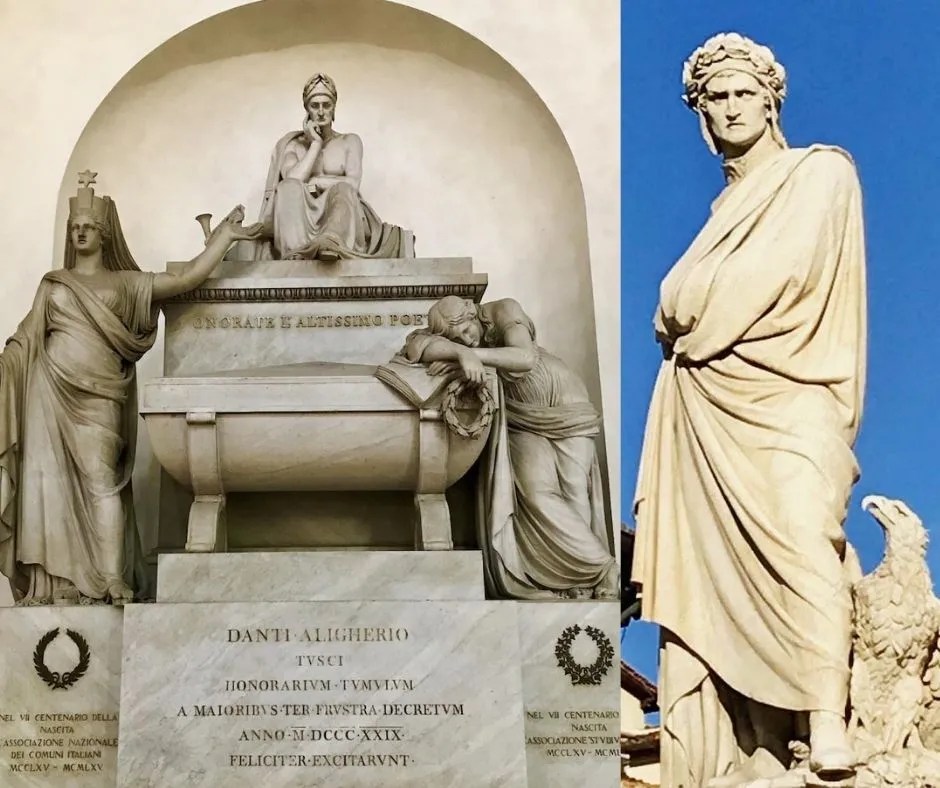
    I passed the national library with its Dante sculpture and quote from his political treatise Convivio, ‘let this be new light’. Then came the Galileo Museum, shortly after which I turned right at the Uffizi galleries. Over the heads of all the eager street artists, I spied a second Dante sculpture which depicts him pointing at himself in a gesture of self-importance and pride. Here in stone, he has been bequeathed the laurel crown of poet that he so desperately wanted to return to wear in person before he had died, aged 56, in exile. I thought of his bones, lying in Ravenna. 

    From Palazzo Vecchio I weaved in and out of guide groups who were following umbrellas of every neon hue. Three people were eating the special Florentine schiacciata on the move. A little Canadian girl was playing with a wooden sword.

    ‘Whoosh,’ she cried out, ‘off with their head!’

    Under the stone arches, it was nice and cool. But I’d never been here when it had been so busy. It was heaving.

    The smell of leather hit me as I passed down the main street and I resisted the temptation to pop into my favourite lingerie stores. I couldn’t believe I was in reach of the baptistry, my final stop. 

    I was glad to have this final moment on my own. The last three weeks had tested me beyond what I thought I could endure physically and mentally and I felt happy and restored. 

    And with that, I turned the corner and there she was, the baptistry in her green and white marble.

    She stood simple and sublime.

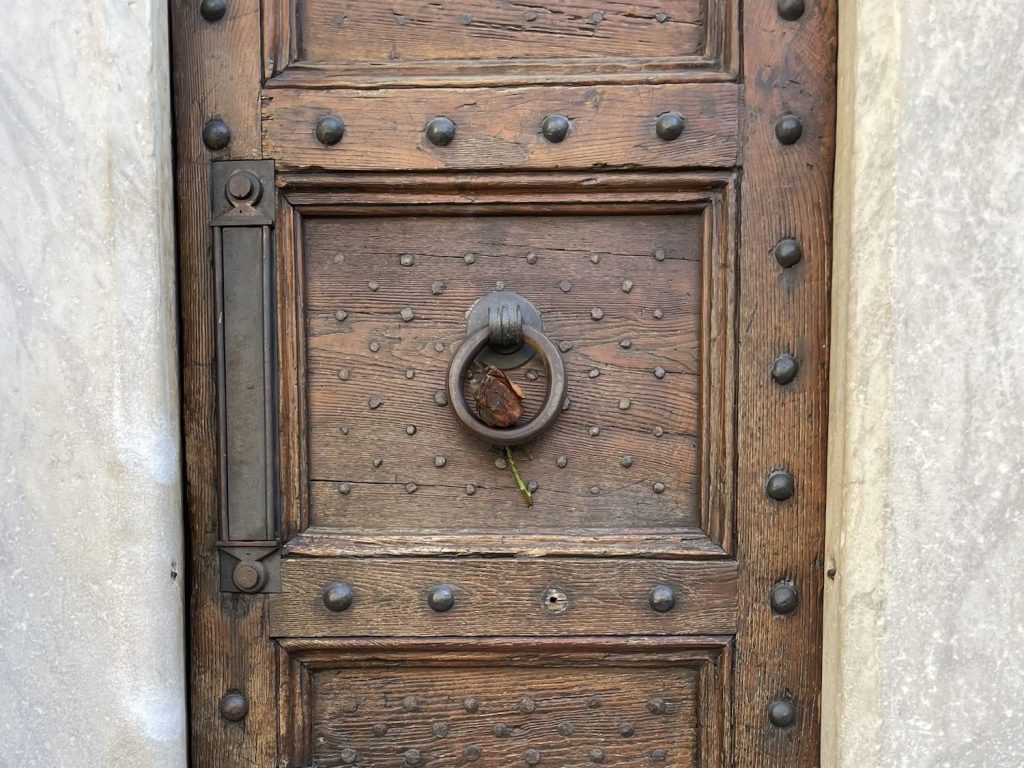
    I thought of how struck I had been at the age of 15 when I had first seen the mosaics inside and of the copy of Christ’s head that I had rendered that was likely still situated in the paving of my old secondary school. I thought about the first time I had read the words of Dante and felt seen and understood in my sense of being lost. The sobs immediately came. I placed my hands upon the flank of San Giovanni and tucked the rose I had brought from Ravenna in the doorknob. Dante’s dream had been to return as a poet and now, in some ways, symbolically, I had brought him back.
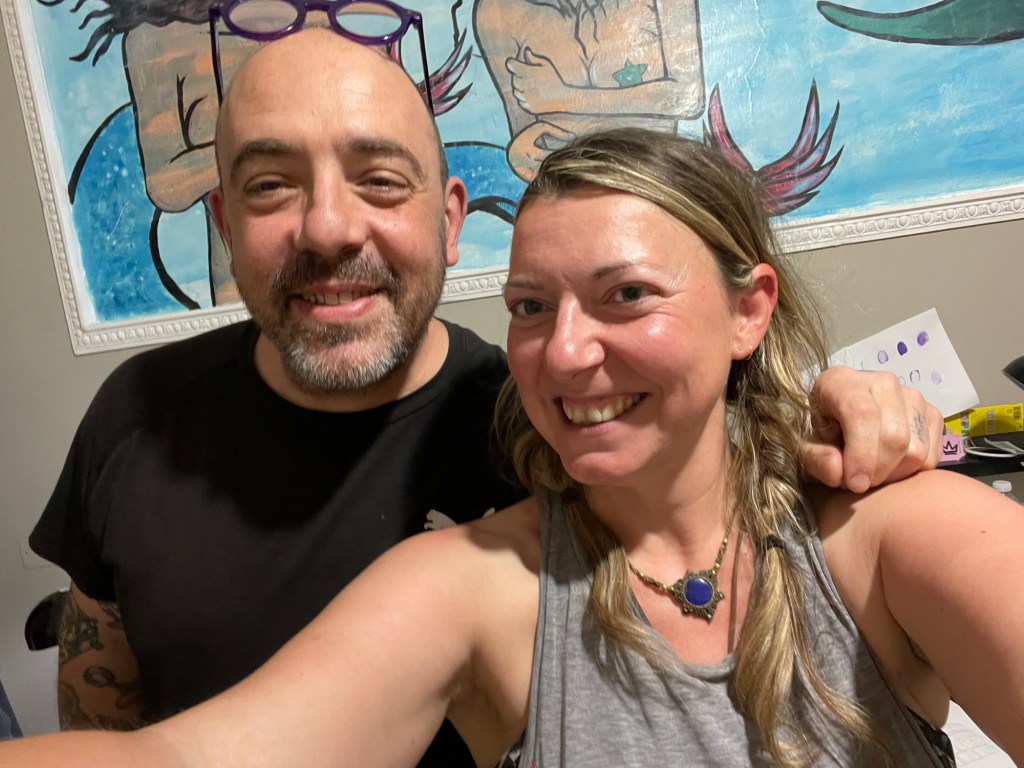
    Turning the corner, Kelsey and Alina with whom I’d shared parts of the cammino were there to greet me with a huge hug. Kelsey had made me a laurel crown with roses which she placed upon my head – they smelt magnificent. Alina who was wearing characteristically fashionable unmatching earrings squirted at me with champagne in the traditional fashion of Italian graduations. I sent a picture to Giordano, the founder of the trail. 

    ‘Consider yourself a graduate of poetic passages in Tuscany and Emilia Romagna,’ he replied with a smiley face emoji.

    That word passages had come to mean so many things to me. Passages of the Divine Comedy, passages through place and time; the many passengers who had travelled with me.

    As I melted into Kelsey and Alina’s embrace I thought of canto 21 of Purgatorio when Virgil meets with his beloved mentor Statius and realizes that he is unable to hold him because he is but a shade. He says, in one of the most moving passages of the entire Divine Comedy,

    ‘“Now you can understand
    how much love burns in me for you, when I
    forget our insubstantiality,

    treating the shades as one treats solid things.”’

    I had been gone three long weeks, much of which I’d spent alone in the wilderness, and as I hugged my friends, I felt my body return to life. I thought of all the times I had been to visit friends in detention centres where we’d been banned from touching; I thought of the borders that divided us; of Tagore’s ‘narrow domestic walls’.  
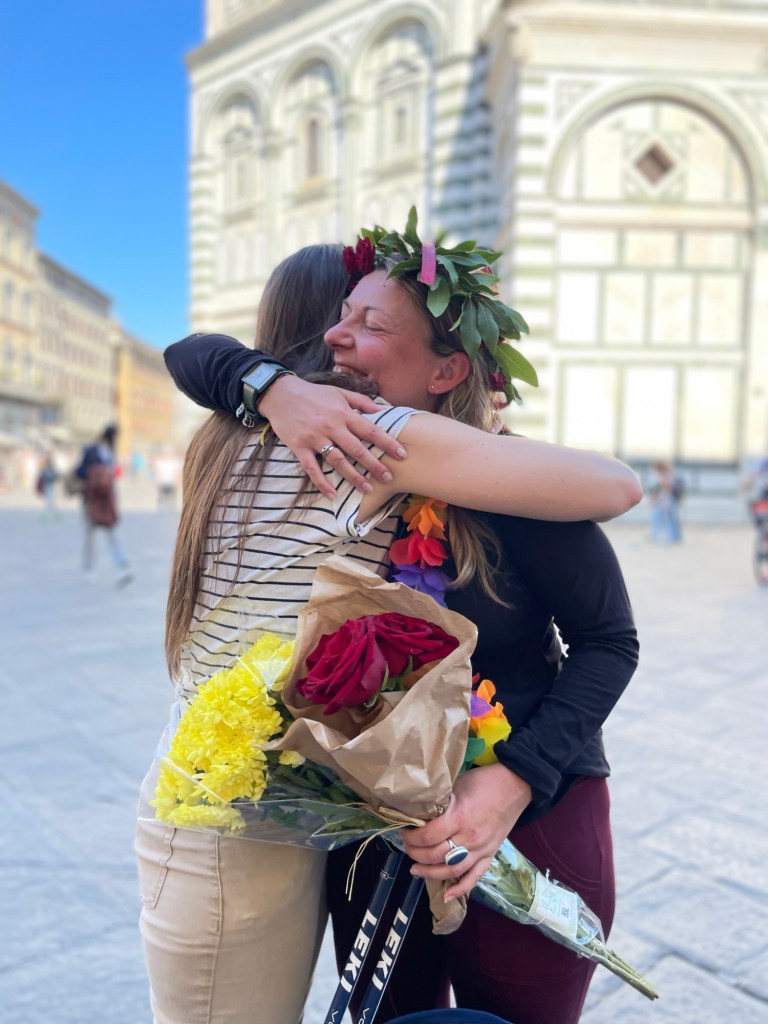
    Alina untangled her face from my hair. 

    ‘A question’, she asserted.

    ‘Do you think, after all this, that Dante would have written the Divine Comedy had he never been a refugee like me?’
  • ‘Visible Speech’: From Dicomano to Pontassieve

    The sun shone strongly on the rolling hills and I reflected on great art’s ability to speak in indelible ink.  

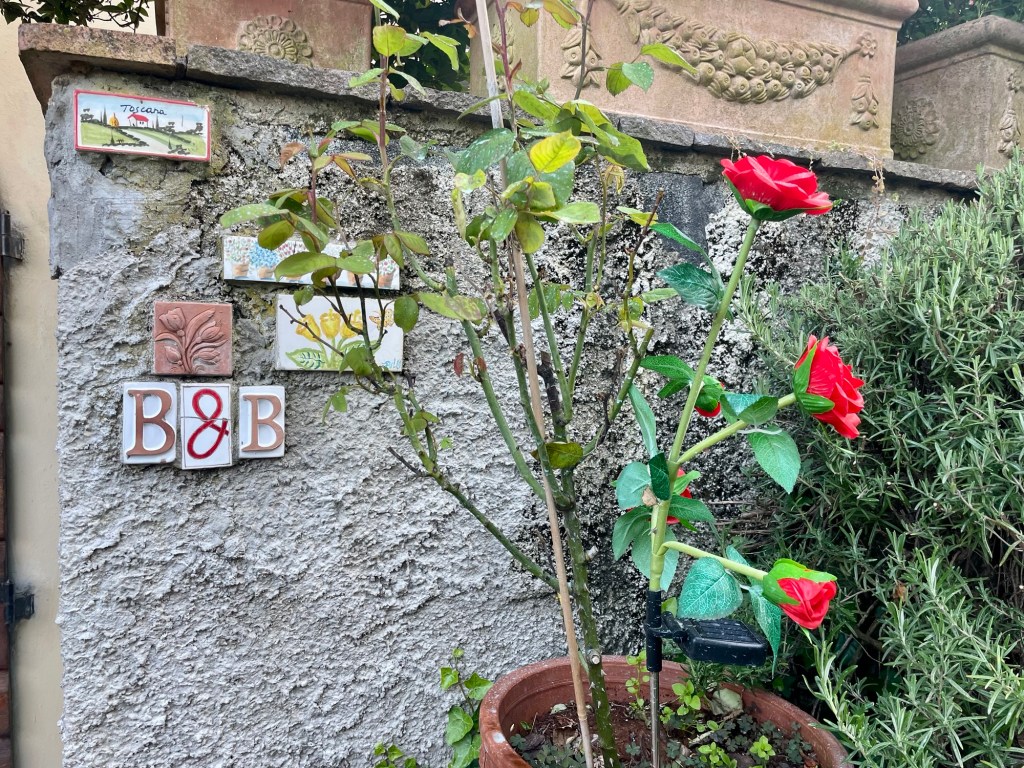
    I woke at 7am and ate breakfast with the construction worker from Udine and a colleague of his who was also staying at the B&B, Pino del Capitano. Coffee was served in a chipped teapot.

    We discussed Italian TV and the phenomenon of the velinas who are attractive women who serve at props in news and current affairs shows – showgirls, if you will. When I had started studying Italian in my teenage years, I had been struck by the sexism that dominated much of the culture, but I reflected that on my cammino I had encountered nothing but respect and chivalry. 

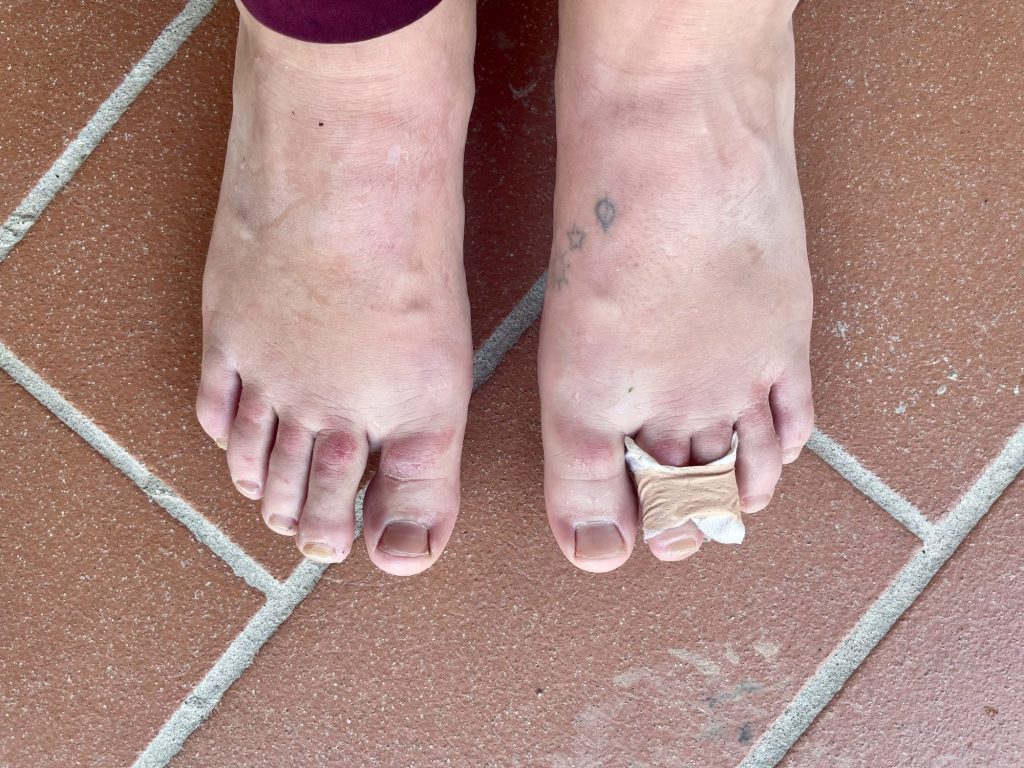
    I was worried about my toes which were swollen and painful from yesterday’s fall and so I bound them together once more with some tape and plasters that had been left to me in a first aid kit by Alina. Today I would walk tentatively and see how far I got. It was going to be a case of mind over matter, for sure.

    Ivan proudly showed me the lemons he had picked from his own tree. They smelt sweet and tangy at the same time. I was reminded of the citrus house in Oxford’s botanical gardens where I would sit and read as a student. 

    As I departed back up the valley, a line of mist like an airplane trail hung lightly in the sky. It was sunny but the air was fresh, or rather ‘frescino’.

    I love Italian suffixes such as ‘ino’ and ‘etto’ which denote something as small. ‘One’ renders its subject big and ‘accio’ makes it wicked. My Italian exchange partner Maurizio had called me ‘Jennina’ – little Jenny.

    I would miss speaking Italian on my return. Speaking a foreign language is like playing a musical instrument through which you get to express a different part of yourself. In French, I go by Jennifer; in Italian I am Jenny; and in Arabic I am Jen which means ‘ghost’.

    Kelsey, picking up on my international mindedness and desire to incorporate all my different linguistic personalities called me ‘Jenny-Jennifer-Jen.’

    As I passed down Via Garibaldi, there was a church on my left and an elderly gentleman attending to his roses. One of the gardens that lined the little path featured a tree decorated with easter egg wrappers and outside one house was an exercise bike. ‘Free to anyone who loves the planet,’ read the paper note.

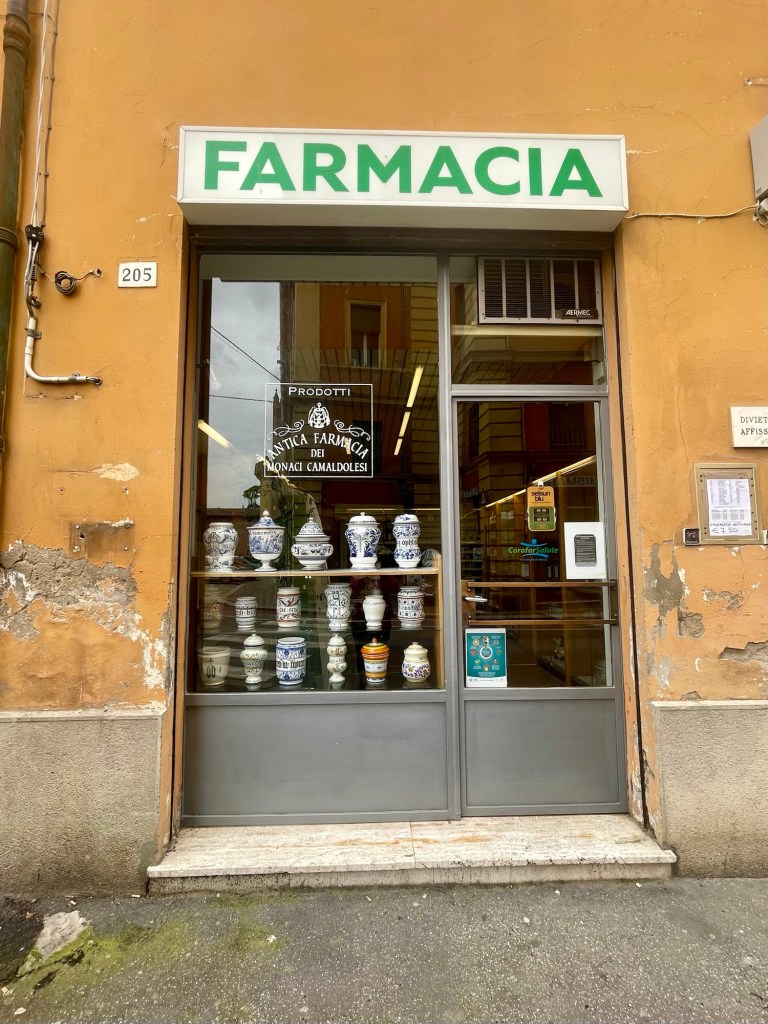
    As I crossed the beautiful river, I realized I was limping. The pharmacy wasn’t open for another hour so I made do with Ibroprofen and carried on my way. On the road there were shards of a car’s wing mirror that glittered in the dawn light.

    I entered a café in Dicomano’s centre to grab a second coffee and got talking to three men in bright yellow nurses’ uniforms. I asked one of them about my foot. He said the same as my mum had, to lance my toes together, put my foot up with ice and rest. I told him that this wasn’t a possibility and that I had to continue. 

    ‘I see,’ he responded with a smile. ‘So, you grind your teeth and carry on, girl!’

    The gaggle of men sitting smoking outside could have been intimidating, but I wasn’t self-conscious at all. On the contrary, I felt welcome. There was a self-service laundromat and a shop called Meat Matters, both of which were yet to open. 

    I walked alongside the river for around 20 minutes. Some graffiti said, ‘all cops are bastards.’ There was a beautiful little allotment on the left and an avenue of cypress trees to the right. I crossed beneath a short railway bridge which even touched my head at five foot two. 

    A man was walking a ridiculously small dog in a gilet.

    I read a sign alerting me that I was on the Path of the Powerful Arno, also known as the ‘Path of Partisans’. In the Spring of 1944, the resistance to the Nazis had grouped together near here and walked to Florence which they would finally liberate on August 11th. I thought of one of my favourite Italian writers, Elsa Morante and her novel La Storia, which means both story and history. It narrates the life of a single mother living under Nazi occupied Rome:

    ‘Freedoms are not given,’ she writes, ‘They are taken.’ 

    It was hot and I was sweating as I left the river and mounted the rise out of the town. A school bus went up the hill and down again. I’d really come to appreciate nicely ploughed agricultural land; the brown earth was spilling up its guts, vulnerably awaiting new crops.  Someone had a boxing bag hanging in their garden.

    Today I felt like walking in silence. I was nearing the end of the cammino and every second was important. Every now and again a stone would get caught just under the front pad of my left foot, sending a shooting pain up my leg. But I was on the way of the partisan. What did I have to worry about, really? It hurt, but I could still walk and walk I did.  My right calf twinged. Perhaps I was overcompensating for my left foot?

    After yesterday’s multiple diversions, I kept religiously checking that I was on the right path. I saluted the town as a train chugged by, turning the corner into a silver cobweb that broke upon impact with my nose. 

    A flurry of flowers, a kind of sage I think, were covered in ‘cuckoo spit’. The phenomena actually has nothing to do with cuckoos or spit at all. The foamy liquid is caused by a type of bug called a froghopper nymph, also known as a spittlebug.  The insect feeds on sap found in plant stems and leaves behind blobs of this spit-like goo. 

    I saw a new type of butterfly – yellow and black in the middle, its wings became translucent at the ends. 

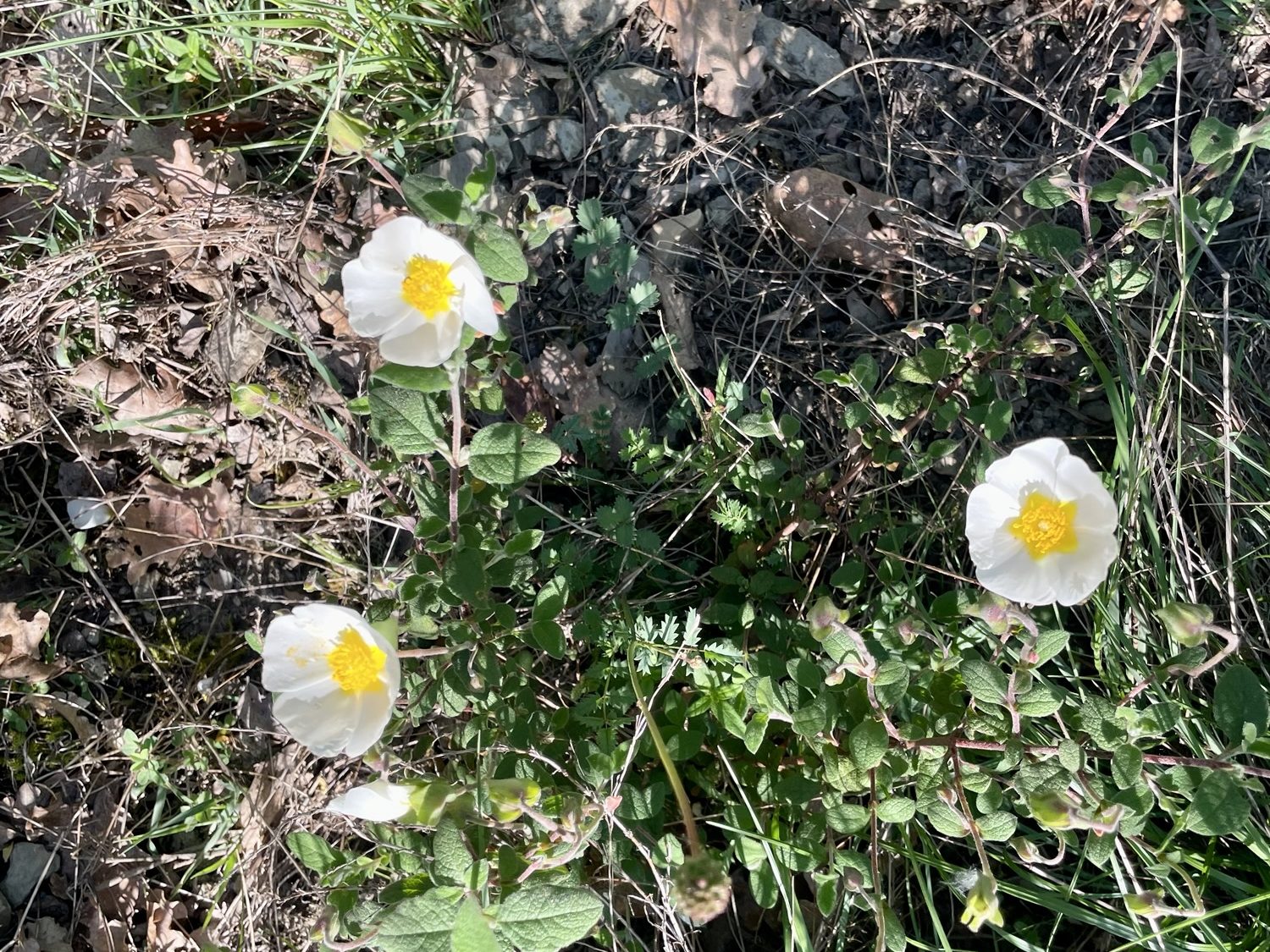
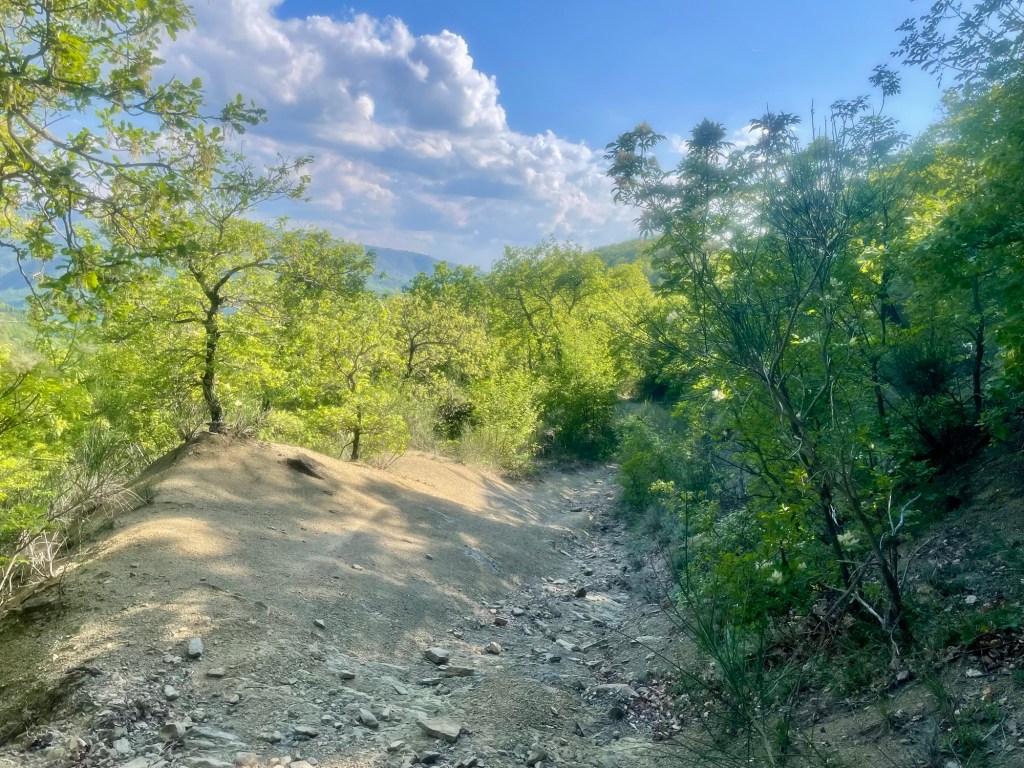
    There were white flowers with yellow middles, pregnant with pollen and I was happy to see the bees enjoying it. The shadow from the trees was merciful as I made my way up a steep uphill path. The sedimentary rock crumbled in clumps beneath my feet.

    I followed the navigator on my phone down a little path where the grass was really tall, stopping to pet two golden retrievers who accompanied me for a short while. One licked my hand which was salty from the sweat.

    A stack of abandoned beehives looked like filing cabinets on the hill.

    Though the sun was maturing in the sky, I resisted wearing sunglasses as I wanted to enjoy every bit of the view. I wished I hadn’t left my sunscreen behind and trusted that my cap would offer sufficient protection.

    A man was sat reading in a field of chickens. A tabby cat crossed the path in front of me, reminding me of my own cat, Dante, back home. 

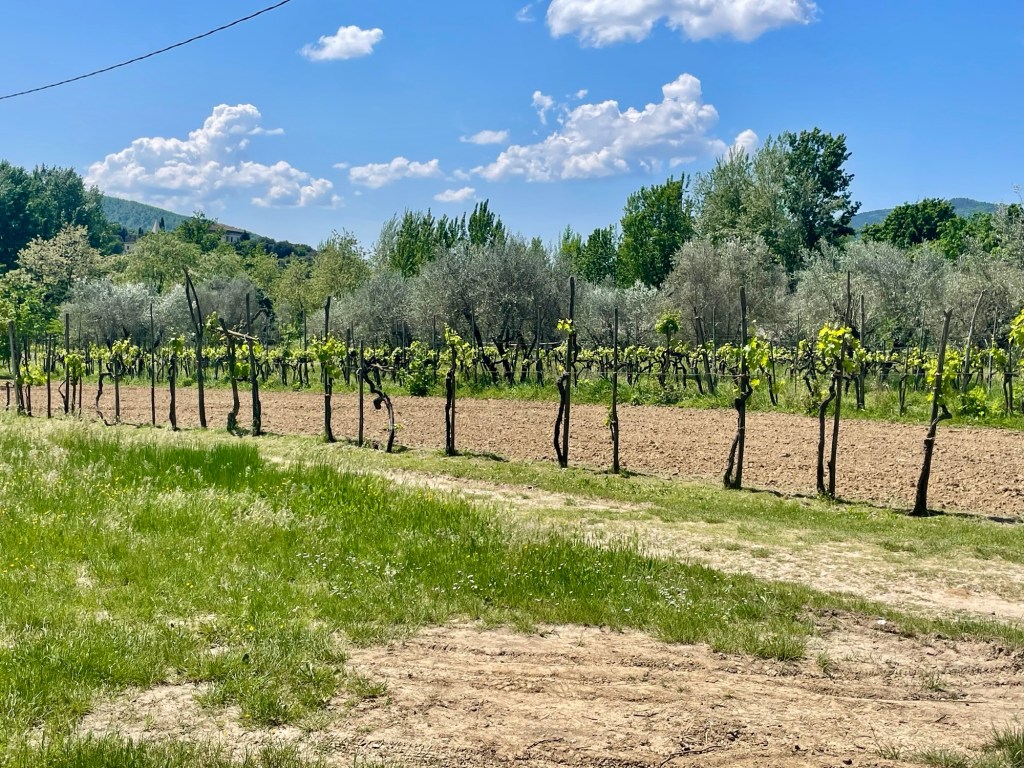
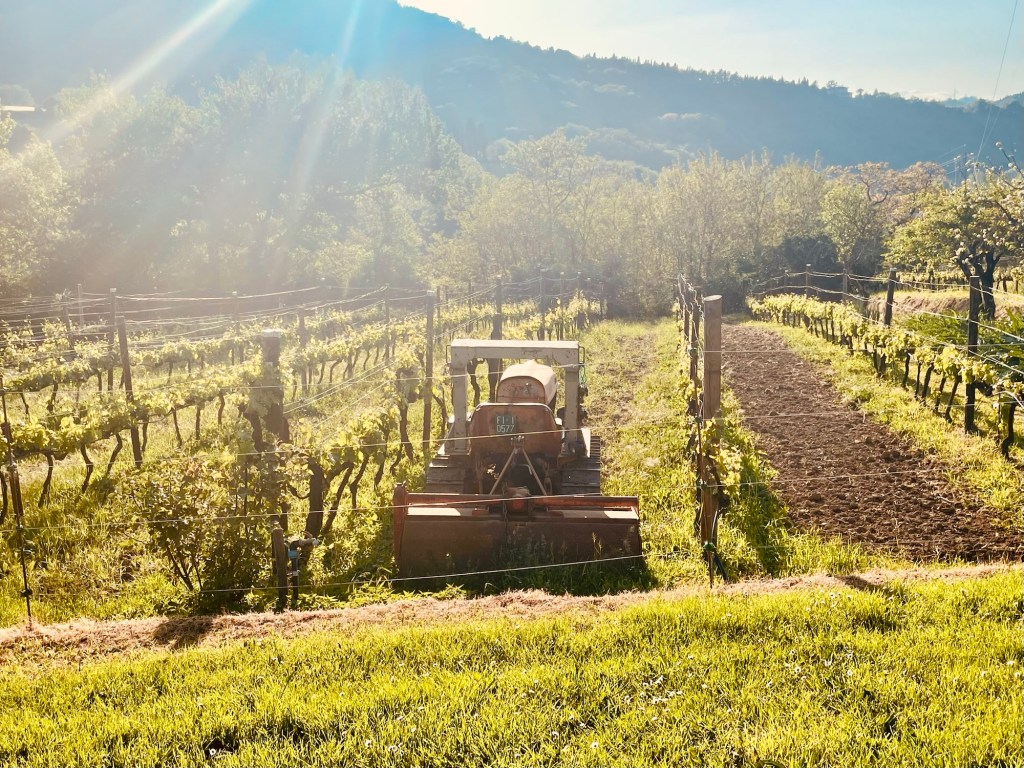
    As I passed a vineyard, I realized something momentous. The vines which I had identified at the start of my walk as tortured souls from Dante’s wood of suicides now appeared to me as yogis mindfully stretching their limbs towards the sun.

    My depression had lifted and I felt quite transformed in body and spirit. 

    All the nettles of the region seemed to have assembled here from where they stung me through my leggings as I crossed the overgrown field. My boots were snagging on sticky weed and there was a landslide. Then the overgrown foliage transformed into a perfect lawn.

    I stepped in something only to release that it was the entrails of a dead deer. The back half of its carcass was a little further up the path. Flies were making a feast of it. What could have got it, a wolf?

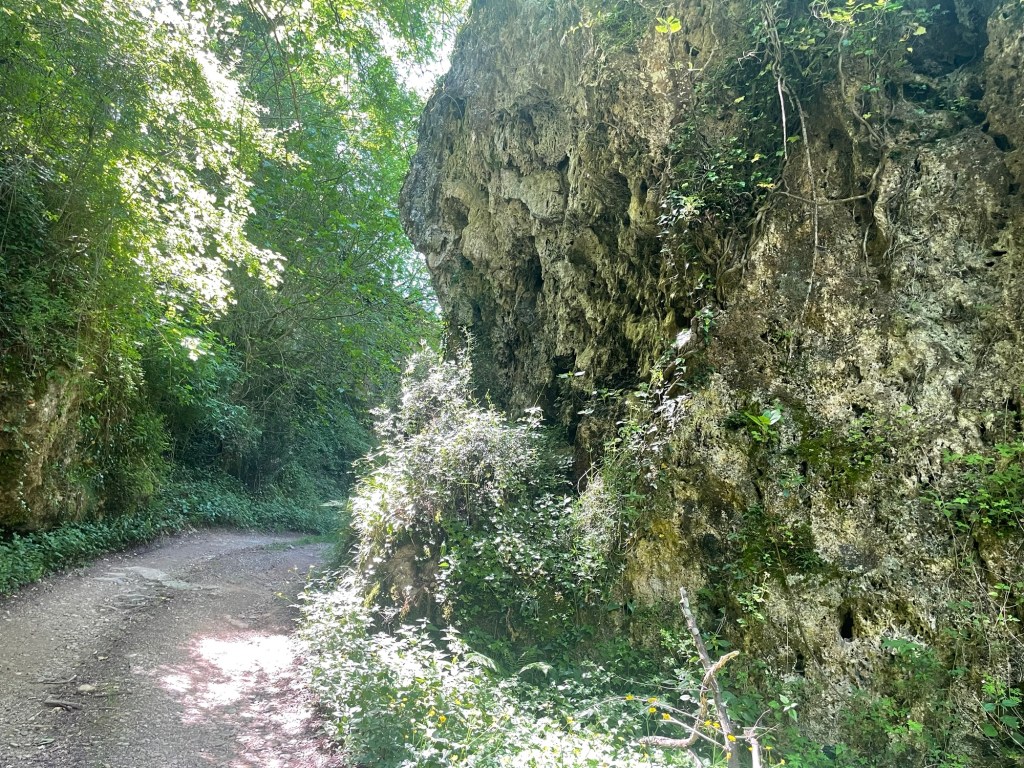
    As I passed a series of small waterfalls, I noted the ferns that sprung up in fans like toilet brushes. The landscape felt almost tropical. A pock marked cliff face protruded onto the road.

    I crossed a rickety wooden bridge and a sign that led to the Poet Hotel. What I assumed to be a father and son were playing in the stream. 

    Three hours had passed since I had left and so I stopped to take some more pain killers, observing a plastic unicorn rocker and succulents on the wall.

    Accompanied by the sound of the stream I felt like listening to Neil Young’s Harvest, one of the few CDs I had bought with me aged 18 as I trekked through India and Nepal. 

    ‘Will I see you give more than I can take?
    Will I only harvest some?
    As the days fly past will we lose our grasp
    Or fuse it in the sun?’

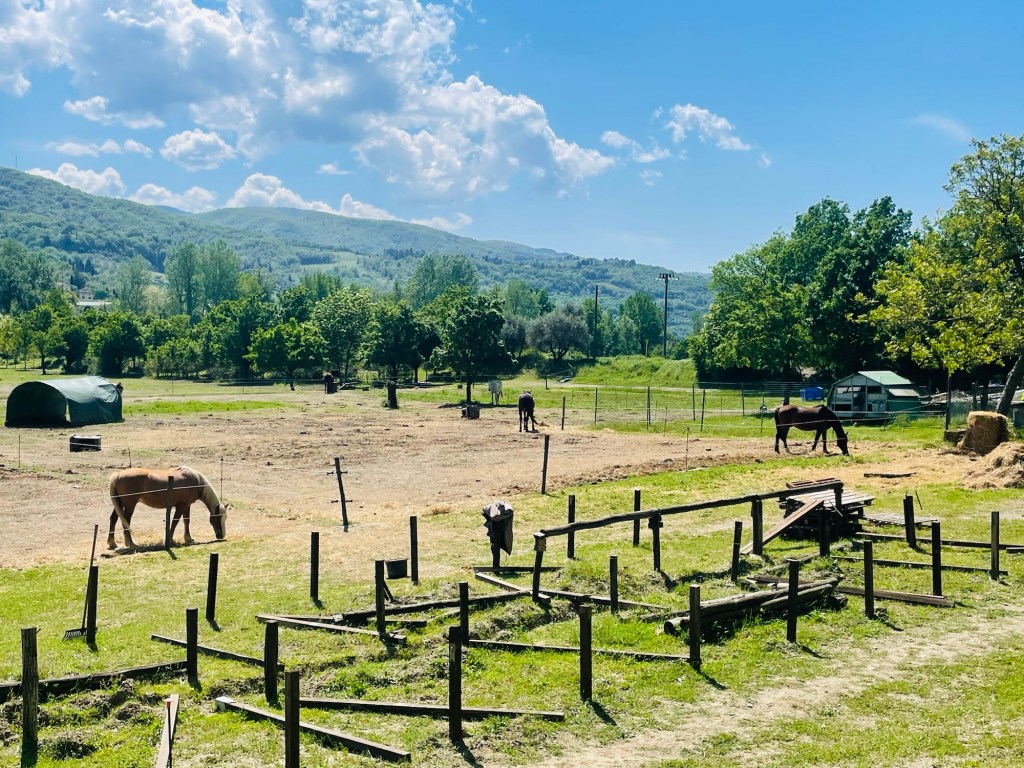
    Silverlake Ranch emerged and I greeted 12 horses who were each stationed in their own field by a reservoir. 

    The church bell sounded out at 11.58am, two minutes early. A spider had caught a fly in its web and it was slowly disintegrating. And there sat the spider proudly on the top of the grass.

    I was about half-way to Pontassieve and my broken toes were feeling it. I would stop in the next village and assess the situation.

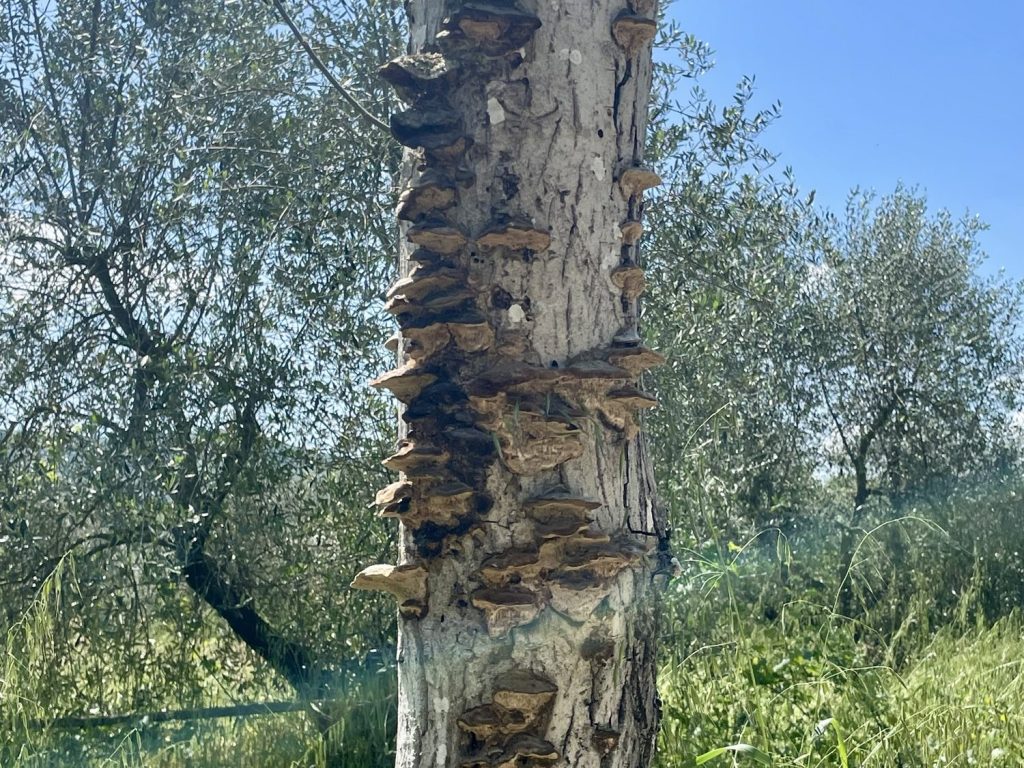
    I arrived in Galardo to the smell of woodsmoke and strings of drying laundry that lined the narrow streets. Someone had decorated the front of their house with purple and orange snapdragons. I took one between my fingers and made the familiar mouth shape: snap! Some mushrooms were colonising a tree. 

    I stopped at a bar overlooking the river and ordered a coke zero and tuna and tomato stracciata. The type of bread  salty and delicious – suggested I was getting near to Florence. I knew better this time than to ask for cheese, and it tasted all the better for it.

    The owner, Sofian, was from Tunisia and so we exchanged a few words in Arabic. He had turquoise eyes that were quite captivating. 

    ‘We get a lot of pilgrims who stop here on the cammino di Dante but also the Via Francesco. But you’re the only person I’ve met who has gone it alone. It must be tough, especially for a woman.’

    ‘Not really,’ I replied. 

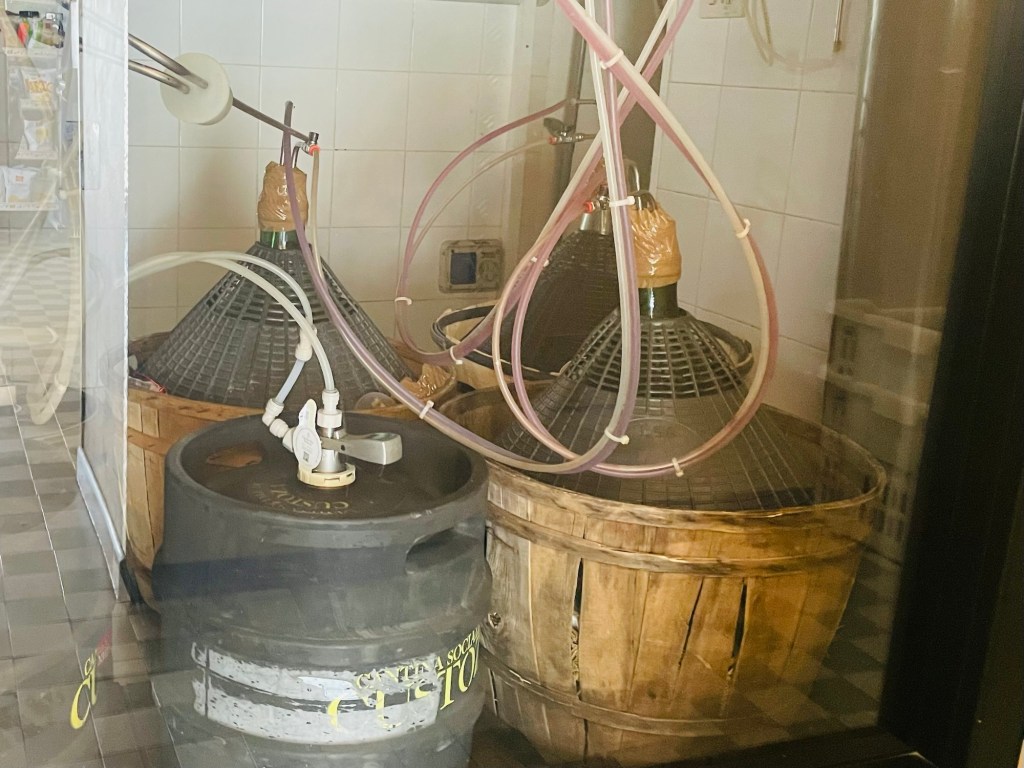
    I explained to him about my broken toes and he suggested I take a lift to Pontassieve with a local guy who would be passing by shortly to pick up some wine. The wine was made in house. Next to the bar there stood a heavy metal corking machine.

    It was tempting. I was determined to walk the full way back to Florence tomorrow and I’d already done 15km today and climbed 75 floors. I could wash my clothes, catch up on my blog and be ready for tomorrow which would undoubtedly be a day full of emotion. Kelsey and Alina were going to meet me in Florence along with Professor Alberto Tonnini from the University where I’d taken up a visiting professorship in 2023.

    Otherwise, there was the train or the bus, counselled Sofian. I heard him on the phone explaining that there was a ‘pretty blonde girl who wanted a lift’.

    Within ten minutes, Maurizio had arrived. He was a gentle older man with a solid grey moustache who drove a green jeep. 

    ‘Sorry for the mess,’ he offered. ‘For me a car is a way to get from A to B and nothing more.’

    I offered him a drink and, with speed he downed a glass of rose. 

    I thought of Virgil seeking out a shortcut from him and Dante in canto 11 of Purgatorio,

     ‘to reach the stairs; if there is more than one
     passage, then show us that which is less steep; 

     for he who comes with me, because he wears
     the weight of Adam’s flesh as dress, despite
     his ready will, is slow in his ascent.’

    See, even Dante had taken it easy sometimes.

    In the car, Radio Capital, a Roman station, played out a solid mix of 90’s tunes. Maurizio explained to me that he was retired but still repaired cars with his son for a living. But today was May 1st, workers day, and so he was having a day off.

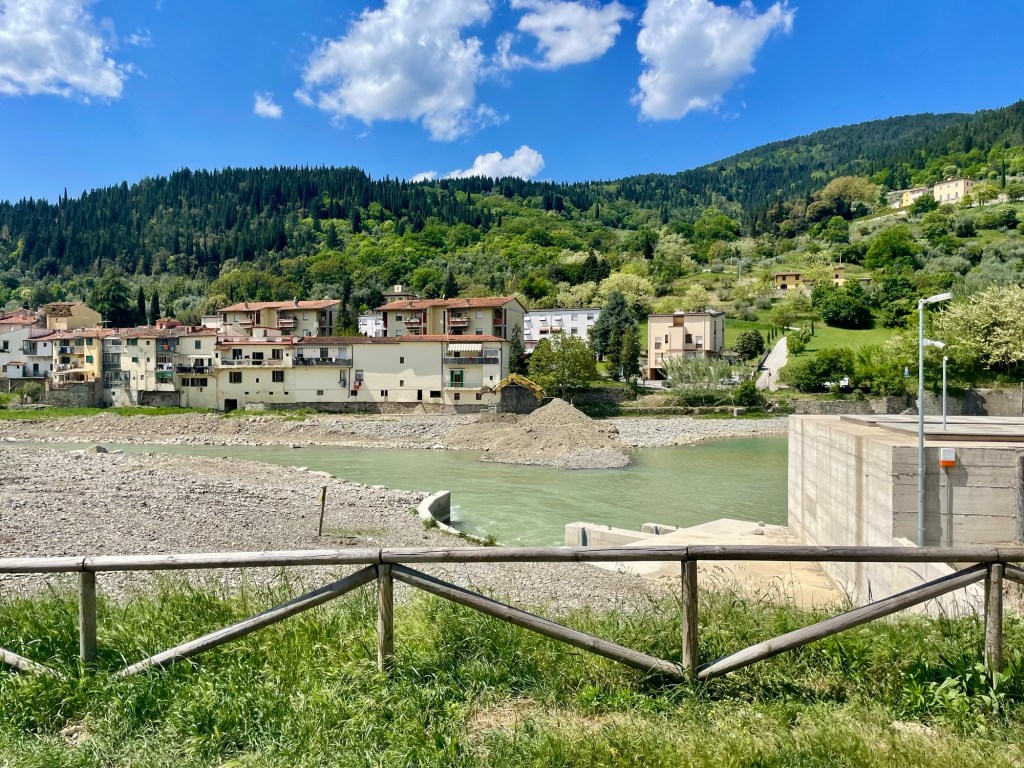
    As we passed the medieval bridge, he explained that a ‘bomb of water’, or flood, had hit the town on March 15th, causing damage to its foundations and inundating the football field. There were logs that had been carried by the surge still deserted on the banks of the river.

    ‘Luckily no one here was hurt,’ Maurizio sighed. ‘You hear the sound of water and you can’t do anything.’

    I thought back to Rossella and her animals, not all of whom had survived the floods of 2023. 

    Maurizio left me by the town hall in the old city and wished me well,

    ‘Be careful in Florence,’ he advised me, ‘the political rivalry of Dante’s day continues there today.’ 

    ‘Oh, there’s the local major,’ he said, waving, and then he sped on.

    I felt vindicated in my decision to dye my hair blonde which had clearly played a role in me getting a lift.

    I strolled around the old city walls and was surprised at the decent size of the town. There was a United Colours of Benetton and a shop that sold nothing but sewing machines. A man’s barbershop was full of beautiful antique equipment. I saw my reflection in the window – the top of my shoulders were red with sunburn.

    I climbed up a little side street that smelled of soap and up a very steep hill to the apartment where I would be staying that night, La Taverna di Caterina. There were orange trees on the terrace and a sweeping view of the city. 

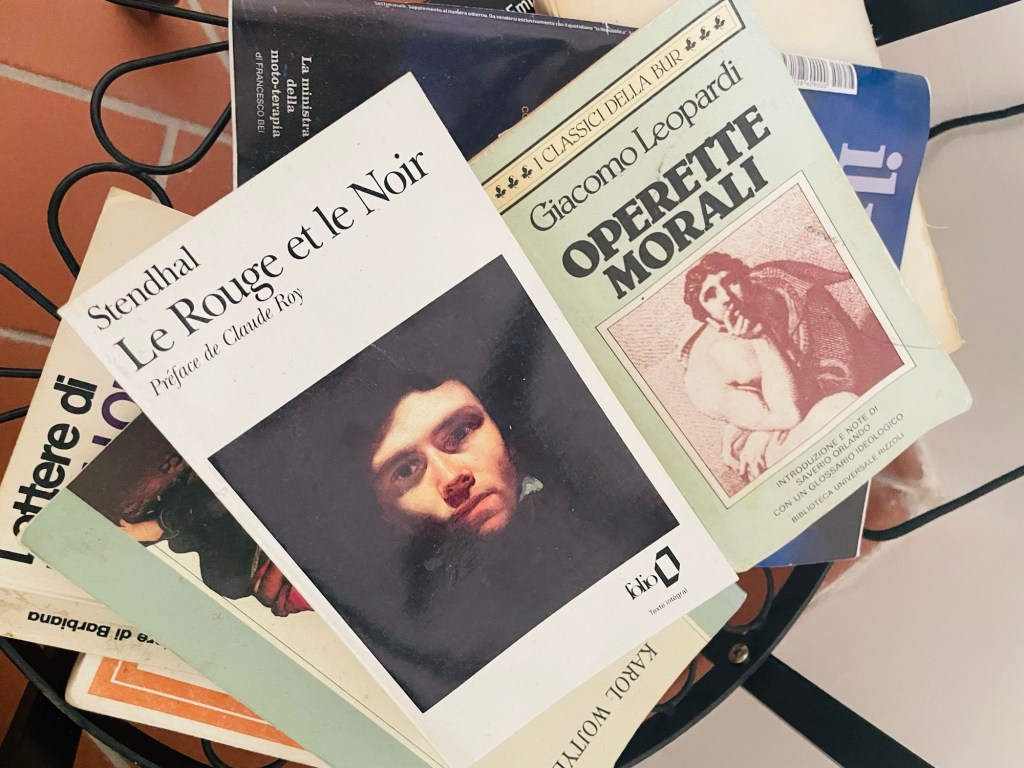
    Caterina’s daughter Anna showed me the lovely flat which had a round table outside for writing. Inside there was an amazing selection of books including The Red and the Black by Stendhal and verses by Leopardi.

    I thought back to Stendhal’s romantic novel. 

    ‘A good book is an event in my life,’ he had written. 

    As I washed my face in the sink, I realized I had come out in spots from the constant sweating. There was a heatwave back in England my mum messaged me to say and I wondered if she had caught the sun too. 

    I did some writing, caught up on work emails and then wondered back into the town. 

    Since the start of my cammino, I had wanted to do something permanent to mark the adventure and my relationship with Dante, so as I passed a tattoo studio I tentatively walked in and inquired if they had any spaces.

    They did.

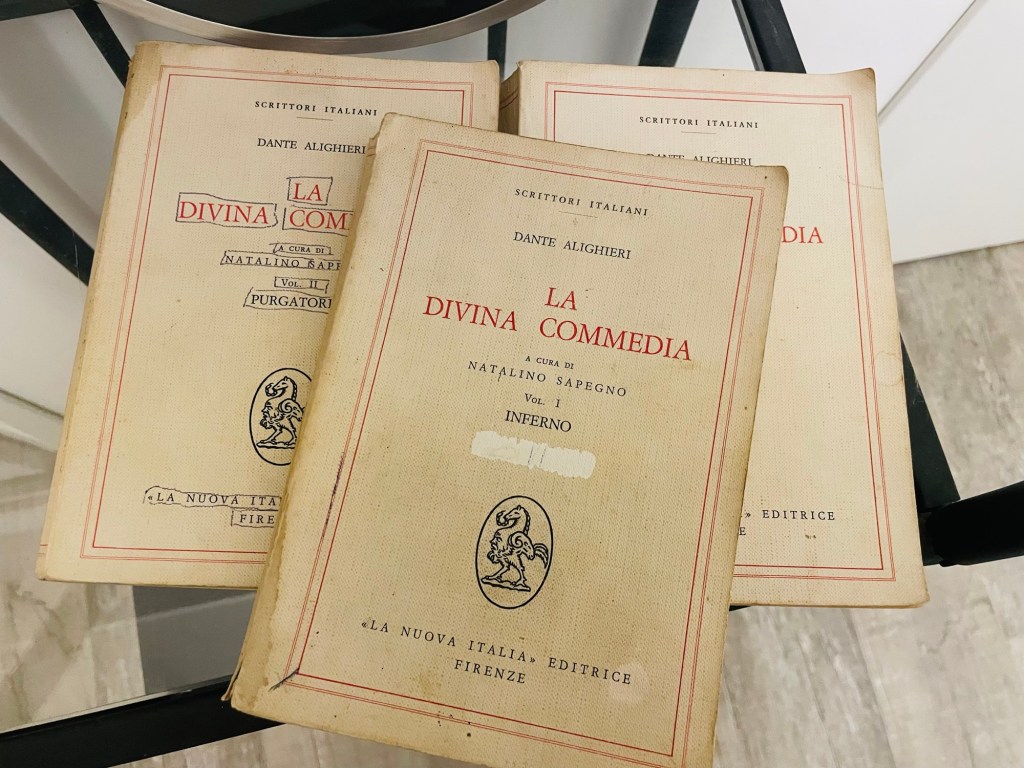
    I spoke with Massimiliano, the lead tattoo artist and explained something of my journey and intention. Then, as if by magic, out he whipped a copy of the Divine Comedy from his backpack.

    ‘I always carry it with me,’ he said, ‘here and there I read a verse or two.’

    It felt meant to be. 

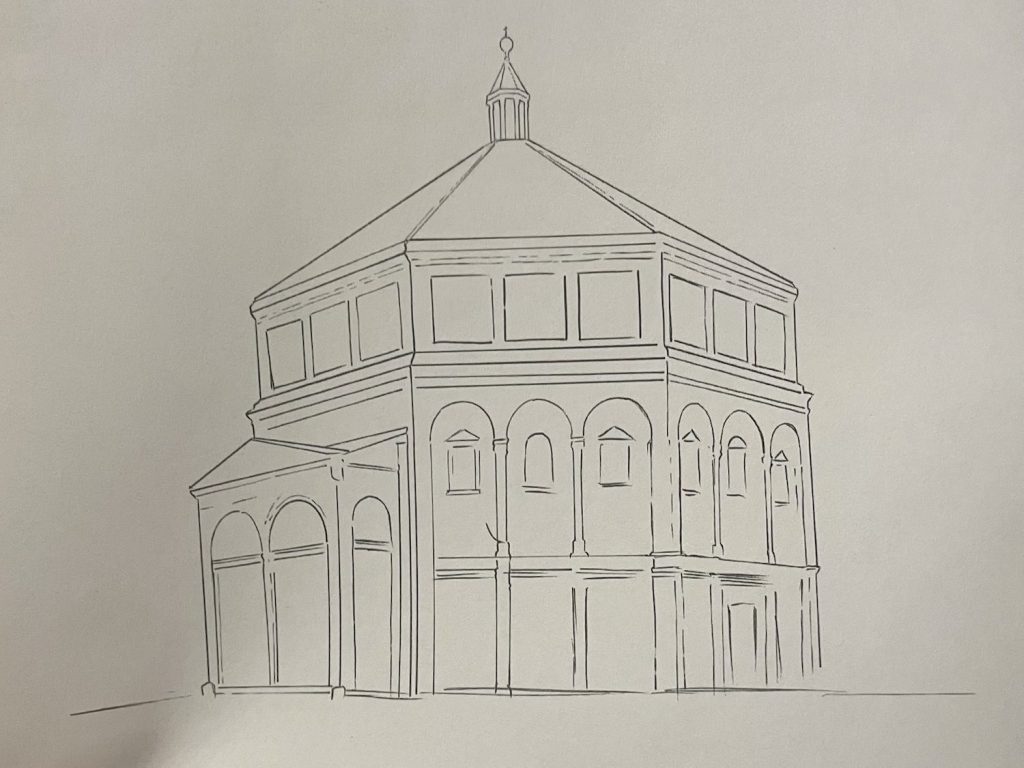
    Together on an iPad we designed a simple outline of the baptistry where Dante had been baptized and where he had wished to return a poet and assume the laurel crown. It was more original that getting a tattoo of the Duomo which was very popular in these parts, Massimiliano said. His dad was from Florence. This was the first time he’d tattooed an English person. 

    Two other female tattooists, Asia and Claudia, were working and they were chatty and curious to hear about my walk and my blog. 

    Massimiliano had to go and collect his daughter and so I sat with Claudia who realized my tattoo. She inked the small design in a subtle terracotta colour that I associated with Florence.

    ‘You’re not thinking of your feet anymore,’ she said, as the needle buzzed across my arm.

    And then it was finished.

    ‘Now you’re more Florentine than me!’ Claudia announced. 

    I was thrilled with the finished product and celebrated by going to a sushi bar where I necked a platter of dragon rolls. 

    Underneath my jacket I stroked my new tattoo. It was a work of art, a testament to what Dante calls ‘visibile parlare’ or visible speech. A picture could say a thousand words. 

    ‘I see you,’ this tattoo seemed to say. 

    ‘I see the pain of exiles and I am committed to documenting it.’

    ‘I have walked 400 kilometres and more to re-see the beauty of Florence and there, tomorrow, may I find peace.’

  • Broken Toes and Tasteful Tiles: From San Godenzo to Dicomano

    I got lost four times and made the stupid decision to scale a towering fence. 

    Marcella, the owner of the Agriturismo Tenuta Mazzini where I had spent the night, came to greet me in the morning. She was on her way to work as a primary school teacher. I didn’t hesitate in exuding my passion for her place.

    ‘It’s a marvel,’ I said.

    I always felt a slight anxiety when I had not walked for a day, but I had slept amazingly in the comfy bed, and I felt well rested as I heaved on my backpack and set off down the road to Dicomano.

    It was 10.20am and the sun was shining brightly. The air was fresh. Two cows greeted me from an ample field. 

    The day’s walk began with the descent back to Dicomano where Dante was summoned for a political meeting during his exile from Florence. I’d been spending a lot of time with Dante the poet and so it was interesting to spend time with Dante the politician. It was here that he had sought to forge alliances between the Ghibellines and the White Guelfs of whom he was a member. Like many refugees, Dante had been multiply displaced. His brief stay in Bologna had been interrupted when the White Guelfs were barred from the city.

    I passed an excavator that was digging up the Earth as I wound down the road and stopped momentarily to pet a ginger tom cat.

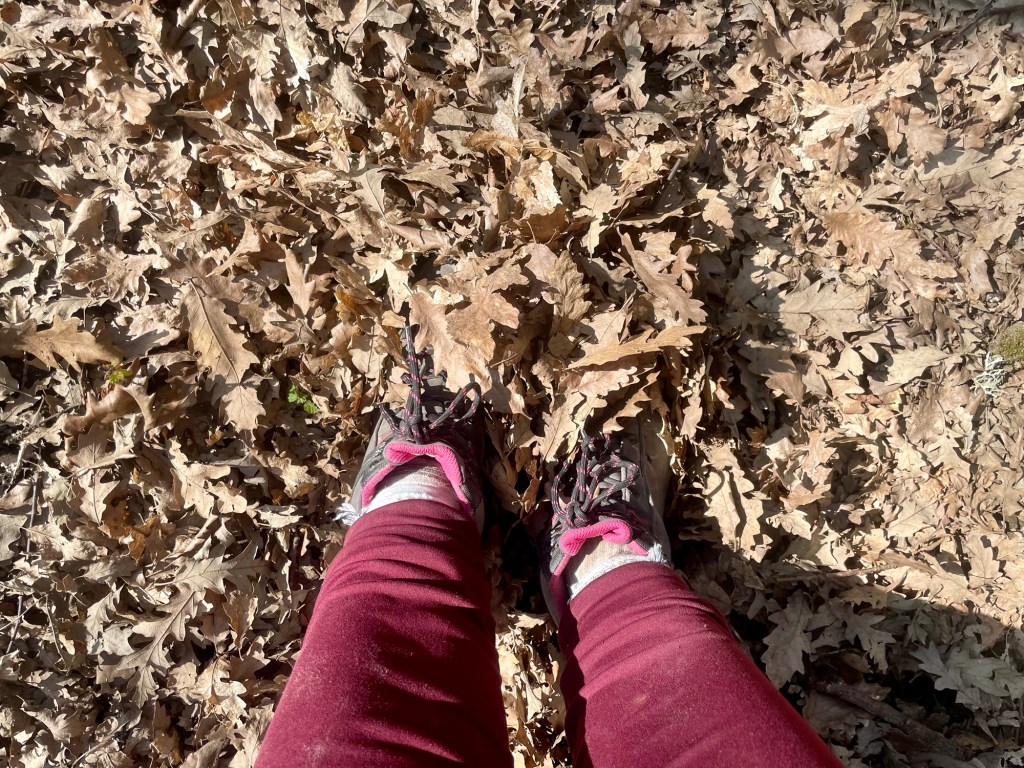
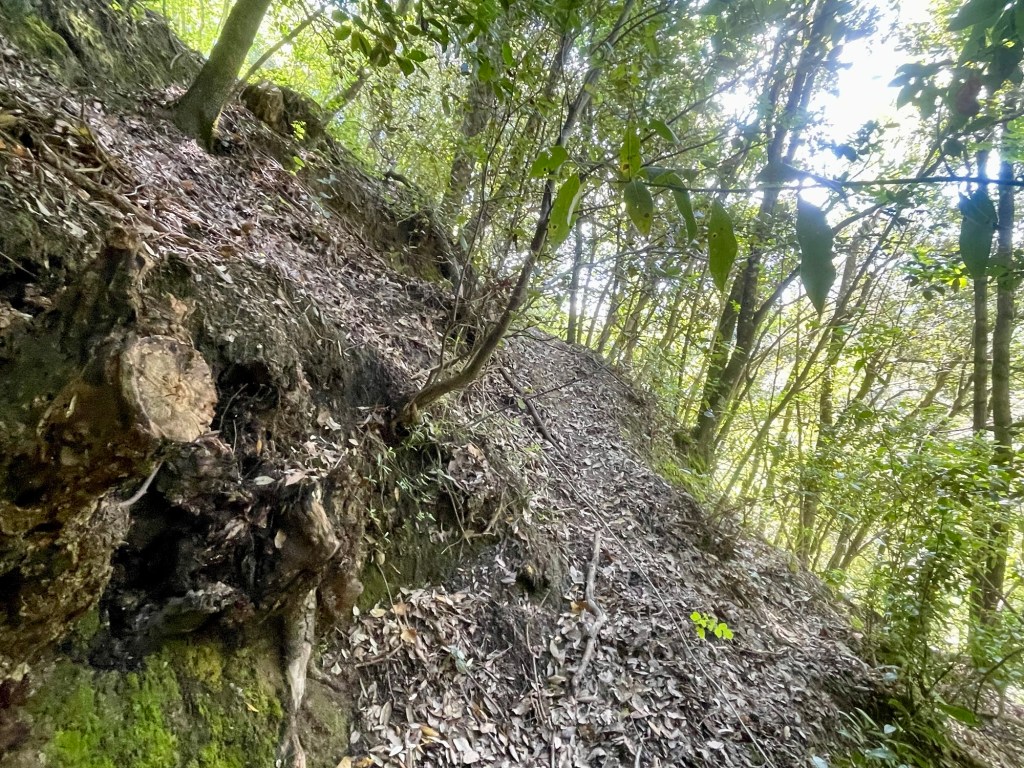
    I followed a Dante trail sign off down a small, steep woodland path to the right and was soon kicking up the leaves again. I crossed a small, gurgling waterfall where the path split in two.

    I went left, which would transpire to be the wrong choice. 

    Conscious of not walking with my phone attached to my hand, I had tucked it into my sports bra so that it was fifteen minutes before I realized that I was very much off the beaten path. I was glad I was wearing trousers and not shorts as the brambles and trees assaulted me, leaving bloody snags on my arms and hands. I held onto the tree branches to heave myself up the bank towards the road. I’d thought about going back to where I’d lost the straight path but decided to carry on. The map suggested that in a few metres I would re-reach the road from which I could proceed my descent into the medieval town.

    Climbing up on my hands and knees, the mud collected beneath my fingernails. Nettles attacked my ankles and, as I passed a network of two waterfalls, my weight dislodged a huge chunk of earth from the ground.

    I assumed I had made the usual mistake of following an animal track. I passed through two olive fields and there was the road ahead of me, just a short way down from where I’d strayed. 

    I had basically done a 45-minute loop of the forest for absolutely no reason. If I had stuck to the path, I’d be eating pizza for breakfast by now but instead I was weary, thirsty and had no idea from whence I’d come. I paused for some water and let the blood dry in a thick smear on my hand. My knees were filthy from the climb.

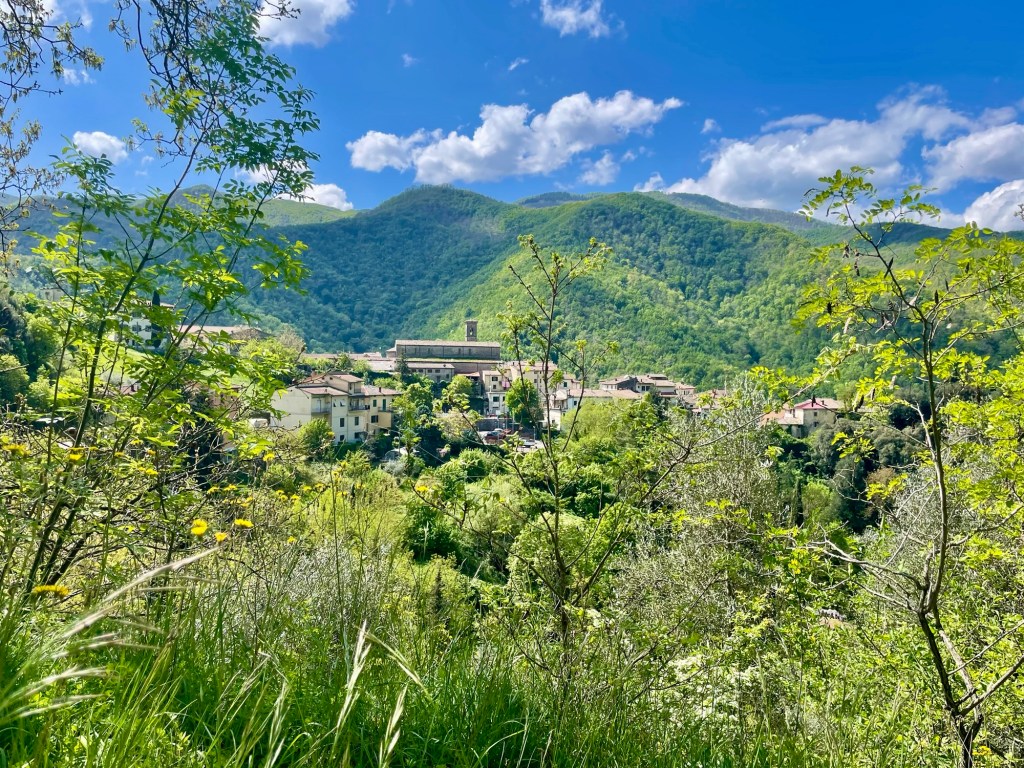
    I passed through an open gate and exited onto a hill from where I could see the town before me. I had no idea what to do. The end was in sight and so I just kept climbing, trying to reach the road, my knees and knuckles deep in the foliage as if I were massaging the Earth. I wished I could just jump or fly over to the car park.

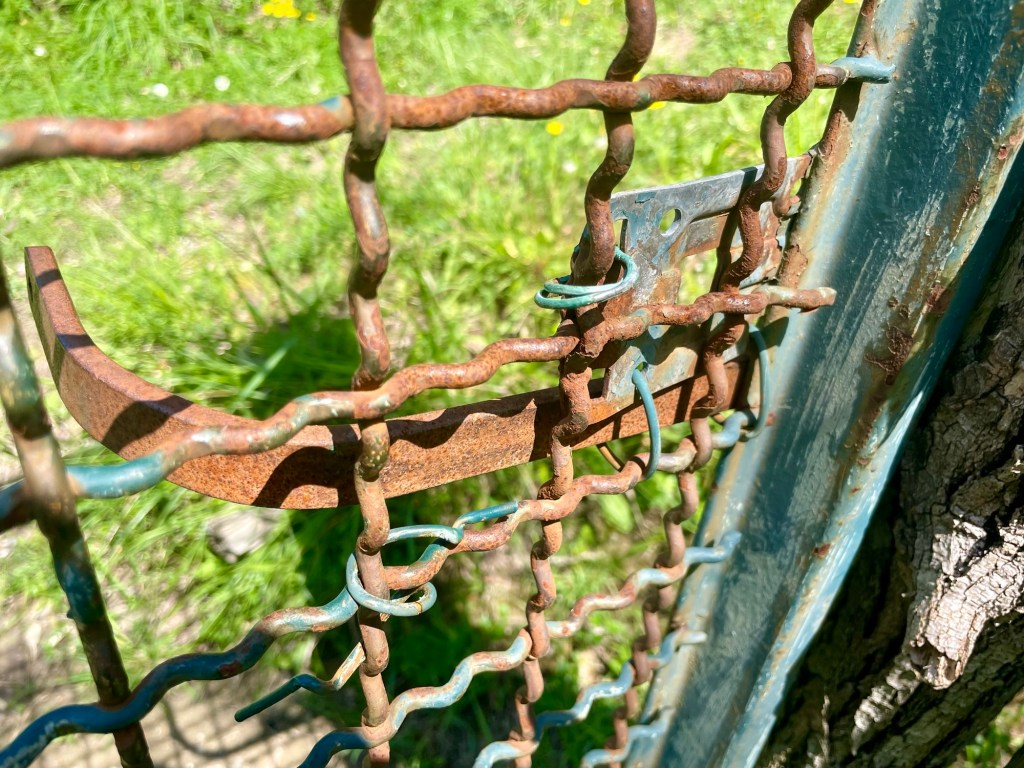
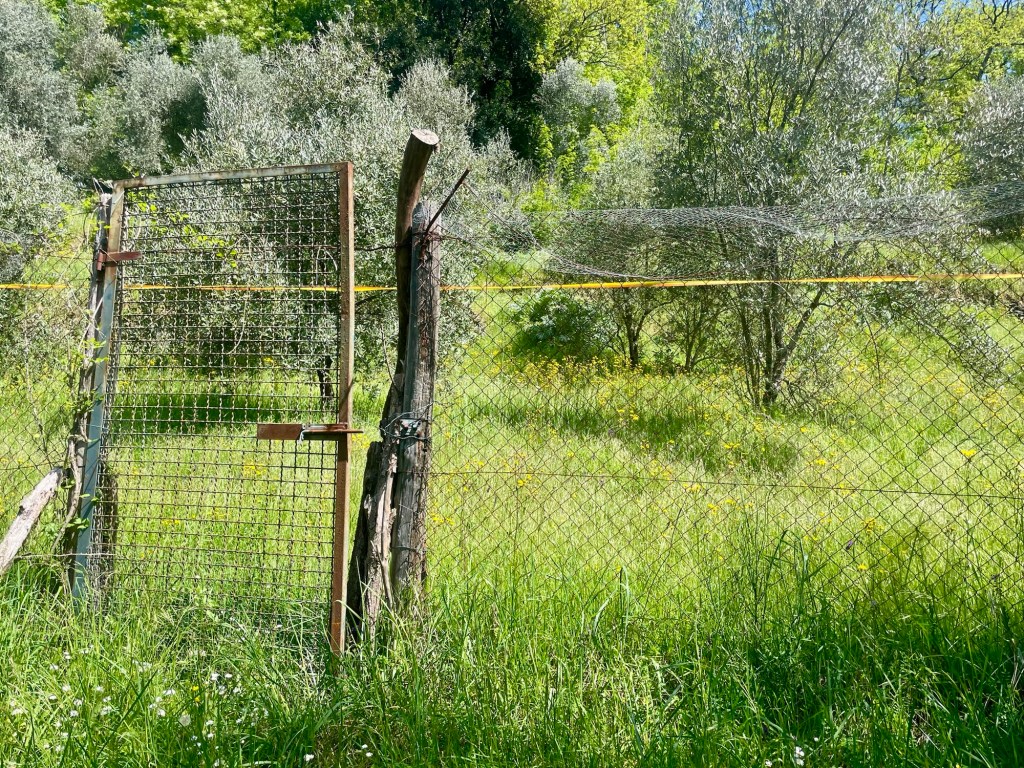
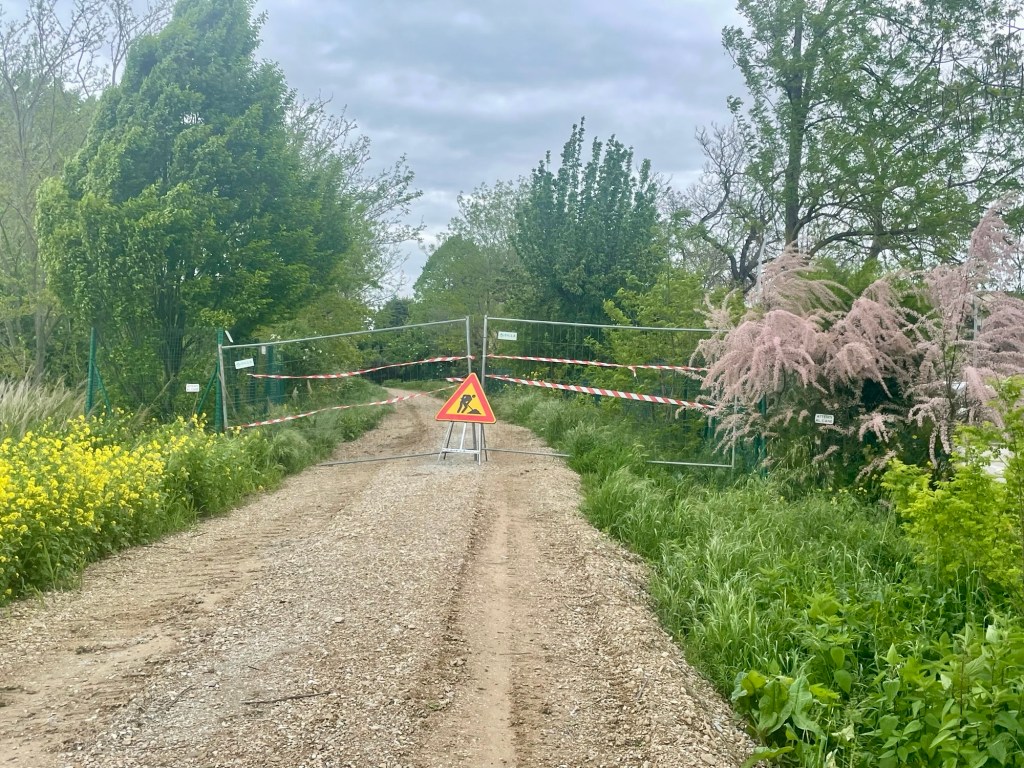
    Now all that stood before me and an espresso macchiato and pizza slice was a massive metal fence which was decorated, at the top, with a thick mesh of vertical barbed wire. 

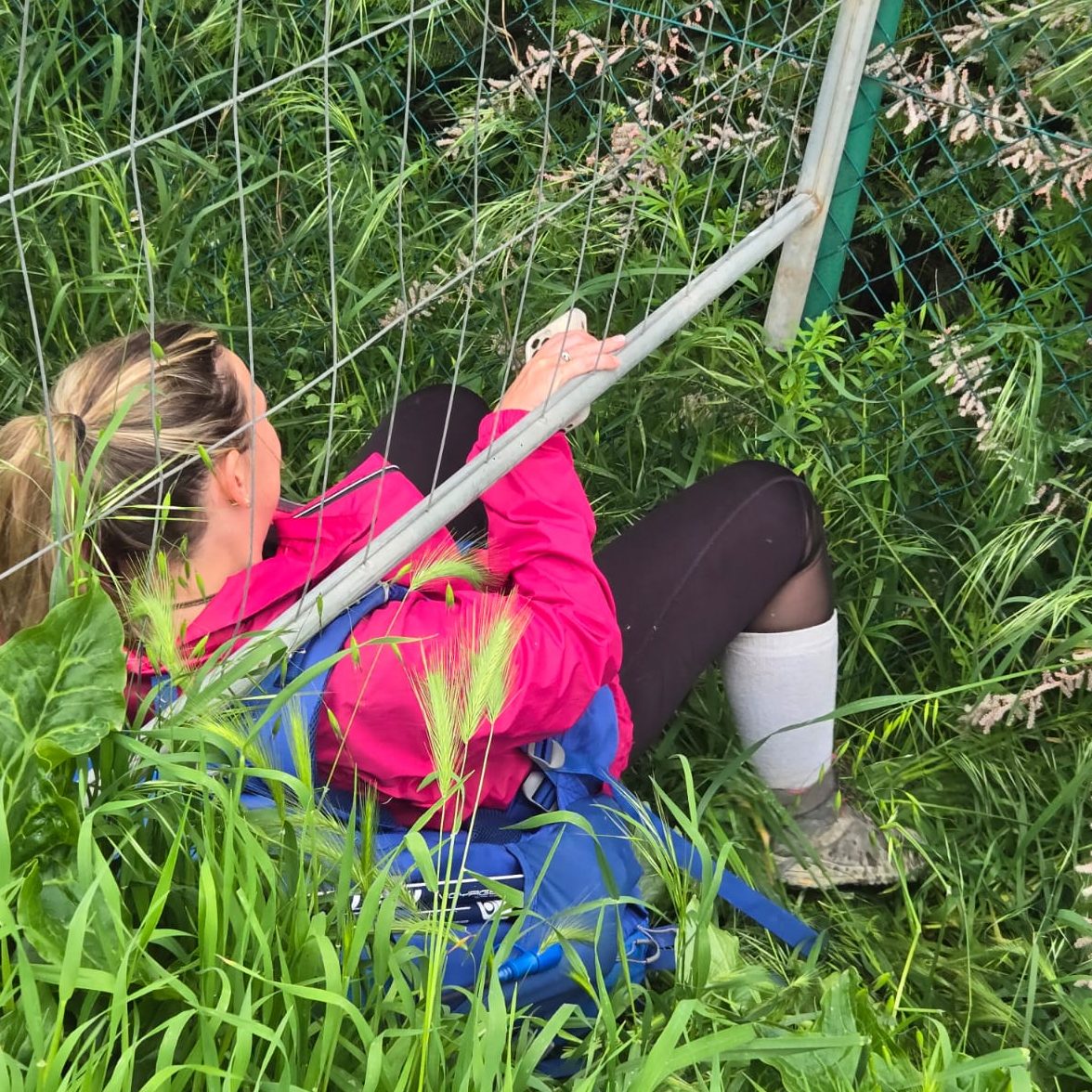
    The road was right there, but as I stumbled around the fence’s parameter, I couldn’t find a way to cross. Two metal gates were tightly fastened with thick wire which I tried in vain to unpick, clumsily sliding my fingers between the holes in the gate. There was nothing for it, I couldn’t go through or under it: I would have to go over it.

    As I climbed up onto a wooden ballast, my bag pulled me back and so I threw my weight forwards, held tight to the fence and swung my leg over. The second one followed and I jumped down, only to land on the roadside with a thud, the full force of which shot up into my left foot. 

    The familiar pain immediately hit me and I knew I’d broken something. Luckily, from the quick survey of the discomfort, I deduced I had just damaged a toe or two. This was nothing like the agony of when I’d broken my metatarsal in Guatemala when headed out on a hike to locate the national bird, the resplendent quetzal. I took some Ibroprofen for the pain and carried on into the town centre where I’d spent some time yesterday in Dante’s footsteps. My hands were covered in a cocktail of mud and blood.

    It was 12 o’clock which meant I had spent almost an hour and a half scrambling around in the woods including 15 minutes trying to unpick the lock and 15 minutes working out how to get over the fence. I’d bruised my knee and cut my trousers on the barbed wire but I had made it back onto the road. A smartly dressed lady was walking past with her dog. 

    ‘Are you OK?’ She said.

    ‘Yes,’ I replied, though I wasn’t. ‘I just got a little lost.’

    I sat on the verge and ate an apple. Next time, I’ll take the road. I could have been well on my way to Dicomano by now, but as it was, I hadn’t even reached the starting point and the steep climb meant I’d exhausted at least half of my supply of water.

    And that was how in the middle of the journey of my life, I found myself in a caged olive grove for the straight path was lost. 

    I hobbled to a bar and ordered the much craved for coffee and pizza. I removed my shoe and tried to wiggle my left middle toe. No, it wasn’t moving. The sellotape Alina had left me finally came in use. I used it to attach my broken toe to the ones beside it. We had evolved from three toes creatures after all: the three middle toes already moved as one. 

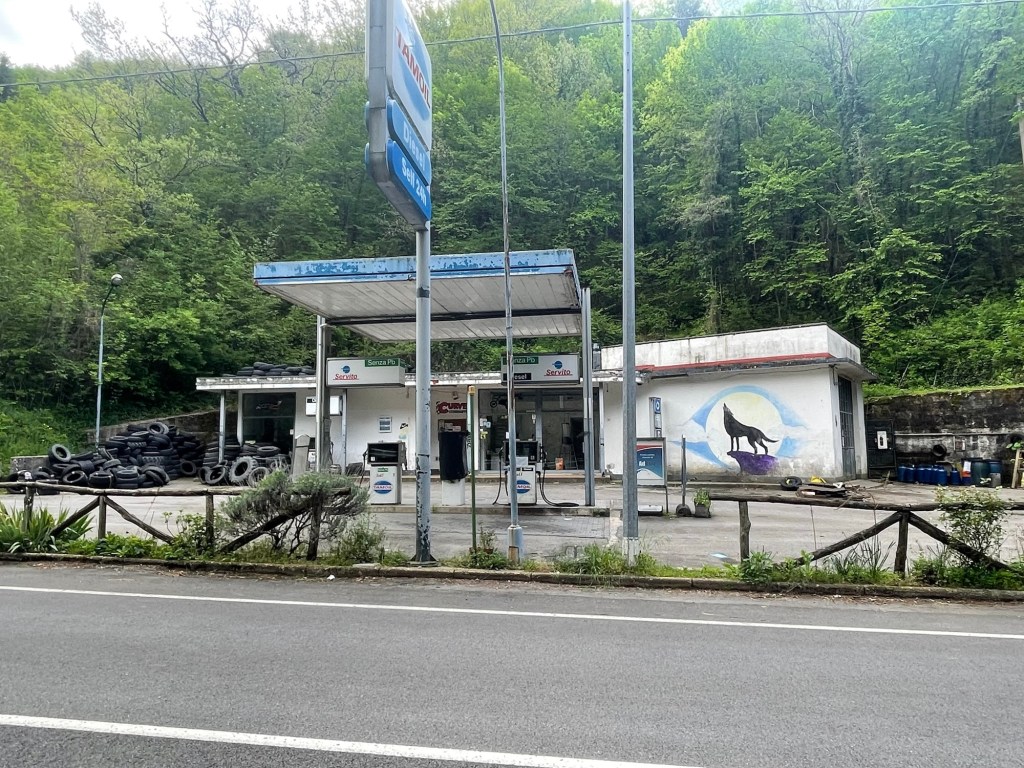
    I noted a urinal built into the cliff face next to a busy garage which had a wolf mural painted on the wall. 

    Five men were drinking beer in the café.  

    ‘Ok, let’s start again,’ I thought. It was 12.30pm.

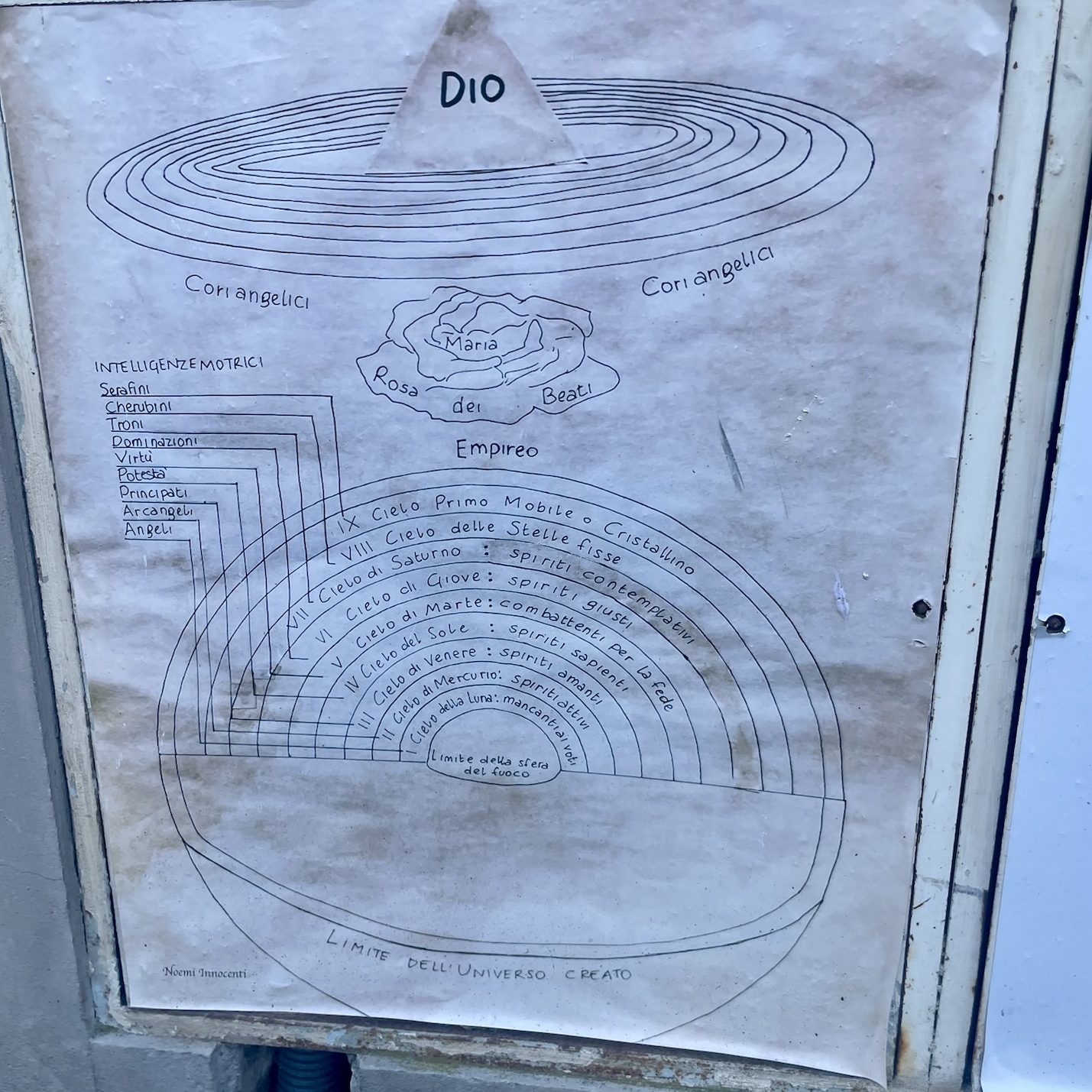
    On the surrounding streets were quotes from Dante’s Paradiso that had been plastered to the wall and here was a map of the heavenly realms as he had understood them. One quote read:

    ‘The handsome image those united souls,
    happy within their blessedness, were shaping,
    appeared before me now with open wings.

    Each soul seemed like a ruby—one in which
    a ray of sun burned so, that in my eyes,
    it was the total sun that seemed reflected.’

    In the Divine Comedy, Paradise is depicted as a series of concentric spheres surrounding the Earth, consisting of the Moon, Mercury, Venus, the Sun, Mars, Jupiter, Saturn, the Fixed Stars, the Primum Mobile and finally, the Empyrean.

    Back on the path, I passed a balcony on which stood a lady watering Calla lilies beside a hyper vigilant black cat. She smiled and wished me a ‘buon viaggio.’

    As I left the town, there was a cemetery on the left, sweeping trees to the right and, of course, the village football field.

    I followed the signage, making sure to check directions on my phone every five minutes now, and made my way up a steep concrete road. From a garage there emerged some antique porcelain sinks and toilets.

    I moved in and out of shadows, enjoying the litter of red leaves on the pavement that were the colour of Alina’s hair. Tom had told me yesterday that you could eat dandelion flowers and so I folded one into my hungry mouth. The entire plant is edible, from the flowers to the roots. It tasted bitter.

    I proceeded past a field of goats that came with a ‘beware of the goats’ sign and an agriturismo which was decorated at the front by a beacon of lemon trees. 

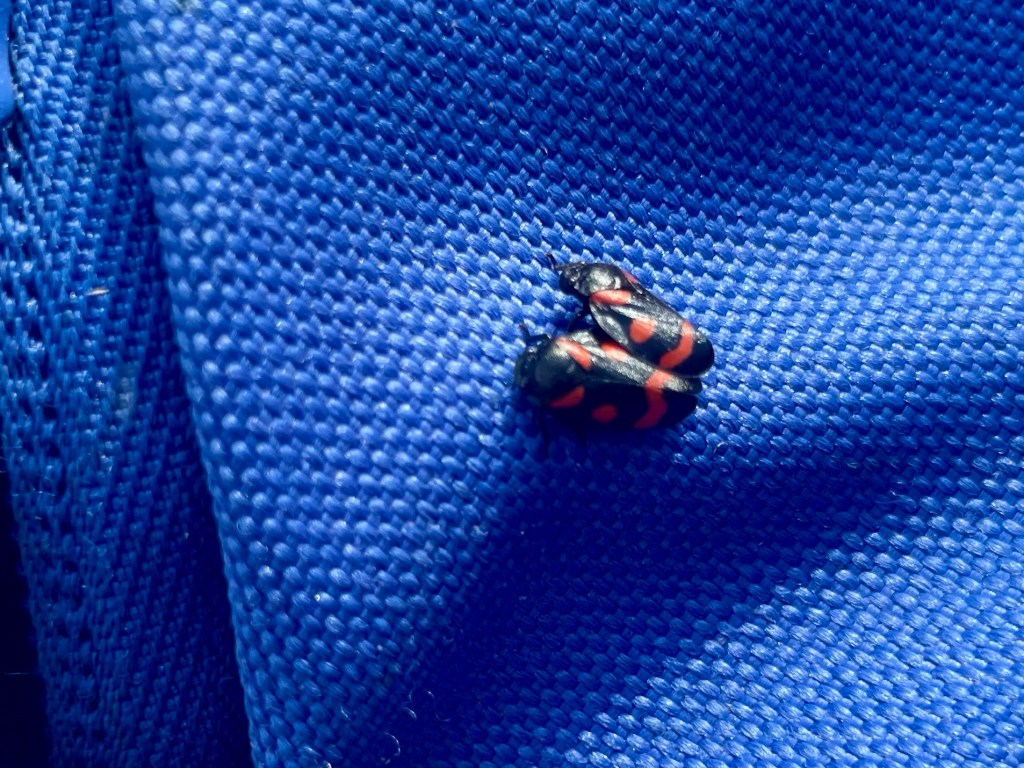
    The path had expanded out into a beautiful hobbit like landscape. I sat on a rock and drank some more water beside a prairie and a tinkling stream. A white butterfly with orange tips fluttered past, then a yellow one. Two black beetles were mating on my backpack. They were covered in red spots like inverse ladybirds. I noted that I was developing callouses on my hand from the rub of my hiking poles.

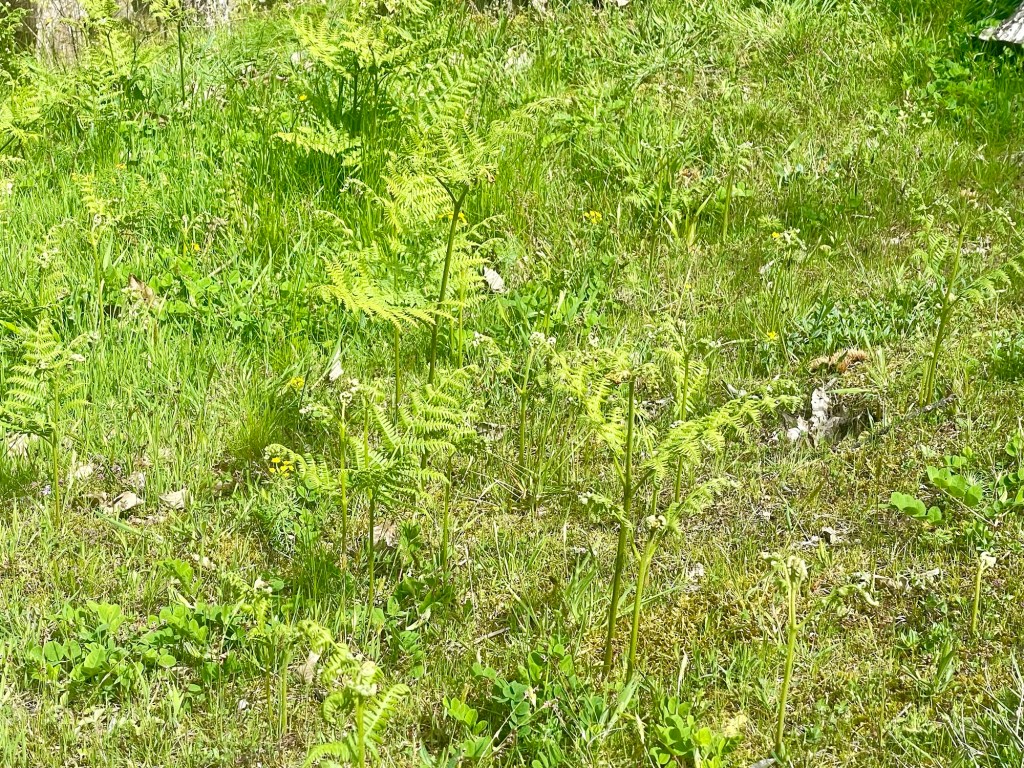
    I could see back down to the town in all its majesty. There was a house built into a tree which was surrounded by a cluster of bracken. The simple way to tell bracken apart from ferns is that bracken has a stem, and will come up singly. Ferns, on the other hand, generally don’t have a stem but rather always have multiple fronds coming up from one central point.

    I realized I was lost again and there followed an agonizing half hour hike up a steep bank that was littered with spiky horse chestnut seeds. I had somehow managed to drink all of my water and kept stopping to catch my breath. At one point, my cap was disturbed by an overhanging branch and I had to retrace my steps downwards some ten metres to retrieve it. It was a chalky blue and read, ‘Stay wild and free, protect our sea.’ I had purchased it from a Royal National Lifeboat Institute giftshop in Wales the previous summer.

    I thought of Will and Jo’s non-wedding wedding that I would be attending that weekend back in London. Their party theme was ‘under the sea’ and my friends at home had been feverishly making costumes, including one for me. 

    I stopped to pull out some horse chestnut spikes from my hands and finally re-found the path. It was 3pm and I’d only hiked some 12 kilometres and climbed nearly 120 floors but I was only about 6 kilometres along today’s 17 kilometre stretch of the cammino. My arms looked like I’d had a fight with the cat. I flicked an ant off my leg. 

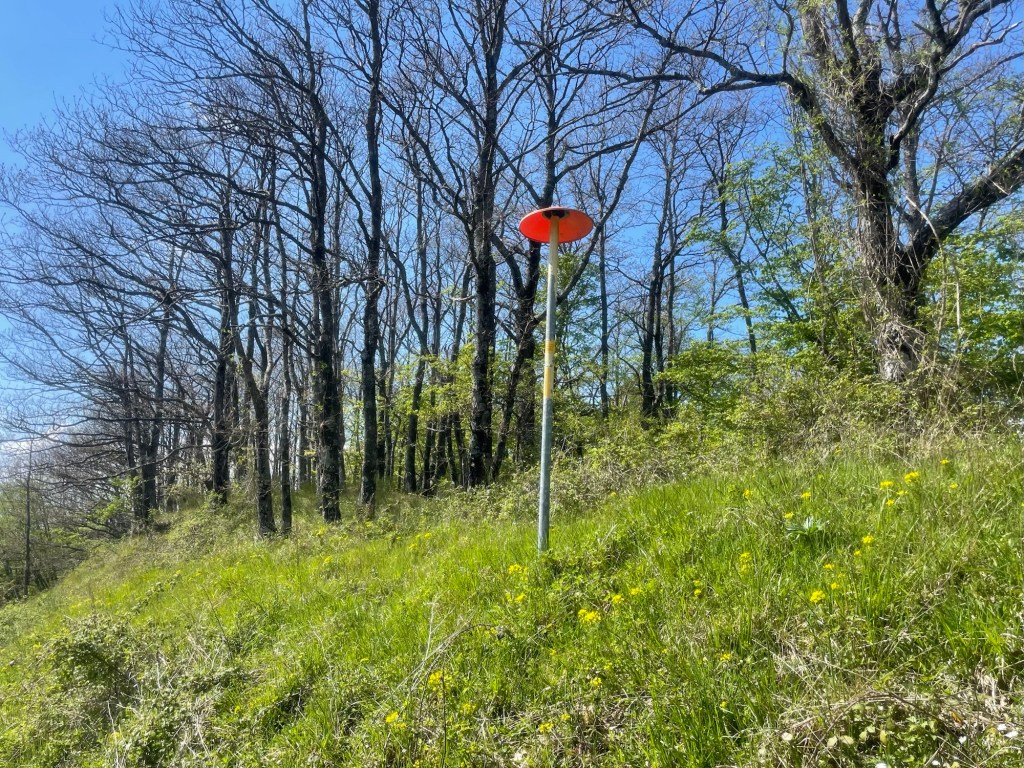
    The path followed an ancient Etruscan way which was dotted with sign posts with orange cones on the top which resembled Asian hats. I trotted downhill now, my bag chafing under my armpits, enjoying the spectacular view to the right of the mountains in the sun. They were striped in shadow and light. 

    Two lizards were wrestling beside the bushes and the trees were squeaking in the light breath of the breeze. I really wanted some water. 

    Then I realized that in my stupor I had gone wrong yet again. It was a fifteen minute hike back uphill. Today was not my day. 

    It was tough on my knees and broken toes hiking downhill, but I was thankful to have finished the climb and grateful once more to Franco in Marradi for fixing my right hiking pole. A farm appeared to my left with goats and a horse. 

    I got lost for the fourth and final time, climbing nearly all the way up a really steep hill covered in scree only to backtrack. A cock crowed somewhere in the distance. It was 5pm.  

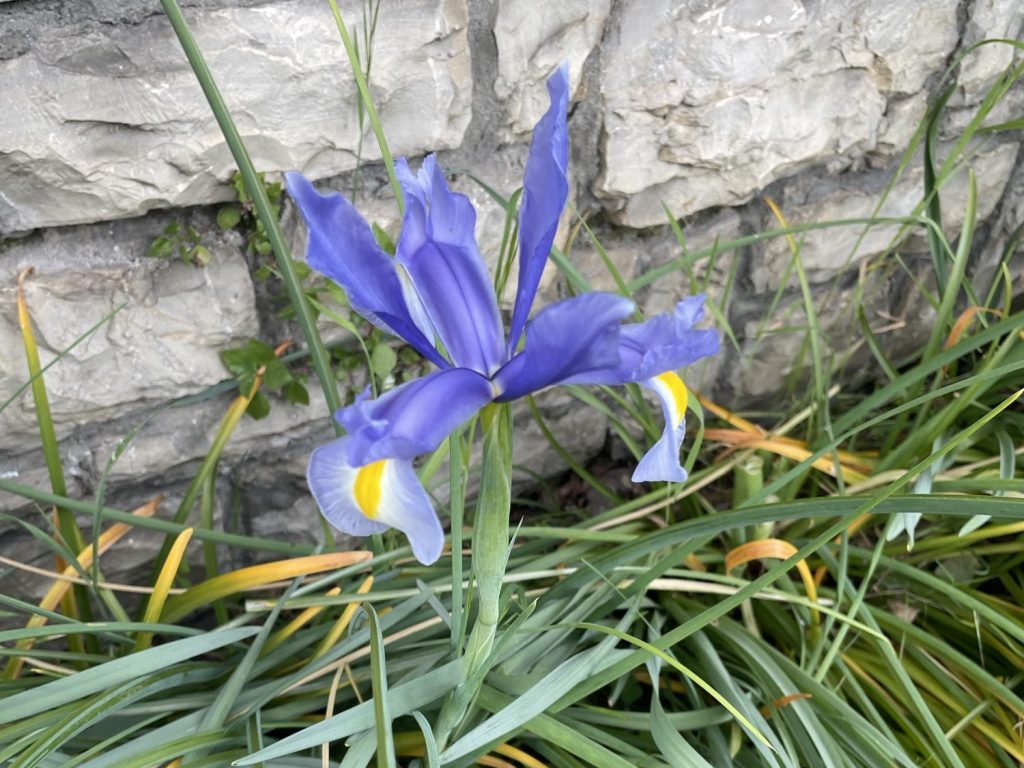
    An aloe vera plant emerged from someone’s garden and I was so thirsty I contemplated ripping off a leaf, opening it out and licking the sweet sap. The irises that decorated this lawn were purple and pink in hue.

    I ate some berries from my trail mix thinking they might have some moisture inside. The sun was beating down and I had my eyes peeled for an outdoor tap.

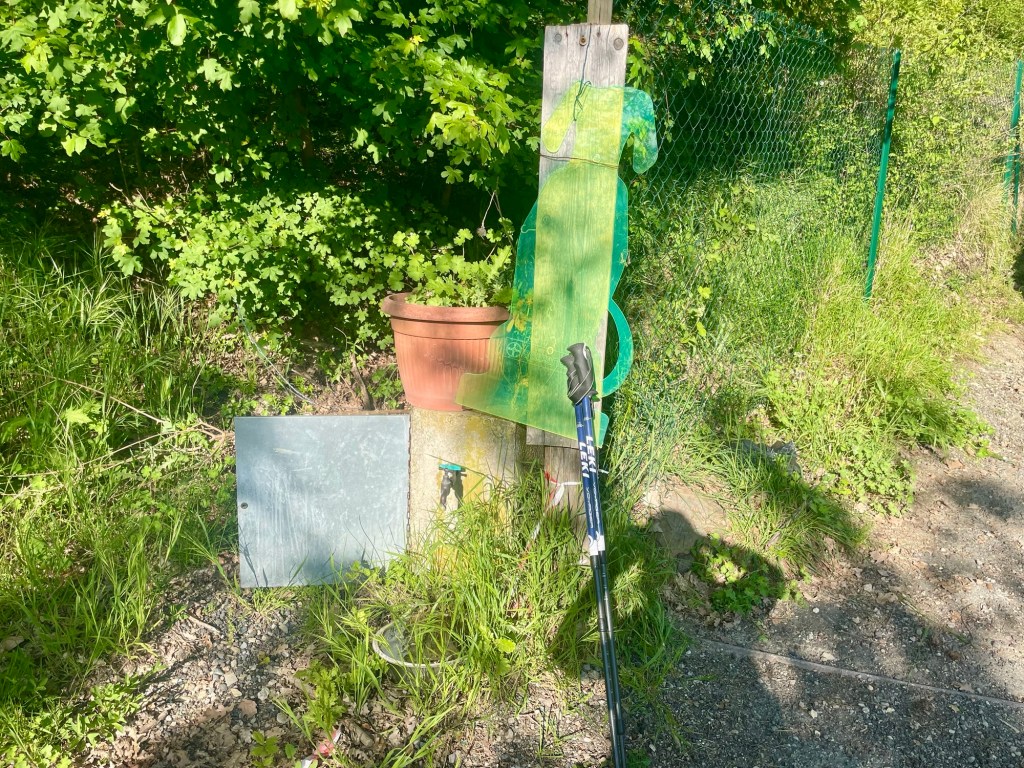
    Then, just as quickly as the thought arrived, such a tap appeared. It was accompanied by the outline of a dog and dog bowl but, water was water. I guzzled from the font and refilled my pouch. I held the water in a precious sphere in my mouth before I swallowed it. 

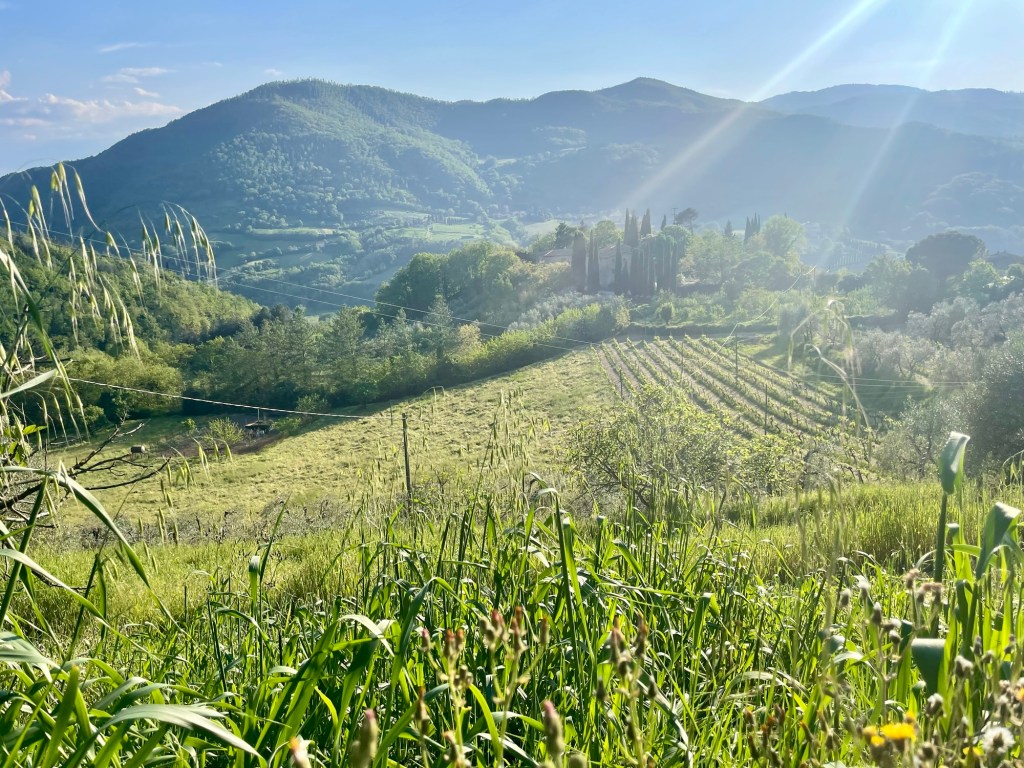
    I could feel that I was back in Tuscany because of the rolling hills, the soft golden light and the way the olive leaves seemed to glitter in the evening sun. The approaching dusk made the hills look matt and hazy.

    A bird sounded out like a car alarm. It was suddenly so tranquil. I recalled the words of William Blake from his poem Auguries of Innocence

    ‘To see a world in a grain of sand

    And a heaven in a wild flower,

    Hold infinity in the palm of your hand

    And eternity in an hour.’

    I watched a plane soar through the sky and was once again reminded that, this time next week, I’d be finished with walking and back to normal life. I wondered how normal my life could ever be after this adventure. 

    A tractor drove past, and I collapsed in the grass awhile. I was 20 minutes from my destination but my toes ached and I was exhausted from all the extra energy I had expended on getting lost today. I had been told by my French host Beatrice that there would be pesto pasta for dinner and I was sure that it would be delicious. 

    The final descent into Dicomano was stunning. Poppies once again lined the hedgerows coupled with thick clumps of thistles. A chorus of sheep bleated out in unison. 

    There was a horse medallion on someone’s house and statues of little angels and a chicken rendered in bronze. There was plenty of space for both me and the cars on the road. A chain of colourful beehives lined the hill like a Lego brick house under construction.

    Three men who were tending to a cement mixer said hello as I passed them and, embarrassed, I realized I’d been singing to myself the nursery rhyme The Grand Old Duke of York. Today had certainly seen me march to the top of the hill and march back down again. 

    Then came the familiar sweet waft of black locust or white robinia. A plough was stationed in the middle of a field, retired from the toils of the day. An elderly voice was shouting to a young child something about a horse and dirty trousers. 

    I was greeted by my host, Ivan, who called me ‘bambina’ and complemented me on my pigtails – they were cute but also practical hiking wear. Their bed and breakfast, Pino del Capitano sat in a beautiful Mediterranean garden that was decorated with colourful Portuguese tiles and sinuous sculptures. 

    That night, I dined on a delicious fare with a man working in construction from Udine who was also staying with Ivan and Beatrice. Unlike me, he was here for business, not pleasure.
    Ivan brought me some plasters and I lanced my toes together more forcefully. He was sympathetic since his own daughter was a hiker who had recently completed 45 days of the Camino de Santiago. He was 74 but seemed much younger for his friendly and exuberant demeanor. 

    Every stone you see, every flower, that’s the work of my hands in the garden,’ he proudly explained.

    It had taken him 25 years to get it just right. 

    We must ‘cultivate our garden’ counsels the French writer Voltaire at the end of his satirical quest, Candide. After the day I’d had I enjoyed the peace. Too true, I thought, too true. 

  • Tuna and Cheese? From Monte Romano to Marradi

    A short walk today ended in a disaster when one of my hiking poles broke, and I made a faux pas ordering fish with cheese.

    I woke up for breakfast at 7am and was thrilled to meet Enrico’s wife, Daniela, who had returned from saluting the late Pope in Rome. After setting off early at 2am, she had only had to wait two hours in line. I thought of when the Queen had died and the epic queues I had witnessed on TV. David Beckham had spent a day among the plebs waiting to pay his respects to her. 

    I secretly wanted the Beckhams to become to new Royal Family. Though, in an early communist rebellion perhaps, I had cut Posh Spice out of my posters, she was now my favourite Spice Girl. I admired their family and the way she and David shared a mutual work ethic.

    Enrico and Daniela explained to me that their dog, Mia, with whom I’d shared cuddles the evening before, had been named after the song ‘Romagna Mia’ which had become a hit during the floods of 2023 to give strength to the local people. Their other dog, Cillian, meanwhile, was named after the Gallic for warrior.

    The Romagna people are definitely proud of their heritage. Their territory spans half of Emilio Romagna towards the sea and their language, or dialect, is quite specific. 

    Dante was sensitive to these vagaries in language as he wrote in his Latin treatise on language, De Vulgari Eloquentia. Written between 1303 and the first months of 1305, his work was perhaps the first published European socio-linguistic research.

    Over breakfast, Enrico and Daniela revealed that they were seasoned travellers who had visited over 100 countries, often to chase a solar eclipse. They had been to Sudan, Libya… I thought of the way my own parents had taken me travelling to exotic locations as a child. This was a real home stay alright. I couldn’t have felt more at home if I’d tried.

    I drank nearly a whole family pot of espresso and ate a banana at Alina’s recommendation to alleviate the cramps in my feet. I had a Zoom meeting with a student whose dissertation was on Chinese, UK and US medical care models which felt somewhat discordant from this place of Paradiso. Then I did some gentle yoga stretches and massaged my feet. Today was a relatively short day of walking but I still felt my feet resist.

    I slept for another hour.

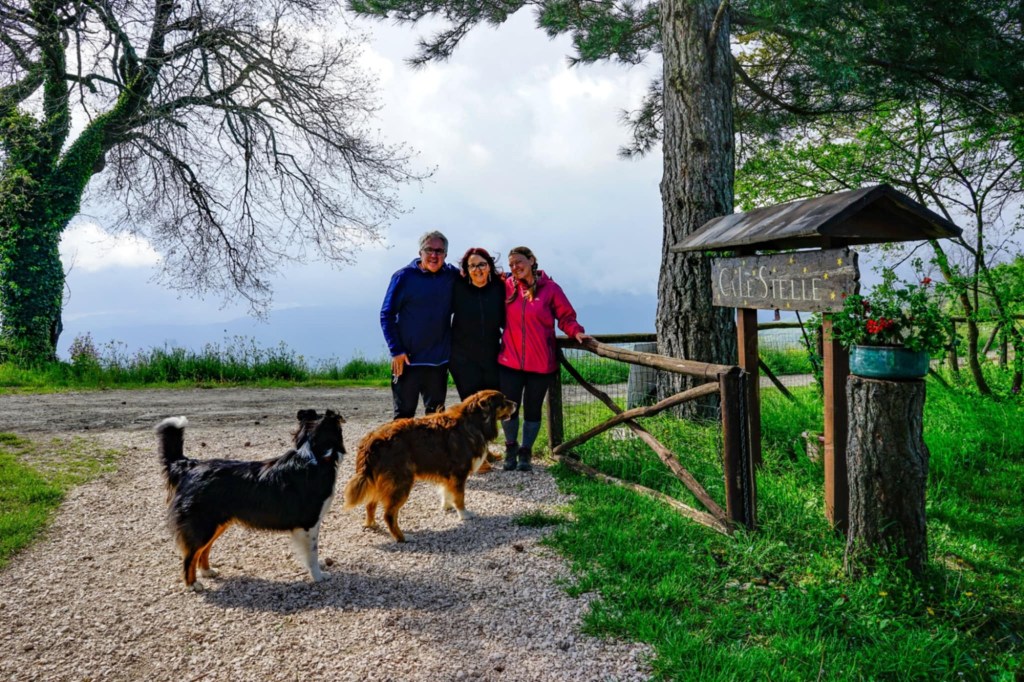
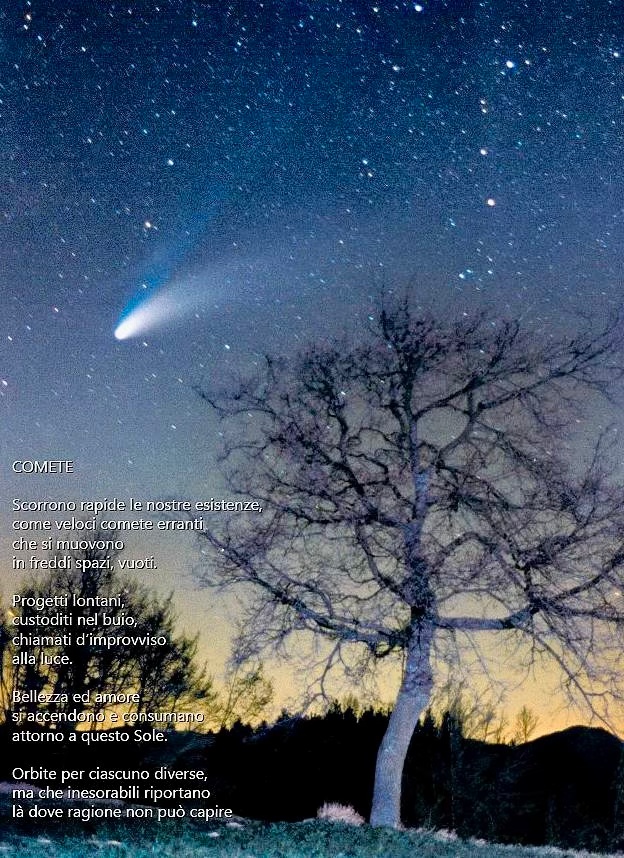
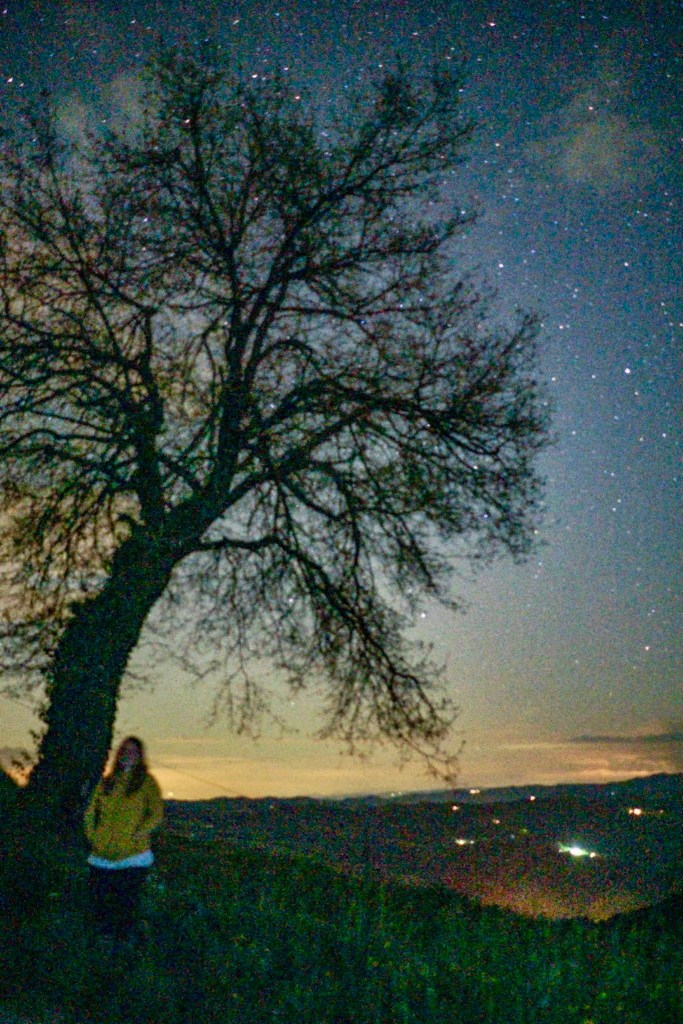
    At 11 o’clock, outside, me, Enrico and Daniela took pictures. 

    ‘The sky is so huge it can reduce the pain of everyone,’ counselled Enrico.

    ‘You feel tiny and so do your problems. It is a tiny comfort for us to see the stars.’

    I hesitated, then went for it: I asked about how the two of them reconciled their love for science with religion.

    ‘Something was put it in motion,’ came Daniela’s reply.

    Although I was not collecting stamps in a passport on my Dante journey, Enrico gave me one along with a pretty star decoration that I would put upon my Christmas tree. 

    I was grateful beyond belief.

    Enrico walked with me the first kilometre to the Dante trail with his two dogs. At one point Cillian started barking in a frenzy and then, there it was, a deer! 

    Enrico identified it as a female as it had no horns.

    How wonderful. I’d only ever seen them in the wild in Salmon Lake in California. She skitted across the hills gracefully as if she were aboard my nephew’s pogo stick.

    It was nice to walk alongside Enrico. The family had two pilgrims expected that night and also a family who were returning. They had come last year during the cammino and were coming back to see the stars. I knew I’d also be back. Hopefully with my mum.

    There was the patch of woodland where he collected mushrooms, indicated Enrico.

    And here was the crest I would traverse today.

    At the crossroads, I turned left towards Florence and saluted Enrico. I put on my waterproofs and covered my bag thinking, suspiciously, that then it wouldn’t rain.

    I’d made the right decision to sleep a bit more. I would follow the crest and then descend into the valley of Marradi.
    I passed the church and I was back on the Cammino de Dante. A familiar cuckoo sung its heart out, seeking to attract the midday sun.
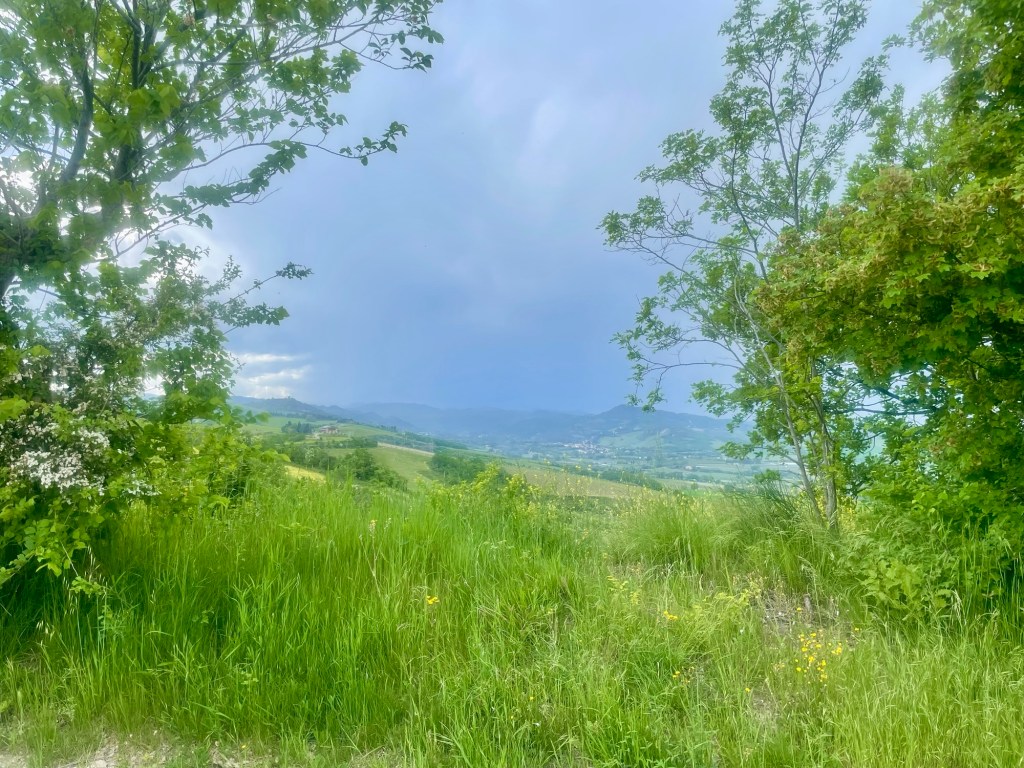
    I stopped to meditate on the view and sent my French friend Marie a Happy Birthday message. It had been too long since we’ve been in touch. 

    After 3 kilometres I stopped to dry the sweat off of my forehead. Had my face ever been this red? It had. At 15 I had been national karate champion and one of my unintentional tactics had been to scare the opponent with my red, sweaty face. Now my niece, at 12, was a green belt, taking on the mantle. It had been agonizing attending her recent karate competition. 

    ‘Don’t you dare cheer, Auntie Jenny.’ She’d warned.

    I’d had to put my hands in my mouth. As it was, she had come out with a gold and I had had a little happy cry in the carpark. 

    Kelsey sent me some videos from the lesbian conference she was attending in Rome. A gaggle of women were singing Bella Ciao and the chant, We Are All Antifascist!

    I thought back to singing Bella Ciao at my old school on one of the many occasions I had gone to visit to give talks to aspiring pupils. Lord Grey Could, went the motto. If I had got into Oxford, they would too. 

    I was relieved that my feet seemed OK. I would take it slowly and I had the delightful knowledge that, tonight, I would be staying at a pizzeria. 

    After an hour of walking, I stretched out my feet as my nurse mother had advised me (yes, she had practiced as both a geologist and a nurse). I was determined to avoid cramps today, ready for tomorrow’s epic hike. I had to make it to Florence, I had to. Now it was written in the stars.

    A guy passed on a mountain bike coming full force up the hill. I was impressed, I signalled.

    I reflected, as I walked, of how Enrico had told me that his daughter had done her thesis on the French writer, Flaubert. I had loved Madame Bovary. I thought about my relationship to France. When had Italy taken over as my soul place?

    I recalled the quote I loved so much from his famous novel,

    ‘Human speech is like a cracked kettle on which we tap crude rhythms for bears to dance to, while we long to make music that will melt the stars.’

    La parole humaine est comme un chaudron fêlé où nous battons des mélodies à faire danser les ours, quand on voudrait attendrir les étoiles.

    And with that thought I realized I’d gone wrong. I went back up the hill, annoyed at the 10-minute detour.

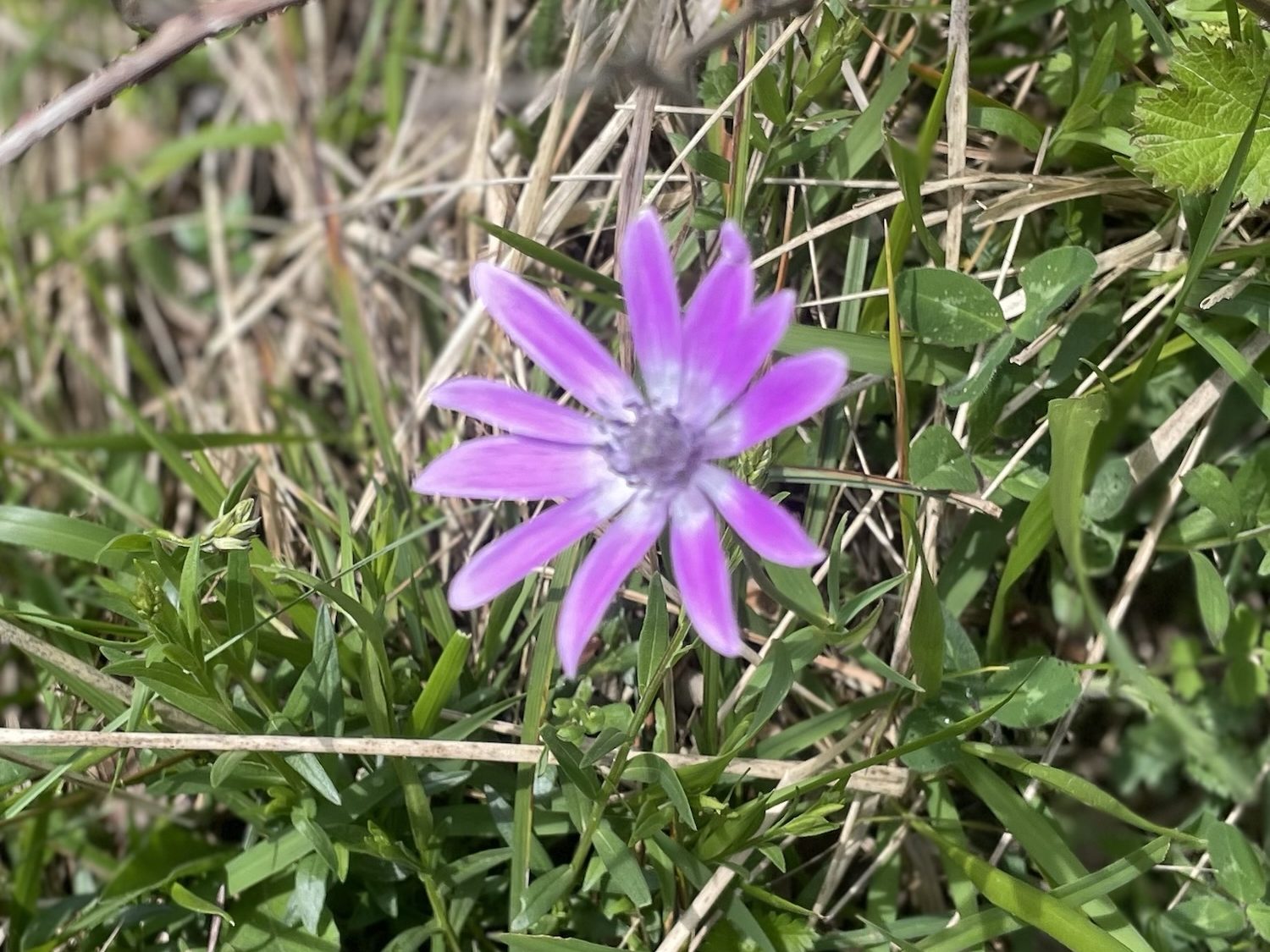
    On the woodland path were mounds of excrement full of seeds. A broad-leaved anemone, neon pink, shot up from the verge.

    The puddles of sunlight on the path appeared briefly then disappeared again, a kaleidoscope of light.

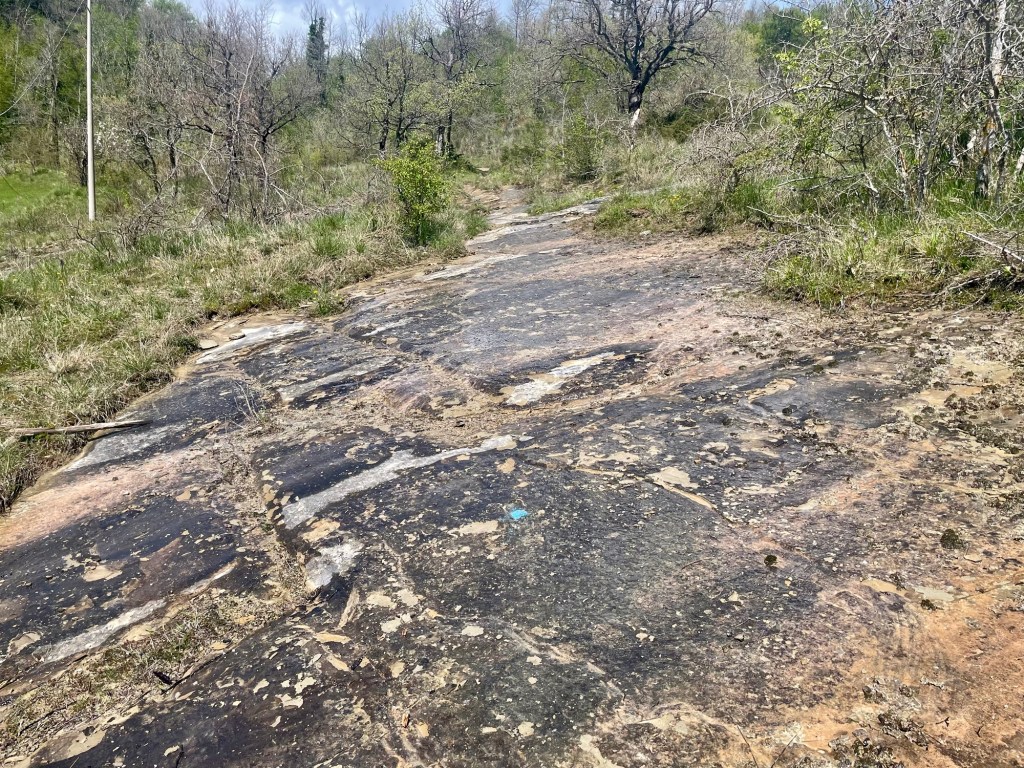
    From a prairie, I descended to flat vertical rocks which looked like lava slipping down the hill.

    I ate some bread, cheese, and tzatziki in the tentative sunlight.

    There were three different types of purple flowers. A yellow butterfly with orange tips saluted me. An ant ran across my bag and a bee buzzed.

    The sun felt great on my skin, though I had left my moisturizer at a previous B&B. The bee who hovered around my lunch was a really fluffy light brown.

    The view of the Apennines was striking.

    I enjoyed the crunch of the crisps with the soft cheese and bread. The spectre of work was haunting me, but I tried to focus on the soft buzz of the flies.

    Oh, I could lie here in the sun all day.

    But I was only about halfway. The sun momentarily went in and I took my leave.

    I felt steady on my feet today, maybe tomorrow I’d be OK.

    After another 2 kilometres, I cracked open the pistachio nuts that I’d been lugging around. Then there were five cereal bars, and some trail mix, that had accompanied me from the start. I was wary of slipping on the hazardous vertical rocks and wanted to make sure that I was strong. I stuffed them into my mouth.

    Two bees were mating, tumbling over one another on the ground in a cartwheel of evolution.

    The shadow of the leaves decorated the rocks.

    I turned the corner, past an abandoned house, and rolled my socks down. My black leggings were calf length and the wind felt good against the inch of leg that was bared. Why on earth had I been heaving around two pairs of shorts, I wondered. Only one had even seen the light of day.

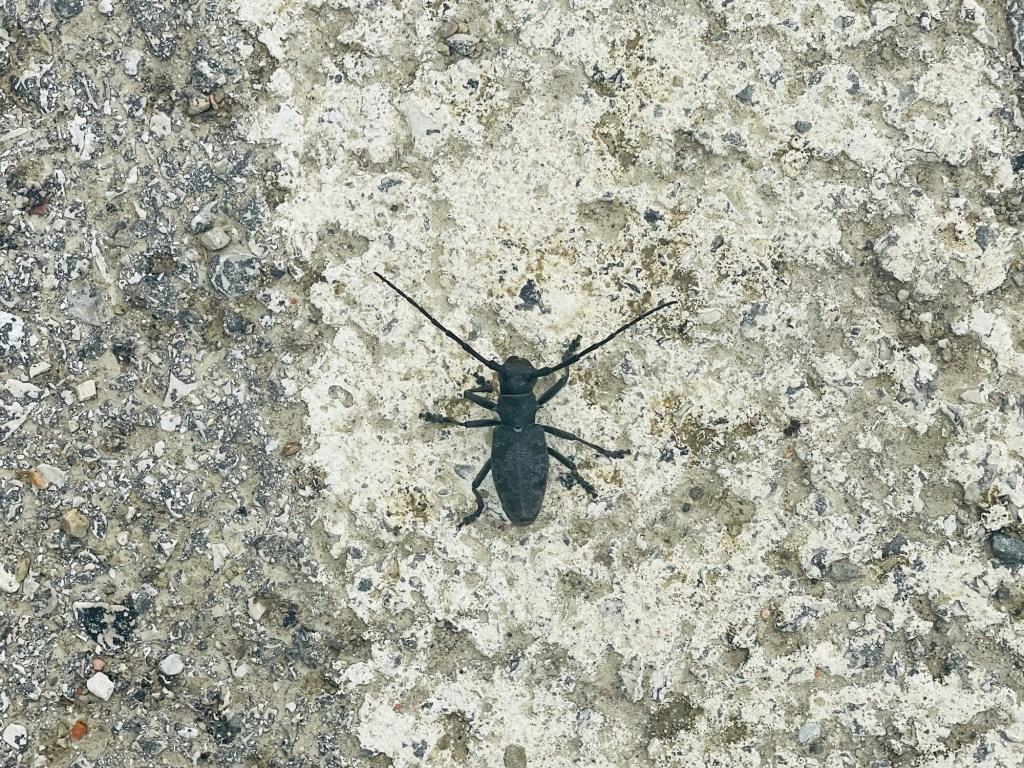
    I lightly twisted my ankle as I descended the uneven terrain which led to more derelict houses. These ones were for sale. I stopped again to massage my feet. A. black beetle crossed the path before me.

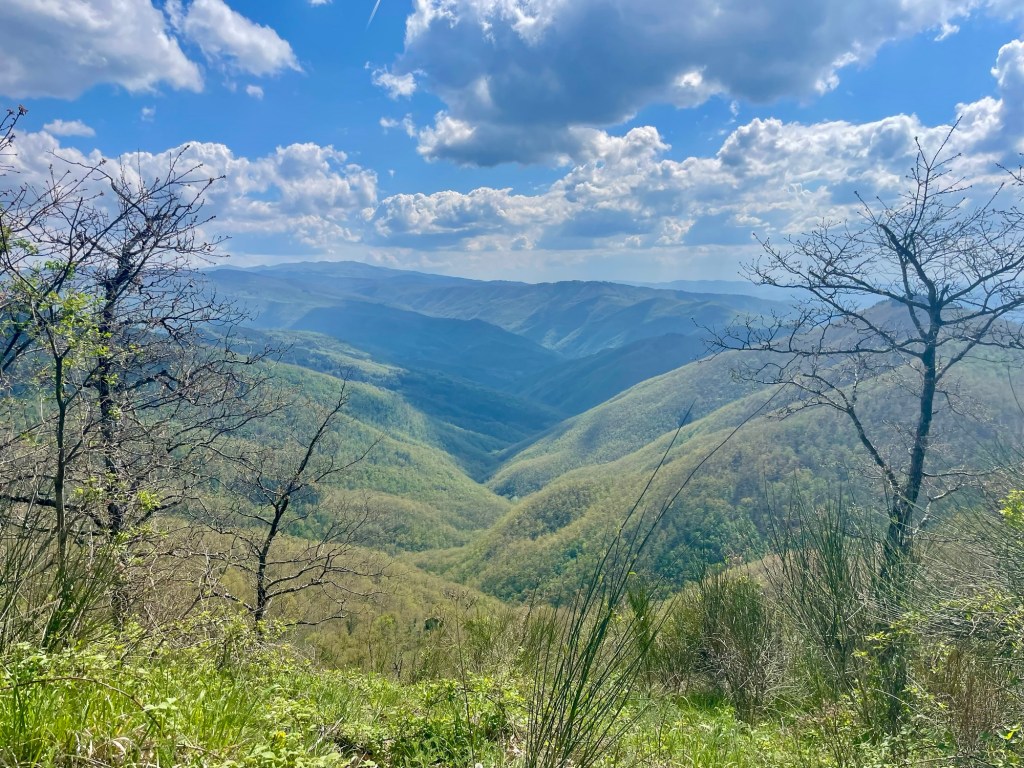
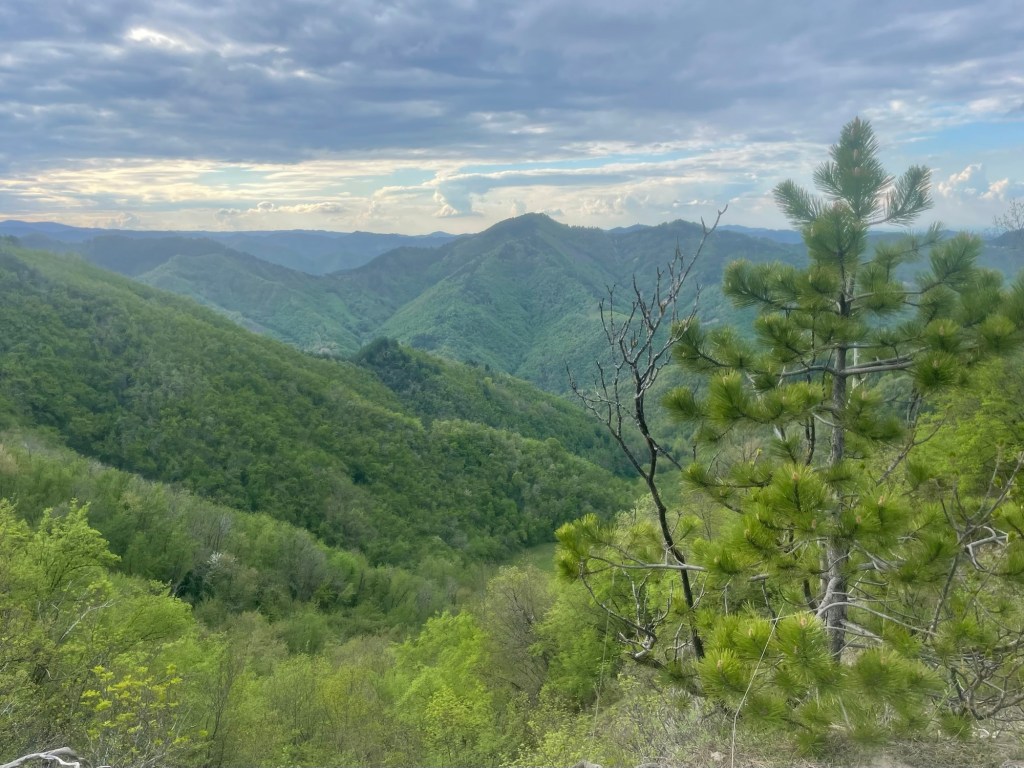
    I exited the woods into a panoramic landscape with 180 degree views of the beautiful rolling mountains. The sound of birdsong warmed my heart.

    Then, fuck.

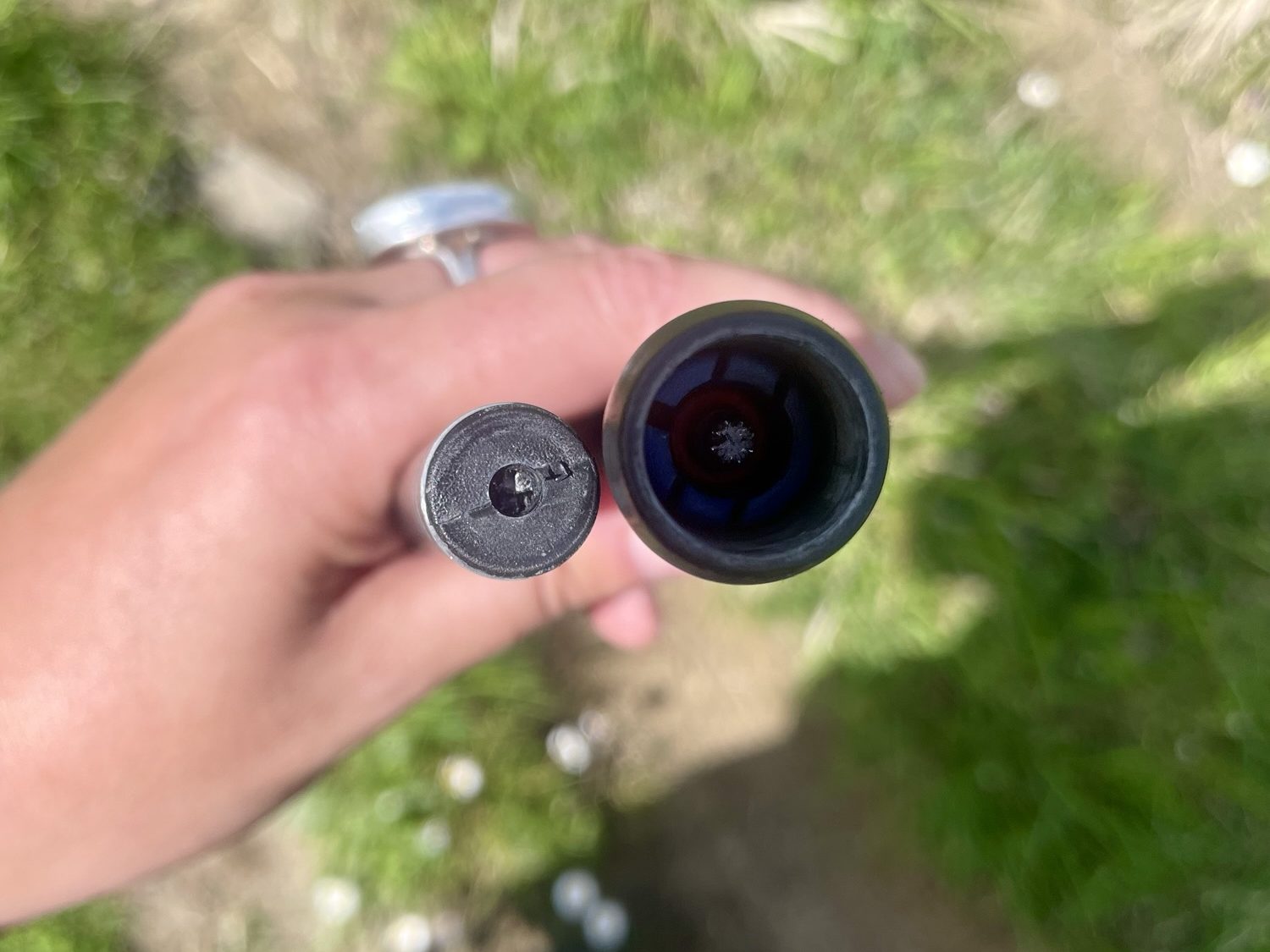
    One of my hiking poles had got stuck in the mud and had broken half way down. The expandable mechanism had completely detached.

    I thought of what I had in my pack to repair it – the sellotape Alina had left me – nope, not strong enough. Some plasters? Again, too weak.

    I would have to continue today’s gentle walk with only one stick, but what on earth would I do tomorrow which was famously one of the most difficult days of the trail?

    I tried not to cry, recalling how when I was hiking with Alina for the first four days I hadn’t used them. And I’m quite sure Dante hadn’t had silicone hiking poles.

    I was now starting the descent. I used my one stick to navigate the hard tug of the mud.

    It was a steep rock path down and, without two sticks, my knees were taking the full thrust of the incline. There was a quarry to my right. I late some dark chocolate and listened to Romagna Mia on repeat to lift my mood.

    I was struck again by the ubiquity of white snail shells on the path. Were they made that way or had their shells been bleached like my hair which was ever more blonde with every day of the cammino?

    There was moss snuggled between slabs of rock.

    I pulled my socks back up to cover my legs as I traversed a patch of brambles. In the distance, I could see Marradi. There was still quite a descent.

    Without my pole I felt weak. It was like losing a limb. I’d been a four-legged insect this whole time. Perhaps at the B&B they’d have some superglue.

    I let a cyclist past and continued on my downwards route. The path had been reinforced by wooden logs like staggered steps. A thin arch was constructed at one junction which I found it impossible to fit through. I jumped the fence.

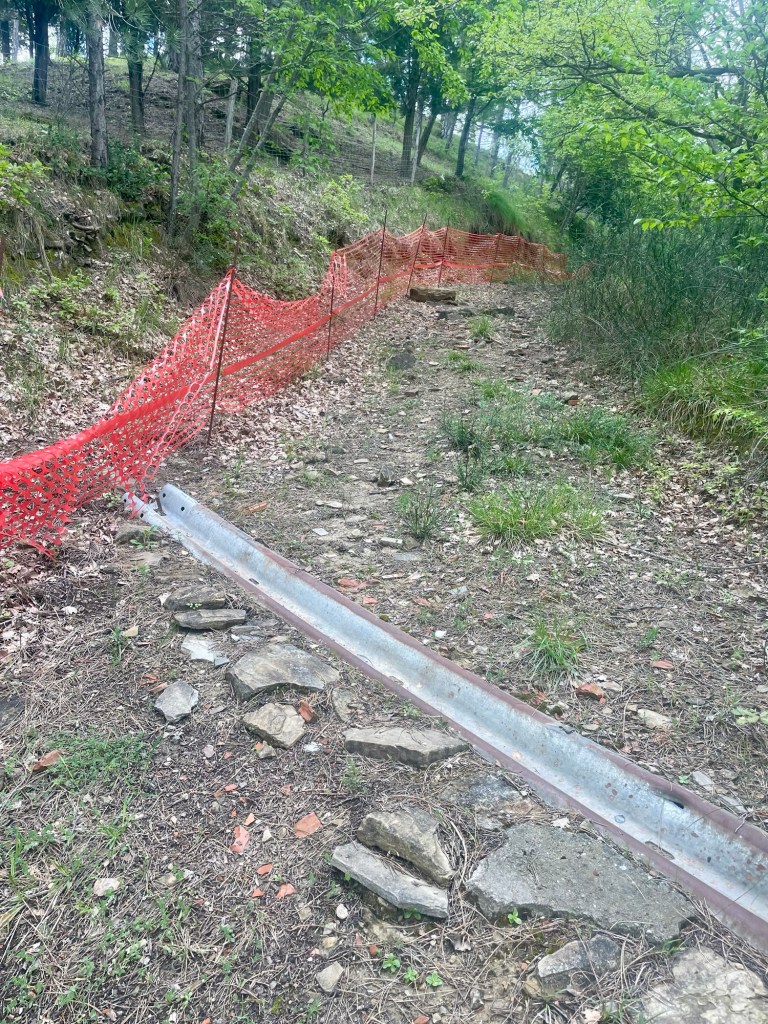
    And here was that hideous orange netting again, signaling a landslide.

    Now there were also troughs in the road to catch the water.

    I was nearly there.

    I walked sideways for the last bit. It was steep and treacherous, and I’d already fallen once today – the incident where I’d broken my trail stick. 

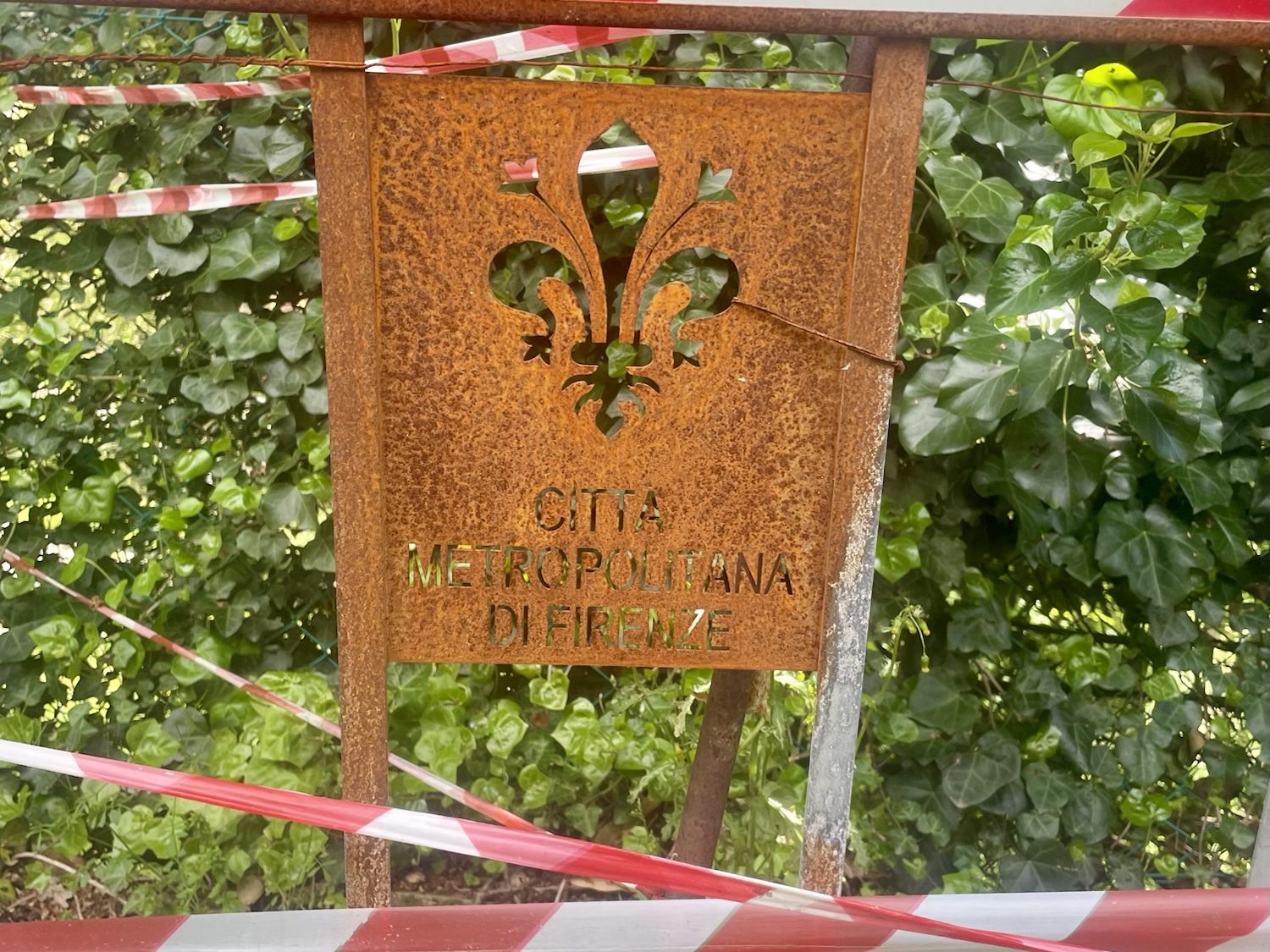
    Then a winding path led me into the town where I heard the hum of cars and the roar of the stream. There was a sign boldly featuring a lily – I was back in Tuscany, alright.

    Marradi was an old medieval city that had been decimated in 1616 by an earthquake. 1775 had heralded the start of its neoclassical architectural reconstruction.

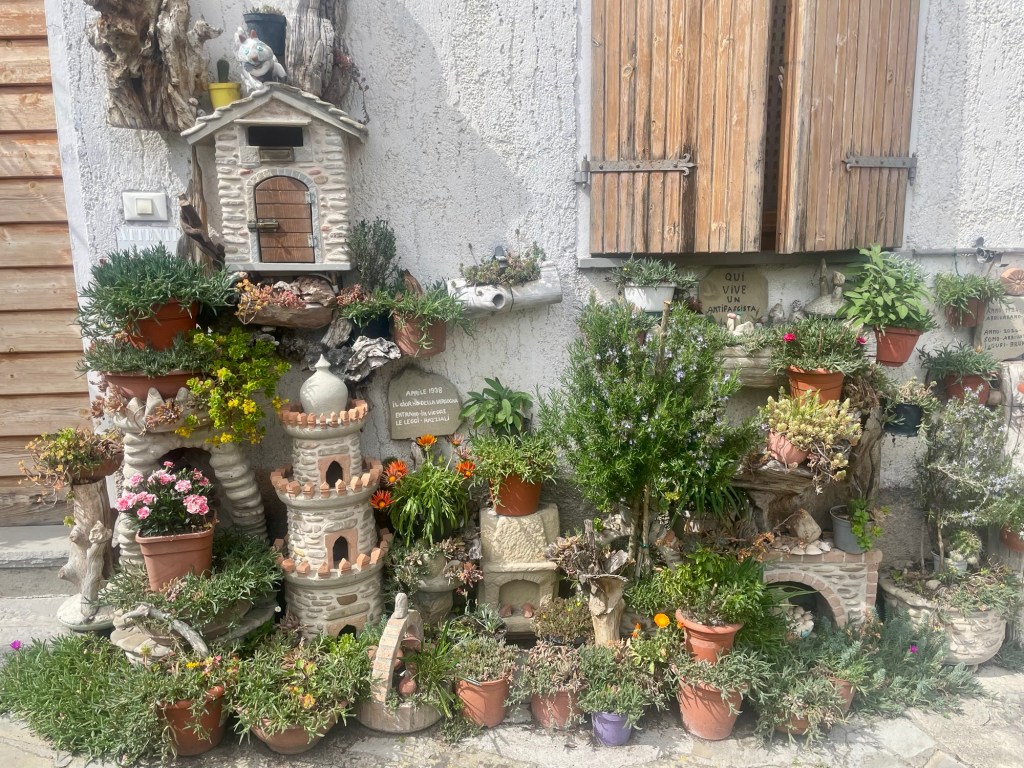
    A house to my left was decorated with pretty succulents, stone sculptures and shells, and poetry was displayed upon the wall next to a sign that read,

    ‘Here live anti-fascists!’

    I thought of Kelsey at her conference and how I should make more of my front garden back home as a kind of public art exhibition. As it was, I had decorated it with some of my mosaics and a fuchsia or two.

    There was the smell of a plant I struggled to identify – it was sweet like grapes – and vegetable gardens were staggered to my right.

    One poem, by Bruno Baracani read:

    Good Day

    Good day to those who pass by
    This street to breathe the scents of
    Spring as if it were speaking.
    The air, in the shade of those leaves
    From the song of the birds makes
    Cheerful the day, the first
    Leaves turn from green, to yellow.
    In the middle the chestnuts fruit
    From the tree, and the first
    Petals white as roses
    Cover the ground, in that
    Magical splendor that the mountain breeds.
    I send you wishes of a good day in peace
    Of so much love that accompanies you.


    (April 2023).


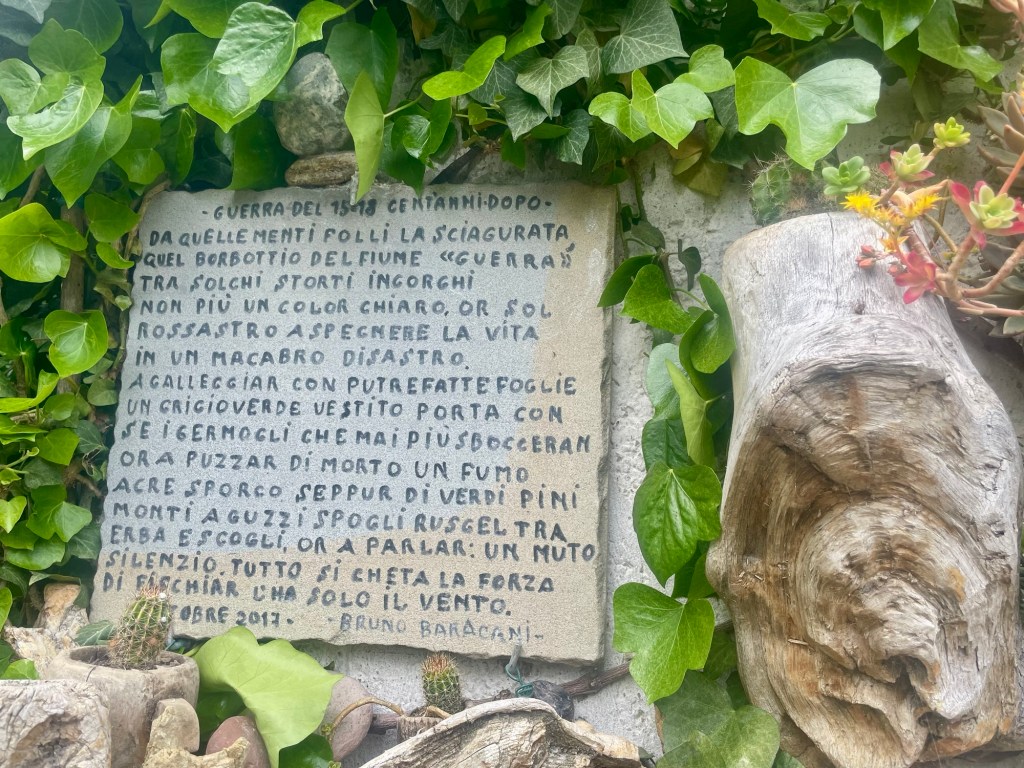
    A second poem on the wall read:

    War of 1915-1918, 100 years after

    From those mad minds, the wretched, 

    The crooked furrows, traffic jams

    More a light color, now, only

    Reddish waiting for life.

    In a macabre disaster

    Afloat with rotten leaves

    A gray-green dress brings with

    It the buds, most of which will bloom.

    Now a smoke stinks of the dead

    Acrid dirt, even if, the sharp mountains,

     Green pines snuggle between them.

    Grass is haggard, now to speak: a mute

    Silence, everything is quiet.

    Only the wind has the strength to whistle.

    (October 2017).

    My phone battery died just as I was entering the town, so I plugged in my power bank. Pink blossom decorated the road like frosting on a cake.

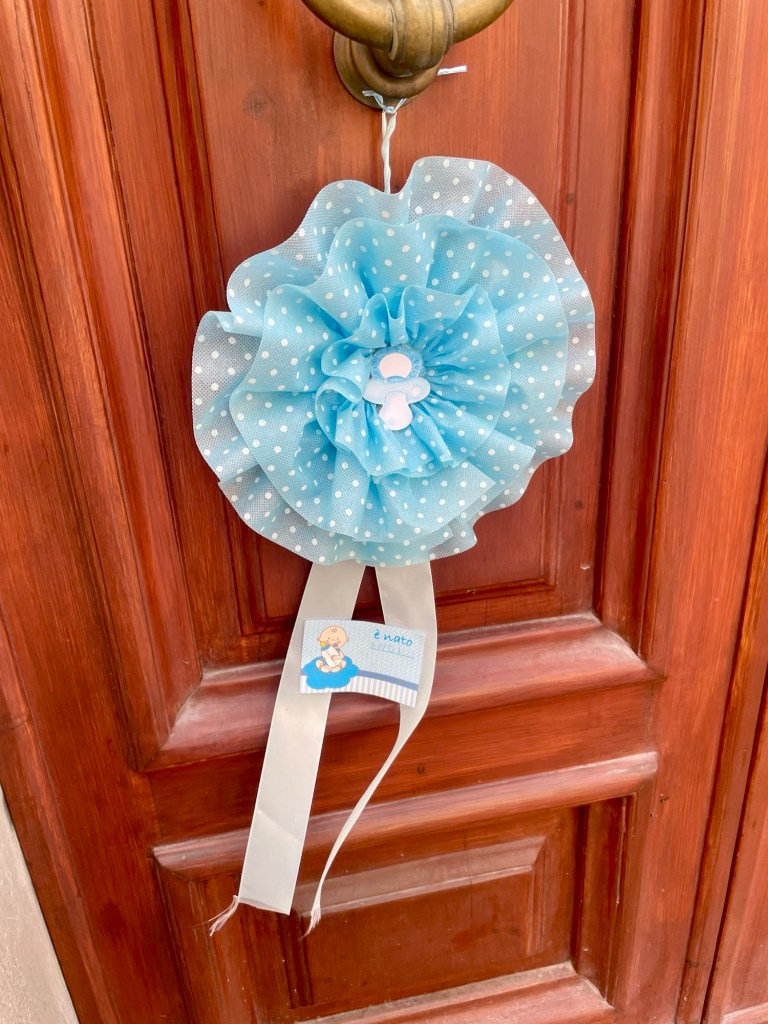
    Tiny succulents sprouted from in between bricks. Someone had graffitied a smiley face onto an electricity box similar to those my dad would draw on my prominent mole as a child. A rosette on a door announced the birth of a boy child.

    As I passed the church, the stream ran into the river. A man was reading a book in the Square and a palm tree sprung from someone’s garden which was also decorated with Italian flags for Independence Day. It felt good to be in the city again and to see the Tuscan shield. 

    I stopped at a bar on the corner, Café Teatro. Reggaeton music was blaring. There was a gaggle of other walkers who were accompanied by a brown dog and a guy with a crystal around his neck and palm trees on his shirt. He was chatting to a girl with braids with gold beads, a belly button piercing and a miniskirt. She wore big gold hoop earrings and leather boots. They were drinking tequila shots. 

    I passed an opticians on my left and then climbed some steps to arrive at my destination, Pizzeria and B&B Le Scalelle.

    I rang the bell and waited five minutes but no one came. I tried phoning the number on the door. 

    ‘Arrivo!’

    Now, someone was coming.

    I watched a little boy with a helmet on playing with his scooter in the square. 

    Finally, Franco welcomed me and led me into a room which was filled with smoke from the fire he had just lit in the restaurant. Did I want a coffee? 

    My room was just by the toilets. So much, I thought, for an early night.

    Then here it came again, ‘Are you alone?’

    I’d caught the sun today. I wanted to buy some more sunblock along with paracetamol for my foot cramps but the pharmacy was closed. Of course it was, it was a Friday.

    On a little wander, I discovered two ice cream shops. Oliver had sent me a message to enquire after my feet. He remembered then.

    That night, I ate a huge parmigiana pizza with fries. The waiter, Kevin, asked abount my laptop. His sister lived in England and he was a student of IT.

    I washed my socks and knickers in the bidet and put them to dry on the abundant heater for which I was glad. These kind of things had become extremely precious to me.

    I drank a bottle of fizzy water and used the special throat medication Kelsey had left me preventatively. 

    Tomorrow would be hard, but I would do it. I had to do it.

    Before I went to bed I asked Franco to make me a sandwich for lunch the next day. 

    ‘Tuna and tomatoes is ok?’ he’d asked.

    ‘Could you also add some cheese,’ I’d responded.

    Fish and cheese, together, in Italy. What had I been thinking.

    And this was my last thought before, at 10pm, I fell into a deep, deep sleep.

  • What Goes Down Must Go Up: From Brisighella to Monte Romano

    It was a difficult day of walking starting with an overdose of gypsum followed by an unforgettable evening of hospitality and a sky full of stars.

    I got up at 7am to a lovely message from my American writer friend Joyce who said she was headed to a ballet version of Frankenstein. I was jealous! Frankenstein, so misunderstood, is among my favourite books. Misread as a horror story, Mary Shelley’s novel is nothing if not a deeply romantic reflection on man’s search for connection and love. 

    Shelley writes,

    ‘If the study to which you apply yourself has a tendency to weaken your affections, and to destroy your taste for those simple pleasures in which no alloy can possibly mix, then that study is certainly unlawful, that is to say, not befitting the human mind.

    If this rule were always observed; if no man allowed any pursuit whatsoever to interfere with the tranquillity of his domestic affections, Greece had not been enslaved; Caesar would have spared his country; America could have been discovered more gradually; and the empires of Mexico and Peru had not been destroyed.’

    As I wrote in a recent article in The Times, I try to follow this logic with my own research as much as I can: taking my time, respecting people and not rushing to conclusions. 

    Indeed, part of the motive for this cammino was to take time to reflect on my research practice as a social scientist. 

    As I’ve been listening back to audio recordings of interviews with refugees on my way, I feel I’ve been able to hear their voices with a new attentiveness. I was taking care of myself and my own need to be outside and wonder. This would, I hoped, help me to care for other people. 

    For me, individuals’ wellbeing and not the political machinations of the world have always been my primary interest. One of my favourite quotes is from the French writer, Boris Vian,

    ‘What interests me isn’t the happiness of all people, but that of each one.’

    ‘Ce qui m’intéresse, ce n’est pas le bonheur de tous les hommes, c’est celui de chacun.’

    I had tried to carry this spirit with me on this adventure that was also, in many ways, a self-reflective ethnographic exercise.

    I headed down to breakfast where the cappuccino machine spat out my drink. The hosts were gracious and said I didn’t have to pay for the disappointing spa

    The morning was fresh but sunny. As I packed my bag, I was disappointed to learn that one of Alina’s glittery socks that I’d washed and put out to dry the night before had disappeared over the balcony. A pigeon flew into my glass door repeatedly. I closed the curtains hoping that might help.

    I drank a whole bottle of fizzy water and ate a cheese sandwich for the road. Yesterday at the supermarket, I’d purchased a Red Bull energy drink which I tucked into my sack. I was still quite tired. I didn’t feel like walking today. I had even contemplated getting a taxi, but Italians don’t really do taxis and part of me had to continue. I’d see how far I got.

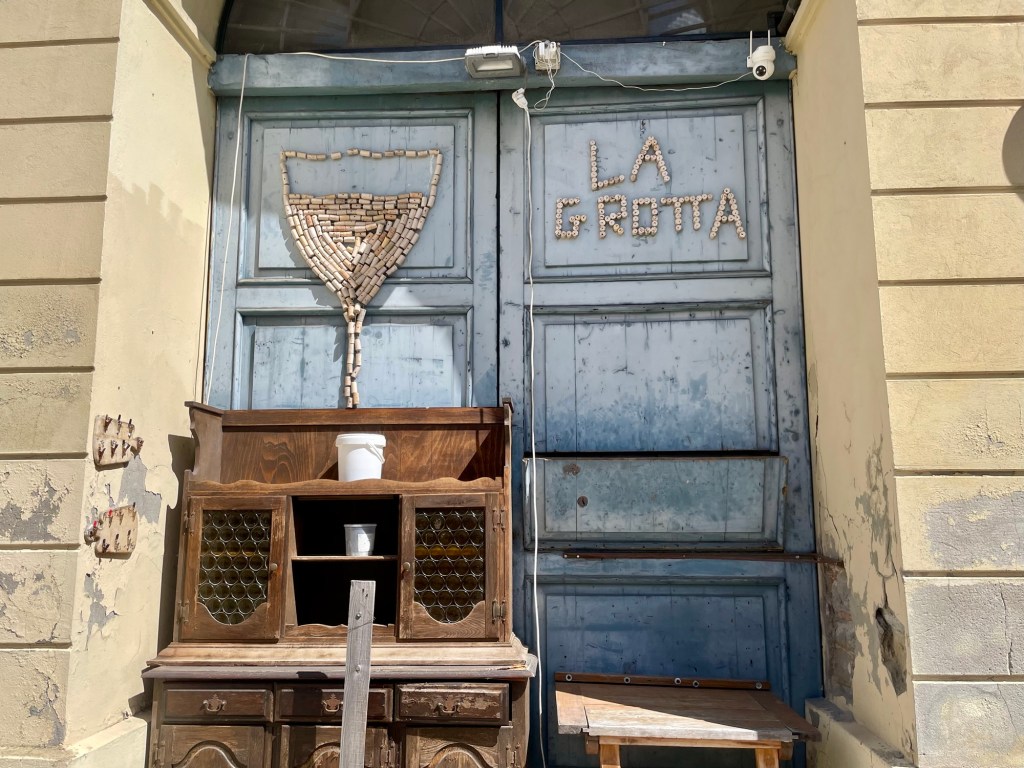
    There was a Sardinia flag on one of the houses that lined the road, and I passed a man who was fitting new shutters on his house. A fancy-looking restaurant had hung wine bottles from an olive tree outside and the door was decorated with a sculpture made from cork. 

    The Dante trail takes you right through the heart of the medieval town of Brisighella. The cylindrical turret of the tower of Orologio, built for military purposes in 1290, dominates the sky above the majestic town hall.

    The butcher’s shop, or macelleria, was doing a roaring morning trade and a boutique called Woman included, among the tempting items in the window, a beautiful crochet top and leather boots.

    The road up out of the town was closed and so I had to take a scenic detour up some very steep steps that were about half a metre tall. I heaved myself up and the sweat was soon pouring from my forehead down into my eyes, rendering me partially blind. Leaving my bikini behind with Alina’s one remaining sock clearly hadn’t been enough to lighten the load of my heavy bag. 

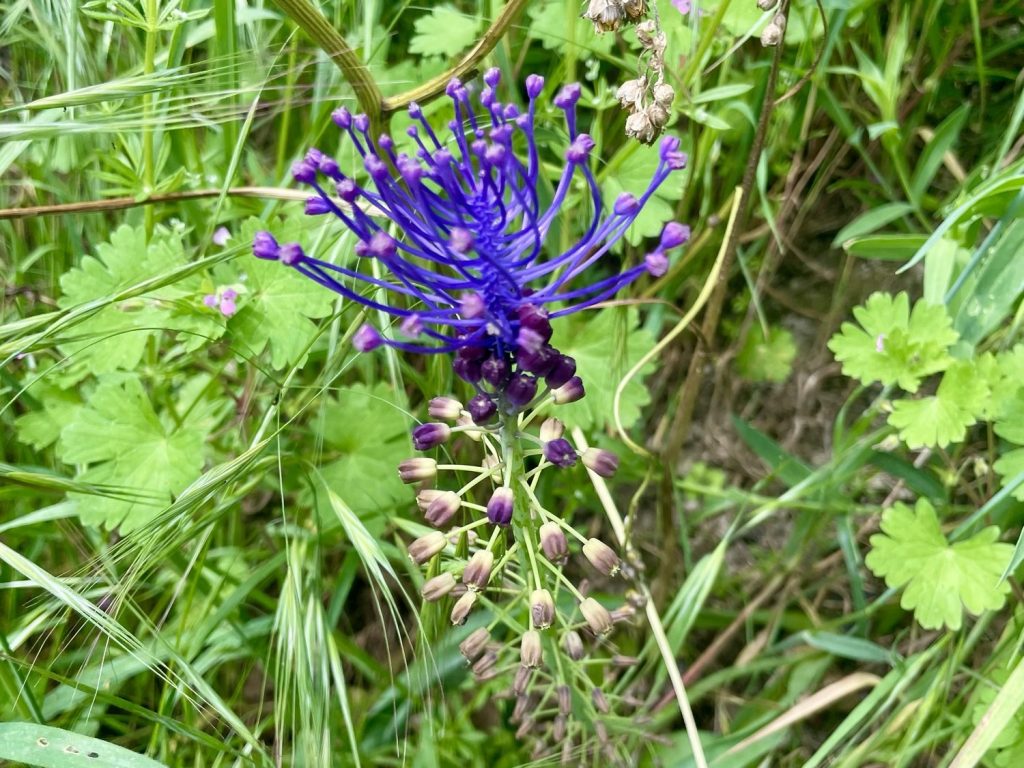
    Succulents were nestled into the rocks and a purple flower called tassel grape hyacinth sprung out of the verge. It looked alien with its prongs – something like the covid virus. As I passed the church, the butterflies were back out in full force.

    Then I was back on the path which took me into a national park. It featured an open-air geology museum on the old site of the quarry of Montecino. I was in the land of gypsum, the second hardest mineral after talc on the Moh scale of mineral hardness, or so my geologist mother had informed me. She’d kill to be here. On holiday in Tunisia she had swooned over the abundant gypsum. ‘The desert rose’, she’d called it.

    The Gypsum Vein is a small mountain range characterized by one rock only, Selenite. It marks the landscape of the Apennine foothills of western Romagna. This, in turn, is made of just one mineral: shiny, soluble, slippery gypsum. 

    The landscape’s origin dates back to about 6 million years ago when the Mediterranean Sea and the Atlantic Ocean were separated and the sea water evaporation caused the formation of several strata of crystals that are the origin of today’s ravines. The solubility of gypsum produced a tessellation of caves and sinkholes (it is almost ten times more soluble than limestone), making it an area of great geological interest to Europe. The site had given rise to fossils from over five and a half million years ago: of rhinos, monkeys, hyenas, antelopes and crocodiles. But a sign made clear that fossil hunting was not permitted here. The park was to be enjoyed, not excavated. 

    I passed a French couple who I wished a bon chemin and stopped to locate my cap to ease the sweating situation. I had only done two kilometres but I was exhausted. 

    I exchanged voice notes with Alina whose mother’s house in Ukraine had been hit by a missile the day before. We shared thoughts on the mistaken assumption that refugees are somehow running away from something rather than staying to fix the problems in their countries of origin. 

    This brushland was a new kind of scenery for me. Something like broom scraped my arms as I walked and two mountain bikers came hurtling down the hill:

    Occhio! ‘Watch out!’

    ‘But are you by yourself?’ one man stopped to ask me. 

    I was, I replied for the umpteenth time. With every time I was forced to declare it, I felt more and more alone. 

    I whistled back at the birds as I climbed up the dirt track road which soon turned to gravel. An orange peel left by a previous hiker was being devoured by ants. 

    I offloaded my empty Red Bull can in a bin in a parking lot that was next to a sign with an arrow that simply read Carne – ‘meat, this way!’

    The valley had been slashed and hacked as if it had been visited by the devils in Dante’s infernal circle of schismatics.

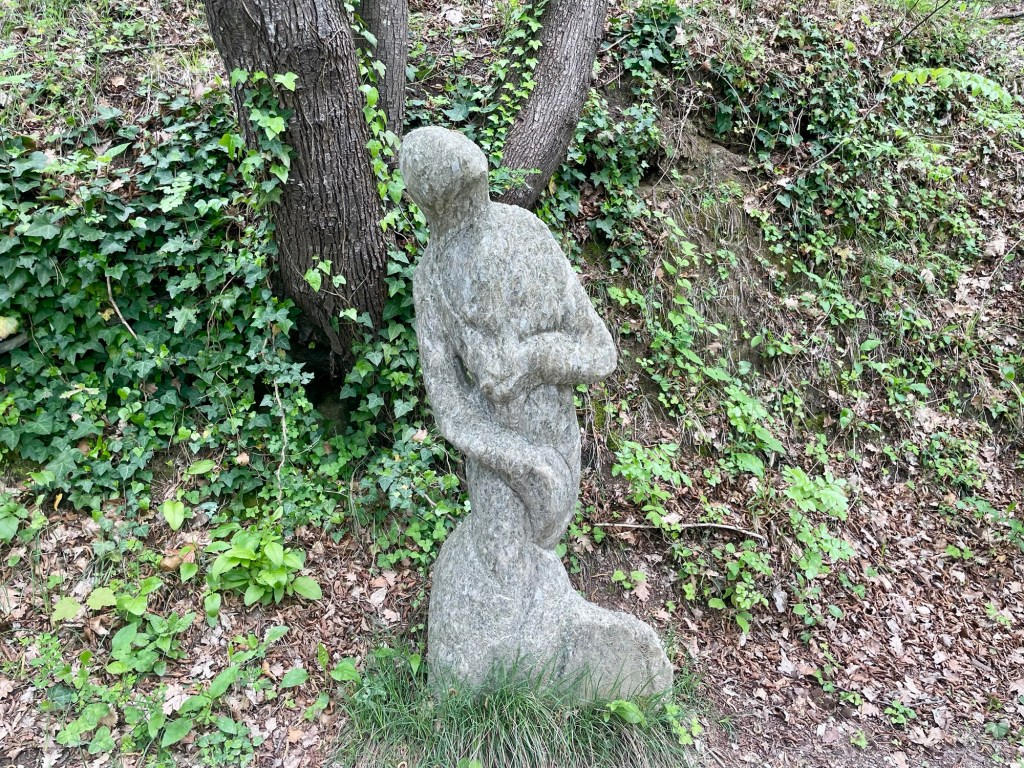
    I could hear the sound of children laughing and soon arrived at a scout camp which was surrounded by sculptures. One resembled a dragon; here was a lizard and, there, a tortured woman who made me think of the Bernini sculpture of Persephone turning into a tree to escape violation by Hades. The statue is housed in the Galleria Borghese in Rome.

    Two years ago, on a tour that I had taken with refugees, led by my brilliant friend and curator Stefania, one woman had said the sculpture reminded her of the sexual violence that her and others had experienced in Libya en route to safety in Europe. How she wished she could have turned into a tree. 

    The sun had gone in and it was nice and cool under the trees. In the panorama, the pine trees sprung up like bishops in a chess game.

    Several scouts filed towards the camp heading in the opposite direction to me. My Granny had been a scout leader, known as Akela after the character in The Jungle Book, but I’d never been a scout myself. Though I grew up in the city, my love of the outdoors had been instilled by my mother and father through our regular walks in the ‘Country Park’, a beautiful stretch of parkland some fifteen minutes’ drive away from our house. There was also, nearby, an old quarry where occasionally, with friends, I’d swim. Once I got a fishing hook caught in my foot. That hurt alright!

    My feet hurt now alright, and I was relieved to reach a stretch of downhill. But looking at the map I was reminded that what goes down must go up. Today would not be easy.

    I put on some music to elevate my mood. The song, Despacito, poignantly rang out and I sang along to the Spanish lyrics. On my most recent trip to Cuba, I had teased my friend Jo by requesting the song repeatedly from the ubiquitous itinerant street musicians. 

    The hills undulated like pencil sharpener shavings strung out across the landscape.

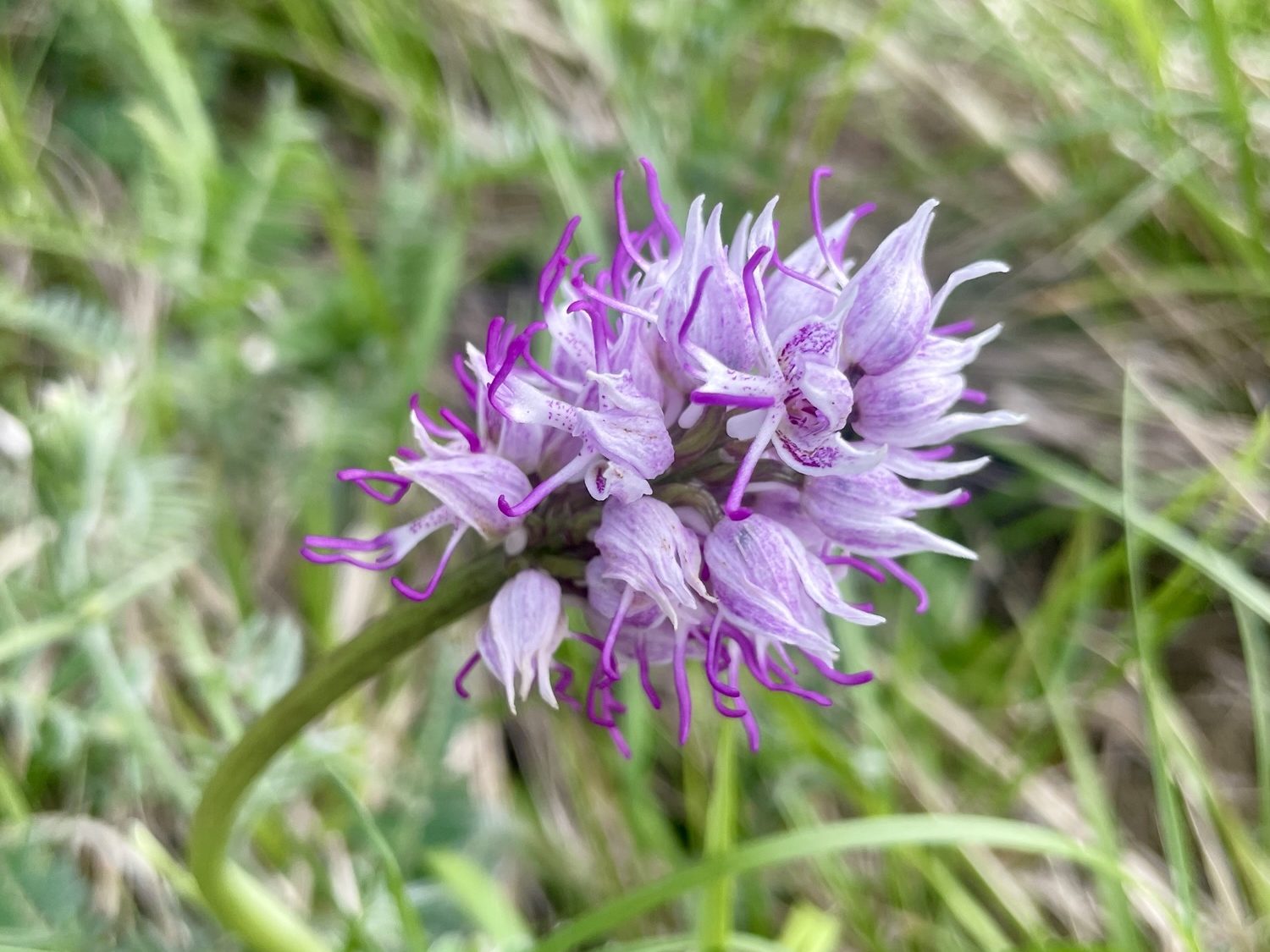
    The yellow broom smelt magnificent, and pinecones littered the path. The poppies opened up their petals like the wings of a butterfly. It was 1pm now and the sky was smudged with clouds. I passed a monkey orchid and bushes of juniper. 

    I didn’t have time to check out the Museum of Olive Oil but I was making up time on the gentle downhill patch. To look down was to see a furry black caterpillar curled in a ball; to look up was to see the vineyards dusted with buttercups.

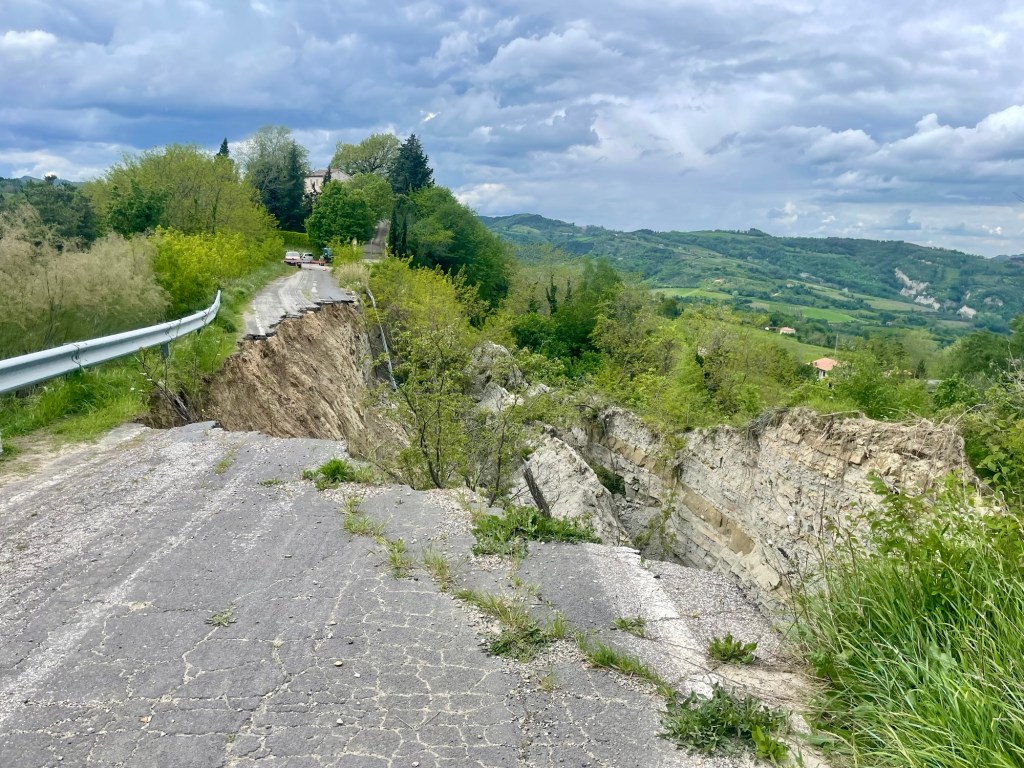
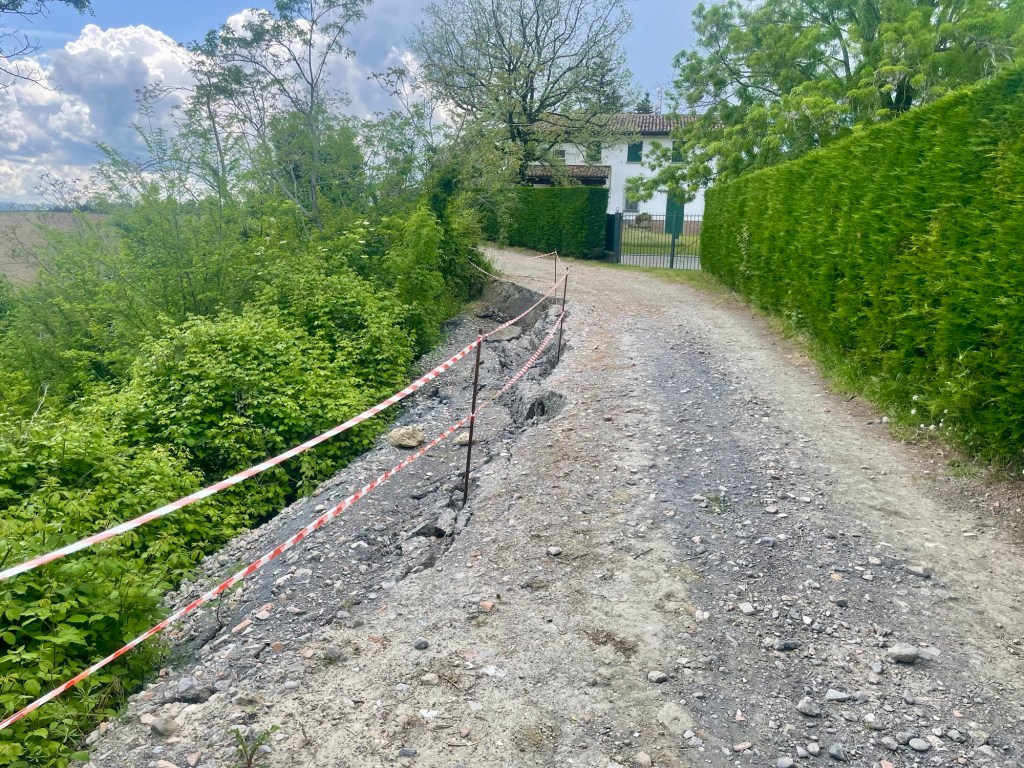
    I proceeded past a sign saying the road was broken up ahead only to find that yet another landslide had torn into the cliff face. Luckily, I was able to hop over the barrier and traverse the crevasse on the left hand side. I put on Fleetwood Mac.

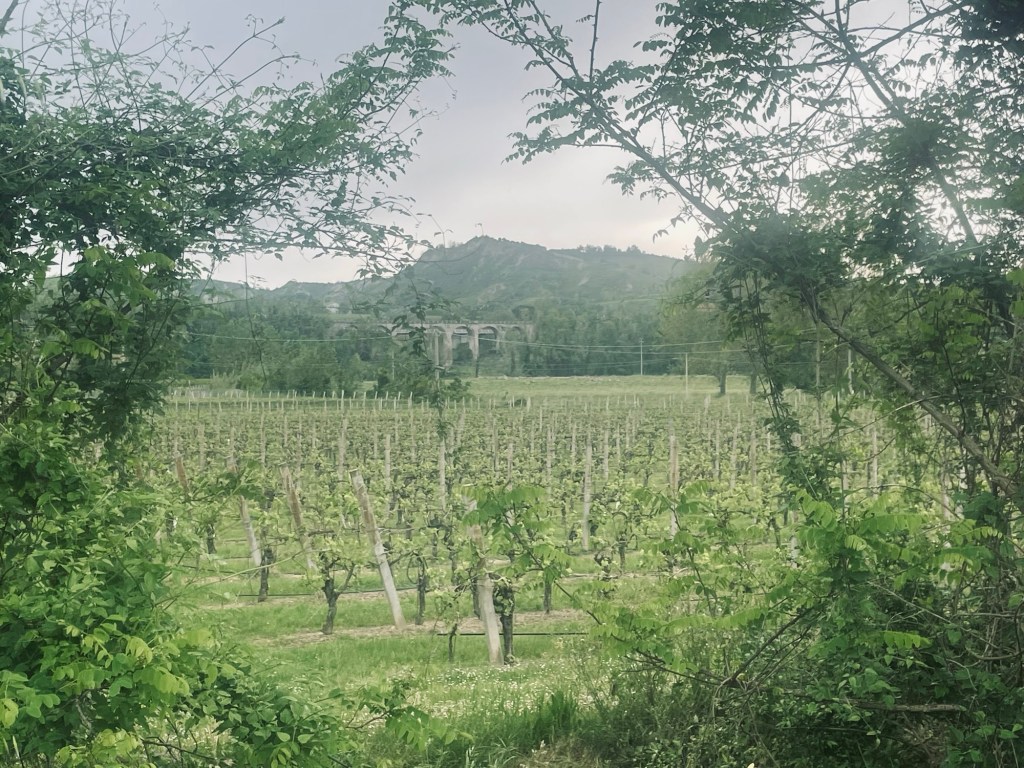
    The combination of smoked salmon and tzatziki was so, so good as I stopped for lunch, looking out over the vines. I noticed a worrying hole in my shoe. I still had quite a long way to go but I wanted to take a nap. This plan was thwarted by a tractor that emerged spraying pesticides.

    A car sped past. But where had it come from? The road was broken? Oh well, I’d missed my chance to hitch a ride.

    Some pigeons perched on an electricity wire. A delicate trace of honeysuckle decorated a laurel tree.

    And now came the ascent once more. I noticed the various signs signaling that European Union money had been invested in the area and passed another landslide, though this time the road was still navigable.

    My feet ached and I stopped to take some ibuprofen. Now I was listening to an audiobook that Alina had recommended, The Signature of All Things by Elizabeth Gilbert. It was about botany. I thought of my grandfather who I had never known, but who had been an academic at the University of Manchester. A doctor of blue green algae or cryptogamic botany, he had apparently been a walker too. The family legend went that he had even been shortlisted for the Edmund Hillary Everest expedition. In my dad’s house there still hung a beautiful black and white photo of him at the summit of Mont Blanc.

    I tried to channel that spirit as I ploughed on with painful feet. I tried smaller steps – that hurt. I tried longer strides – that hurt too. A tiny spider hitched a lift on my thumb nail. Desperate for some company in my hour of need I played some opera music. The highs and lows of the singers’ voices matched the ups and down of the path.

    My phone signal had gone so I couldn’t call anybody for motivation. The rocks weren’t massaging my feet now, they were hurting them. I’d only done 12.1 kilometres but the incline had been 72 floors.

    A chapel to the Madonna spurred me on for a while, then I collapsed by some abandoned farming equipment. I would take some paracetamol too. Shit, how would I fare tomorrow, and the day after, and the day after that?

    I watched a hawk sweep across the sky and contemplated it a while. It hovered then soared down in a flurry of feathers which were dark on the outer edges and a lighter brown in the middle. It screeched into the sky. I hear you, I thought. This was the sound of my foot cramps. 

    I put my feet up on my bag and closed my eyes. God, it felt good to be horizontal. It was nearly 4pm. In my body I felt fine. It was just that my stomach was still playing up and my feet were aching.

    I carried on, listening to the sound of the hawk and dogs barking in the distance. I was rewarded by a spectacular 360 degree view of the mountains which was framed by wild rosemary and thyme and blue daisies that exited the ground in little puffs of mauve. 

    The pain killers had taken the edge off, but every step still hurt and I had another two kilometres to go. There was a brief flirtation of rain, just enough for me to cover my bag and myself, but then it passed as swiftly as it had arrived.

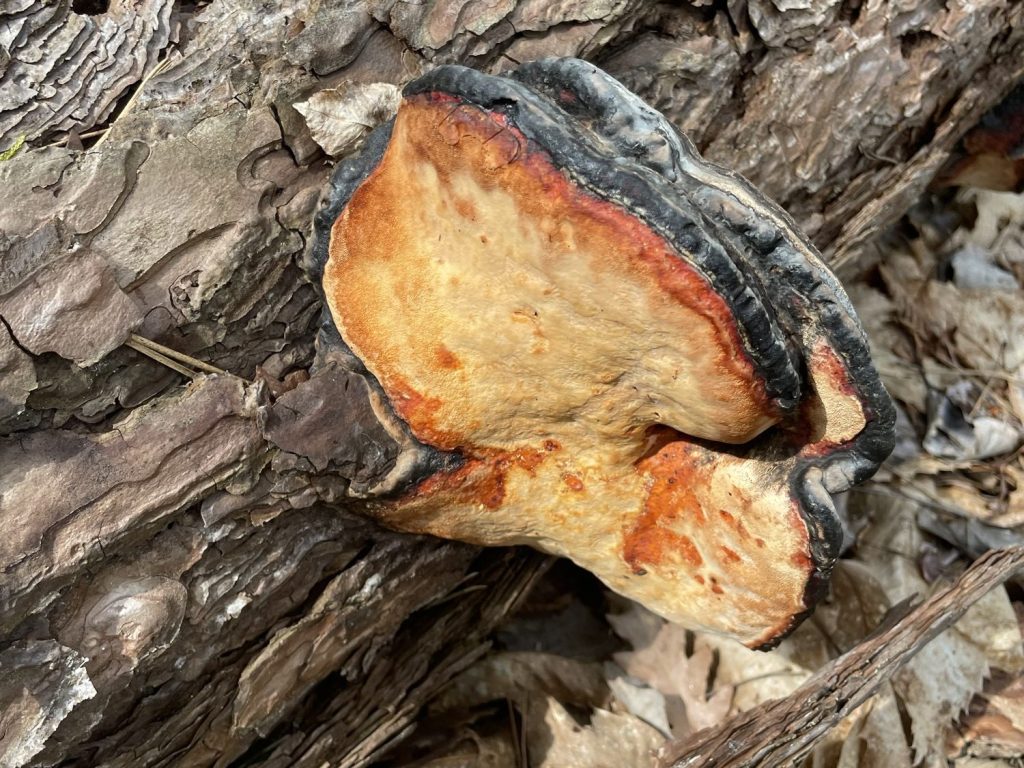
    I pushed down hard on my hiking poles to relieve the pressure on my feet.  By 6 o’clock, I told myself, I’d be there. I ate some pistachio nuts and carried on my way. Panting like a dog, I dodged muddy puddles here and there and noticed an interesting orange fungus on a tree stump.

    A sign informed me that I was in Ca’ di Malanca where on the 10th of October 1944, Italian forces had clashed with German soldiers. There had been 42 fallen partisans. It was humbling. 

    The forest opened up to reveal spectacular views on either side. I saw some parasites on an oak tree and thought of Paolo back in Ravenna and his ink. What a man he had been. 

    Now the path led across a sheer rock face littered with boulders with precipitous drops on either side. I thought again of Dante’s hike through canto 12 of Inferno,

    ‘And so we made our way across that heap
    of stones, which often moved beneath my feet
    because my weight was somewhat strange for them.’

    Attention is drawn here to Dante’s weight to stress he is a human being visiting the underworld. I hoped Dante had had good boots.

    The sun was now illuminating the mountain tops in a vibrant green. Then, I could hear a dog, I saw a car and my heart started to lift. Here was Enrico, my host for the night who had promised to meet me. 

    I couldn’t have been more happy to see him.

    He showed me that across the ridge you could see Ravenna and, see that last line? That was the Adriatic sea. On a clear day you could see the mountains of Croatia.

    I immediately liked this man who was accompanied by two adorable dogs, Mia and Cilian.

    Enrico was a keen geologist and star gazer – to love planet earth is to love space after all, he explained. He was one of the patrons of the Observatory that sat atop a nearby hill. When they’d built it, they’d found an unexploded bomb from the war.

    Together we passed Monte Romano, a tiny village composed of just ten houses, and arrived at his home. It was folded into the hills in the middle of nowhere. The view was breathtaking. You could see Mount Falcone which I’d crossed from Florence in the snow, and here were the origins of the Arno and Tiber rivers.

    It was moving to see how far I’d come. Perhaps I could do this after all. 

    ‘And you’re doing it without the threat of the death penalty over your head like our dear Dante,’ Enrico reminded me. We laughed. 

    Enrico’s wife had left to pay her respects to the late Pope at 2am that morning and so it was just me and Enrico who enjoyed an aperitivo on a little balcony as we watched the sunset. He had grilled aubergines with the local oil into a delicious sauce to make bruschetta. The olives melted in my mouth. 

    That night we ate tagliatelle with mushrooms he had foraged from the surrounding woodland with pepper he had brought back from Madagascar and discussed all things geology and stars beside a roaring open fire. The mushrooms were called St George’s mushrooms, since the best day to collect them was St George’s Day.

    Enrico also prepared me a delicious baked potato with rosemary and some grilled cabbage and tomatoes which were served with pecorino and some local squacquerone cheese. It was all delicious. 

    The house was as stunning as Enrico’s cooking, with original brick walls and beams that crisscrossed above us protectively. There was an antique clock, oak furniture and a near perfect pencil depiction of Dante’s death mask which had been rendered by his grandmother’s sister for a project at school.

    And then Enrico shared with me one of his prized possessions: a striking photograph of the comet Hale–Bopp which was visible from earth in April 1997. It had been one of the brightest seen for many decades. 

    I can still recall my mum’s excitement. 

    ‘A comet, a real-life comet in the sky!’

    I had been ten at the time. It was one of my most vivid childhood memories. It won’t return for well over 4,000 years, had marveled my mum. I wished she were here to meet Enrico. 

    The dogs were under the table and I tickled one of them with my weary feet. It felt luxurious. Enrico shared with me a poem he had written about comets:

    Our existences flow rapidly.

    Like swift wandering comets

    That move

    In cold, empty spaces.

    Distant projects,

    Guarded in the dark

    Suddenly called

    To the light.

    Beauty and love

    They light up and burn

    Around this Sun.

    For each, the orbit is different,

    But it inexorably brings us

    Back to a place that reason cannot understand.

    Enrico had been the translator for Thomas Bopp, one of the astronomers who had discovered the comet before it became visible to the naked eye, on a visit to Italy during which he had signed his photograph. The photo, he proudly shared, was also featured on numerous book covers.

    ‘Comets now have names of computer programmes,’ he lamented, ‘not astronomers or lovers of the sky.’

    This man was a true lover of the sky, just as Dante had been.

    Before I went to bed, Enrico took me outside to see the stars and took my photograph beside his favourite oak tree. I felt honoured. And naturally, I recalled the last lines of the Divine Comedy in Paradiso:

    ‘As the geometer intently seeks
    to square the circle, but he cannot reach,
    through thought on thought, the principle he needs,

    so I searched that strange sight: I wished to see
    the way in which our human effigy
    suited the circle and found place in it—

    and my own wings were far too weak for that.
    But then my mind was struck by light that flashed
    and, with this light, received what it had asked.

    Here force failed my high fantasy; but my
    desire and will were moved already—like
    a wheel revolving uniformly—by

    the Love that moves the sun and the other stars.’

  • A Divided Sky: From Oriolo dei Fichi a Brisighella

    Today’s mix of sunshine and rain left me in a melancholy mood which was not alleviated by the hotel’s awful spa.

    I woke up to a horrible dream which put me on edge. And, typical: I’d left my mosquito repellant with Kelsey to offload some weight and now, in the night, they had assaulted me. It was my own fault – it was a balmy evening and I’d left the window open to hear the cicadas.

    I received news from Stefano and Donatella that Oliver’s memory was returning and shortly after he sent me a Whatsapp message. Thank God.

    The aftershocks of yesterday’s drama were still hitting me. 

    The rain fell lightly on the vineyards surrounding the agriturismo, la Sabbiona, which had a swimming pool and children’s play area for the summer. There was a bench made of wooden crates from which you could enjoy them, though something like a large football net obscured the view.

    Over breakfast, I got chatting to Chris and Carey, a retired American engineer and teacher couple from Colorado who were vacationing in the region. We discussed Trump and their plans to keep travelling until his four-year reign was over. I thought of the schismatics and sewers of civil discord in Dante’s Inferno who are punished by having their body parts mutilated. 

    ‘Who, even with untrammeled words and many
    attempts at telling, ever could recount
    in full the blood and wounds that I now saw?…

    And then, were one to show his limb pierced through
    and one his limb hacked off, that would not match
    the hideousness of the ninth abyss.

    No barrel, even though it’s lost a hoop
    or end— piece, ever gapes as one whom I
    saw ripped right from his chin to where we fart:

    his bowels hung between his legs, one saw
    his vitals and the miserable sack
    that makes of what we swallow excrement.’

    The prophet Mohemmed shows his entrails to Dante and Virgil while on the left stands his son Ali, his head cleft from chin to forelock. Some other souls have their heads on backwards. That might be more suitable for Trump, I thought.

    Breakfast consisted of homemade juices – I chose raspberry and grape – that came in plastic cups (Italians really like their plastic cups) and a range of home-baked pastries. There were some pretty flowers in a little boxes set out on the table in a line. Perhaps there would be a wedding. I realized as this thought transpired that I was thinking in Italian – un matrimonio.

    I was eager to get back on the cammino after a couple of days of not walking but I was also tired. Yesterday had taken it out of me, even if I had slept all night. I had a headache and my stomach was playing up, so I took some paracetamol.

    As I set off, I was rewarded with the familiar sight of olive, rosemary and fruit trees. When I passed guard dogs, now I greeted them familiarly, converted by my experience in Forlí.

    The lizards were back and the thistles, poppies and sticky weed. Some wild verbena sprouted on the roadside. 

    A sign announced that we were in the land of ‘flavours and wine’.

    Once I’d passed the little church of Sant’Apollinare, which had been reconstructed in 1946 after bombardments in World War Two, I passed onto a dirt road where poems had been pinned upon the tree barks and lamposts. One called ‘crickets’ by Nino da Oriolo read:

    ‘In the red of evening

    The crickets serenade the moon

    In a row with elms they stand on top of the hill,

    They greet my day of work.

    I feel them close,

    They live in my land,

    They live in my sun,

    They feel my wind,

    We enjoy the pleasure of living.

    In silence they accompany me on my way.

    I am not alone, we are not alone.’

    I felt alone today, though now I had met Giordano, Marcello and Oliver, the guardians of the trail, I had a new appreciation for every marker on a tree or lamppost to which they had put their generous hands. I recalled how Giordano and his son both had strong, thick fingers like tree branches.

    I tried to religiously keep my feet dry as I navigated the mud which was embroidered with tractor tracks here and there. 

    Marco, who I had met at Fattoria Chiocce Romagnole, who had set off on the cammino from Ravenna, had written to warn me about the roads which were muddy and diverted in several places, and today, as I walked along, knocking over the daisies with the tip of my boot, I felt some comfort knowing that they had walked before me here.

    The path weaved in and out of the vines. A butterfly decorated some dog excrement and a man ate a brioche on a stationary tractor by the side of the road. The sun was strong up in the sky. 

    An explosion of poppies lined the margins of the path making me think back to the schismatics and of war. 

    My feet felt surprisingly OK. My shoes had fully dried out and I’d applied blister plasters preemptively before setting off. The wounds on the top of my toes had hardened into scabs. 

    It seemed like the world and his wife were mowing their lawns today in Oriolo. From everywhere emanated the smell of freshly cut grass. 

    A message from Kelsey arrived to say that the UN Lesbian March she had been organizing for this coming Saturday had been cancelled because some 250,000 people, including Trump, were expected to descend on Rome for Pope Frances’ funeral. Even from the grave it seemed he had it in for the gays. 

    I missed Kelsey. 

    Back on the tarmac, there appeared a pretty terracotta farmhouse to my right the colour of my bathroom and huge thistles the size of small children lined the road. 

    After an hour, I stopped for a caffé macchiato at Manueli restaurant which featured pretty frescos on the walls. My back was already sweating into my t-shirt. I contemplated stopping to write awhile but decided to continue on. Writing and walking had come to be, for me, one and the same. 

    I crossed the river Manogue and spied a lizard that had been run over. Its skin and guts were spilled out onto the pavement. It was an iridescent hue, green and blue, like an oil spill.

    A dusty blue Fiat Panda sped past and a lady in a straw hat who was cultivating romagnole artichokes wished me a buon cammino

    Everything in this region is ‘Romagnole’ – there’s a deep sense of pride. 

    A peacock strutted across the road next to a tractor as I passed over another river following the Via della Uccellina – the path of the little bird. 

    I looked back at the city of Faenza from where puffs of industrial smoke rose into the sky, merging with the clouds which were pooling grey and white. I’d visited Faenza with my Reading Dante with Refugees class and remembered vividly Sahra dancing on the stage of the spectacular theatre. I pinged her a message to see how she was getting on.

    It was relatively flat on the path though I was surrounded by undulating hills. The landscape reminded me somewhat of Le Marche where I had spent several summers at my friend Harriet’s house enjoying quality time with University friends. 

    I listened to some gentle Indie rock as I sweated under the midday sun.

    A big white car pulled out of physiotherapist’s office which I found odd to be located in the middle of the countryside. 

    The livid poppies made it look like the hill was aflame.

    The trees were embracing one another on either side of the path to make a tunnel.

    As Brisighella came into view before me, there were quite a few cars on the road. 

    Pink, yellow and purple irises bloomed from a garden to my right. I felt the rub of the end of my second toes inside my boots. 

    Throughout history, different cultures have attached meaning to the length of toes, including the second toe. The Greeks, known for their appreciation of beauty and mathematical harmony, considered a longer second toe, also known as Morton’s toe, as an aesthetic ideal. Greek sculptures, such as the Venus de Milo, often depicted figures with Morton’s toe, further perpetuating its cultural significance. French sculptor Frédéric Auguste Bartholdi studied Greek and Roman sculptures, which resulted in the Statue of Liberty’s longer second toe.

    As the mountains came into view beneath a purple sky which was heavy with rain, I thought again of items I could get rid of before the climb ahead. My hoody perhaps? Or my deodorant?

    Olive trees marked the perimeter of the vineyard and a familiar cuckoo sounded out.

    I stubbed my swollen toes on a crack in the road and stopped for lunch, looking back over Faenza and forward towards the towering peaks. I bit into a blood orange which burst in an ecstasy of sugar in my mouth. I was tired and I wanted to take a nap but the rain was coming, so on I went. The sky was divided in two: here in front it was dark and brooding, the colour of a whale; there behind me it was light, the colour of delphiniums. 

    As I continued, the road collapsed down to the left. The hills were cut with ridges and valleys like slices of an apple. 

    A blackbird sang out and the leaves on the trees began to rustle in the light wind.

    I had come to recognize the smell of oncoming rain. The butterflies had disappeared and, was that thunder I heard in the distance?

    The overcast sky made the hillside look emerald green rather than the more vibrant pea green of earlier in the day. A ruined brick house emerged from among the foliage.

    After about ten minutes of walking downhill, I realized I had missed a turning but I decided to proceed down the road along via Carla. I would pick up the trail later on.

    I stopped to cover my backpack at the touch of the first drops of rain, outside a house with peppermint green shutters. A huge beetle crossed in front of me and my phone pinged with the offer of a discount from a takeaway back home.

    At a junction where there was a Cammino de Dante sign, I stopped briefly to converse with a woman called Stefania who was pruning her roses. She greeted me warmly and I petted her dog, Pepe. She said I was the first person she’d seen pass this year. A man in overalls asked me if I’d come from England to salute the Pope.

    ‘I’ll let you go before the rain comes down any stronger,’ she said, ‘do you need anything, water?’

    She was particularly impressed that I was tackling the cammino alone as a woman.

    ‘You must have strong legs and a strong will!’ she said. 

    A bonfire in a farm to the right reminded me of one of my favourite Italian books, La luna e i Falò (The Moon and the Bonfires) by Cesare Pavese.

    ‘We all need a homeland,’ reads one line, ‘if only for the pleasure to leave it.’

    A tractor on the right was mowing in between the vines and the rain was starting to hit hard. I was rushing, trying to arrive at my destination, which was suitably called Modus Acquae, for a four o’clock zoom meeting.

    An impressive railway bridge on the right marked my entry into the city along with some tennis courts and recycling bins. 

    The river Lamone was opaque and surprisingly low given recent rainfall.

    I passed beneath the railway bridge and by some apartments with pretty flowers on the balcony and decorative windmills spinning in the breeze.

    A billboard advertised a pork festival, another steel sign announced that I’d arrived in the city of olive oil. The town sat in a nest of hills.

    I popped into a big Conrad supermarket to stock up on dinner and lunch for tomorrow and giggled at the significant section of Italian Mills and Boon novels which had titles including ‘The Seduction of Fire’ and ‘Undeniable Alchemy’. I treated myself to some smoked salmon, strawberries and dark chocolate.

    I made it just in time for my meeting with five minutes spare to untie my braids for a more formal look. It was about the presentation of some research on asylum appeals to the English judiciary. As part of the project, I’d observed 100 asylum appeals – an experience that had left me with a profound sense of moral injury at the injustice of it all. 

    After the meeting, I visited the hotel’s spa which had nothing on my blissful experience at the Hotel Granduca in Campigna. In fact, it was pretty awful. The view encompassed some orange tape, a ping-pong table and some camper vans that were stationed in the car park. The sauna was tepid at best and only one of the three jacuzzi functions worked. 

    Back in my room, I peeled the blister plasters off my socks into which they had unhelpfully melted and took a Coke Zero from the mini bar. There was no question about it, I was going to lose my second toenails from the rub, rub, rub of my boots. 

    The rain bounced off the cover of the swimming pool and an ant scurried across my balcony to find shelter. I would have to email my local book group to let them know I would miss tomorrow’s session on Americanah by Chimamanda Ngozi Adichie, a migratory novel that I’d loved.

    I felt a bit lonely as the rain stopped and the evening sunlight poured into my room. I looked out into the courtyard at an abandoned skateboard and starkly pruned tree. A Spanish girl in a princess crown was showing another how to ride a bike,

    ‘Go, Maria, go!’

    I checked my phone to see a message from Alina and another from Oliver. Alina’s news was bad: her mother’s house in Ukraine had been hit by shelling. The news from Oliver was good: he had been discharged from hospital and was finally home. 

  • Ditches, Dandylions and Donkeys: From Forlí to Passo Vico

    Today’s walk gave a detailed insight into rural life, while the animals at the farm where we stayed were a delight. 

    I had met my friend Kelsey in Forlí the evening before, still somewhat shaken after my strange encounter with the dog. To shake it off, we went partying until around 2am. 

    We must have been the oldest people in the underground club, but we had a blast, dancing and chatting to various Erasmus exchange students. We also met a couple of Moroccan men with whom I spoke Arabic and French. One was a hairdresser from Fez where I have a dear friend from a former home stay called Fatima Zohra. I thought of how unsuccessful I had been at navigating the souk when I stayed with her and felt proud, on the whole, of the navigational abilities I had demonstrated during this trip thus far.

    The nardo oil I had purchased at San Pietro a Romena had opened and spilled all over my bag in the night. I was sad to lose it, but at least the canvas now smelt fantastic which was not insignificant given that I had spent over a week sweating into the back of it. 

    After a slight panic about Kelsey misplacing her wallet, and then her earrings, we checked out of Hotel Lory at 11.30 after a breakfast of pastries, kiwis and bananas. Kelsey pointed out that the reason Italian café paper napkins are so thin and unpliable is because their primary purpose is to be used to hold  the food rather than to clean yourself up after it. She demonstrated this with a cream cornetto (no, not the type Pavarotti sung about, but a pastry). 

    I’d dried my boots on the towel rail and they appeared to have shrunk. After applying two blister plasters to my heels and two smaller elastic plasters to my second toes – which now had blisters at the very end – I had to lever my feet into them with a lot of wriggling and brute force. These were not happy feet. But today had been meant to be a shorter walk of only 15 kilometres. It turned out, of course, to be 22.

    ‘Do you mind?’ said Kelsey as she strode out into the tentative sunlight, putting on her all-American baseball cap which was a bright lemon colour. She tugged her long brown ponytail through the hole at the back as I laughed,

    ‘Go for it! Americans on tour.’

    Around her neck she wore a wooden necklace of a kingfisher which served as a whistle and, in her ears, she wore studs a friend had made for her out of wood depicting a little hiking backpack and a firepit. 

    A local pharmacy with an embellished façade had Chinese jars in the window and displays of honey, teas and perfumes. In fact, it was more like an apothecary, but luckily it sold Compeed blister plasters. They really are like a second skin.

    Kelsey introduced me to Propoli, an Italian herbal remedy for a scratchy throat made from a resinous mixture that honeybees produce by mixing saliva and beeswax with exudate gathered from tree buds and sap flows, in this case the Mediterranean poplar. 

    When we stopped for a coffee, we got chatting to a middle-aged man called Alessandro from Bologna who thought nothing of drinking a large glass of prosecco at midday. The café was still displaying Christmas gnomes inside.

    When I explained about the cammino, Alessandro began reciting a verse from canto 33 of Inferno, Dante’s famous encounter with the last great charismatic sinner of Infernothe Sardinian vicar Ugolino who was locked in a tower in Pisa with his children. His sin was to have manipulated his family members in securing and consolidating power over Pisa. This form of exploitation, while taken to the extreme in Ugolino’s case, was systemic in Dante’s dynastic society. 

    Ugolino narrates to Dante the tortured days of imprisonment in the tower and his death by starvation, a death that takes him only after he has witnessed the deaths by starvation, one by one, of his children and grandchildren. Ugolino is depicted as an absent and terrible father.

    ‘I did not weep; within, I turned to stone.

    They wept; and my poor little Anselm said:

    “Father, you look so . . . What is wrong with you?”

    Therefore I shed no tears and did not answer.’

    Dante insists on the innocence of youth, saying of the children, ‘their youth made them innocent’, seeming to imply that Ugolino’s sins should not have been visited upon his descendants. 

    I reflected on the many young male Albanians with whom I’ve worked who have fled blood feuds of familial descent, a phenomenon that is largely ignored by the UK government in asylum decisions.

    Though the text is ambiguous, in a dramatic crescendo it seems to imply that Ugolino ate one of the bodies of his children who offered himself up to him so that he might survive a little longer:

    ‘As soon as a thin ray had made its way
    into that sorry prison, and I saw,
    reflected in four faces, my own gaze,

    out of my grief, I bit at both my hands;
    and they, who thought I’d done that out of hunger,
    immediately rose and told me: “Father,

    it would be far less painful for us if
    you ate of us; for you clothed us in this
    sad flesh—it is for you to strip it off.”

    Then I grew calm, to keep them from more sadness;
    through that day and the next, we all were silent;
    O hard earth, why did you not open up?

    But after we had reached the fourth day, Gaddo,
    throwing himself, outstretched, down at my feet,
    implored me: “Father, why do you not help me?”

    And there he died; and just as you see me,
    I saw the other three fall one by one
    between the fifth day and the sixth; at which,

    now blind, I started groping over each;
    and after they were dead, I called them for
    two days; then fasting had more force than grief.’

    This is a famous passage which Alessandro must have studied at school. 

    He offered to buy us more coffee, but we made our way to the Duomo of Santa Croce where Kelsey had attended mass the evening before. She took her cap off as we entered and made a cross. 

    The cathedral contained a spectacular array of marble and, to the left, the Madonna del Fuoco, the Fire Madonna, a painting of the Virgin Mary with Jesus. An information plaque and mural informed us that the artwork had hung in a school until 1425 when it miraculously survived a fire. The Fire Madonna is now considered the protector of the city.

    Though the Piazza Dante Alighieri was a bit disappointing – an urban rectangle of stray cats and pigeons with a war memorial – a plaque on the wall of the surrounding street said something of the time the poet had spent in exile in Forlí: ‘here, the house of the Ordelaffi family welcomed Dante Alighieri’. 

    The cross at the alter had been covered by a large maroon cloth because it was Good Friday. They would unveil it again on Sunday to mark Easter, when Jesus came back to life.

    A man with brown skin and worn shoes showed us the screen of his iPhone where there was written a request for money in multiple languages. 

    The market was in full swing outside the church, including clothes, shoes and fresh vegetable stalls from local farmers. We passed by a tiny rusting Fiat red panda car. A lady in a leopard coat with matching trousers and purse cycled by. A sausage dog came waddling down the street. 

    We had a leisurely lunch at a restaurant called Zio Bio 100% natura in Piazza Dante Alighieri. It consisted of aubergine parmigiana, a delicious crecione (the typical specialty of Romagna cuisine I had first tried yesterday) and fennel salad.

    Delicious doesn’t come close to it. 

    Today’s stretch of the cammino began with passing through the city gates of Forlí. From there we proceeded to a river where we had to army roll under a metal fence that blocked the path with a no entry sign which, by now, I’d learnt to ignore. 

    Like the doors of Dante’s Hell, it seemed to say,

    THROUGH ME THE WAY INTO THE SUFFERING CITY,
    THROUGH ME THE WAY TO THE ETERNAL PAIN,
    THROUGH ME THE WAY THAT RUNS AMONG THE LOST.

    JUSTICE URGED ON MY HIGH ARTIFICER;
    MY MAKER WAS DIVINE AUTHORITY,
    THE HIGHEST WISDOM, AND THE PRIMAL LOVE.

    BEFORE ME NOTHING BUT ETERNAL THINGS
    WERE MADE, AND I ENDURE ETERNALLY.
    ABANDON EVERY HOPE, WHO ENTER HERE.

    These words—their aspect was obscure—I read
    inscribed above a gateway

    Though we could see the mountains peeking in the distance, the route all day today was totally flat to the point that I almost missed the hills.

    What I didn’t miss was the continued surplus of tacky mud. 

    As we crossed under a bridge, our feet were submerged by the molten riverbank. Further up, the terrain was cracked from where the river had recently been higher due to excessive rainfall and washed away the bank. Two men on bicycles also sought to navigate it. 

    There was a light breeze and the clouds hung low in the sky. 

    We passed through another ‘do not pass’ sign and observed a crane doing work on the other bank of the river.

    After about an hour, the road became a raised mount between two ditches on which we continued nearly all the way to our final destination. The track was perfect for two people to walk side-by-side, which we did. It was riddled with ant mounds, beetles and seeds the shape of hearts (Kelsey’s interpretation) or pig snouts (mine).

    ‘That’s the biggest worm I’ve ever seen!’ Kelsey exclaimed.

    Plastic nets had been placed over fruit trees to protect them from intruders – a white wedding veil here, a black funeral mantilla there. Kelsey whose work focusses on reducing plastic waste in fishing, pointed out the damage of such farming innovations.

    We passed several farmers who were maintaining their fields and pretty country houses with large gardens. One had a rectangular swimming pool like a humungous bathtub. Another had a trampoline.

    It felt somewhat voyeuristic to be staring down at this from on high. I thought of a backwater tour I had taken on a boat in Kerala and how awkward I had found the experience of staring into other people’s private yards and private lives. 

    The flat, single-track walk became a little tedious with the hours and I was grateful for Kelsey’s company. Though I was also sad that she had missed the more spectacular parts of the cammino.

    By midafternoon, the wind had dropped and it was quite humid. A bird had become caught in one of the farming nets. As it futilely flapped upwards, we contemplated descending to try to rescue it but the bank was too steep. I thought of Ugolino in his tower and wondered if it would slowly starve to death. This is the price of our fresh nectarines, I thought.

    As we walked, Kelsey was inspired by the agricultural landscape to tell me about her childhood. Growing up in Southern California in a rural town she could relate to the scenery which also reminded me of a Steinbeck novel.

    A Bobcat tractor made her recall her twin brother Carl doing wheelies on theirs, while the waft of manure reminded her of playing in horse dung piles as a girl. 

    Red bugs burrowed into seed shells and a slug slowly made its way across the path. 

    A man in a smart bright blue coat was collecting dandelions for his rabbits. He scratched his back with his sickle dexterously. 

    There were horses and cockerels in the pretty farmsteads and gaggles of happy geese.

    Kelsey picked up rocks to examine them as we walked. She also collected stray pieces of plastic that had been discarded on the road. 

    We passed an abandoned house which was framed by a caravan and a water tower.

    Around 5pm, we stopped to take off a layer in the evening sun, sitting on the verge and putting our feet together and pumping them in a grounding stretch. I used to do this with my brother as a child when we were bored. We called it the ‘thinking game’. In a play on words, Kelsey called it ‘sole heal-ing’. 

    Our shadows merged together as we carried on beneath the crepuscular rays. 

    We passed by sprigs of elephant garlic which has healing properties and grass that looked like leeks. A hare leaped across a field, pumping its hind legs in tall arches like a water sprinkler.

    I reassured Kelsey not to worry too much about ticks or rattle snakes which had killed many of her cats and dogs as a child. 

    Nearing the farm stay we had booked for the night, Fattoria Chiocce della Romagnole, we took a shortcut through an apricot farm. We passed by a muddy ditch, into which I promptly fell and soaked my left foot, and a stinky swamp. I was reminded of the eighth pit of the Malebolge (‘evil pockets’) that constitute, in a wheel shape connected by bridges, Dante’s eighth circle of Hell. These ditches, or ‘pockets’ are used to punish various sins of fraud. One example is the second bolgia, where flatterers are submerged in excrement. 

    We arrived at our accommodation around 6.30pm to a warm welcome from our host Rossella and from a sturdy-looking man who was mowing the lawn. 

    Everywhere there were animals.

    Chickens with glossy coats of different varieties pecked at the ground; geese, both white and grey, waddled around on their neon orange feet; turkeys waved their wrinkled necks; guinea pigs nibbled on hay; sheep baad from a field behind the farmhouse; and two parrots, one red, one a grey African, spoke out to us. The guard dogs barked into the evening air. But best of all, four donkeys merrily wondered around the garden nibbling on the grass. 

    Kelsey is a huge animal lover.

    As we walked, she had told me about a donkey she had owned as a child called Sweet Pea, on whom she would ride around selling girl scout cookies. Once, he had bitten off the button from her brother’s jacket. He was choking, so Kelsey had had to hold open his mouth while Carl put his hand down her throat to retrieve it.

    ‘She was such a good girl.’

    When Sweet Pea died, they had used a tractor to dig her grave, only for it to fall on top of her. All of the neighbours had pitched in to tie ropes to rescue the tractor from the pit. In this landscape, I could picture all too well her rural childhood and took great pleasure in seeing her nuzzle the donkeys and kiss them on the nose. 

    The most lightly coloured one, Mais, Rossella explained to us, had become famous when, during a period of bad flooding that cut off the roads, he had walked three kilometers to safety with the help of the emergency services alongside his two girlfriends. In a play on words with his name, he became a symbol of the region’s resilience:

    la Romagna non molla Mai(s)‘ – Romagna never gives up!’

    Two men, Marco and Francesco, were also staying at the farm having left from Ravenna yesterday to do the Cammino in the Florence direction. Helpfully for other hikers, they are recording their walk on the app, Komoot.

    ‘Oh, so you’re Jenny from the blog!’ they exclaimed. 

    In our room, two kittens, one with a black patch on his eye and spot on his face, the other grey, brown and white, played on our bed, jumping to catch iPhone cables and sniffing every item as we unpacked. The grey one purred like a motorbike. 

    ‘It must be a lot of work running this place,’ I commented to Rossella as we warmed up our dinner of artichoke pie.

    ‘It’s not work, it’s pleasure’ came her reply. 

    She was cradling, in her arms, a black and white skunk called Margarita. 

  • Mushrooms, Bees and Fallen Leaves: Montemignaio to Castel San Niccolò

    The Tuscan landscape with its dandelions, daisies and cultivated fields has echoes of Ukraine where war still rages on.

    Today we woke up leisurely and made the 13-kilometre trek to Castel San Niccolò from Montemignaio. 

    As we munched on basil pesto on toast for breakfast, Alina showed me videos from the cities of Ukraine, Lviv – city of the lion, and of the epic landscape of the Carpathian Mountains. She has been commenting a lot in the last three days on how the landscape reminds her of Ukraine: a dandelion, a freshly ploughed field, an iris tentatively spreading its pastel petals in the Spring breeze. 

    The emotion is raw. Watching the camera pan over the hills and churches we both had tears in our eyes. 

    ‘We’ll go and hike there one day’, we both agreed. 

    Alina is getting a taste for the sweet ache of long-distance walking.

    She’s hardly hiked before and her life in Italy is largely restricted to Rome where she runs the holistic creative agency Sensi and fights to thrive in a context that would have her live on a meagre allowance a month. This is money incidentally that hasn’t even reached her account in recent months because of bureaucratic delays. She’s nothing if but a fighter. As she hopped over logs today in soggy trainers she was on the phone doing business. 

    ‘This walk is like metaphorically walking through my homeland’, she remarked today as the rain began to fall and the scent of freshly cut grass and quarry dust mingled in the air. 

    The first part of our walk was uphill through dense forest. The leaves that blanketed the floor crunched beneath our feet. They were interspersed with primroses the colour of Sicilian lemons, violet flowers and patches of moss an emerald shade of green. 

    Some of the trees seemed strangely out of place with their brown flesh shedding into the wind. 

    After talking with Alina about the war this morning, I was reminded of the poem ‘Soldati’ by the Italian poet Ungaretti:

    ‘They hover like

    The leaves 

    Of autumn

    On the trees’

    Si sta come 
    d’autunno 
    sugli alberi 
    le foglie.’

    I remember I was given this poem at my interview at Oxford University when I auditioned to read French and Italian. I was quite stunned to read it then and it moves me now in its simplicity. The verb ‘stare’ connotates a sense of temporariness that I’ve tried to capture with the word hover in my translation. 

    ‘How do we mourn so many dead?’ asked Alina.

    ‘I feel like this trip is a very healing space. Like we’re doing it here but the impact touches back home.’

    As we were speaking, a Whatsapp message pinged into a group I share with university friends. 

    ‘Will’s been got!!!’ It read.

    Will is the co-head of the charity Greenpeace UK and one of my dearest friends. It transpired that he had been arrested for pouring biodegradable blood-red dye into a pond outside the US embassy in London. He was among five people put in cuffs when the large pond outside the embassy was turned red in what Greenpeace said was a protest at the US government’s continued sale of weapons to Israel.

    Will had been arrested on suspicion of conspiracy to cause criminal damage, which carries a maximum sentence of 10 years in prison. Four other activists were also arrested near the embassy.

    I’ve become used to friends being arrested in the last two decades. A lot of my acquaintances are activists and I’ve come to know the deep belly fear of not knowing how the UK’s increasingly repressive government will punish them. Once, we recorded a whole audiobook for my friend Danni, fearing the worse when she was on trial for ‘aggravated trespass’ for occupying a runway to protest climate change and the new Heathrow runway. Luckily, she got off, but the terror was real. 

    How, my mind repeated. How do we mourn so many dead. 

    The chestnut shells were crispy at our feet, their hairy bodies split open by the footsteps of previous pilgrims. Though it must be said that whoever had come before us also had their work cut out. The path today was riddled with fallen trees and prickly thorns that sought to impede our route. We only got lost once, a move remedied by a twenty-minute dance over dead trees and waterfalls. I went ahead, whistling to orientate Alina with my two fingers tucked tightly into my mouth the way my Granny taught me as a child.

    As we approached another ascent, we played 90’s pop songs on our phones to maintain our mood. And then came the relief of the classic anthem by Paul Johnson, ‘Get Get Down’. And down we went, tottering with aching feet on the rocky terrain. 

    The sound of flowing water accompanied us today as we passed by numerous cascades and then arrived at the river. The town of Prato di Strada is well named – it is quite literally ‘lawns’ by the side of a major ‘road’ with the river bubbling by to the right of it. Stones line the sides of its path, worn smooth by the flow of the years.

    To look up was to see tin beehives in multiple colours and stone terraced houses tucked neatly into the folds of the hills. Smoke rose into the grey sky from farmhouses lacing the air with the scent of charred oak which was mingled with manure. 
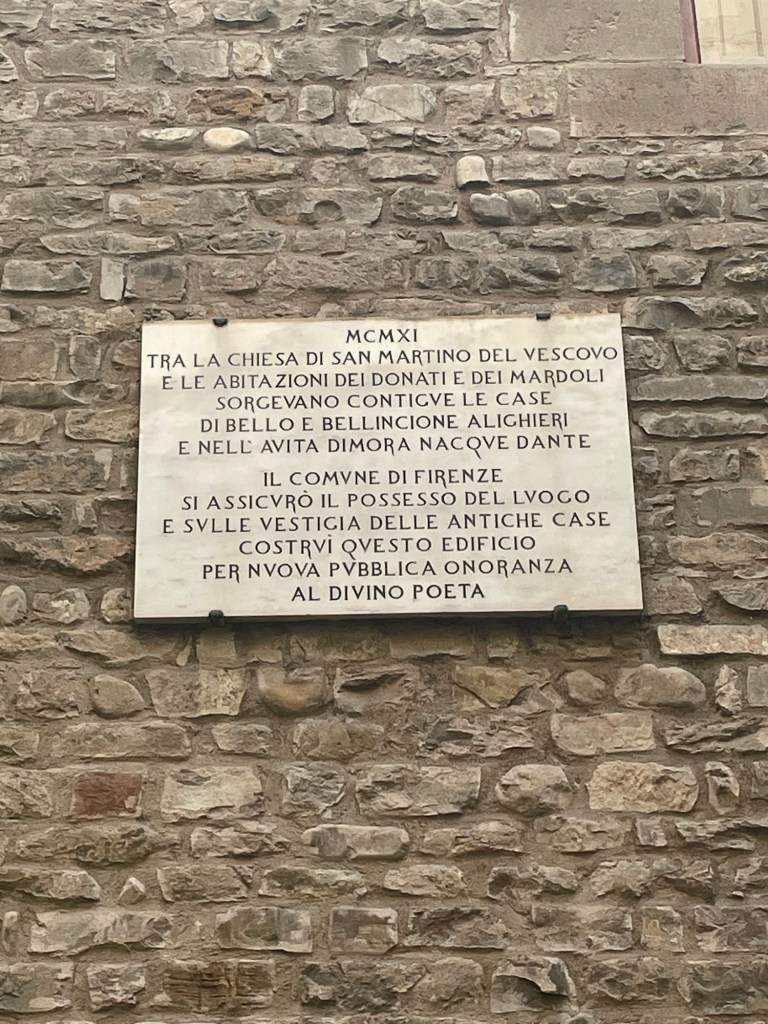
    As we trod the difficult terrain Alina repeated her refrain, 

    XiaoXin (小心) – careful! 

    It literally means ‘little heart’ in Mandarin Chinese.

    We talked about how we both use these little phrases stolen from the various countries we have lived in. I say ‘oopla’ like a French woman when I tumble and ‘Alhamdulillah’ when we re-find the path from which we’ve strayed. Once I thanked Allah at a dry cleaner in Queensway, London after they managed to get a particularly difficult stain out of my then husband’s trousers. The Moroccan owners were so tickled they offered me the service for free. This is how we move through the world as global citizens. 

    Alina lived in China as a fashion designer for ten years before the war when she moved to Rome as a refugee. Like Dante, she was made an exile in absentia. Yesterday she’d told me about the richness of her experience in fashion and production: an apprenticeship at Alexander McQueen in London and then years spent in industry in China and the Middle East, including – a stint that tickled me – designing costumes for humans and animals alike for the world’s largest circus,

    ‘You know it’s quite a feat to measure the inner thigh of an elephant,’ she quipped. 

    The extraordinary variety of scenery we have passed in these three short days gives a sense of the topography of Dante’s Hell: towering banks from which he and Virgil stare down at sinners; streams made sinister by the force of gravity that has the water hiss like a serpent as it falls. 

    He makes little mention of the vast array of neon mushrooms, palm sized lizards. The ubiquitous caterpillars and butterflies are also absent from his infernal landscape. 

    We passed by horses in a field. A bus stop casually erected with three unmatching chairs beneath a tin canopy. We hugged the river until we arrived at our destination of Castel San Niccolò from where we faced another up-hill hike to our air b and b.

    At the end of the second part of the Divine Comedy, Purgatory, Dante drinks from two rivers, the Lethe and then the Eunoe. I wondered whether the River Solano with its gentle banks had inspired him. Today it is hard to access due to the phalanx of ‘no fishing’ signs. 

    We went a bit wild in the grocery store and purchased local pecorino, marinated artichokes and some Tuscan ribollita, a soup made with left over vegetables and stale bread typical of Florence. The server was tickled by the way Alina and I spoke to each other in a mix of Italian and English. When we arrived back at the house to unpack our spoils, we found she’d tucked in some extra aniseed buns, on the house. 

    Many people greeted us in the town,

    ‘Salve!’

    ‘Buon cammino!’

    Anna’s house’, was hard to find but once we arrived it afforded rewarding views of the valley and surrounding town. I sat on the doorstep with a cup of tea as Alina snuggled her slim body into the window ledge, reading out loud from the copy of Paradiso that was tucked into one of the bookshelves. 

    ‘What’s the Empyrean?’ she asked. 

    In Dante’s cosmology, the Empyrean Heaven, Empyreal or simply the Empyrean, was the place in the highest heaven.

    Speaking of heaven – though somewhat less glamorous. In the absence of a bathtub, as Alina read on contently in her nook, I took out one of the recycling bins and filled it with hot water.

    Adding some shower gel, I slowly placed inside, one by one, my aching feet. The top of my toes were raw with blisters and my heels appeared to have swelled in size from the rub, rub, rub of my walking boots. The feeling of the warmth gave me an immediate dopamine boost and I heaved a peaceful sigh. 

    Alina had put on music. 

    Leonard Cohen’s ‘Famous Blue Raincoat’ rang out into the evening air as swallows circled the sky and a neighbour’s cat walked curiously by. 

    ‘Every house should have a copy of the Divine Comedy,’ Alina said.

    Recommended reading: Activists disguise as delivery riders to pour blood-red dye into US Embassy pond in London: https://www.standard.co.uk/news/london/met-police-blood-red-dye-us-embassy-pond-israel-arms-sales-london-b1221715.html

    Recommended viewing: video of the Ukrainian Carpathian Mountains: https://www.youtube.com/watch?v=gBW7EFfYGI0

    Recommended listening: Leonard Cohen’s ‘Famous Blue Raincoat’: https://www.youtube.com/watch?v=ohk3DP5fMCg

  • My Florence, the anti-Milton Keynes

    Florence feels like my home, though the city I grew up in couldn’t be more different.

    Coming to Florence has always felt like coming home to me. It’s peculiar since I grew up in Milton Keynes which is known as England’s ‘best new city’. It’s a capitalist paradise with grid roads based on San Francisco and dozens of roundabouts. It has a city centre founded on a shopping centre and an indoor ski slope that looks like a slug.

    It’s quite the contrast to Brunelleschi’s famous Duomo, but then I suppose Florence was also built on the accumulation of new capital. Somehow I find the aesthetic of the latter more appealing.

    I cried as I spent a Christmas mass there overwhelmed by how at home I felt. Duomo does not mean dome as many might suppose. Rather it stems from the Latin Domus, for home. In one of my favourite Italian books, La luna e I falò (The Moon and the Bonfires) Pavese writes, ‘we all need a home town, if not only for the chance to leave it’ (Un paese ci vuole, non fosse che per il gusto di andarsene via.)  

    I got the tram into the city centre from the airport as I have so many times before, living in Florence as a Visiting Professor at the University and returning a number of times to give talks about my work reading Dante with refugees in the last two years.

    I smiled at the little ‘tss tss’ of my ticket at it registered in the little yellow machine. I’d had to wait about an hour at arrivals listening to banal conversation in the non-EU passport queue – thanks Brexit! I got chatting to one family visiting Florence for the first time.

    ‘You’re going to be blown away,’ I assured them.

    When they asked me what I did I told them, and as usual I was greeted with an opinionated diatribe about what the UK needs to do to solve it’s ‘refugee problem’ and stop the scourge of ‘boat people’. 

    ‘If we are a country that had a navy that could colonize the world we have the capacity to save refugees from drowning in a stretch of water the size of Scotland,’ came my reply. ‘It’s a question of political will’.

    Sometimes I lie and say that I’m a hairdresser, but I felt like the fight.

    By the time we had passed the 20 minutes to Santa Maria Novella I’d made some headway in talking them down from a Reform stance, but in my experience it takes about 45 minutes or a long taxi ride to genuinely ‘change hearts and minds’. I felt a little less guilty about taking this time as work leave – as academics who care about the subject of our endeavors we are in some ways always working. 

    On arrival in the centre, I was greeted with the familiar sites of the Yamamay lingerie shop where I’ve spent way too much money in recent years and groups of black faces sitting on the steps outside the train station. 

    ‘Kenya, Senegal?’ I asked one friendly face. He carried over his arm a brocade of African bracelets and under his other arm some books in Italian and English about slavery. It’s a smart business I’ve observed across Italy. When I was living in Rome it was rare to leave a bookshop without encountering an African face who sought to sell you something of their violent history.

    ‘Senegal!’ Came the reply. And we continued to discuss in French how his life was progressing in Florence; how business had been that day.

    I asked him about the war in Casamance providence, the longest running conflict in Africa, where I’d worked with women peace activists as a journalist at openDemocracy 50.50.

    ‘It’s hard,’ he said, ‘but in Italy life is a little easier’.

    We parted ways after our brief chat – I didn’t want to distract him from his business – and he gave me one of dozens of friendship bracelets I’ve accumulated in my discussions with the African street sellers.

    I knew from experience to take it and that, unlike in many situations with migrant sellers, my receipt of the gift wouldn’t be followed by a request for money. A relationship – however fleeting – not a transaction had been established.

    ‘Au revoir, Madi, bonne chance!’ I offered as I heaved my backpack back onto my shoulders and made my way to the Santa Maria Novella Square. Maybe I should put in a funding application to do an ethnography of African street sellers, I mused. 
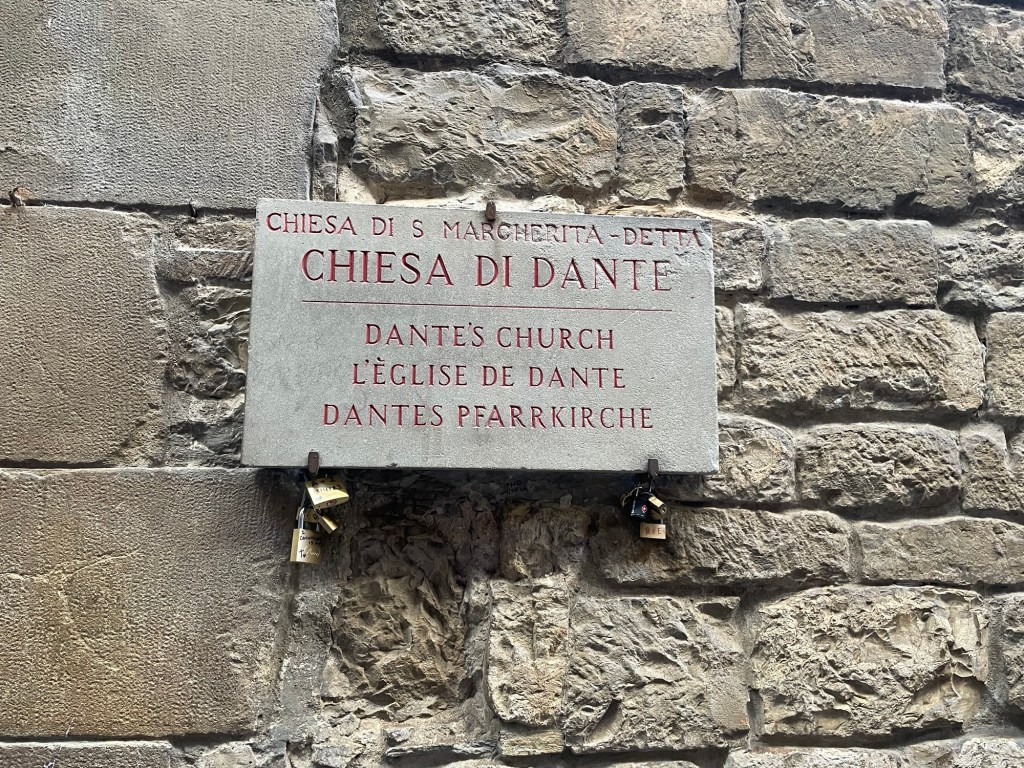
    In Santa Maria Novella I headed straight to the church where I wanted to pay my respects to one of my favourite paintings in the city, the Trinità by Masaccio. It’s known as the first painting in Western art that uses the principles of perspective. I’d need that if I was to spend 20 days hiking the 235 miles of the Cammino di Dante through central Italy.
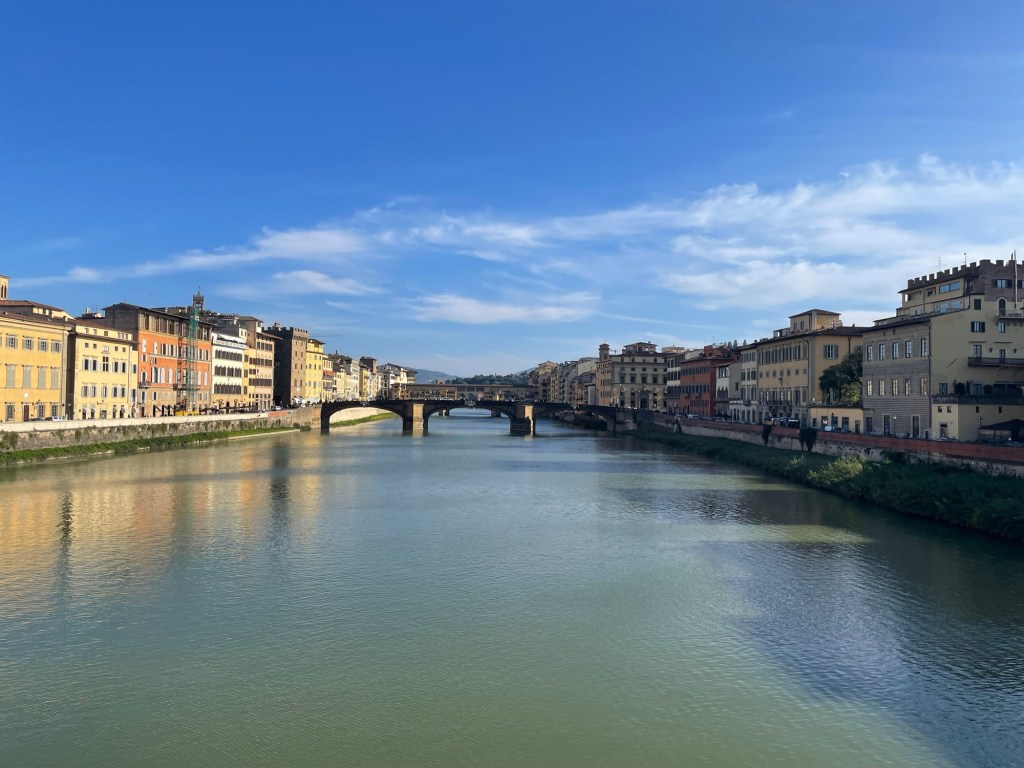
    I remember first seeing it when I came to Florence as an eager 15-year-old art lover. I’d studied it in school and even done some sketches from a post on Wikipedia before Google was a font of unlimited images. I think back then I’d asked Yahoo or Jeeves. 

    ‘Can you see mum, all the lines point backwards into an invisible vanishing point. This is no ordinary depiction of Christ’.  

    She was suitably impressed and then, as now, a chance to process the monument of Masaccio’s revolution in European painting was proceeded in the form of a strong coffee in one of the colourful cafes that line the square like lace.

    I knew that even though I had hardly slept that at 2pm, I would be chastised for ordering a cappuccino – this is a breakfast drink in Italy not to be taken after midday. I took a double espresso macchiato and turned my face into the Spring sun awhile.

    The term cappuccino comes from the capuchin monks who resemble in their brown habits and shaved heads the caramel colouring of the cup’s rim and the dollop of foamed milk in the middle. You don’t get a sprinkle of chocolate or nutmeg here in Italy unless you ask for it, this is a foreign invention.

    From Santa Maria Novella I spent the afternoon trotting happily through the narrow streets, observing the signs detailing which famous figures had occupied said building. Galileo. Leonardo da Vinci. There were all the greats, it was enough to look up. And on the street corners, known as cantos, like the sections that make up Dante’s Divine Comedy, there appeared the all too familiar Medici crest.

    The six balls that make up the shield are disputed as to their origin. Some say they represent medical compresses – pills were yet to be discovered in the Renaissance – harking back to the Medici name which means doctors in Italian. Still others claim they depict oranges – also good for your health and a frequent feature in frescos depicting the family. 

    From Santa Croce the colossal statue of Dante constructed by Enrico Pazzi to mark the 600th anniversary of Dante’s birth glared down at me. Though I knew better than to seek to procure a ticket last minute in tourist season, I knew that inside the walls of the church sat the tomb of Dante erected by Stefano Ricci in 1830.

    In it, he appears topless and macho, symbolic of the newly unified Italy and all things nationalism. Though he dreamed of and wrote at length about a unified Italy and glorified the Holy Roman Empire, Dante’s own stance on nationalism was more nuanced and I felt he’d be somewhat miffed to see himself depicted in that rather uncouth way, tits out, topless without his classic red cape, hood and white ear flaps. 

    More to the point, unlike the tombs of Galileo and Machiavelli, his was empty.

    And here comes the whole point of my pilgrimage, his bones lie in Ravenna, my destination, where he died in exile.

    His grave in Florence is a reminder of the vicious battle that still continues between the two cities about where Dante’s remains and his legacy should reside.

    On a fieldtrip with a group of refugee students back in Spring 2023 responses were mixed. Some felt it was desperately sad that Dante hadn’t been able to return to Florence but that as the place that has hosted him, Ravenna was entitled and duty bound to be the custodian of his remains. Others felt that Dante would have wanted his bones to be returned to his beloved home town in recognition of the fact that he had, as he had prophesied in the Divine Comedy, ‘returned as a poet’.

    There’s no mistaking the fact the Florence and Ravenna tourist boards seek to cash in on his legacy. In Florence many streets bare engravings from the Divine Comedy and there is now the Dante House Museum on a site estimated to be near his home, though the exact location remains unclear.

    Opposite the museum is the Church of Dante which belonged to the Portinari family where his unrequited love, Beatrice, was married to another man.

    Today, lovers tie love locks and tuck heartfelt pleas and into the folds of the doorway wishing for a love that would take them to the stars and back, as Dante’s did.

    As I trace Dante’s steps to Ravenna this question of the location of his remains will be in my mind.

    I avoided the busy central Piazza del Duomo because I wanted to preserve my impressions for when I would meet Alina, my former Ukrainian student, tomorrow to start the Dante trail.

    At a bar by Ponte Vecchio I got chatting to a charismatic English woman who had also travelled to Florence on her own for a get away between jobs. We quickly struck up a rapport and discussed all things ‘being in our 30’s and not having kids’, the wave of our friends who had bought up town houses in Tottenham to start their families while we indulged in our freedom to sip on a glass of something bubbly at 4pm in the sun and contemplate the relative physiological merits of the stream of tourists who passed.

    ‘Oh if you’re looking for Italian men you’re on the wrong spot.’ The waitress informed us as she used her tea towel to chase away the pigeons. One, she informed us, was called ‘stumpy’ because he’d lost his feet perching on one of the many anti-pidgeon contraptions that line the city’s window ledges. The real Florentines live across the river, she continued. 

    It was across the river I proceeded to the British Institute in Florence. It was Monday night and I knew instinctively upon my arrival that I was to spend the evening indulging in a familiar past time of life drawing at Sotto Il British. The class is lead by Tom J. Byrne, a friendly Irish man with a walking stick. He remarked that I looked familiar.

    ‘I used to come here all the time when I lived in Florence,’ I reminded him.

    The British Institute is a magnificent building that houses a speculator Oxfordian library with comfy chairs that point out towards the river. 

    The model was a beautiful young woman who took to the various 5 minute and 15-minute poses with ease. A well-dressed lady of middle age – you know the type, flowing fabrics and a well sized pendant on an embellished chain –  sat opposite me with her small brown dog at her feet using watercolour and ink to capture the model’s Rubenesque curves.

    As always, the talent of the artists was at once intimidating and deeply compelling and I took pleasure in sketching my own humble contribution. Drawing together it felt like we were part of an orchestra.

    The model rewrapped herself in a pastel blue robe and I took leave of the nibbles and wines and headed back to Santo Spirito where I was to spend the night with Anna, a Finnish-British jewelry maker who has made her home in Florence for most of her adult life.

    I had met her when I was living in Florence at the Santo Spirito market where she was selling her stunning range of goddess themed amulets and earrings. Citronella, garnets, emeralds, all crafted into a range of designs in bronze and silver. Mermaids, the sun goddess, Durga. I immediately fell in love with her work and also her friendly demeanor.

    Anna had that beauty about her that many women in their 60’s do – natural hair tied loosely into a bun and a velvet shawl. She introduced me to her daughter Elena who was wearing a stunning lapis lazuli pendant her mother had made for her in the same way my mum makes quilts for me.

    The goddess’ sinuous body was curved round into a circle with her breasts gilded in silver. Elena was a beautiful as the necklace. Long blonde hair to her waist and bright blue eyes to match the pendant.

    Lapis lazuli has been my favourite stone since I went to India at the age of 15 and purchased my first piece with my pocket money. I was mesmerized by the deep sea blue and iridescent gold mottled together in a divine harmony –  to gaze into a piece of lapis lazuli is akin to gazing into the night sky. It is infinite. 

    Lapis lazuli comes largely from Afghanistan. An Afghan friend once told me that there is a piece of Afghanistan in every Renaissance painting in the veil of the virgin Mary who is often depicted in blue pigment – the most expensive at the time. For my part I carry a stone on my finger gifted to me during lockdown by my dear friend, Xiren. It’s a big as my thumb and dominates my hand. I enjoy watching it sparkle as I type. 

    I dined that evening with Anna, her husband and daughter, a simple but delicious fare of broccoli pasta with chilli and pink salt from Bhutan from where Anna and Elena had recently returned impressed by the state of calm afforded by the Buddhist majority. I was a bit late due to my art class so I ate at a beautiful table set up by Anna in their jewelry workshop with a candle and a table cloth – in Italy all meals must be enjoyed with a table cloth. 

    We discussed all things alternative medicine – Anna has recently published a book which I edited on the divine herb Artemisia which has healing properties and is revered around the world. 

    We slept together in the small studio which was decorated with lapis blue walls and depictions of goddesses in various states of trance, Anna, her husband and daughter on sleeping mats and me on the sofa. Anna slept in a stunning Moroccan jellaba the colour of the deep green sea. 

    Recommended Reading: The Divine Artemisia by Anna Lord: https://www.amazon.co.uk/divina-artemisia-Anna-Lord/dp/B0D329DQJV

    Recommended Watching: Reading Dante with Refugees: An Introductory video: https://www.youtube.com/watch?v=iHOeh2w9FdI

    Recommended Reading: OpenDemocracy 50.50 Our Africa: https://www.opendemocracy.net/en/tagged/5050-our-africa/