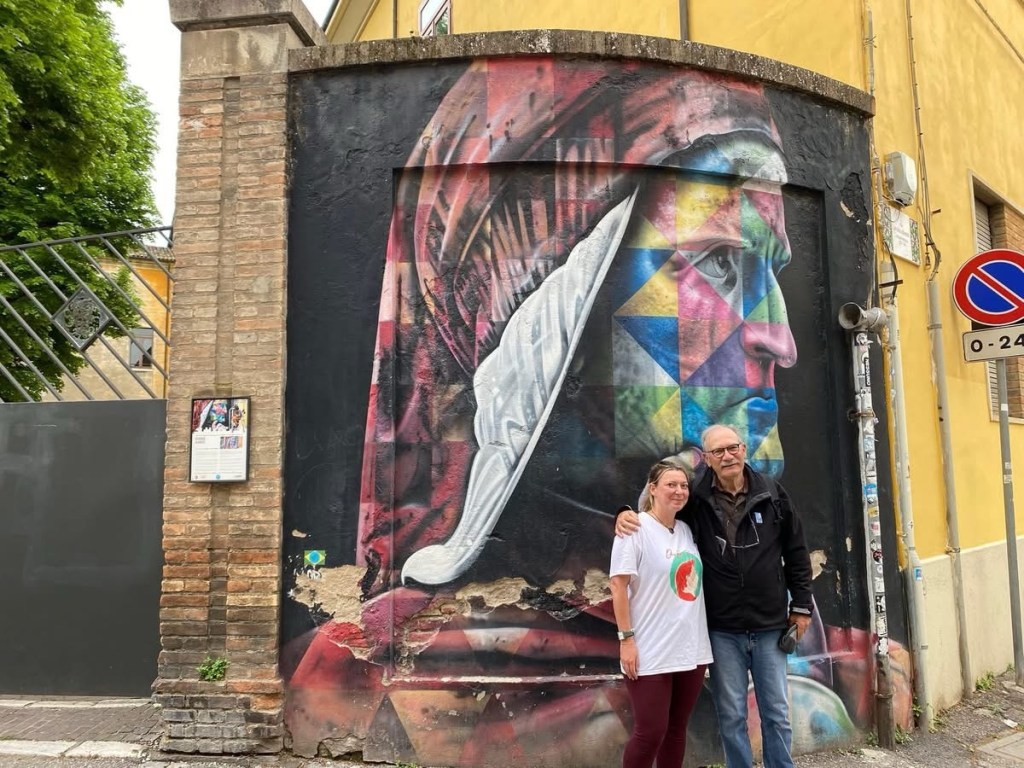
A last-minute invitation to Bologna came with some unexpected drama where I witnessed the strength of Italian family life and was impressed by the Italian health service.
Although the Cammino di Dante is mostly a circular trail, the first day back from Ravenna required retracing the steps of day one. Since I’d already done that leg and I was in need of a rest day, after we dropped Kelsey at Ravenna train station, Oliver dropped me back at Fattoria Chiocce Romagnole where I was all too happy to stay with Rossella and her animals once more.
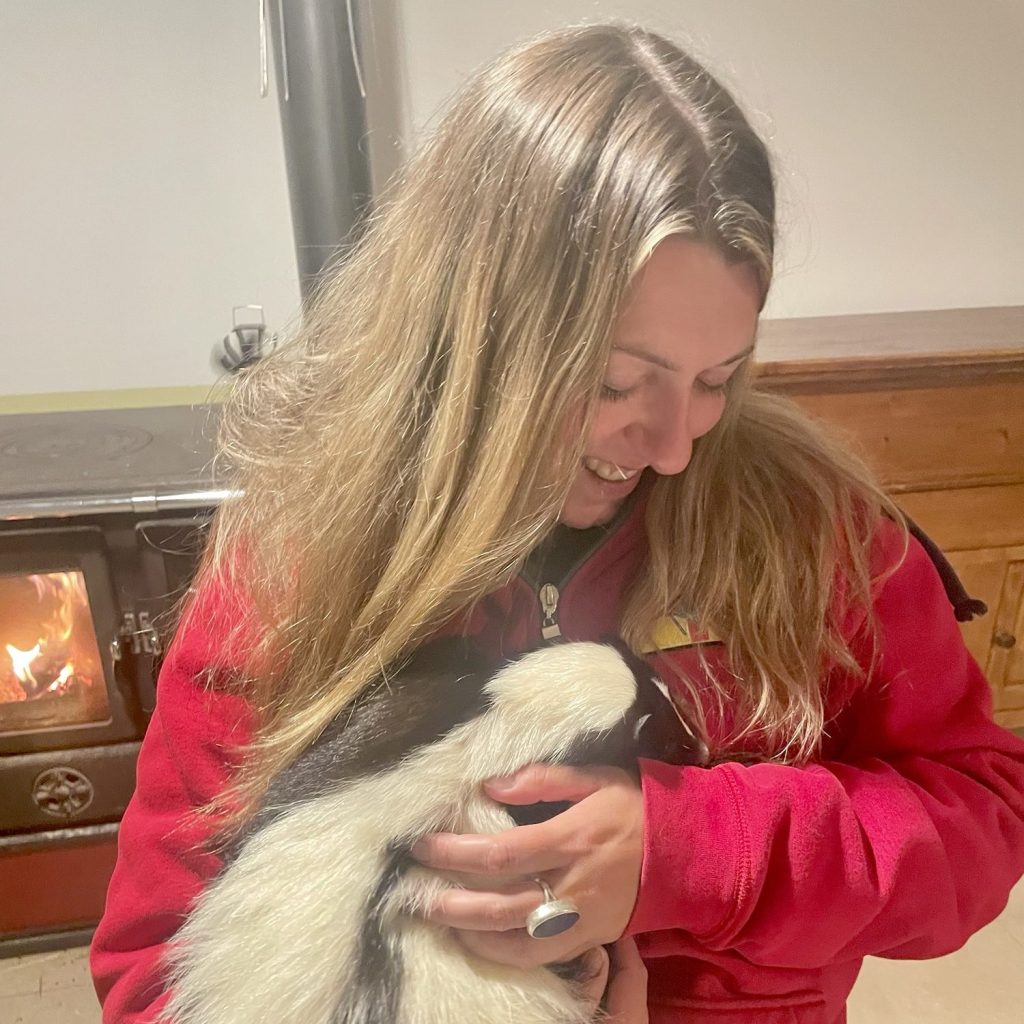
I finally managed to wash my clothes and we spent a lovely evening together with her friends eating pizza and playing with the brood. I got to cuddle Margherita the skunk and a recently born pigeon. Rossella also introduced me to two chicks who had hatched from eggs just that day who were being cared for in an incubator. I was amazed to discover that as well as managing the farm she had an office job in Forlì – this woman was a powerhouse!
I had been among the first pilgrims of the year and there was a tangible sense of excitement that the season was starting. Spring was on its way which would be marked by a party to celebrate Rossella’s birthday. Kelsey would come from Rome. If only I could pop over from England!
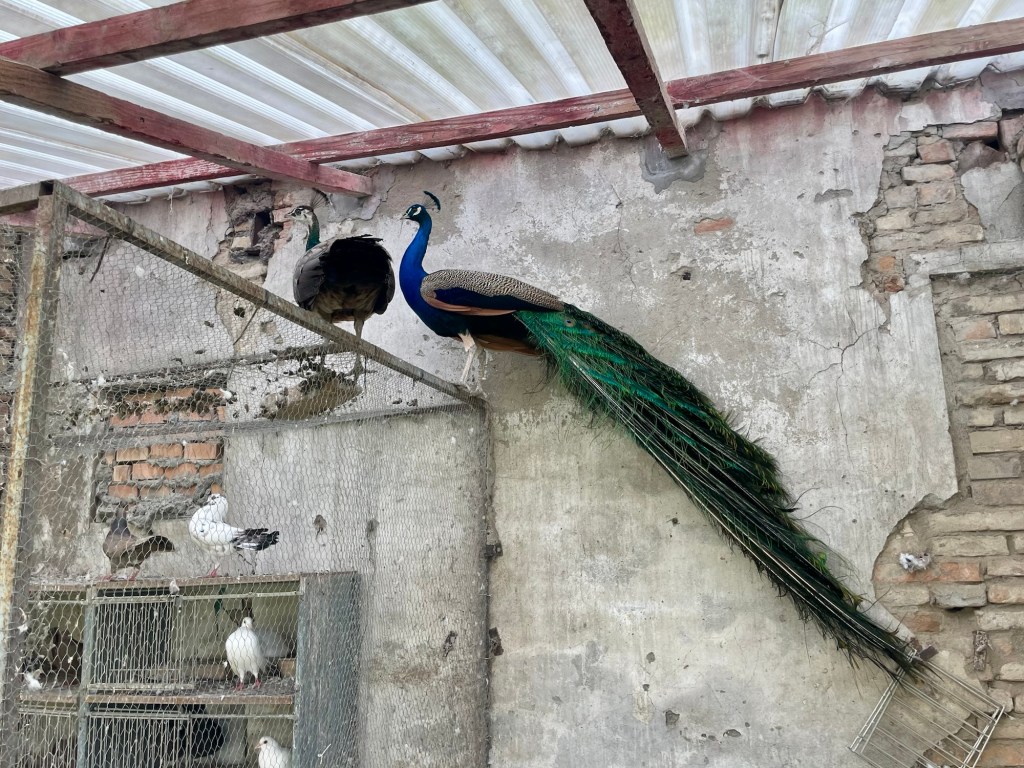
I saluted Blu the African gray parrot and Raul the smaller red one. I was also introduced, to my delight, to Dante and Beatrice, the pair of peacocks who merrily cavorted on the lawn in a frenzy of colour as we ate crisps and chatted among ourselves.
Kelsey had brought me a nail file from her ample collection of hotel goodies – thus is the life of a UN employee – and I filed my nails neatly into ovals.
Oliver had invited me to the regional meeting for walking trails the next morning and, given that I’d be showing up in my rather pungent by now hiking wear, the least I could do was this small gesture of civility.
I took a shower – with hair conditioner Kelsey had also provided that came in a miniature bottle – and looked at myself in the mirror of the wardrobe. Perhaps I had lost a few kilos. I noticed a large bruise on my right buttock where I had fallen in the Apennines on my way to Ravenna. It was the size and colour of a Victoria plum.
Despite my painful foot blisters, I felt in shape and ready to tackle the backwards leg of the cammino. An email arrived from Anna sharing much good will, an invitation to come and stay with her and write, and a reflection that perhaps next time I could consider spending more than one night in each place. She was right. It was saddening this constant stream of hellos and goodbyes; hence I was so happy to be back at Rossella’s farm.
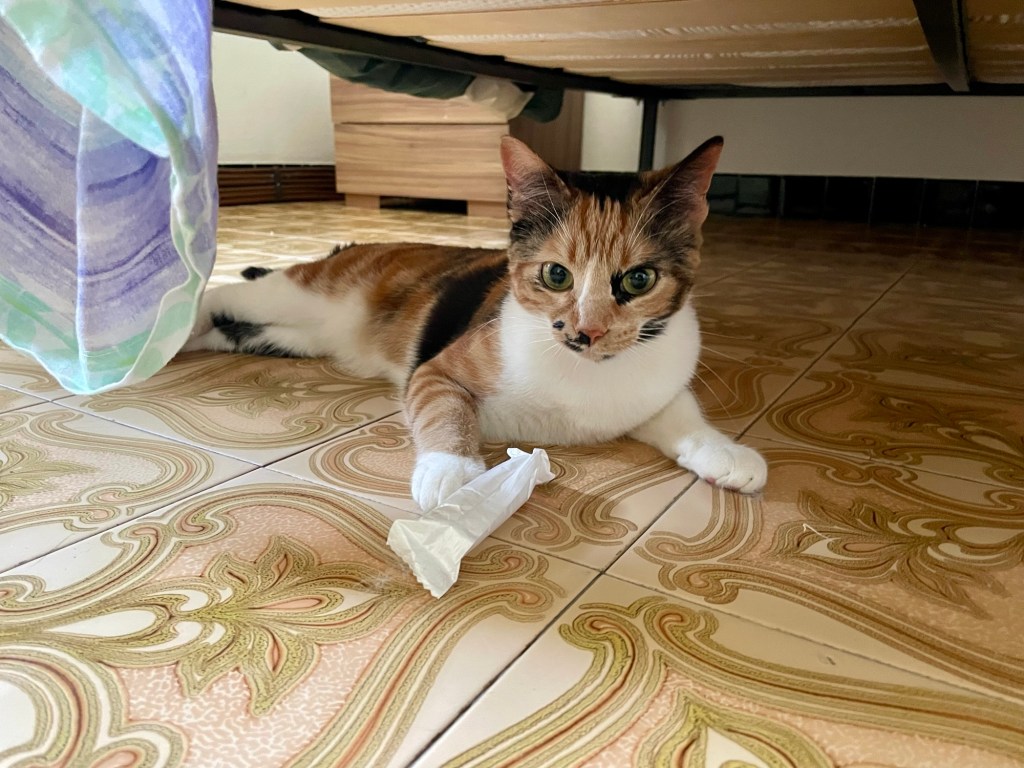
One of the kittens batted a tampon underneath the bed. The other toyed with my shoelaces. This place had become like a second home and I wrote as much in the little guest book.
Oliver picked me up the next day in his large grey car and off we went to Bologna for the regional meeting of trail heads. There would be some 30 different walks represented including religious pilgrimages, such as the cammino of Assisi, and also the relatively new but expanding phenomenon of cycle trails.
Though it is not part of the official route, it felt right to visit Bologna on the Dante trail since he was known to have spent time there, probably teaching at what is one of the world’s oldest universities. I had visited the city on two previous occasions, once with my mum and once to visit my former partner who had procured a prestigious visiting professorship.
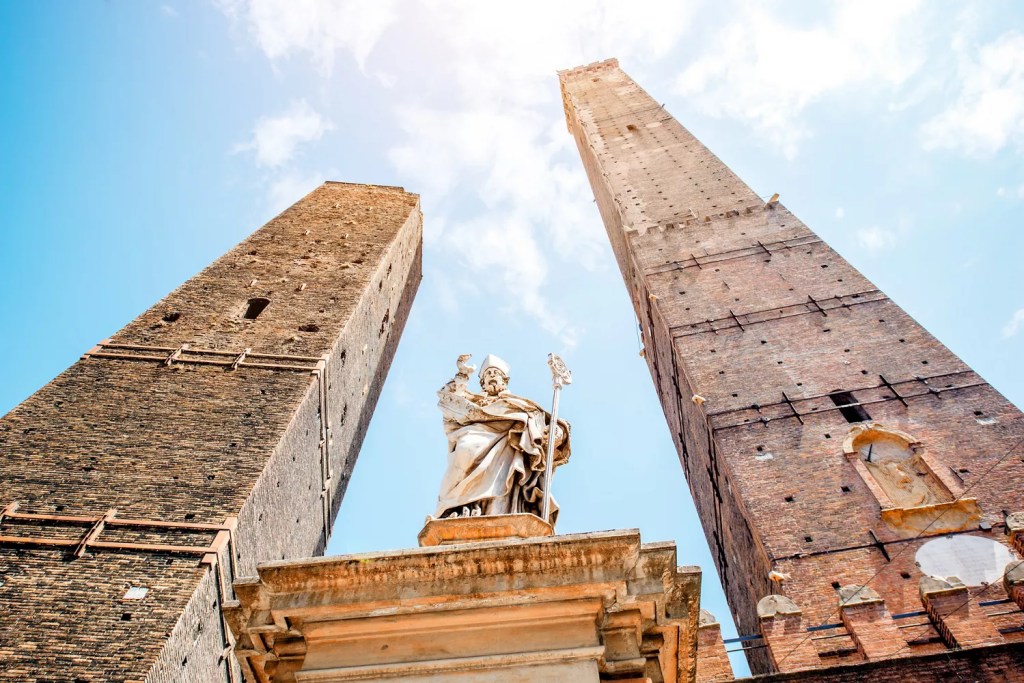
Unlike Florence where the medieval towers had mostly been flattened, here in Bologna the towers rise up in a phalanx, representing the phallic wealth and status of families who fought for power there. One such tower, the Garisenda tower, is mentioned at the end of canto 31 of Inferno to describe the staggering stature of Antaeus, one of the giants who are punished for opposing God, between the eighth and ninth circles of Hell.
‘Just as the Garisenda seems when seen
beneath the leaning side, when clouds run past
and it hangs down as if about to crash,so did Antaeus seem to me as I
watched him bend over me—a moment when
I’d have preferred to take some other road.But gently—on the deep that swallows up
both Lucifer and Judas—he placed us;
nor did he, so bent over, stay there long,but, like a mast above a ship, he rose.’
Antaeus transports Dante and Virgil to the deepest part of Hell, the frozen lake where he is to meet Satan himself.
We don’t know precisely when Dante arrived in Bologna, but the details in his writings make it clear that he knew the city well. After Florence, Bologna is the most cited city in the Divine Comedy.
On the way to the meeting, Oliver explained to me something of the politics of running a cammino. You had to make sure you had official permission for all the signs, and individual communes would lobby you to have you include them in the itinerary in order to boost the footfall of tourists there. As it was, the Dante trail had been divided into two rings, each providing a separate circular trail for the Tuscany and Emilia Romagna regions. After some gentle persuasion, they had also included an optional detour to include the city of Faenza.
I felt at home talking bureaucracy and politics. I had worked at the European Parliament before Brexit, after all.
‘Corruption was the biggest sin during Dante’s time and so it remains now,’ cautioned Oliver.
As he mapped out the complicated process of fundraising to maintain the trail – putting up signs and information boards, cutting back brush, running the website, welcoming pilgrims – I thought of Dante’s portrayal of the money lenders in Hell who have their heads bowed forwards for the weight of the money bags around their necks. The Cammino di Dante wasn’t all daisies and dandelions after all.
‘That’s politics,’ sighed Oliver.
Oliver had become involved in the trail a few years ago after re-reading Dante following a heart attack,
‘It was like opening a new book,’ he said. To read Dante was to ‘enter into a new world.’
On the way to the meeting, Oliver spoke fondly of his wife, Donatella,
‘When you’re old, you need someone. She’s my soul mate.’
I thought of my dad and his girlfriend to whom I’d sometimes been too harsh. Love was love after all.
Once arrived in Bologna, we parked the car on a street on the fringes of the city and Oliver covered my backpack with a patterned cloth:
‘Ochio non vede, cuore non vuole’ he said.
What the eye doesn’t see, the heart doesn’t grieve.
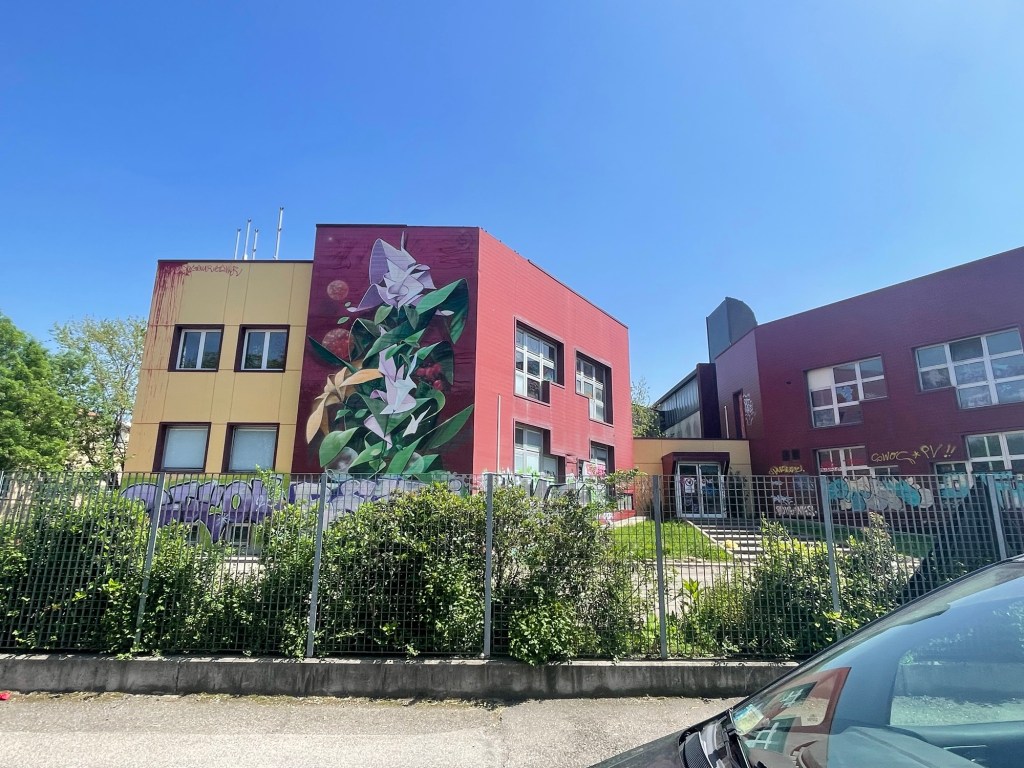
It was a fifteen-minute walk to the towering palace where the meeting would be held and we stopped in a bar for a quick coffee en route. Oliver had a decaffeinated one – I had my usual, a double espresso macchiato. Yes, I was addicted to caffeine.
The district was business like and very contrary to the medieval city centre.
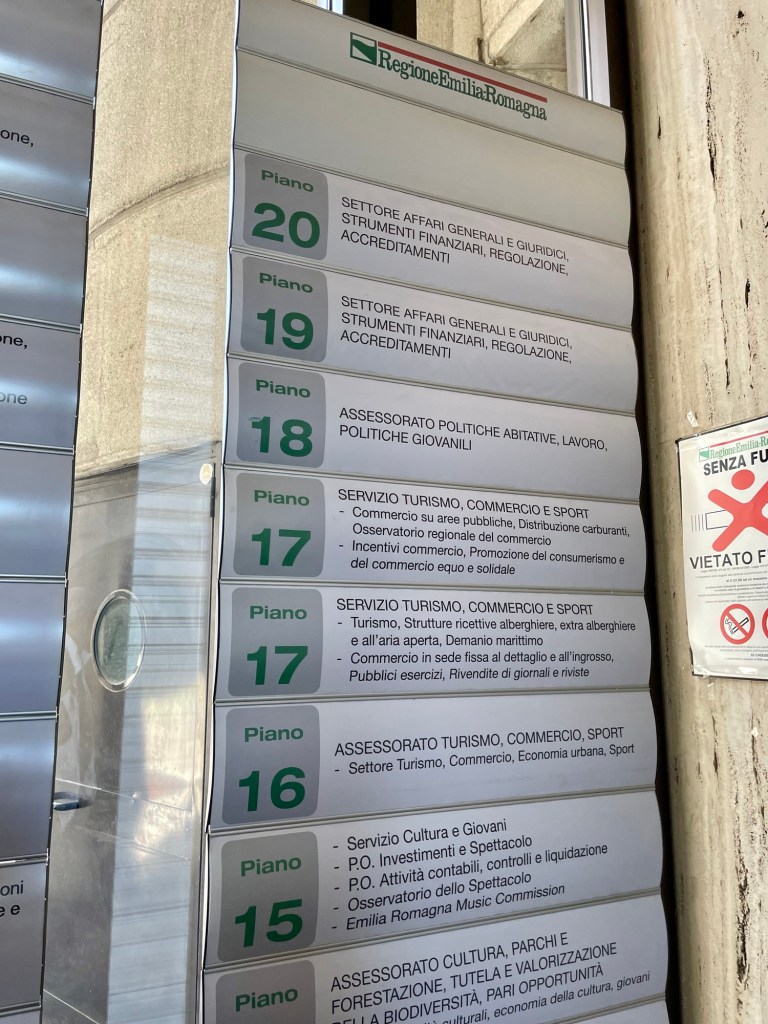
We located the building and shot up in the dizzying elevator to the 20th floor from where we exited into a meeting room. Some people had already arrived, and Oliver introduced me as a pilgrim and student of camminos.
There followed a 90-minute meeting in which the different trail organizers each contributed thoughts on issues and opportunities to the regional office executive, a smart woman who greeted me in English and informed me that she had studied at Leeds University. It was highly formal. Everyone rose when she arrived. She was dressed in thick white glasses and a perfectly matched necklace. Business cards were flicked around like tiddledywinks.
I felt somewhat self-conscious not to be dressed in a suit and was relieved that at least I’d been able to wear clean clothes.
Some of the trail organisers joined on Zoom, including someone who was walking as they spoke. This made me feel like less of an imposter. There was Via San Francesco, the Cammino di Saint Antonio, Via degli Abati, Via Romea Germanica, Via Misericordia, Via San Colombano…I’d have to come back to try them all.
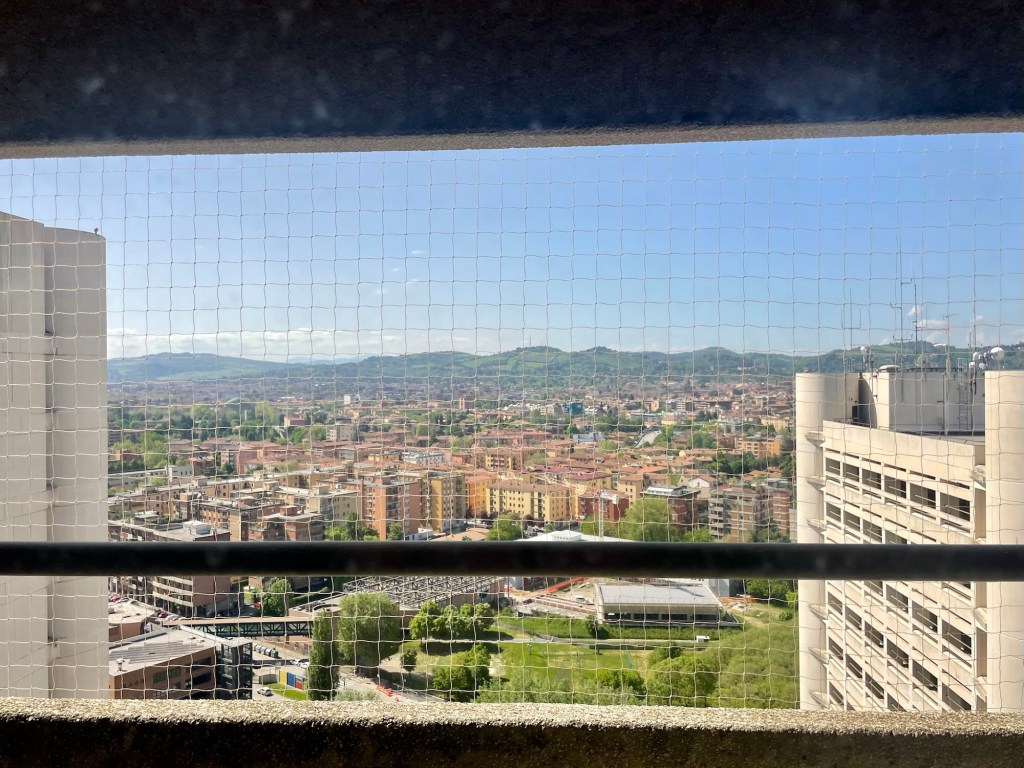
The window afforded a panoramic view of the city.
We went round in a circle and when it was my turn to speak, I deferred to Oliver. I was there to give witness to the reality of the cammino, he offered.
The discussion centered on the difference between ‘slow tourism’ and ‘active holidays’ and how the region could attract more tourists from both Italy and abroad.
‘A path doesn’t exist if it isn’t maintained,’ someone said, and thus came a discussion of the floods of 2023 and 2024 and the ongoing damage to many of the pathways. Other topics included the facility of arriving at trailheads via public transport and different types of accommodation, including licenses for people to pitch tents. People appealed for more resources and someone raised the topic of climate change.
The region should leave a margin of wild trees on the edges of the pathways and invest in more accommodation in remote areas. There was an issue of hotels only wanting to give rooms to people who would stay for a week, not one night, in July and August – there were pilgrims and then there were tourists – it was important to make the distinction.
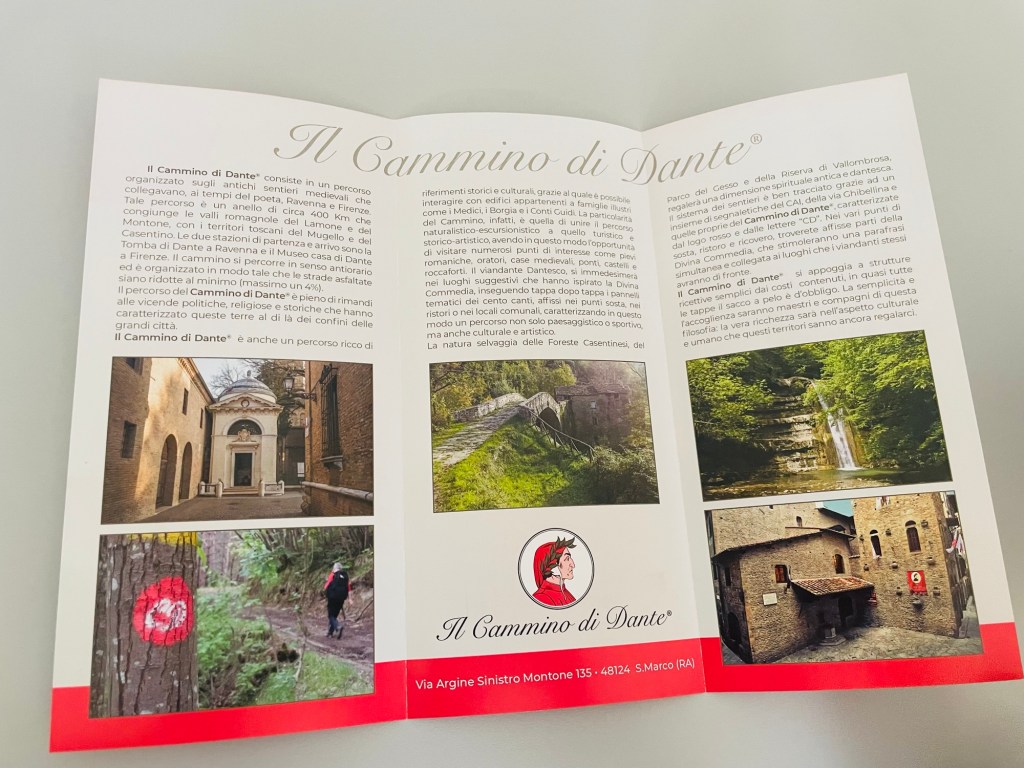
I felt proud to be representing the Dante trail. The King of England had recently mentioned Dante in a speech, someone pointed out with a hint of envy, so there would be a boom in foreign interest in our trail.
The meeting overran and people were hurried in their contributions. The gentleman next to me was taking notes in minuscule script, using a mechanical pencil on squared paper. The lady next to him drew a mind map. I noticed that Oliver didn’t seem to be taking any notes at all.
At the end of the meeting, the regional deputy offered some feedback and then proceedings were formally brought to a close.
I turned to Oliver who, I noted, was wearing a Cammino di Dante jacket.
‘That’s a wrap!’ I said.
‘Whose bag is that?’ he replied, pointing to his rucksack.
I was confused.
‘It’s yours.’
By the time we had exited the lift, I had started to realize that something was seriously wrong. Oliver had asked me where we were and if I remembered where we’d parked the car. Had we come in a car?
Physically he seemed fine and so I retraced our steps in the direction of the vehicle taking note of his behaviour. Was it just a funny turn?
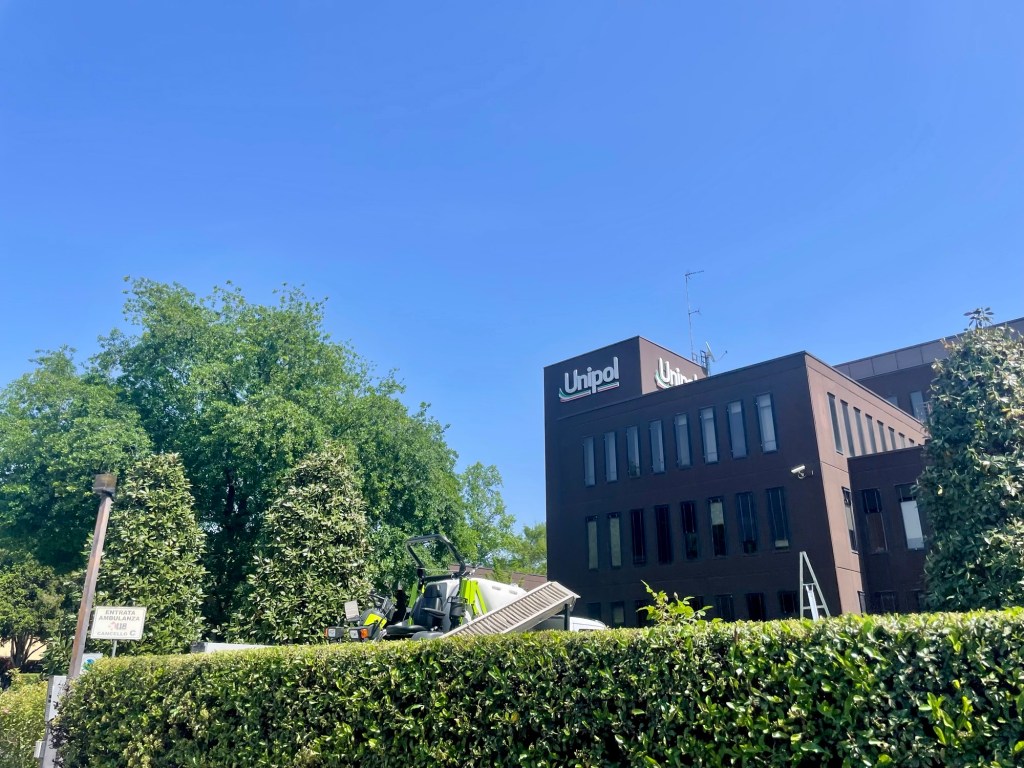
I managed to locate the car, my navigational skills no doubt seasoned by the trail, but, by that point, the gravity of the situation had hit me. Oliver was not ok.
‘I think we need to go to a hospital,’ I said.
‘Could I drive the car?’ Oliver suggested, admitting that his head felt ‘a little funny’. But I didn’t trust myself on the Italian roads.
I checked to see if Uber was operational – it wasn’t – then I asked a man who was passing if he knew of any taxi services.
‘You’ll be quicker calling an ambulance,’ he said. And so call an ambulance I did.
They instructed me to illuminate the car’s emergency lights to aid them in finding our location and gave the coordinates of the street. I was preparing for a long wait and instructed Oliver to sit tight inside the vehicle.
‘Where are we?’ he kept repeating.
Much to my astonishment, the ambulance came in five minutes. Yes, five minutes. When my Dad had had a similar episode some years back we had had to wait five hours! It was ten points for the Italian health service from me.
The paramedics were highly skilled. They checked to see what medication Oliver was taking and got him to say some tongue twisters. Could he raise his arms?
In my head I tried to stay positive, but I also feared the worst. Surely he couldn’t have had a stroke, right here, right now, with me?
I accompanied Oliver to hospital in the ambulance, sitting up front beside a paramedic called Samantha who had extravagant gel nails. She was curious to hear about the appalling state of the British National Health Service from which multiple governments had cut funding in recent years.
Five minutes.
I still couldn’t believe the speed at which they’d come.
Once at the hospital, they took Oliver in for treatment and I was ushered into the waiting room. Was I family? I was not. We’d called his wife from the ambulance and she was on her way.
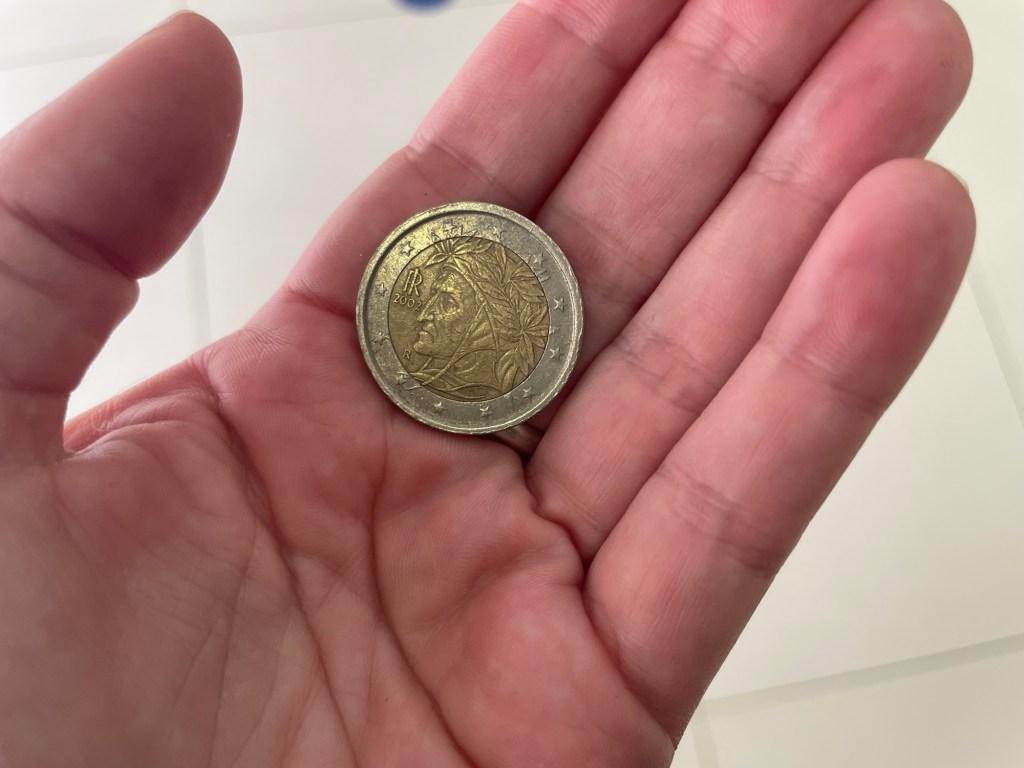
I bought some fizzy water from a vending machine with a one Euro coin which had Dante’s face on it.
There followed two long hours of waiting until I finally convinced the receptionist to let me go and see him. He was sat in a wheelchair in the moderate care unit ‘under observation’. He asked me where he was and I tried to see if he could remember me.
‘Allsopp?’ he tentatively offered.
But he remembered nothing when I showed him photos of the time we had spent together over the last three days.
As he repeatedly asked me the same questions, I thought of the thieves in canto 25 of Inferno who are punished by being metamorphosized, time and time again, from souls into serpents in some hideous version of Nietzsche’s Eternal Return.
Like Dante, I was in shock,
‘If, reader, you are slow now to believe
what I shall tell, that is no cause for wonder,
for I who saw it hardly can accept it.’
I also reflected that while Dante’s shades lose their bodies but not their minds, here was Oliver in the very opposite state.
Finally, his wife Donatella arrived. She was as lovely as Oliver had described her. Accompanying her was their son Stefano and his wife, Sara, who was five months pregnant with Oliver’s grandson. He had been euphoric when he had told me of the future arrival in the car that morning but now, he recalled not a thing.
Upon seeing Sara, he burst into tears,
‘What a wonder!’ he remarked.
Over the next two hours, this was to happen time and time again.
‘But what news! What wonderful news!’
‘How many times have you become a grandfather today,’ Sara would later gest.
We had to gest. There was nothing to be done but wait, instructed the doctors, and the whole situation was absurd.
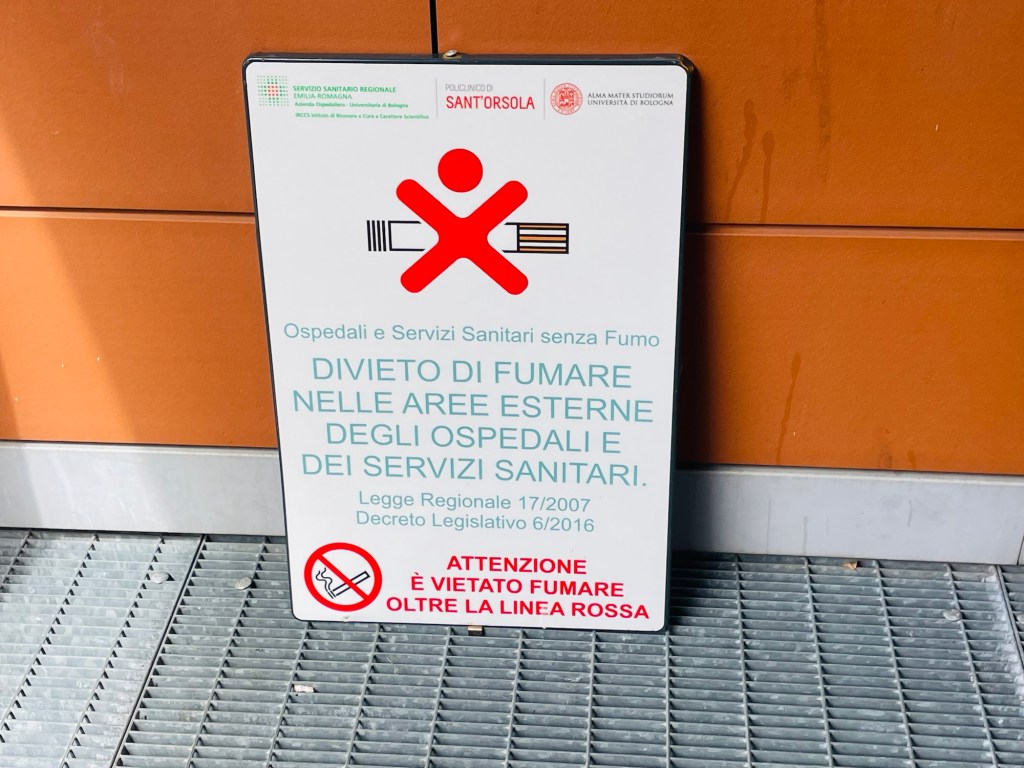
Outside were huge signs reading ‘No smoking.’
Everyone was smoking. Even I was smoking.
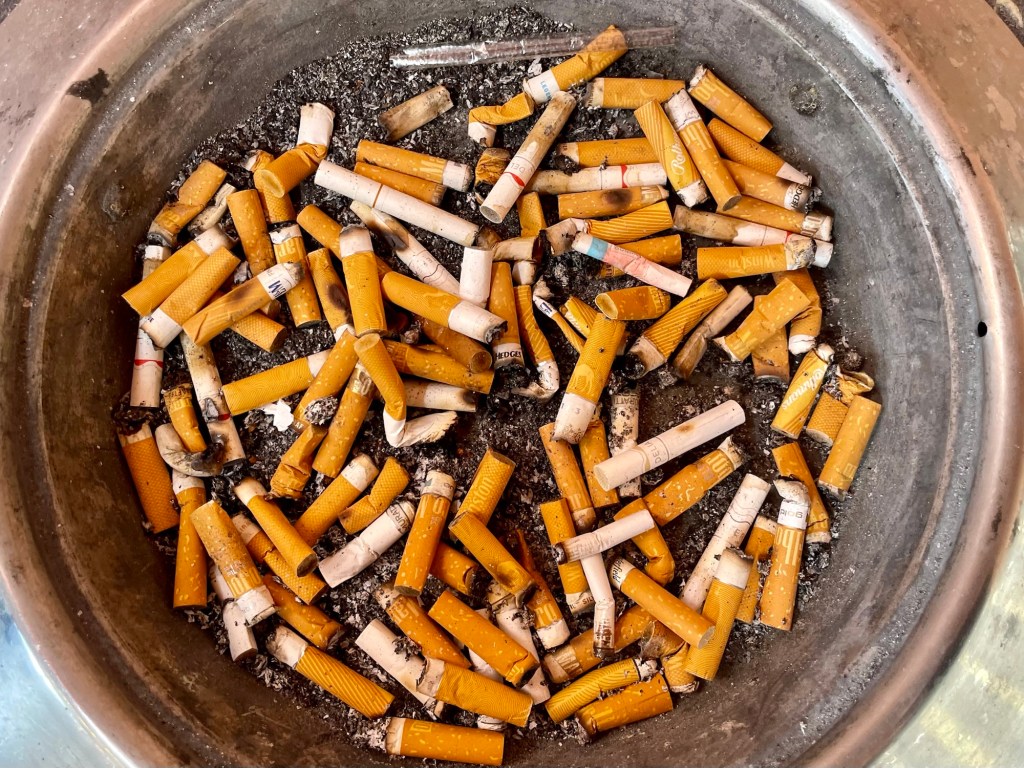
After a while, Oliver came to join us outside. He had a canular in his arm from where they had taken blood but otherwise he seemed physically in form. He asked where we were, re-discovered he was to become a grandfather once more, and, much to our astonishment, joked about his condition.
‘It seems I’ve had a sfarfallamento,’ he offered. This was a word to describe a funny turn that comes from the Italian for butterfly.
But then he would forget it all over again.
The Pope died several times. I got to know him repeatedly and he was moved to tears when I told him I had bought a rose in Ravenna that I would carry back to Florence with me in Dante’s honour.
‘Ma che bella cosa!’
He was thrilled I was doing the cammino and offered me sound advice. His long-term memory was locked in, but short term he could not recall a thing.
‘Allsopp?’
His niece, Martina, joined us. We swapped power banks to charge phones and it was agreed that Donatella would stay with Oliver while Stefano and Sara attended to the dogs. And then there was me.
I was conscious of impinging on the family’s space, but each time I attempted to leave, offering to get a taxi, they insisted I stay. Kelsey had offered to come and meet me. Rossella had offered to come and collect me. There was so much love on the trail. But Oliver’s family insisted that they would take me where I needed to go. It was ‘the least we can do,’ they repeated.
I knew better, being in Italy, than to reject this offer.
I had become somehow an addition of the family and I also deeply cared for Oliver. The last three days we’d spent together had been a riot. I had had the feeling of meeting a kindred soul, even though he now did not recall a thing.
Luckily, I’d had the sense to pin the location of the car and take some photos, and so Stefano went to fetch it while we stayed with Oliver. It seemed to distract and reassure him, talking about the trail.
The doctors insisted it was likely just a temporary memory loss: a transient ischaemic attack (TIA) or ‘mini stroke’ caused by a temporary disruption in the blood supply to part of the brain.
Could it have been caused by the dizzying elevator that had even caught me out of breath?
I was sad to leave Oliver but, in a moment of lucidity, after I’d reminded him who I was for the umpteenth time, he had encouraged me to continue with the cammino, chastising me with it for the big size of my backpack which I’d taken in the ambulance from the car.
‘Could you have packed any more stuff?’ he joked.
We shared a hug. His body seemed to remember the bond we shared, even if his mind currently didn’t.
Thus I climbed into the car with Stefano and Martina, moving some Cammino di Dante signs from the back seat to make space for us.
Who would put them up now?
Stefano was clearly terrified for his father. The whole family had come out in a display of love and support which had moved me deeply. No wonder he had spoken so fondly of these special people.
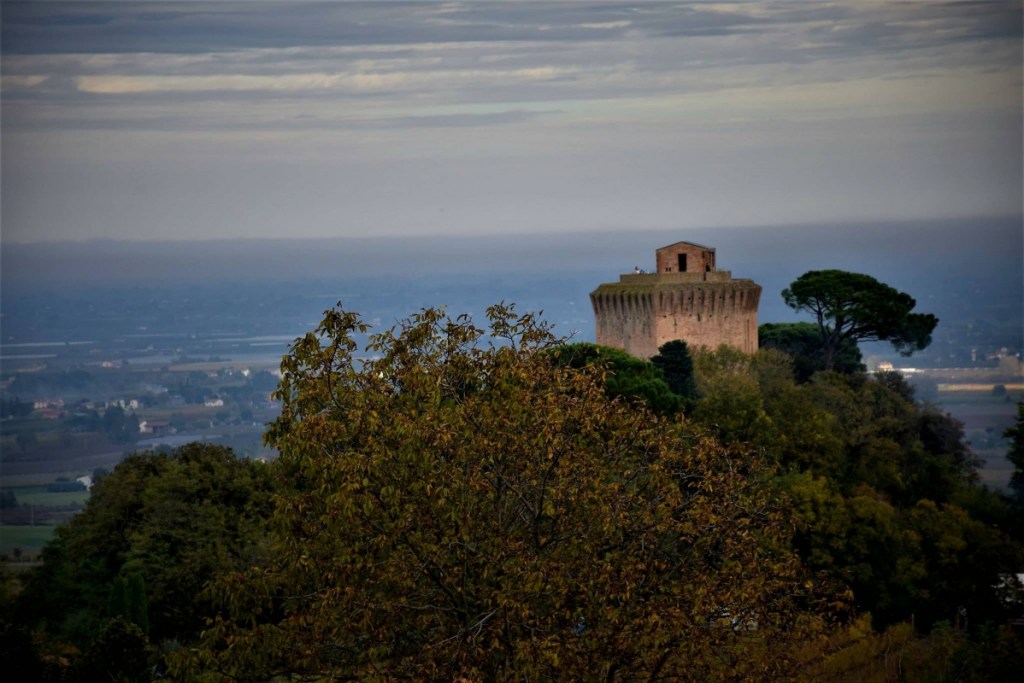
Night had fallen and so Stefano insisted on dropping me at the end of that day’s leg of the trail which was an agriturismo in Oriolo dei Fichi. I had called to warn them I was running late. He used my power bank to charge his phone and we discussed his dear relationship with his father and what it would mean to bring a son into this crazy world.
After finding love at 37, within one year Stefano and Sara had got married and made a baby.
‘When it’s the one, you know,’ he councelled.
There was hope for me yet.
As an only child, Stefano had the responsibility of both his parents on his shoulders. I felt grateful for my brother and grateful for my own family.
The scent of wisteria hit me in the car park and the sound of the birdsong clashed with the disquiet in my heart. I hugged Stefano goodbye and he promised to keep me posted.
I sat in my room which had brick walls and a wooden beam ceiling. A beautiful antique wardrobe faced the bed. I knelt on it and did something I had rarely done in my 37 years, I prayed. I prayed for Oliver and I prayed for his family.
He was my Virgil, my ‘master and my author.’
Without him to guide me, I felt lost.