Tag: nature

  • Broken Toes and Tasteful Tiles: From San Godenzo to Dicomano

    I got lost four times and made the stupid decision to scale a towering fence. 
    Marcella, the owner of the Agriturismo Tenuta Mazzini where I had spent the night, came to greet me in the morning. She was on her way to work as a primary school teacher. I didn’t hesitate in exuding my passion for her place.

    ‘It’s a marvel,’ I said.

    I always felt a slight anxiety when I had not walked for a day, but I had slept amazingly in the comfy bed, and I felt well rested as I heaved on my backpack and set off down the road to Dicomano.

    It was 10.20am and the sun was shining brightly. The air was fresh. Two cows greeted me from an ample field. 

    The day’s walk began with the descent back to Dicomano where Dante was summoned for a political meeting during his exile from Florence. I’d been spending a lot of time with Dante the poet and so it was interesting to spend time with Dante the politician. It was here that he had sought to forge alliances between the Ghibellines and the White Guelfs of whom he was a member. Like many refugees, Dante had been multiply displaced. His brief stay in Bologna had been interrupted when the White Guelfs were barred from the city.

    I passed an excavator that was digging up the Earth as I wound down the road and stopped momentarily to pet a ginger tom cat.

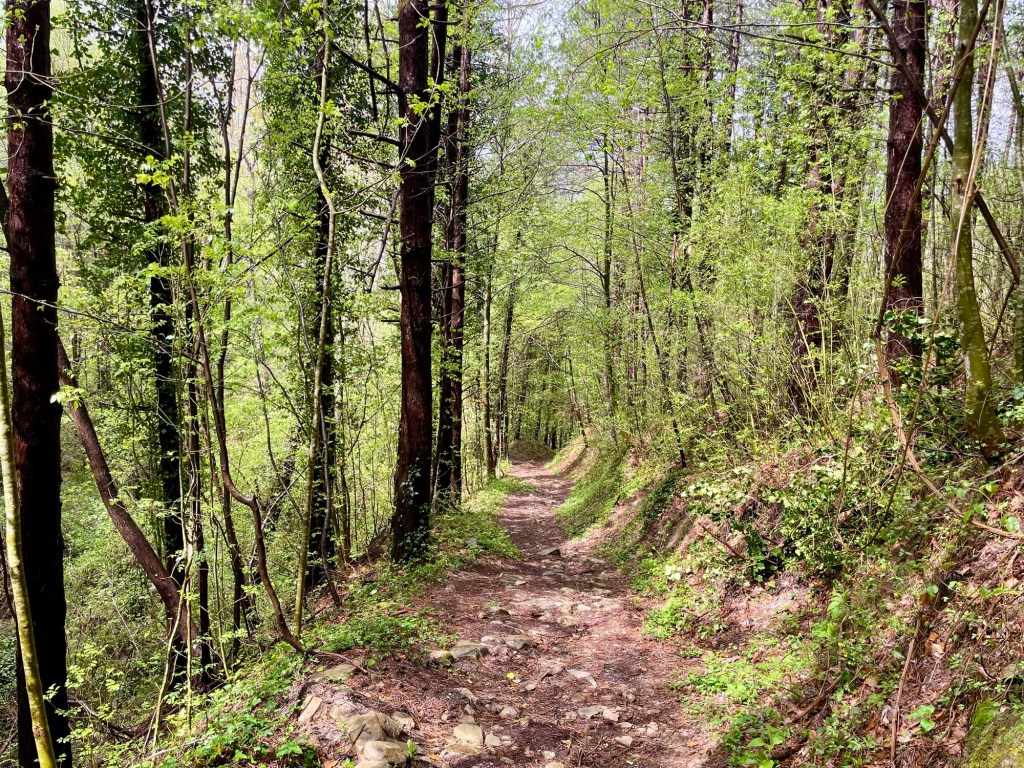
    I followed a Dante trail sign off down a small, steep woodland path to the right and was soon kicking up the leaves again. I crossed a small, gurgling waterfall where the path split in two.
    I went left, which would transpire to be the wrong choice. 

    Conscious of not walking with my phone attached to my hand, I had tucked it into my sports bra so that it was fifteen minutes before I realized that I was very much off the beaten path. I was glad I was wearing trousers and not shorts as the brambles and trees assaulted me, leaving bloody snags on my arms and hands. I held onto the tree branches to heave myself up the bank towards the road. I’d thought about going back to where I’d lost the straight path but decided to carry on. The map suggested that in a few metres I would re-reach the road from which I could proceed my descent into the medieval town.
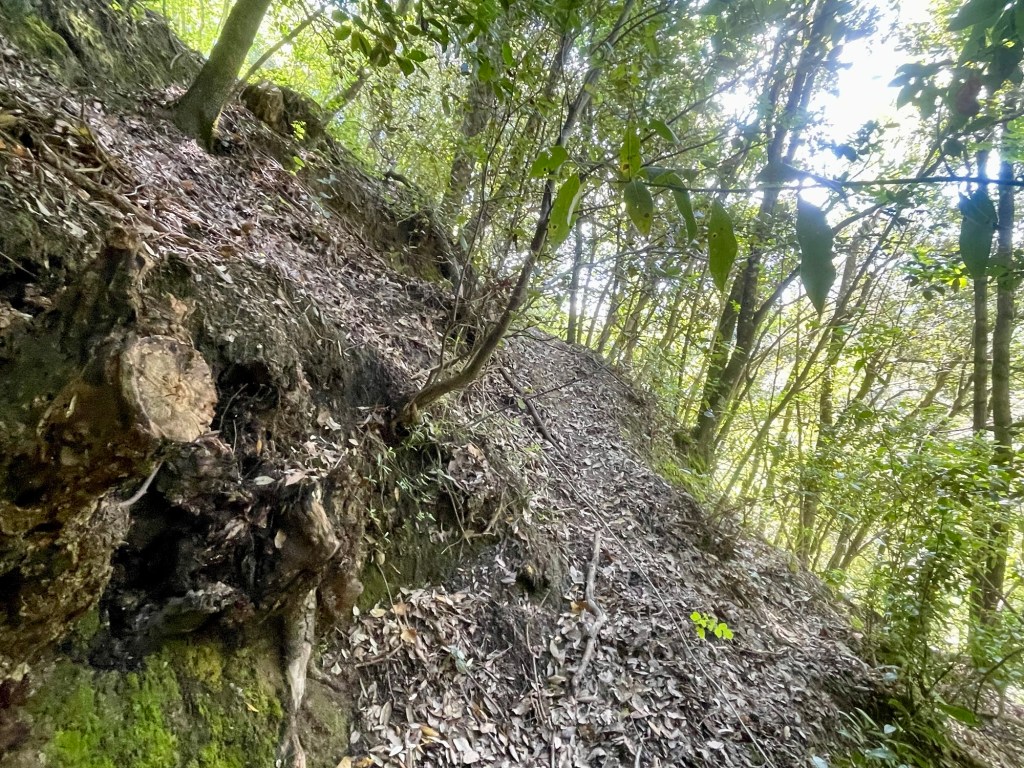
    Climbing up on my hands and knees, the mud collected beneath my fingernails. Nettles attacked my ankles and, as I passed a network of two waterfalls, my weight dislodged a huge chunk of earth from the ground.

    I assumed I had made the usual mistake of following an animal track. I passed through two olive fields and there was the road ahead of me, just a short way down from where I’d strayed. 

    I had basically done a 45-minute loop of the forest for absolutely no reason. If I had stuck to the path, I’d be eating pizza for breakfast by now but instead I was weary, thirsty and had no idea from whence I’d come. I paused for some water and let the blood dry in a thick smear on my hand. My knees were filthy from the climb.

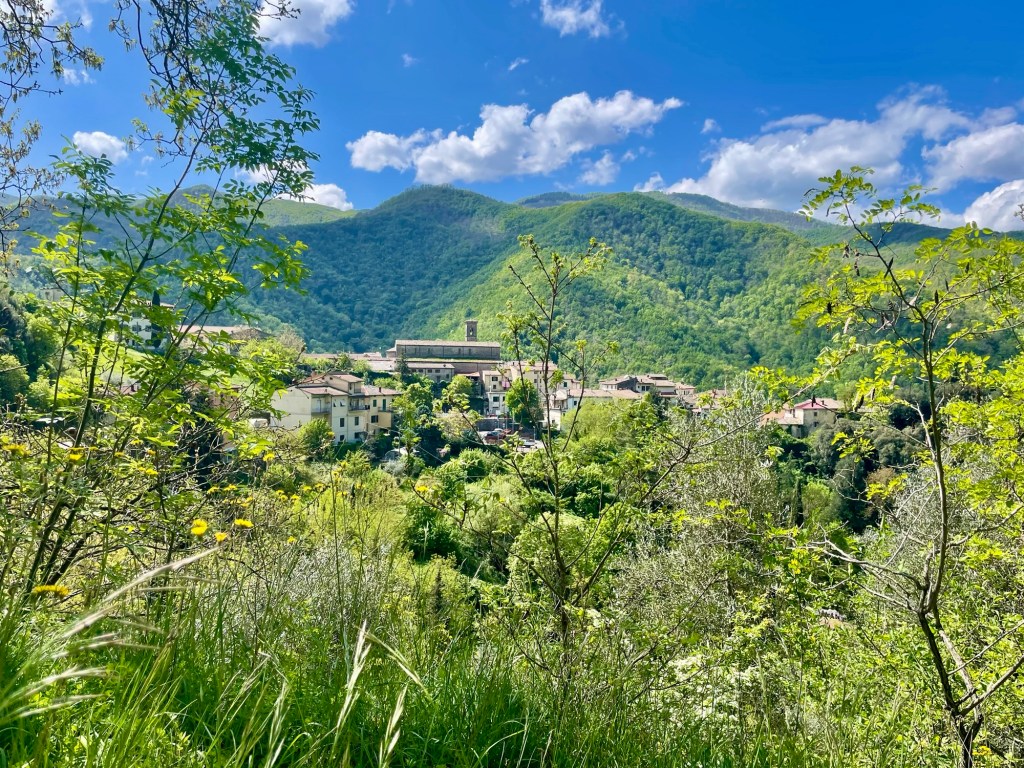
    I passed through an open gate and exited onto a hill from where I could see the town before me. I had no idea what to do. The end was in sight and so I just kept climbing, trying to reach the road, my knees and knuckles deep in the foliage as if I were massaging the Earth. I wished I could just jump or fly over to the car park.
    Now all that stood before me and an espresso macchiato and pizza slice was a massive metal fence which was decorated, at the top, with a thick mesh of vertical barbed wire. 

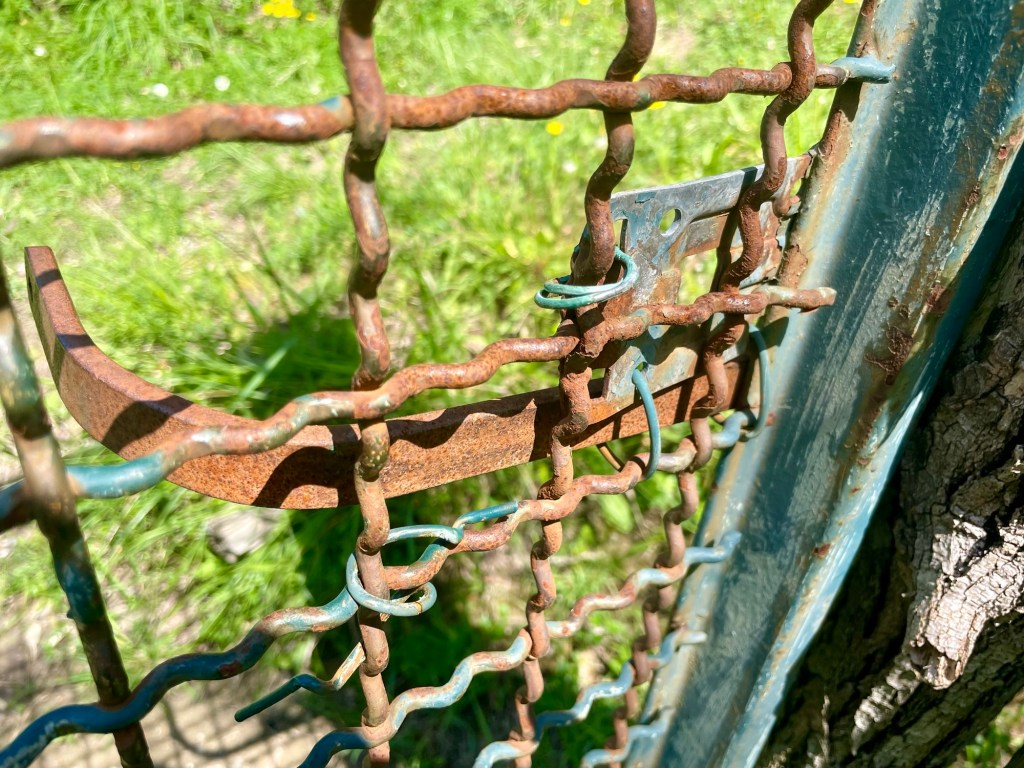
    The road was right there, but as I stumbled around the fence’s parameter, I couldn’t find a way to cross. Two metal gates were tightly fastened with thick wire which I tried in vain to unpick, clumsily sliding my fingers between the holes in the gate. There was nothing for it, I couldn’t go through or under it: I would have to go over it.

    As I climbed up onto a wooden ballast, my bag pulled me back and so I threw my weight forwards, held tight to the fence and swung my leg over. The second one followed and I jumped down, only to land on the roadside with a thud, the full force of which shot up into my left foot. 

    The familiar pain immediately hit me and I knew I’d broken something. Luckily, from the quick survey of the discomfort, I deduced I had just damaged a toe or two. This was nothing like the agony of when I’d broken my metatarsal in Guatemala when headed out on a hike to locate the national bird, the resplendent quetzal. I took some Ibroprofen for the pain and carried on into the town centre where I’d spent some time yesterday in Dante’s footsteps. My hands were covered in a cocktail of mud and blood.
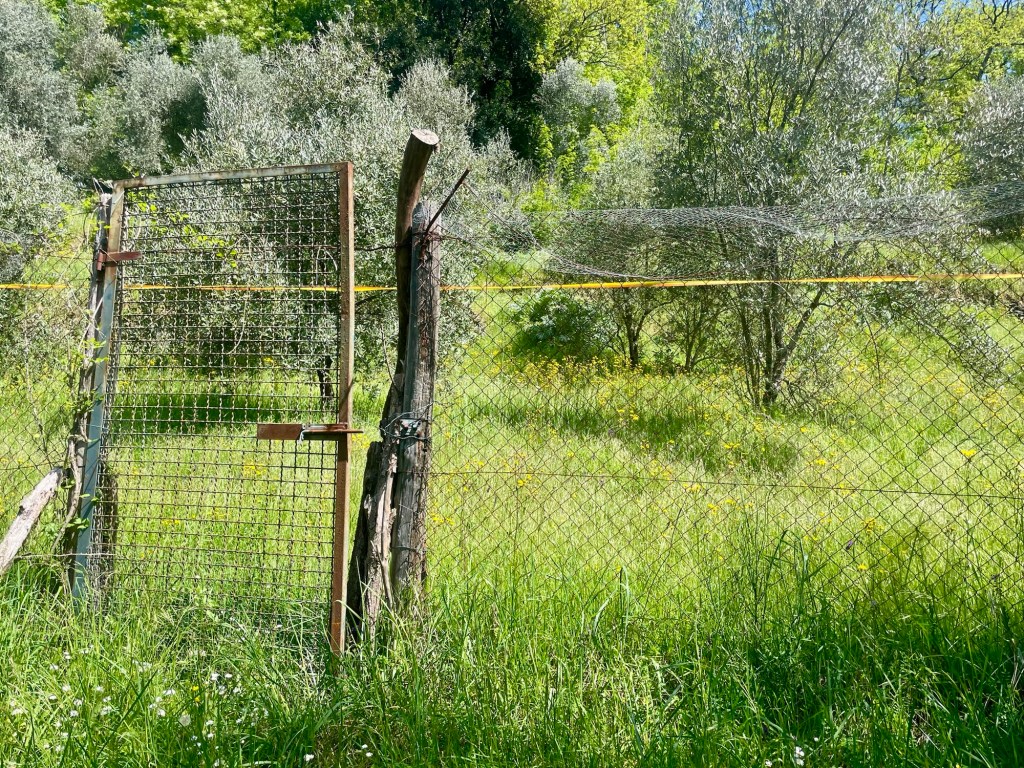
    It was 12 o’clock which meant I had spent almost an hour and a half scrambling around in the woods including 15 minutes trying to unpick the lock and 15 minutes working out how to get over the fence. I’d bruised my knee and cut my trousers on the barbed wire but I had made it back onto the road. A smartly dressed lady was walking past with her dog. 

    ‘Are you OK?’ She said.

    ‘Yes,’ I replied, though I wasn’t. ‘I just got a little lost.’

    I sat on the verge and ate an apple. Next time, I’ll take the road. I could have been well on my way to Dicomano by now, but as it was, I hadn’t even reached the starting point and the steep climb meant I’d exhausted at least half of my supply of water.

    And that was how in the middle of the journey of my life, I found myself in a caged olive grove for the straight path was lost. 

    I hobbled to a bar and ordered the much craved for coffee and pizza. I removed my shoe and tried to wiggle my left middle toe. No, it wasn’t moving. The sellotape Alina had left me finally came in use. I used it to attach my broken toe to the ones beside it. We had evolved from three toes creatures after all: the three middle toes already moved as one. 

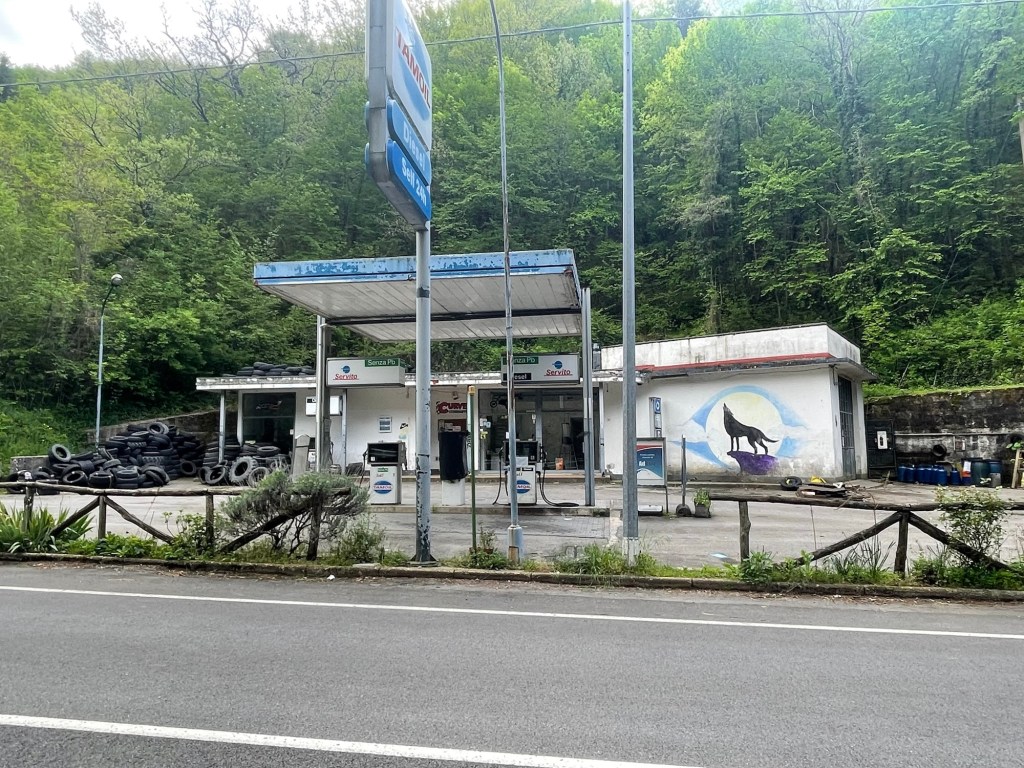
    I noted a urinal built into the cliff face next to a busy garage which had a wolf mural painted on the wall. 
    Five men were drinking beer in the café.  

    ‘Ok, let’s start again,’ I thought. It was 12.30pm.

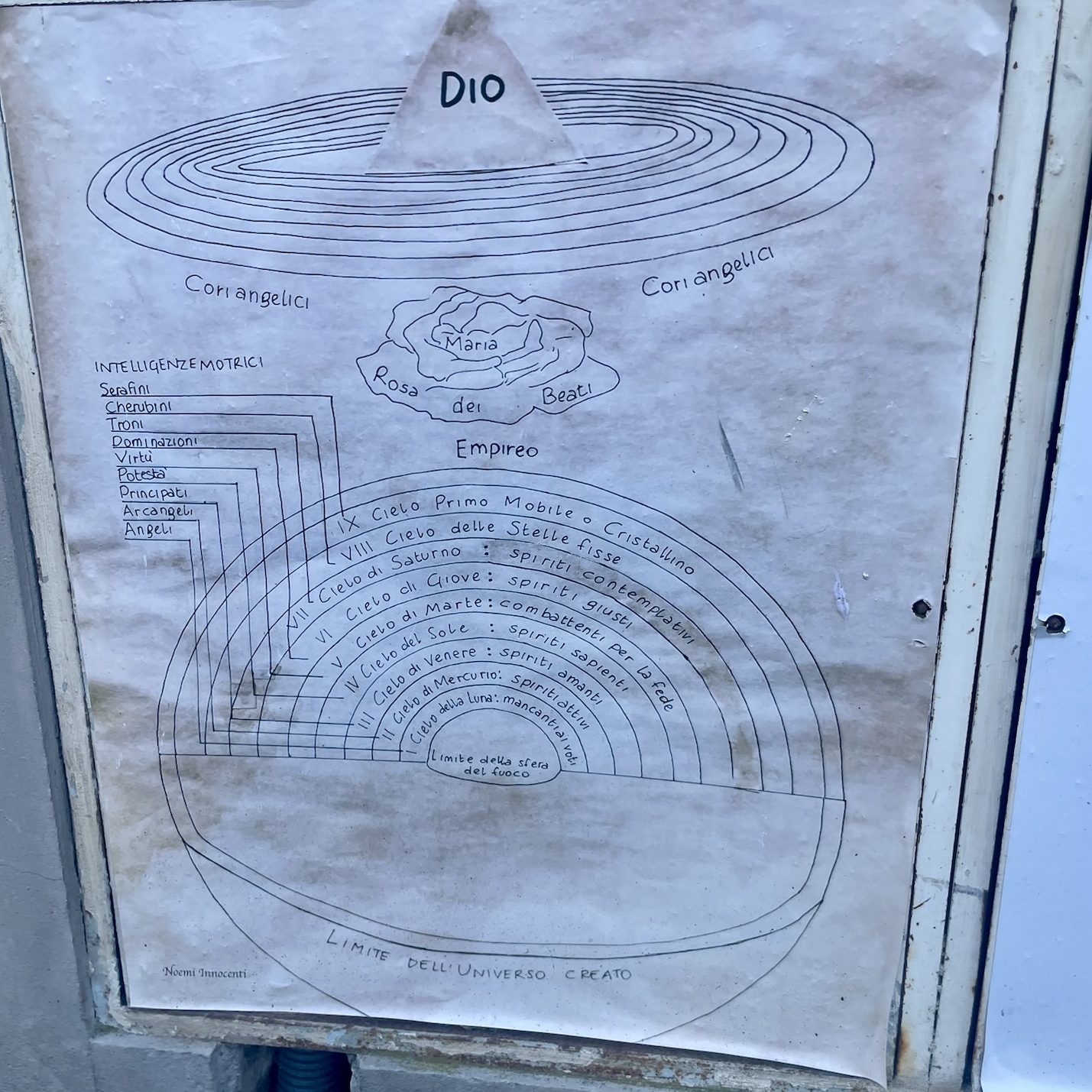
    On the surrounding streets were quotes from Dante’s Paradiso that had been plastered to the wall and here was a map of the heavenly realms as he had understood them. One quote read:

    ‘The handsome image those united souls,
    happy within their blessedness, were shaping,
    appeared before me now with open wings.

    Each soul seemed like a ruby—one in which
    a ray of sun burned so, that in my eyes,
    it was the total sun that seemed reflected.’

    In the Divine Comedy, Paradise is depicted as a series of concentric spheres surrounding the Earth, consisting of the Moon, Mercury, Venus, the Sun, Mars, Jupiter, Saturn, the Fixed Stars, the Primum Mobile and finally, the Empyrean.
    Back on the path, I passed a balcony on which stood a lady watering Calla lilies beside a hyper vigilant black cat. She smiled and wished me a ‘buon viaggio.’

    As I left the town, there was a cemetery on the left, sweeping trees to the right and, of course, the village football field.

    I followed the signage, making sure to check directions on my phone every five minutes now, and made my way up a steep concrete road. From a garage there emerged some antique porcelain sinks and toilets.

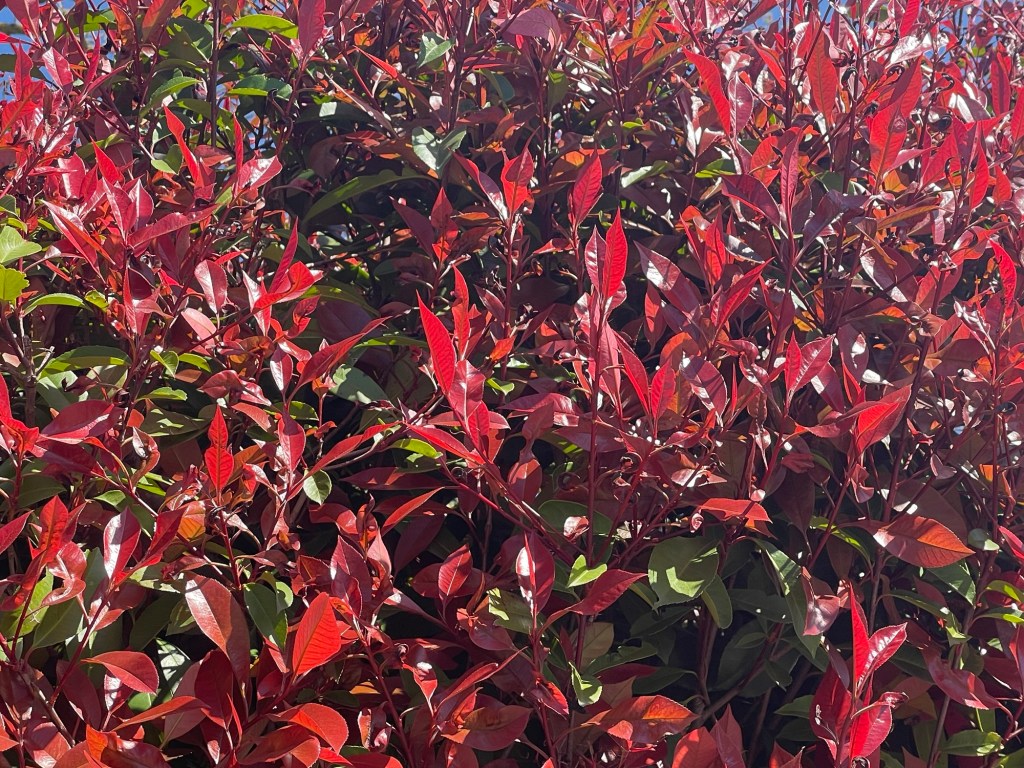
    I moved in and out of shadows, enjoying the litter of red leaves on the pavement that were the colour of Alina’s hair. Tom had told me yesterday that you could eat dandelion flowers and so I folded one into my hungry mouth. The entire plant is edible, from the flowers to the roots. It tasted bitter.
    I proceeded past a field of goats that came with a ‘beware of the goats’ sign and an agriturismo which was decorated at the front by a beacon of lemon trees. 

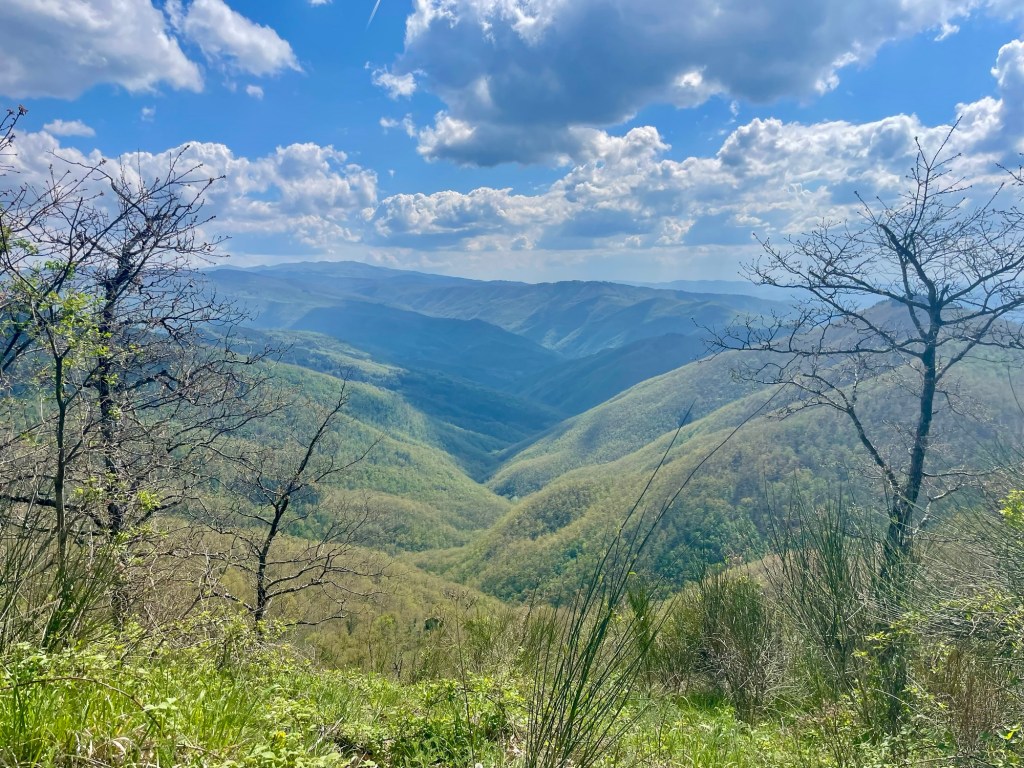
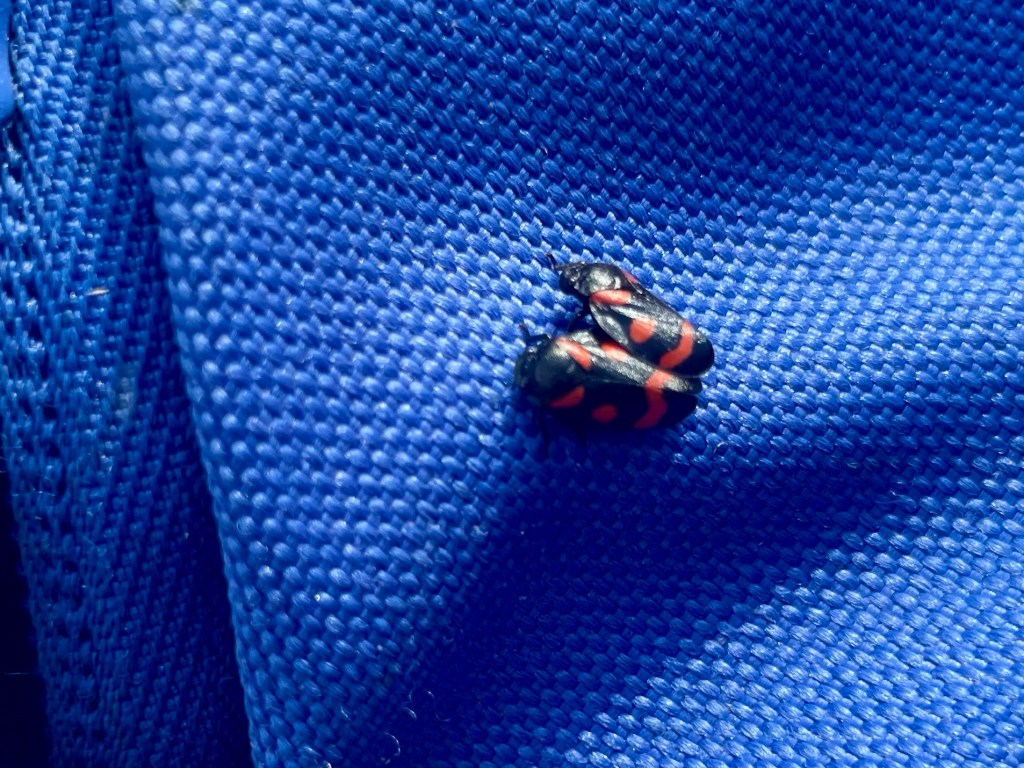
    The path had expanded out into a beautiful hobbit like landscape. I sat on a rock and drank some more water beside a prairie and a tinkling stream. A white butterfly with orange tips fluttered past, then a yellow one. Two black beetles were mating on my backpack. They were covered in red spots like inverse ladybirds. I noted that I was developing callouses on my hand from the rub of my hiking poles.
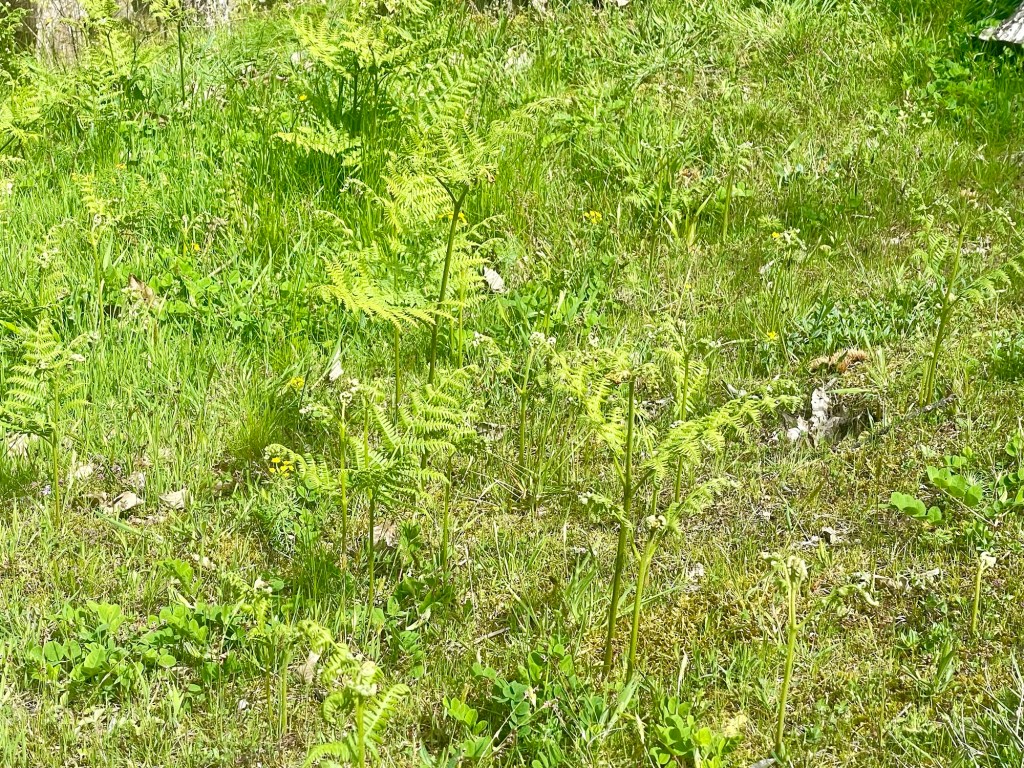
    I could see back down to the town in all its majesty. There was a house built into a tree which was surrounded by a cluster of bracken. The simple way to tell bracken apart from ferns is that bracken has a stem, and will come up singly. Ferns, on the other hand, generally don’t have a stem but rather always have multiple fronds coming up from one central point.
    I realized I was lost again and there followed an agonizing half hour hike up a steep bank that was littered with spiky horse chestnut seeds. I had somehow managed to drink all of my water and kept stopping to catch my breath. At one point, my cap was disturbed by an overhanging branch and I had to retrace my steps downwards some ten metres to retrieve it. It was a chalky blue and read, ‘Stay wild and free, protect our sea.’ I had purchased it from a Royal National Lifeboat Institute giftshop in Wales the previous summer.

    I thought of Will and Jo’s non-wedding wedding that I would be attending that weekend back in London. Their party theme was ‘under the sea’ and my friends at home had been feverishly making costumes, including one for me. 

    I stopped to pull out some horse chestnut spikes from my hands and finally re-found the path. It was 3pm and I’d only hiked some 12 kilometres and climbed nearly 120 floors but I was only about 6 kilometres along today’s 17 kilometre stretch of the cammino. My arms looked like I’d had a fight with the cat. I flicked an ant off my leg. 
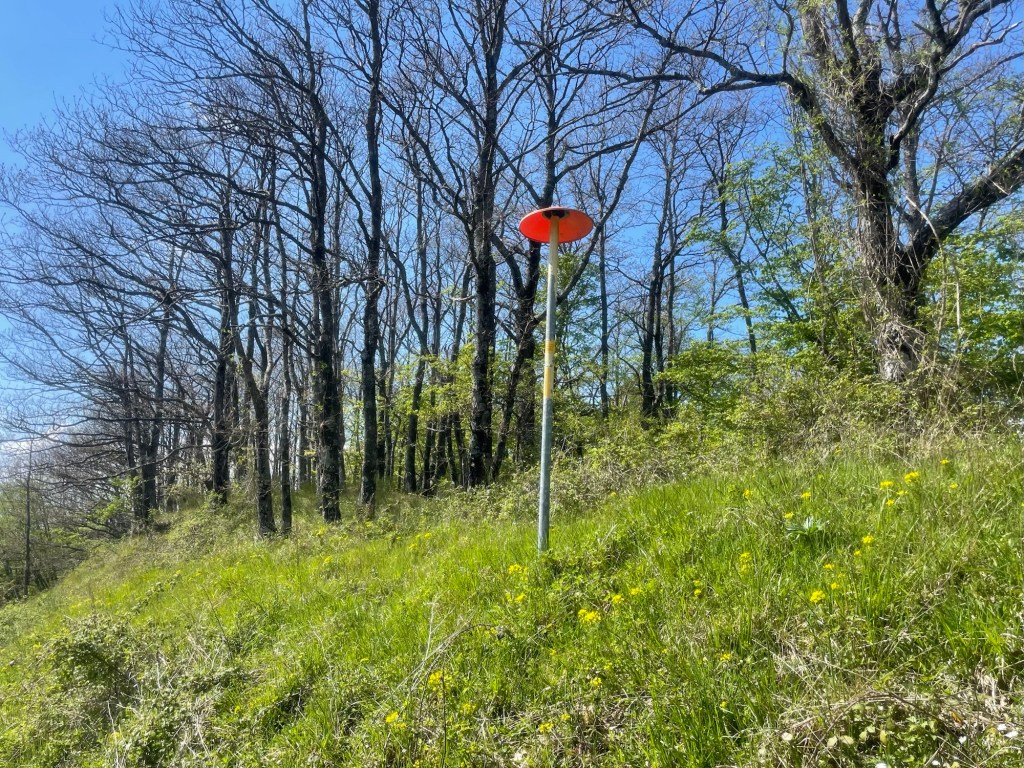
    The path followed an ancient Etruscan way which was dotted with sign posts with orange cones on the top which resembled Asian hats. I trotted downhill now, my bag chafing under my armpits, enjoying the spectacular view to the right of the mountains in the sun. They were striped in shadow and light. 

    Two lizards were wrestling beside the bushes and the trees were squeaking in the light breath of the breeze. I really wanted some water. 

    Then I realized that in my stupor I had gone wrong yet again. It was a fifteen minute hike back uphill. Today was not my day. 
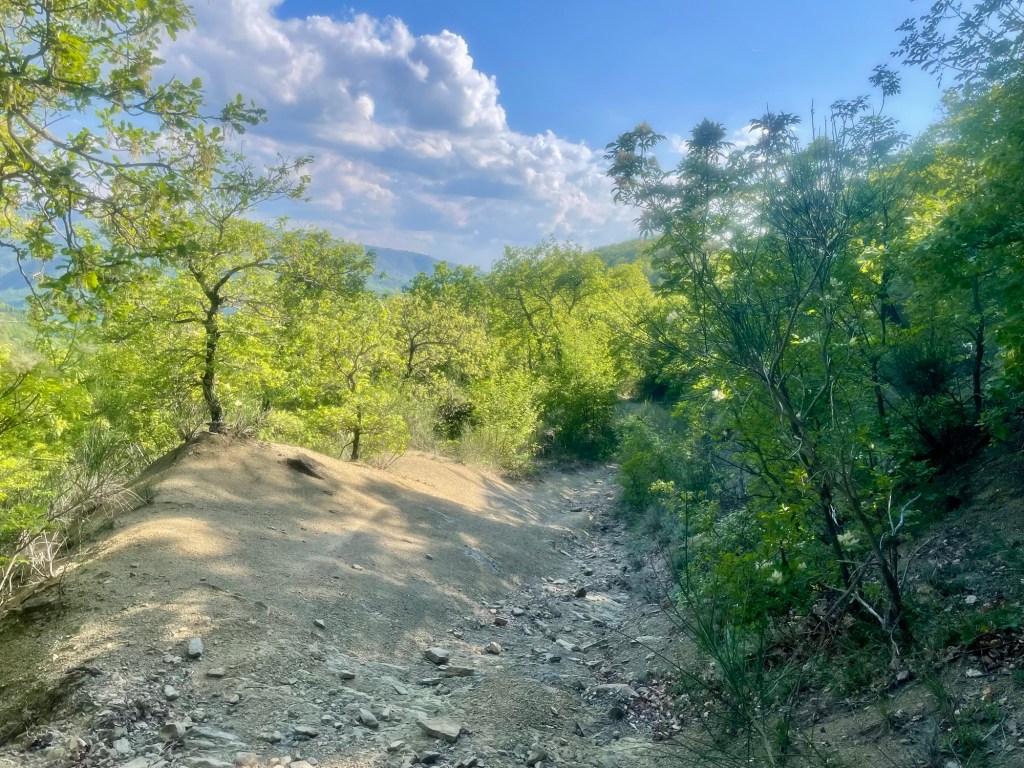
    It was tough on my knees and broken toes hiking downhill, but I was thankful to have finished the climb and grateful once more to Franco in Marradi for fixing my right hiking pole. A farm appeared to my left with goats and a horse. 

    I got lost for the fourth and final time, climbing nearly all the way up a really steep hill covered in scree only to backtrack. A cock crowed somewhere in the distance. It was 5pm.  

    An aloe vera plant emerged from someone’s garden and I was so thirsty I contemplated ripping off a leaf, opening it out and licking the sweet sap. The irises that decorated this lawn were purple and pink in hue.

    I ate some berries from my trail mix thinking they might have some moisture inside. The sun was beating down and I had my eyes peeled for an outdoor tap.

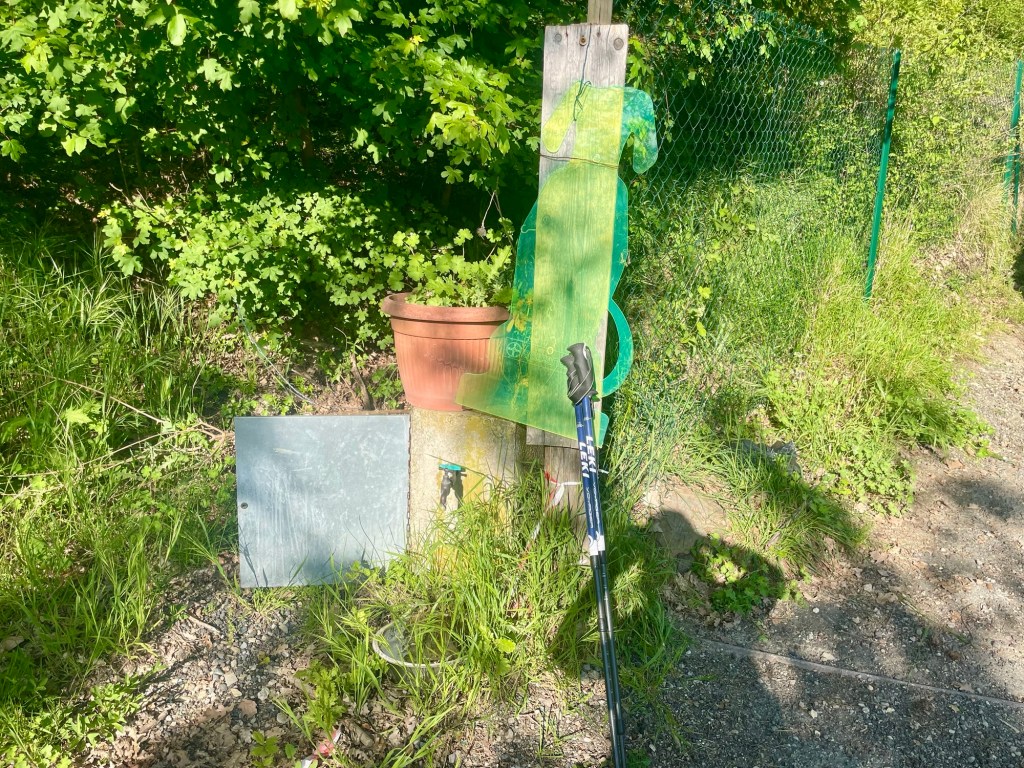
    Then, just as quickly as the thought arrived, such a tap appeared. It was accompanied by the outline of a dog and dog bowl but, water was water. I guzzled from the font and refilled my pouch. I held the water in a precious sphere in my mouth before I swallowed it. 
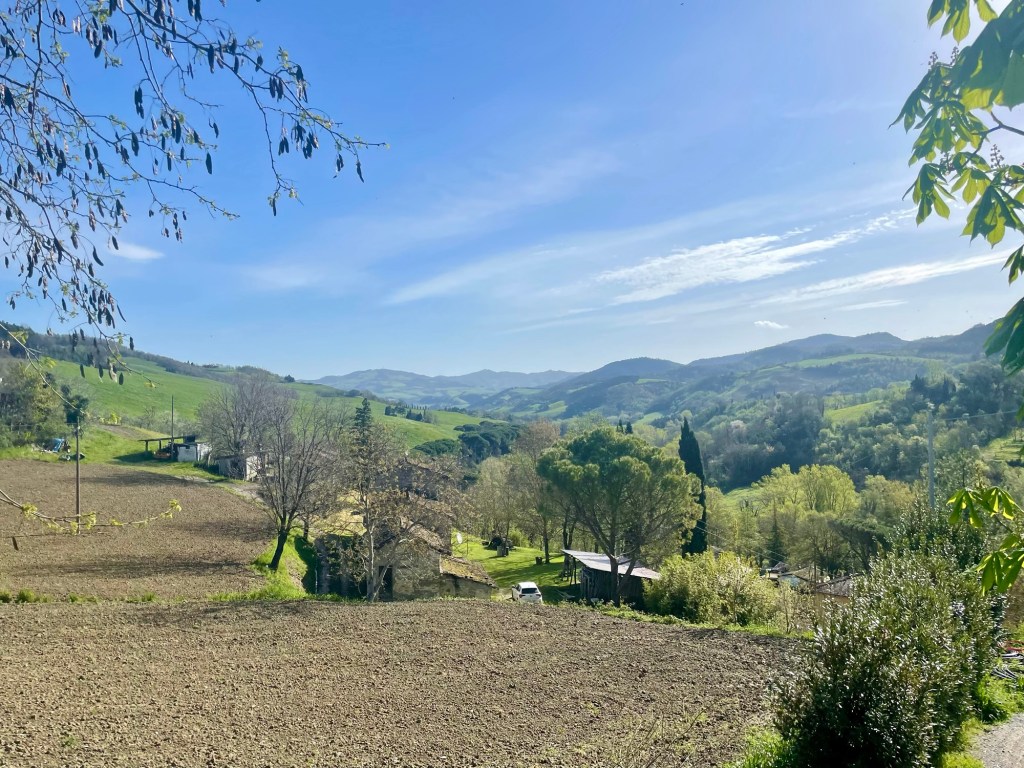
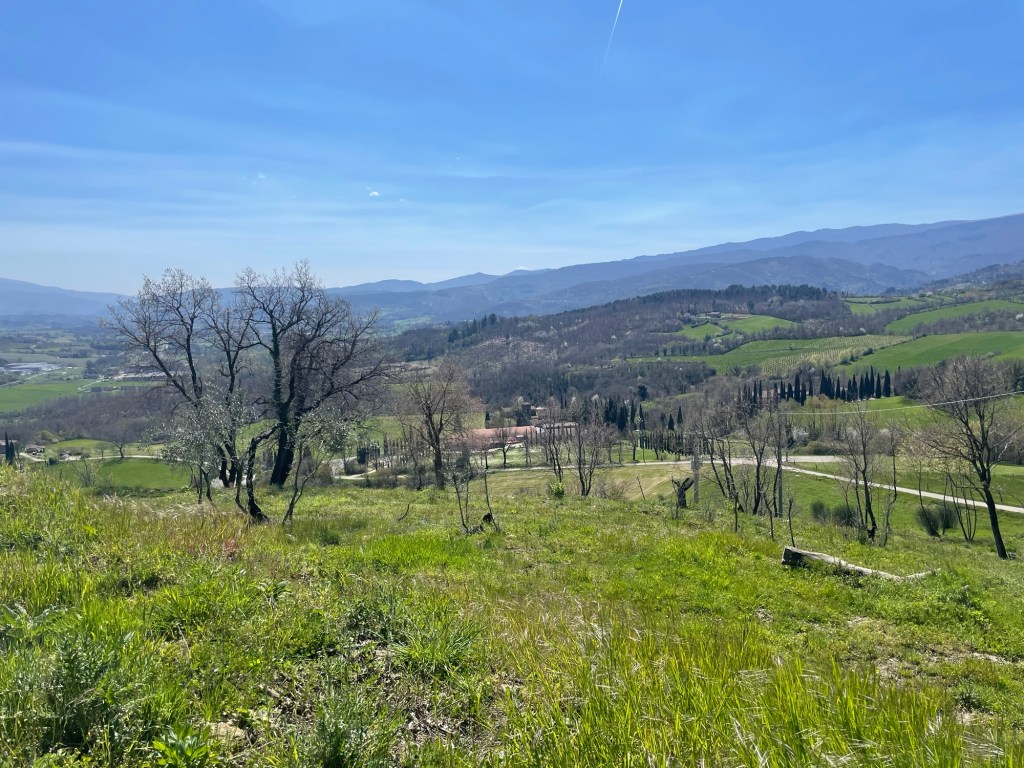
    I could feel that I was back in Tuscany because of the rolling hills, the soft golden light and the way the olive leaves seemed to glitter in the evening sun. The approaching dusk made the hills look matt and hazy.

    A bird sounded out like a car alarm. It was suddenly so tranquil. I recalled the words of William Blake from his poem Auguries of Innocence

    ‘To see a world in a grain of sand

    And a heaven in a wild flower,

    Hold infinity in the palm of your hand

    And eternity in an hour.’
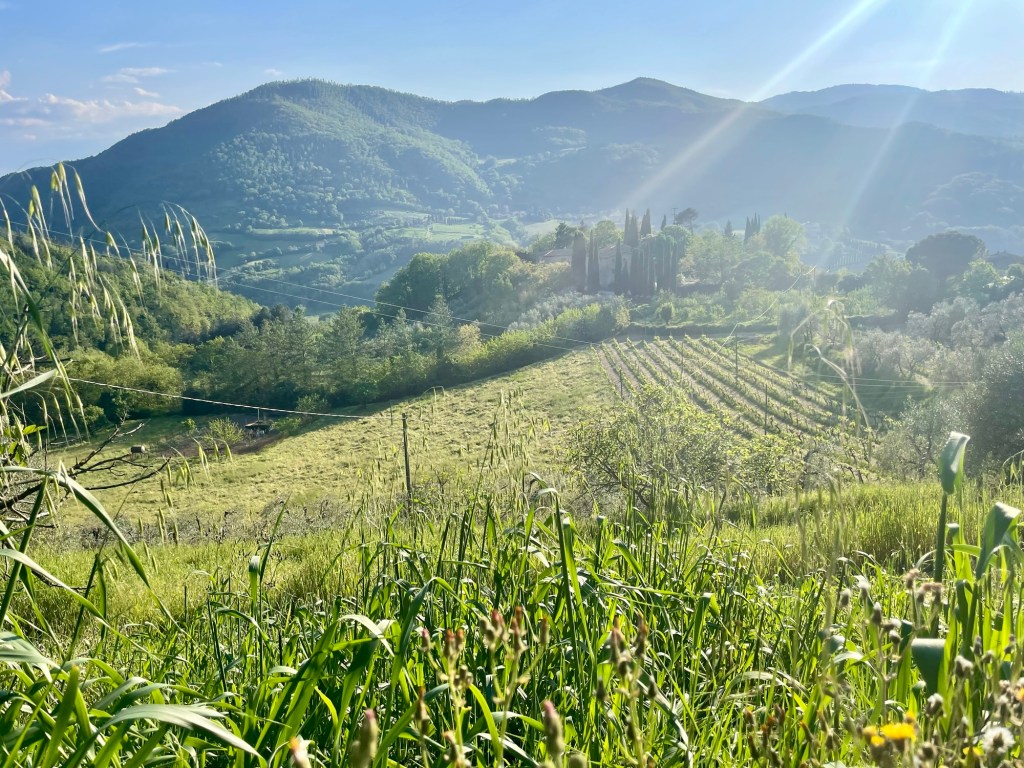
    I watched a plane soar through the sky and was once again reminded that, this time next week, I’d be finished with walking and back to normal life. I wondered how normal my life could ever be after this adventure. 

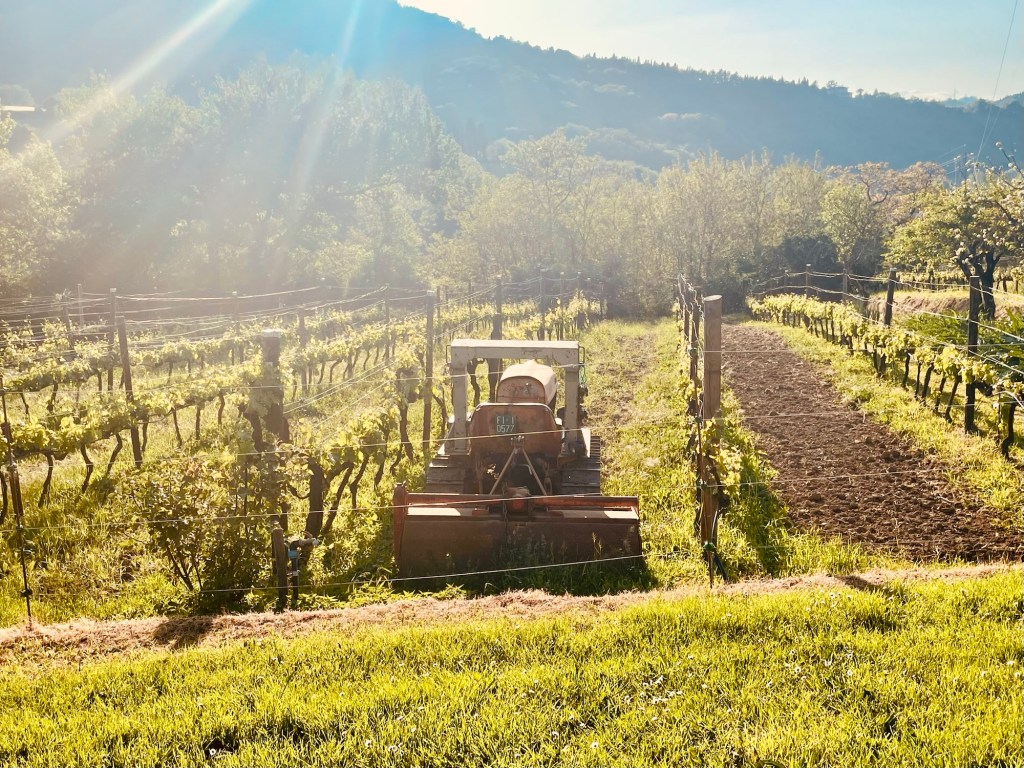
    A tractor drove past, and I collapsed in the grass awhile. I was 20 minutes from my destination but my toes ached and I was exhausted from all the extra energy I had expended on getting lost today. I had been told by my French host Beatrice that there would be pesto pasta for dinner and I was sure that it would be delicious. 

    The final descent into Dicomano was stunning. Poppies once again lined the hedgerows coupled with thick clumps of thistles. A chorus of sheep bleated out in unison. 

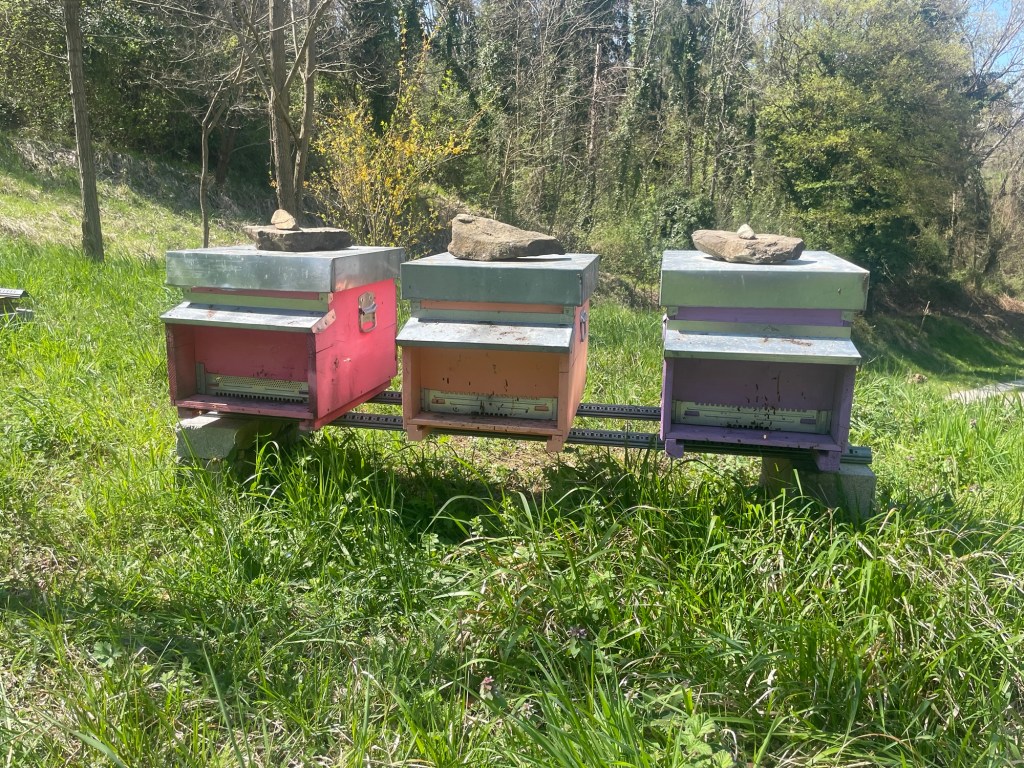
    There was a horse medallion on someone’s house and statues of little angels and a chicken rendered in bronze. There was plenty of space for both me and the cars on the road. A chain of colourful beehives lined the hill like a Lego brick house under construction.

    Three men who were tending to a cement mixer said hello as I passed them and, embarrassed, I realized I’d been singing to myself the nursery rhyme The Grand Old Duke of York. Today had certainly seen me march to the top of the hill and march back down again. 

    Then came the familiar sweet waft of black locust or white robinia. A plough was stationed in the middle of a field, retired from the toils of the day. An elderly voice was shouting to a young child something about a horse and dirty trousers. 
    I was greeted by my host, Ivan, who called me ‘bambina’ and complemented me on my pigtails – they were cute but also practical hiking wear. Their bed and breakfast, Pino del Capitano sat in a beautiful Mediterranean garden that was decorated with colourful Portuguese tiles and sinuous sculptures. 

    That night, I dined on a delicious fare with a man working in construction from Udine who was also staying with Ivan and Beatrice. Unlike me, he was here for business, not pleasure.

    Ivan brought me some plasters and I lanced my toes together more forcefully. He was sympathetic since his own daughter was a hiker who had recently completed 45 days of the Camino de Santiago. He was 74 but seemed much younger for his friendly and exuberant demeanor. 
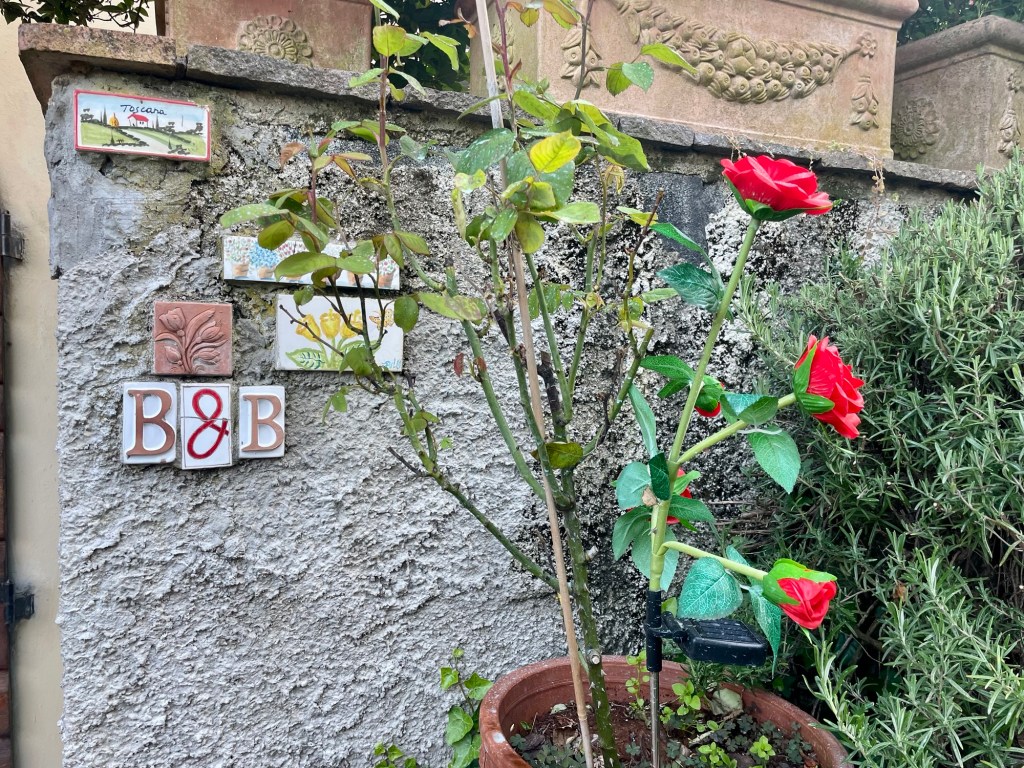
    Every stone you see, every flower, that’s the work of my hands in the garden,’ he proudly explained.

    It had taken him 25 years to get it just right. 

    We must ‘cultivate our garden’ counsels the French writer Voltaire at the end of his satirical quest, Candide. After the day I’d had I enjoyed the peace. Too true, I thought, too true. 
  • A Mosaic of Colour: Ravenna

    I felt immediately at home in Dante’s city of exile, but the most special encounter came in the form of the hospitality of Oliver, our new guide.
    I had had the fortune to visit Ravenna on two previous occasions, once on a road trip with my University friends Tor, Martin and Will, and once to give a lecture at the University of Bologna. Ravenna is known as the city of mosaics and, as a mosaic artist myself, I had felt immediately at home in the city. This personal feeling of sanctuary came flooding back as I wondered the streets.
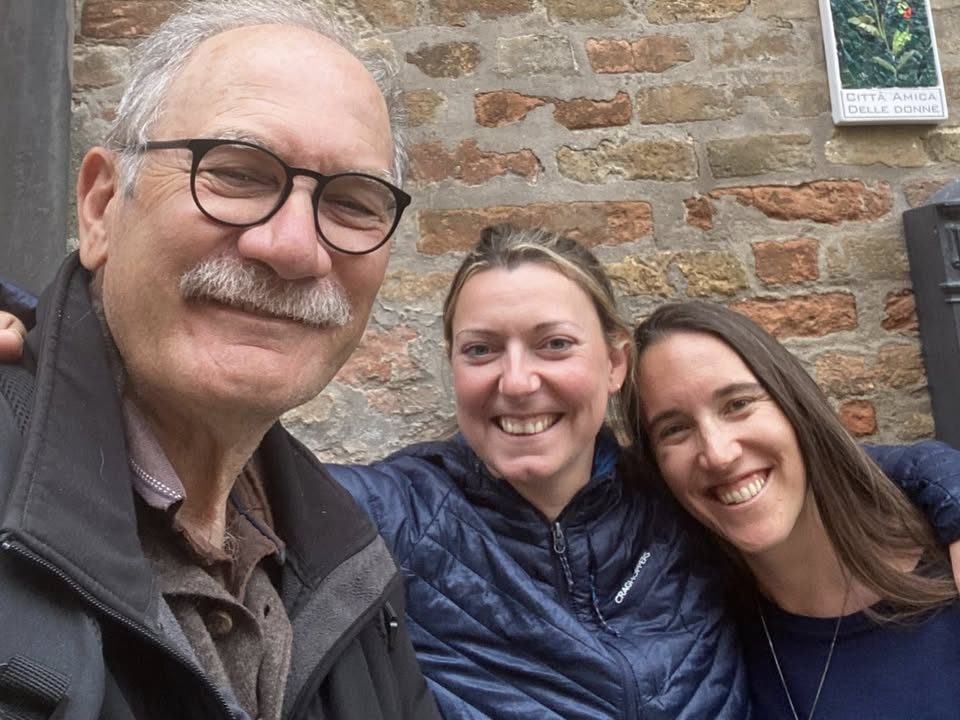
    On every corner are little mosaic plaques that depict flowers and announce,

    ‘Ravenna, city friend of women’. 

    Though they are never explicitly cited, it is said that the Byzantine mosaics in the church complex in Ravenna (Ravenna has some 200 churches) inspired Dante’s Paradiso which he completed in exile here.

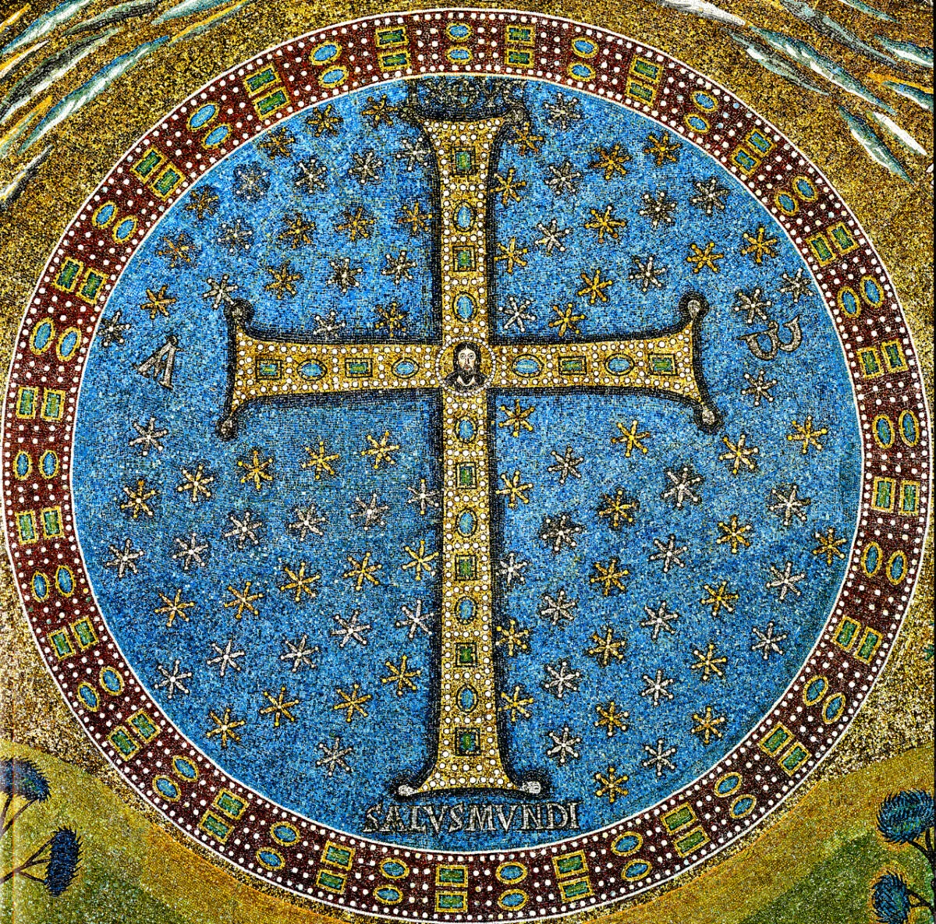
    Among the depictions that one can most easily recognize in the Dantean text is the mosaic in the apse of Sant’Apollinare in Classe which contains a sky dotted with 99 golden stars and a gem cross, in the center of which it is possible to see the face of Christ. In the 14th canto of Paradiso, the souls who welcome Dante arrange themselves in the form of a cross, with Christ placed in the centre:

    ‘As, graced with lesser and with larger lights
    between the poles of the world, the Galaxy
    gleams so that even sages are perplexed;

    so, constellated in the depth of Mars,
    those rays described the venerable sign
    a circle’s quadrants form where they are joined.

    And here my memory defeats my wit:
    Christ’s flaming from that cross was such that I
    can find no fit similitude for it.

    But he who takes his cross and follows Christ
    will pardon me again for my omission—
    my seeing Christ flash forth undid my force.’

    In the 10th canto of Paradiso, meanwhile, Dante encounters a group of blessed souls who surround him and his celestial guide, Beatrice, forming a crown of twelve. A second crown of twelve souls joins them in canto 12, which moves in coordination with the first.

    And I saw many lights, alive, most bright;
    we formed the center, they became a crown,
    their voices even sweeter than their splendor.’

    It is said that this image could recall the two domes of the Neonian and the Arian baptisteries, where the twelve apostles are depicted in a circle.

    It is also possible to imagine that Dante was inspired by the beautiful portrait of the Emperor in the Basilica of San Vitale. Paradiso 6 tells the history of the Roman Empire which Dante viewed as part of the divine plan of Christianity. Justinian has a prominent role. Indeed, the political sixth canto is dedicated to him:

    ‘Caesar I was and am Justinian,
    who, through the will of Primal Love I feel,
    removed the vain and needless from the laws.’

    The Procession of Virgins and Saints depicted in Sant’Apollinare Nuovo may also have informed his description of the grand procession that heralds the arrival of his Beatrice in the Earthly Paradise. 

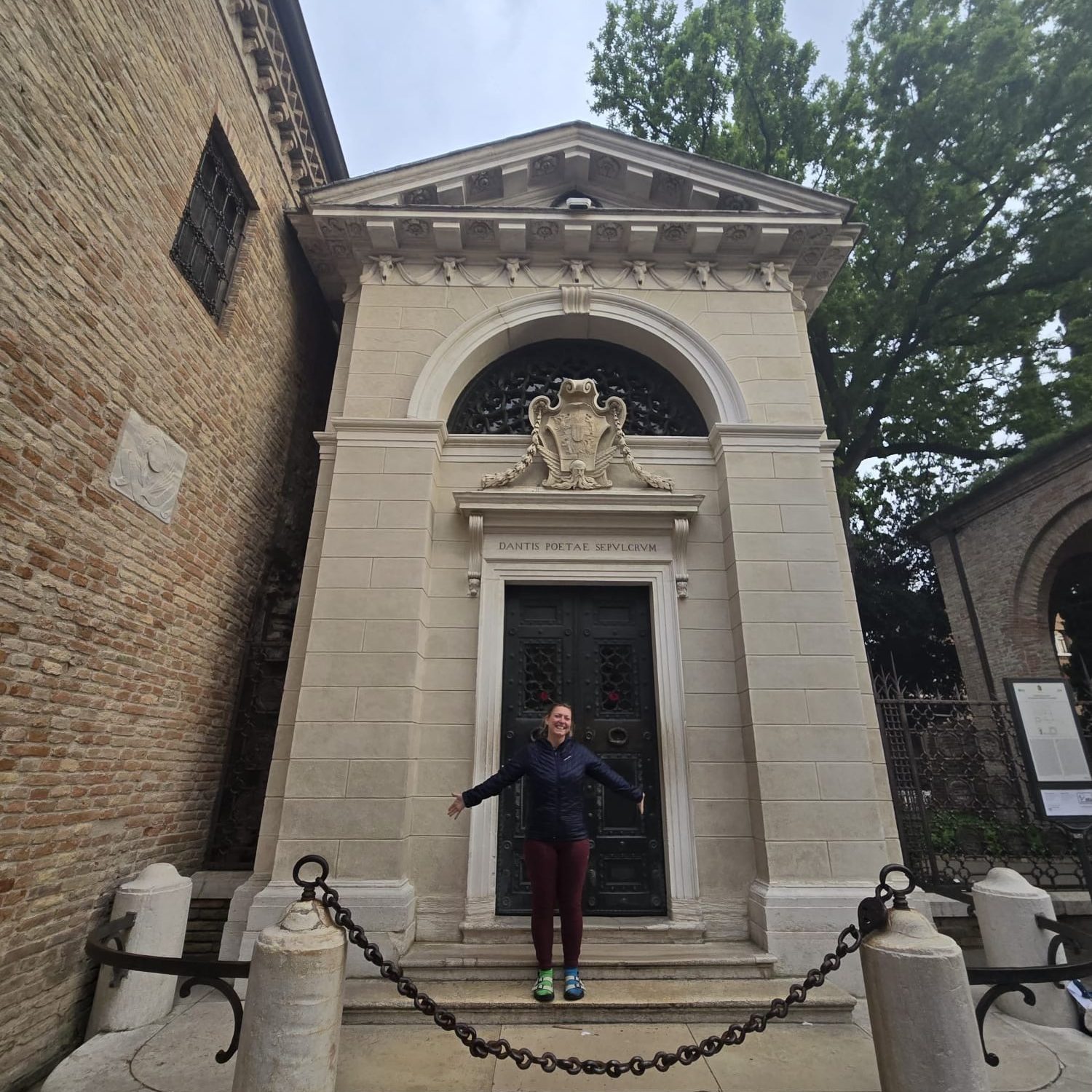
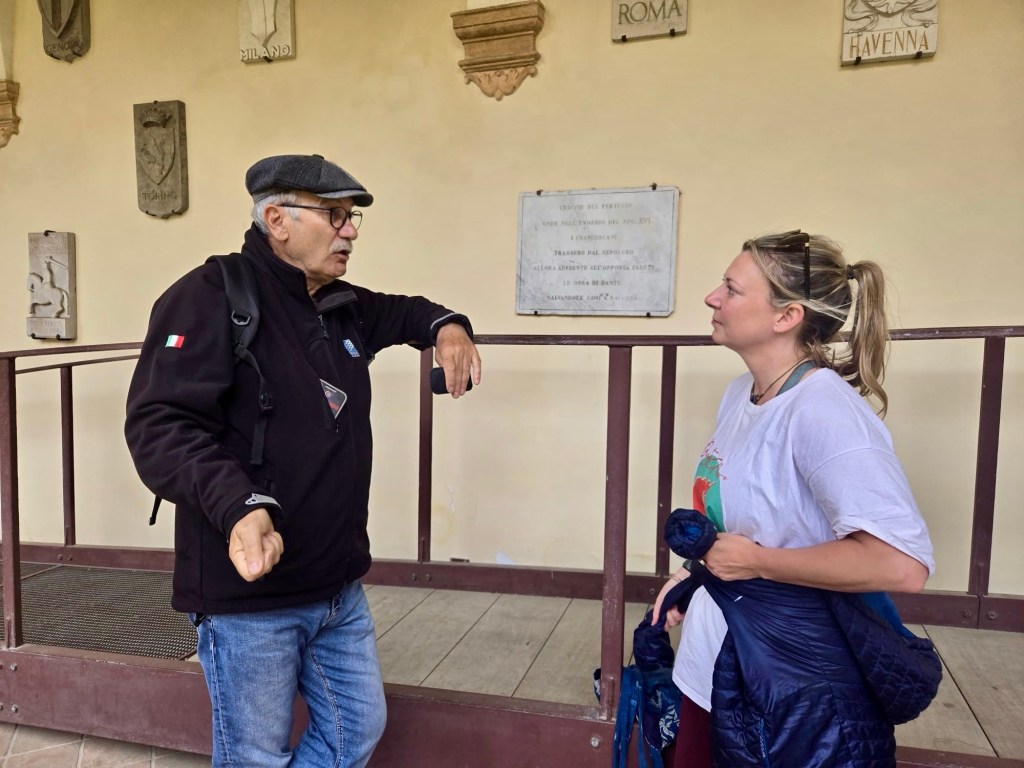
    I left Kelsey to explore the mosaics and caught up with some work during the day before meeting with the current president of the Association of the Cammino di Dante, Oliviero Resta, known to friends as Oliver. We had an appointment outside the tomb of Dante at 5pm. 

    Oliver is unassuming with his bushy moustache and two pairs of glasses, a contrast to the exuberant personality of Giordano, the founder of the trail, with whom who we had had the honour to spend the previous evening.

    His quiet presence is fatherly and reassuring and, once again, I had the feeling that I had met a kindred spirit.

    That evening and the next day, Oliver was a host with the most.

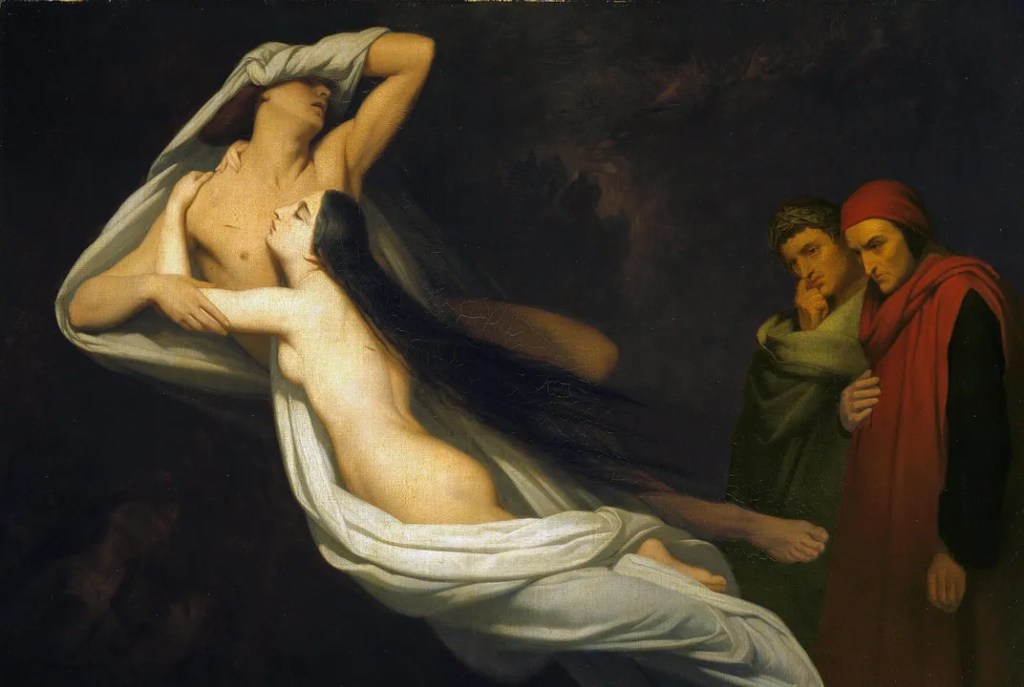
    The first evening he showed us the house said to be home to Francesca di Rimini who is memorably depicted with her lover, Paulo, in a whirlwind of lust in canto 5 of Inferno. She is accompanied by Helen of Troy and Cleopatra. Her lyrical lament is among one of the most beautiful parts of the Divine Comedy,

    ‘Love, that releases no beloved from loving,
    took hold of me so strongly through his beauty
    that, as you see, it has not left me yet.’

    I recalled how when I had given my lecture on young refugees in Ravenna, two students in the front row had cried at the love story of Alim who, after being deported to Afghanistan from Leicester at the age of 18, had returned two years later only to find that his beloved had moved on and shacked up with his best friend. 

    As Dante says,

     ‘Alas, how many gentle thoughts, how deep a longing,
    had led them to the agonizing pass!’

    The emotional and relational lives of refugees is a topic long ignored in contemporary scholarship. Dante helps to set the record straight that refugeehood can be a sight of lust and longing. 

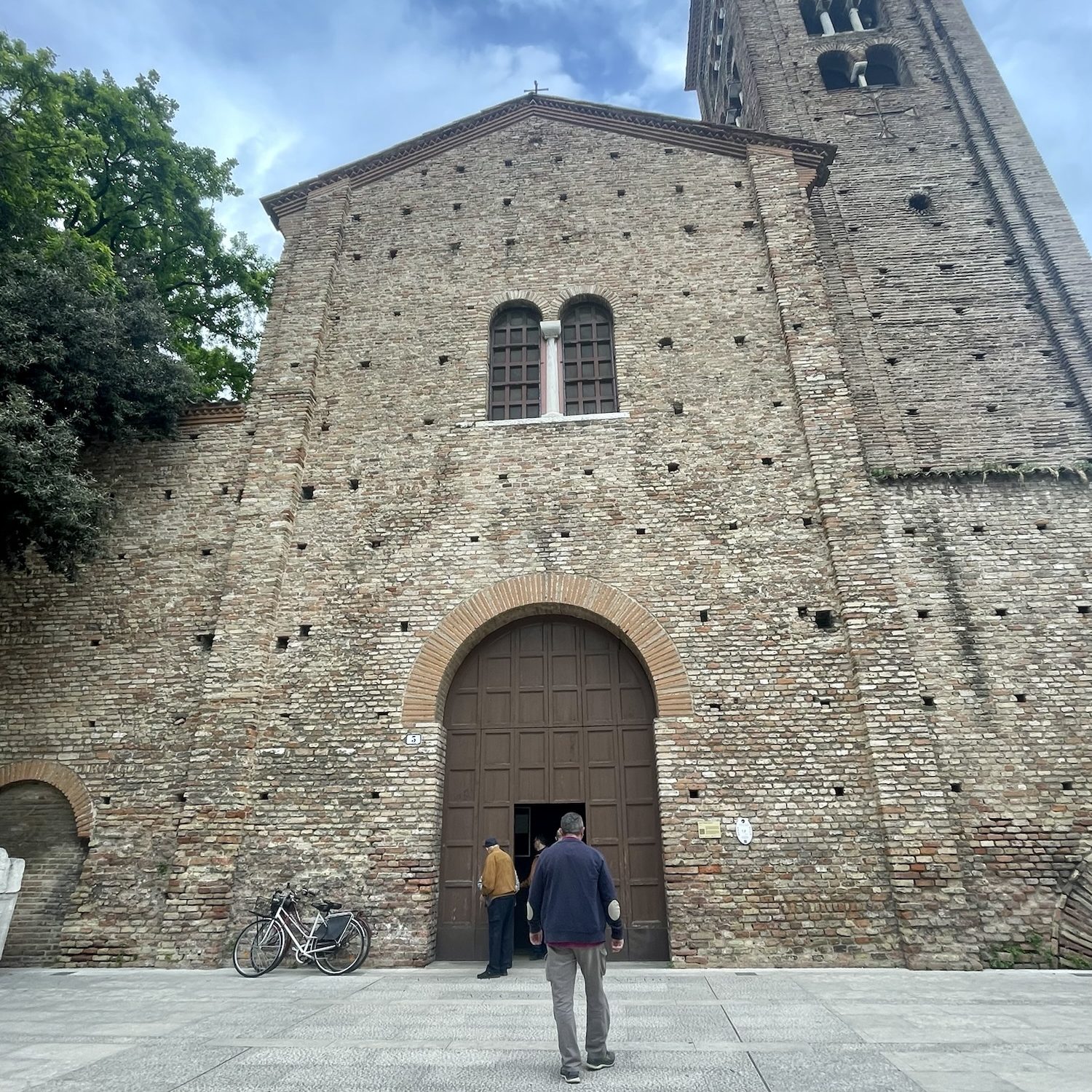
    Oliver took us through the winding streets to see the Basilica which hosted Dante’s funeral. There were signs of the spectacular mosaic floor of the ancient church beneath the foundations which now, quite strikingly, housed a shoal of goldfish. 

    At 6pm we returned to Dante’s tomb where there takes place, every day, a reading from the Divine Comedy. A crowd of about 50 people had assembled there to hear two women recite a canto from Purgatory. The tomb itself was constructed by Camillo Morigia between 1780 and 1782.

    We saw the hole in the wall where Dante’s bones had been hidden by Franciscan monks in 1810 to prevent them being claimed back by Florence. They were found by chance in 1865 and returned.

    Dante’s bones were once again buried in a secret place during the Second World Rar to protect them from bombardment by the Nazis. A plaque memorializes this event.

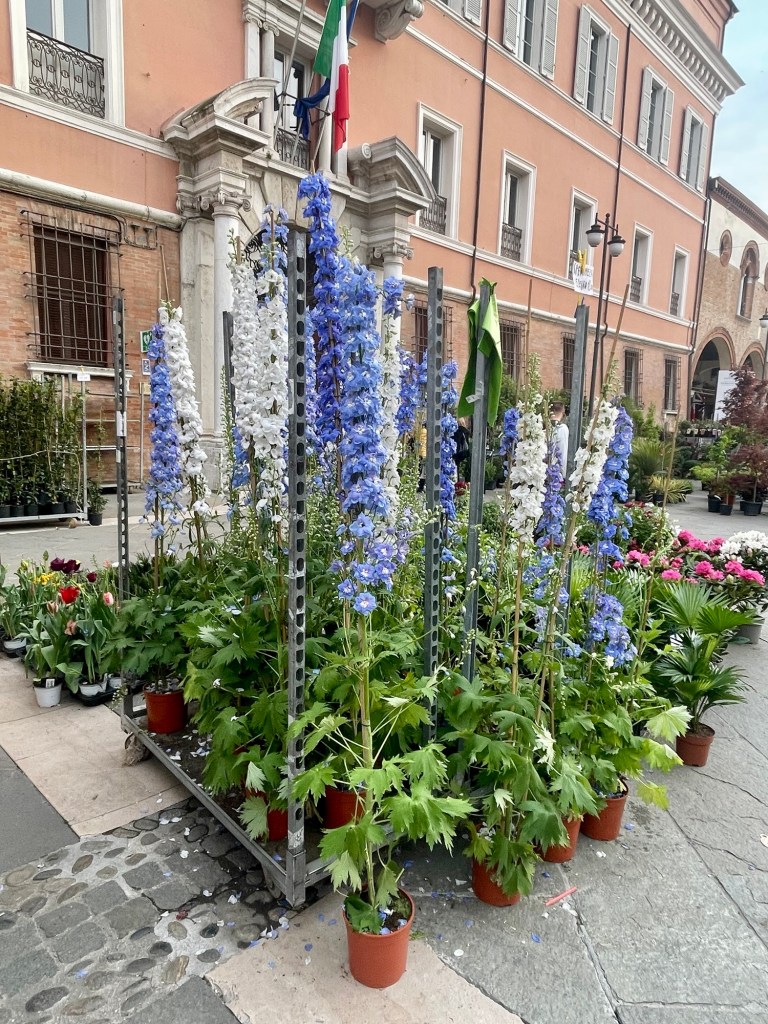
    In a pretty market in the square there was an exuberance of flowers and artisanal wares. I bought Kelsey a hand-whittled honey scooper.

    ‘I’ll think of you when I eat my honey,’ she said. 

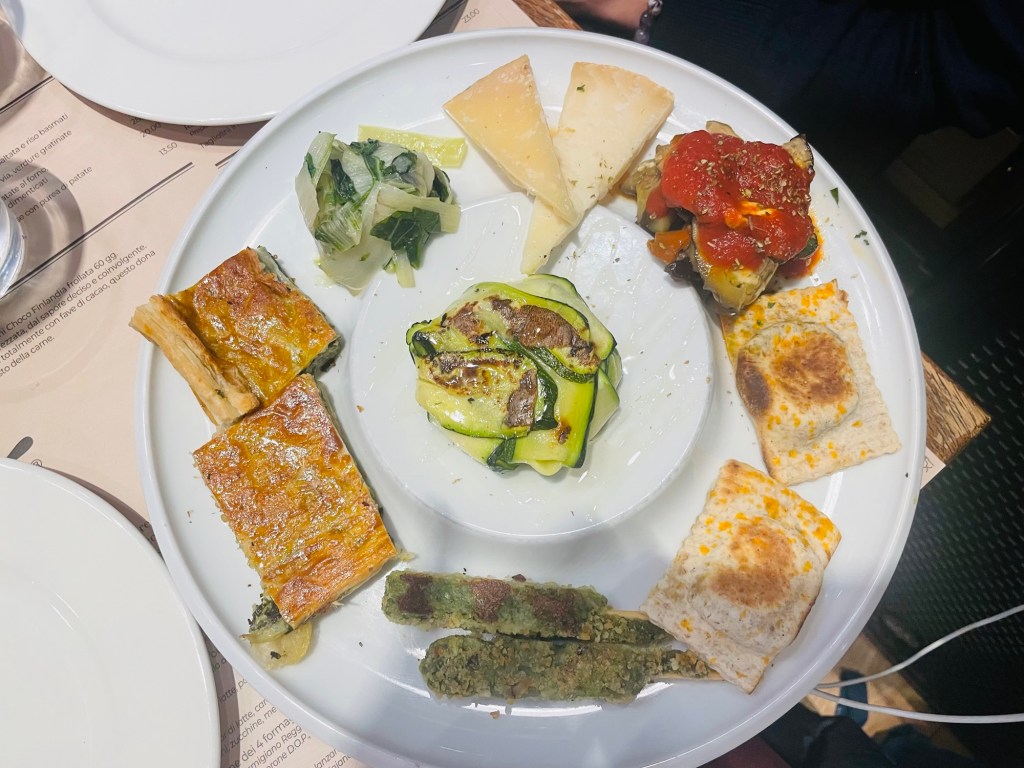
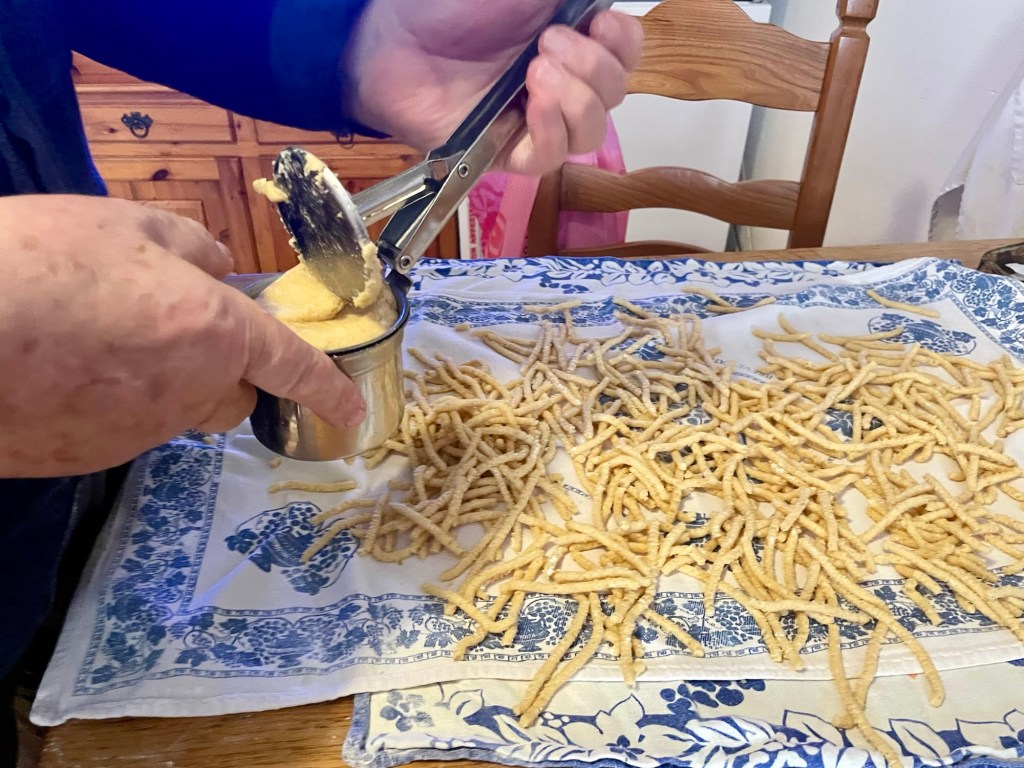
    That night we dined at Passatelli  which since 1962 has been serving delicious local fare in a converted old cinema. We ate all local food including passatelli, a thick pasta that resembles a maggot but tastes anything but.

    We purchased more roses from Mashalim which we weaved into the doors of Dante’s grave. It was touching to see that the roses we had devoted to him the night before were still there, embellishing the tombsite. 

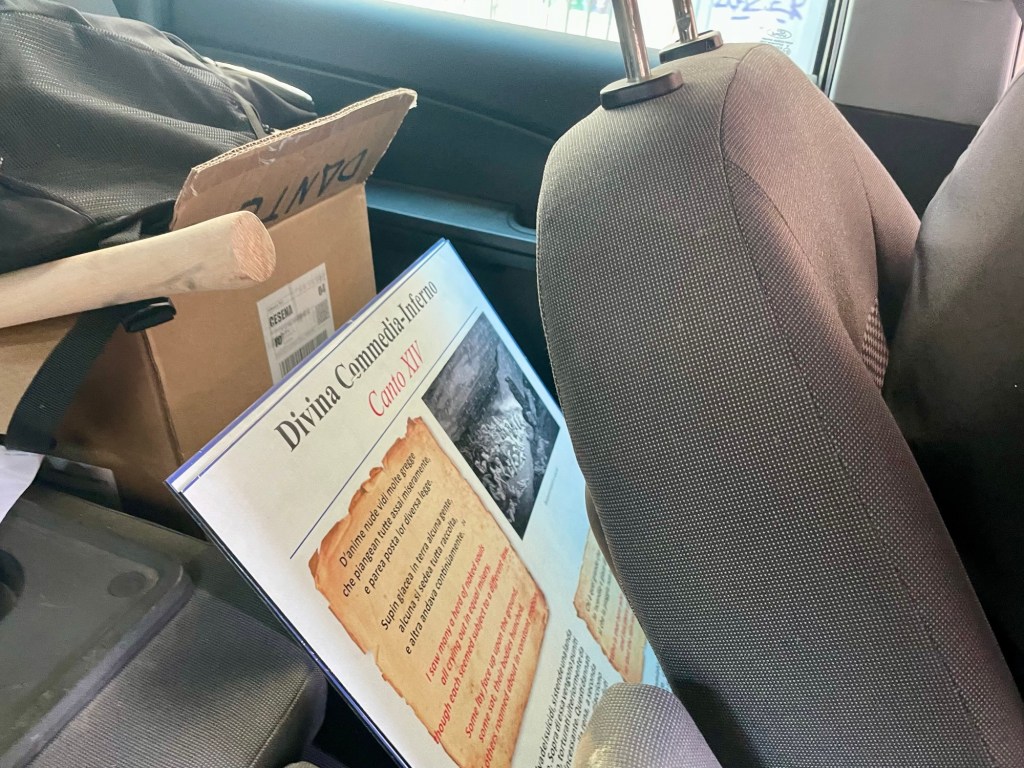
    The next day Oliver picked us up in his battered old car that had Dante information boards stored in the backseats that he would put on the trail in the coming days with the help of Giordano’s son, Marcello. Together they maintained every detail of the cammino meticulously. 

    We passed by the convent where Dante’s daughter had become a nun, taking the name of Beatrice, and visited the lido which had formerly been the port from which Dante had set off on his last perilous diplomatic mission to Venice to negotiate salt taxes. 

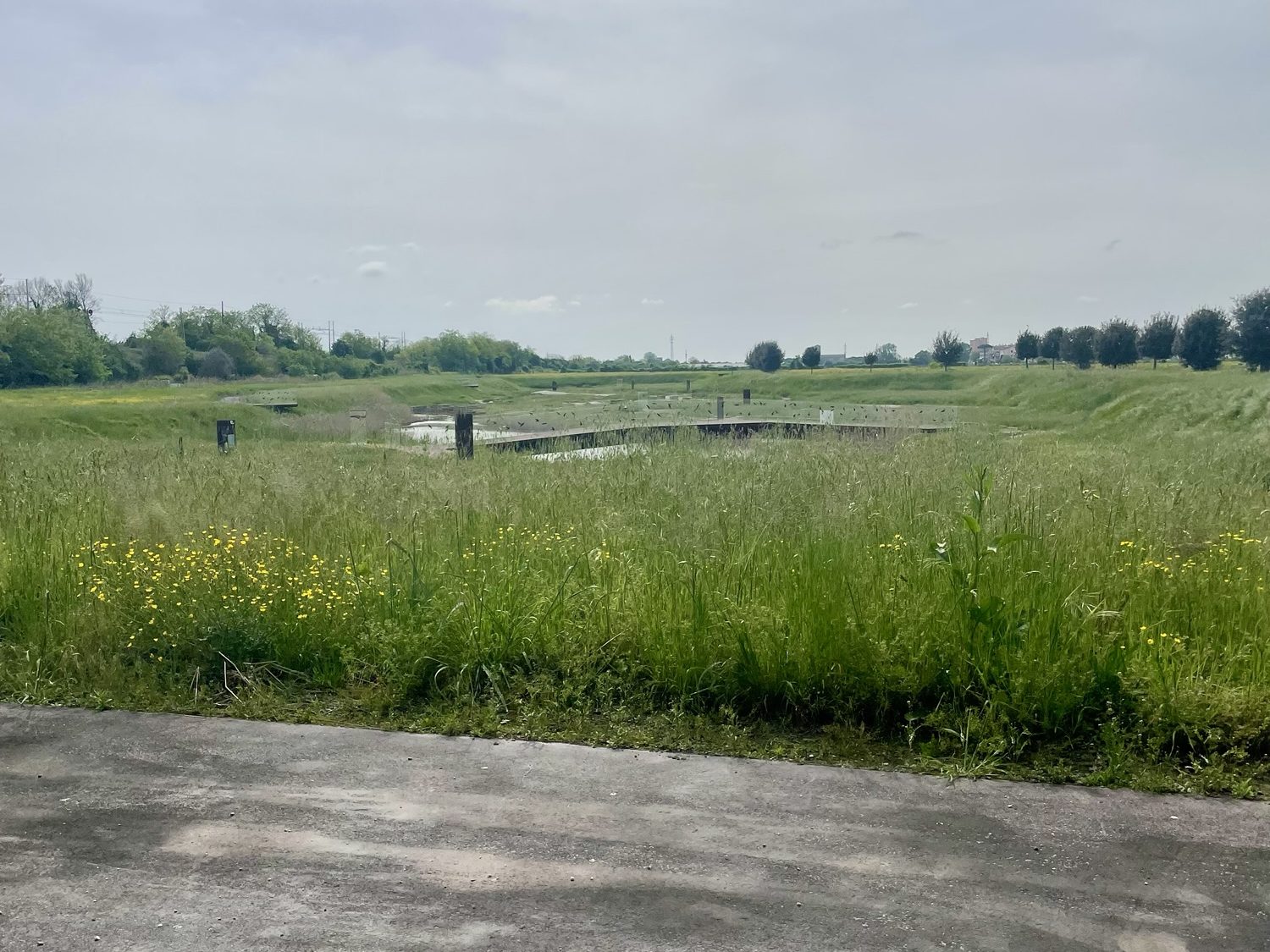
    Though the sea had now retreated some distance from the spot to create a wetland abundant with birdlife, you could imagine the scene. Though he arrived via water he returned from Venice on foot where he caught the malaria that would kill him on the night of the 13th of September, 1321. He was 56 when he died. 

    Oliver explained that a river used to run through the heart of the city but it had been diverted to prevent flooding. The Ravenna of Dante’s day would have looked familiar but also different. 

    ‘Every pilgrim has his way,’ he said.

    Ironically, at 71, Oliver himself isn’t a fan of walking. Some years ago, he’d had a heart attack and had four stents fitted, just like my own father.

    Kelsey had a train to catch at 1.40pm which gave us just enough time to check out the Pine forest of Classe, located a few kilometers south of Ravenna, which inspired Dante in his representation of the ‘thick and vibrant’ woods of the terrestrial Paradise, which receives Dante and Virgil along their path in the 28th Canto of Purgatory.

    ‘A gentle breeze, which did not seem to vary
    within itself, was striking at my brow
    but with no greater force than a kind wind’s,

    a wind that made the trembling boughs—they all
    bent eagerly—incline in the direction
    of morning shadows from the holy mountain;

    but they were not deflected with such force
    as to disturb the little birds upon
    the branches in the practice of their arts;

    for to the leaves, with song, birds welcomed those
    first hours of the morning joyously,
    and leaves supplied the burden to their rhymes—

    just like the wind that sounds from branch to branch
    along the shore of Classe, through the pines
    when Aeolus has set Sirocco loose.’

    The forest was full of life. Wild asparagus sprouted in tall stalks and pines shot up like towers. They had been harvested to make boats in the medieval period.

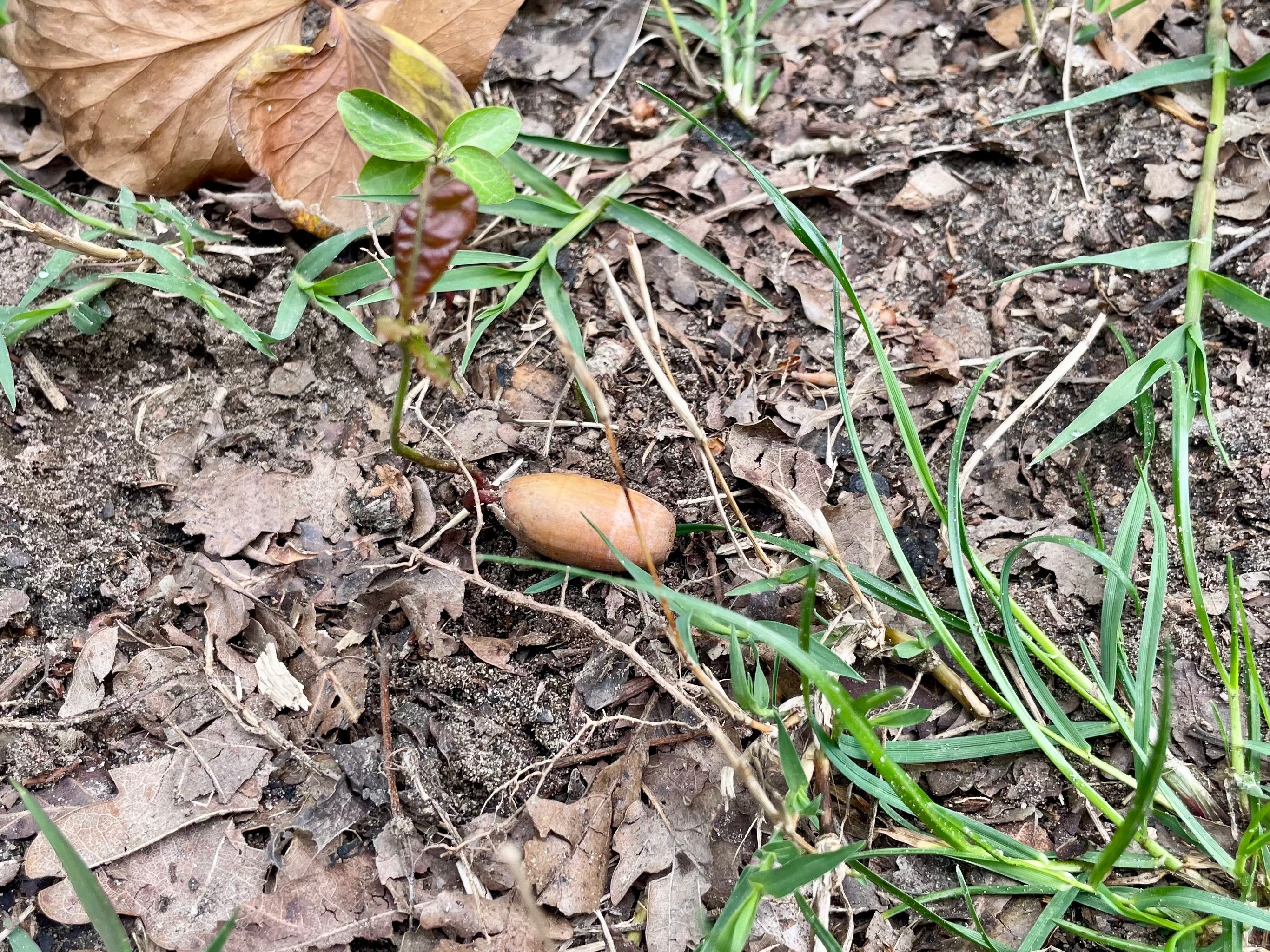
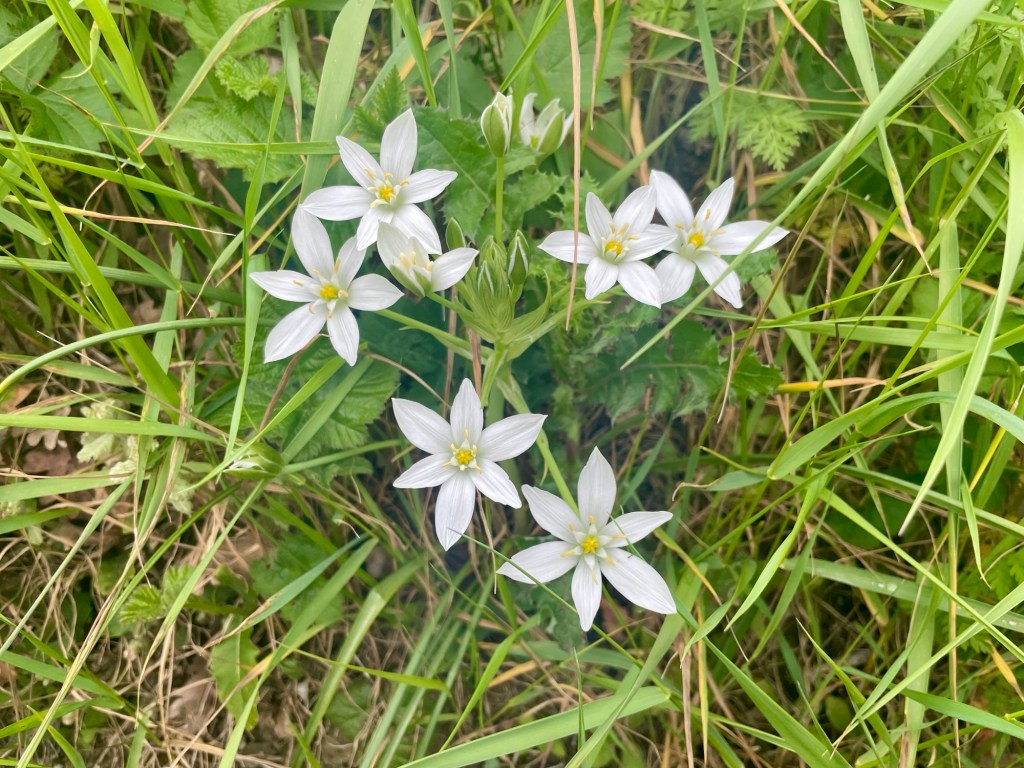
    Wild honeysuckle exuded a delicious tangy scent and from an acorn, an oak plant tentatively hazarded a thin thread of life.

    ‘If you don’t visit a place and touch it with your feet don’t get it,’ said Oliver.

    He spoke fondly of his wife, Donatella, who he said was very much at one with nature – somewhat of a tree hugger like me. When she harvested wild strawberries from the forest she asked for permission, he said.

    ‘Man needs to realize that nature does everything by itself.’

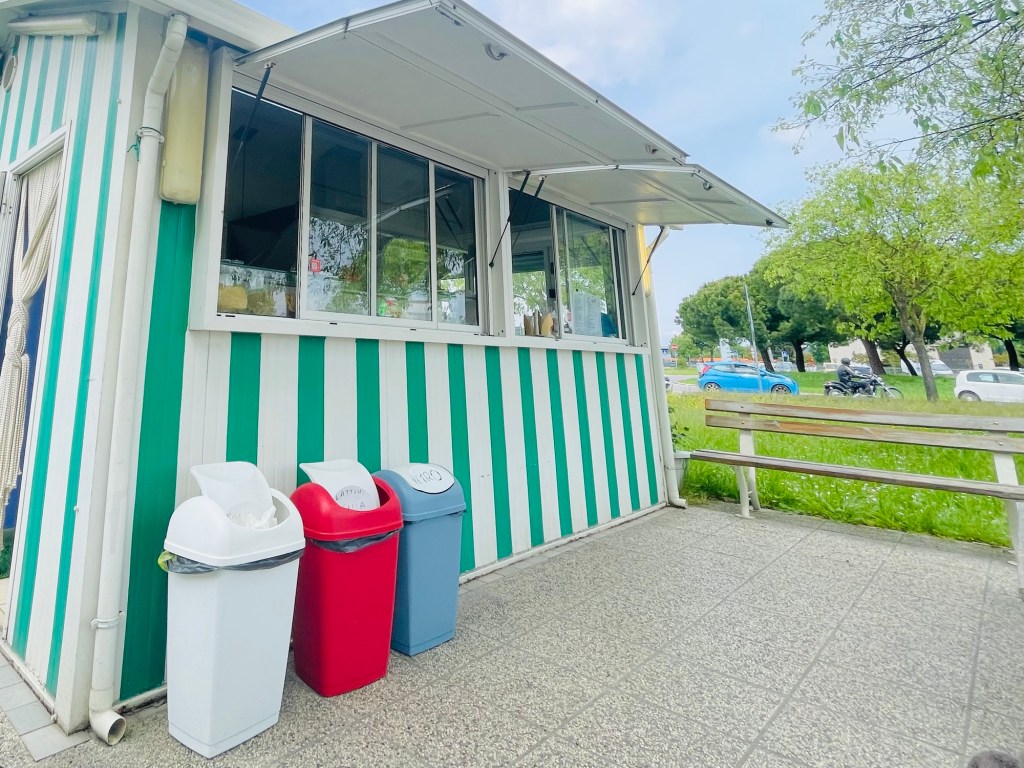
    Back on the road, we stopped at a piadina shack that was recognizable from its green and white stripes. I had one with rocket and a local runny cheese called squacquerone. Kelsey and Oliver had ham and hard cheese. I felt Italian, wearing my feather jacket in the midday sun.

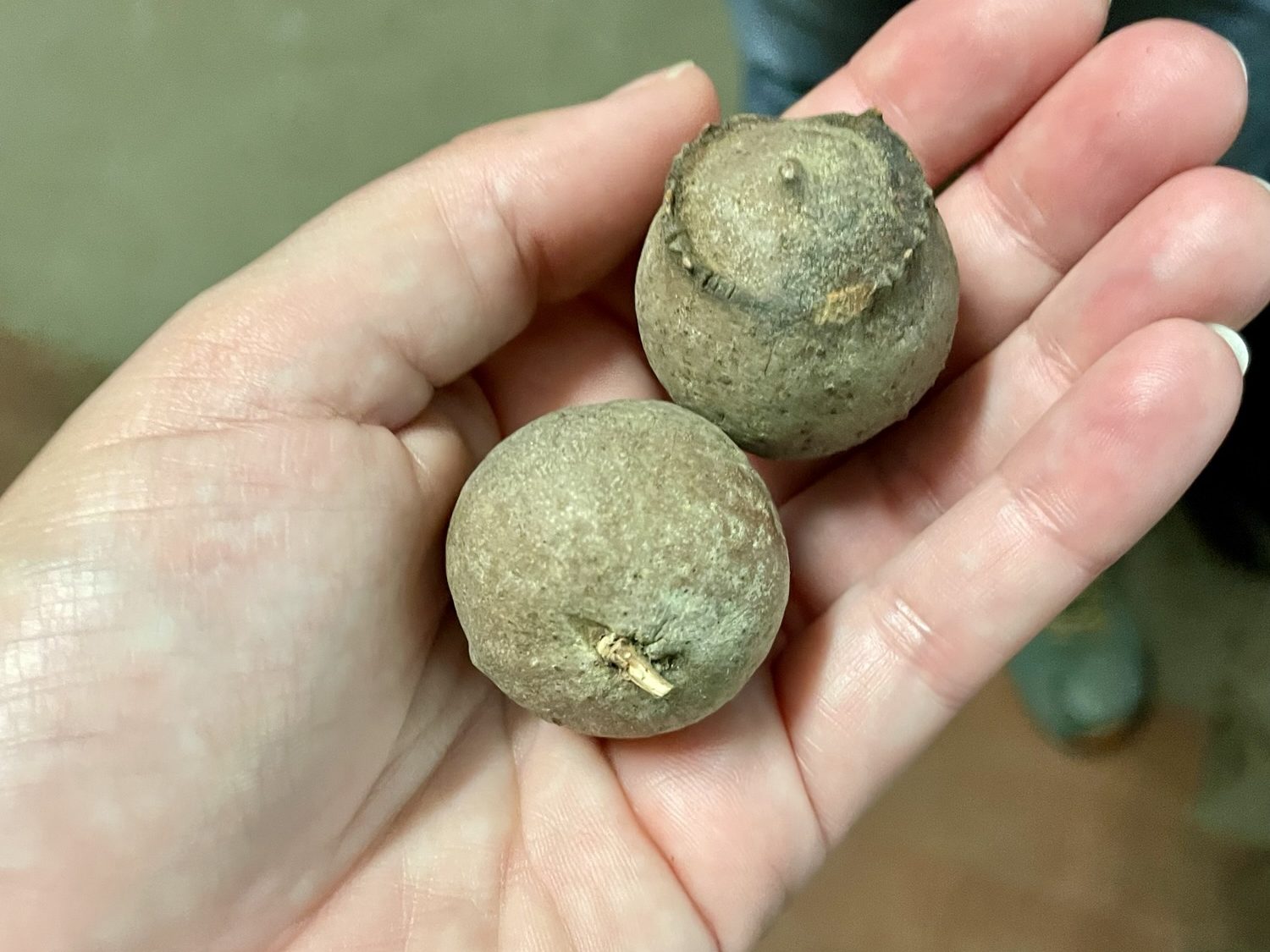
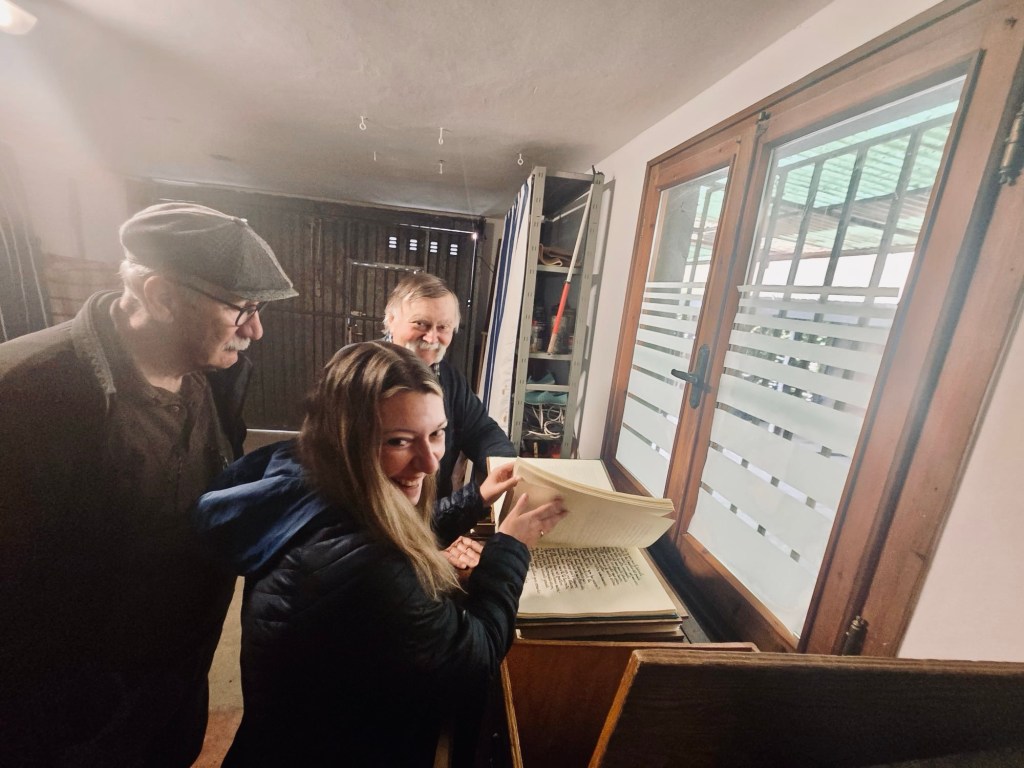
    Oliver then took us to meet Paulo, another extraordinary man who makes his own ink out of oak parasites, which are rich in tannins, and uses it to write out, by hand, stunning tracts of the Divine Comedy.

    This ancient way of making ink requires daily mixing, boiling and the addition of iron and copper to make black from red and green. Gum is added from apricots and peaches to create a substance that is tacky, doesn’t run and sticks to the page.

    His work was flawless.

    The ink smelt like balsamic vinager and he kept it in a sea shell which he used for his ink pot. He was, he explained, a man of the sea. Mountain scribes use stones with holes in as their ink pots. 

    He had started on his work with Paradiso since he had been sick at the time and wanted some lightness – Dante’s vivid depiction of Hell was too close to home, he explained. But now he was recovered and halfway through Inferno. It was the second time he had transcribed the Divine Comedy since he was unsatisfied with his first attempt which was rendered in a slightly different, gothic font. He had had to change the font he used because, with age, his hand was not as dexterous.

    It took him five to six months to complete a canticle. 

    On some of the pages you could see the light outline of the lead he had used to draw the lines to guide his careful script. And here and there, he had embellished letters in gold leaf.

    Alongside the Divine Comedy he had transcribed the two volumes of Dante’s political tract, Convivio, and the Bible.

    After removing the car from his garage so that we could all fit in, he showed us his equipment of an eyeglass, goose feather quill, and a hare’s leg that had been taxidermized and stuffed with cotton. The softness of the hare’s fur gave a particular shine to the embossed parts of the manuscript, he revealed. Each text was written on paper made in the traditional way from papyrus. 

    The name for someone who handwrites manuscripts is an amanuense.

    When we had arrived, Paulo and his wife, Lucia, had been hand making passatelli. Of course they were, they said, it was Easter. They would eat it with prawns and courgettes in a soup, or brodo. 

    On the walls were family pictures, some of which had come loose from the frame, and a white shaggy dog called Pipo bounded across the room in search of affection. An easter display contained eggs and plastic decorations of rabbits and chicks. From the study two budgerigars were tweeting. 

    Paulo appeared incredibly humble but also proud of his work. 

    ‘Many normal people do things that are seen by others are titanic,’ explained Oliver. 

    Then suddenly his wife appeared from the doorway of the garage.

    ‘The Pope is dead,’ she announced. 

    ‘He met J.D. Vance yesterday,’ said Kelsey, ‘shit I hope he didn’t contract the evil eye.’

    I was struck how quickly the conversation moved on back to the books. Paulo was a religious man and the Pope was important, but he was here to show us his own devotional work.

    I asked him what his favourite part of the Comedy was,

    ‘For me,’ he replied, ‘Beatrice is everything.’

    He explained that for him calligraphy was a form of meditation that empties his mind. 

    He read us the last lines of Paradiso and then offered to write it out for Kelsey and I. Yes please, we said. He would entrust it to Oliver to pass forward. 

    Paulo tucked up the pages he was currently working on in a leather cover as if he were putting to bed a baby. 

    He used to go into schools to explain his work to the next generation but he fears that the art is being lost. He was teaching a 16 year old called Giovanni and a student at the university had done a thesis on his work.

    I thought of my great aunt mary who had taught me how to handmake pillow lace. I’d have to pull out my cushion and bobbins when I got home and see what I could remember. 

    As we left, we asked if there was anything we could do for Paulo and he simply said ‘remember me.’ This touched me for its similarity to the pleas of the souls in Dante’s afterlife who ask him to remember them when he returns to the earthly realm. 

  • A Secular Pigrim: From Portico di Romagna to Dovadola 

    People keep addressing me as a pilgrim which feels strangely comfortable, but my path is pantheistic. 

    This image has an empty alt attribute; its file name is img_7011.jpg

    At the start of canto 2 of Inferno, Virgil tells Dante that it is Beatrice who has sent him to guide him on his journey. Dante is reassured. He responds by describing how,

    ‘As little flowers, which the chill of night
    has bent and huddled, when the white sun strikes
    grow straight and open fully on their stems,

    so did I, too, with my exhausted force’

    Like Dante, I set off this morning standing tall but with some weariness in my body. I had a 33-kilometre day ahead of me and my feet were still painful from being waterlogged for the last two days. My boots hadn’t dried out in the night as I’d hoped they might, and so to put them on was to submerge my feet into a damp abyss. 

    I squelched my way out into the sun to set off at 9am. The golden orb had returned, at least momentarily. 

    I couldn’t help but stop for a coffee in the café I had visited yesterday to salute Lisl. A man in an African shirt was sat on a tall stall reading the paper. It turned out he was from Burkino Faso and he appeared delighted when I spoke to him in French. Once again that thought crept into my mind, ‘I could live here.’ 

    Lisl put added a powder to my coffee,

    ‘It’s ginseng,’ she explained, ‘it will make you more powerful.’

    This image has an empty alt attribute; its file name is img_6962.jpg

    After getting lost and losing phone signal the day before yesterday, I made sure to text my mum and let her know where I was heading and my estimated arrival time. Nadia had sent me another lovely message saying that my blog was helping her to see and appreciate Dante through a new sociological lens.

    ‘It’s so much more interesting that the way we’re taught at school,’ she said. ‘You’re now like my academic Virgil!’

    I wondered whether the fact sociology is less respected in Italy, as Alim had opined last night, was why there were so many Italian sociologists in the UK. The migration research centre where I work, IRiS, at the University of Birmingham, counts three.

    It was 9.30am by the time I left the bar. A band of us had had another long discussion about the prospect of rain. In these parts, people seem to enjoy talking about rain as much as in England.

    This image has an empty alt attribute; its file name is img_6964.jpg

    On this walk, I’m finding that it’s a constant challenge to manage my time between walking, writing and making memories with new people. But I’m determined to write every day. The writing feels as important as the walking.

    As the critic Osip Mandelstam has observed, the rhythm of Dante’s prose – in the form he invented of terza rime – third line rhymes – reminds us of the footsteps of a walk. He writes,

    ‘Inferno, and even more so Purgatory, celebrate the human journey, the measure and rhythm of our steps, the foot and its form…Dante’s is a prosaic modality. He pictures the coming and goings of life drawing on multiform and captivating expressions. In Dante, philosophy and poetry are always on the move, always on their feet.’

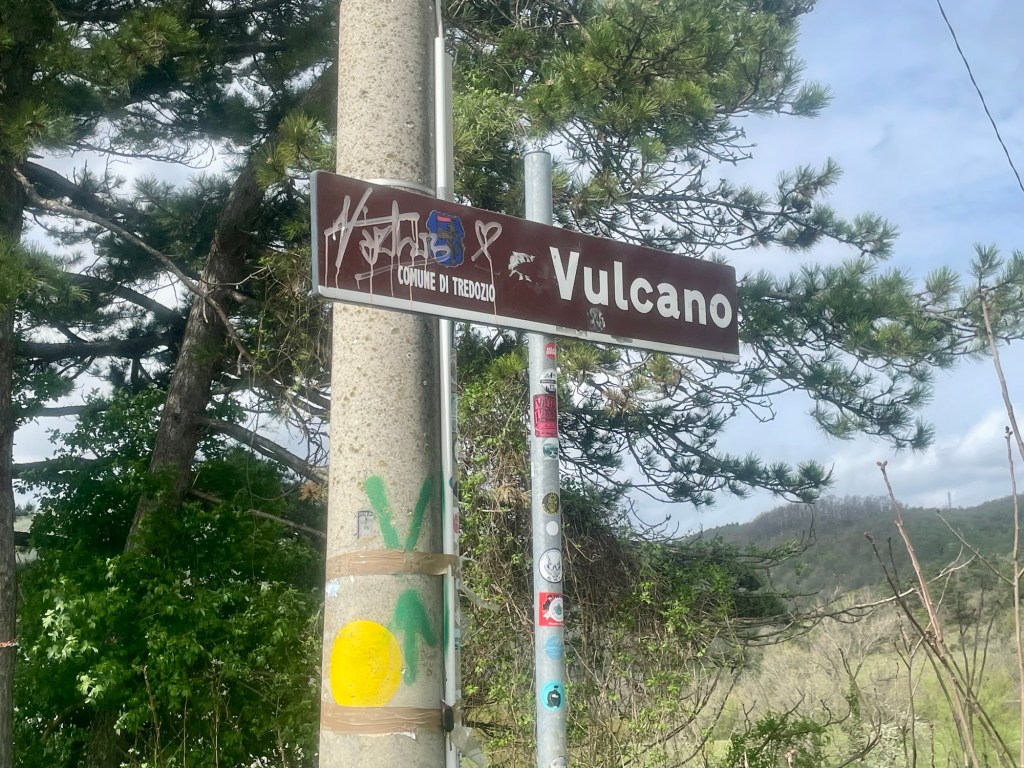
    I followed to Via dei caduti – the way of the fallen – up for about 5 kilometres before I stopped to see what is known as the world’s smallest volcano which has been active since before 1500. In reality, the perennial flame is due to the emanation of gaseous hydrocarbons which, in contact with oxygen, remain perpetually on. The flames that emerge from the subsoil, in the middle of an uncultivated field, create a particular sight that reminded me of Ulysses speaking to Dante from within the tongue of far – could this have inspired him?

    This image has an empty alt attribute; its file name is img_6997.jpg

    I stayed a while to look at the body of a dead mole. Its hands were leathery with large talons stemming from them. Then I set back off.

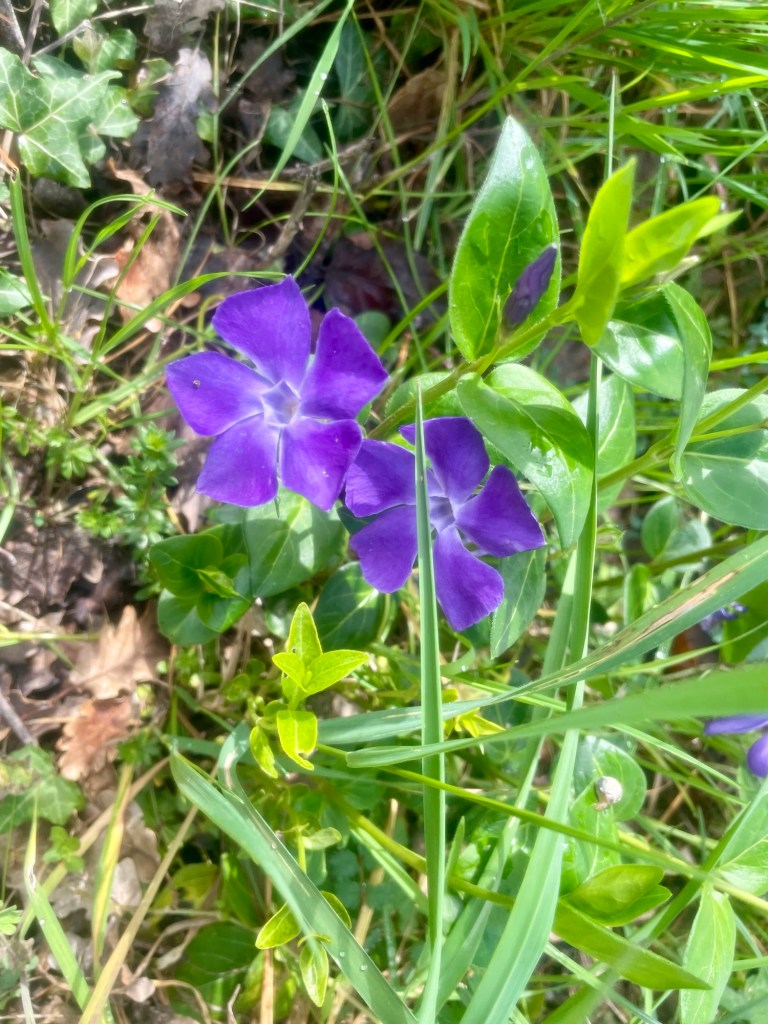
    Pink flowers had climbed through the centre of an abandoned traffic cone in the hedgerow and buttercups, cow parsley, and dandelions lined the verges of the road. I was glad to have a single path to follow so I couldn’t get lost. Here to my right were hexagonal, indigo flowers, and there, a mauve plant that looked a bit like lavender but without the smell.

    This image has an empty alt attribute; its file name is img_6994.jpg

    Tractors were loading hay bales into a lorry and I passed more piles of wood and a fence weaved with sticks the way I’ve seen in Shining Cliff Woods near my house back home.

    The sweat was dripping down my forehead, but I resisted the temptation to put my cap on for fear I would fate the sun to disappear. 

    I passed by rosehip, the fruit of which we’d used at my primary school as a form of itching powder, and modesty, the seeds of which my brother and I used to shake out and use as money in pretend games of a summer. 

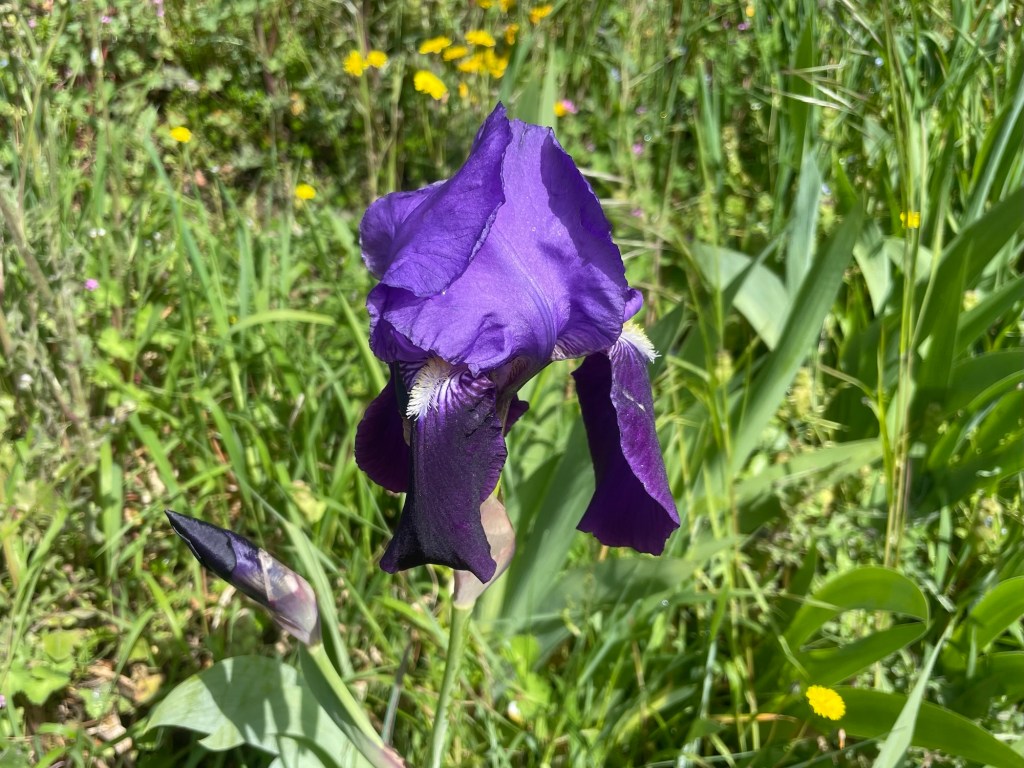
    A black goat bleated from behind an electric fence and out of the margins there emerged a wild iris, a vivid purple in the sun. A happy bee buzzed past and a couple of butterflies tentatively made their way back out into the sunlight after the rain

    It was a show and steady ascent with panoramic views of the town. Electric cables were strung across the landscape like fairy lights on a Christmas tree.

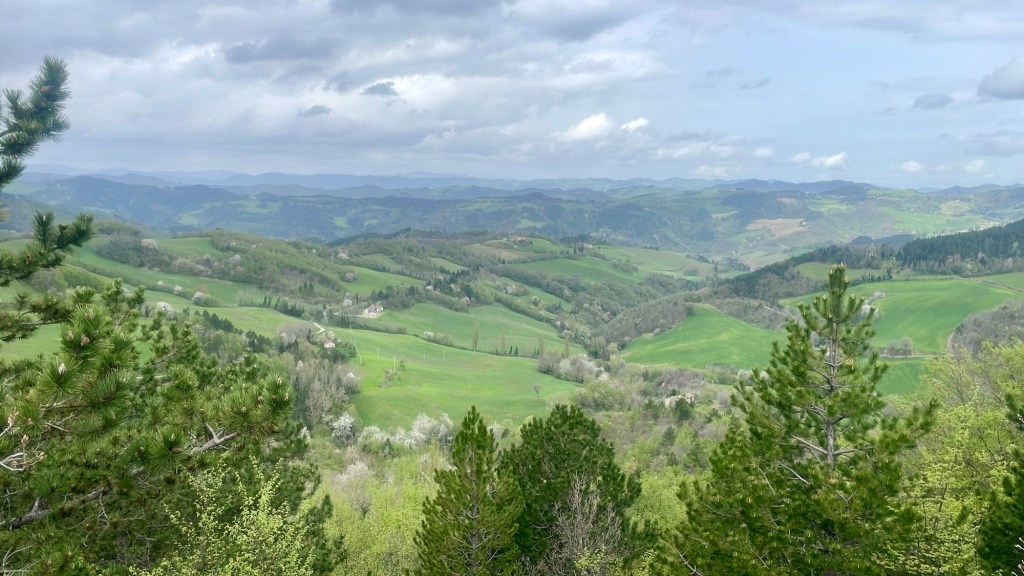
    A single stone house with a terra-cotta roof was nuzzled into the bosom of the rolling hills. 

    This image has an empty alt attribute; its file name is img_6971.jpg

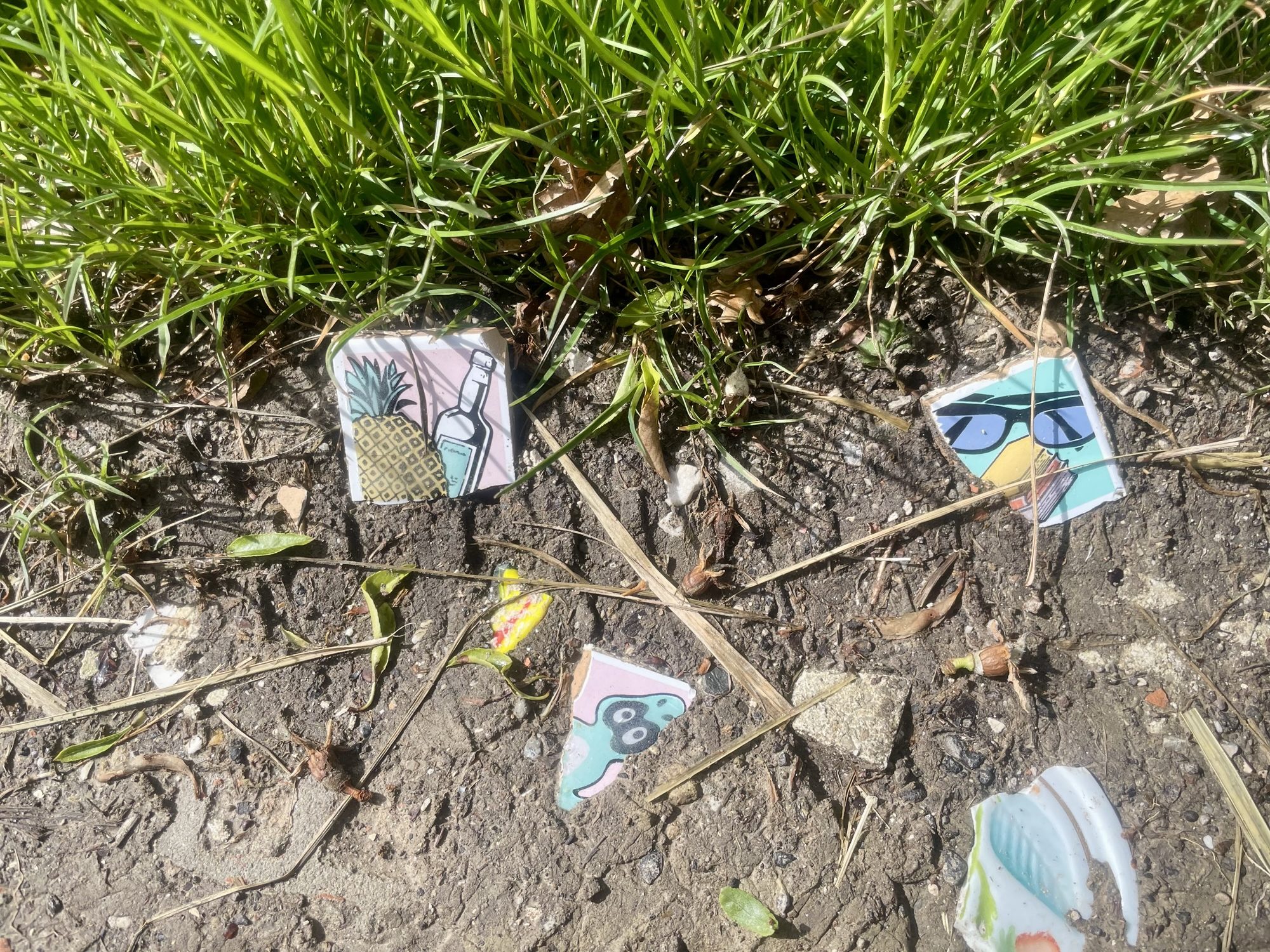
    The path was covered in more broken tiles that would have made for spectacular mosaic pieces had I only had the space in my bag: there was a flower, some sunglasses, a pineapple, pink, purple, yellow and green – perhaps we could adopt this method to fill the ubiquitous potholes in England. The Department for Transport had recently said that the local authorities’ road maintenance pot would be boosted by £500m from mid-April, but councils must publish annual reports detailing progress on potholes or lose a quarter of that extra funding.

    This image has an empty alt attribute; its file name is img_6983-edited.jpg

    I heard the familiar rustle of lizards and a frog jumped into the stream to the right of the road. But would the weather hold?

    I was making slow progress at about 4 kilometres an hour, unlike the cyclists who sped past me up the hill in their fifty shades of lycra. At one point the road was interrupted by a landslide, the asphalt shredded into black puzzle pieces. 

    My bag was definitely heavier than the recommended weight of 10 pounds and I was reminded of the proud penitents who carry heavy rocks on their backs in Purgatorio. The weight forces them to walk slowly, their bodies bent low to the ground. Dante compares the suffering of the hunched souls to the human figures (with knees to their chest and pained expressions) used in architecture to support a ceiling or roof. 

    ‘Just as one sees at times—as corbel for
    support of ceiling or of roof—a figure
    with knees drawn up into its chest (and this

    oppressiveness, unreal, gives rise to real
    distress in him who watches it): such was
    the state of those I saw when I looked hard.

    They were indeed bent down—some less, some more—
    according to the weights their backs now bore;
    and even he whose aspect showed most patience,

    in tears, appeared to say: “I can no more.

    Hairpin turn after hairpin turn, I proceeded up with my stash of coffee and a cachet of teabags. I was carrying two litres of water, Alina’s socks, my blue eyeliner, a Pokémon card and one tile fragment – the one with the pineapple – that I just hadn’t been able to resist picking up.

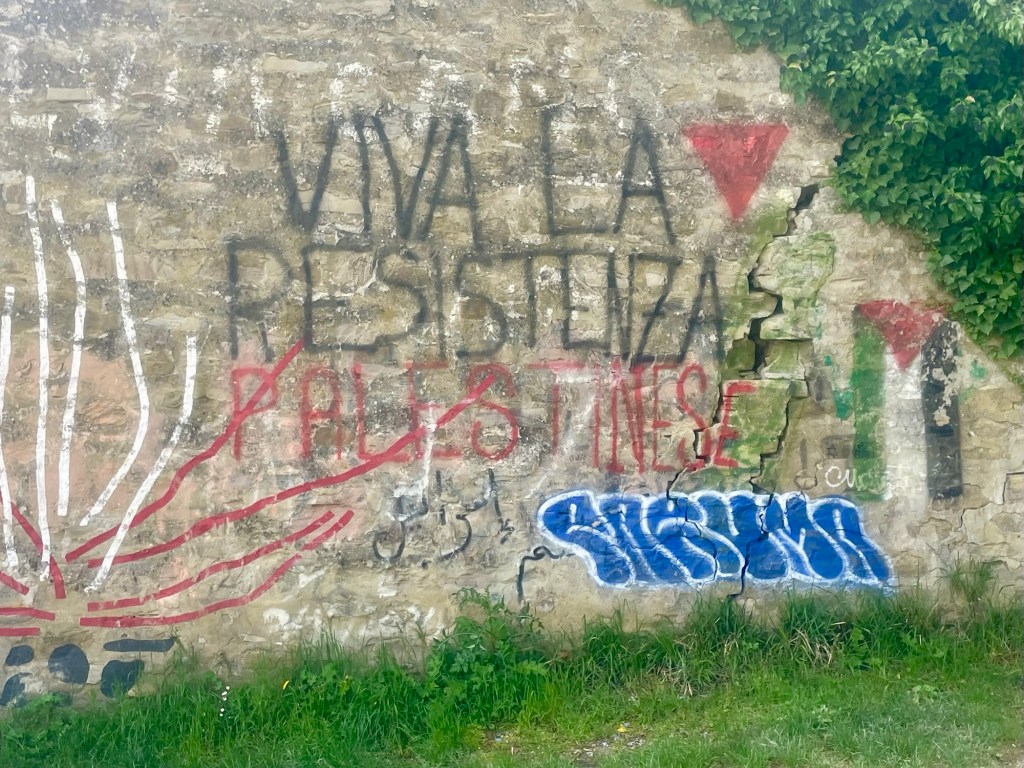
    On a wall there was graffitied ‘Viva la resistenza Palestinese‘ (long live the Palestine resistance).

    This image has an empty alt attribute; its file name is img_6996.jpg

    Unlike previous days where I’d been totally alone, today I passed a few individuals. I oscillated between ‘ciao,’ ‘salve’ and ‘buongiorno’ and people returned a friendly reply. 

    The village of Monte Busca announced itself by the sight of wheat and a display of orange flowers that did not appear wild. Here, potholes in the road had been filled with tarmac. A man sat outside a wood workshop eating a yoghurt next to a stack of abandoned crates. There were sweeping views on either side of the path.

    This image has an empty alt attribute; its file name is 3087a671-affa-4517-917a-7b8dbc498b38-1.jpg

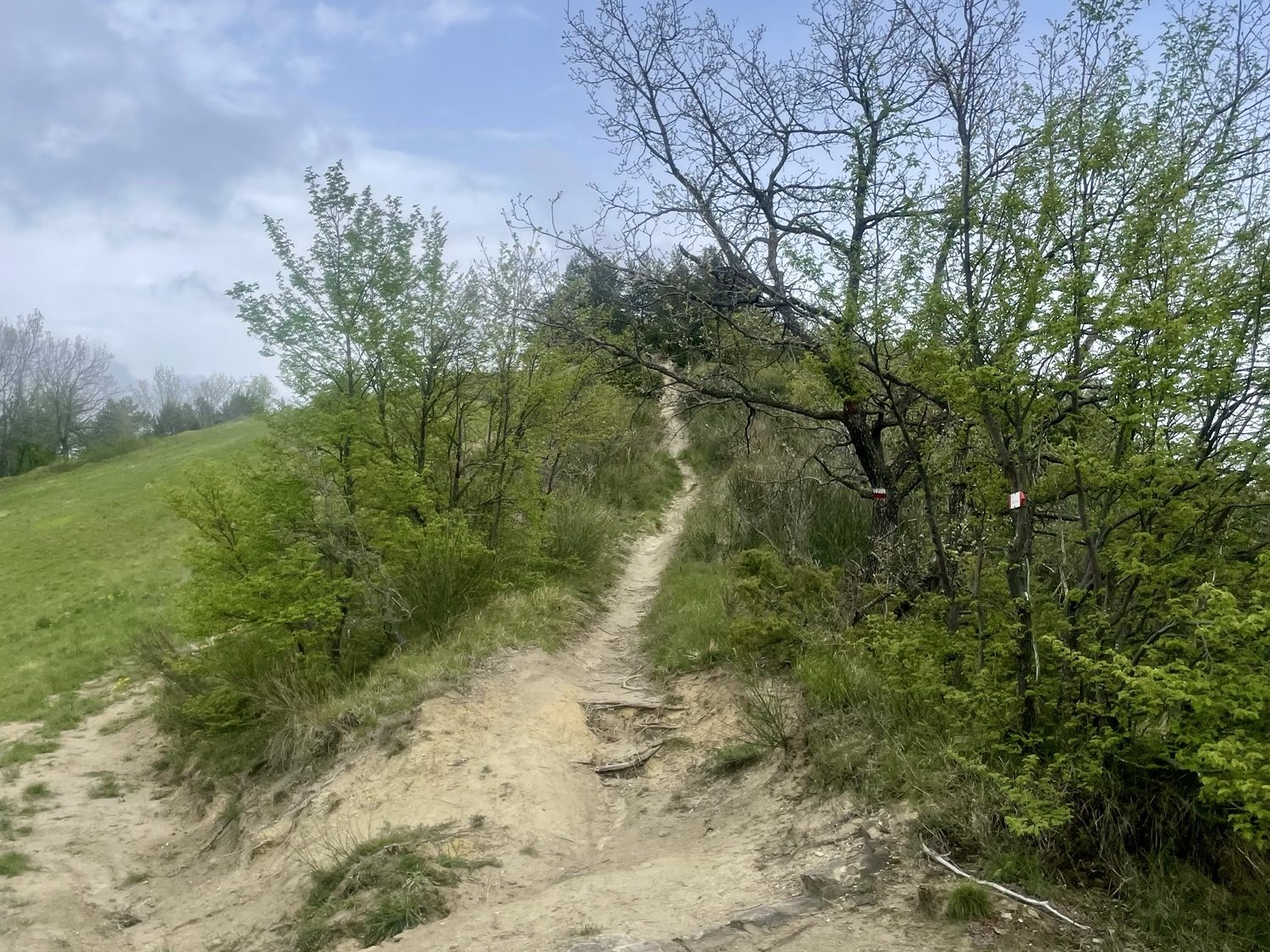
    Much thought has gone into this route so that, wherever possible, you are not walking on the road but it felt good to have my feet on solid ground. 

    The expansive green lawns that cascaded down the slopes reminded me of the quads of Oxford colleges, although these always came with a sign, ‘do not step on the grass.’ Here I could tread as I pleased. I thought back to the Wadham summer ball. At 6 in the morning a group of us had staggered out onto the quad in a rare opportunity to laze there for a while, hung over and cuddling one another for the fun of it all.

    The cloud started to hang heavy and I could smell the oncoming rain.

    By midday, I’d done 10 kilmetres. Since it was a long day, I was rationing my water intake. Thirsty, I bit into an apple and ate a cheese sandwich. As Dante writes also in canto 10 of Purgatorio, 

    ‘I was exhausted; with the two of us
    uncertain of our way, we halted on
    a plateau lonelier than desert paths.’

    Except now I was alone, walking with just the familiar sound of the cuckoo. It sounded like a child’s first notes on the recorder.

    My guidebook was still a little damp, though it had spent all night on the radiator.

    I snapped a nail heaving my bag back onto my shoulders. I hadn’t brought a nailfile and, though I’d gifted one to my twelve-year-old niece for her birthday, I didn’t have a Swiss army knife of my own.

    With my bag I was now also carrying a spider as a stowaway. 

    I disturbed a dandelion, sending the seeds into a little cloud.

    This image has an empty alt attribute; its file name is img_7047-edited.jpg

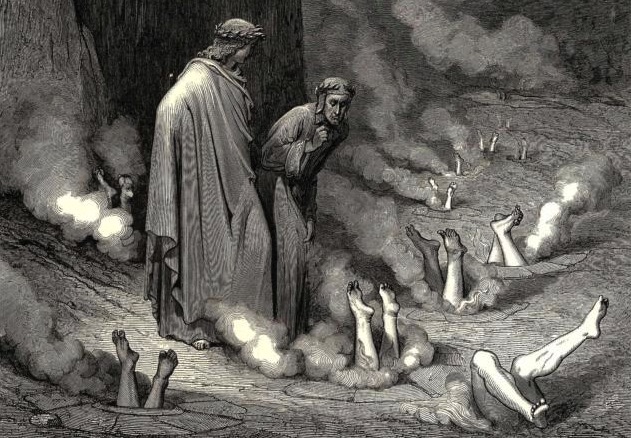
    The path went from asphalt to gravel to concrete to woodland. It was hard to walk past an agriturismo without stopping but I had to keep moving forwards. I stopped briefly to change my sodden socks for dry ones, a piece of advice my friend Craig from the local pub, Angel’s, had given me before I set off. My feet felt like they were on fire, bringing to mind the popes who are buried in holes by Dante with their feet in flames. 

    ‘Out from the mouth of each hole there emerged
    a sinner’s feet and so much of his legs
    up to the thigh; the rest remained within.

    Both soles of every sinner were on fire;
    their joints were writhing with such violence,
    they would have severed withes and ropes of grass.

    As flame on oily things will only stir
    along the outer surface, so there, too,
    that fire made its way from heels to toes.’

    This image has an empty alt attribute; its file name is the-inferno-canto-19.jpghalfhd.jpg

    Inferno 19 is the first full-fledged indictment of the Church in the Divine Comedy, picking up on some earlier indications that Dante associates the clerical establishment with the sin of avarice. He, like me, was not a fan of organized religion, or at least as it existed in its contemporary form.

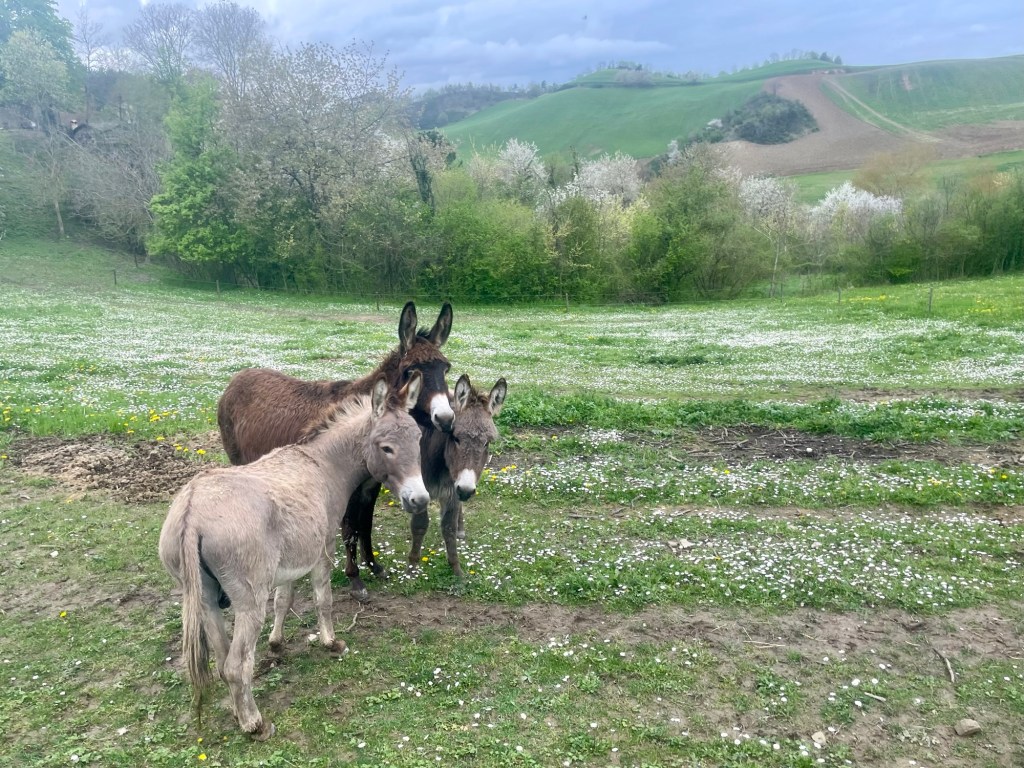
    I sat for a while and observed some baby donkeys. They had soft hair on their heads, fluffy like little chicks. I thought about the similarity of their hooves and my nail that had just snapped off and of how all things in nature are connected.

    The two calves hung close to their mother nuzzling her neck. One of them had a large penis that hung down. The other didn’t. One bit its mother’s mane playfully, and the mother nibbled the back knee of the lighter of the two which was coloured like ash.

    Mud stuck to their fur which was wavy, and their ears looked soft to the touch. They were pointing forward. Did that mean that they were happy or scared?

    This image has an empty alt attribute; its file name is img_7028.jpg

    I was reminded of a quote from Alice Walker’s novel, The Colour Purple, 

    ‘Whenever you trying to pray, and man plop himself on the other end of it, tell him to git lost, say Shug. Conjure up the flowers, wind, water, a big rock…The more I wonder, the more I love.’

    Tiny flies buzzed around puddles on the muddy woodland path which I tried to avoid in order to keep my feet some semblance of dry.

    Suddenly it became humid and I felt a twinge in my right buttock. I was tired from the uneven path and would be happy to get back on the road. Prickled by pines on the descent, I put one foot in front of the other on the narrow path like a tightrope walker. I got my foot caught in a bramble and nearly went tumbling

    I ate some almond cake and chocolate and worried that I hadn’t factored enough rest days to the return.

    At 2 o’clock the first rain came. I was counting the kilometers religiously on my phone, grateful for my solar powered phone charger. A beetle climbed onto my shoe. It was iridescent, despite the lack of sun.

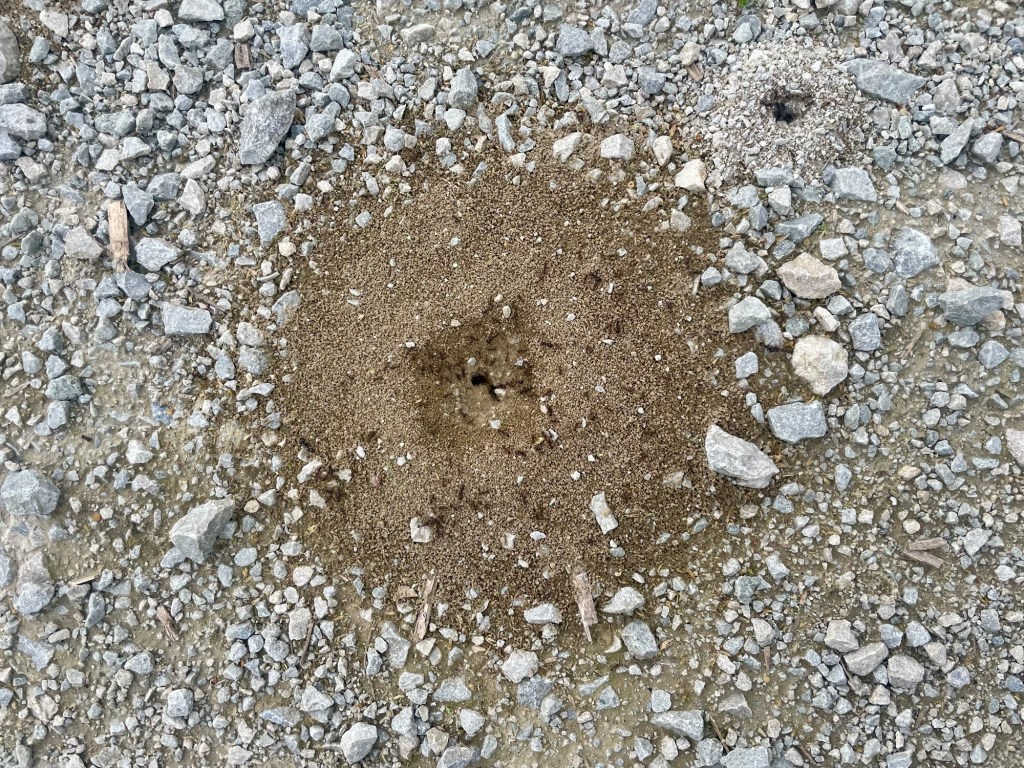
    Curious ants had burrowed minuscule holes in the ground and a yellow and black butterfly soared past me, the first I’ve seen of its kind. White and brown ones abound. 

    This image has an empty alt attribute; its file name is img_7317.jpg

    To the right, solar panels spilled over the landscape reflecting the light like strips of unraveled cassette tape. 

    I saw cows in a field which always reminded me of my dad and the game Spot It that we would play in the car as children. You had a series of cards with things to see on the road: a tractor, a yellow car, a phone box etc. Once my dad had taken a 2 kilometre detour via a fire station so that he could trump us with his fire engine card. 

    At 4 o’clock, the mist started to descend, and the top of the hills were obscured

    Haybales had been tucked up in tarpaulin and an abandoned piece of farming equipment was slowly rusting outside an old farmhouse.

    The cloud hung in heavy curtains, a blind folding down over the undulating hills.

    An bathtub containing water was propped up on the marsh by two pieces of wood. Daisies stretched out on their storks which were the length of a ruler.  

    This image has an empty alt attribute; its file name is img_7073.jpg

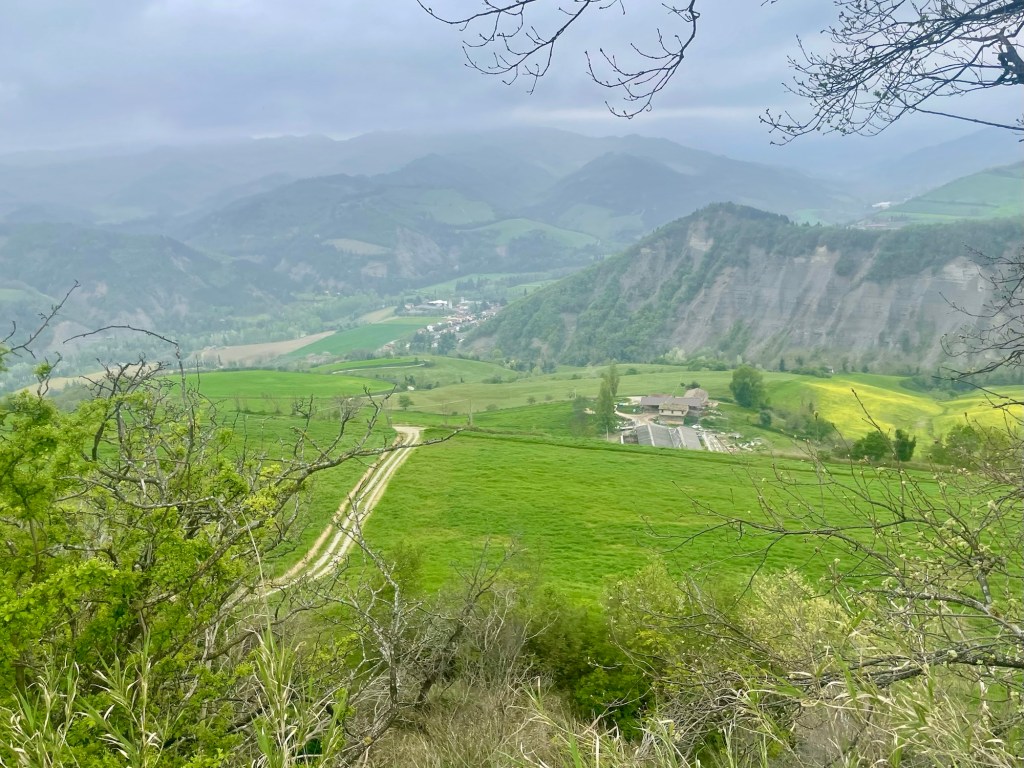
    I turned the corner and there it was, the village of Dovadola, with its winding path that would take me to shelter. The stark cliff faces were a mark of the ancient river that had forged the valley. Once again, the rocks were caged in to avoid landslides. As my earth sciences major mother had taught me, geology is the language of the land. 

    I heard the familiar sound of the church bell strike 5pm and felt a pang of hunger. I’d always liked the sound of church bells just like in Morocco and Syria I had so enjoyed the call to prayer. 

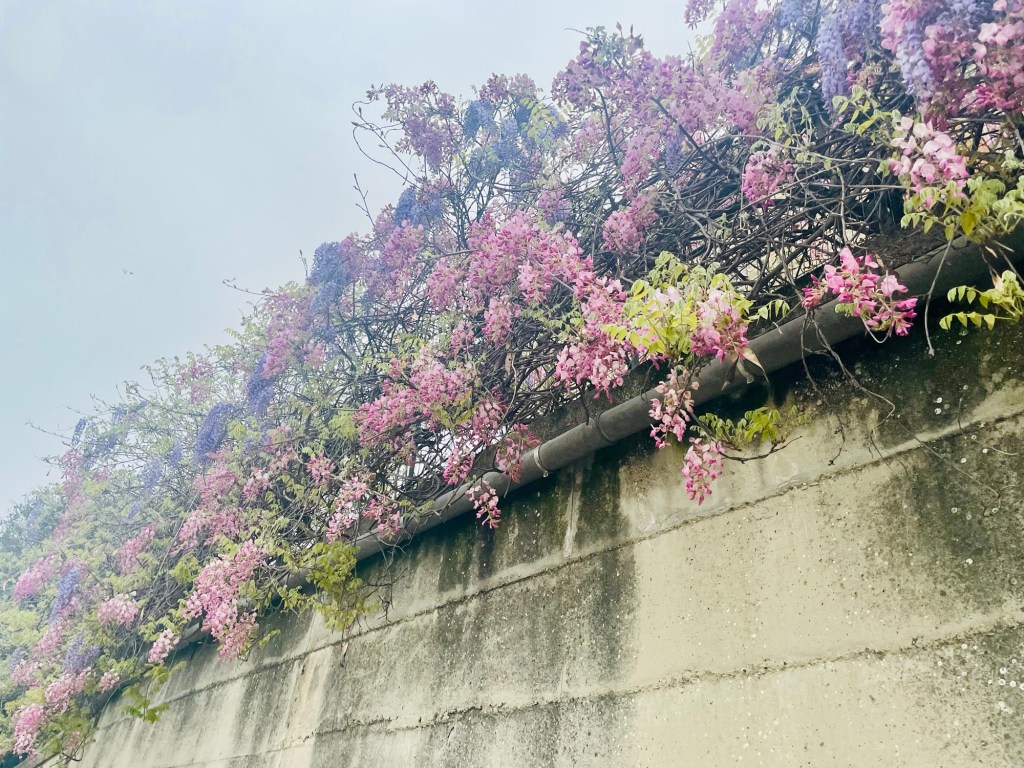
    Wisteria was hanging down from fences like bunches of grapes. The scent was something akin to the tiny round violet sweets that I would eat as a child. A three-wheel vehicle passed me. It was an emerald green. 

    This image has an empty alt attribute; its file name is img_7119.jpg

    I passed the FC Dovalda football ground and an older church in town with a medieval tower. Someone stopped to asked me if I was doing the cammino of Assisi but I explained that I was a secular pilgrim doing the Dante cammino. I was a pantheist and following nature as my guide.

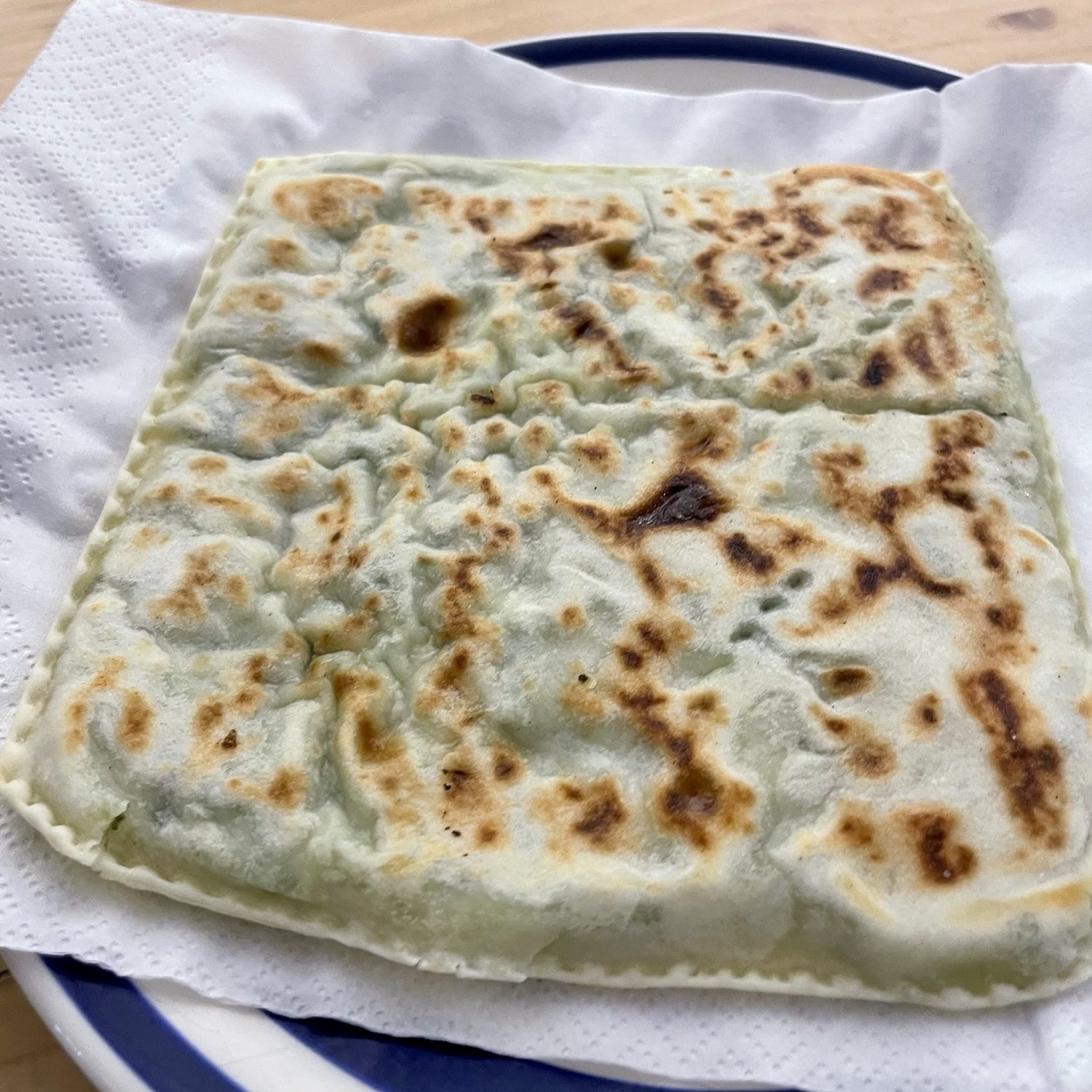
    I went into the to bar the Antica Osteria and had a delicious spinach and ricotta crecione. This regional plate is a folded piadina in the shape of a half-moon. It looks like one big piece of ravioli, or rather, a raviolo

    This image has an empty alt attribute; its file name is img_7084-edited.jpg

    I was self-conscious that I smelt but the atmosphere in the joint was intoxicating. An older lady sat in the corner peeling plastic labels off a new set of plates. A little girl called Lucia was dressed as Snow White and sat terrorizing a black cat. 

    ‘It’s from the Befana!’ she shrieked, alluding to the old witch who brings sweets on the epiphany according to Italian folklore.

    Another group of kids hung about in a gaggle around the ice cream freezer. Outside the adults were smoking. One of them had a beautiful wolf-like dog called Deni. After spending the day walking alone it was nice to be in company and I stayed and talked awhile.

    I brought some cheese, tomatoes, dates, a big apple, pistachio nuts and some much-needed hair conditioner from a local store and continued with the next 50 minutes down the busy road to my agriturismo. 

    I passed the sign to Loch Ness fishing zone and a petrol station. In Italy they put in the petrol for you, so you don’t even have to exit your car for a fill up. 

    This image has an empty alt attribute; its file name is img_6974.jpg

    I already missed being up in the hills with the wildflowers. I thought back again of Oxford and how I’d religiously learnt all their names in translation. We had had to learn an insane amount of very specific vocabulary in French and Italian. I still have a cushion my friend Caroline sewed for me with the opening phrase from our French translation exam,

    ‘You are the most wonderful hippogriff.’ 

    Now I’ve been here a week, I’ve started thinking in Italian.

    The final leg involved another steep ascent along a winding road. I tried to channel the spirt of Virgil as my guide. As Dante writes when he finally reaches the slopes of Mount Purgatory, leaving Hell behind: 

    ‘The climb had sapped my last strength when I cried:
    “Sweet Father, turn to me: unless you pause
    I shall be left here on the mountainside!”

    He pointed to a ledge a little ahead
    that wound around the whole face of the slope.
    “Pull yourself that much higher, my son,” he said.

    His words so spurred me that I forced myself
    to push on after him on hands and knees
    until at last my feet were on that shelf.’

    This image has an empty alt attribute; its file name is img_7131.jpg

    Thus I arrived in the Airbnb, Naturaliterre BnB – Microfattoria, a sweaty mess.

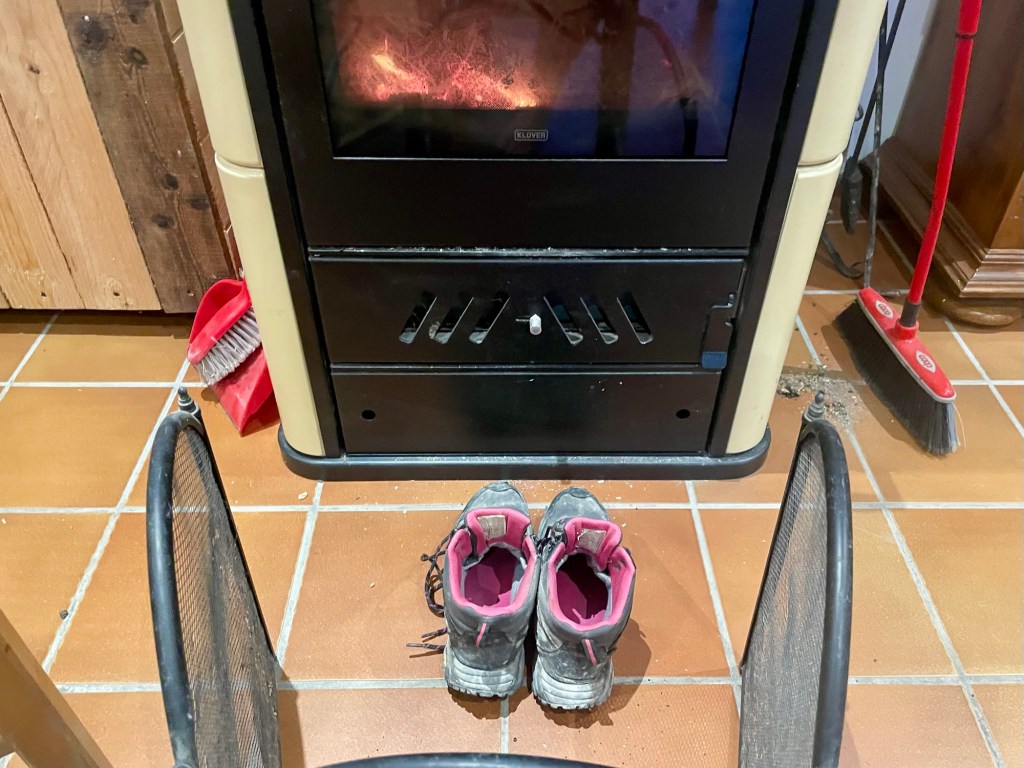
    I was greeted by Benjamin, a kind French host who ordered me a pizza and put my boots by the fire. I checked my email to see that I had received a beautiful note from Anna in Montemignaio. There is so much love on this cammino. I feel held by the path itself. 

    Another email to my work account reminded me to finish a funding application this week and for once I felt inspired and up to it. I’d been holding myself back because of confidence, but if I could do this hike, I could do anything.

  • Dante’s Women: From Premilcuore to Portico di Romagna

    Today’s short hike promised a rainbow but real colour came in the narrow streets of the medieval town where Beatrice’s family lived.

    ‘Gloom of Hell or of a night deprived 

    of all the stars, beneath a barren sky

    Which everywhere was overcast with clouds’

    With these words Dante begins the canto of Purgatorio 16. I could relate. All night, it hadn’t stopped raining and, as I opened the curtains, the grey clouds still hung in webs.

    My top and bottoms had dried on the radiator, but my anorak was still slightly wet. My boots were soaked through.

    Nadia had given me some sweet treats for breakfast the night before since, though it was Tuesday, today was their day off. They coordinate in the village so that no one closes on the same day. 

    There was no big rush to get going today since the hike to Portico di Romagna is one of the shortest of the cammino at around 10 kilometres. But still, I was a little wary after yesterday’s experience of getting lost.

    I caught up with work emails, performed my usual ritual of folding my hiking socks over my laces so that they would not become untied, and by 11am I had set off into the spitting rain. I stopped briefly at a panettiere – bread shop – and bought a slice of vegetable pizza to complement my sweet breakfast, breaking the hard and fast Italian rule of not eating on the move. 

    By the time I exited the town over the bridge, the rain had eased off a bit and sunlight was pushing through the clouds. In Canto 17 of Purgatorio, Dante makes a similar observation on the particular microclimate of the region, writing,

    ‘Remember, reader, if you’ve ever been
    caught in the mountains by a mist through which
    you only saw as moles see through their skin,

    how, when the thick, damp vapors once begin
    to thin, the sun’s sphere passes feebly through them,
    then your imagination will be quick’

    It was. I scanned 360° for a rainbow but was left disappointed.

    As I made the ascent, I thought of the line from the film Forrest Gump, ‘I’d never seen so many shades of green until I went to Vietnam [insert Premilcuore].

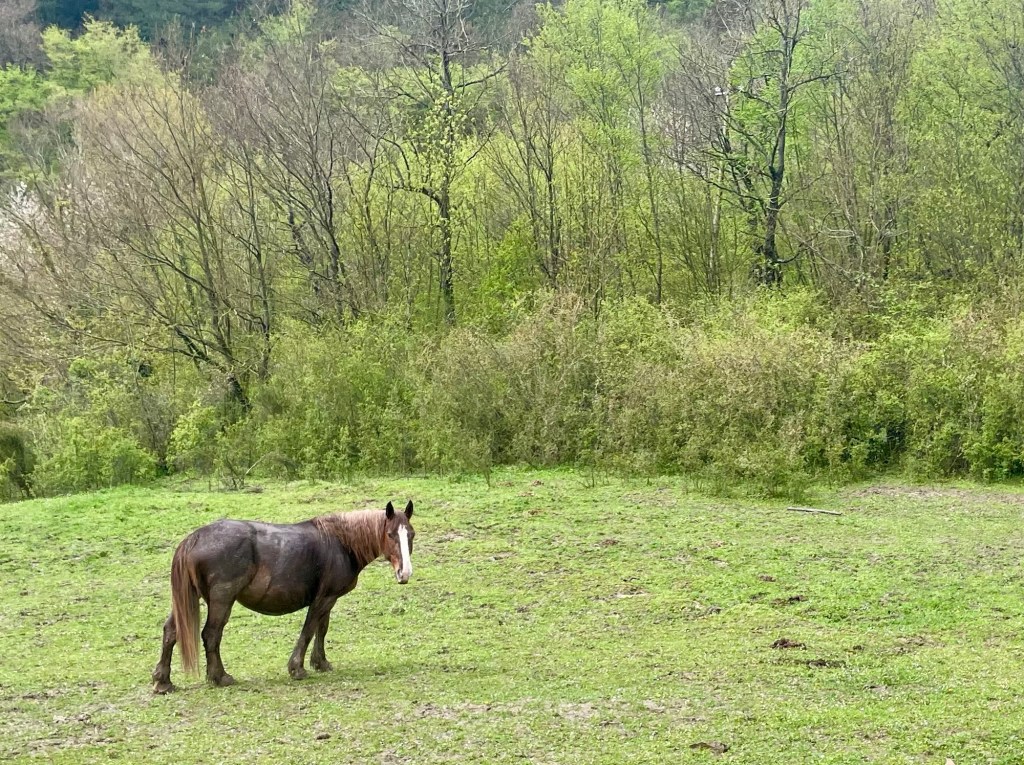
    To my left were horses with bells tied around their neck nodding in the rain, their mains slick to their necks.

    There was something in the rolling hills of the Lake District in my native England as I looked back down towards the town.

    A brown spider the size of my little fingernail crossed the path.

    The concrete way had foot and paw prints cast into it, reminding me of the concrete in my garden back home. I’d have to do something with it upon my return. I thought of my Great Aunt Lena who in her older age would still bend forward with a butter knife to tease the weeds out from the cracks. 

    The path transitioned to tarmac which was coated in petals that had been cast into the air like confetti at a wedding. Some of the blossom had caught on the needles of the pines, embellishing them like Christmas trees.

    It felt strange to be walking along the path strewn with the petals. I was reminded of my wedding to my former husband which had taken place in Port Meadow, Oxford. I had been an excellent bride, but a terrible wife, though I still have fond memories of the day which was themed around love art, and revolution. I had shown Alina some pictures two days before. She had complemented my mother’s sewing work on the dress I wore in the engagement shoot in Wadham College gardens.

    Here the path turned to mud with a little strip of green running down the middle, riddled with an abundance of rust-coloured pinecones. Encroaching at the sides were imposing, prickly trees. I thought of the aide-memoire I’d learnt to identify plants in the White Mountains – ‘spiky, spruce; friendly fern.’

    I suddenly realized that with the rain had come the absence of lizards, bees, and butterflies and I missed them.

    I was feeling tired, achy and nostalgic. 

    Dante, like me, had not suited married life, though for him it had been more of a familial negotiation rather than anything to do with love. When he was exiled, it is said his wife Emma Donati would cry in the streets where she was left behind with her children. Dante, on his travels, continued to pen poetry to his one true love, Beatrice Portinari. 

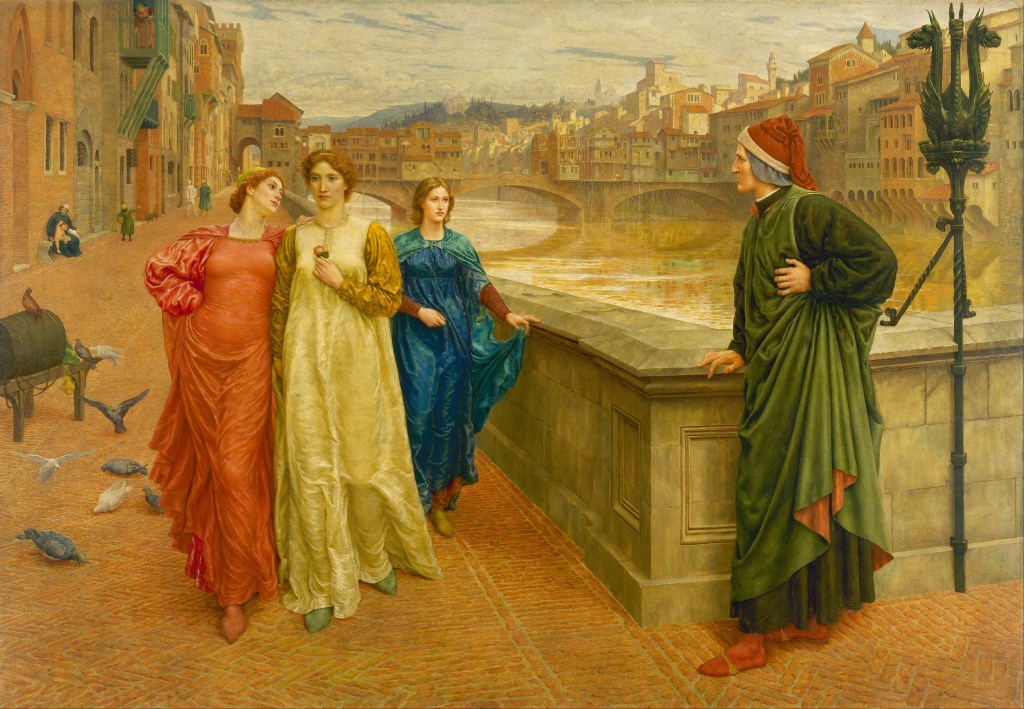
    An ancient legend goes that Dante met Beatrice in Portico di Romagna where her family owned an estate, though Dante himself writes that he first saw her as a girl and then when she was 19 in Florence on the Santa Trinità bridge. This image was rendered immortal by Henry Holiday in 1884.  

    Dante’s treatment of women in the Divine Comedy is proto feminist. Although they rarely speak, he was one of the first writers to document the lives of women in Medieval Italy at all and he depicts them in various roles: as victims of domestic violence, harlots and saviors. The fact that he was guided in Paradise by a woman was revolutionary and, though she is put on a pedestal, she is also ‘real’. She chastises Dante for his sins and baulks at him for not listening attentively to her philosophizing. 

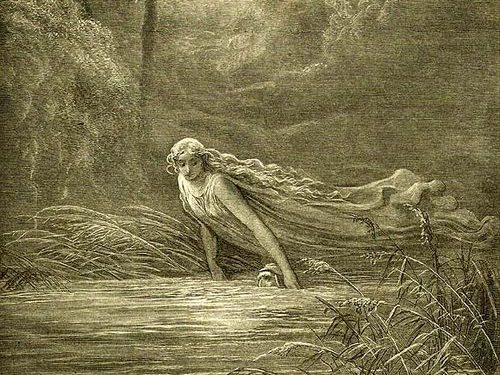
    Another woman, Mathilda, is given the task of baptizing him in the river before he can enter the Earthly Paradise at the top of Purgatorio. For the umpteenth time, Dante passes out, and when he comes to, Mathilda is reviving him in the river Lethe. Some people believe Dante may have had a condition like epilepsy or narcolepsy because of how many times he passes out, and how realistic his descriptions are of coming back to himself.

    Mathilda has been compared to a priestess, although the Roman Catholic Church forbids women from being ordained as priests. Dante confesses to having erotic feelings for her however she quickly assumes the role of teacher and sister-in-Christ to Dante when she scolds him and refers to him as frate, or ‘brother’. Mathilda, far from being a romantic interest for Dante, demonstrates the brotherly love found between the blessed souls of Paradise.

    This representation of the Beatrice and Mathilda is foreshadowed by Dante in Canto 27 where he has his character dream of Leah and Rachel, Mathilda and Beatrice’s biblical counterparts.

    The issue of women was in my mind today as the UK Supreme Court made a controversial and cruel ruling to deny rights to trans women by deciding that the legal definition of women in the Equalities Act only relates to biological sex. I messaged my trans friend Andie back home to see how she had received the news. 

    ‘I’m terrified,’ she replied. ‘I can’t change – I’ve come too far. But had I not come out in 2017, I wouldn’t come out in today’s climate. How fucking sad is that?’

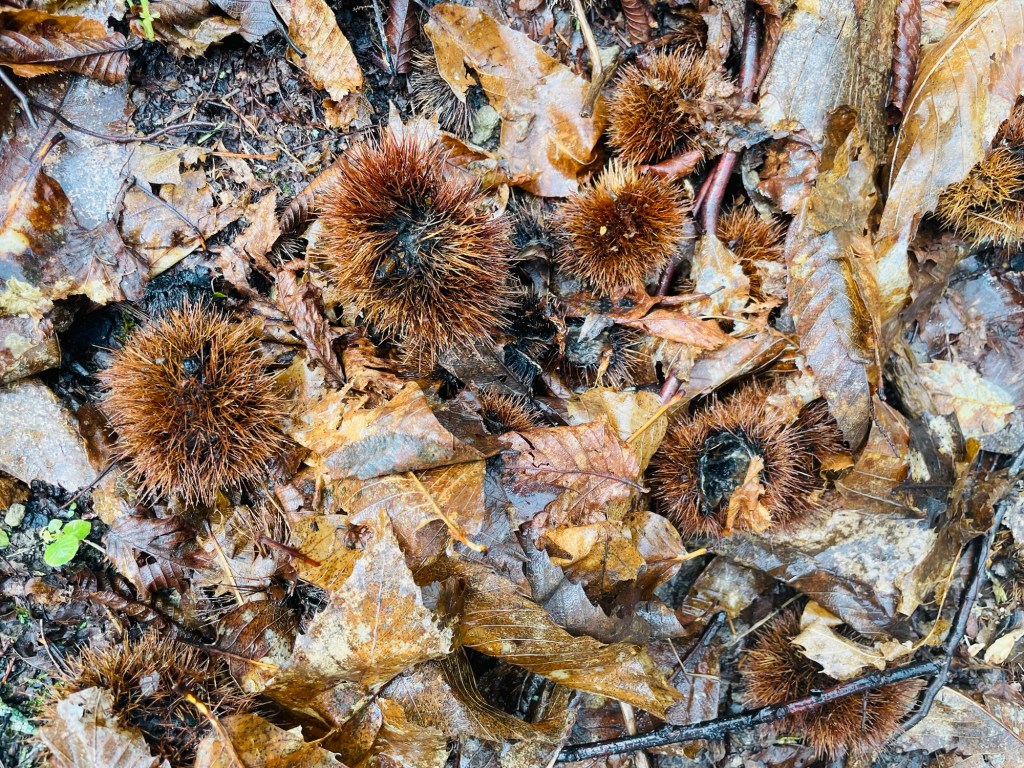
    To the right the slope was precipitous. A blister at the top of my middle toe pushed painfully against the inside of my wet shoe as I kicked conkers along the trail that had fallen from the horse chestnut trees. As kids, my brother and I had tried all sorts of tactics to try to strengthen them so that we might compete with them honorably in the playground: baking them, freezing them, soaking them in vinager. How did we play? Well, you would thread a string through with a needle and then compete to crack open the opposing party’s conker. It was good, honest fun, but fun that had been banned in my Middle School on health and safety grounds. 

    Their cases lay split open like sea urchins on the ground. 

    The air was fresh and my spirit lifted.

    Now that the path was easy to follow and I knew the day was short, it was fantastic to be outside alone in the forest. With absolutely no one around, I listened to some music on my phone which was tucked into my pocket – the Italian composer Einaudi’s album, Seven Days of Walking.

    Needles from the pine trees reminded me of another childhood game, pick-a-sticks, where you’d let a tray of thin sticks go from your hands and then try to remove them from the pile without disturbing the others. There was a version at Anna’s house Air B&B in Castel San Niccolò , but Alina and I had been too tired to play.

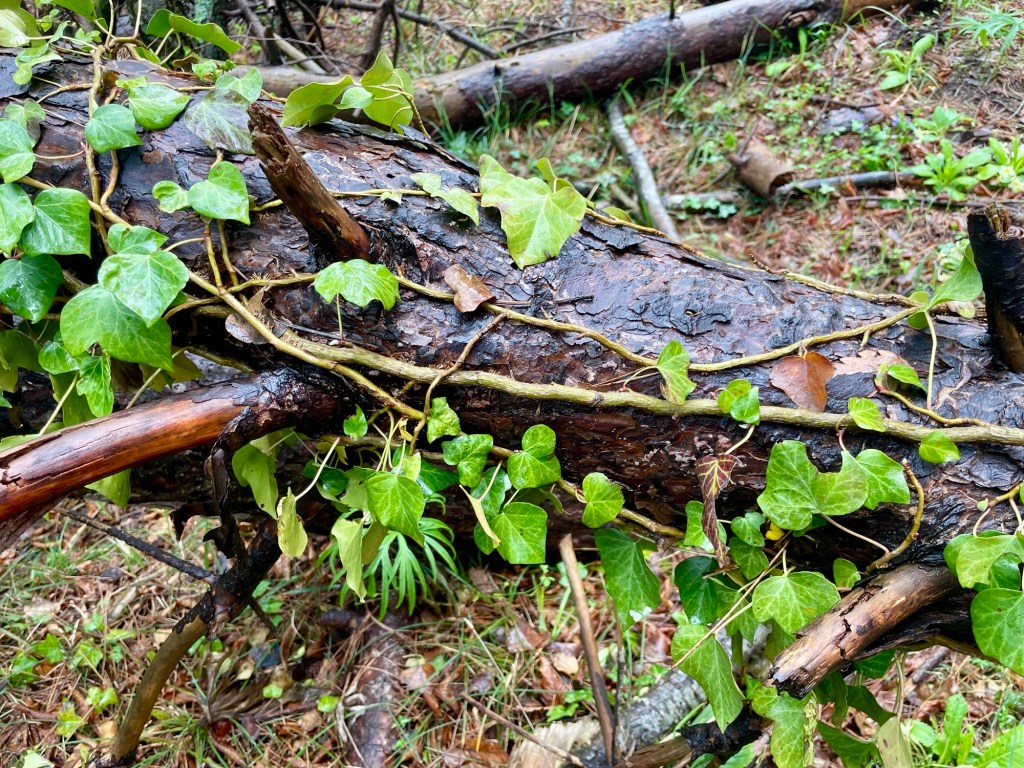
    A tree which had fallen down was consumed by ivy which threaded tightly around it like the serpents who take over the souls’ bodies in Dante’s circle of the thieves. 

    A cuckoo sounded like a hollow wooden wind instrument 

    I walked downstream tentatively over the slippery lime, disturbing several boulders. I was still cautious after yesterday’s fall, though I was relieved to see that my arm had not come out in a bruise. 

    As Dante writes of him and Virgil in canto 12 of Inferno,

    ‘And so we made our way across that heap
    of stones, which often moved beneath my feet
    because my weight was somewhat strange for them.’

    Unlike the other souls in Hell who are bestowed with the quasi-Foucauldian invention of ‘aerial bodies’ that can experience pain while exerting no weight, Dante, the living pilgrim, also disturbs the land around him. 

    Now it was raining in earnest but not quite so hard as yesterday. The sun still couldn’t make up its mind. I kept my hood down, enjoying the pitter patter of raindrops on my forehead. 

    A small brown bird chirped alone on an electric wire and something like bulrushes lined the little stream to the left of the path.

    I was starting to enjoy my own company.

    And with that, the sun exploded out. 

    I was so happy to see the sun again that I stopped to nibble on a pistachio and chocolate biscuit. A bee puffed past like a yellow pom pom; a tiny beetle the size of a penny coin climbed onto my rucksack, iridescent.

    As I descended into Portico di Romagna, a range of stark orange tubes cut into the earth to channel the stream, the mark of humans interfering with the landscape to try to master the ubiquitous water of the region. 

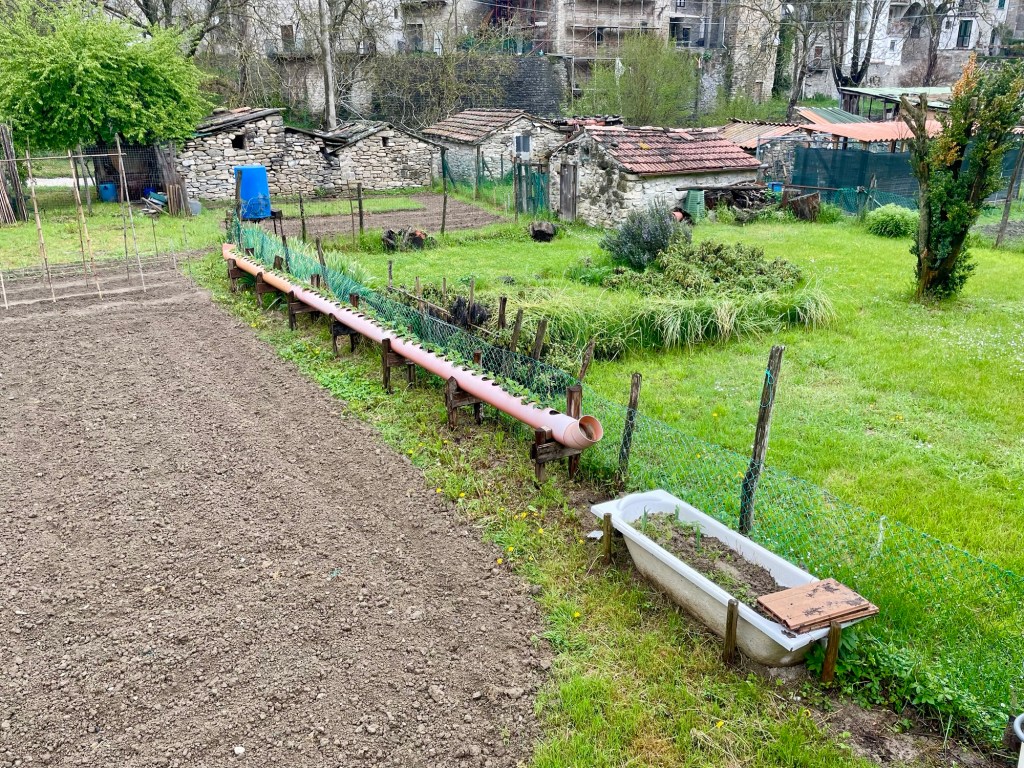
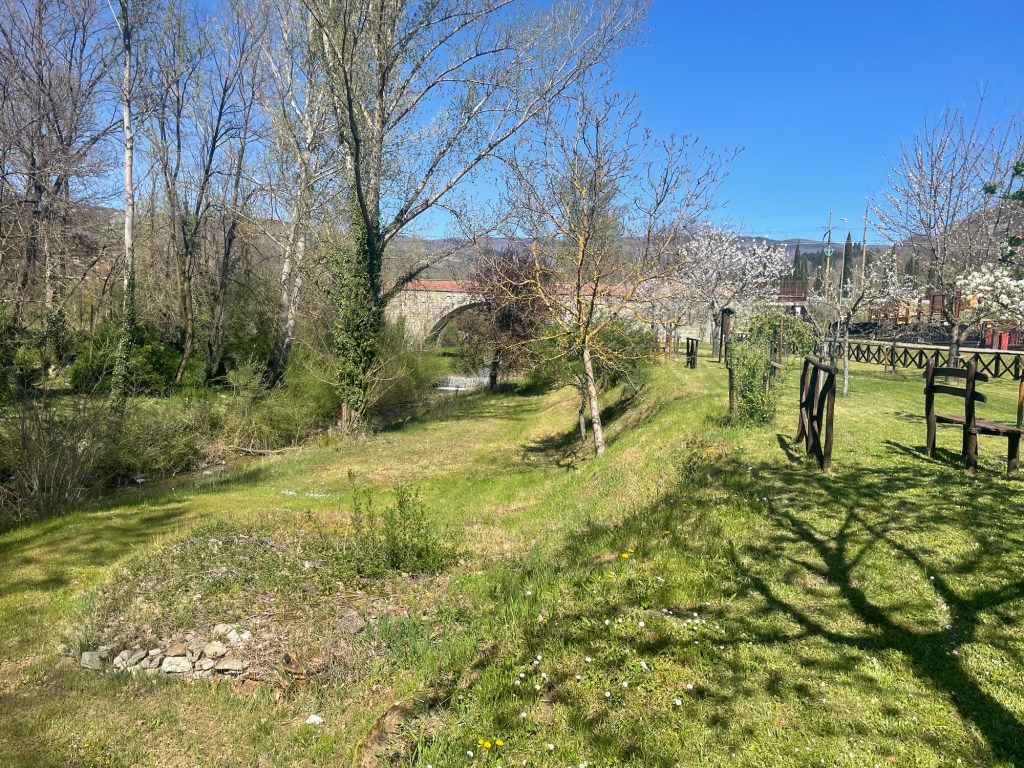
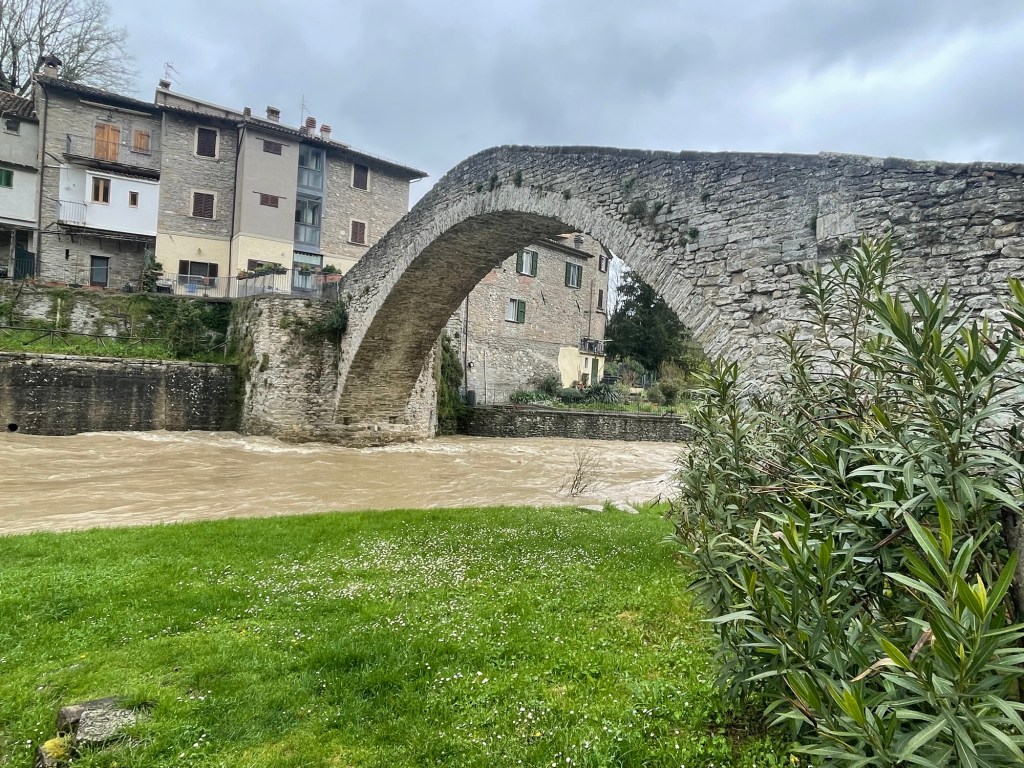
    Before me lay a beautiful scene. A medieval arched bridge framed a permaculture plantation in which herbs sprouted in a bathtub and old pipe into which holes had been drilled. A tortured vine hanged from a scaffold. Something of the scene reminded me of Hebden Bridge.

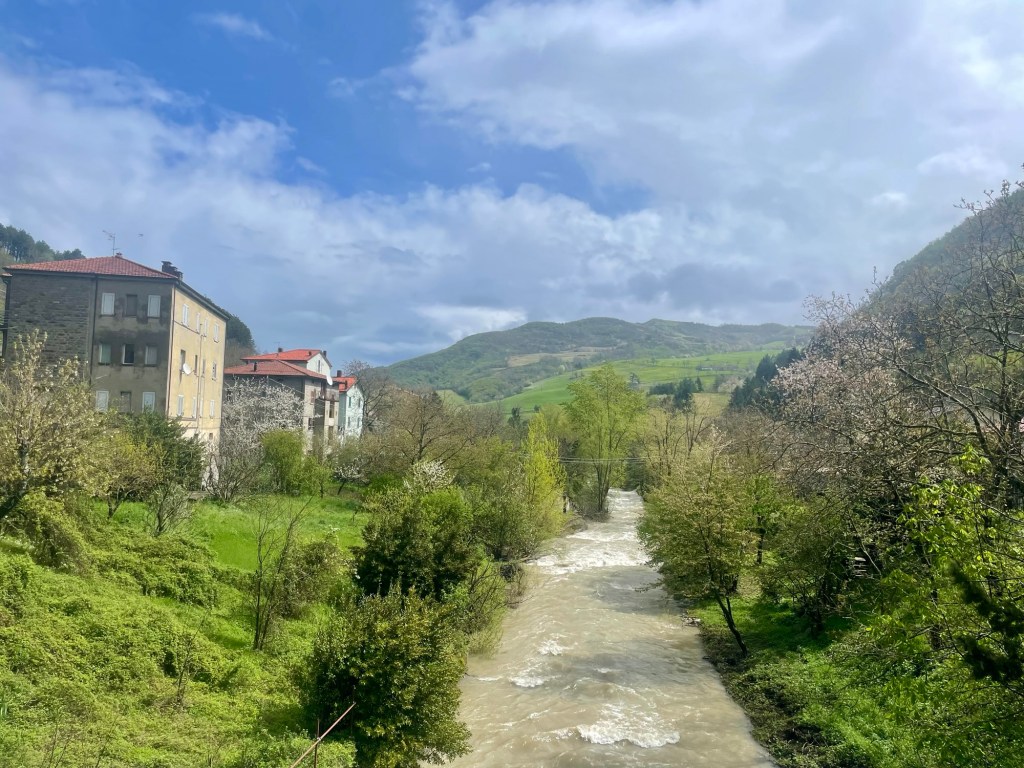
    The river ran ferociously in rapids from all the recent rainfall. It was a sandy brown, coloured by silt. 

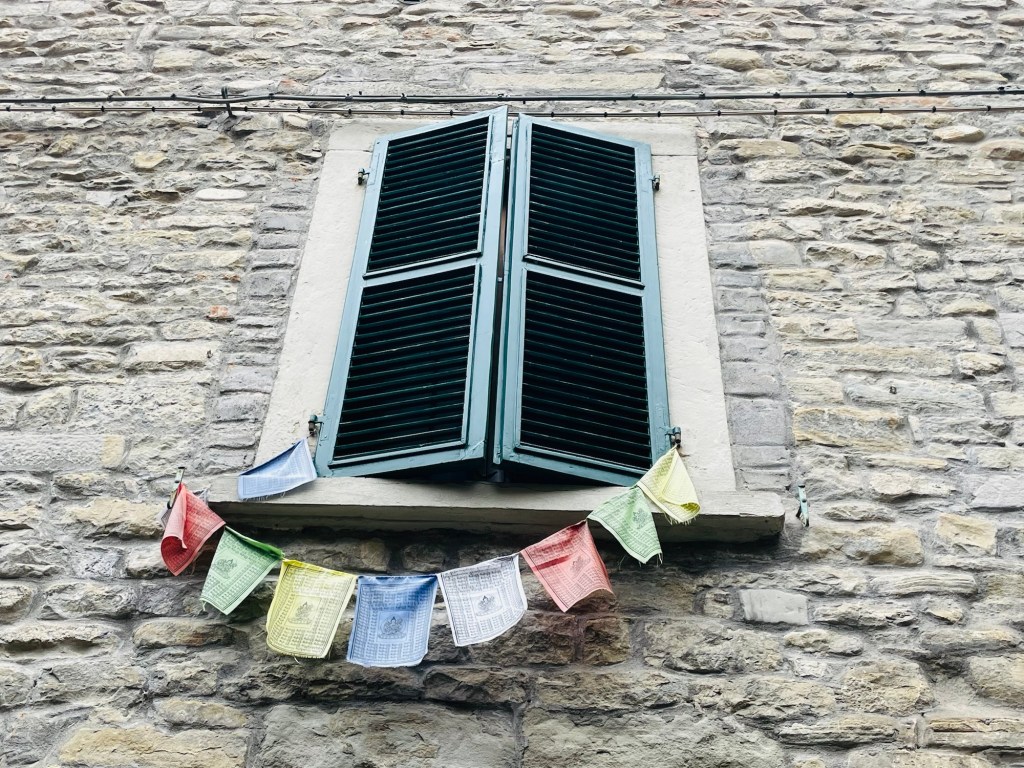
    As I followed the steep street as it winded upwards, I was rewarded with the sight of flower boxes bursting forth with tropical plants which were clearly happy in the wet, temperate climate: bromelias, calla lilies and ferns. There were painted pebbles and succulents planted into tree barks. Someone had posted poetry on their door, another had hung Nepali prayer flags from their window. 

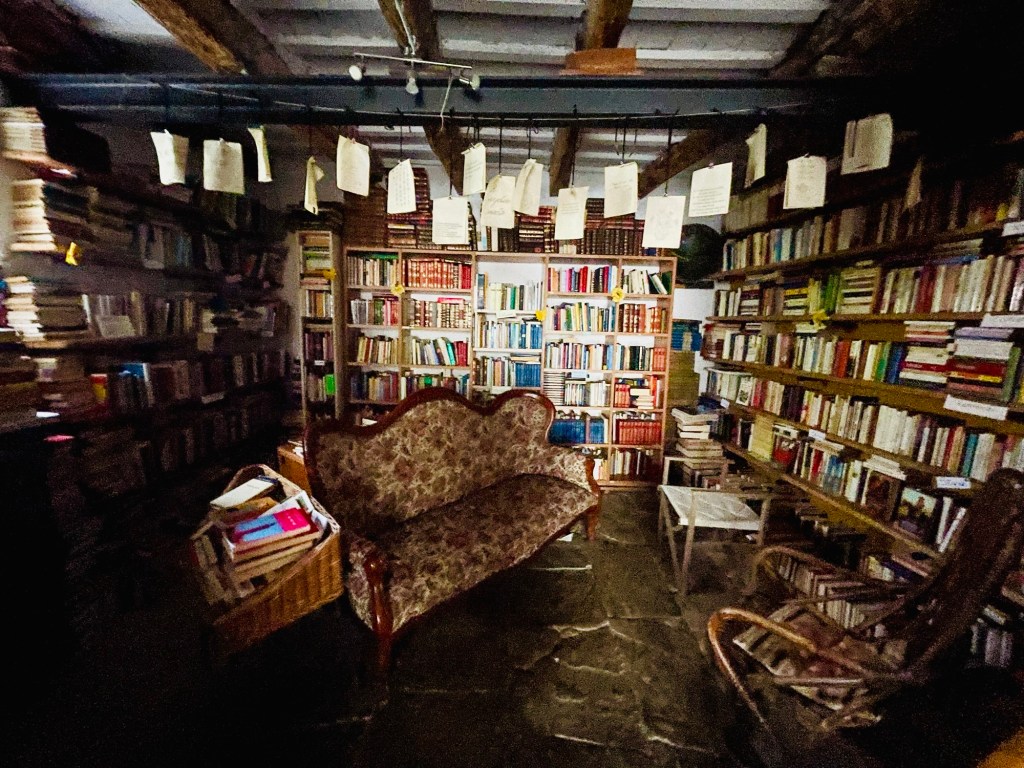
    Around the corner, just before the central arch, there appeared the jewel of the town, the amazing ‘Libri Libreria’ or ‘free book bookshop’. Though I knew I couldn’t carry the weight of a book, I couldn’t help but go in. The walls were lined with all manner of tomes. Comfy antique sofas and strings of poetry made for a welcoming environment. 

    I rounded the corner and took a coffee in a bar in which a group of men, all wearing flat caps, were playing at cards. They were waving their arms around in the passion of the game. A younger man with a broken arm sat outside smoking. He was chatting to a man in an orange waterproof with a walking stick. 

    Lisl, the bar owner, told me there were two English couples who lived in the town who usually spent their evenings there. For her part, she told me she was from the Philippines. She offered to make me a sandwich for tomorrow’s hike. 

    ‘I could live here,’ I thought.

    I saw the longest worm I’ve ever seen as I walked down to the B&B, the Molino di Sopra. Next to the house, the river had burst its banks and was straying onto the lawn. I was reminded of the great Florentine flood of 1966 which killed 101 people and damaged or destroyed millions of masterpieces of art and rare books, including Ghiberti’s famous bronze baptistry doors which were rescued and given sanctuary in the Duomo museum. The doors you see in the city today are replicas.  

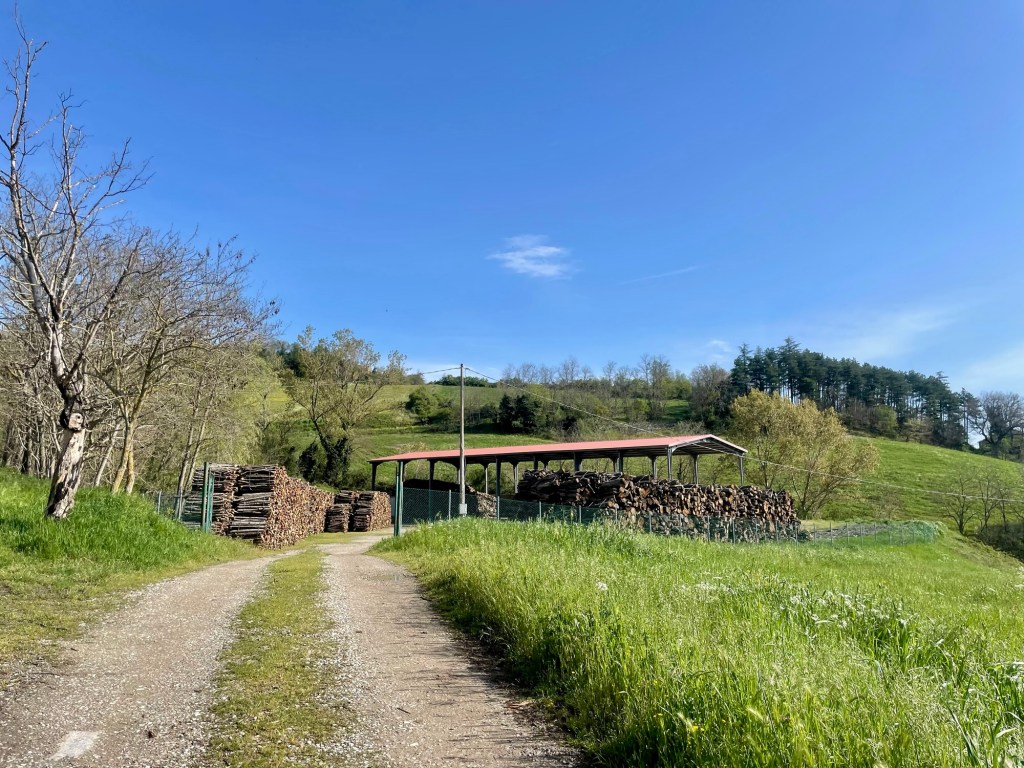
    There was a big pile of logs stacked outside. This is the nature of the region, wood everywhere: wood and water. 

    My hosts for the night, Orlando and Cinzia, were incredibly welcoming, inviting me to dry my wet clothes by the fireplace and showing me up to the modern two-story apartment with a bed at the top and a view of the river. They’d already heard of me and my journey from my blog. When I handed it over, even my passport was sodden. 

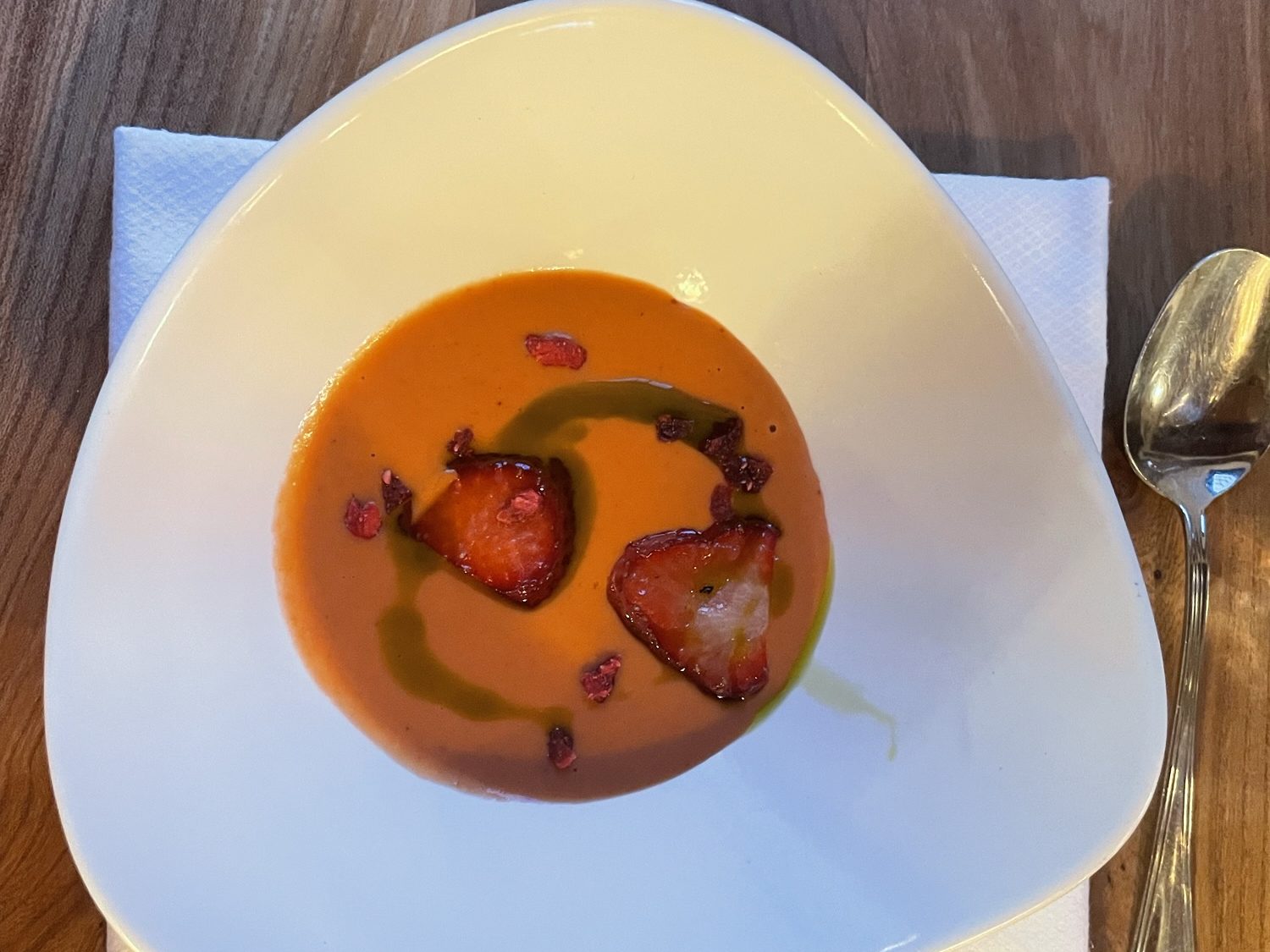
    At 7.30pm I headed out to the only local restaurant, Il Vecchio Convento – The Old Convent, where I dined surrounded by orchids on an exceptional and somewhat extravagant set menu which included, among other things, strawberry gazpacho and wild rocket and carrot pesto gnocchi which were perfectly pan fried, like scallops.

    Despite the fancy environs I was eager not to miss a bite so I ‘did the scarpetta’, the act of circling your plate with a piece of bread to absorb the remaining scraps and juices. The plates were flat with raised edges like the ones my friend Carly makes back home and my knife and fork came with a little raised plate to perch them upon. Lounge jazz played in the background. 

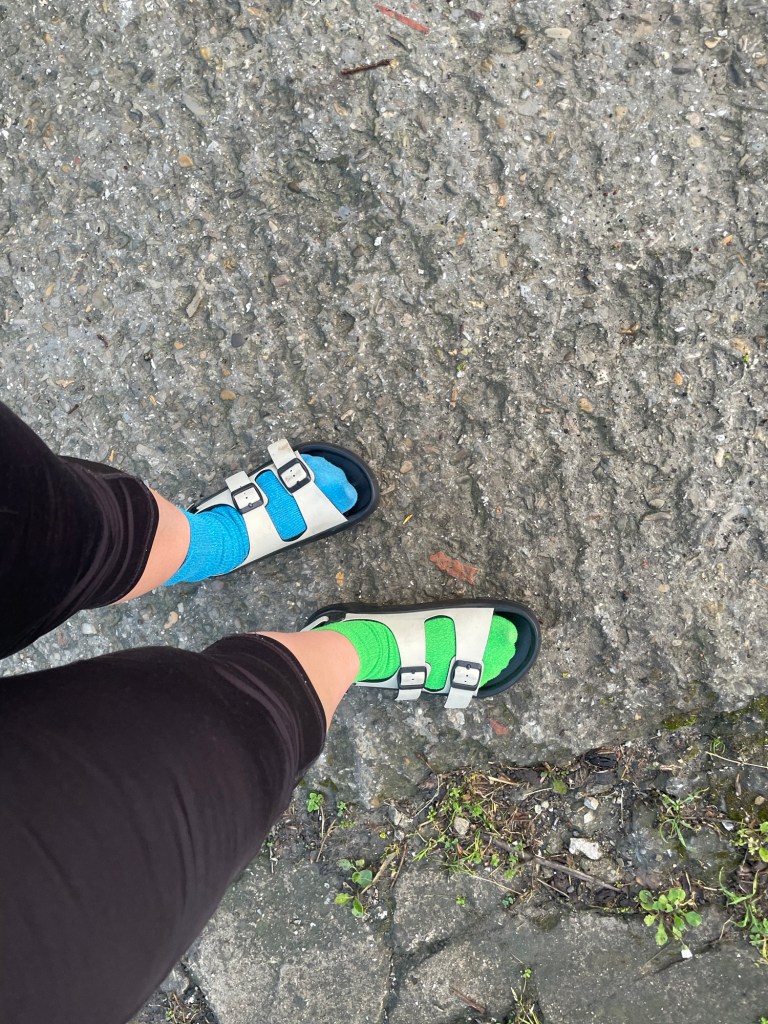
    I felt underdressed in my hiking gear. At least I had put on, with my sandals, Alina’s glittery mismatching socks. 

    ‘See,’ she later wrote to me, ‘they’re not that impractical after all!’ She also sent me a video she had made of our trip which nearly made me cry. 

    I was tempted to go back to the bar to meet the English locals but I was tired and had a long day of walking ahead and so I carried on back to the B&B beneath a night sky which was now strewn with stars. Finally, the cloud had lifted, and as Dante writes at the end of Inferno,

    ‘thus, we departed to see once more the stars’.

    I stopped a while to contemplate the Big Dipper and Orion’s Belt and listen to the roar of the river.

    Recommended Listening: Einaudi, Seven Days of Walking https://en.wikipedia.org/wiki/Seven_Days_Walking

    Recommended Viewing: Forrest Gump: https://www.imdb.com/title/tt0109830/

  • An Infinite Spring: From Castel San Niccolò to Casalino

    The expansive green landscapes and spectacular church complex of Romena will have you dreaming.

    The first thing I did in the morning was to line my eyes with a thick rim of turquoise eye liner I had purchased along with sun cream in the town pharmacy yesterday. Meeting Anna in Montemignaio had left a big impression on both of us with her organic, healthy way of life and I sought to emulate something of her serenity. I wouldn’t be able to keep sheep with my work schedule and pickling my own walnuts appeared too much labour, so make-up seemed like a good enough place to start. 

    Sei Bellissima,’ said Alina. And with that, we grooved on down to the song of the same name by Annalisa. 

    Then she introduced me to her chat GBT mentor. He’d searched me up online and recited a shockingly accurate amount of information in a friendly tone. 

    I’m a luddite. On this trip she is teaching me how to use the new technology my students swear by.

    We had another delicious breakfast of pesto toast on the patio in the rising sun and were up and at ‘em and back on the Dante trail by 8am. We passed houses where dried grain hung outside the porch. It shone golden in the sunlight. A child who looked about 8 sped past on a motorbike.

    The stunning hilly scenery around Castel San Niccolò is interrupted by industry. The path is thick with hoof prints and acorn shells and lined with buttercups, dandelions and grape hyacinth. Butterflies and petals from the blossoming trees sweep across on the wind. 

    Interrupting the hedgerows are flaming trees the colour or Alina’s hair. 

    We saw the first cows of our trip, stopped to pet a number of horses and were hissed at by geese who appeared menacingly above the fence like the three-headed Cerberus. 

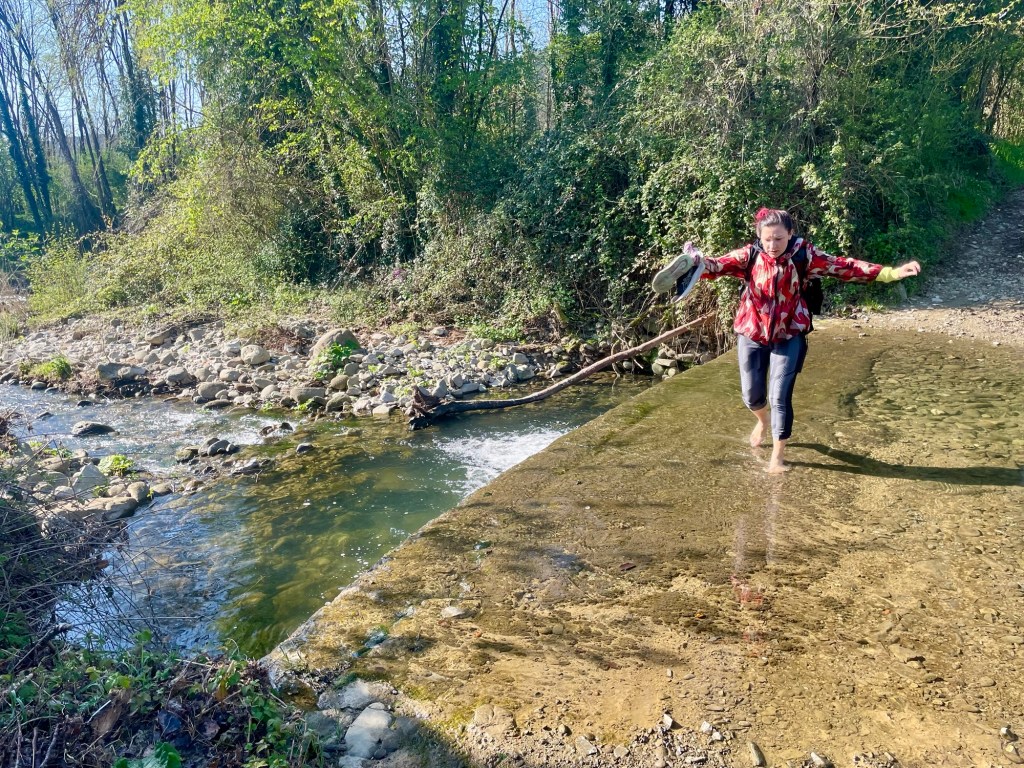
    On our way out of the town we crossed a stream. Alina had the sense to remove her trainers and traverse it barefoot. 

    I got wet feet. 

    I feel like Virgil would have chastised Dante for this stupidity as he does many times on their journey together through Hell and Purgatory. Alina just laughed. 

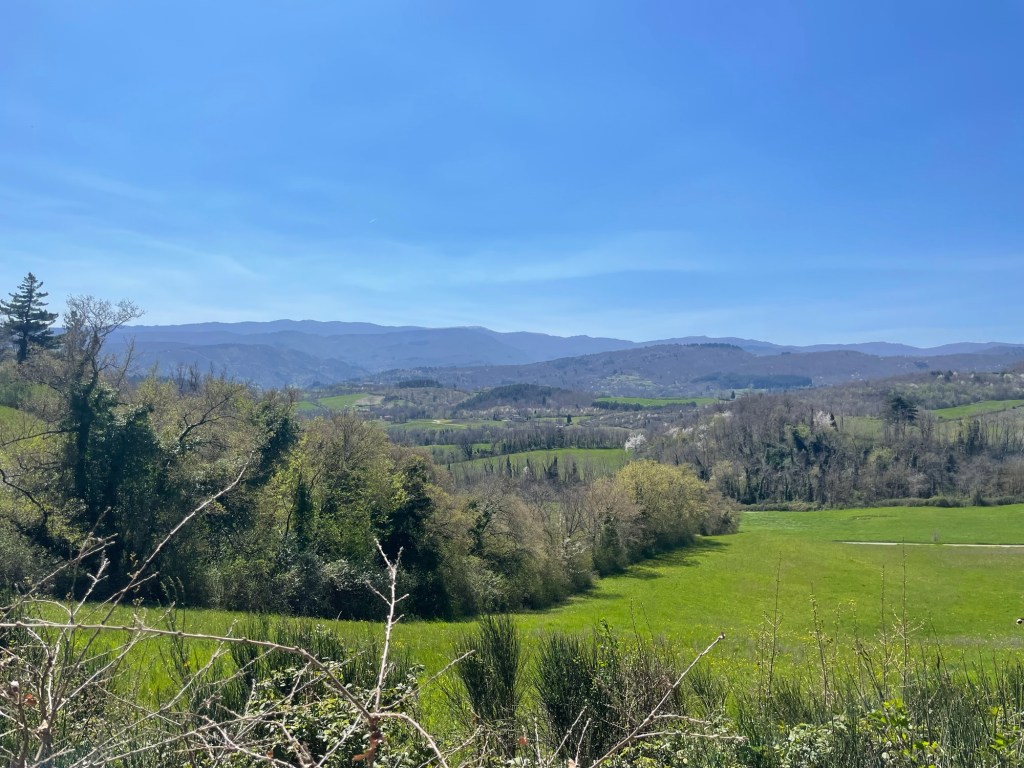
    We’d spent the last couple of days crunching through brown leaves in a climate that could have been mistaken for autumn if it were not for the primroses. But exiting the forest today, it felt like Spring had truly come. A gentle hike up afforded expansive views across the surrounding hills. The sun shone brightly on our faces and now it was my turn to be reminded of England. Alina said it also recalled Crimea where she would spend her holidays as a child.

    As we stopped in a field next to a towering hay bale which was taller than me at five foot two, I was reminded of the poem L’Infinito  by Giacomo Leopardi, an Italian poet born in 1798 in Naples. 

    The Infinite

    ‘This solitary hill has always been dear to me
    And this hedge, which obscures from me
    The endless horizon. 
    But when I sit and gaze, I imagine, in my thoughts,
    Endless spaces beyond the hedge,
    An all-encompassing silence and a deeply profound quiet,
    To the point that my heart is quite overwhelmed. 
    And when I hear the wind rustling through the trees
    I compare its voice to the infinite silence. 
    And I recall eternity, and all the ages past,
    And the present time, and its sound. 
    Amidst this immensity my thought drowns:
    And to flounder in this sea is sweet to me.’

    ‘Sempre caro mi fu quest’ermo colle,
    e questa siepe, che da tanta parte
    dell’ultimo orizzonte il guardo esclude.
    Ma sedendo e mirando, interminati
    spazi di là da quella, e sovrumani
    silenzi, e profondissima quïete
    io nel pensier mi fingo, ove per poco
    il cor non si spaura. E come il vento
    odo stormir tra queste piante, io quello
    infinito silenzio a questa voce
    vo comparando: e mi sovvien l’eterno,
    e le morte stagioni, e la presente
    e viva, e il suon di lei. Così tra questa
    immensità s’annega il pensier mio:
    e il naufragar m’è dolce in questo mare.’

    Once again, I’ve taken a stab at my own translation. ‘Naufragar’ – to flounder or to drown? I wish I had Anna’s Zingarelli dictionary.

    The poem, written in the Marche region in 1819, is a prescient nod to the modern mindfulness movement. This is something my colleague Will at the University of Birmingham refers to in a recent work as ‘McMindfulness’ for its ubiquitousness in social prescribing. Every other person seems to have an app on their phone, but how mindful are we really? 

    Leopardi’s poem reminds us that contemplating the infinite nature of the horizon when in nature can return us to a sense of peace. It’s not quite the same as having a low-pitched American drawl telling us to ‘feel our feelings and let them drift by like clouds in the sky’, but it’s something akin to it and dare I say superior?

    Alina and I spent a moment of silence contemplating the hedges and horizons around us and were quietly moved. 

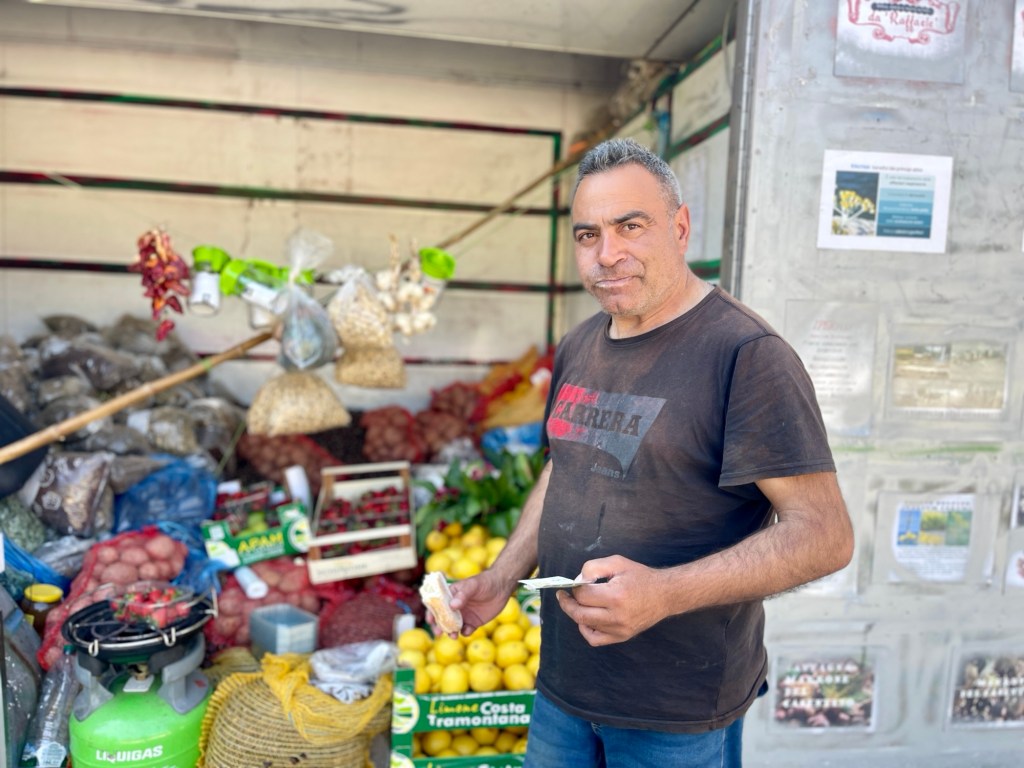
    Walking up to the steep path to the rural church and complex of San Pietro a Romena, we were greeted by a man selling groceries from a battered old vehicle. At first, I thought it was an ice-cream van – damn. But it turned out to be a worthy pit stop anyway. 

    ‘Where are you from?’

    We replied.

    ‘Oh shit, there’s a war in your country,’ he told Alina.

    ‘Thanks for letting me know,’ she said. 

    Bastardi, those who make war should make love,’ he continued, a look of lust creeping over his narrow eyes.

    Raffaele was eating straight from a can of tuna from which the tin lid flapped like a fin over the side. He had breadcrumbs around what he called his ‘muzzle’ and beseeched us to ‘stop and eat something with me!’ 

    He had a fuel stove and paper plates in his van. 

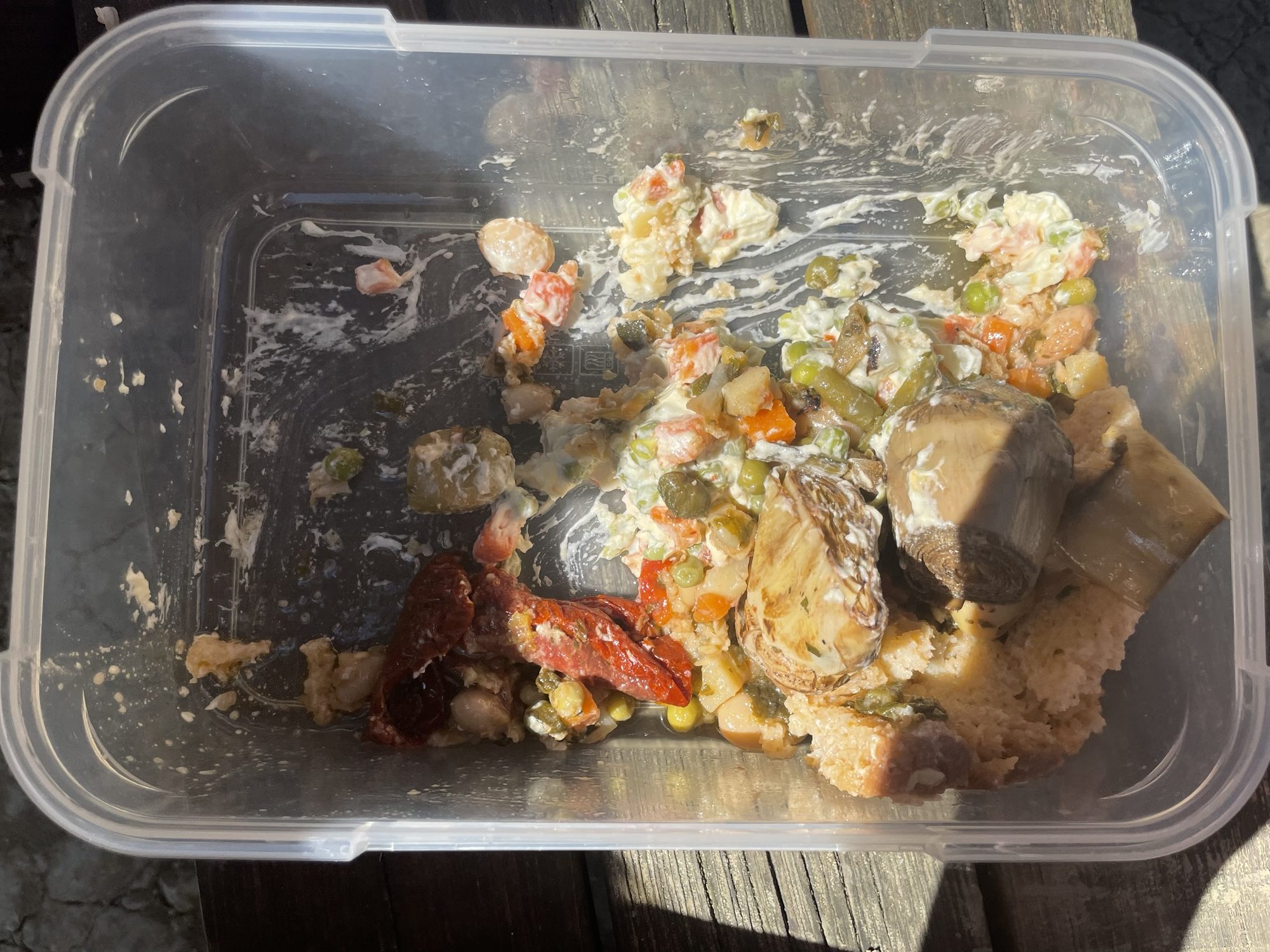
    We kindly refused the offer – we had a Tupperware full of treats from the deli yesterday to attend to. Alina said the way the salads had mixed together reminded her of the first day of January in Ukraine where you eat all the leftovers. She is a stickler for not wasting food.

    We purchased fresh strawberries and a huge bag of peanuts in their wrinkly shells for 5 euros and went on our way after exchanging a sweaty, and perhaps slightly too familiar, hug.

    San Pietro a Romena is a tranquil oasis which extends way beyond the Parish church over the cascading fields. 

    Located on the slopes of the hill dominated by the remains of the castle of the Guidi Counts, on the right bank of the Arno, in the territory of the municipality of Pratovecchio Stia, the baptismal church is a masterpiece of Romanesque architecture. 

    The building, declared a national monument for its importance, was built in 1152. The place name of Etruscan origin, Romena probably already housed a temple that was readapted in Roman times. A Christian building later rose on the pagan building. 

    Descending under the staircase on the right wall, you can admire the traces under the present raised presbytery of an early medieval church built between the eighth and ninth centuries.

    Art adorns the church, though it is simple: rustic tapestries and painted wooden panels.

    Volunteers were cleaning and delicately placing olive branches in preparation for Palm Sunday. 

    Surrounding the church is a range of art, a conference suite, a meditation room, a café, bookshop, and gardens containing medicinal herbs and olive groves. There is no escaping the sense of tranquility afforded by the expansive complex. 

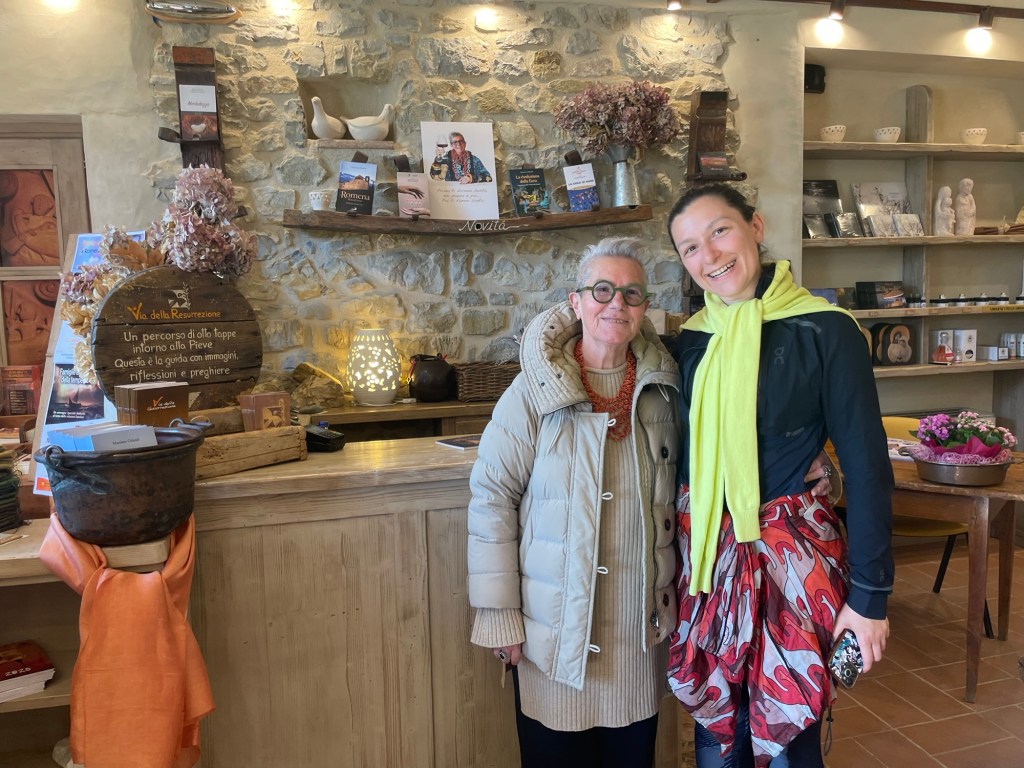
    A blend of Tracy Chapman and reggae played in the background as we perused the gift shop which was run by another spectacular 80-year-old woman who wore fashionable round, green glasses and a coral necklace. Behind the till, on the wall, friends had photoshopped her face and a glass of wine onto an image of the fashion icon, Iris Apfel with the quote, 

    ‘First they say enough, you’re crazy, then they make you a saint.’ 

    We admired her massive rings. One was made of silver, transformed into a circle of beads that encased a large labradorite. 

    ‘Oh cool,’ came the voice of Alina as she pawed a book about one of her favourite singers, Gianmaria Testa. It turned out he had performed here. The singer and guitarist, who died in 2016, is something of an Italian Leonard Cohen, though in his lifetime he didn’t receive the same critical acclaim.

    Throughout his musical career, Testa continued to work as a station master at the train station in Cuneo. One quote from the book read,

    ‘Poetry is literature’s form of combat.’

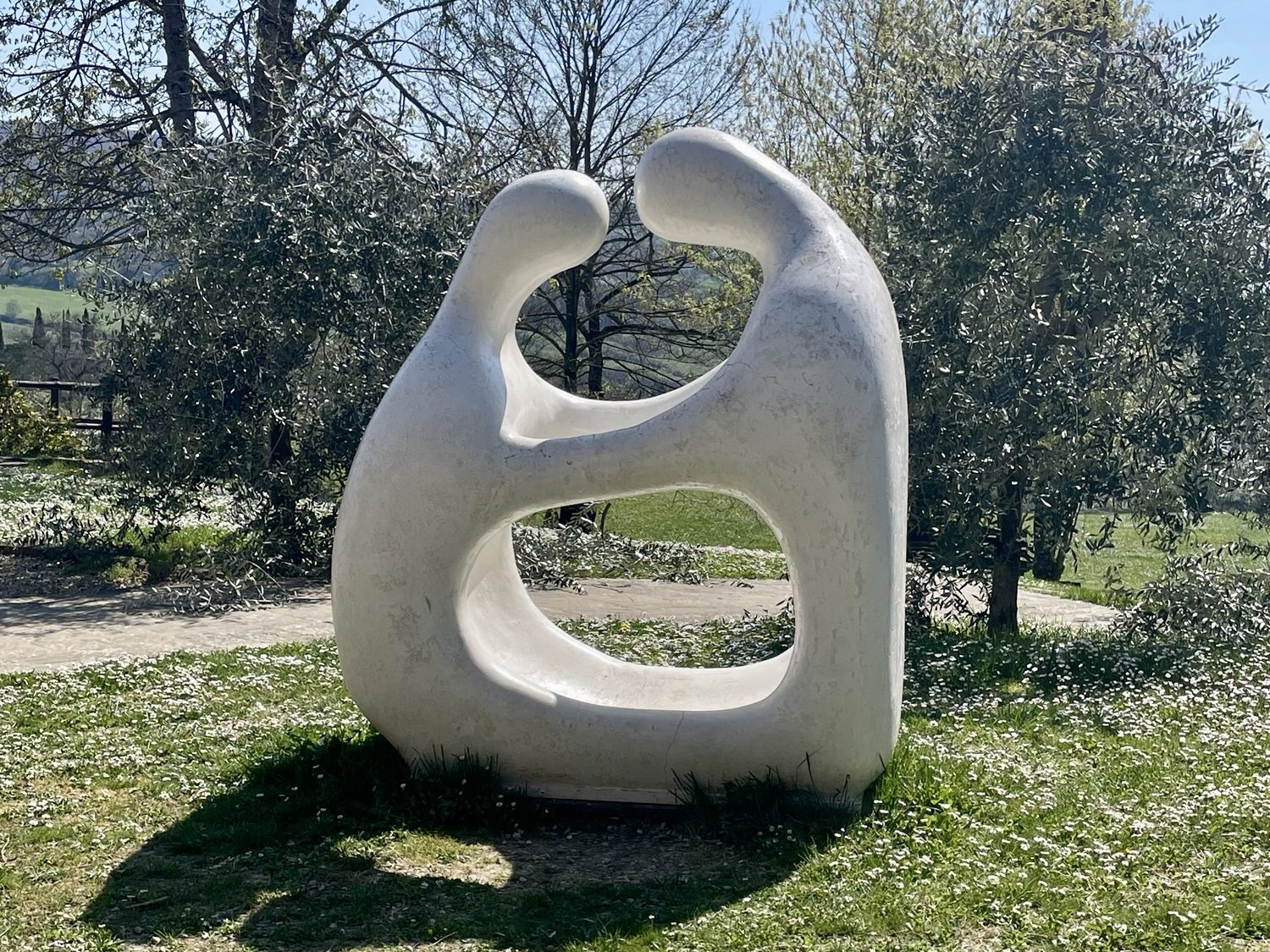
    A dozen other quotes and pieces of art were scattered across the complex. These included a steel silhouette of Banky’s Girl with Balloon and a beautiful white sculpture of a couple embracing.

    On an old door there appeared the words,

    ‘Everyone is looking for a bit of bread, a bit of affection and to feel at home somewhere.’

    The place was very quiet, but we were informed that on Sundays it attracts up to 1,000 people, as we would soon find out.

    ‘The door is always open’, the lady in the café informed us.

    A wooden placard beside the door displayed a quote by Marcel Proust,

    ‘Real travel doesn’t mean looking for new lands, but having new eyes.’

    A sign in the café read,

    ‘A coffee, 3 euros’

    ‘A coffee please, 2 euros.’

    ‘Hello, may I have a coffee please, 1 euro.’

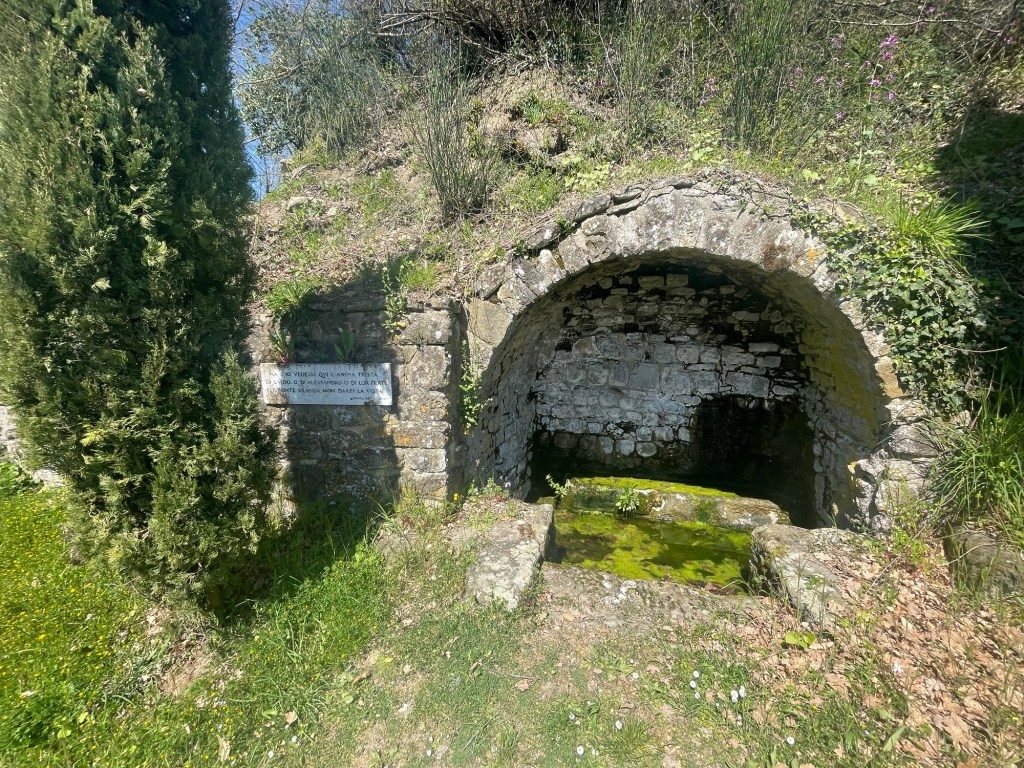
    After a peaceful break, we hiked up the hill to Branda font. It is referenced by Dante in Inferno, canto 30 which depicts mutilated souls who, as follows the principle of contrapasso whereby the sin becomes the punishment, have been damned for representational and economic fraud.

    Dante was clearly struck by the streams and hills of the Casantino landscape too and likely stayed in the castle on the hill. He writes of one soul from Romena who counterfeited money,

    ‘The rivulets that fall into the Arno
    down from the green hills of the Casentino
    with channels cool and moist, are constantly

    before me; I am racked by memory—
    the image of their flow parches me more
    than the disease that robs my face of flesh.

    There is Romena, there I counterfeited
    the currency that bears the Baptist’s seal;
    for this I left my body, burned, above.’

    Dante then stages a meeting with Guido, Alessandro, or their brother,

    ‘I’d not give up the sight for Fonte Branda.’ He writes. Dante also mentions the Castle of Romena where the forger Adamo produced his florins.

    The punishment of those in Hell is that they are perpetually tormented by memories of their past lives without being able to move forward. 

    Alina and I moved forward, walking past the castle through an avenue of lego green cyprus trees.

    On our descent into the town of Pratovecchio, we encountered rusty tractors pulling ploughs in fields and beehives buzzing with life. It was easy to imagine Dante here, sat beside one of the many streams. Time seemed to have stopped in this part of Tuscany, if it were not for the electric cables and roar of motorbikes on the asphalt road.

    In Prato Vecchio, known for the swallows that inhabit its grand porches, we stopped for a drink in a small café where we met a musician, theatre producer and yogi from the south of Italy, called Massimo Kyo. He had medium-long hair which was half tied back and kind eyes. He told us his second name had come to him in a dream. 

    Like Raffaele, Massimo Kyo also asked us where we were from. But he was somewhat more diplomatic in his reply when Alina responded with ‘Ukraine.’

    ‘Oh…I mean, how do you feel?’

    She was surprised at the question – ‘no one ever asks me that,’ she said. 

    During the next hour of casual conversation he informed us that ‘Casentino is a magical place where you meet the people you have to meet’.

    When we shared that we were on the Dante trail he offered up the theory that Dante had experimented with natural drugs to enter his imaginative afterlife. 

    ‘Young people here go and look for mushrooms that grow in cow shit nearby,’ he explained.

    Massimo kindly offered for us to use any of his music or jingles we liked for the podcast we have been recording as we walk and invited us to spend the next day together, saving Alina’s number in his phone as ‘Alina walker’.

    I went to pay in the bar, commenting that I liked the tattoos of the bartender, one of which showed the stylized outline of a little girl holding her mother’s hand. 

    ‘Oh, this is my little girl who never was,’ she explained.

    ‘She’s beautiful,’ came my reply.

    The toilet was an old school squat. 

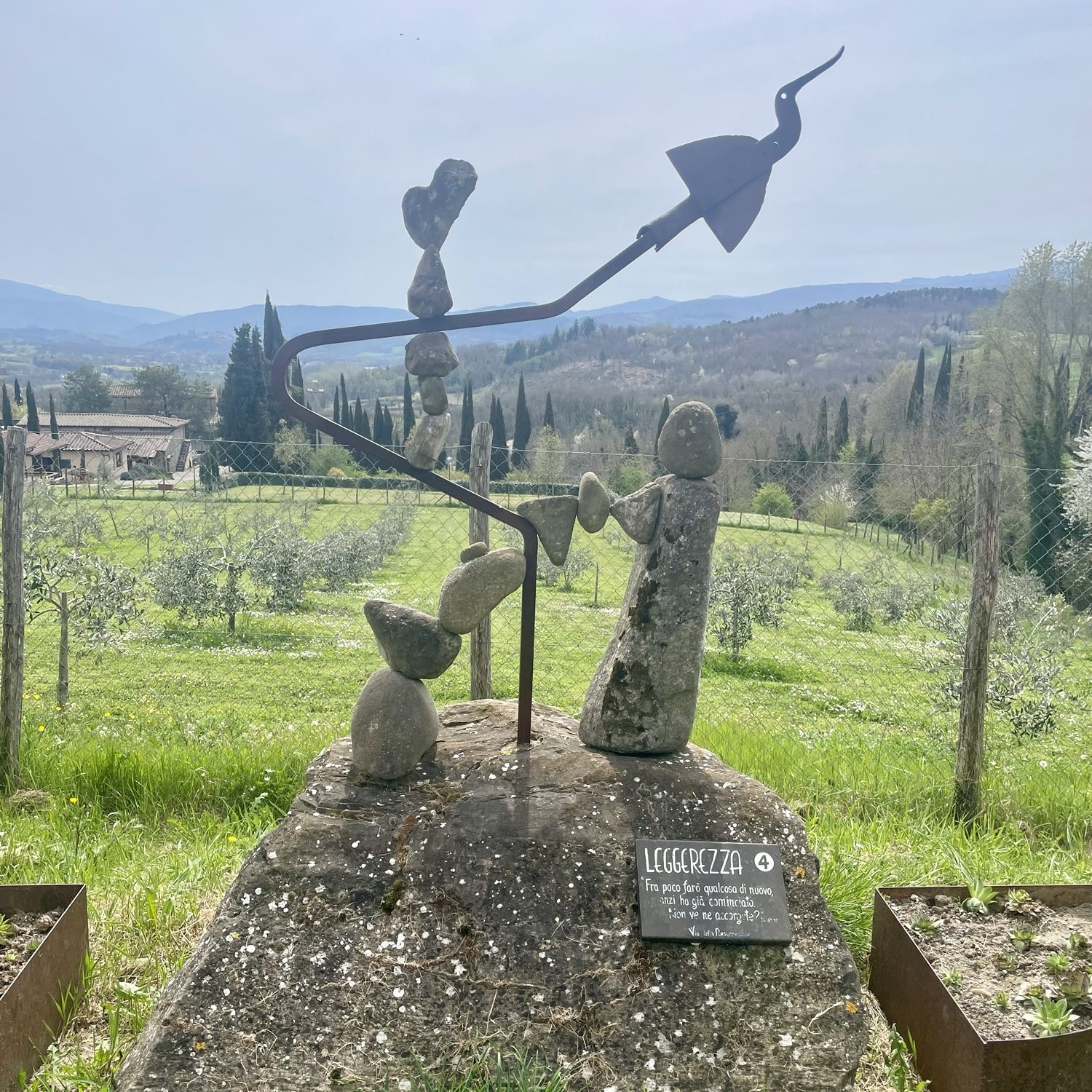
    We spent Sunday, our rest day, with Massimo, returning to Romena where he showed us his favourite spots. They included the Via della Resurrezione – the Path of Resurrection. On the way a sign read,

    ‘Before long you will do something new, in fact you’ve already started, don’t you see it?’

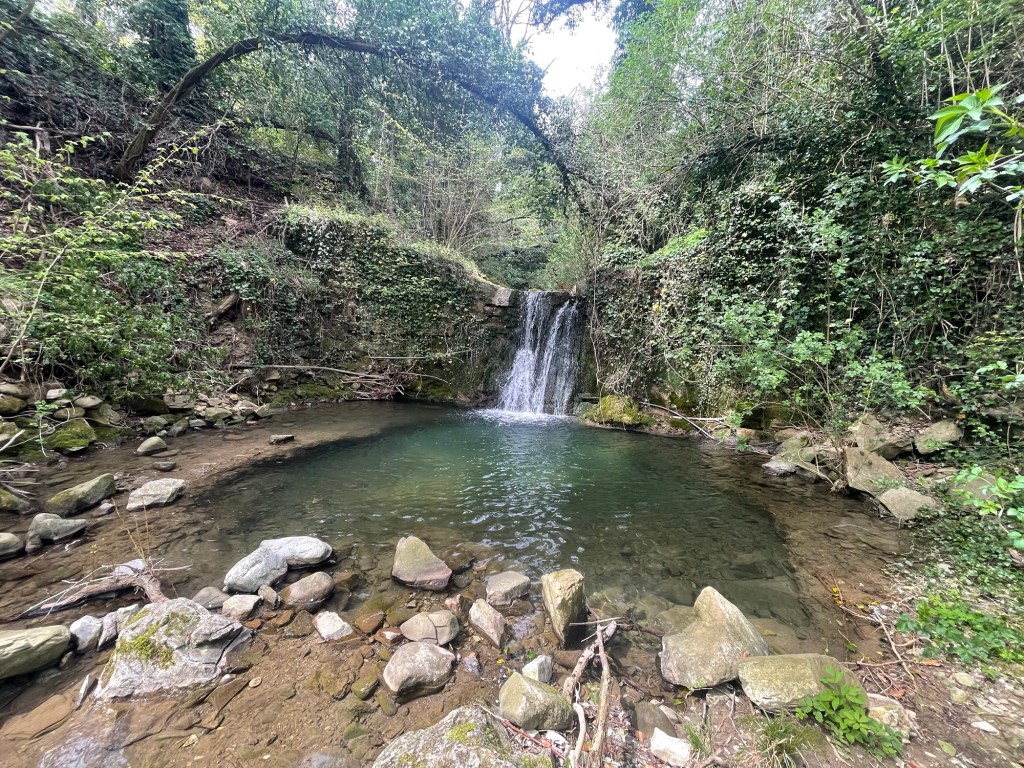
    The path ,which was pitted with art, flowed through the olive groves , ending in a stunning waterfall that fell into a turquoise pool the colour of my eyeliner. We sat and Massimo asked if we’d like to sing some mantras together.   

    We did.   

    I was taken back to Sri Lanka and to Tye, my mantra teacher who would bring us all to tears with her harmonium singing the Ganesh Maha Mantra, Om Gam Ganapataye Namaha.

    Thereafter we discussed our hopes and dreams. I shed a tear as I declared that one of mine was to finish the cammino. 

    ‘You will,’ Massimo sagely confirmed. 

    Though I don’t believe in God and think this life is all we have to make what we can of it, I really did feel like a pilgrim.

    Perhaps I do have a latent spiritual side after all. 

    Before we left, we returned to the giftshop where I bought Alina the Gianmaria Testa book and, at Massimo’s advice, some ‘nardo’ oil, made at the property.

    Known in English as Spikenard, nard, nardin, or muskroot, nardo is a class of aromatic amber-colored essential oil that comes from a flowering plant in the honeysuckle family. The oil has been used over centuries as a perfume, a traditional medicine, or in religious ceremonies across a wide territory, from India to Europe. It is said that the Virgin Mary used it to anoint the body of Jesus when he was removed from the cross.

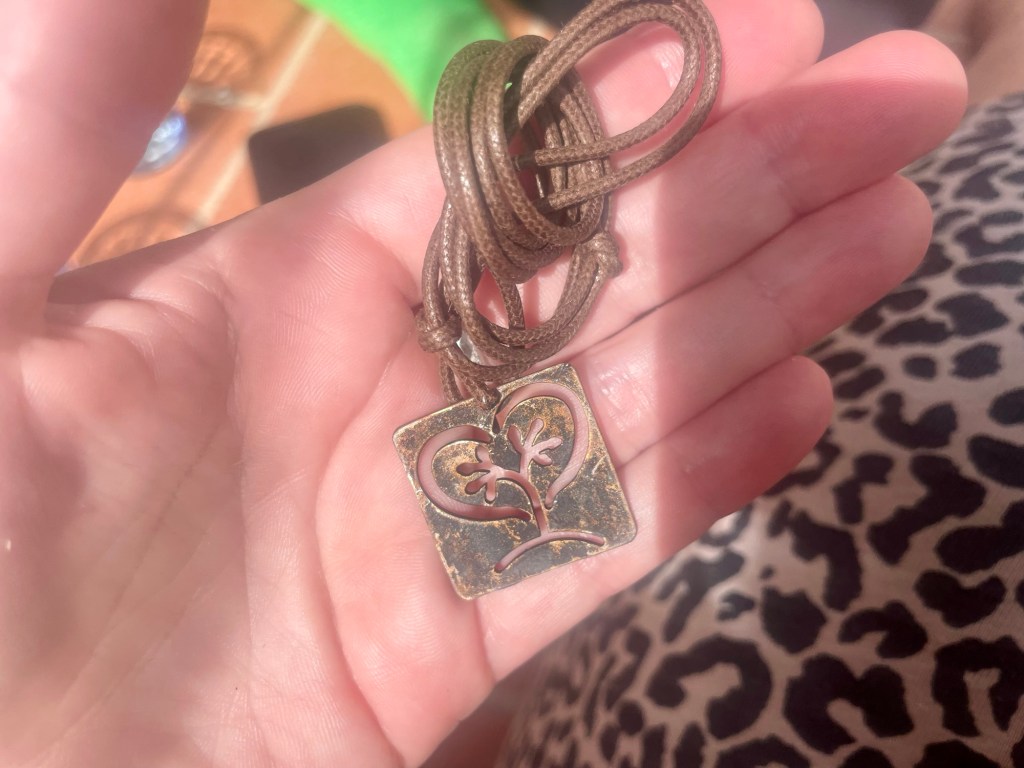
    Back outside, Alina gifted me a beautiful artisanal necklace that she had bought which depicts an almond tree. The accompanying card contains a quote from Luigi Verdi,

    ‘Like the almond tree, you are the first to flower and the last to give fruit.’

    ‘It reminded me of you and your Dante book,’ Alina explained. ‘You’re flowering now, and you have to trust that the fruit will come.’

    On the way back, Massimo took us to the supermarket, kindly relieving us of the one hour hike up to Casalino we had done yesterday which would have been strenuous with shopping bags, however beautiful with its surrounding fields and pathway through the ‘park of endangered fruit trees’. Alina had experienced foot cramps on the steep hill and so we’d stopped to record our podcast overlooking the fertile valley which was lit up by the sunshine like a strip light over a painting in a gallery. 

    I bought Massimo a little succulent with three buds,

    ‘It’s us,’ I said. 

    He blinked a few times and smiled.

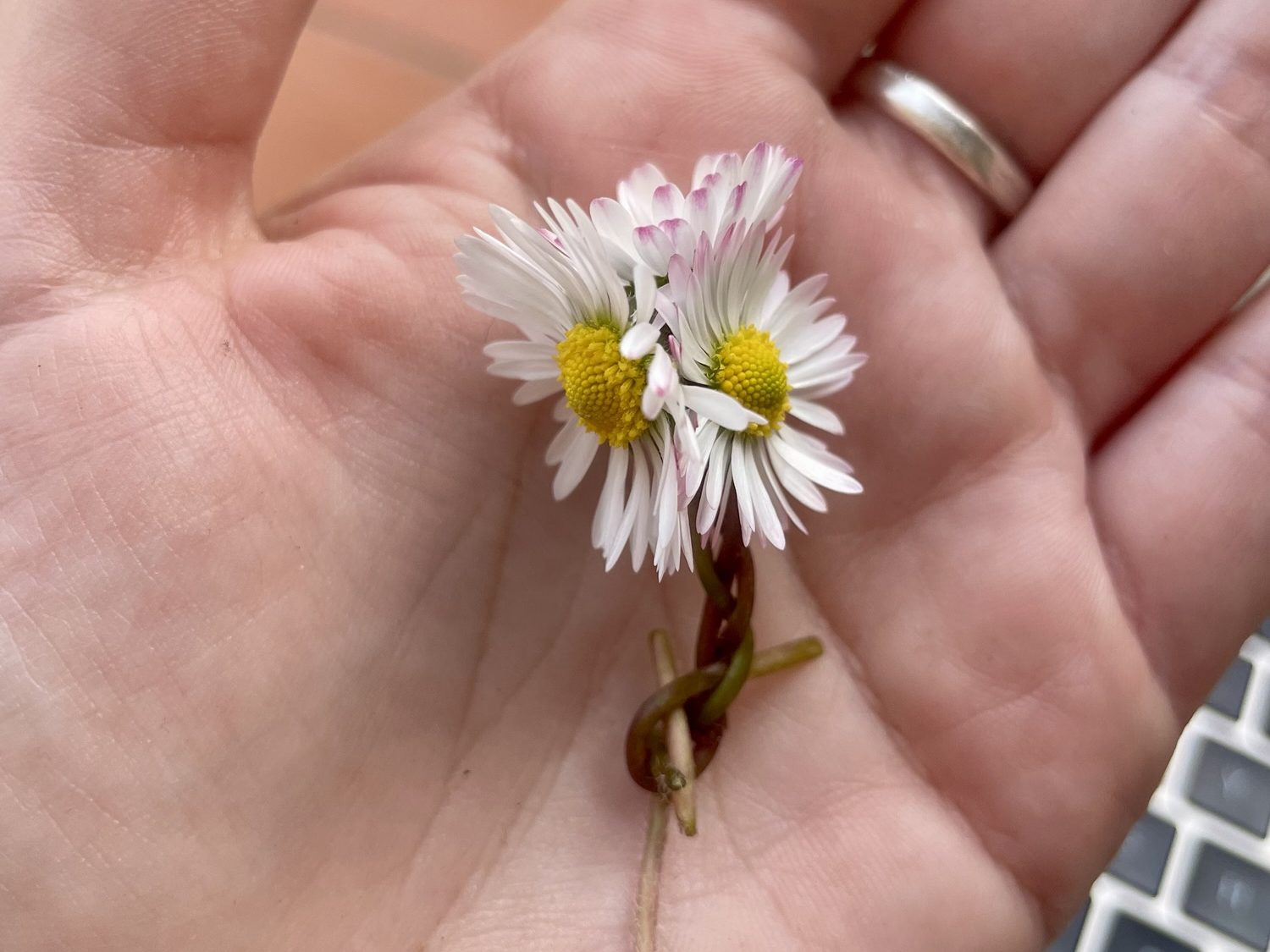
    Back at our air b and b we had an aperitivo with a selection of regional cheeses and made daisy chains in the pretty garden which we accessed from our apartment, number 74, via terracotta steps. 

    Alina’s method involved plaiting the flowers together whereas mine relied on poking holes in the stems and threading them through. I was thrilled to do this since as I child I bit my nails and was unable to do so. 

    I was reminded of Dante’s dream in Canto 27 of Purgatorio where he encounters the Old Testament characters of Leah and Rachel who were traditionally interpreted allegorically by the Church as figures of the active and contemplative life. Dante writes,

    ‘… in my dream, I seemed to see a woman
    both young and fair; along a plain she gathered
    flowers, and even as she sang, she said:

    “Whoever asks my name, know that I’m Leah,
    and I apply my lovely hands to fashion
    a garland of the flowers I have gathered.

    To find delight within this mirror I
    adorn myself; whereas my sister Rachel
    never deserts her mirror; there she sits

    all day; she longs to see her fair eyes gazing,
    as I, to see my hands adorning, long:
    she is content with seeing, I with labor.’

    We drank hot water, a habit Alina had picked up in her decade in China. She looked lovely in a forest themed patterned cotton top and trousers made by her fashion designer mum.

    ‘How have you packed all this into such a small bag!’ I exclaimed. ‘You’d make a good refugee.’ 

    We both laughed. This is the kind of dark humour that keeps me sane.

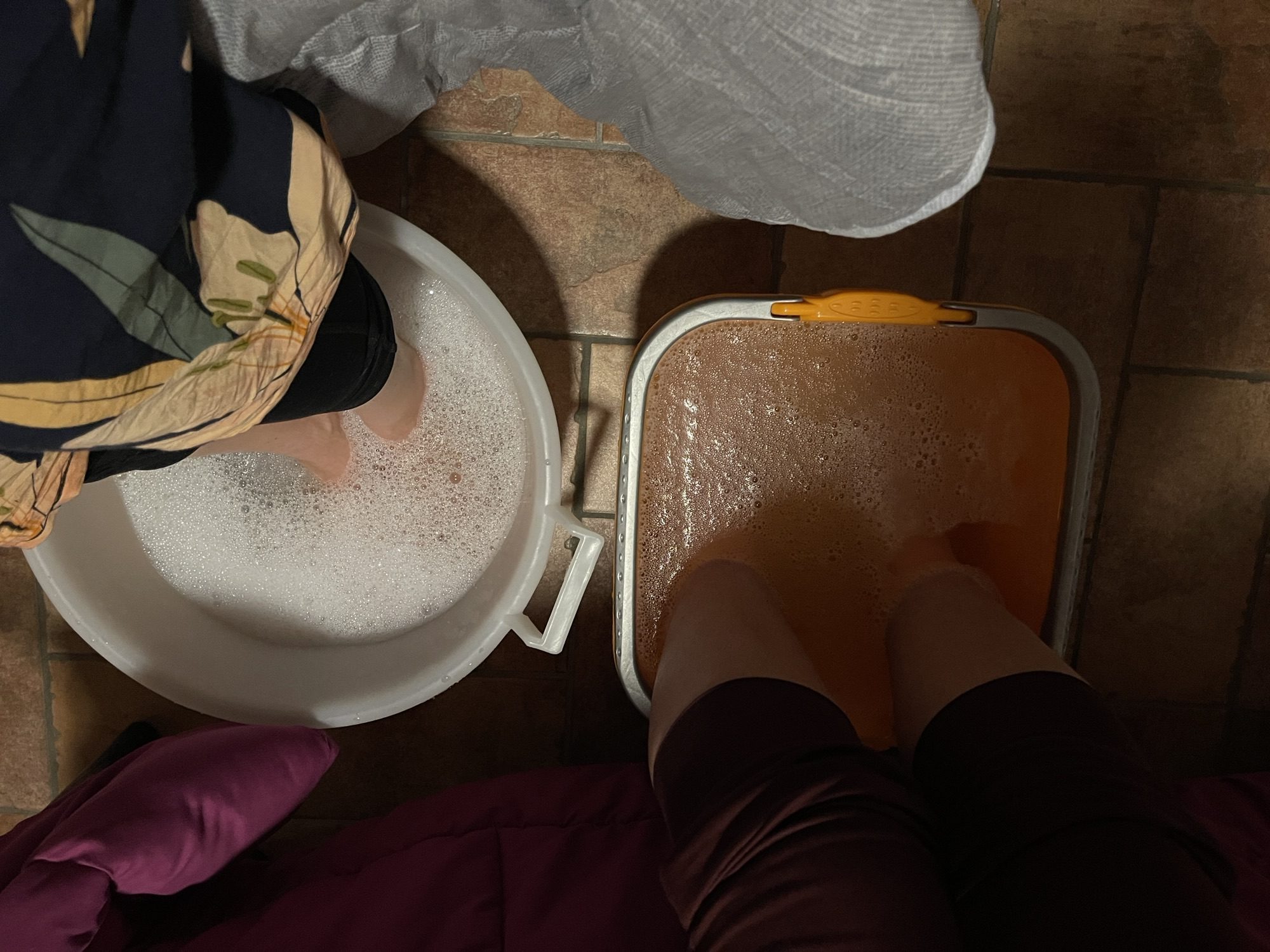
    After a simple dinner of spaghetti and green beans, we were delighted to discover not just a bin but a bucket and washing up basin into which Alina and I placed our aching feet in hot soapy water as has become tradition.

    Before bed, we sat outside and contemplated the full moon. 

    ‘You know no woman has ever walked on the moon?’ I said

    ‘Yet,’ replied Alina. ‘Who knows what wonders the future holds.’

    I held my necklace in my hand and made a wish. 

    Recommended listening: music by Massimo Kyo: https://open.spotify.com/artist/72MZKpGf1ARioeXiHAWXCw?si=4CfTY_SbTk2KGSCMCRCPWw

    Recommended listening: the music of Granmaria Testa: https://youtu.be/4f_4HW340Cw?si=JRfV45WqVPUDwt0B

    Recommended using: Nardo oil: https://en.wikipedia.org/wiki/Spikenard#:~:text=Spikenard%2C%20also%20called%20nard%2C%20nardin,Nepal%2C%20China%2C%20and%20India.