Tag: fantasy

  • What Goes Down Must Go Up: From Brisighella to Monte Romano

    It was a difficult day of walking starting with an overdose of gypsum followed by an unforgettable evening of hospitality and a sky full of stars.
    I got up at 7am to a lovely message from my American writer friend Joyce who said she was headed to a ballet version of Frankenstein. I was jealous! Frankenstein, so misunderstood, is among my favourite books. Misread as a horror story, Mary Shelley’s novel is nothing if not a deeply romantic reflection on man’s search for connection and love. 

    Shelley writes,

    ‘If the study to which you apply yourself has a tendency to weaken your affections, and to destroy your taste for those simple pleasures in which no alloy can possibly mix, then that study is certainly unlawful, that is to say, not befitting the human mind.

    If this rule were always observed; if no man allowed any pursuit whatsoever to interfere with the tranquillity of his domestic affections, Greece had not been enslaved; Caesar would have spared his country; America could have been discovered more gradually; and the empires of Mexico and Peru had not been destroyed.’

    As I wrote in a recent article in The Times, I try to follow this logic with my own research as much as I can: taking my time, respecting people and not rushing to conclusions. 

    Indeed, part of the motive for this cammino was to take time to reflect on my research practice as a social scientist. 

    As I’ve been listening back to audio recordings of interviews with refugees on my way, I feel I’ve been able to hear their voices with a new attentiveness. I was taking care of myself and my own need to be outside and wonder. This would, I hoped, help me to care for other people. 

    For me, individuals’ wellbeing and not the political machinations of the world have always been my primary interest. One of my favourite quotes is from the French writer, Boris Vian,

    ‘What interests me isn’t the happiness of all people, but that of each one.’

    ‘Ce qui m’intéresse, ce n’est pas le bonheur de tous les hommes, c’est celui de chacun.’

    I had tried to carry this spirit with me on this adventure that was also, in many ways, a self-reflective ethnographic exercise.
    I headed down to breakfast where the cappuccino machine spat out my drink. The hosts were gracious and said I didn’t have to pay for the disappointing spa

    The morning was fresh but sunny. As I packed my bag, I was disappointed to learn that one of Alina’s glittery socks that I’d washed and put out to dry the night before had disappeared over the balcony. A pigeon flew into my glass door repeatedly. I closed the curtains hoping that might help.

    I drank a whole bottle of fizzy water and ate a cheese sandwich for the road. Yesterday at the supermarket, I’d purchased a Red Bull energy drink which I tucked into my sack. I was still quite tired. I didn’t feel like walking today. I had even contemplated getting a taxi, but Italians don’t really do taxis and part of me had to continue. I’d see how far I got.

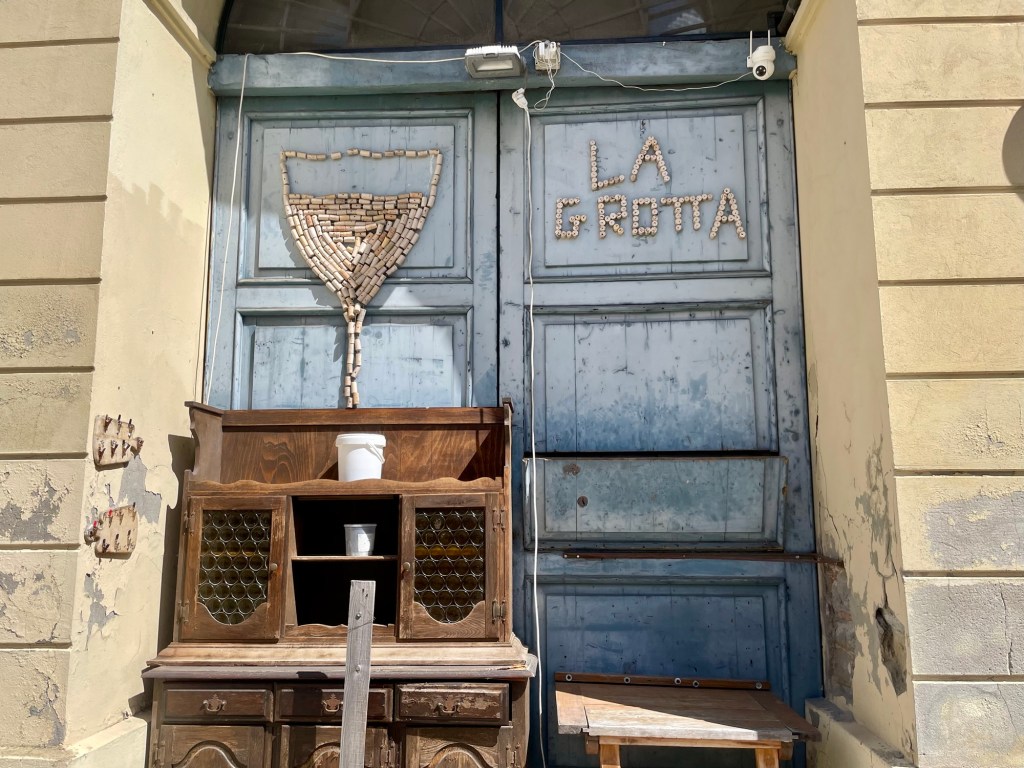
    There was a Sardinia flag on one of the houses that lined the road, and I passed a man who was fitting new shutters on his house. A fancy-looking restaurant had hung wine bottles from an olive tree outside and the door was decorated with a sculpture made from cork. 
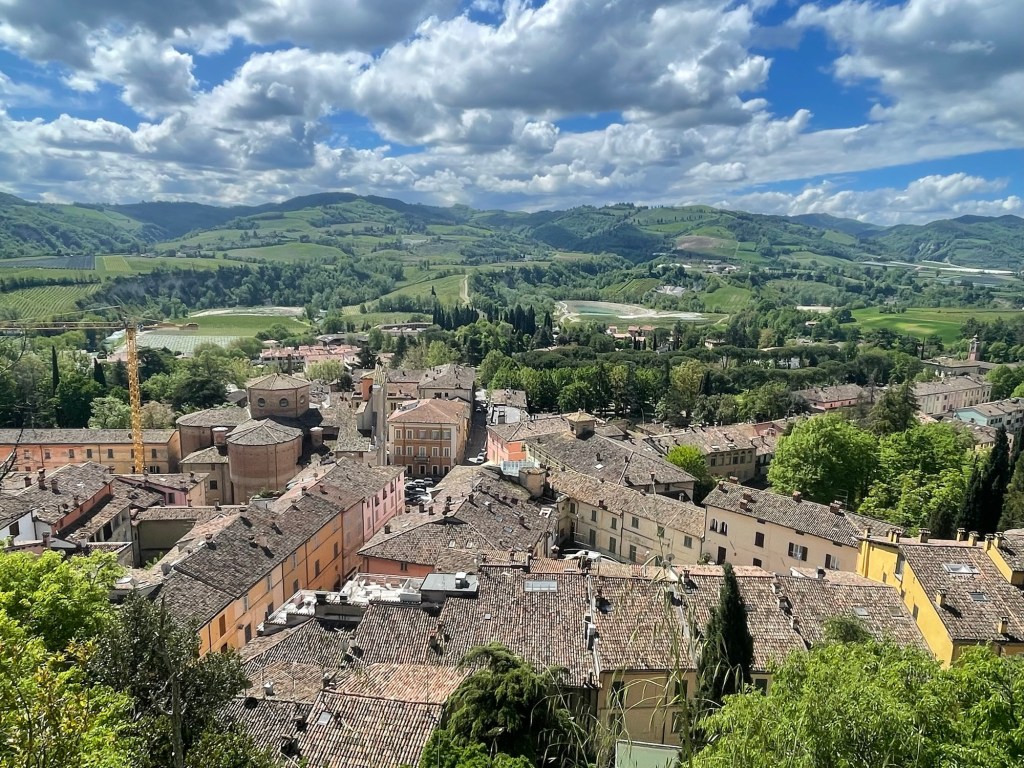
    The Dante trail takes you right through the heart of the medieval town of Brisighella. The cylindrical turret of the tower of Orologio, built for military purposes in 1290, dominates the sky above the majestic town hall.

    The butcher’s shop, or macelleria, was doing a roaring morning trade and a boutique called Woman included, among the tempting items in the window, a beautiful crochet top and leather boots.

    The road up out of the town was closed and so I had to take a scenic detour up some very steep steps that were about half a metre tall. I heaved myself up and the sweat was soon pouring from my forehead down into my eyes, rendering me partially blind. Leaving my bikini behind with Alina’s one remaining sock clearly hadn’t been enough to lighten the load of my heavy bag. 

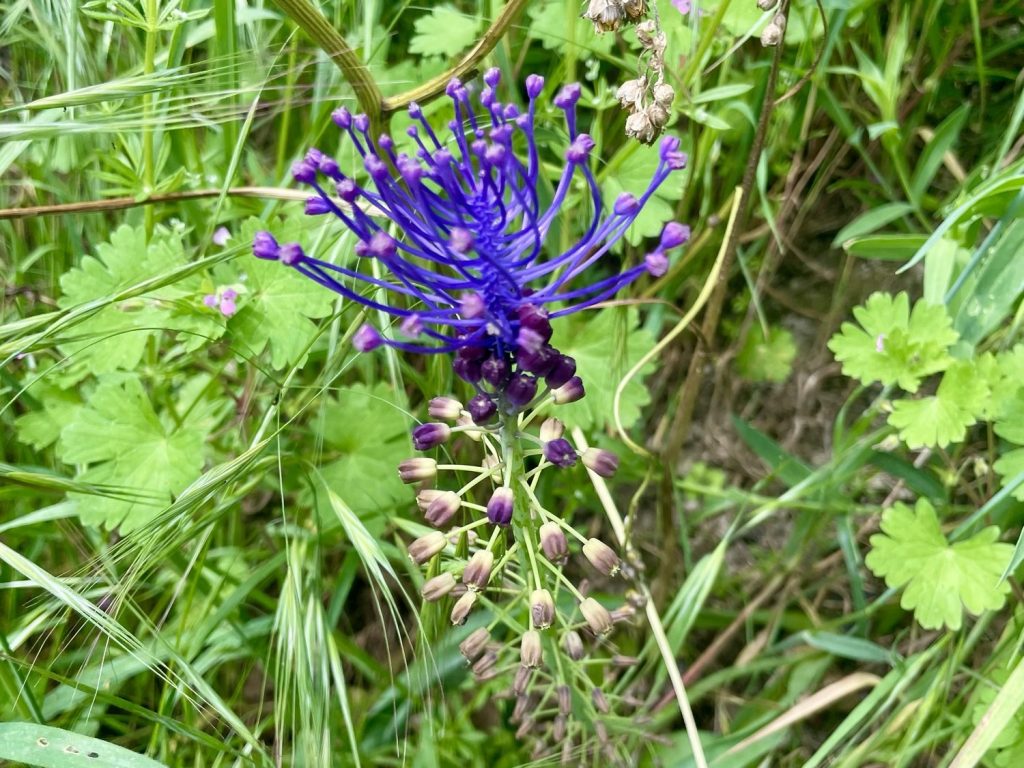
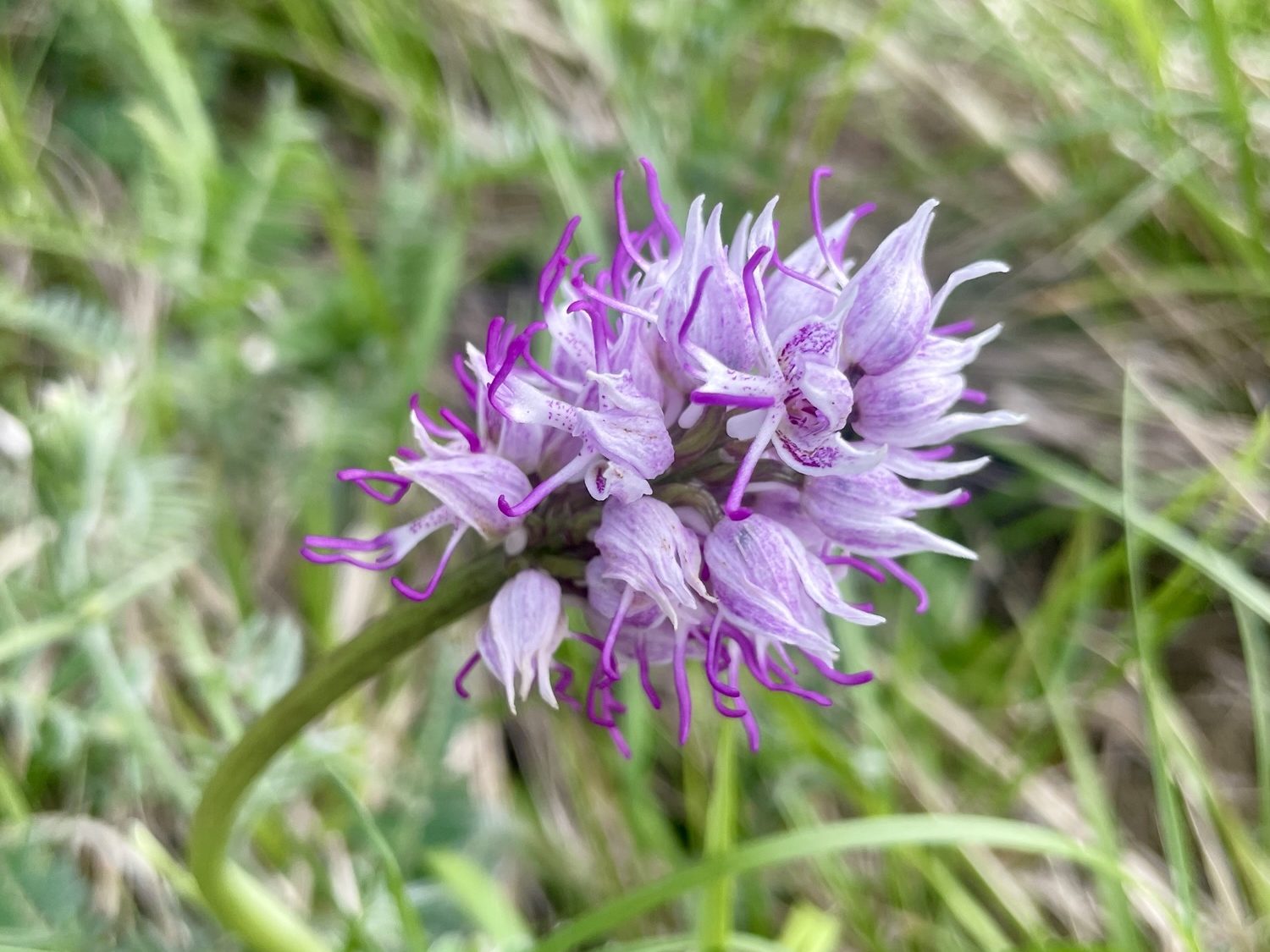
    Succulents were nestled into the rocks and a purple flower called tassel grape hyacinth sprung out of the verge. It looked alien with its prongs – something like the covid virus. As I passed the church, the butterflies were back out in full force.
    Then I was back on the path which took me into a national park. It featured an open-air geology museum on the old site of the quarry of Montecino. I was in the land of gypsum, the second hardest mineral after talc on the Moh scale of mineral hardness, or so my geologist mother had informed me. She’d kill to be here. On holiday in Tunisia she had swooned over the abundant gypsum. ‘The desert rose’, she’d called it.

    The Gypsum Vein is a small mountain range characterized by one rock only, Selenite. It marks the landscape of the Apennine foothills of western Romagna. This, in turn, is made of just one mineral: shiny, soluble, slippery gypsum. 

    The landscape’s origin dates back to about 6 million years ago when the Mediterranean Sea and the Atlantic Ocean were separated and the sea water evaporation caused the formation of several strata of crystals that are the origin of today’s ravines. The solubility of gypsum produced a tessellation of caves and sinkholes (it is almost ten times more soluble than limestone), making it an area of great geological interest to Europe. The site had given rise to fossils from over five and a half million years ago: of rhinos, monkeys, hyenas, antelopes and crocodiles. But a sign made clear that fossil hunting was not permitted here. The park was to be enjoyed, not excavated. 

    I passed a French couple who I wished a bon chemin and stopped to locate my cap to ease the sweating situation. I had only done two kilometres but I was exhausted. 

    I exchanged voice notes with Alina whose mother’s house in Ukraine had been hit by a missile the day before. We shared thoughts on the mistaken assumption that refugees are somehow running away from something rather than staying to fix the problems in their countries of origin. 

    This brushland was a new kind of scenery for me. Something like broom scraped my arms as I walked and two mountain bikers came hurtling down the hill:

    Occhio! ‘Watch out!’

    ‘But are you by yourself?’ one man stopped to ask me. 

    I was, I replied for the umpteenth time. With every time I was forced to declare it, I felt more and more alone. 

    I whistled back at the birds as I climbed up the dirt track road which soon turned to gravel. An orange peel left by a previous hiker was being devoured by ants. 

    I offloaded my empty Red Bull can in a bin in a parking lot that was next to a sign with an arrow that simply read Carne – ‘meat, this way!’
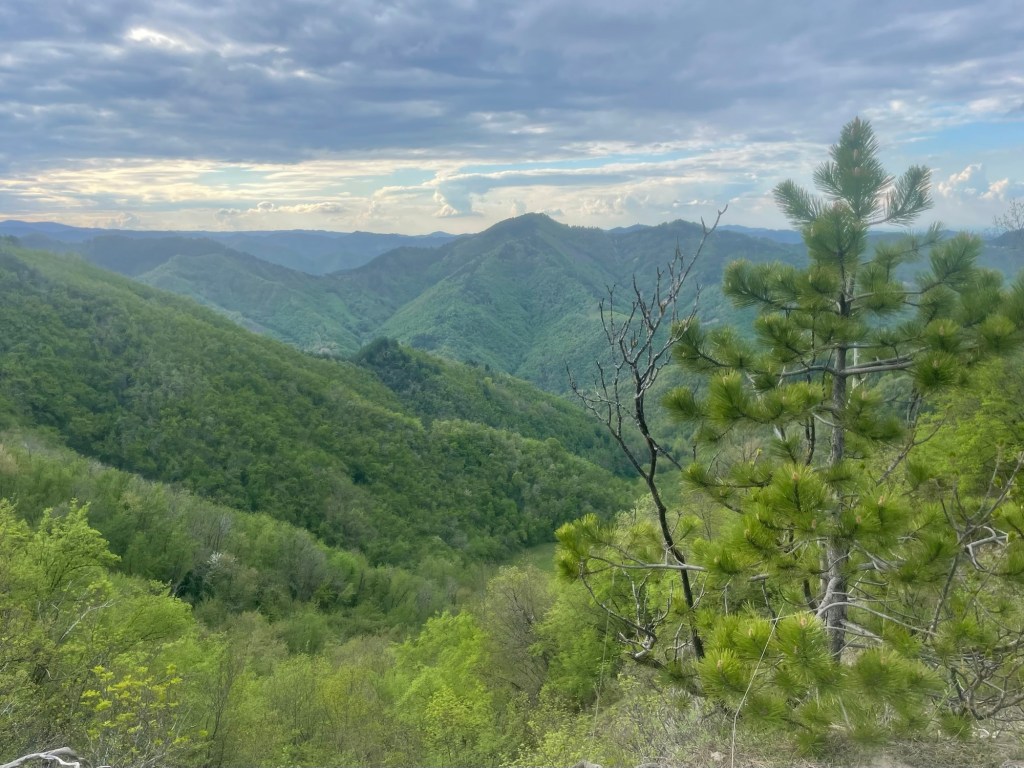
    The valley had been slashed and hacked as if it had been visited by the devils in Dante’s infernal circle of schismatics.

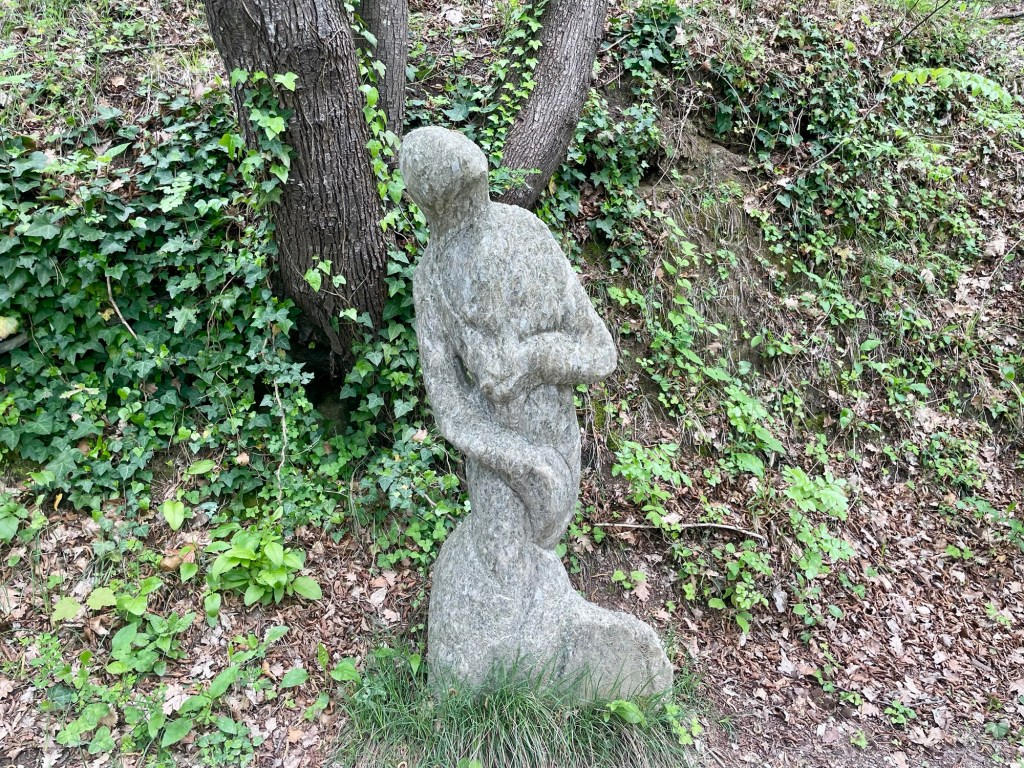
    I could hear the sound of children laughing and soon arrived at a scout camp which was surrounded by sculptures. One resembled a dragon; here was a lizard and, there, a tortured woman who made me think of the Bernini sculpture of Persephone turning into a tree to escape violation by Hades. The statue is housed in the Galleria Borghese in Rome.

    Two years ago, on a tour that I had taken with refugees, led by my brilliant friend and curator Stefania, one woman had said the sculpture reminded her of the sexual violence that her and others had experienced in Libya en route to safety in Europe. How she wished she could have turned into a tree. 
    The sun had gone in and it was nice and cool under the trees. In the panorama, the pine trees sprung up like bishops in a chess game.

    Several scouts filed towards the camp heading in the opposite direction to me. My Granny had been a scout leader, known as Akela after the character in The Jungle Book, but I’d never been a scout myself. Though I grew up in the city, my love of the outdoors had been instilled by my mother and father through our regular walks in the ‘Country Park’, a beautiful stretch of parkland some fifteen minutes’ drive away from our house. There was also, nearby, an old quarry where occasionally, with friends, I’d swim. Once I got a fishing hook caught in my foot. That hurt alright!

    My feet hurt now alright, and I was relieved to reach a stretch of downhill. But looking at the map I was reminded that what goes down must go up. Today would not be easy.

    I put on some music to elevate my mood. The song, Despacito, poignantly rang out and I sang along to the Spanish lyrics. On my most recent trip to Cuba, I had teased my friend Jo by requesting the song repeatedly from the ubiquitous itinerant street musicians. 

    The hills undulated like pencil sharpener shavings strung out across the landscape.

    The yellow broom smelt magnificent, and pinecones littered the path. The poppies opened up their petals like the wings of a butterfly. It was 1pm now and the sky was smudged with clouds. I passed a monkey orchid and bushes of juniper. 
    I didn’t have time to check out the Museum of Olive Oil but I was making up time on the gentle downhill patch. To look down was to see a furry black caterpillar curled in a ball; to look up was to see the vineyards dusted with buttercups.

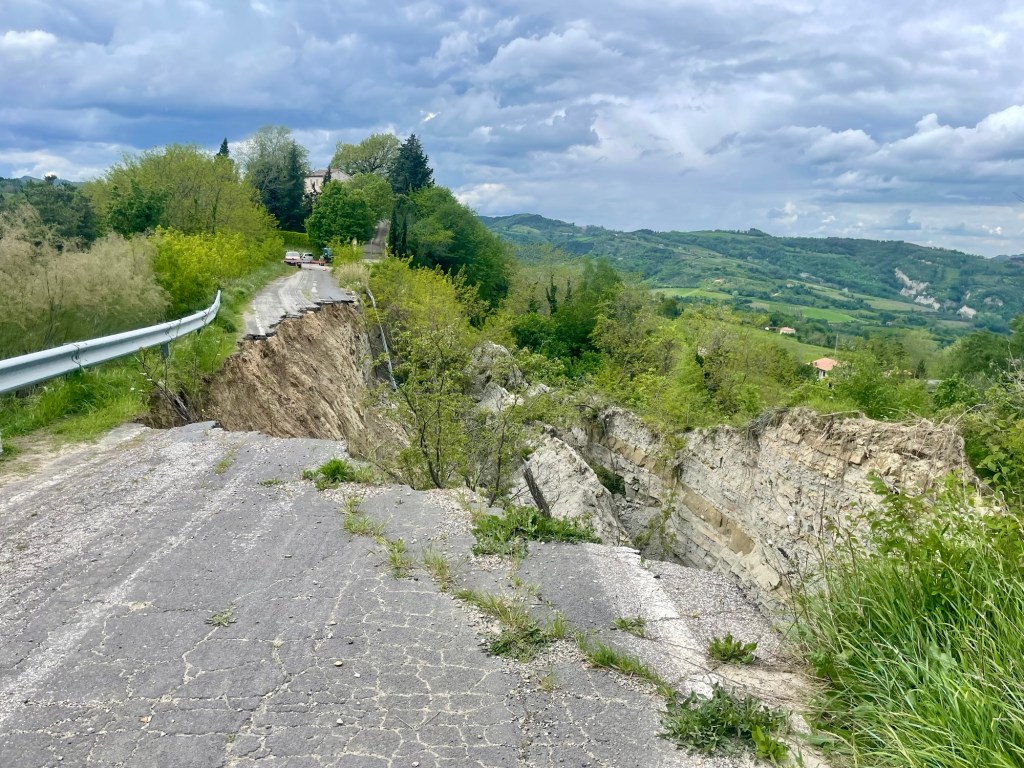
    I proceeded past a sign saying the road was broken up ahead only to find that yet another landslide had torn into the cliff face. Luckily, I was able to hop over the barrier and traverse the crevasse on the left hand side. I put on Fleetwood Mac.
    The combination of smoked salmon and tzatziki was so, so good as I stopped for lunch, looking out over the vines. I noticed a worrying hole in my shoe. I still had quite a long way to go but I wanted to take a nap. This plan was thwarted by a tractor that emerged spraying pesticides.

    A car sped past. But where had it come from? The road was broken? Oh well, I’d missed my chance to hitch a ride.

    Some pigeons perched on an electricity wire. A delicate trace of honeysuckle decorated a laurel tree.

    And now came the ascent once more. I noticed the various signs signaling that European Union money had been invested in the area and passed another landslide, though this time the road was still navigable.

    My feet ached and I stopped to take some ibuprofen. Now I was listening to an audiobook that Alina had recommended, The Signature of All Things by Elizabeth Gilbert. It was about botany. I thought of my grandfather who I had never known, but who had been an academic at the University of Manchester. A doctor of blue green algae or cryptogamic botany, he had apparently been a walker too. The family legend went that he had even been shortlisted for the Edmund Hillary Everest expedition. In my dad’s house there still hung a beautiful black and white photo of him at the summit of Mont Blanc.

    I tried to channel that spirit as I ploughed on with painful feet. I tried smaller steps – that hurt. I tried longer strides – that hurt too. A tiny spider hitched a lift on my thumb nail. Desperate for some company in my hour of need I played some opera music. The highs and lows of the singers’ voices matched the ups and down of the path.

    My phone signal had gone so I couldn’t call anybody for motivation. The rocks weren’t massaging my feet now, they were hurting them. I’d only done 12.1 kilometres but the incline had been 72 floors.

    A chapel to the Madonna spurred me on for a while, then I collapsed by some abandoned farming equipment. I would take some paracetamol too. Shit, how would I fare tomorrow, and the day after, and the day after that?
    I watched a hawk sweep across the sky and contemplated it a while. It hovered then soared down in a flurry of feathers which were dark on the outer edges and a lighter brown in the middle. It screeched into the sky. I hear you, I thought. This was the sound of my foot cramps. 

    I put my feet up on my bag and closed my eyes. God, it felt good to be horizontal. It was nearly 4pm. In my body I felt fine. It was just that my stomach was still playing up and my feet were aching.

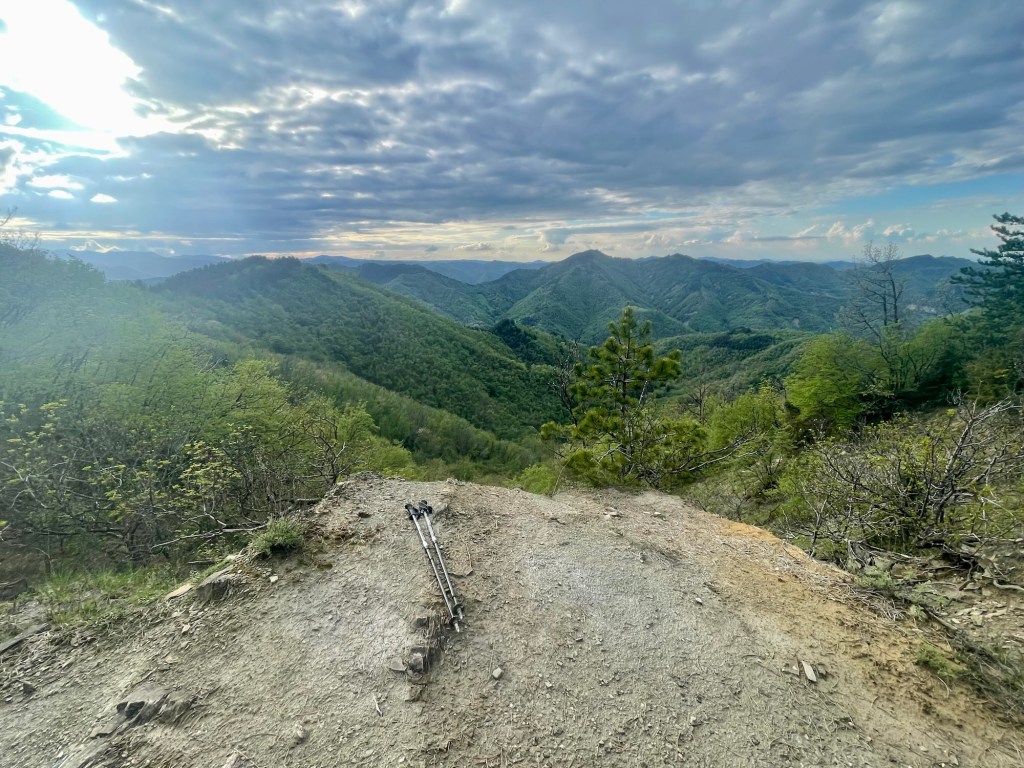
    I carried on, listening to the sound of the hawk and dogs barking in the distance. I was rewarded by a spectacular 360 degree view of the mountains which was framed by wild rosemary and thyme and blue daisies that exited the ground in little puffs of mauve. 
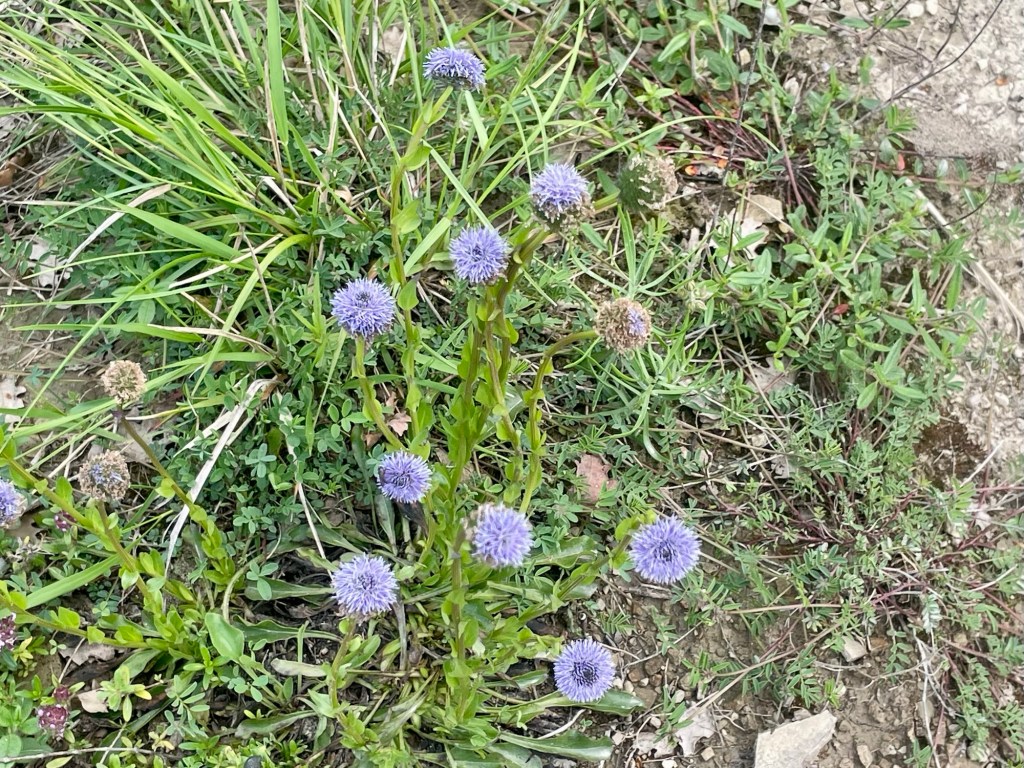
    The pain killers had taken the edge off, but every step still hurt and I had another two kilometres to go. There was a brief flirtation of rain, just enough for me to cover my bag and myself, but then it passed as swiftly as it had arrived.

    I pushed down hard on my hiking poles to relieve the pressure on my feet.  By 6 o’clock, I told myself, I’d be there. I ate some pistachio nuts and carried on my way. Panting like a dog, I dodged muddy puddles here and there and noticed an interesting orange fungus on a tree stump.

    A sign informed me that I was in Ca’ di Malanca where on the 10th of October 1944, Italian forces had clashed with German soldiers. There had been 42 fallen partisans. It was humbling. 

    The forest opened up to reveal spectacular views on either side. I saw some parasites on an oak tree and thought of Paolo back in Ravenna and his ink. What a man he had been. 

    Now the path led across a sheer rock face littered with boulders with precipitous drops on either side. I thought again of Dante’s hike through canto 12 of Inferno,

    ‘And so we made our way across that heap
    of stones, which often moved beneath my feet
    because my weight was somewhat strange for them.’

    Attention is drawn here to Dante’s weight to stress he is a human being visiting the underworld. I hoped Dante had had good boots.
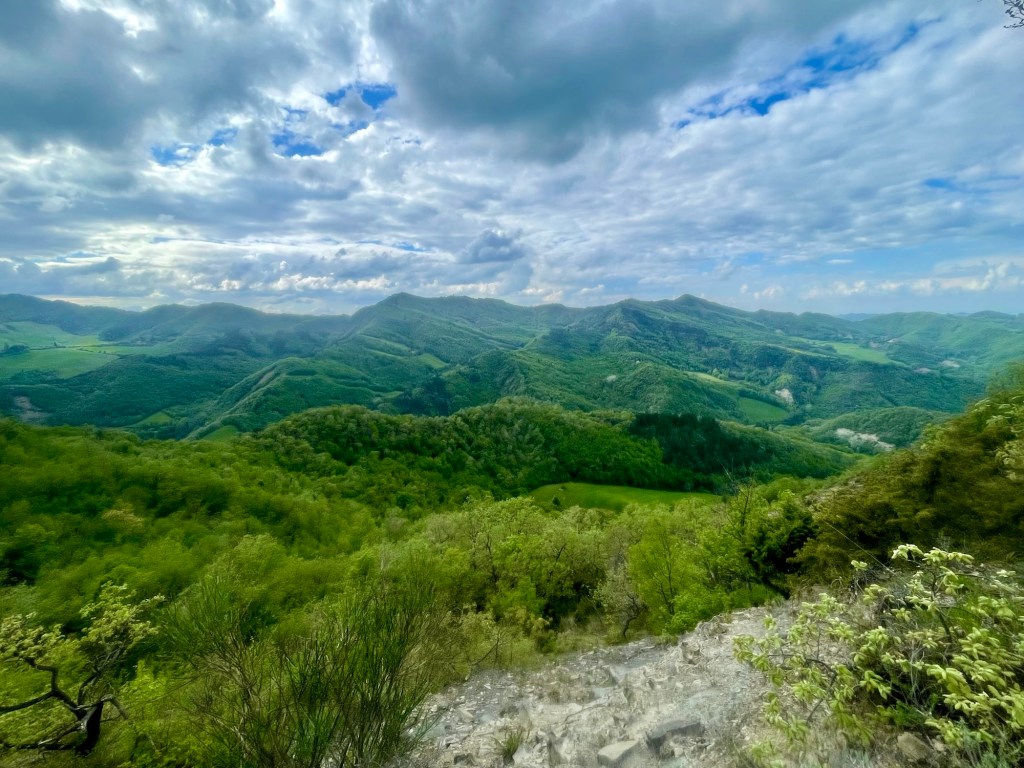
    The sun was now illuminating the mountain tops in a vibrant green. Then, I could hear a dog, I saw a car and my heart started to lift. Here was Enrico, my host for the night who had promised to meet me. 

    I couldn’t have been more happy to see him.

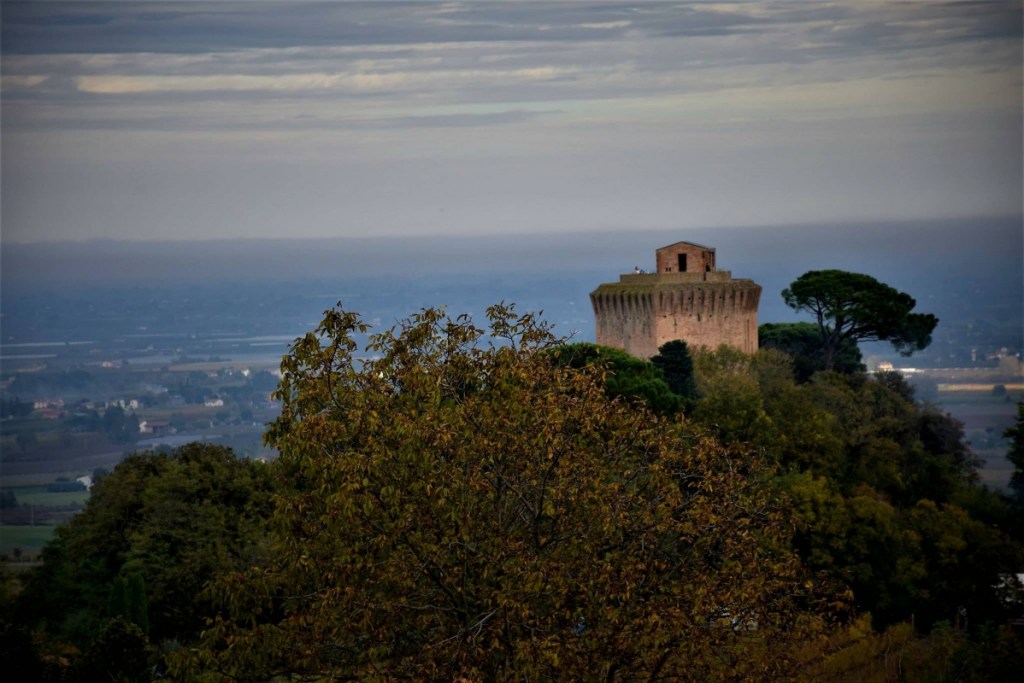
    He showed me that across the ridge you could see Ravenna and, see that last line? That was the Adriatic sea. On a clear day you could see the mountains of Croatia.

    I immediately liked this man who was accompanied by two adorable dogs, Mia and Cilian.
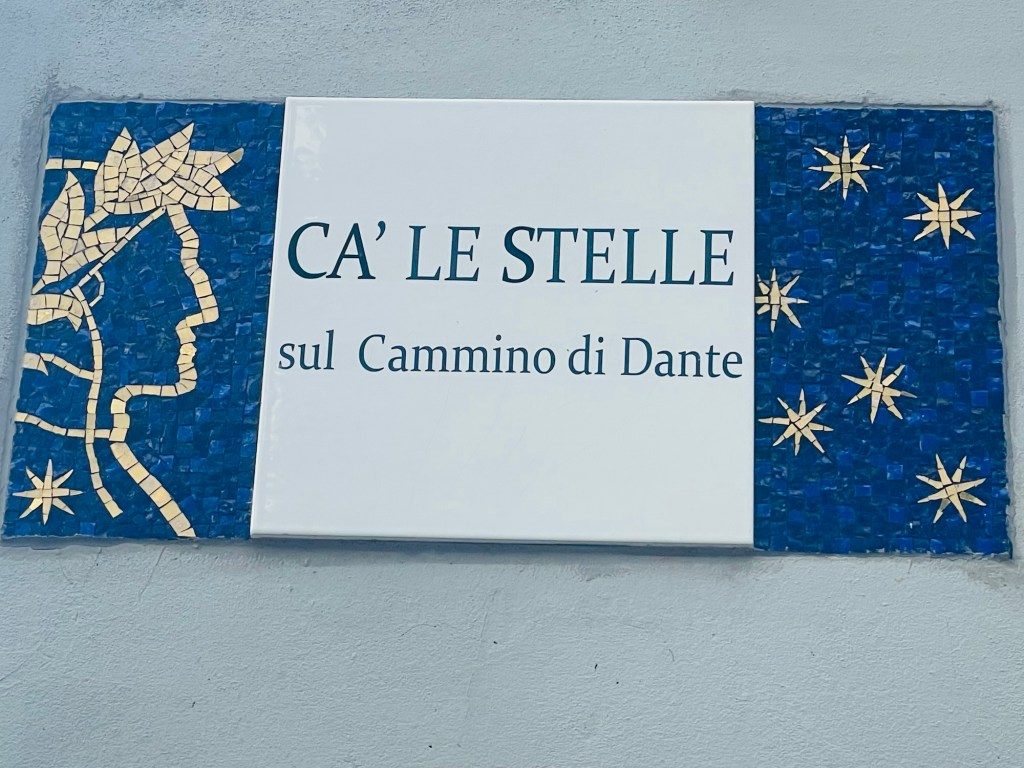
    Enrico was a keen geologist and star gazer – to love planet earth is to love space after all, he explained. He was one of the patrons of the Observatory that sat atop a nearby hill. When they’d built it, they’d found an unexploded bomb from the war.

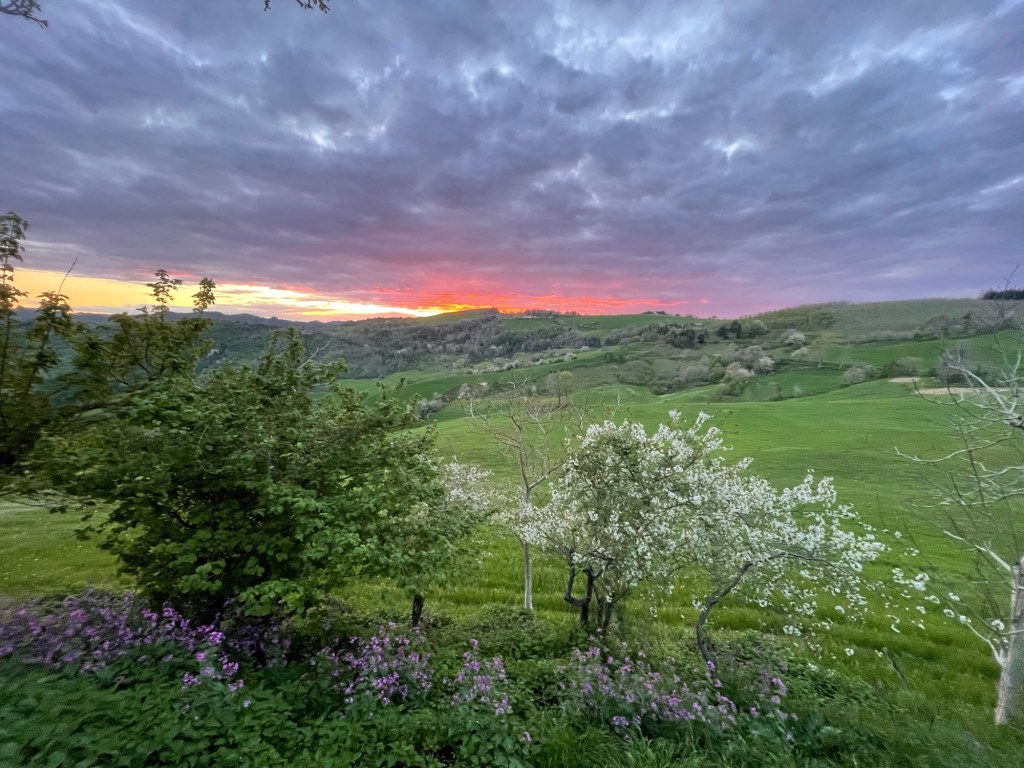
    Together we passed Monte Romano, a tiny village composed of just ten houses, and arrived at his home. It was folded into the hills in the middle of nowhere. The view was breathtaking. You could see Mount Falcone which I’d crossed from Florence in the snow, and here were the origins of the Arno and Tiber rivers.
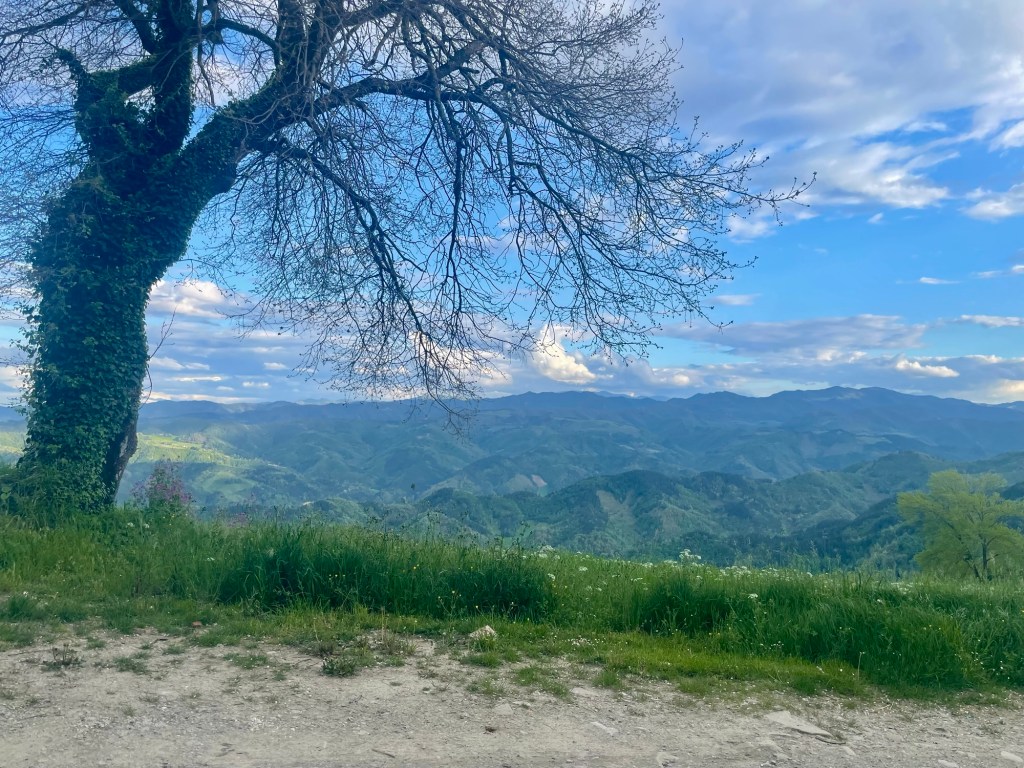
    It was moving to see how far I’d come. Perhaps I could do this after all. 

    ‘And you’re doing it without the threat of the death penalty over your head like our dear Dante,’ Enrico reminded me. We laughed. 

    Enrico’s wife had left to pay her respects to the late Pope at 2am that morning and so it was just me and Enrico who enjoyed an aperitivo on a little balcony as we watched the sunset. He had grilled aubergines with the local oil into a delicious sauce to make bruschetta. The olives melted in my mouth. 
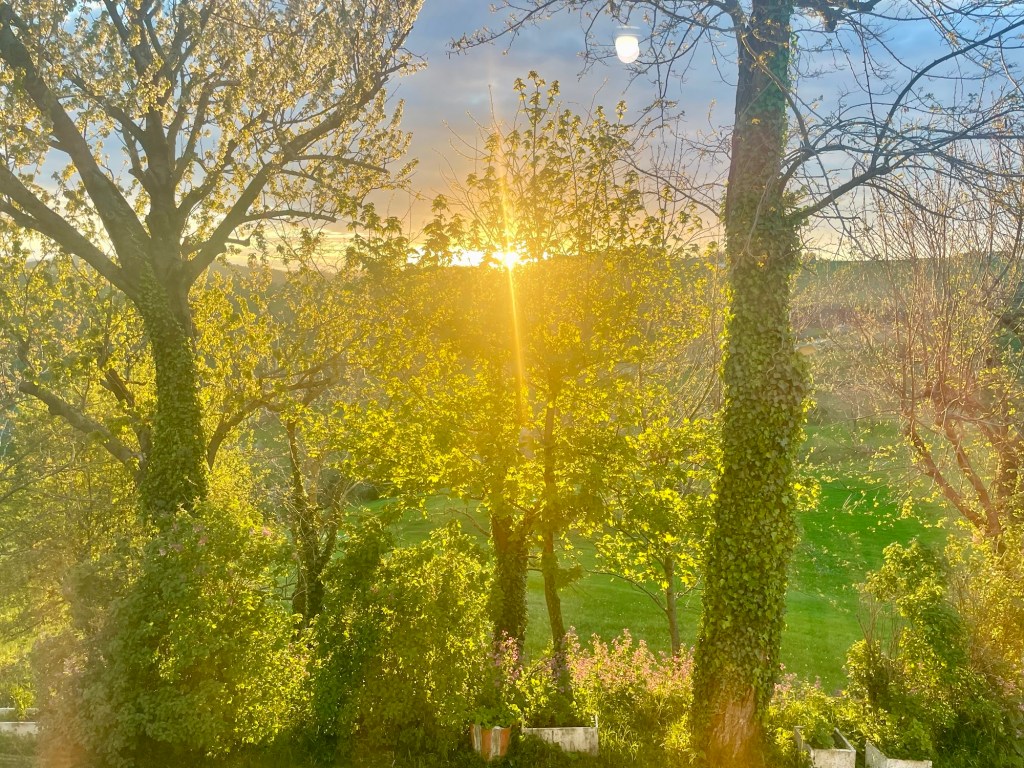
    That night we ate tagliatelle with mushrooms he had foraged from the surrounding woodland with pepper he had brought back from Madagascar and discussed all things geology and stars beside a roaring open fire. The mushrooms were called St George’s mushrooms, since the best day to collect them was St George’s Day.

    Enrico also prepared me a delicious baked potato with rosemary and some grilled cabbage and tomatoes which were served with pecorino and some local squacquerone cheese. It was all delicious. 

    The house was as stunning as Enrico’s cooking, with original brick walls and beams that crisscrossed above us protectively. There was an antique clock, oak furniture and a near perfect pencil depiction of Dante’s death mask which had been rendered by his grandmother’s sister for a project at school.

    And then Enrico shared with me one of his prized possessions: a striking photograph of the comet Hale–Bopp which was visible from earth in April 1997. It had been one of the brightest seen for many decades. 

    I can still recall my mum’s excitement. 

    ‘A comet, a real-life comet in the sky!’

    I had been ten at the time. It was one of my most vivid childhood memories. It won’t return for well over 4,000 years, had marveled my mum. I wished she were here to meet Enrico. 

    The dogs were under the table and I tickled one of them with my weary feet. It felt luxurious. Enrico shared with me a poem he had written about comets:

    Our existences flow rapidly.

    Like swift wandering comets

    That move

    In cold, empty spaces.

    Distant projects,

    Guarded in the dark

    Suddenly called

    To the light.

    Beauty and love

    They light up and burn

    Around this Sun.

    For each, the orbit is different,

    But it inexorably brings us

    Back to a place that reason cannot understand.
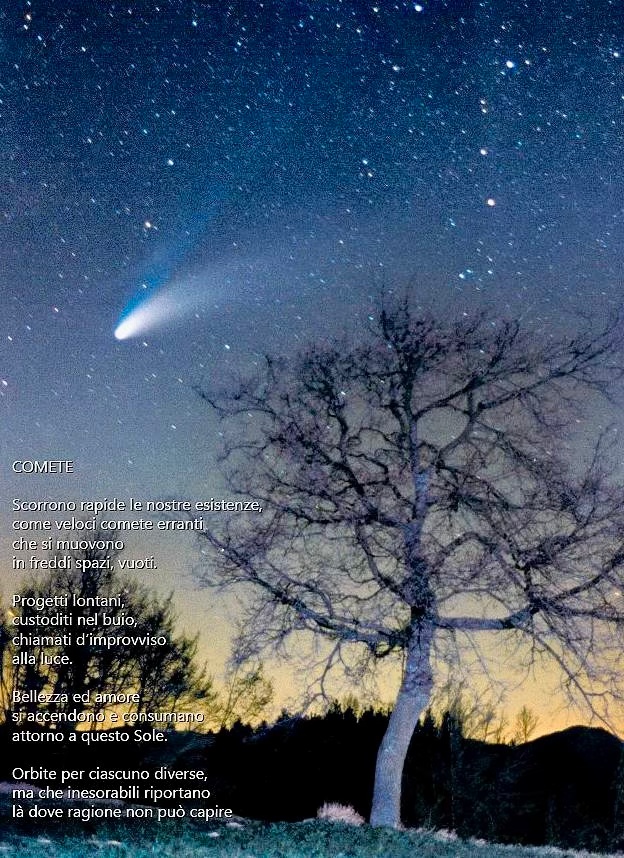
    Enrico had been the translator for Thomas Bopp, one of the astronomers who had discovered the comet before it became visible to the naked eye, on a visit to Italy during which he had signed his photograph. The photo, he proudly shared, was also featured on numerous book covers.

    ‘Comets now have names of computer programmes,’ he lamented, ‘not astronomers or lovers of the sky.’

    This man was a true lover of the sky, just as Dante had been.

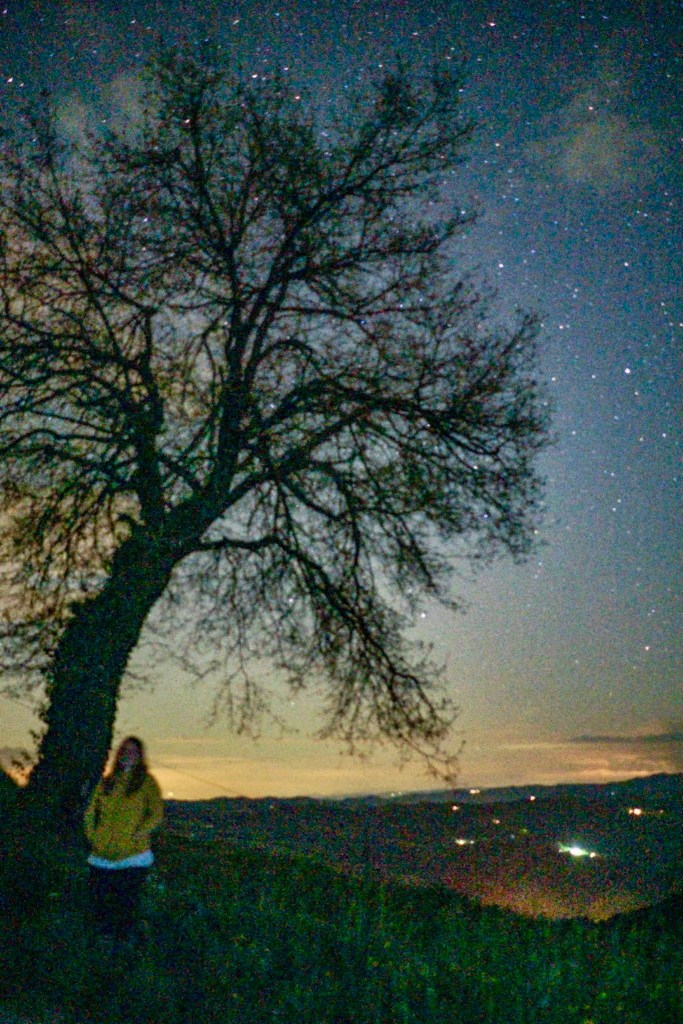
    Before I went to bed, Enrico took me outside to see the stars and took my photograph beside his favourite oak tree. I felt honoured. And naturally, I recalled the last lines of the Divine Comedy in Paradiso:

    ‘As the geometer intently seeks
    to square the circle, but he cannot reach,
    through thought on thought, the principle he needs,

    so I searched that strange sight: I wished to see
    the way in which our human effigy
    suited the circle and found place in it—

    and my own wings were far too weak for that.
    But then my mind was struck by light that flashed
    and, with this light, received what it had asked.

    Here force failed my high fantasy; but my
    desire and will were moved already—like
    a wheel revolving uniformly—by

    the Love that moves the sun and the other stars.’
  • Emergency: From Passo Vico to Bologna to Oriolo dei Fichi

    A last-minute invitation to Bologna came with some unexpected drama where I witnessed the strength of Italian family life and was impressed by the Italian health service.

    Although the Cammino di Dante is mostly a circular trail, the first day back from Ravenna required retracing the steps of day one. Since I’d already done that leg and I was in need of a rest day, after we dropped Kelsey at Ravenna train station, Oliver dropped me back at Fattoria Chiocce Romagnole where I was all too happy to stay with Rossella and her animals once more.

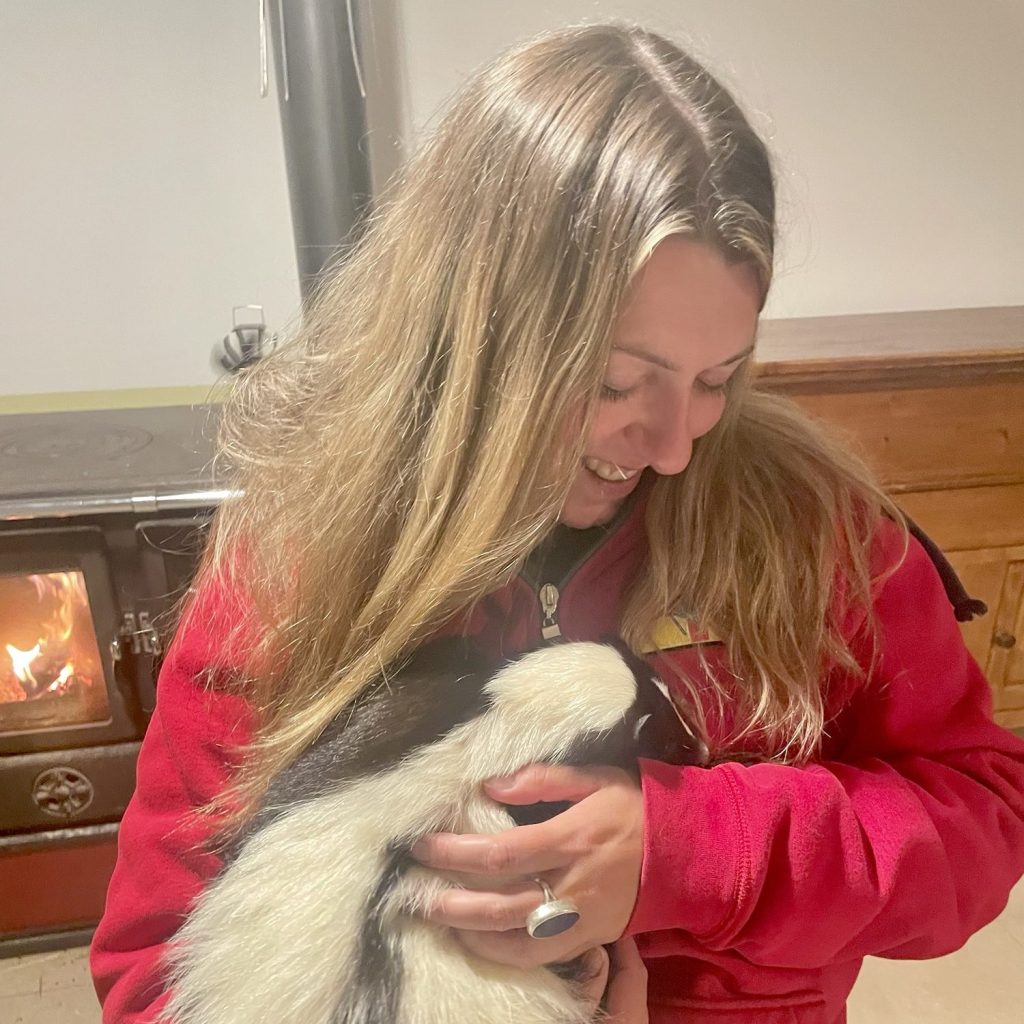
    I finally managed to wash my clothes and we spent a lovely evening together with her friends eating pizza and playing with the brood. I got to cuddle Margherita the skunk and a recently born pigeon. Rossella also introduced me to two chicks who had hatched from eggs just that day who were being cared for in an incubator. I was amazed to discover that as well as managing the farm she had an office job in Forlì  – this woman was a powerhouse!

    I had been among the first pilgrims of the year and there was a tangible sense of excitement that the season was starting. Spring was on its way which would be marked by a party to celebrate Rossella’s birthday. Kelsey would come from Rome. If only I could pop over from England!

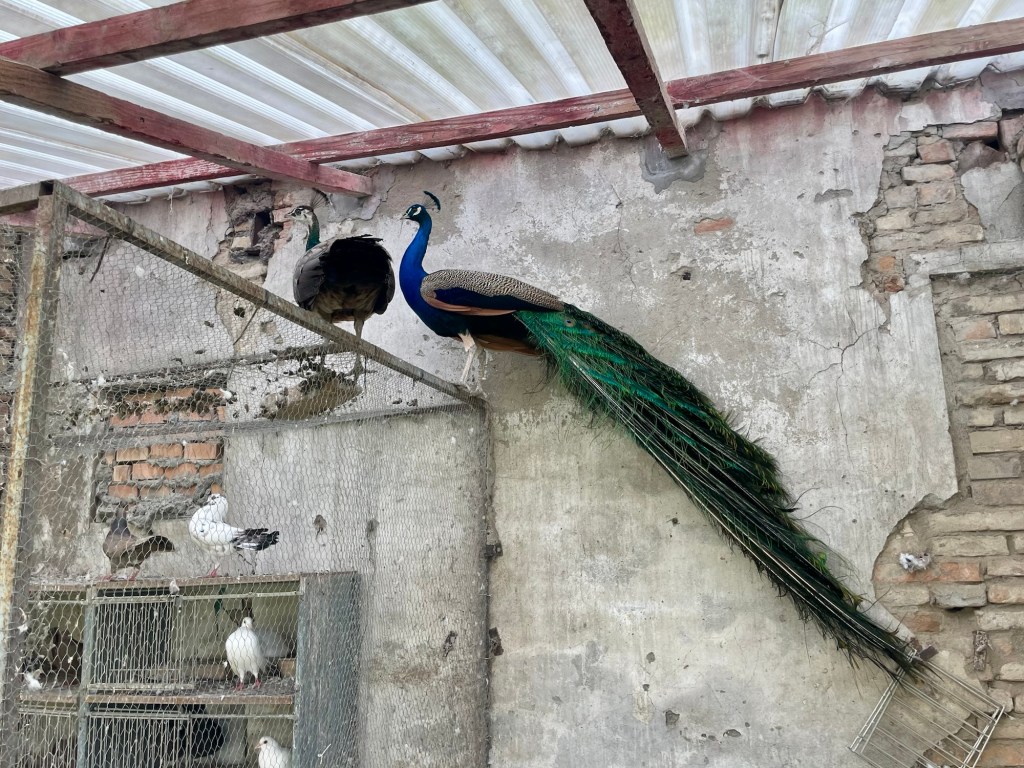
    I saluted Blu the African gray parrot and Raul the smaller red one. I was also introduced, to my delight, to Dante and Beatrice, the pair of peacocks who merrily cavorted on the lawn in a frenzy of colour as we ate crisps and chatted among ourselves.

    Kelsey had brought me a nail file from her ample collection of hotel goodies – thus is the life of a UN employee – and I filed my nails neatly into ovals. 

    Oliver had invited me to the regional meeting for walking trails the next morning and, given that I’d be showing up in my rather pungent by now hiking wear, the least I could do was this small gesture of civility.

    I took a shower – with hair conditioner Kelsey had also provided that came in a miniature bottle – and looked at myself in the mirror of the wardrobe. Perhaps I had lost a few kilos. I noticed a large bruise on my right buttock where I had fallen in the Apennines on my way to Ravenna. It was the size and colour of a Victoria plum. 

    Despite my painful foot blisters, I felt in shape and ready to tackle the backwards leg of the cammino. An email arrived from Anna sharing much good will, an invitation to come and stay with her and write, and a reflection that perhaps next time I could consider spending more than one night in each place. She was right. It was saddening this constant stream of hellos and goodbyes; hence I was so happy to be back at Rossella’s farm. 

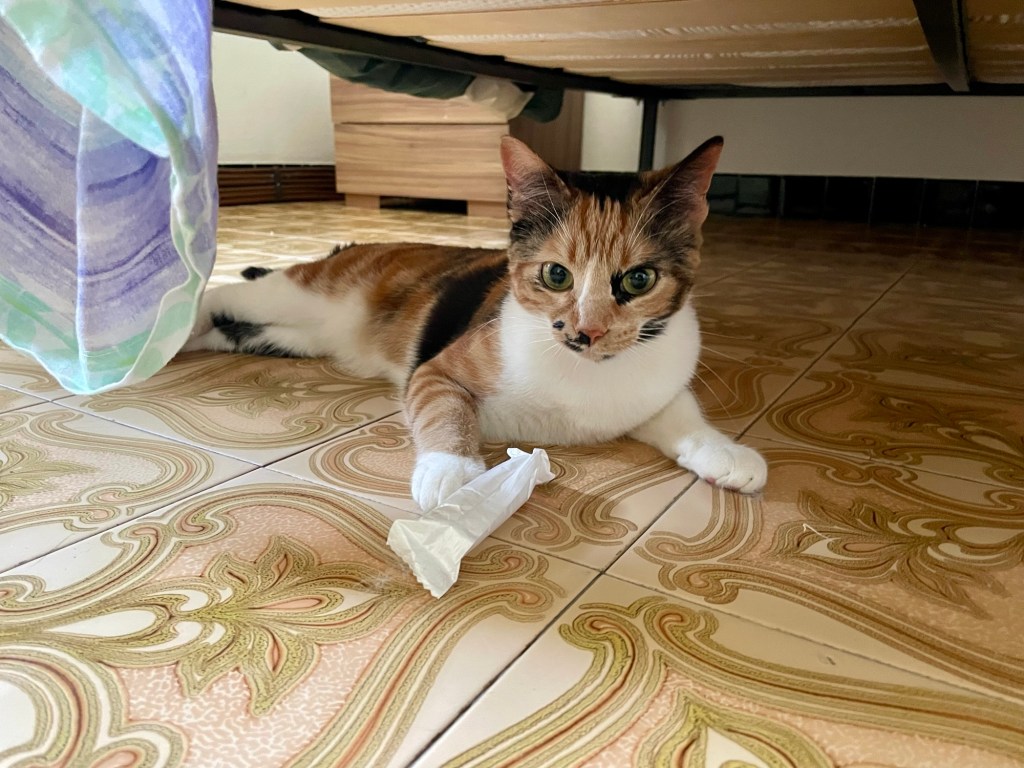
    One of the kittens batted a tampon underneath the bed. The other toyed with my shoelaces. This place had become like a second home and I wrote as much in the little guest book. 

    Oliver picked me up the next day in his large grey car and off we went to Bologna for the regional meeting of trail heads. There would be some 30 different walks represented including religious pilgrimages, such as the cammino of Assisi, and also the relatively new but expanding phenomenon of cycle trails. 

    Though it is not part of the official route, it felt right to visit Bologna on the Dante trail since he was known to have spent time there, probably teaching at what is one of the world’s oldest universities. I had visited the city on two previous occasions, once with my mum and once to visit my former partner who had procured a prestigious visiting professorship. 

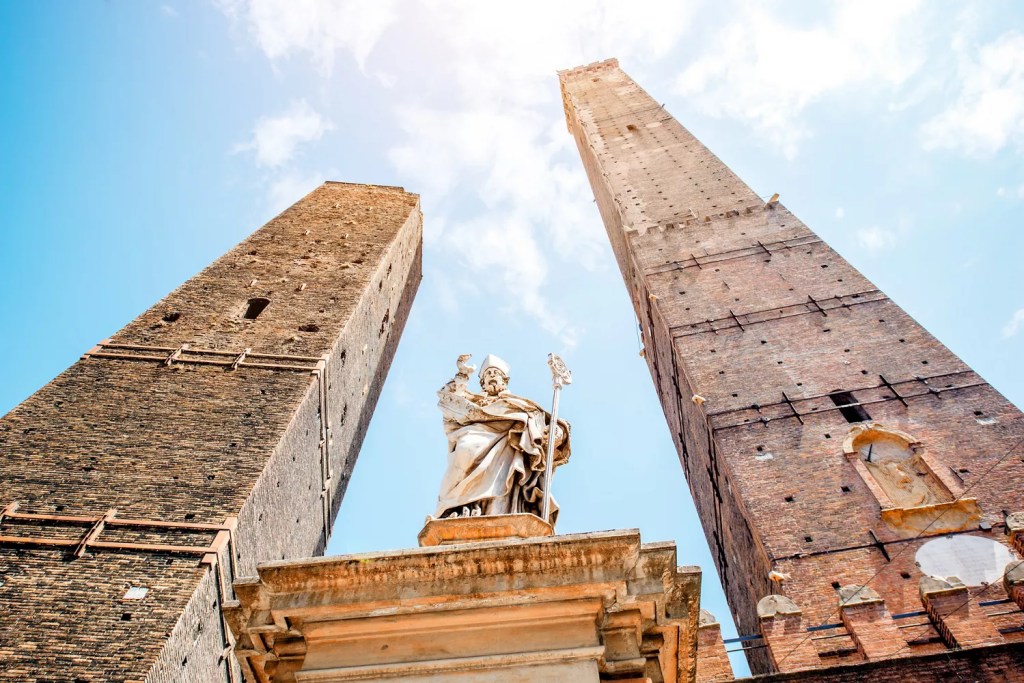
    Unlike Florence where the medieval towers had mostly been flattened, here in Bologna the towers rise up in a phalanx, representing the phallic wealth and status of families who fought for power there. One such tower, the Garisenda tower, is mentioned at the end of canto 31 of Inferno to describe the staggering stature of Antaeus, one of the giants who are punished for opposing God, between the eighth and ninth circles of Hell. 

    ‘Just as the Garisenda seems when seen
    beneath the leaning side, when clouds run past
    and it hangs down as if about to crash,

    so did Antaeus seem to me as I
    watched him bend over me—a moment when
    I’d have preferred to take some other road.

    But gently—on the deep that swallows up
    both Lucifer and Judas—he placed us;
    nor did he, so bent over, stay there long,

    but, like a mast above a ship, he rose.’

    Antaeus transports Dante and Virgil to the deepest part of Hell, the frozen lake where he is to meet Satan himself.

    We don’t know precisely when Dante arrived in Bologna, but the details in his writings make it clear that he knew the city well. After Florence, Bologna is the most cited city in the Divine Comedy.

    On the way to the meeting, Oliver explained to me something of the politics of running a cammino. You had to make sure you had official permission for all the signs, and individual communes would lobby you to have you include them in the itinerary in order to boost the footfall of tourists there. As it was, the Dante trail had been divided into two rings, each providing a separate circular trail for the Tuscany and Emilia Romagna regions. After some gentle persuasion, they had also included an optional detour to include the city of Faenza.

    I felt at home talking bureaucracy and politics. I had worked at the European Parliament before Brexit, after all. 

    ‘Corruption was the biggest sin during Dante’s time and so it remains now,’ cautioned Oliver.

    As he mapped out the complicated process of fundraising to maintain the trail – putting up signs and information boards, cutting back brush, running the website, welcoming pilgrims –  I thought of Dante’s portrayal of the money lenders in Hell who have their heads bowed forwards for the weight of the money bags around their necks. The Cammino di Dante wasn’t all daisies and dandelions after all. 

    ‘That’s politics,’ sighed Oliver.

    Oliver had become involved in the trail a few years ago after re-reading Dante following a heart attack,

    ‘It was like opening a new book,’ he said. To read Dante was to ‘enter into a new world.’

    On the way to the meeting, Oliver spoke fondly of his wife, Donatella,

    ‘When you’re old, you need someone. She’s my soul mate.’ 

    I thought of my dad and his girlfriend to whom I’d sometimes been too harsh. Love was love after all. 

    Once arrived in Bologna, we parked the car on a street on the fringes of the city and Oliver covered my backpack with a patterned cloth:

    ‘Ochio non vede, cuore non vuole’ he said.

    What the eye doesn’t see, the heart doesn’t grieve. 

    It was a fifteen-minute walk to the towering palace where the meeting would be held and we stopped in a bar for a quick coffee en route. Oliver had a decaffeinated one – I had my usual, a double espresso macchiato. Yes, I was addicted to caffeine. 

    The district was business like and very contrary to the medieval city centre. 

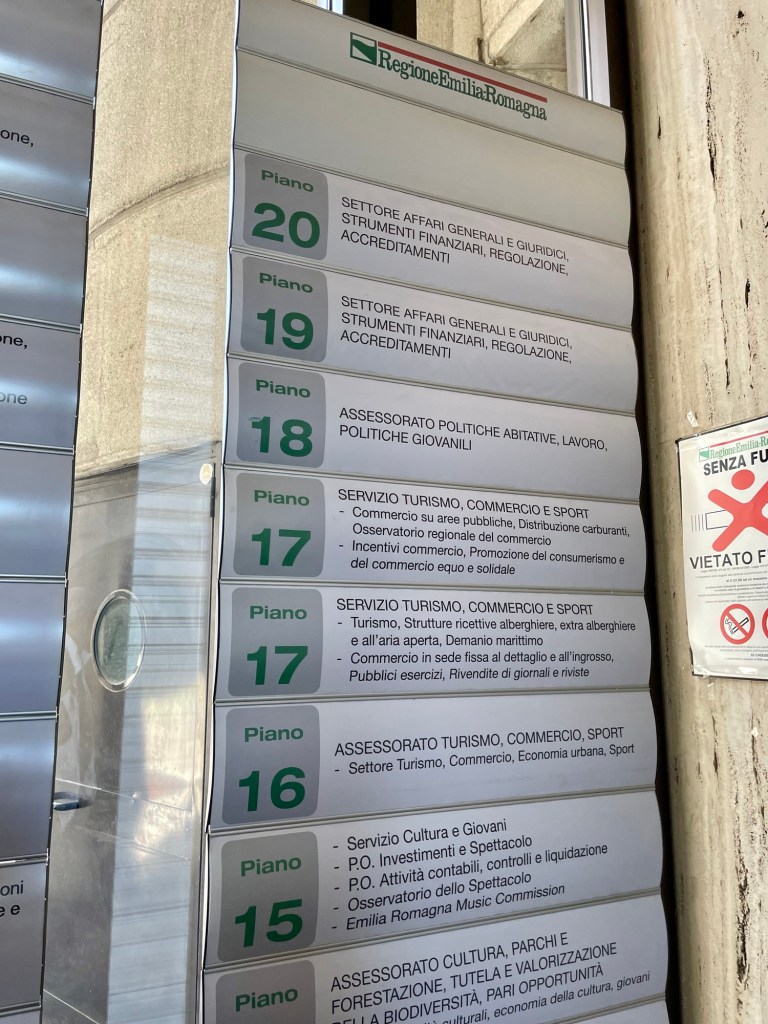
    We located the building and shot up in the dizzying elevator to the 20th floor from where we exited into a meeting room. Some people had already arrived, and Oliver introduced me as a pilgrim and student of camminos.

    There followed a 90-minute meeting in which the different trail organizers each contributed thoughts on issues and opportunities to the regional office executive, a smart woman who greeted me in English and informed me that she had studied at Leeds University. It was highly formal. Everyone rose when she arrived. She was dressed in thick white glasses and a perfectly matched necklace. Business cards were flicked around like tiddledywinks. 

    I felt somewhat self-conscious not to be dressed in a suit and was relieved that at least I’d been able to wear clean clothes.

    Some of the trail organisers joined on Zoom, including someone who was walking as they spoke. This made me feel like less of an imposter. There was Via San Francesco, the Cammino di Saint Antonio, Via degli Abati, Via Romea Germanica, Via Misericordia, Via San Colombano…I’d have to come back to try them all.

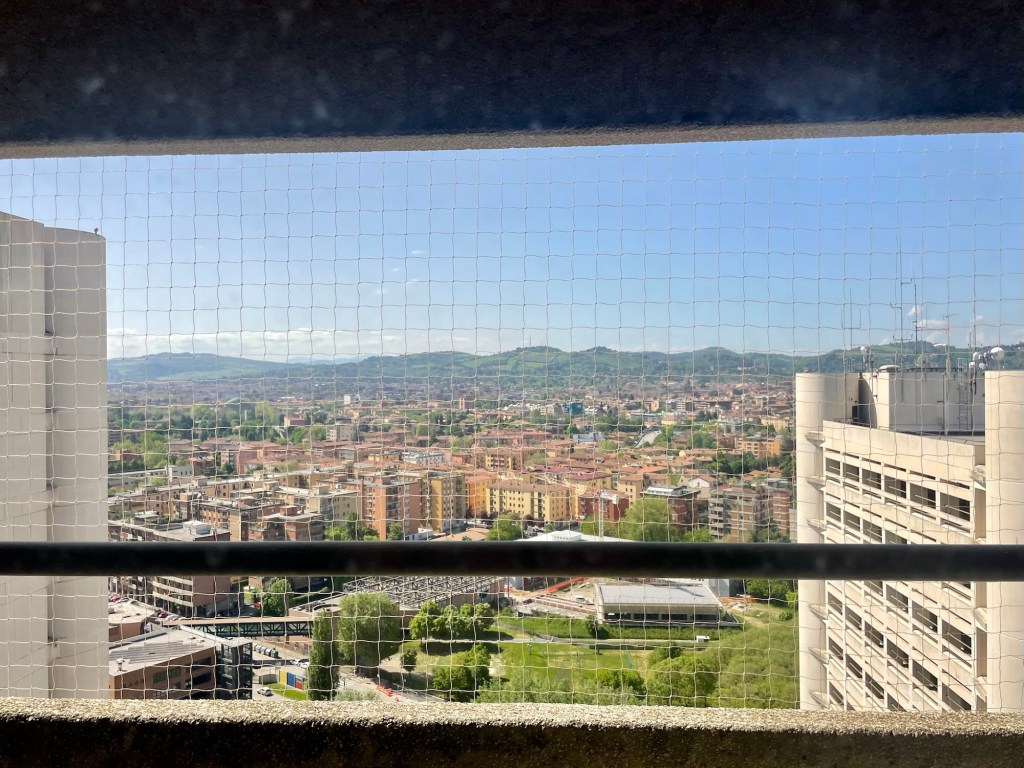
    The window afforded a panoramic view of the city.

    We went round in a circle and when it was my turn to speak, I deferred to Oliver. I was there to give witness to the reality of the cammino, he offered.

    The discussion centered on the difference between ‘slow tourism’ and ‘active holidays’ and how the region could attract more tourists from both Italy and abroad. 

    ‘A path doesn’t exist if it isn’t maintained,’ someone said, and thus came a discussion of the floods of 2023 and 2024 and the ongoing damage to many of the pathways. Other topics included the facility of arriving at trailheads via public transport and different types of accommodation, including licenses for people to pitch tents. People appealed for more resources and someone raised the topic of climate change. 

    The region should leave a margin of wild trees on the edges of the pathways and invest in more accommodation in remote areas. There was an issue of hotels only wanting to give rooms to people who would stay for a week, not one night, in July and August – there were pilgrims and then there were tourists – it was important to make the distinction. 

    I felt proud to be representing the Dante trail. The King of England had recently mentioned Dante in a speech, someone pointed out with a hint of envy, so there would be a boom in foreign interest in our trail. 

    The meeting overran and people were hurried in their contributions. The gentleman next to me was taking notes in minuscule script, using a mechanical pencil on squared paper. The lady next to him drew a mind map. I noticed that Oliver didn’t seem to be taking any notes at all. 

    At the end of the meeting, the regional deputy offered some feedback and then proceedings were formally brought to a close.

    I turned to Oliver who, I noted, was wearing a Cammino di Dante jacket. 

    ‘That’s a wrap!’ I said.

    ‘Whose bag is that?’ he replied, pointing to his rucksack. 

    I was confused.

    ‘It’s yours.’

    By the time we had exited the lift, I had started to realize that something was seriously wrong. Oliver had asked me where we were and if I remembered where we’d parked the car. Had we come in a car?

    Physically he seemed fine and so I retraced our steps in the direction of the vehicle taking note of his behaviour. Was it just a funny turn?

    I managed to locate the car, my navigational skills no doubt seasoned by the trail, but, by that point, the gravity of the situation had hit me. Oliver was not ok. 

    ‘I think we need to go to a hospital,’ I said. 

    ‘Could I drive the car?’ Oliver suggested, admitting that his head felt ‘a little funny’. But I didn’t trust myself on the Italian roads. 

    I checked to see if Uber was operational – it wasn’t – then I asked a man who was passing if he knew of any taxi services.  

    ‘You’ll be quicker calling an ambulance,’ he said. And so call an ambulance I did.

    They instructed me to illuminate the car’s emergency lights to aid them in finding our location and gave the coordinates of the street. I was preparing for a long wait and instructed Oliver to sit tight inside the vehicle. 

    ‘Where are we?’ he kept repeating. 

    Much to my astonishment, the ambulance came in five minutes. Yes, five minutes. When my Dad had had a similar episode some years back we had had to wait five hours! It was ten points for the Italian health service from me.

    The paramedics were highly skilled. They checked to see what medication Oliver was taking and got him to say some tongue twisters. Could he raise his arms?

    In my head I tried to stay positive, but I also feared the worst. Surely he couldn’t have had a stroke, right here, right now, with me?

    I accompanied Oliver to hospital in the ambulance, sitting up front beside a paramedic called Samantha who had extravagant gel nails. She was curious to hear about the appalling state of the British National Health Service from which multiple governments had cut funding in recent years.

    Five minutes.

    I still couldn’t believe the speed at which they’d come.

    Once at the hospital, they took Oliver in for treatment and I was ushered into the waiting room. Was I family? I was not. We’d called his wife from the ambulance and she was on her way.

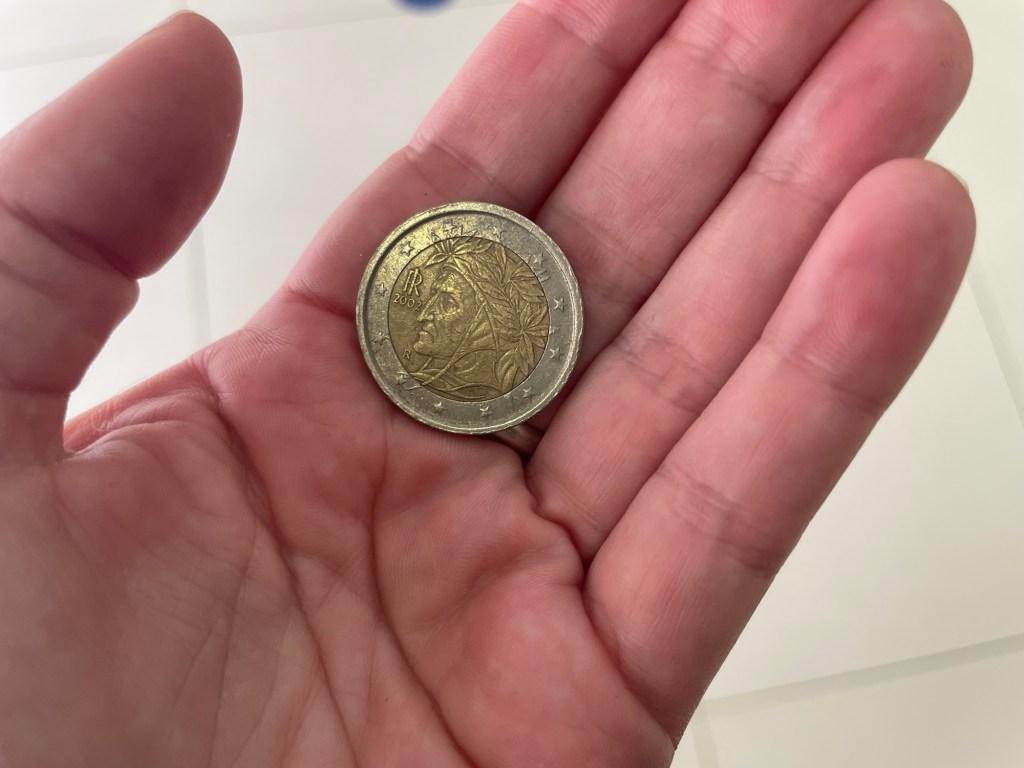
    I bought some fizzy water from a vending machine with a one Euro coin which had Dante’s face on it.

    There followed two long hours of waiting until I finally convinced the receptionist to let me go and see him. He was sat in a wheelchair in the moderate care unit ‘under observation’. He asked me where he was and I tried to see if he could remember me.

    ‘Allsopp?’ he tentatively offered. 

    But he remembered nothing when I showed him photos of the time we had spent together over the last three days. 

    As he repeatedly asked me the same questions, I thought of the thieves in canto 25 of Inferno who are punished by being metamorphosized, time and time again, from souls into serpents in some hideous version of Nietzsche’s Eternal Return.

    Like Dante, I was in shock,

    ‘If, reader, you are slow now to believe

    what I shall tell, that is no cause for wonder,

    for I who saw it hardly can accept it.’

    I also reflected that while Dante’s shades lose their bodies but not their minds, here was Oliver in the very opposite state. 

    Finally, his wife Donatella arrived. She was as lovely as Oliver had described her. Accompanying her was their son Stefano and his wife, Sara, who was five months pregnant with Oliver’s grandson. He had been euphoric when he had told me of the future arrival in the car that morning but now, he recalled not a thing.

    Upon seeing Sara, he burst into tears, 

    ‘What a wonder!’ he remarked.

    Over the next two hours, this was to happen time and time again.

    ‘But what news! What wonderful news!’

    ‘How many times have you become a grandfather today,’ Sara would later gest.

    We had to gest. There was nothing to be done but wait, instructed the doctors, and the whole situation was absurd. 

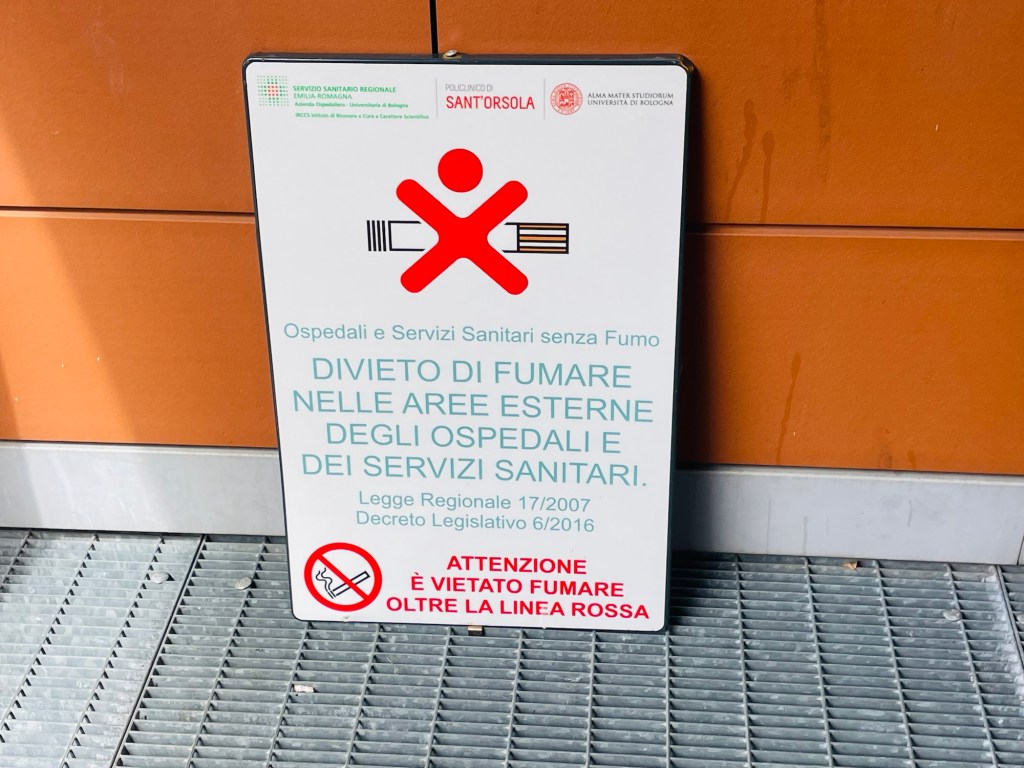
    Outside were huge signs reading ‘No smoking.’ 

    Everyone was smoking. Even I was smoking. 

    After a while, Oliver came to join us outside. He had a canular in his arm from where they had taken blood but otherwise he seemed physically in form. He asked where we were, re-discovered he was to become a grandfather once more, and, much to our astonishment, joked about his condition.

    ‘It seems I’ve had a sfarfallamento,’ he offered. This was a word to describe a funny turn that comes from the Italian for butterfly. 

    But then he would forget it all over again. 

    The Pope died several times. I got to know him repeatedly and he was moved to tears when I told him I had bought a rose in Ravenna that I would carry back to Florence with me in Dante’s honour.

    Ma che bella cosa!’

    He was thrilled I was doing the cammino and offered me sound advice. His long-term memory was locked in, but short term he could not recall a thing. 

    ‘Allsopp?’

    His niece, Martina, joined us. We swapped power banks to charge phones and it was agreed that Donatella would stay with Oliver while Stefano and Sara attended to the dogs. And then there was me. 

    I was conscious of impinging on the family’s space, but each time I attempted to leave, offering to get a taxi, they insisted I stay. Kelsey had offered to come and meet me. Rossella had offered to come and collect me. There was so much love on the trail. But Oliver’s family insisted that they would take me where I needed to go. It was ‘the least we can do,’ they repeated.

    I knew better, being in Italy, than to reject this offer. 

    I had become somehow an addition of the family and I also deeply cared for Oliver. The last three days we’d spent together had been a riot. I had had the feeling of meeting a kindred soul, even though he now did not recall a thing.

    Luckily, I’d had the sense to pin the location of the car and take some photos, and so Stefano went to fetch it while we stayed with Oliver. It seemed to distract and reassure him, talking about the trail.

    The doctors insisted it was likely just a temporary memory loss: a transient ischaemic attack (TIA) or ‘mini stroke’ caused by a temporary disruption in the blood supply to part of the brain.

    Could it have been caused by the dizzying elevator that had even caught me out of breath?

    I was sad to leave Oliver but, in a moment of lucidity, after I’d reminded him who I was for the umpteenth time, he had encouraged me to continue with the cammino, chastising me with it for the big size of my backpack which I’d taken in the ambulance from the car. 

    ‘Could you have packed any more stuff?’ he joked.

    We shared a hug. His body seemed to remember the bond we shared, even if his mind currently didn’t. 

    Thus I climbed into the car with Stefano and Martina, moving some Cammino di Dante signs from the back seat to make space for us. 

    Who would put them up now?

    Stefano was clearly terrified for his father. The whole family had come out in a display of love and support which had moved me deeply. No wonder he had spoken so fondly of these special people.

    Night had fallen and so Stefano insisted on dropping me at the end of that day’s leg of the trail which was an agriturismo in Oriolo dei Fichi. I had called to warn them I was running late. He used my power bank to charge his phone and we discussed his dear relationship with his father and what it would mean to bring a son into this crazy world.

    After finding love at 37, within one year Stefano and Sara had got married and made a baby. 

    ‘When it’s the one, you know,’ he councelled.

    There was hope for me yet.

    As an only child, Stefano had the responsibility of both his parents on his shoulders. I felt grateful for my brother and grateful for my own family.

    The scent of wisteria hit me in the car park and the sound of the birdsong clashed with the disquiet in my heart. I hugged Stefano goodbye and he promised to keep me posted. 

    I sat in my room which had brick walls and a wooden beam ceiling. A beautiful antique wardrobe faced the bed. I knelt on it and did something I had rarely done in my 37 years, I prayed. I prayed for Oliver and I prayed for his family. 

    He was my Virgil, my ‘master and my author.’

    Without him to guide me, I felt lost.