Author: Jennifer Allsopp

  • In the Distance: Florence to Pieve a Pitiana

    Renaissance paintings line the route, but be wary of getting lost in the wood of suicides.
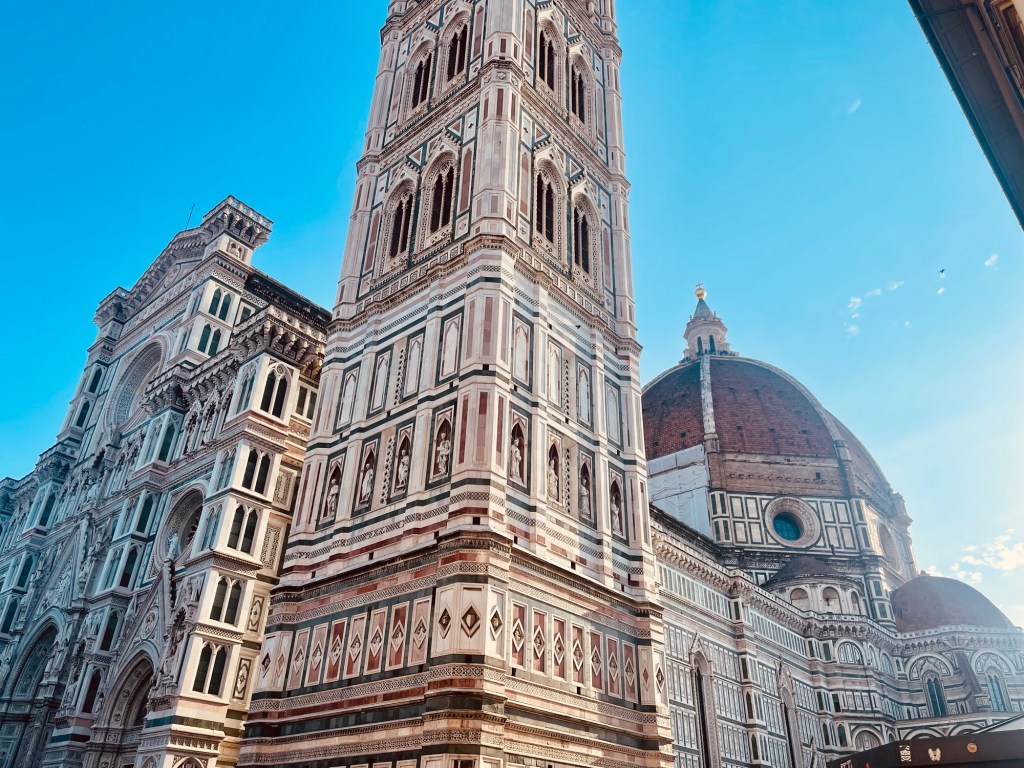
    Though I remain determined it is what Dante would have wanted, starting my pilgrimage in Florence, Dante’s birthplace, rather than his site of exile and death, Ravenna, had the drawback of beginning with what is said to be the hardest day of the cammino: 30 kilometres with an ascent of 895 metres. Though I’ve been training back in the UK in the Peak District near my home, I was somewhat daunted as to how the day would unfold.

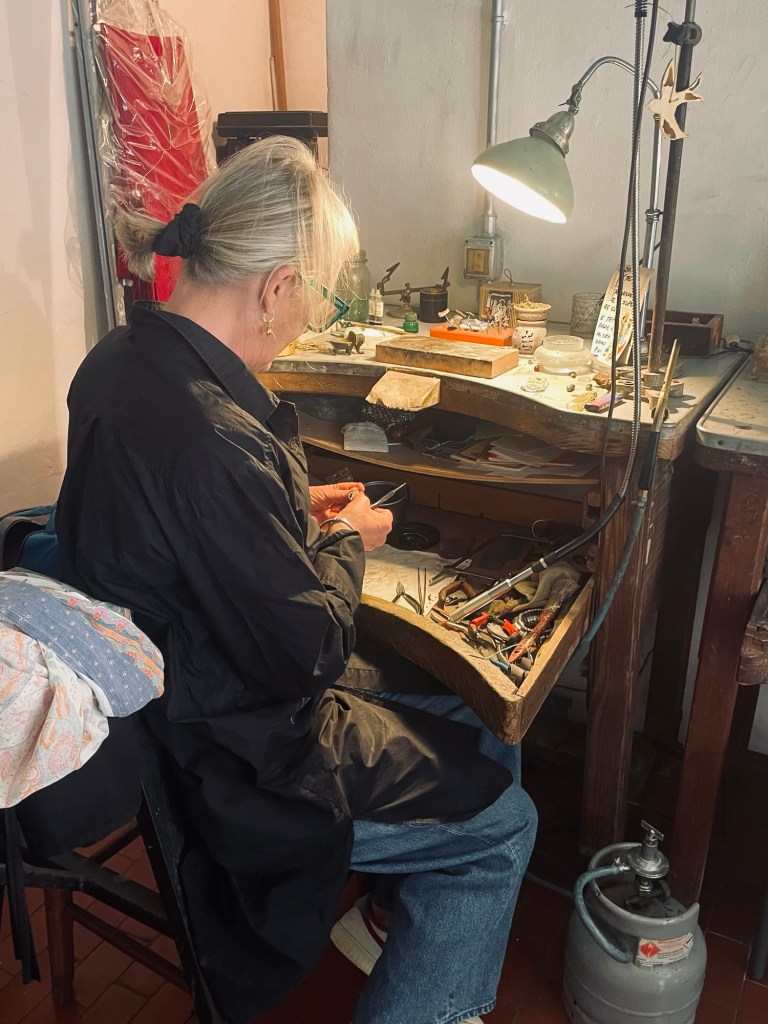
    I woke around 7am to the sound of birds singing and the chiming bells of Santa Spirito, the ‘church across the river’. I left Anna and her family sleeping soundly as I packed up my bag and tried discretely to exit the jewelry studio through the glass double doors that opened onto the quiet street. Succulents a hue of pink and green occupied window boxes along the cobbled passage into which the sun was sneakily smuggling its first rays of the morning. 

    In Santo Spirito square the market sellers were already setting up their stalls: leggings, knickers, pot plants, copper bracelets and beaded earrings the size of oranges. Two dogs – one caramel and fluffy, one white and slick – frolicked by the central fountain while their owners puffed on cigarettes and made casual conversation.

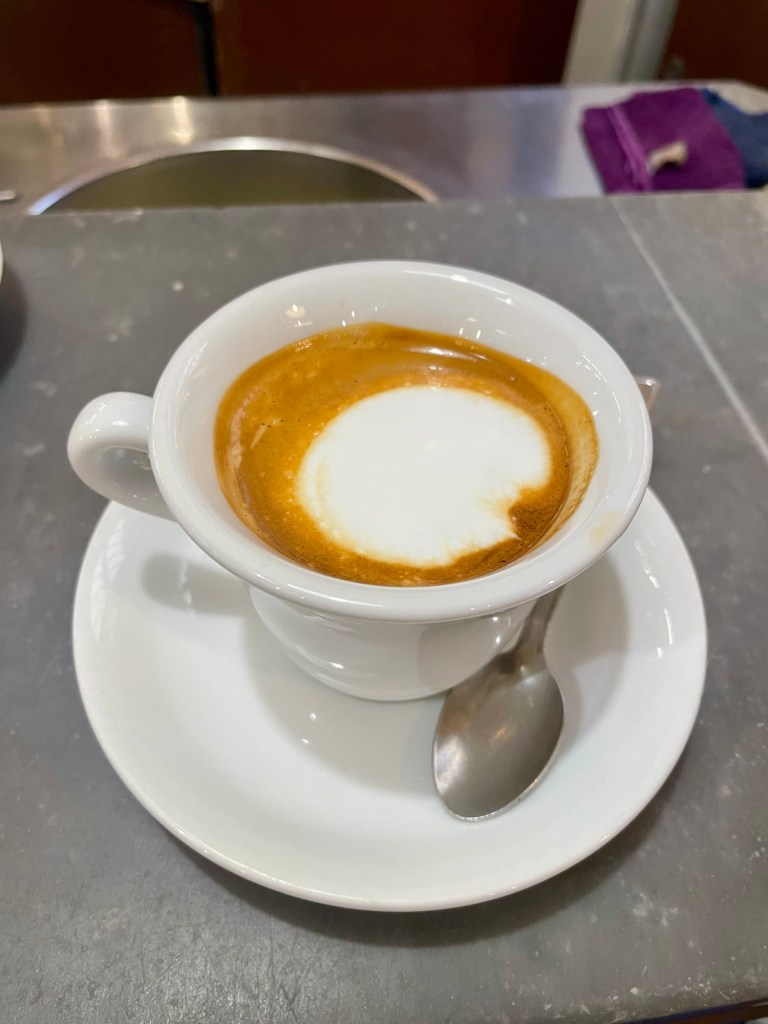
    I took an espresso macchiato and looked across at the church. Among other delights, it contains the Madonna with St. Catherine of Alexandria and St. Martin of Tours by Filippino Lippi. The altarpiece is also known as Pala de’ Nerli from the name of the commissioners, Tanai de’ Nerli and his wife Nanna, who are shown in donor portraits at the sides – the Renaissance equivalent of a selfie. 

    The painting was commissioned by the church in 1494, so some 100 years after Dante walked the squares of Florence. Lippi’s style is sensual. Gone are the 2D Giotto era portraits of Jesus looking like an adult squeezed into a baby-sized body. Lippi was a contemporary of Botticelli whose fleshy Madonnas continue to mesmerize visitors to the Uffizi with their delicate features. 

    The Uffizi Gallery literally means ‘offices’. It is named after the seat where the city’s rulers used to conduct their affairs. Once business was conducted in the Bargello, now an art gallery home to dozens of Donatello sculptures where Dante would have served as a member of the political elite. 

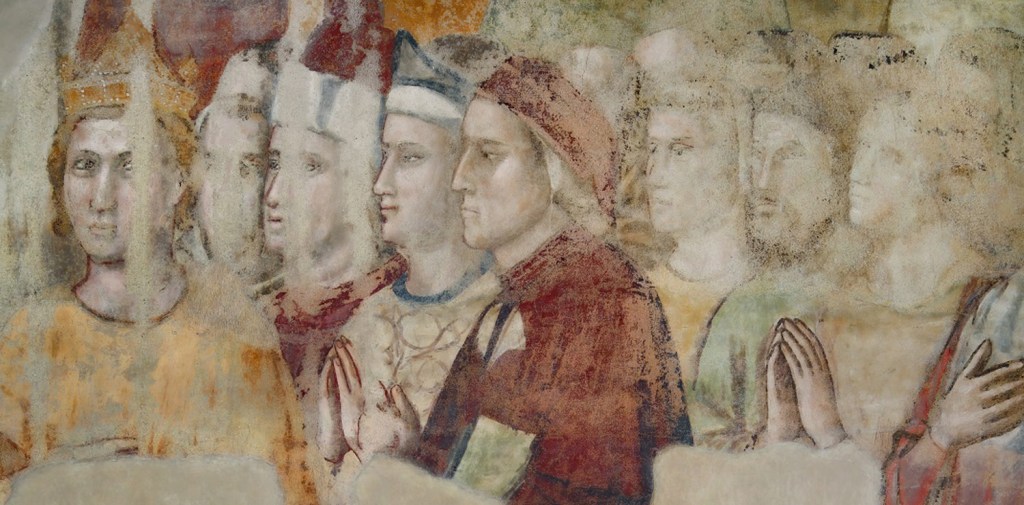
    The Bargello is the ideal venue to trace the complex relationship between Dante and his home city. In the Sala dell’Udienza of the then Palazzo del Podestà (today the Salone di Donatello), on 10 March 1302, the poet-politician was condemned to exile. In the adjacent Cappella del Podestà, a few years later, Giotto and his school portrayed Dante’s face for the first time, including him in a fresco among the ranks of the elect in Paradise. It is said to be the first ever portrait of Dante.
    The façade of the Santo Spirito Church is striking in its simplicity. As I passed and continued towards the Ponte Vecchio, runners wove in and out of my path and trucks disembarked cargo to one of Florence’s hundreds of eateries. One box read, ‘Lobsters and fresh mussels.’ 

    An Asian couple were taking wedding photos on the famous bridge which connects the Uffizi Galleries to the Pitti Palace which the Medici once called their home. Her veil glittered in the morning sunlight as the photographer insisted they ‘kiss, kiss, kiss!’

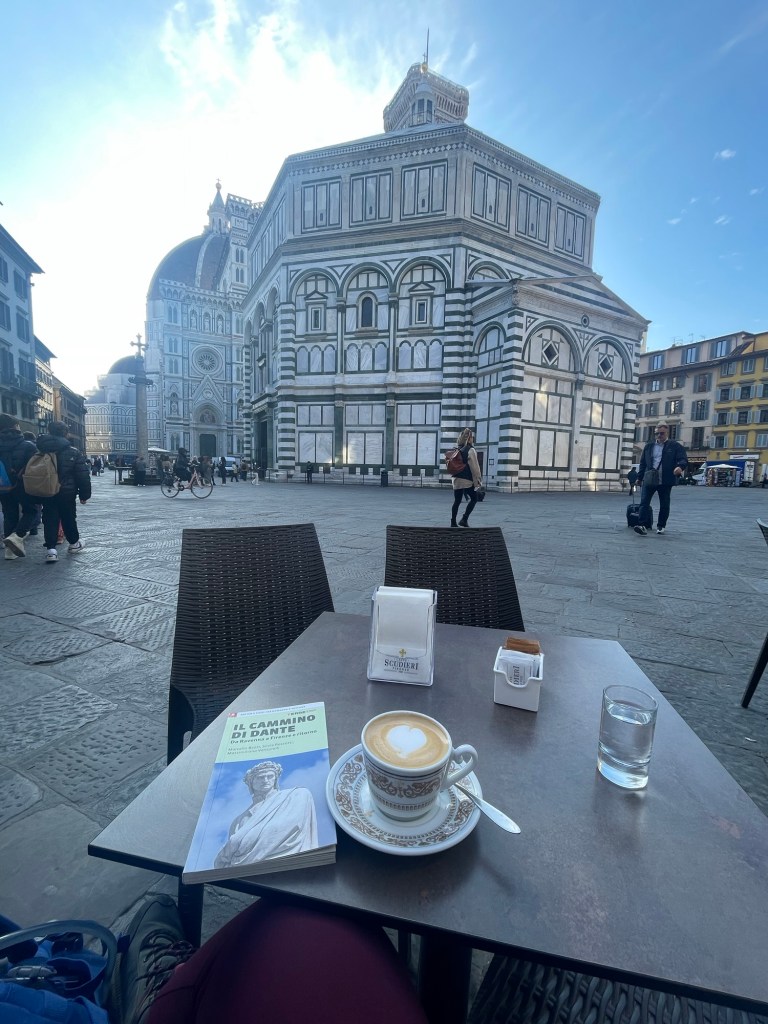
    I took a second coffee when I reached the Piazza del Duomo which, unlike the rest of the still sleepy city was bustling with life. Tour groups followed umbrellas like leaf cutter ants and carriages pulled by horses escorted tourists through the narrow streets. In Venice, the streets are known colloquially as ‘rughette’ or ‘little wrinkles’. I smiled as I recalled this fact, spreading wrinkles across my own face.

    Then came the time for our meeting. 
    Alina arrived, her flaming red hair licking her collarbone and cascading over her shoulders.

    She was wearing a beautiful black coat over sweatpants and a running jacket designed by one of the fashion houses for whom she had previously laboured. She had succeeded in stashing a huge amount into her small backpack.

    ‘That’s what comes with moving around a lot,’ she said. ‘And the coat? Well, if you invite a refugee on a walk, they likely only have one coat, and this is it.’

    We hugged tightly, shedding the first of what would be several tears over the coming days, and reached out and touched the walls of the baptistry where Dante had been immersed in 1265 and to where he had hoped one day to return as a poet post-exile. In Paradiso canto 25 he writes,

    ‘If it should happen . . . If this sacred poem—

    this work so shared by heaven and by earth

    that it has made me lean through these long years—

    can ever overcome the cruelty 

    that bars me from the fair fold where I slept,

    a lamb opposed to wolves that war on it, 

    by then with other voice, with other fleece,

    I shall return as poet and put on,

    at my baptismal font, the laurel crown .’

    Se mai continga che ’l poema sacro

    al quale ha posto mano e cielo e terra,

    sì che m’ha fatto per molti anni macro, 

    vinca la crudeltà che fuor mi serra

    del bello ovile ov’io dormi’ agnello,

    nimico ai lupi che li danno guerra; 

    con altra voce omai, con altro vello

    ritornerò poeta, e in sul fonte 

    del mio battesmo prenderò ’l cappello . ‘                        

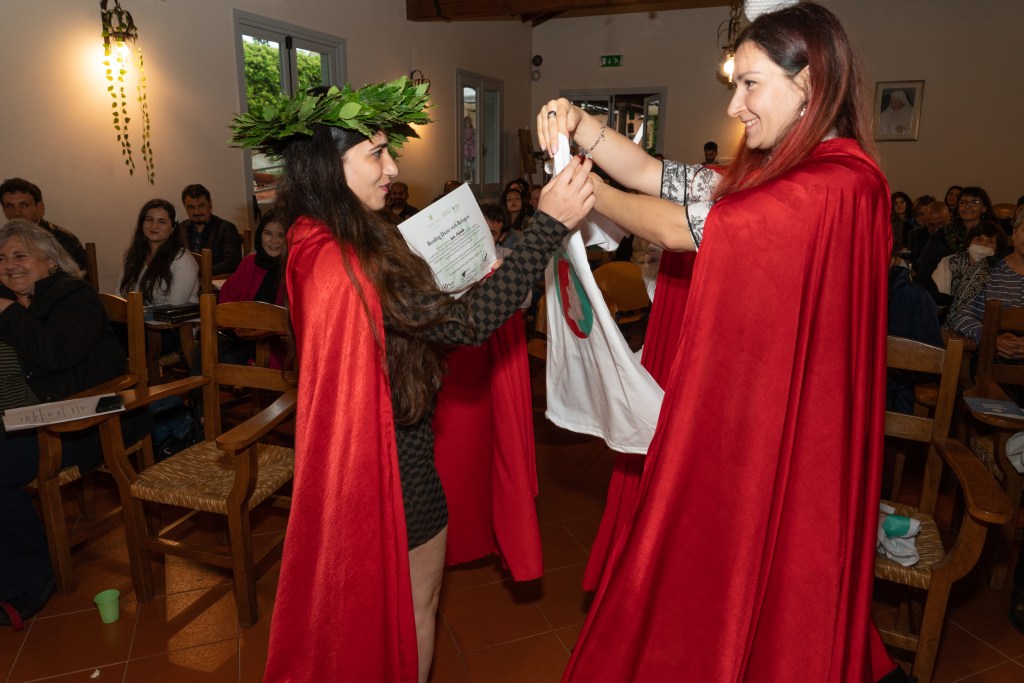
    It is tradition to depict poets in Italy with laurel crowns, one now adopted by students who port the symbol on graduation day. When we completed our Reading Dante with Refugees course in Rome, I made sure that all of the students received from Stephan, the Director of the Trinity College Rome Campus that hosted us, a laurel crown. 

    Alina, a Ukrainian refugee fashion designer turned feminist activist, was one of the eleven refugee students who took my class. For her final project she imagined her own journey from Inferno to Paradiso through the lens of the Italian bureaucracy. In the short film she made for the course, Paradise of Exiles, she shows herself moving from the dark wood (she literally, set off at 2am to shoot in woods outside of Rome) followed by the Purgatory of refugee status determination and the eventual Paradise of finding peace in Rome’s art scene. She filmed the final scenes at an exclusive shoot at the Galleria Borghese where my friend Stefania Vannini is a curator. She looks resplendent with her red hair against the green walls. I’m there in the background cheering her on.
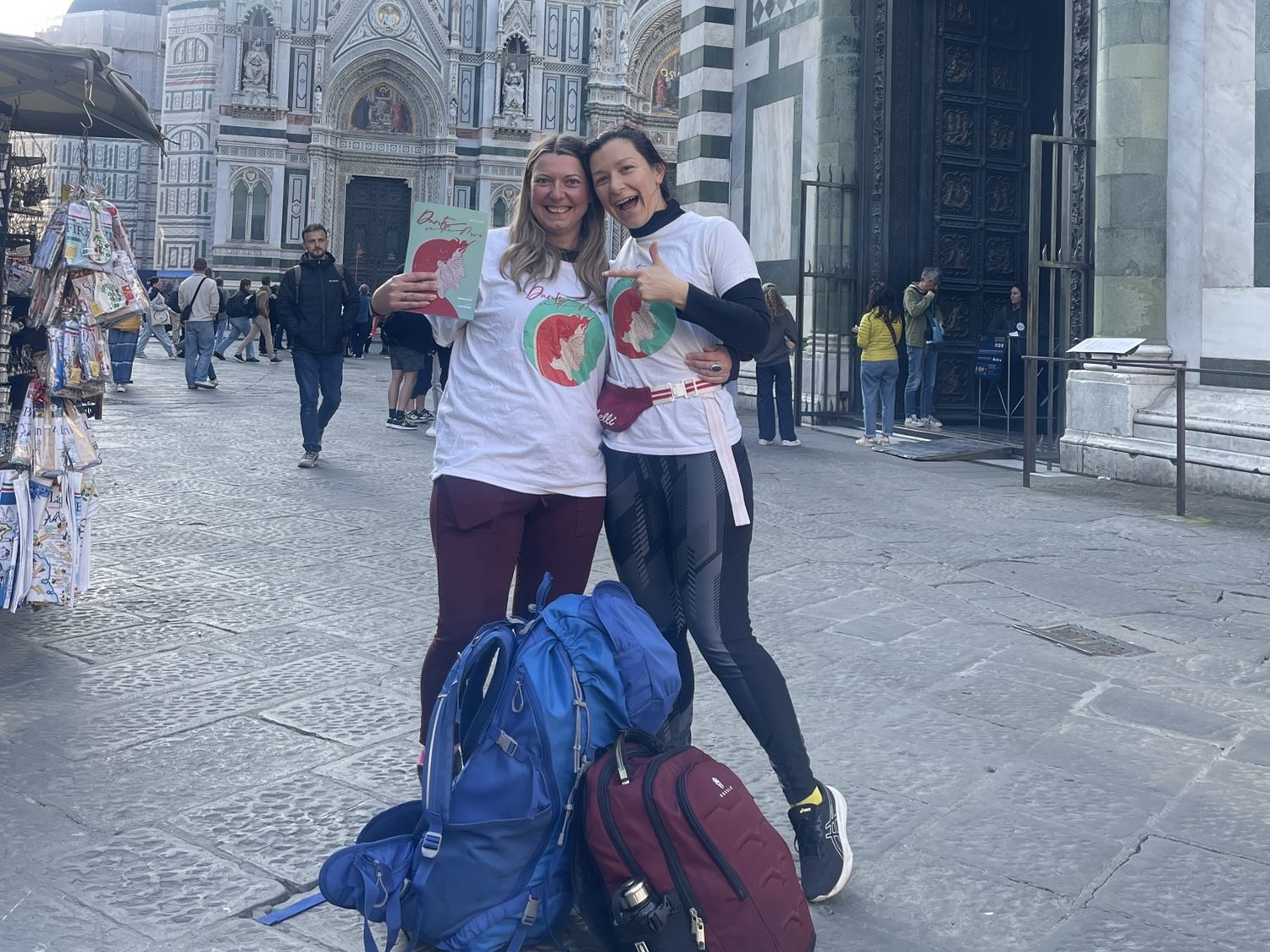
    Since the course finished two years ago, I have become somewhat of a mentor to Alina, even though she is only five years younger than me. I know the value of mentorship having experienced it first-hand myself so many times over: Julie, Andi, Janey, Joyce – you know who you are.

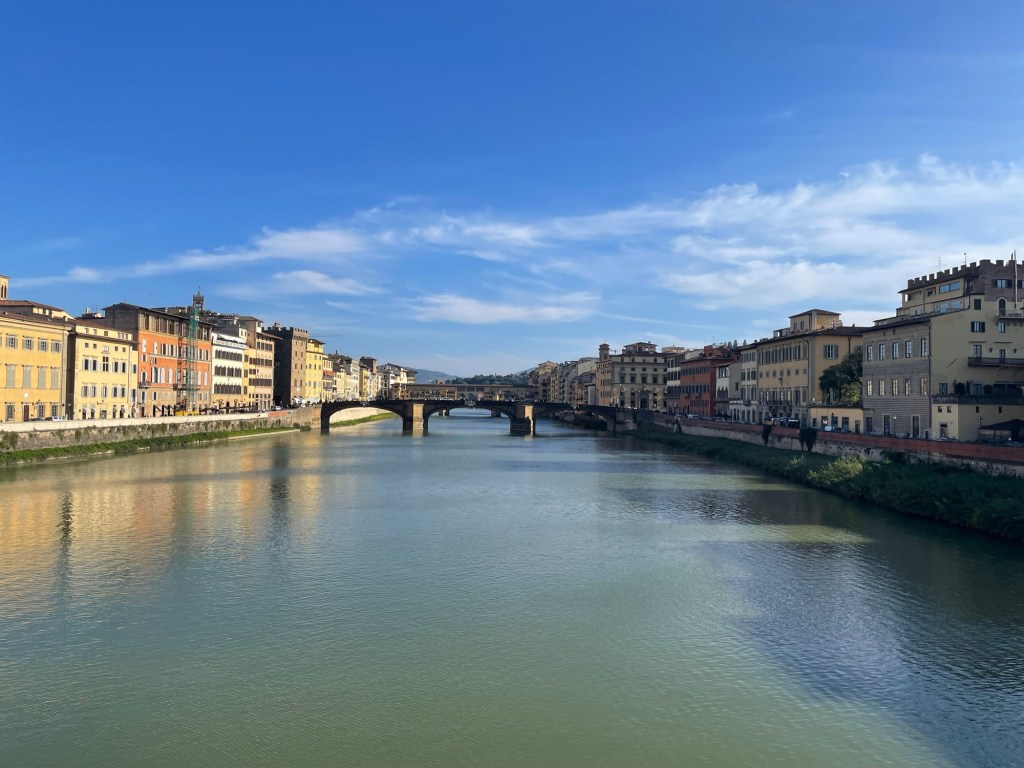
    We took our time winding through the bustling morning streets before passing to the river, beside which we hiked a good few kilometres before turning up a road that led us outside of the city. For the entire morning, the Florentine landscape peaked out behind us like a jester egging us on. Each time we turned around she was more distant. I thought of Dante and how close he would have come in his exile. While we know, as this trek honours, that he dwelled at several lodgings by the river Arno, did he get close enough to see the cityscape which then would have been teaming with medieval towers and devoid of today’s famous domed landscape curated by Brunelleschi and Giotto?

    Swallows sprung from under bridges and inside cemeteries, disturbing the air with the gentle flap of wings. Street corners were embellished with Madonna and child.

    Alina and I chatted fluently in our colloquial mix of Italian-English as we followed the path up, up, up and left the gilded city in our trail. At 11.30 on the dot we stopped at a bench overlooking the city for her to join a call with two interns working for her holistic creative agency, Sensi, who were running an event on refugee wellbeing. I took the time to check our route and enjoy the delicate scent of crocuses that filled the spring air. 
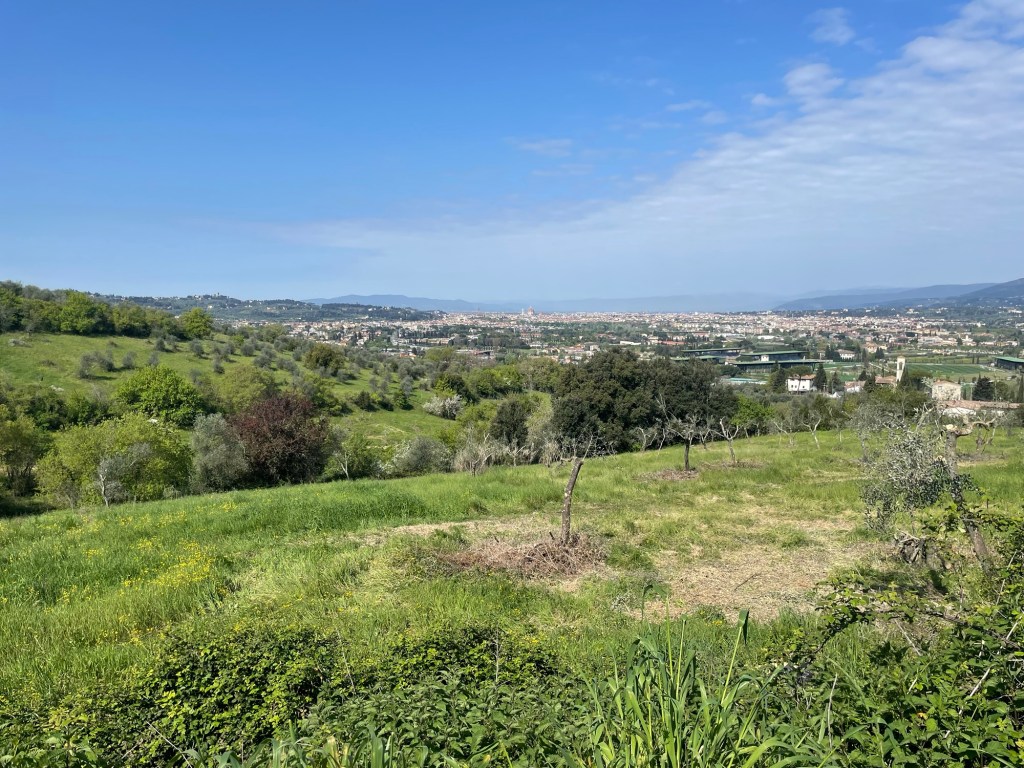
    Despite her small bag, Alina had packed in an impressive amount of food including ‘unsalted bread’ from her local Bangladeshi deli. I was relieved to find that I was able to stomach dates again after a traumatic incident in Syria where I spent a 12-hour bus journey to Jordan munching on a bag-full only to find, upon sunrise, that it was also filled with ants. Oh well, protein is protein.

    Alina shared her news and I caught her up with my life. We’d both spent depressive winters hiding beneath the sheets of our beds and were grateful, like the crocuses, to be coming back to life. I had nominated Alina to be part of the Nobel Women’s Initiative Sister to Sister mentorship programme in 2023 and now she’d been invited to participate in a peacekeeping mission to Ukraine. It’s a funny kind of pride I felt as both a teacher and a friend. 

    ‘It’s about time women got some coverage in the Ukrainian-Russian conflict in Britain,’ I commented. ‘Too true,’ she observed.

    Once we had taken in the last glimpse of the Duomo it was after lunch. We ate schiacchiata sandwiches, a Florentine delicacy which literally means ‘squashed together’.

    The day was hot.

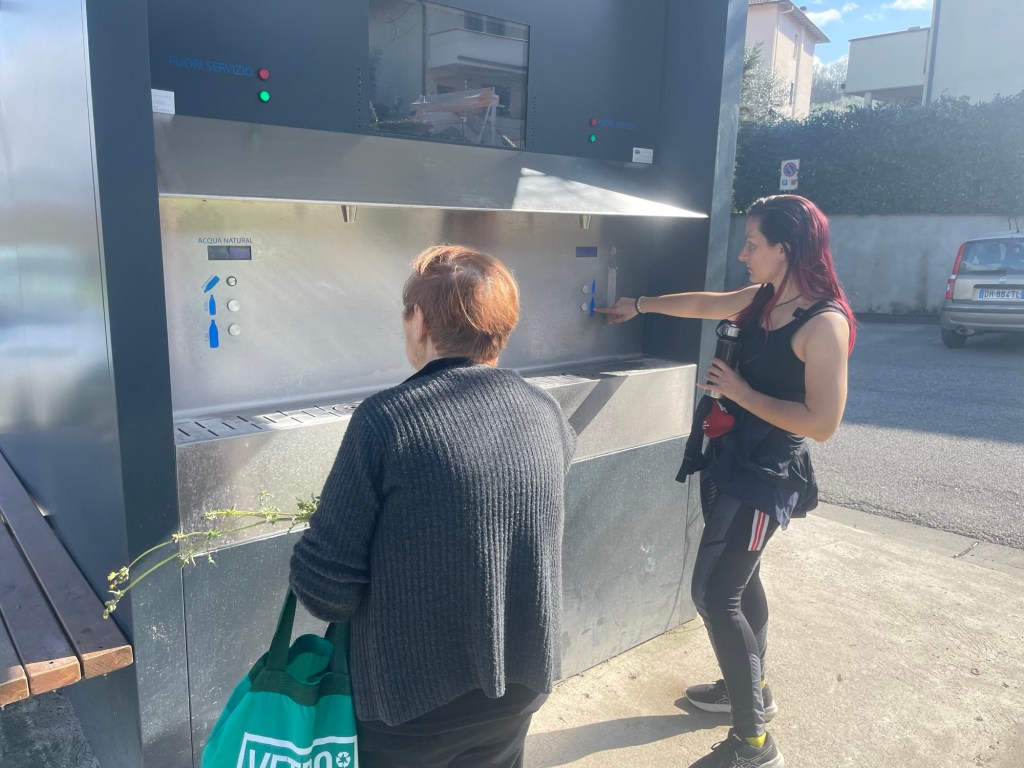
    In the town of Bombone we stopped to refill our water bottles and I marveled at the fact that the town council had voted to put in a well that featured not just purified still, but fizzy water. I made the mistake of filling my camel drinking pouch with it, only for it later to explode inside my bag. Luckily though my bum got soaked, my laptop survived.

    We met a kind faced 80-year-old lady who Alina showed how to use the fountain,

    ‘In all these years, I’ve never known,’ she said. ‘Buon cammino!’
    A lot of Alina’s utterances start with the phrase ‘before the war’, just as mine do with ‘before my divorce’. Before long we were completing each other’s sentences. 

    ‘Before the war, I got my eyebrows done.’ 

    ‘Before the war, I worked for Alexander McQueen.’

    ‘Before my divorce, I worked for openDemocracy

    ‘Before my divorce, I thought that by simply loving people I could change the world.’ 

    Perhaps something of the latter is still true.

    Mum dropped me a text asking how it was going, addressing me as ‘her Marco Polo’. 

    Benissimo,’ I replied.

    I was so happy to see Alina. 

    Despite her slender Ashtanga yoga and capoeira molded frame and my own body, bloated with anti-depressants, she was less trained for the hike than I was. She pushed on honorably in her sneakers rarely complaining or even stopping to drink water. Layers were taken off and on as we moved in and out of the sun. 
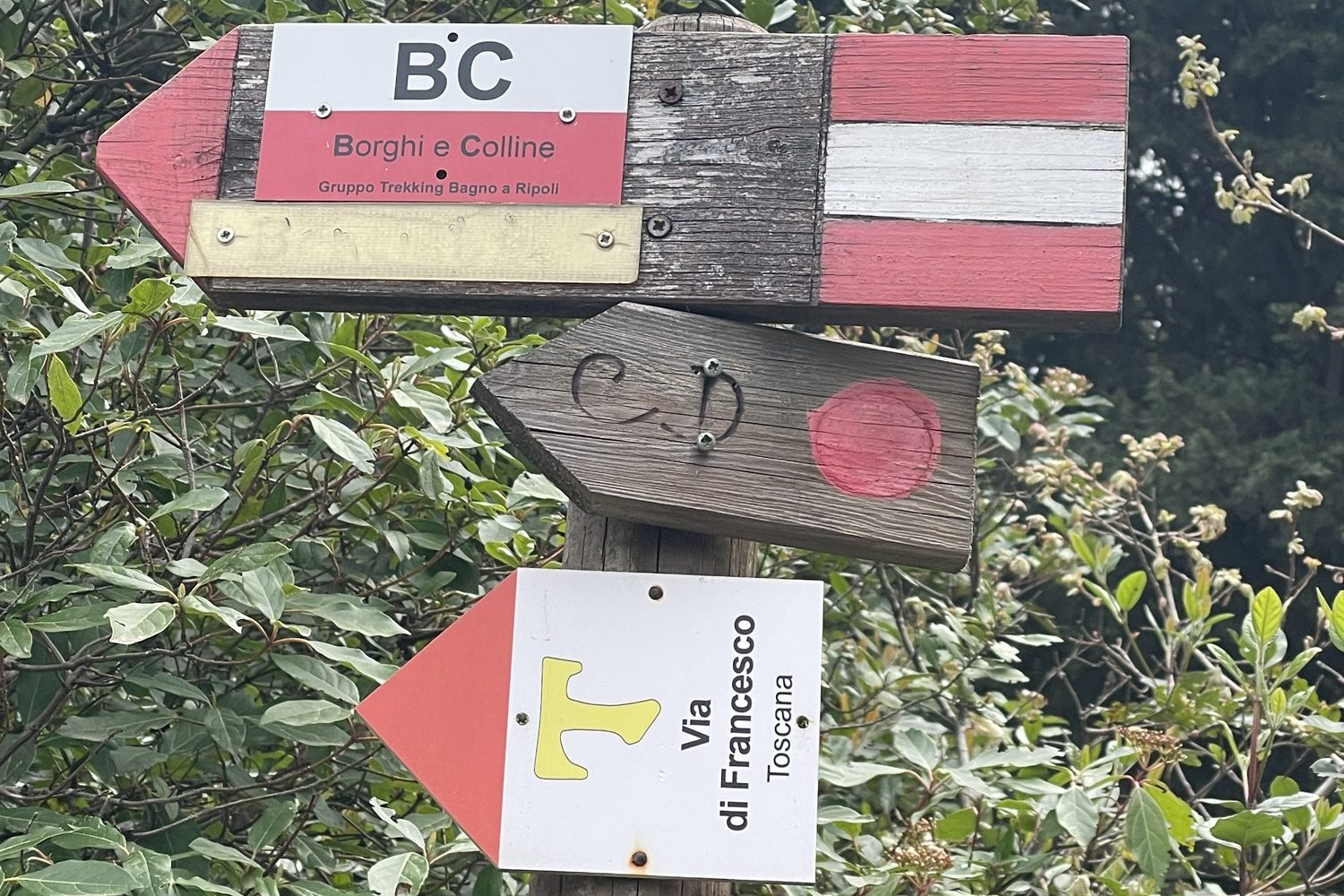
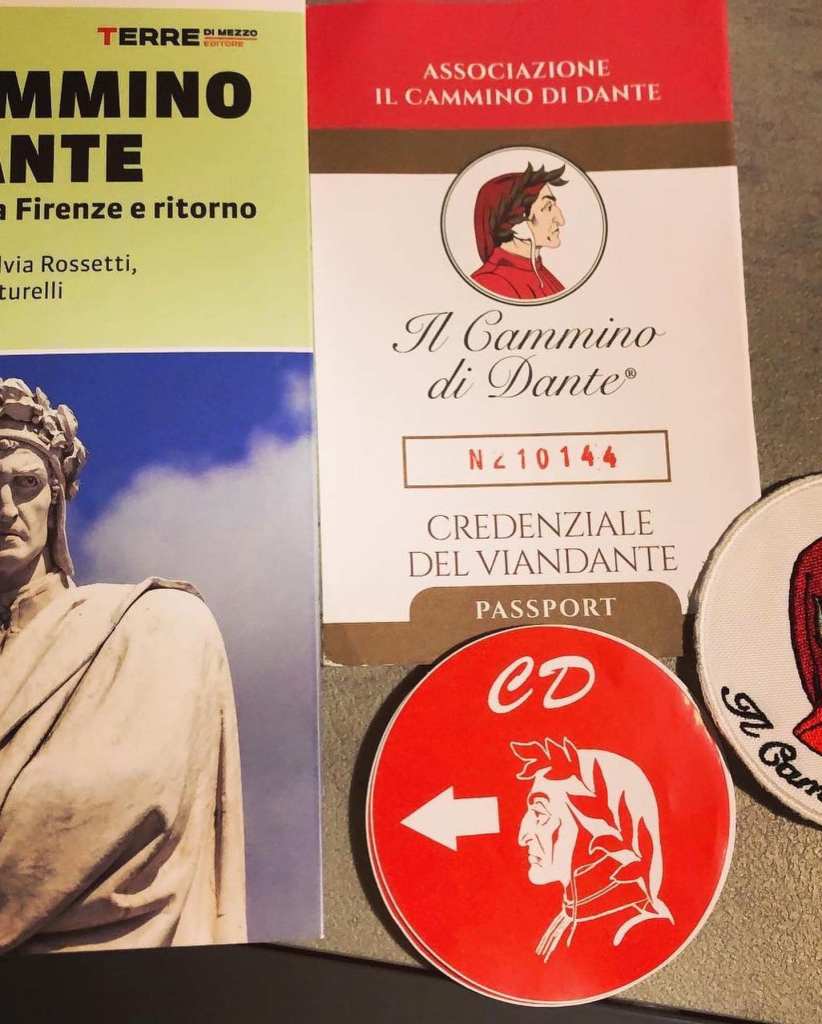
    ‘I can’t get over the fact someone has gone to all this effort to mark this trail!’ I kept repeating, euphoric that someone out there might be more obsessed by Dante than me. Each sign post for the Dante trail had been marked with a red sticker on a lamppost or a wooden sign with the letters CD singed into it by hand by the trail’s father, Oliviero Resta, who I hope to meet in person in Ravenna.

    I would say it was hard to get lost if it were not for the half an hour detour we took tumbling down a dark forest following the GPS and ignoring the very clear ‘no trespassing’ sign. It turned out we were right, but the forest spooked us both. As we crossed the barbed wire and our feet became trapped in brambles, I thought of the documentary, Green Border, I recently watched about refugees seeking to cross the Belarussian-Polish frontier at the edge of Europe.

    ‘You can imagine Dante feeling a little shitty here, eh?’ we remarked. 
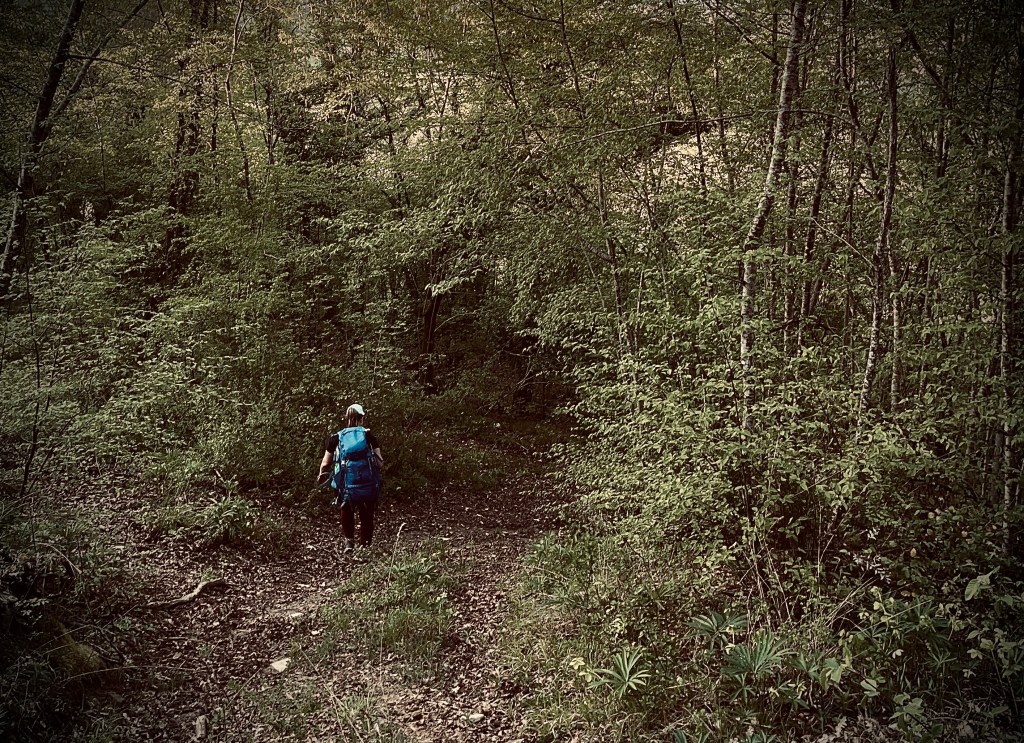
    Finally, arms shredded with brambles we were back on solid ground.

    We passed fields of tortured vines that provided a rich supply of local wine and stopped at a vineyard called Fattoria Pagnana to taste the local fare and buy a bottle for tonight’s hosts, a family of six who look after the local church. While much of today consisted of being barked at by aggressive guard dogs, at the winery the two brown dogs approached us tails wagging and tongues lolling out of their mouths, desperate for a touch. Alina like me is an animal lover. 

    ‘Don’t lick my face!’ She squealed.

    They licked her face.

    At 5pm, our host, Stefano offered to pick us up in the neighbouring village but we were insistent that we would carry on. We resisted the temptation to stay in Rignano sull’Arno for a Palestine solidarity music night and arrived at Pieve a Pitiana at around 8 in the evening with the sun setting behind us. 
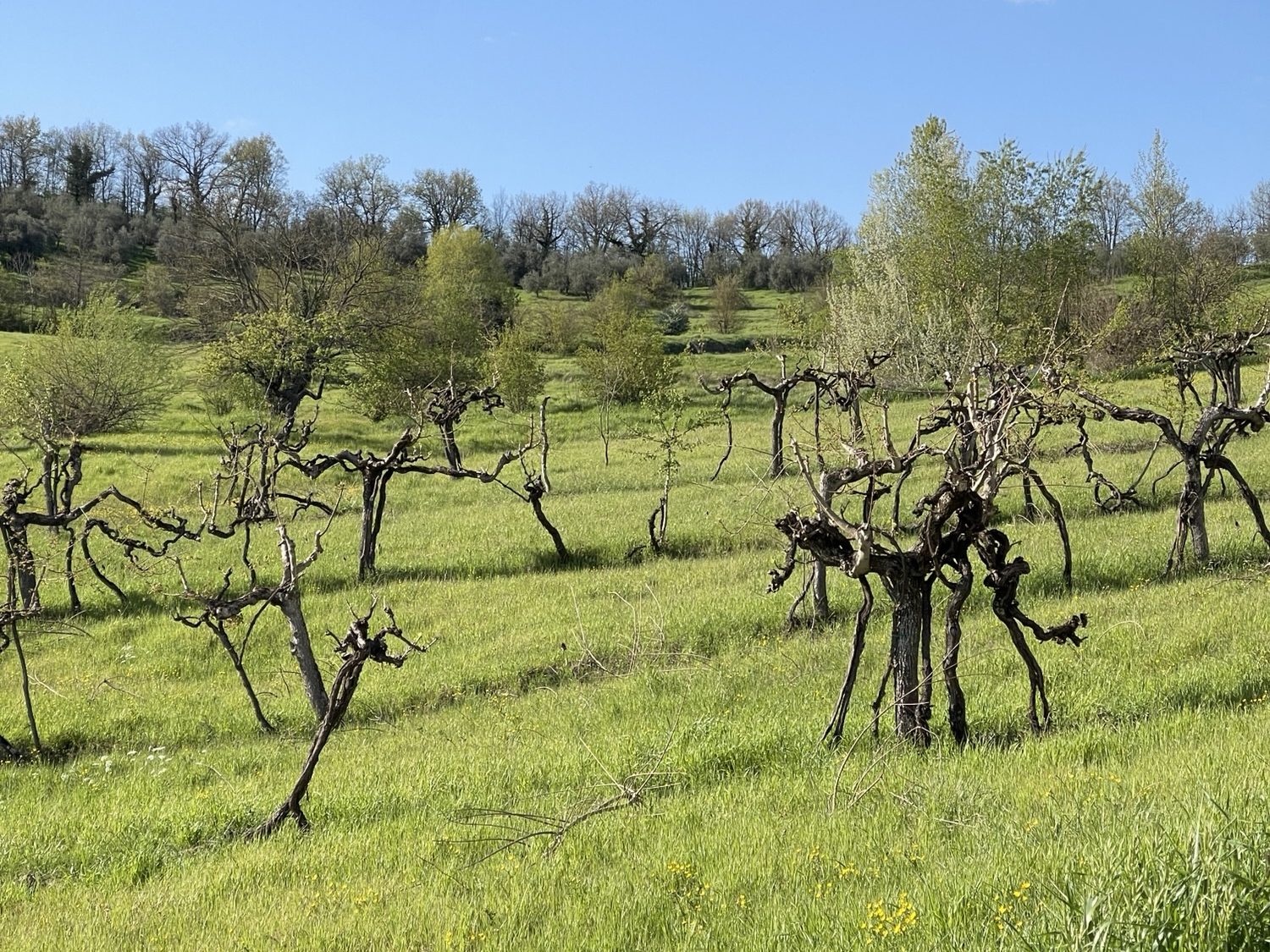
    We had both been spooked by getting lost in the forest earlier in the day and now as the sun set, the sun kissed vines metamorphosed into Dante’s wood of suicides.

    In Canto 13 of Inferno, Dante encounters those who have taken their own lives, following on from Canto 12 where he depicts those who have been violent towards others or their possessions. The canto is heavy with negativity:

    ‘No green leaves in that forest, only black;  

    no branches straight and smooth, but knotted, gnarled;  

    no fruits were there, but briers bearing poison.’  


    ‘Non fronda verde, ma di color fosco;

    non rami schietti, ma nodosi e ’nvolti;

    non pomi v’eran, ma stecchi con tòsco.’
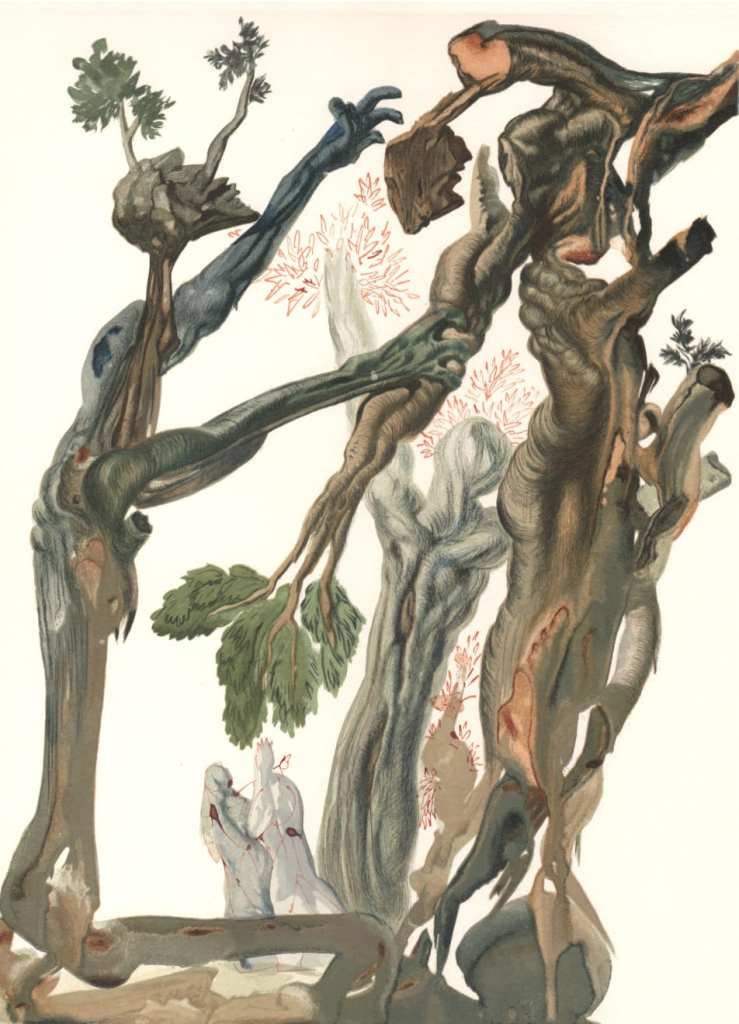
    Dante is remarkably kind to the souls, much to Virgil’s chastisement, asking after them and their stories. Virgil encourages him to snap a branch off one of the oaks from which blood drains and the soul within orates. This is how he meets Pier della Vigna, an advisor to Frederick II who killed himself when his reputation was ruined by false rumors. Frederick asks for Dante to heal his reputation on earth, because this is the only part of him that survives outside of Hell. Though encouraged by Virgil to interrogate the tree like an asylum seeker on trial, Dante is so stirred by pity that he says he cannot think of anything more to ask the soul.

    Dante describes the tortured woodland as infested with harpies who abuse the souls by ripping off their branches. In an act of symbolic retribution, it is said that when each of the blessed and damned will return with their body from the Last Judgment, those damned for suicide will not re-inhabit their bodies but instead hang them on their branches, both because they denied them in their final act of life and as a reminder of what they denied themselves. Salvador Dalí depicted this starkly in one of his many paintings of the Commedia.
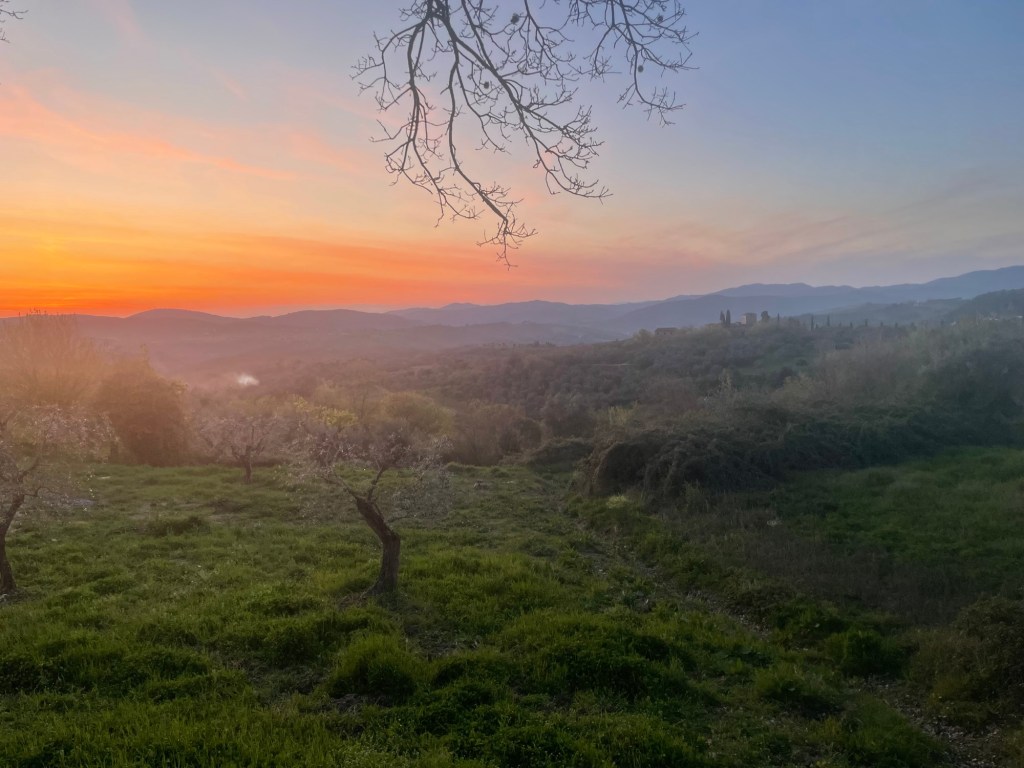
    As I mentioned above, Alina and I had spoken over the course of the day frankly about our own very difficult winters. Previous experiences of depression and suicidal thoughts had also weaved their way into our casual conversation, as they had many times before. It felt concrete and somewhat scary to see this fictitious scene brought to life. 

    We arrived at the church of Pieve a Pitiana to a roaring fire and an equally warm welcome from our host Stefano, his wife Giorgia, Stefano’s mother and their three bubbly kids. Anna, the middle girl-child was excited to practice her English, asking us about our favourite sports, meanwhile the youngest boy was keen to discuss all things Pokémon, later gifting us each a precious Pokémon card (I got Chansey, super power level 80. Get in!)

    He had been off school sick and held his arm in a sling made from a shredded blanket. 
    ‘You look like a Roman wearing a toga!’ I commented, at which he giggled. His dimples pitted his face like someone had imprinted it with little olive pips. 

    We ate a simple meal of pasta al pomodoro with eggs from the three happy free-range hens that were the family pets and aubergine marinated by Stefano’s mother. Stefano and Giorgia talked to us about the 600-year-old house and the church that had even longer foundations. They had met in Peru. Their oldest son Michael was a bit timider but cited to us the first verse of the Divine Comedy after remarking, 

    ‘Wow, you guys are like really, really into Dante!’

    I think they were glad to have someone to talk to.

    After dinner there followed a private tour of the church where we were able to marvel at the paintings of Ghirlandaio, an early Renaissance painter of the Florentine school noted for his detailed narrative frescoes. One had been stolen, Stefano explained, and a replacement had been installed. He was careful to put on the alarm before we left. Alina said a short prayer. 

    The house sits beside an NGO that works with local migrant children and the two stories Alina and I shared were strewn with half-finished craft projects and colourful drawings on the walls. Since we both work with refugee children, it was a sight familiar to us both. They marked a stark and stunning contrast with the 14th century stonework which peaked out at points from beneath the pastel plaster. 

    With full tummies, Alina and I headed to our bunks in the arts room, sleeping beside loo roll easter bunnies and papier mâché masks. A warm shower was most welcome. My inner heels had developed thick blisters while Alina’s little toes looked like they had come down with plague sores.
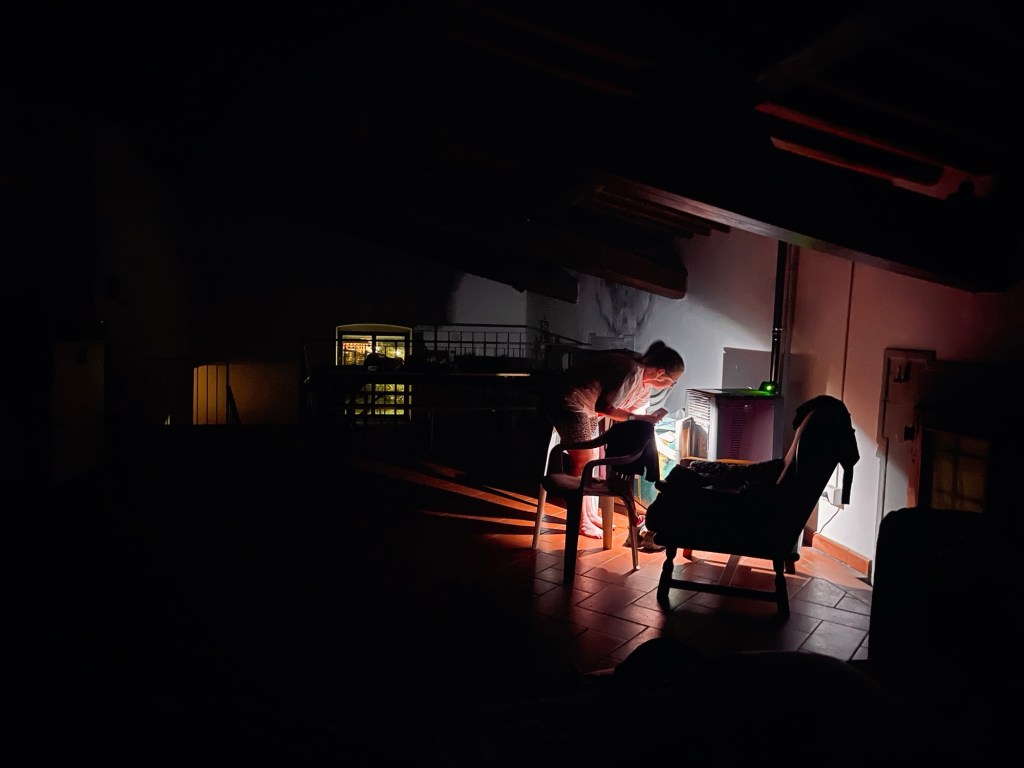
    An open fire kept us warm and dried our soap rinsed socks and knickers as we snuggled into our blankets and rested our weary limbs. 

    Apparently, I screamed out at one point in the night but this I don’t recall.

    Recommended watching (turn on subtitles): Paradise of exiles: https://www.youtube.com/watch?v=-o-lUZq_71E

    Recommended watching: Green Border: https://www.imdb.com/title/tt27722543/

    Recommended reading: openDemocracy 50.50: https://www.opendemocracy.net/en/author/jennifer-allsopp/
  • My Florence, the anti-Milton Keynes

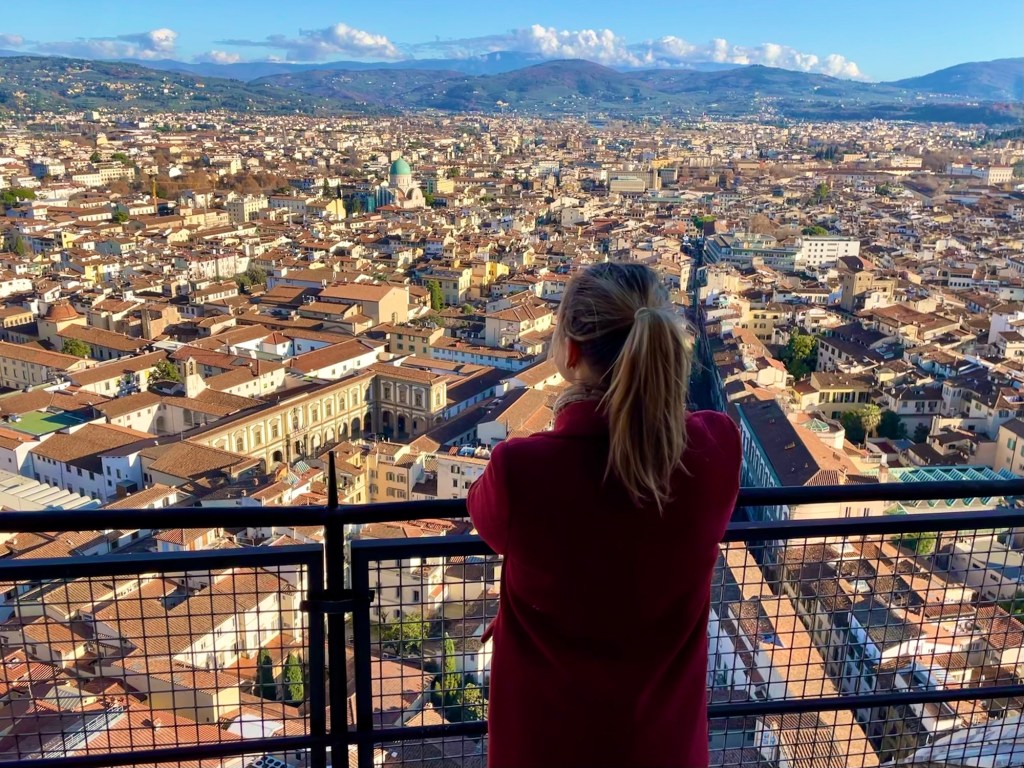
    Florence feels like my home, though the city I grew up in couldn’t be more different.

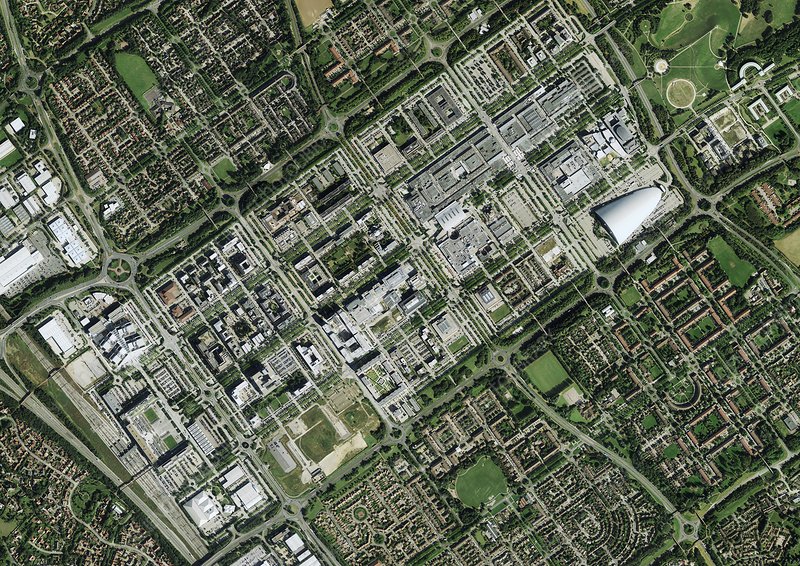
    Coming to Florence has always felt like coming home to me. It’s peculiar since I grew up in Milton Keynes which is known as England’s ‘best new city’. It’s a capitalist paradise with grid roads based on San Francisco and dozens of roundabouts. It has a city centre founded on a shopping centre and an indoor ski slope that looks like a slug.

    It’s quite the contrast to Brunelleschi’s famous Duomo, but then I suppose Florence was also built on the accumulation of new capital. Somehow I find the aesthetic of the latter more appealing.

    I cried as I spent a Christmas mass there overwhelmed by how at home I felt. Duomo does not mean dome as many might suppose. Rather it stems from the Latin Domus, for home. In one of my favourite Italian books, La luna e I falò (The Moon and the Bonfires) Pavese writes, ‘we all need a home town, if not only for the chance to leave it’ (Un paese ci vuole, non fosse che per il gusto di andarsene via.)  

    I got the tram into the city centre from the airport as I have so many times before, living in Florence as a Visiting Professor at the University and returning a number of times to give talks about my work reading Dante with refugees in the last two years.

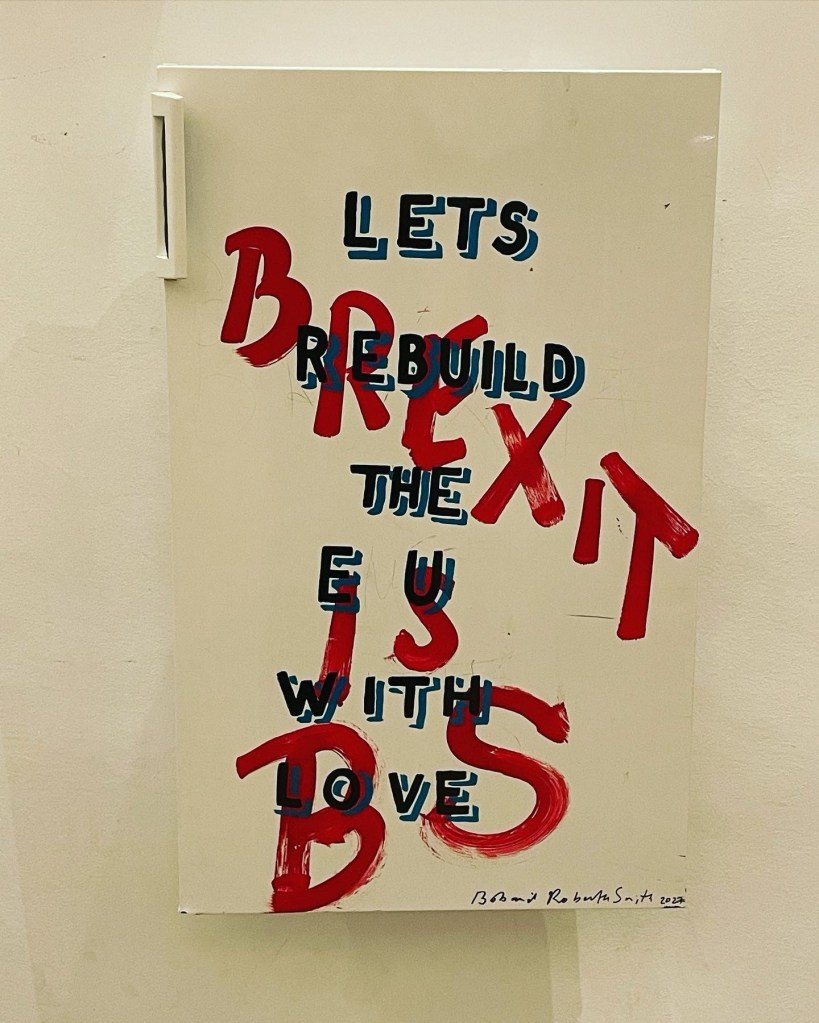
    I smiled at the little ‘tss tss’ of my ticket at it registered in the little yellow machine. I’d had to wait about an hour at arrivals listening to banal conversation in the non-EU passport queue – thanks Brexit! I got chatting to one family visiting Florence for the first time.

    ‘You’re going to be blown away,’ I assured them.

    When they asked me what I did I told them, and as usual I was greeted with an opinionated diatribe about what the UK needs to do to solve it’s ‘refugee problem’ and stop the scourge of ‘boat people’. 

    ‘If we are a country that had a navy that could colonize the world we have the capacity to save refugees from drowning in a stretch of water the size of Scotland,’ came my reply. ‘It’s a question of political will’.

    Sometimes I lie and say that I’m a hairdresser, but I felt like the fight.

    By the time we had passed the 20 minutes to Santa Maria Novella I’d made some headway in talking them down from a Reform stance, but in my experience it takes about 45 minutes or a long taxi ride to genuinely ‘change hearts and minds’. I felt a little less guilty about taking this time as work leave – as academics who care about the subject of our endeavors we are in some ways always working. 

    On arrival in the centre, I was greeted with the familiar sites of the Yamamay lingerie shop where I’ve spent way too much money in recent years and groups of black faces sitting on the steps outside the train station. 

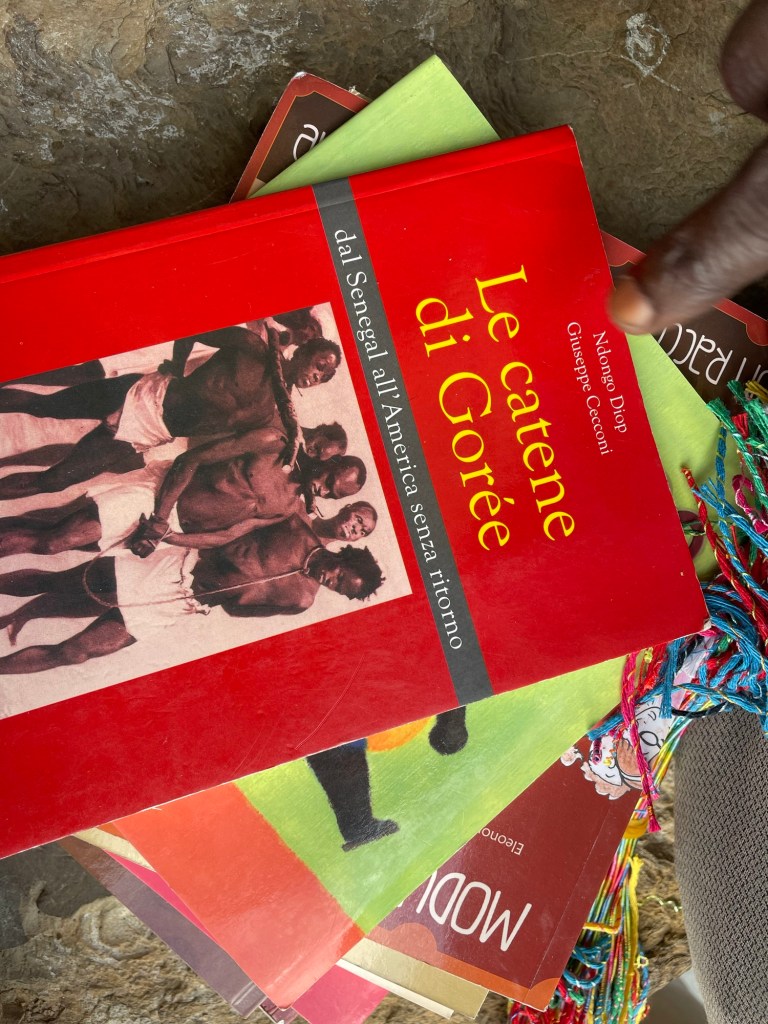
    ‘Kenya, Senegal?’ I asked one friendly face. He carried over his arm a brocade of African bracelets and under his other arm some books in Italian and English about slavery. It’s a smart business I’ve observed across Italy. When I was living in Rome it was rare to leave a bookshop without encountering an African face who sought to sell you something of their violent history.

    ‘Senegal!’ Came the reply. And we continued to discuss in French how his life was progressing in Florence; how business had been that day.

    I asked him about the war in Casamance providence, the longest running conflict in Africa, where I’d worked with women peace activists as a journalist at openDemocracy 50.50.

    ‘It’s hard,’ he said, ‘but in Italy life is a little easier’.

    We parted ways after our brief chat – I didn’t want to distract him from his business – and he gave me one of dozens of friendship bracelets I’ve accumulated in my discussions with the African street sellers.

    I knew from experience to take it and that, unlike in many situations with migrant sellers, my receipt of the gift wouldn’t be followed by a request for money. A relationship – however fleeting – not a transaction had been established.

    ‘Au revoir, Madi, bonne chance!’ I offered as I heaved my backpack back onto my shoulders and made my way to the Santa Maria Novella Square. Maybe I should put in a funding application to do an ethnography of African street sellers, I mused. 

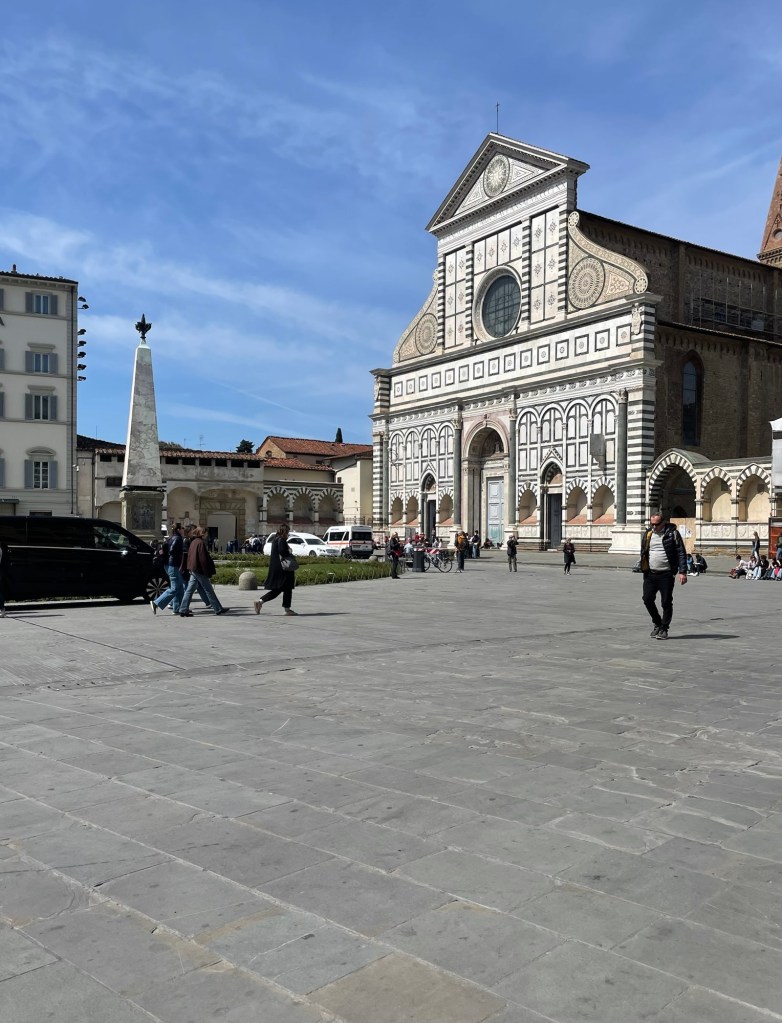
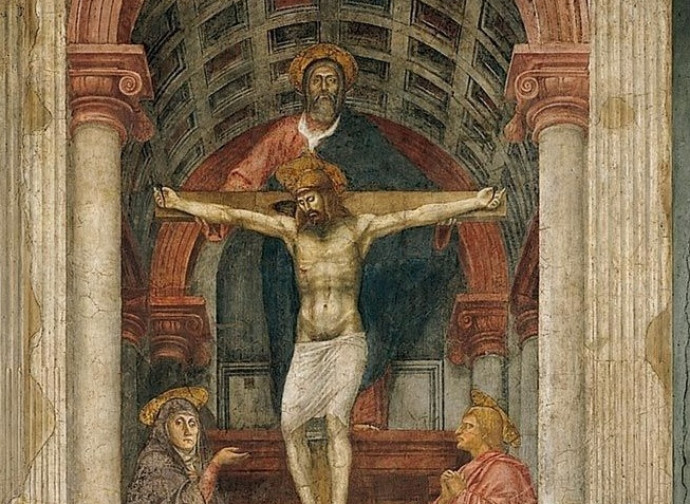
    In Santa Maria Novella I headed straight to the church where I wanted to pay my respects to one of my favourite paintings in the city, the Trinità by Masaccio. It’s known as the first painting in Western art that uses the principles of perspective. I’d need that if I was to spend 20 days hiking the 235 miles of the Cammino di Dante through central Italy.

    I remember first seeing it when I came to Florence as an eager 15-year-old art lover. I’d studied it in school and even done some sketches from a post on Wikipedia before Google was a font of unlimited images. I think back then I’d asked Yahoo or Jeeves. 

    ‘Can you see mum, all the lines point backwards into an invisible vanishing point. This is no ordinary depiction of Christ’.  

    She was suitably impressed and then, as now, a chance to process the monument of Masaccio’s revolution in European painting was proceeded in the form of a strong coffee in one of the colourful cafes that line the square like lace.

    I knew that even though I had hardly slept that at 2pm, I would be chastised for ordering a cappuccino – this is a breakfast drink in Italy not to be taken after midday. I took a double espresso macchiato and turned my face into the Spring sun awhile.

    The term cappuccino comes from the capuchin monks who resemble in their brown habits and shaved heads the caramel colouring of the cup’s rim and the dollop of foamed milk in the middle. You don’t get a sprinkle of chocolate or nutmeg here in Italy unless you ask for it, this is a foreign invention.

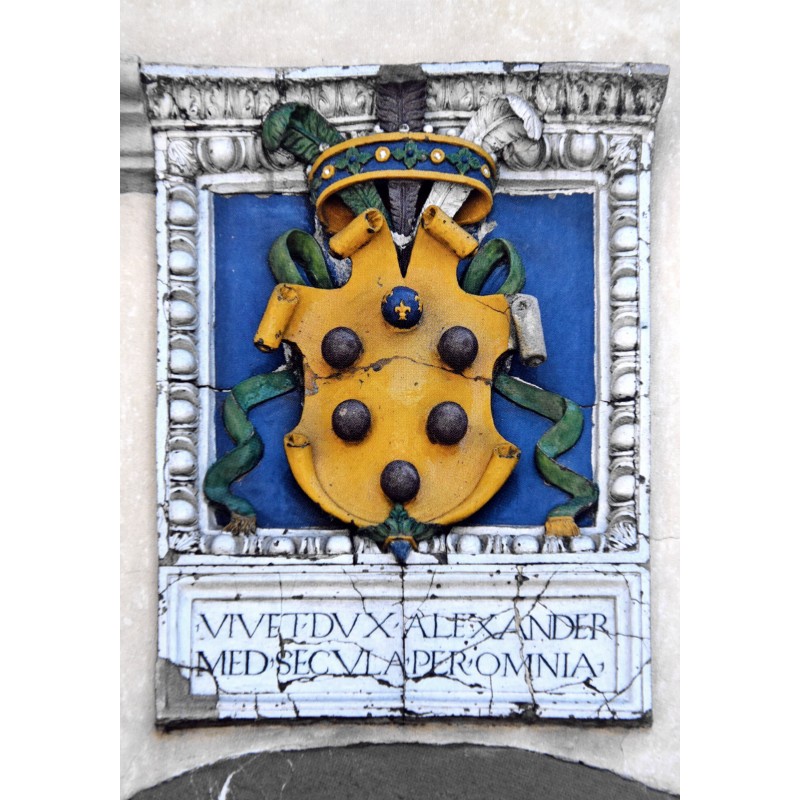
    From Santa Maria Novella I spent the afternoon trotting happily through the narrow streets, observing the signs detailing which famous figures had occupied said building. Galileo. Leonardo da Vinci. There were all the greats, it was enough to look up. And on the street corners, known as cantos, like the sections that make up Dante’s Divine Comedy, there appeared the all too familiar Medici crest.

    The six balls that make up the shield are disputed as to their origin. Some say they represent medical compresses – pills were yet to be discovered in the Renaissance – harking back to the Medici name which means doctors in Italian. Still others claim they depict oranges – also good for your health and a frequent feature in frescos depicting the family. 

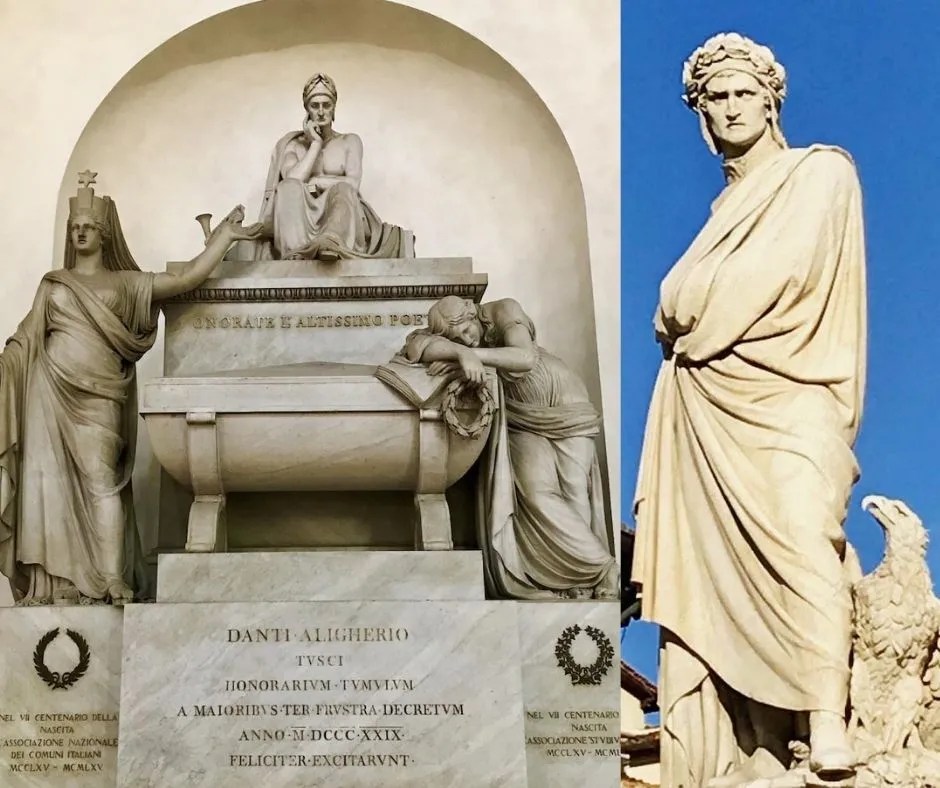
    From Santa Croce the colossal statue of Dante constructed by Enrico Pazzi to mark the 600th anniversary of Dante’s birth glared down at me. Though I knew better than to seek to procure a ticket last minute in tourist season, I knew that inside the walls of the church sat the tomb of Dante erected by Stefano Ricci in 1830.

    In it, he appears topless and macho, symbolic of the newly unified Italy and all things nationalism. Though he dreamed of and wrote at length about a unified Italy and glorified the Holy Roman Empire, Dante’s own stance on nationalism was more nuanced and I felt he’d be somewhat miffed to see himself depicted in that rather uncouth way, tits out, topless without his classic red cape, hood and white ear flaps. 

    More to the point, unlike the tombs of Galileo and Machiavelli, his was empty.

    And here comes the whole point of my pilgrimage, his bones lie in Ravenna, my destination, where he died in exile.

    His grave in Florence is a reminder of the vicious battle that still continues between the two cities about where Dante’s remains and his legacy should reside.

    On a fieldtrip with a group of refugee students back in Spring 2023 responses were mixed. Some felt it was desperately sad that Dante hadn’t been able to return to Florence but that as the place that has hosted him, Ravenna was entitled and duty bound to be the custodian of his remains. Others felt that Dante would have wanted his bones to be returned to his beloved home town in recognition of the fact that he had, as he had prophesied in the Divine Comedy, ‘returned as a poet’.

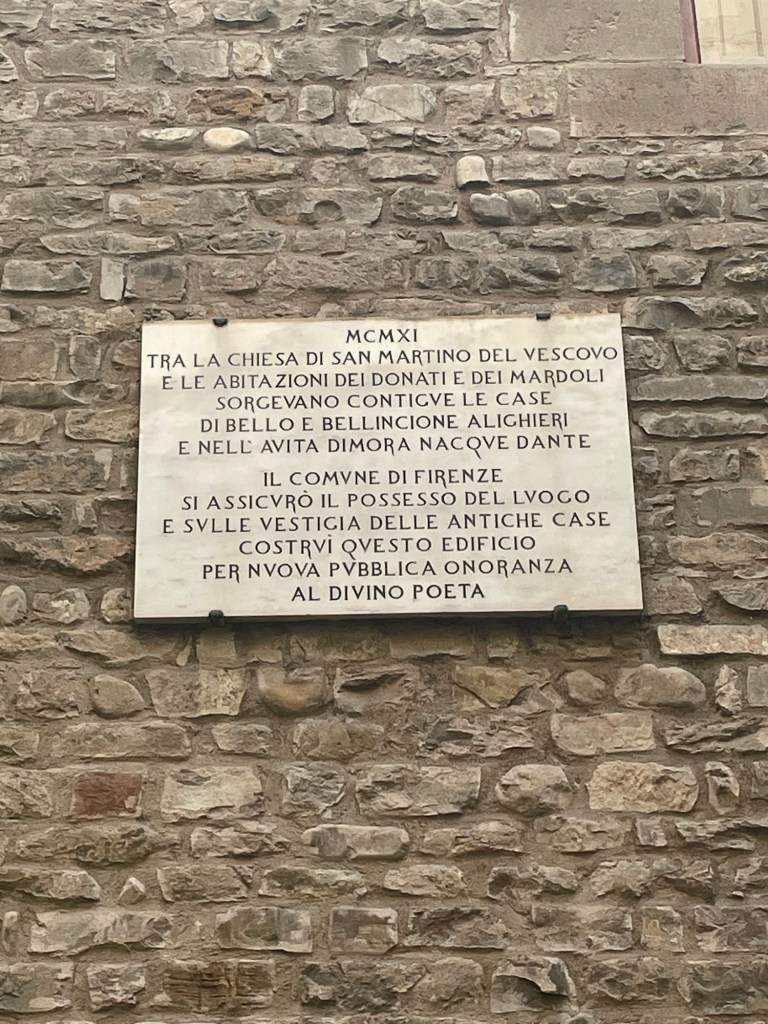
    There’s no mistaking the fact the Florence and Ravenna tourist boards seek to cash in on his legacy. In Florence many streets bare engravings from the Divine Comedy and there is now the Dante House Museum on a site estimated to be near his home, though the exact location remains unclear.

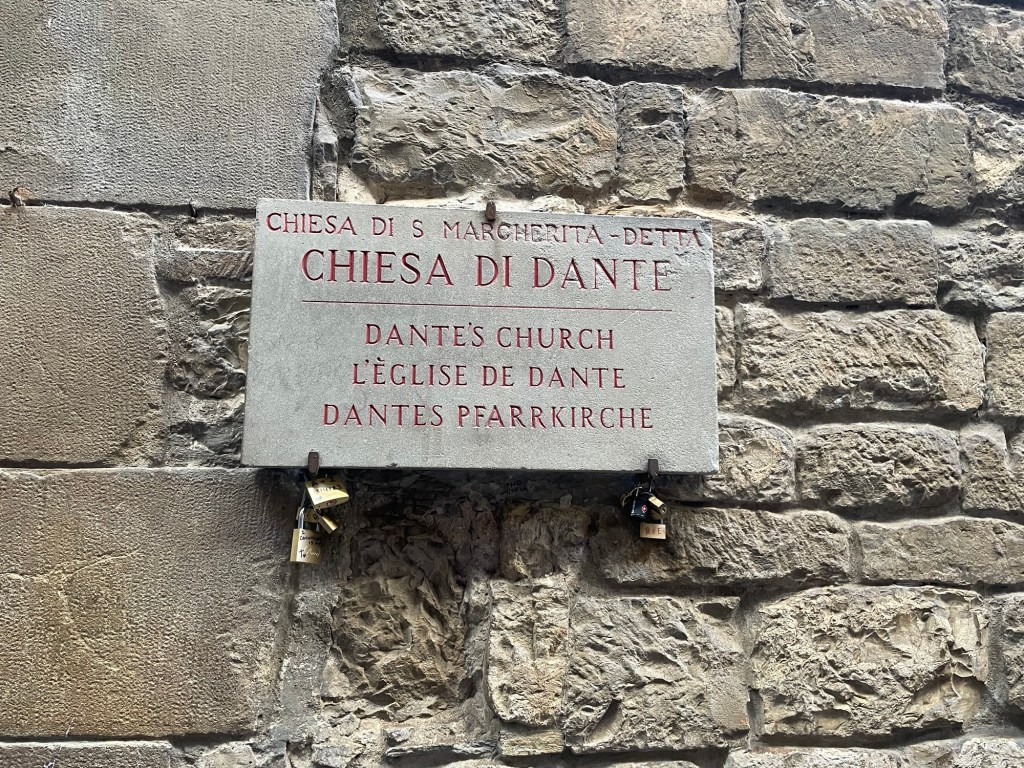
    Opposite the museum is the Church of Dante which belonged to the Portinari family where his unrequited love, Beatrice, was married to another man.

    Today, lovers tie love locks and tuck heartfelt pleas and into the folds of the doorway wishing for a love that would take them to the stars and back, as Dante’s did.

    As I trace Dante’s steps to Ravenna this question of the location of his remains will be in my mind.

    I avoided the busy central Piazza del Duomo because I wanted to preserve my impressions for when I would meet Alina, my former Ukrainian student, tomorrow to start the Dante trail.

    At a bar by Ponte Vecchio I got chatting to a charismatic English woman who had also travelled to Florence on her own for a get away between jobs. We quickly struck up a rapport and discussed all things ‘being in our 30’s and not having kids’, the wave of our friends who had bought up town houses in Tottenham to start their families while we indulged in our freedom to sip on a glass of something bubbly at 4pm in the sun and contemplate the relative physiological merits of the stream of tourists who passed.

    ‘Oh if you’re looking for Italian men you’re on the wrong spot.’ The waitress informed us as she used her tea towel to chase away the pigeons. One, she informed us, was called ‘stumpy’ because he’d lost his feet perching on one of the many anti-pidgeon contraptions that line the city’s window ledges. The real Florentines live across the river, she continued. 

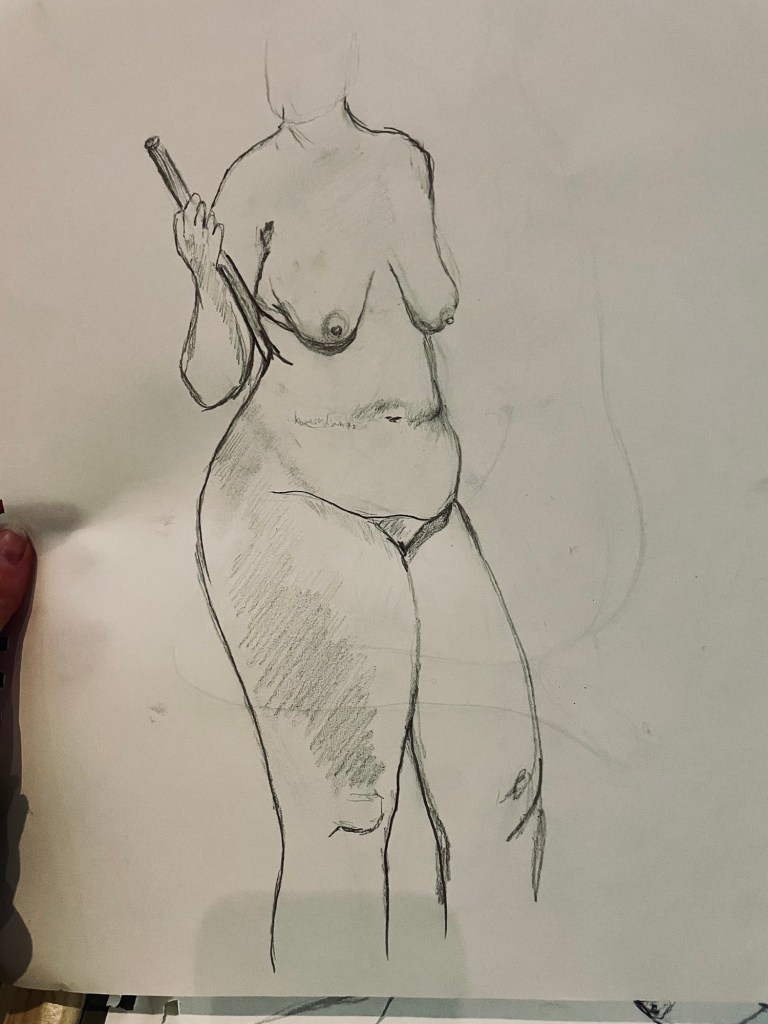
    It was across the river I proceeded to the British Institute in Florence. It was Monday night and I knew instinctively upon my arrival that I was to spend the evening indulging in a familiar past time of life drawing at Sotto Il British. The class is lead by Tom J. Byrne, a friendly Irish man with a walking stick. He remarked that I looked familiar.

    ‘I used to come here all the time when I lived in Florence,’ I reminded him.

    The British Institute is a magnificent building that houses a speculator Oxfordian library with comfy chairs that point out towards the river. 

    The model was a beautiful young woman who took to the various 5 minute and 15-minute poses with ease. A well-dressed lady of middle age – you know the type, flowing fabrics and a well sized pendant on an embellished chain –  sat opposite me with her small brown dog at her feet using watercolour and ink to capture the model’s Rubenesque curves.

    As always, the talent of the artists was at once intimidating and deeply compelling and I took pleasure in sketching my own humble contribution. Drawing together it felt like we were part of an orchestra.

    The model rewrapped herself in a pastel blue robe and I took leave of the nibbles and wines and headed back to Santo Spirito where I was to spend the night with Anna, a Finnish-British jewelry maker who has made her home in Florence for most of her adult life.

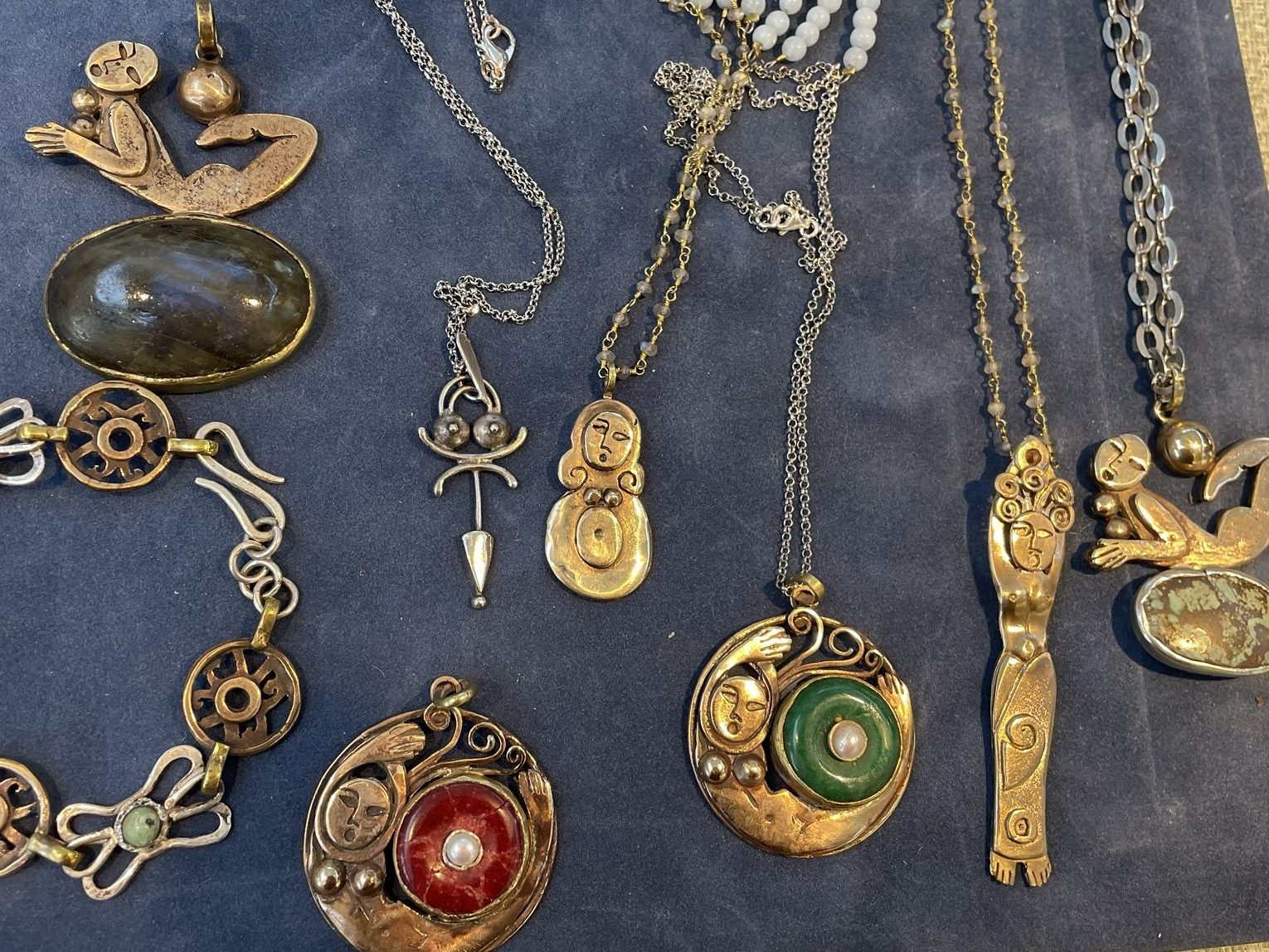
    I had met her when I was living in Florence at the Santo Spirito market where she was selling her stunning range of goddess themed amulets and earrings. Citronella, garnets, emeralds, all crafted into a range of designs in bronze and silver. Mermaids, the sun goddess, Durga. I immediately fell in love with her work and also her friendly demeanor.

    Anna had that beauty about her that many women in their 60’s do – natural hair tied loosely into a bun and a velvet shawl. She introduced me to her daughter Elena who was wearing a stunning lapis lazuli pendant her mother had made for her in the same way my mum makes quilts for me.

    The goddess’ sinuous body was curved round into a circle with her breasts gilded in silver. Elena was a beautiful as the necklace. Long blonde hair to her waist and bright blue eyes to match the pendant.

    Lapis lazuli has been my favourite stone since I went to India at the age of 15 and purchased my first piece with my pocket money. I was mesmerized by the deep sea blue and iridescent gold mottled together in a divine harmony –  to gaze into a piece of lapis lazuli is akin to gazing into the night sky. It is infinite. 

    Lapis lazuli comes largely from Afghanistan. An Afghan friend once told me that there is a piece of Afghanistan in every Renaissance painting in the veil of the virgin Mary who is often depicted in blue pigment – the most expensive at the time. For my part I carry a stone on my finger gifted to me during lockdown by my dear friend, Xiren. It’s a big as my thumb and dominates my hand. I enjoy watching it sparkle as I type. 

    I dined that evening with Anna, her husband and daughter, a simple but delicious fare of broccoli pasta with chilli and pink salt from Bhutan from where Anna and Elena had recently returned impressed by the state of calm afforded by the Buddhist majority. I was a bit late due to my art class so I ate at a beautiful table set up by Anna in their jewelry workshop with a candle and a table cloth – in Italy all meals must be enjoyed with a table cloth. 

    We discussed all things alternative medicine – Anna has recently published a book which I edited on the divine herb Artemisia which has healing properties and is revered around the world. 

    We slept together in the small studio which was decorated with lapis blue walls and depictions of goddesses in various states of trance, Anna, her husband and daughter on sleeping mats and me on the sofa. Anna slept in a stunning Moroccan jellaba the colour of the deep green sea. 

    Recommended Reading: The Divine Artemisia by Anna Lord: https://www.amazon.co.uk/divina-artemisia-Anna-Lord/dp/B0D329DQJV

    Recommended Watching: Reading Dante with Refugees: An Introductory video: https://www.youtube.com/watch?v=iHOeh2w9FdI

    Recommended Reading: OpenDemocracy 50.50 Our Africa: https://www.opendemocracy.net/en/tagged/5050-our-africa/

  • Who will Guide Me on the Dante Trail? 

    Though it is my most prized possession, here’s why I will be leaving my copy of the Divine Comedy behind.

    On my training walk today, I experimented with carrying in my rucksack the contents I’ve been carefully curating for the Cammino di Dante

    It includes: a fistful of Compeed blister plasters, a bamboo toothbrush with the end sawed off (thanks Jess for that top tip), two changes of clothes, four pairs of socks and knickers, a solar powered power pack and my laptop. My indulgences include some Ayurvedic balm from Sri Lanka and a collapsible hairbrush. 

    I always fancied that if I was invited onto the BBC programme Desert Island Discs, I’d take some essential oils with me as my luxury item because smell has a huge Proustian impact on my disposition. It’s enough to sniff some Rose Herbal Essences shampoo and I’m back in Calcutta showering away a difficult day spent with street children at the age of 18. 

    The Ayurvedic balm, meanwhile, reminds me of turquoise waters and golden sands and the month I spent training to be a yoga teacher in Sri Lanka last year. The sense of peace that comes with the inhale and exhale of a perfectly realized ‘cat-cow’. I figure I’ll need some of that as I walk, not to mention the healing properties it will grant to aching limbs.

    When one of my favourite journalists, Lyse Doucet, the BBC Middle East war correspondent, featured on Desert Island Discs she also took essential oils as her luxury item. ‘Cool,’ I thought. I have something in common with Lyse Doucet. 

    But I’m avoiding a major dilemma. 

    I’ve been to-ing and fro-ing about whether to take with me on my hike my much thumbed and much annotated copy of the Divine Comedy.

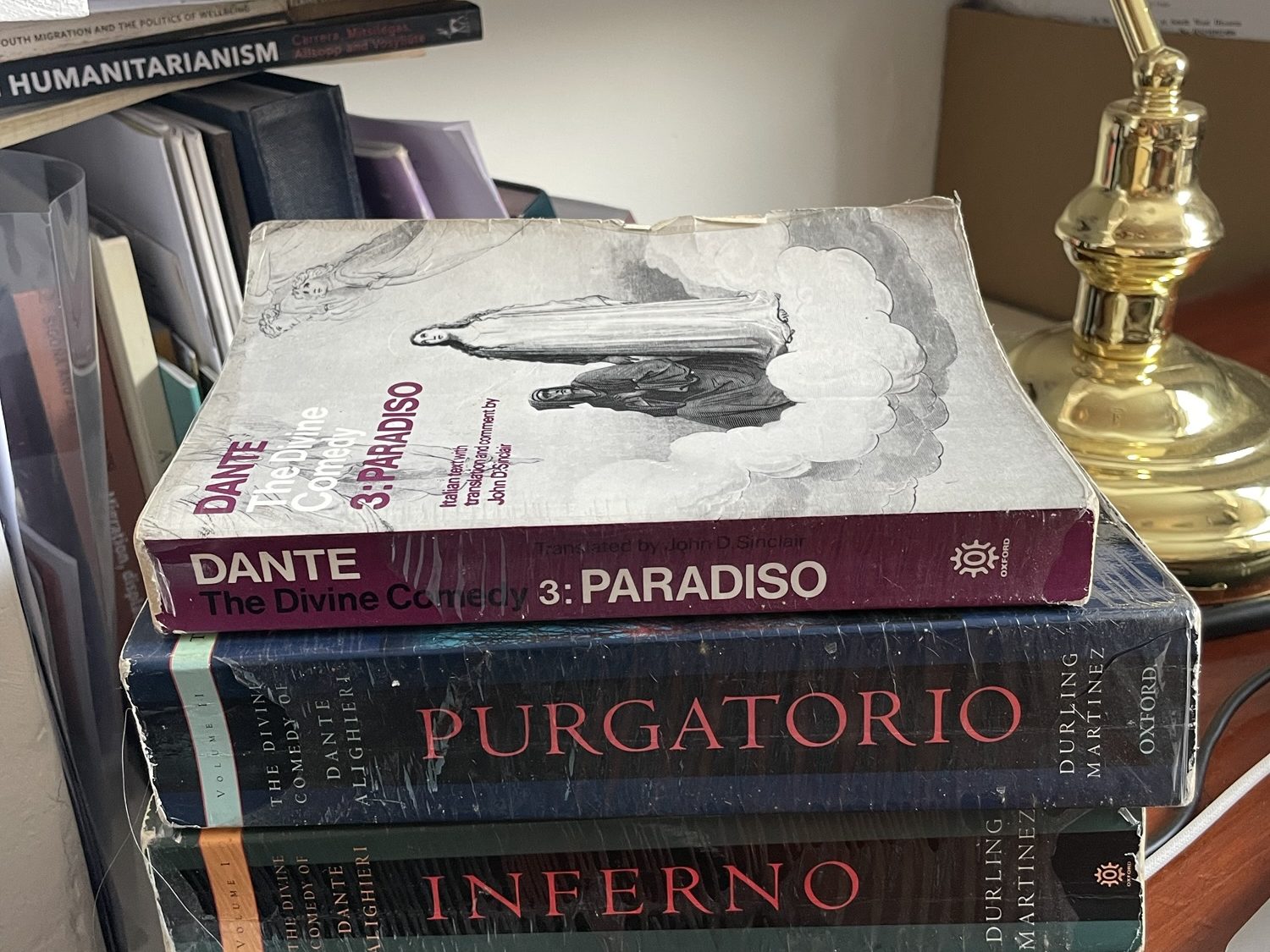
    It sits pride of place in my office in three heavy tomes. 2kg of magic. That’s  a lot for a pilgrimage of 235 miles through the mountains of Tuscany and Emilia Romagna. 

    On my travels, I’ve almost always taken these three books with me: Inferno, Purgatorio, Paradiso. While many people are fixated on Inferno – see the Dante’s Inferno video game which perversely sees Dante rescue Beatrice from Hell –  for me, Dante’s journey is definitively a comedy in three parts that traces a journey from darkness and stagnation to light and unfettered mobility.  

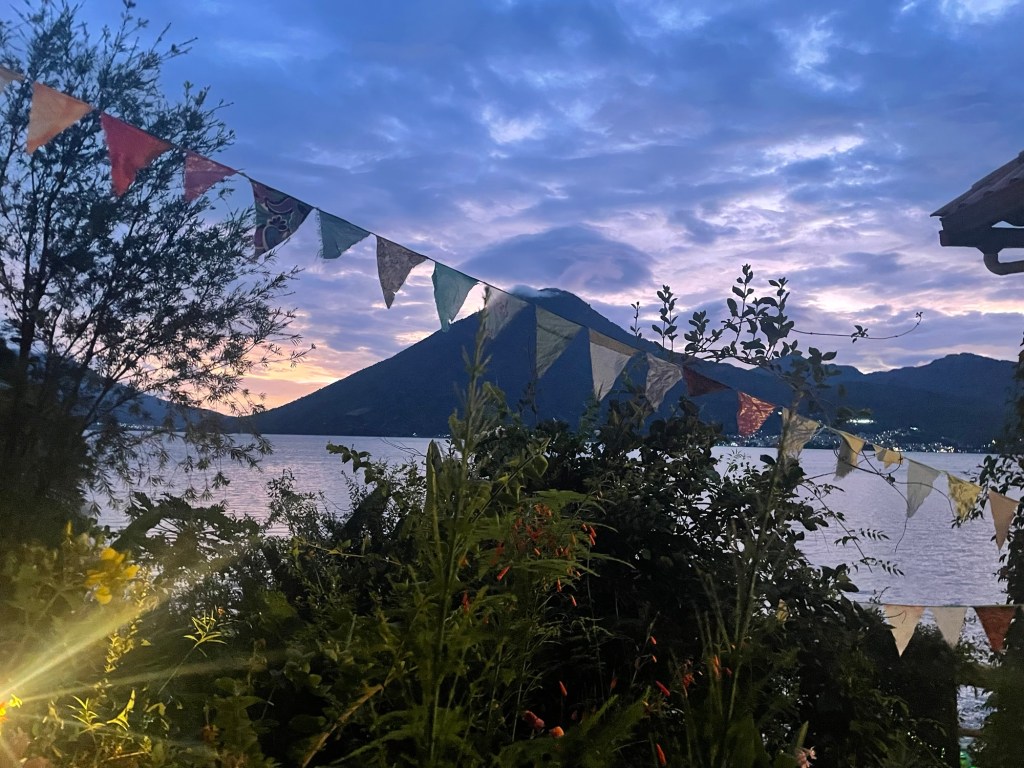
    When the pandemic hit, I got stuck in Guatemala for five months and luckily, I had the books to keep me company. I was living in the US at the time and had gone for a one week writing retreat. When Trump closed the border to foreigners like me, rather than return to England, I was invited to stay with the writer, Joyce Maynard, and pianist, Xiren Wang in a lakeside house. 

    One evening as the sun set I performed for them the canto of Ulysses with a volcano in the background for added dramatic effect. 

    ‘You were not made to live like beasts, but to follow virtue and knowledge!’ I decried, embodying all of Ulysses’ pride. 

    One of my annotations reads, ‘Ulysses is Dante’s alter-ego? Am I Ulysses!?’ 

    His tale of defiantly leading his sailors on past the straights of Gibraltar in the face of danger is a warning to all of us who seek to travel to stretch ourselves. I’m sure during my walk I will turn to this passage to push me on but also to ground and console myself when I reach my limits. 

    Dante writes of Ulysses:

    ‘neither the sweetness of a son, nor compassion for 

    my old father, nor the love owed to Penelope, which

    should have made her glad, 

    could conquer within me the ardor that I had 

    to gain experience of the world and of human vices and virtues’.

    (Canto 26, Inferno)

    I can relate to this desperate thirst for knowledge, this desire to ‘trapassar del segno’ – to push beyond the boundary. It’s a blessing and a curse. 

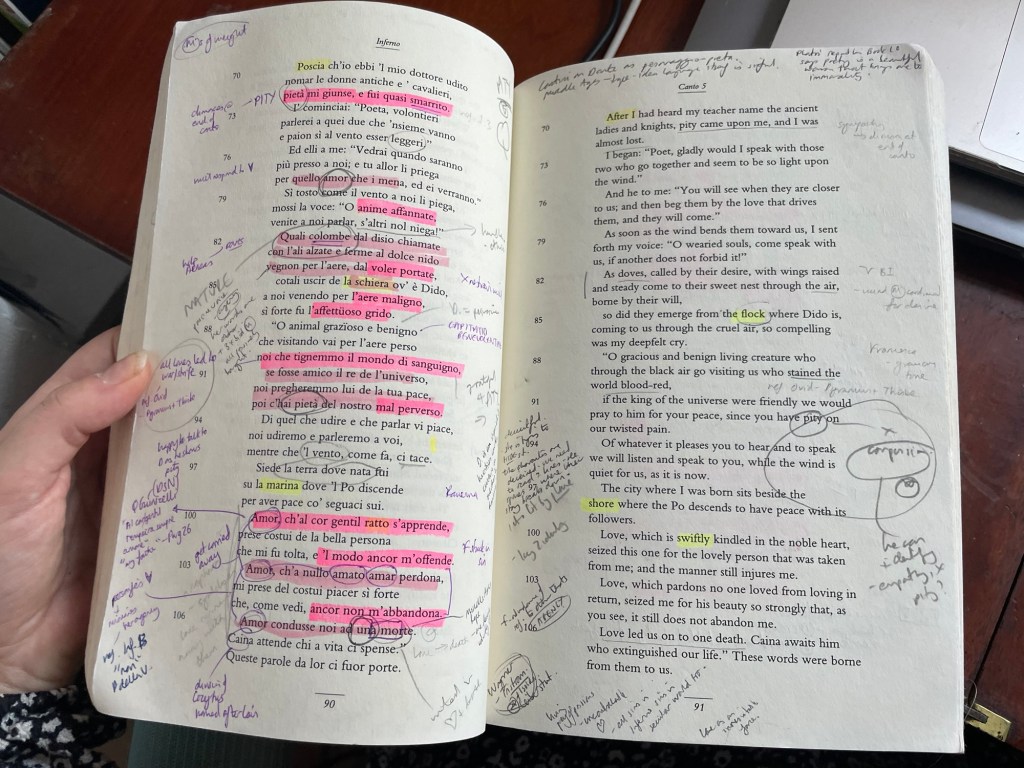
    There are at least six different rounds of annotations that I’ve made as I’ve read the Divine Comedy at various stages of my life which are revealed in different fonts and coloured inks.

    My first galloping foray through the pages was at the age of 15 when much was inaccessible to me. Still, I swooned at the love story between Paulo and Francesca who were banished to forever spin in a whirlwind of lust in Hell. Their crime: an illicit kiss inspired by their reading of the story of Guinevere and Lancelot. My pencil scrawl reads: ‘love and literature – you lose yourself if you read for pleasure’. 

    Next are the meticulously crafted notes and highlighted sections from lectures at Oxford where I studied Dante under the expert guidance of Manuele Gragnolati. In a recent article he writes, ‘what does my Europe look like? Like Dante’s: the dream of a more just world’. He speaks about the nomadism that captured him, much like it did me, and inspired an academic career that traversed the world. I had just enough time to lock up my bicycle and dash the steps of the grand Taylorian Library on my first day of lectures to hear him boldly state: 

    ‘Get ready because Dante is a whirlwind!’

    He wasn’t wrong.

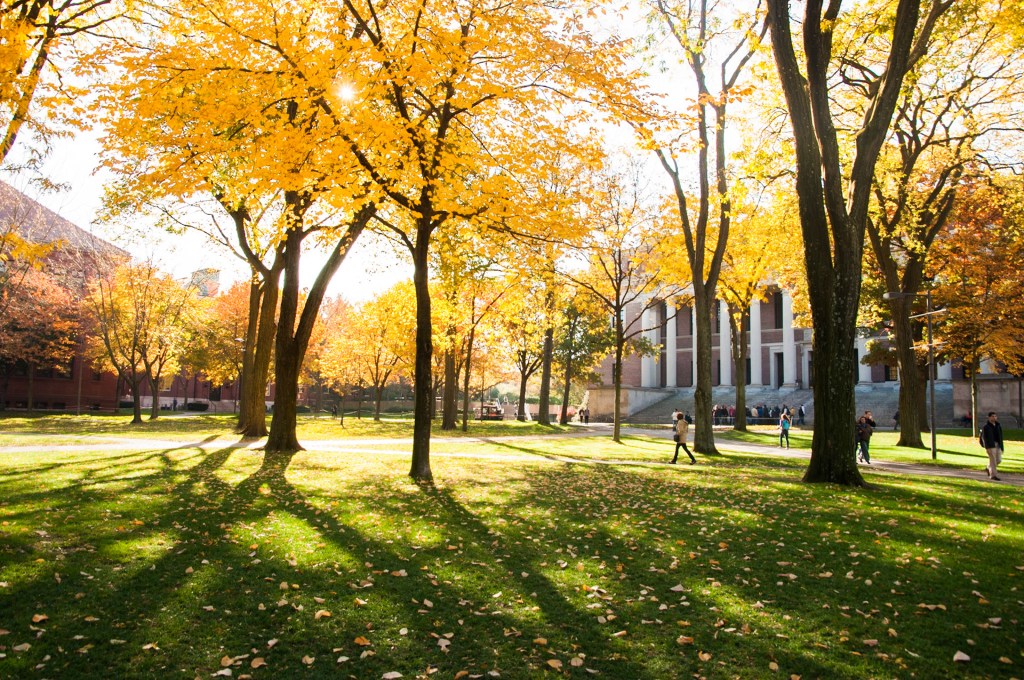
    The next round of annotations, in purple pen, comes from reading Dante in Harvard Yard with Ambrogio Camozzi Pistoja. Autumn leaves swept up in the wind would settle at our feet as we read cantos aloud together as tourists circled the Widener Library. ‘It was founded by a woman who lost her son on the Titanic’, the student guides would repeat as their cotton Harvard scarves flapped in the breeze. 

    I was based at Harvard to set up a new Immigration Initiative, but on Thursday afternoons I would sneak out of my office to audit seminars on the Divine Comedy. Ambrogio, like me, showed particular sensitivity to the plight of Virgil, Dante’s guide through Hell.

    You see, Virgil is swiftly abandoned as Dante moves through Purgatory. Dante is willed to continue his journey to Heaven, but as a non-Christian, Virgil is condemned to return to Limbo. 

    ‘But Virgil had left us deprived of himself –

    Virgil, most sweet father, Virgil, to whom I gave

    Myself for my salvation’

    (Purgatorio, canto 30)

    This reading made me sensitive to Dante’s liberal use of guides throughout his journey. The iconic literary figure of Virgil is to Dante as Dante is to me. But ought I not open myself up also to be led by other guides?

    In the poem, the pilgrim Dante is accompanied by three guides: Virgil, who represents human reason, and who guides him for all of Inferno and most of Purgatorio; Beatrice, who represents divine revelation in addition to theology, grace, and faith; and guides him from the end of Purgatorio onwards; and Saint Bernard of Clairvaux, who represents contemplative mysticism and devotion to Mary the Mother, guiding him in the final cantos of Paradiso.

    My annotations as Dante abandons his first guide, in no particular order, read, 

    1. ‘WHAT? What about Virgil?’
    2. ‘Dante cries as Virgil leaves – and he’s not the only one!’
    3. ‘The paternal authority of Virgil is replaced by the maternal authority of Beatrice. Dante feels intense emotions.’

    Dante’s intensity of emotions is just one of the reasons his text so resonates with me.

    I felt angry at Dante the author for abandoning his guide. Why could Virgil not have found the same repentance he does?

    In Purgatory, Dante works miracles so that Cato can be saved, arguing that the Roman political figure of the first century B.C.E. who committed suicide was a proto-Christian who wasn’t held accountable to Christian beliefs against suicide. While many who committed suicide are condemned to an eternity as gnarled trees in Hell, Cato gets a get out of jail free card. Why? Because Dante could. It was his narrative, just as this blog is mine.

    And thus, Virgil is condemned to return to Hell as Dante continues his journey under the tutelage of a new guide. 

    What can all of this tell me about my own reliance on guides as I walk in Dante’s footsteps? Who will guide me on the Dante trail?

    For one, though I am embarking on this journey largely alone, I will be joined at the start by a Ukrainian friend and former student Alina. Halfway through I will be briefly joined by an American marine biologist, Kelsey, who will meet me in Forli. So, I guess, I too, will dabble in the dealings of disposable guides. And who knows who else I will meet on my journey. I penned a list of ‘things I am scared of’ for my therapist Hugh, and among them was ‘I will meet someone annoying who insists on accompanying me’. 

    ‘But that’s great stuff,’ came Hugh’s mirthful reply. ‘well, I mean, it will make for compelling reading…’

    But the real guide for my pilgrimage is my text of the Divine Comedy itself. With 20 years of insight into both Dante and my developing mind in the form of annotations it is among my most prized possessions. 

    Once, in Florence, I had my bag stolen with my copy of Inferno inside. I cried my way through Florence’s multiple police stations until my bag finally emerged with the text still inside. Forget the 200 euros taken with my wallet. I heaved a huge sigh of relief that my copy of Inferno was found. The police were somewhat baffled as I hugged it to my chest. 

    ‘Dante means the world to me,’ I said. 

    One was amused and gave me a piece of apricot tart. 

    ‘Yes, Dante is pretty special. It’s unusual for a foreigner to realize it.’ 

    The reaction of most Italians to my obsession with Dante is bewildered appreciation and curiosity. 

    But alas. I have returned with aching shoulders from my hike today – cue Ayurvedic balm – and made the difficult decision that I will not be taking my precious copy of the Divine Comedy with me on Monday when I set off.

    The reason? Primarily, it is simply too heavy to carry 235 miles.

    And secondly, while I am curious about my annotations over the years, I want to re-discover Dante afresh now, as a 37-year-old woman who is in the ‘middle of the journey’ of her life.

    As I set off like Ulysses ‘to gain experience of the world and of human vices and virtues’, may I be open to be guided by something or someone new. 

    Recommended listening, Lyse Doucet, Desert Island Discs: https://www.bbc.co.uk/programmes/m0013yzs

    Recommended viewing, Lake Atitlan Writing Workshop | 8 Women in Lockdown in Guatemala: https://www.youtube.com/watch?v=9gfnZNnlvdk

  • Il Cammino di Dante passport

    My Dante passport has arrived but I won’t be using it. Here’s why.

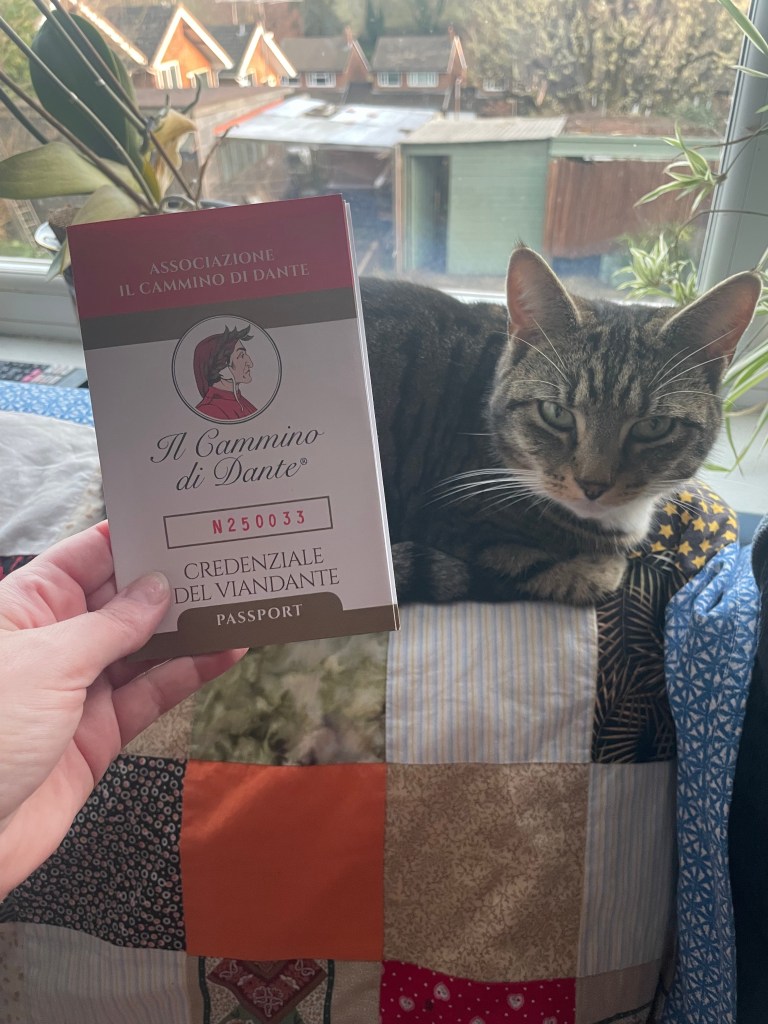
    My map for the cammino di Dante arrived in the mail as promised this week and it was accompanied by a passport. I was number 20250033, the thirty-third person to attempt the pilgrimage this year, perhaps. This is not uncommon in contemporary walking trails – you get a ledger where you can lodge your progress, that feels good, like accumulating stamps in a passport. I’ve been there. In my youth I took huge pleasure in seeing my battered red passport bulk up with stamps and timbres as I crossed the world’s many borders with the ease of an enthusiastic young white British woman. I fancied myself a Gertrude Bell in the making.

    I recall waiting at the Syrian-Lebanon border for hours to be gratified with a little fir tree bestowed in the form of a pasted stamp – passage granted. That night I was travelling with an Irish fellow Arabic student, and we spent all our money on food and crashed out with a bottle of red wine on the Beirut beach. We woke bellies satiated but our skin covered in bites from sand flies. 

    Crossing borders used to be a fun part of travel for me, now it gives me a deep sense of unease as I am aware of the many reasons some people and not others can cross. 

    Dante’s Hell is a landscape strewn with borders. No souls can travel beyond the place assigned to them and Dante’s passage is often challenged, and it is up to Virgil, his guide, to defend him and lobby for his right to pass. He’s tricked, devils send them the wrong way and Dante stumbles and faulters at the threshold of many the next descent. Crossing the River Styx he faints from the stress of the crossing, something contemporary ‘boat refugees’ might all too readily relate to. 

    As I set off on Sunday afternoon in the rain to do a 3-hour training hike, I thought about the reasons I am embarking on this pilgrimage – to reflect on some 20 years working with the world’s refugees and try to find some hope in a dark time for people on the move and those who care about them. I thought of my passport back home – blue now (thanks Brexit!) and how it would be stamped when I arrived in Italy some two weeks from now. I thought of the world’s 43.4 million refugees and 4.4. million stateless people.

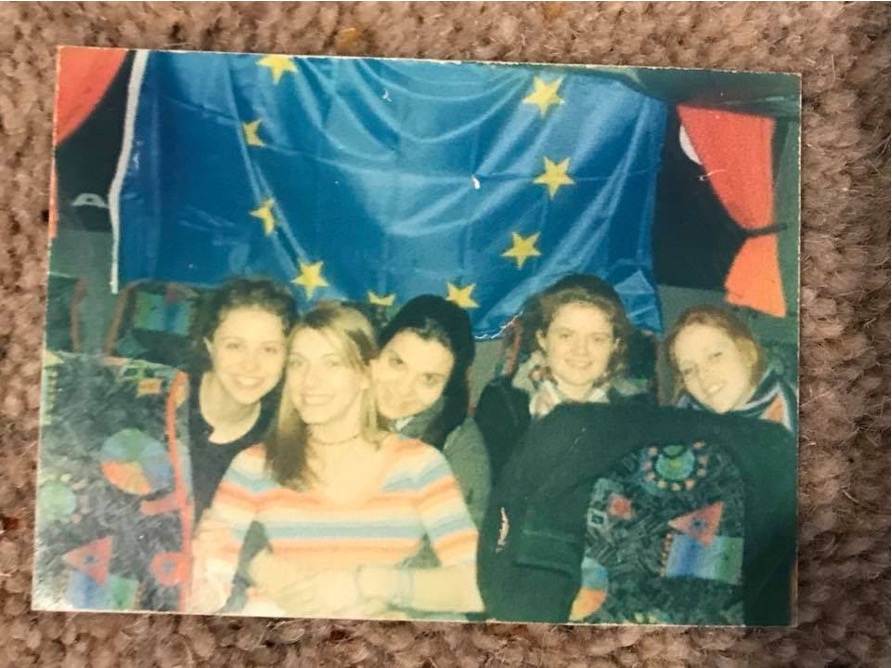
    As a child this was unimaginable to me. I was an impassioned member of the European Youth Parliament and in my teens I would spend my Spring and Summer holidays happily flitting across Europe to visit my Italian exchange family in Turin and my adopted French family in Montpellier. Later I would work in both countries, as was my right as a British and then European citizen. 

    I’d met both families through teachers as part of language exchanges that used to be the norm. My own failing state school, Lord Grey, was made a languages academy as part of a government programme at the time and I was all too eager to gobble up the opportunities this opened up to me. 

    I arrived in Montpellier nervous but excited at the age of 14. I carried myself well, my only mistake being to lie that I enjoyed the Roquefort salad with such enthusiasm that it would be served from then on a regular basis, much to my chagrin (I now don’t mind it in a quiche!)

    My host sister Marie was a gymnast, sarcastic and smart as a whip. We quickly developed a relationship like sisters. We’d bicker and share make-up and make up.

    When I was at University, and came to Montpellier to work as a language assistant in a high school through ERASMUS we were roommates. She was studying for her medical exams and I leant her my Dictaphone. I would regularly hear the repetition of words as she bathed in our common bathroom – an-o-rex-i-a ner-vo-sa – from the Greek, an-orexis – without appetite. She chain-smoked her way through the brutal first year and passed with flying colours and today she works as a psychiatrist. An-orexis. The words still repeat in my mind. 

    In Turin I would lodge with an Italian family who couldn’t have made me feel more welcome. The mum would grate parmesan cheese on the cat’s kibble and hide ham beneath my salad (‘to be vegetarian is to be sick!’ Mamma Colto would insist). Together we’d read Dante’s sonnets in the kitchen as she prepared a feast for the family of four – steak for the two strapping young men and pasta pesto for me. She was ever so smart Mamma Coltro but she’d made the mistake of getting divorced and so she felt it was her penance to serve the family now above all else. It seemed so unfair at church on Sundays when she wasn’t allowed to take mass. I would try to sing along, articulating the phonetic sounds of words I was yet to understand and marveling at the glorious frescos in the pretty little local church. Later, when I went off to India on my own at the age of 18 Mamma Coltro was horrified. I wrote about her and the other mothers I accumulated on my travels in a poem, All My Mothers, which I include at the end of this post. It’s a suitable tribute as Mother’s Day approaches. 

    It’s sad to me that British kids today will never know that unfettered movement throughout the European Union. Meanwhile because of health and safety, it seems schools are less likely to offer exchange programmes to their students. They’re barring us in. 

    It was my late Italian teacher, Andi Oakley, who first introduced me to Dante when I was 15 and my art teacher, Adrien Lee, who set me off to Florence for an artistic immersion (he now works as a ghost buster in the States). With a heavily annotated map, I dragged my mum around the Uffizi – she was wearing high heels to fit in – and I eagerly took her to the various churches to marvel at the frescos of Masaccio, Giotto and Cimbue. She was an enthusiastic student, as was I. Dante writes about Giotto surpassing Cimabue.

    To travel is to pursue something new and never done before, to ‘trapassar del segno’ – to push beyond the limits. But Dante warns us that as travelers we have to be humble too. See Ulysses’ last voyage. How in canto 26 of Inferno he writhes as he speaks from a fraudulent tongue of fire urging his men to push on past the straits of Gibraltar to discover the new world despite the great risks. ‘You were not made to live like beasts,’ he urges them, ‘but to follow virtue and knowledge!’ The sinking of the ship was rendered starkly by one of my Reading Dante with Refugees students, Mohammed, from Iraqi Kurdistan (see last post).  He could relate, he’d been a rare survivor of a shipwreck upon trying to reach my precious Europe without a passport. 

    Most of the people I have worked with do not have a passport, or rather their passport is worth little of value to them once they have become refugees or worse, stateless. Dante too likely found himself in the position of being a refugee. Though nation states were yet to be established, associated with the rise of the modern ‘Westphalian system’, following the Treaty of Westphalia in 1648, he was cast out of his city state without documentation. King Henry V of England is credited with having invented what some consider the first British passport in the modern sense, as a means of helping his subjects prove who they were in foreign lands. The earliest reference to these documents is found in a 1414 Act of Parliament. Dante was exiled in 1302.

    A refugee was and remains someone who is unwilling or unable to avail themselves of the protection of their host state because of a well-founded fear of persecution due to race, nationality, religion, political opinion or membership of a particular social group. For people like Mohammed, a passport is a goal not a privilege. As such, as I embark on my Dante cammino two weeks from now I won’t be stamping the passport at the various stops in recognition of the millions of people who have no such document and must travel clandestinely through Europe and Italy. Perhaps I will miss out on discounts at Dante attractions en route but, alas, once I have cleared passport control and entered the country I will be an undocumented Dante pilgrim. 

    Recommended listening, Passports Please by Katy Long, BBC: https://www.bbc.co.uk/programmes/b08nrzpr

    Recommended reading, The Invention of the Passport, John Torpey: https://www.cambridge.org/core/books/invention-of-the-passport/92242092DFC0BEEDD5486AA7B858F91B


    All My Mothers

    I collected mothers like dolls.
    Beads on a necklace
    A bracelet of charms.

    The Italian one, Catholic, hid
    porchetta beneath the lettuce
    for to be vegetarian was to be sick.

    You taught me how to haggle in Porta Palazzo
    How to use the horn
    Stared in horror at the photos from my travels and
    sent money to the children.

    ‘Why would your mother let you go?’, you sighed. 

    We recited sonnets to each other,
    Petrarch and Dante,
    as you grated parmesan onto the cat’s dinner
    wiped your chapped hands on your apron and
    cooked another steak for your sons.

    I made a crumble for my colleagues, remember,
    but you confiscated all the Tupperware and
    made a perfect pie.
    ‘Take that instead’ was your command.
    ‘Ma che crumble!’

    You were distinctly unimpressed
    with the food I brought to the family table
    but not the conversation.
    You said you’d never had a daughter
    You’d always dreamed of travelling and that
    once, in your youth, you’d been to China.

    The weeks ran into months
    The snow in the fields became fresh cherries and apricots
    We drove down to the city through the smog,
    surrounded by mountains like an open jaw.
    ‘Oh no, it wouldn’t do for my sons to have a girl like you’, you said
    when we visited Vesuvius together.
    You’d made us lunches for the plane.

    The French one, with strong legs hiking up Pic Saint-Loup,
    took me to see abbeys, chateaux and aqueducts.
    We ate rum cakes from the market and you
    showed me your plans to restore the Tuileries.

    Lectures on the history of art
    Ballet at the opera house
    Sipping on the season’s first Beaujolais as we
    discussed the novels of Chamoiseau and Maryse Condé.

    You kept me reading through the sadness,
    And playfully teased my father for his long hair.
    ‘Ah, les hommes…’
    I’d never really laughed at him before.
    It felt transgressive
    Empowering
    Like I’d crossed a border
    and when my colleague assaulted me outside the house you defended me like a daughter.

    We toasted my brother’s engagement with champagne
    and I made a tarte au citron to celebrate.
    It wasn’t half bad
    but I’d spilt the lemon and corroded my carelessness
    into your marble table.
    You were never cross,
    just with the parrot when he nipped your heels.

    I never did sleep with your son
    though we watched Singing in the Rain in his Paris apartment as the
    heaven’s opened and fell outside over the cemetery.
    You smiled at my wedding like a mother of the bride
    floating across the meadow with a glass of wine,
    your movements mellifluous, luxuriant, fun.
    ‘If you want to be an artist you must wear nice fabrics’, you once said.

    The Cuban one, on the make,
    Mojitos and late nights on the Malecón.
    My Spanish was shaped by the men who’d broken, to you,
    their promises. 
    Love songs and tears.
    Ice cream and popcorn. 

    Dancing with the neighbours on the roof until well into the morning
    and the sun came up like a warning
    and the cars began to belch past in the street.

    Remember, I went scuba diving with the friend of your secret lover?
    We dove deep
    Swam into a grotto where he took my breath away.

    We were thirty metres down when he removed my regulator.
    Panic in my eyes he
    kissed me
    left the
    gas
    on
    so
    that
    bubbles
    formed then
    led me up, up above the cave to watch them
    filter through the rocks into the crystal sea. 

    And there were fish
    And it was all so blue against the
    coral which was gilded like an altar,
    and sun rays pierced the fragile water. 

    I’d never seen anything quite so beautiful
    nor been so vulnerable. 

    Meanwhile you were making out in your lover’s office.
    ‘Would he ever leave his wife?’ you asked me again and again.
    You told me it all. 
    God, it was all so romantic, wasn’t it?
    On the way back we both swooned.
    You were fifty and I was eighteen.

    The Indian one, licking ghee off worn fingers,
    always slightly flushed,
    Your hair clotted to your forehead
    for the sweat under your veil.

    You were almost always in the kitchen.
    I can still smell the mustard seeds.
    The roti that made your palms strong. 
    We never exchanged a word in English
    Our language was cooking and touch.

    I made you beans on toast, remember,
    and you couldn’t stop laughing.
    You almost fell over you were so immersed in the sensation
    Then the men entered and you blushed. 

    Your children tied bracelets to my wrists and called me behen.
    When your daughter married I stood beside her
    She wasn’t meant to smile but she said because of me she did.
    She had your smile,
    said she’d ‘bloody kill me’.

    I taught her that.

    Did she ever tell you that she tried to pierce my nose
    when I was prostrate, waiting for my eyes to heal?
    ‘Four types of drops, on the hour, every hour’, the doctor had said. 
    ‘You’ll need someone to care for you.’

    Years later, my mother-in-law couldn’t believe
    I’d not come home.

    The Moroccan one, strawberry jam: tuut!
    You showed me how to skin a calf,
    also unconvinced by my being vegetarian.
    You whispered saha beneath your breath as I washed myself.

    Next to your house
    in the Old Medina
    you scrubbed my back with black soap.
    I was aghast at the shame of the
       skin
          that
              speckled
                     the                     
                          water.
    Grey and oiled,
    You grated it into your palms. 
    Your breasts were swaying to
    the slosh of buckets
    I’d never seen women like that before.

    Through the steam they were laughing as their
    naked children splashed one another
    and their mothers combed their hair and picked their ears and
    made them clean.

    Yes, growing up I played with mothers like dolls.
    New languages, lexicons
    Moments.
  • Reading Dante with Refugees

    The decision to embark on what we might call this pilgrimage hasn’t been taken lightly. As well as the 10 kilos I carry with me 20 years of working with refugees around the world including a recent project reading Dante with refugees.


    “You shall leave everything you love most dearly: this is the arrow that the bow of exile shoots first. You will come to know the bitter taste of others’ bread, how salty it is, and know how hard the path is for one who goes descending and ascending others’ stairs.” (Paradiso, canto 16)

    In Canto 17 of the third section of Dante Alighieri’s Divine Comedy, Paradiso, the author imagines an encounter with an ancestor who prophesies his exile from his beloved Florence.

    You’ll be lonely and lost, he warns, the food will be naff, and you’ll be beholden to your hosts.

    Dante has already passed through the realms of Hell and Purgatory at this point in an imaginary narrative that seeks to make sense of events historic and psychological that both preceded and succeeded his exile in 1302 after false accusations of political skullduggery.

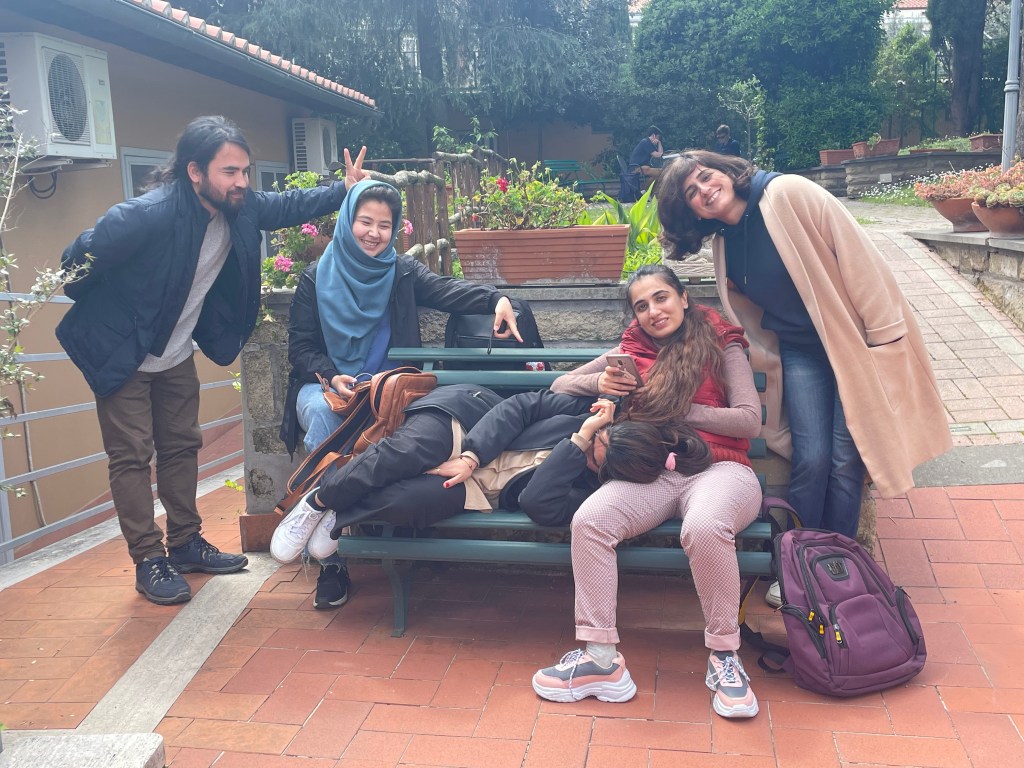
    So, what can Dante’s 700-year-old masterpiece The Divine Comedy teach us about the experiences of today’s exiles? Reading Dante with Refugees, a project I led at the University of Birmingham and Trinity College Rome Campus would suggest, a great deal. Reading the text has been helping refugees in Italy from countries including Afghanistan, Ukraine, Iran, Iraq, Venezuela and Egypt to come to terms with and express their experiences as well as educating the public in the timeless realities of refugees’ experiences.

    In a 20-year career working with refugees around the world, Dante has served as my guide. From refugee camps to detention centres, Dante’s words about the pain of exile have followed me and helped me to humanize the experience of those I came to know and care about. Dante talks with a timeless quality about many experiences faced by people forced to flee: the turmoil of knowing the place you once loved is being corrupted and rendered unfamiliar; the loss of loved ones; the anger and frustration of not knowing if you are moving forwards or backwards.

    Each week, our group read some of Dante’s work and we took fieldtrips to Dante’s old stomping grounds of Florence, Rome, Faenza and Ravenna, where he died in exile, to explore his legacy and the themes arising. The refugees’ own personal journeys of reading Dante are brought together in a series of creative outputs published in the new anthology Dante on the Move.

    Mohammed, a Kurdish Iraqi refugee, explained: “Reading Dante’s work gave me new language to tell my own terrible story of loss after surviving a shipwreck to get to safety in Europe. In the Divine Comedy Dante shows how terrified he was too of crossing borders, but he survived to tell the tale and so did I. In Dante, refugees have an ally and an inspiration.”

    The anthology is divided into three sections, Inferno, Purgatorio and Paradiso to reflect the three parts of Dante’s Divine Comedy.
    Inferno grapples with hellish voyages, beginning with Mohammed’s account of a shipwreck – juxtaposed with scenes of Dante crossing the river Styx and Ulysses’ last voyage. Inferno also contains reflections on the trickery and power of language.

    ‘You took the pen from my hand because you are afraid of my knowledge’ writes Melila, an Afghan poet and feminist activist.
    Meanwhile, Sara from Iran reflects on the painful experience of trying to express herself in a foreign tongue, drawing out Dante’s sensitivity to language.

    In Purgatorio, Zahra explores the theme of fusing influences from Eastern and Western learning with her depiction of a Persian Purgatorio. Sanaz reflects on the power of art to move us while
    Anna reimagines Dante’s realism through music. Alina considers how contested cultural legacies can cause harm with reference to Gogol who comes from her native Ukrainian town.

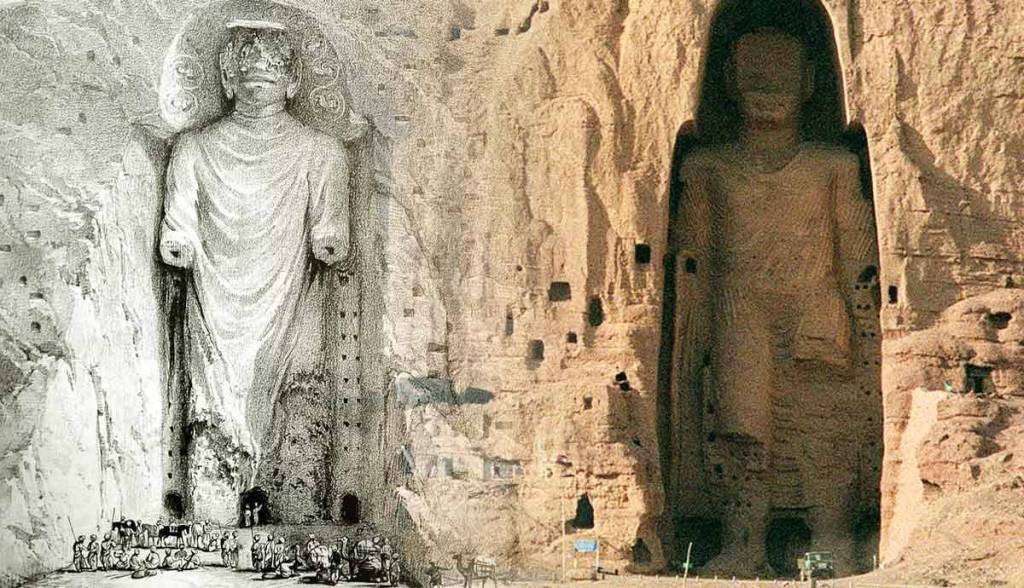
    In the final section, Paradiso, several contributors imagine meeting, in the style of Dante, people they admire in their own lives – for Sanaz, her late grandmother and, for Anna, the Ukrainian opera singer Solomiya Krushelnytska. Mihal stages an encounter with Simon Bolivar while Sabera imagines dialoguing with the Buddhas in her native Bamiyan valley before they were destroyed by the Taliban in 2001. The contributors bring other muses into their work, including Cortez, Gandhi, Greta Thunberg, and Hafiz.

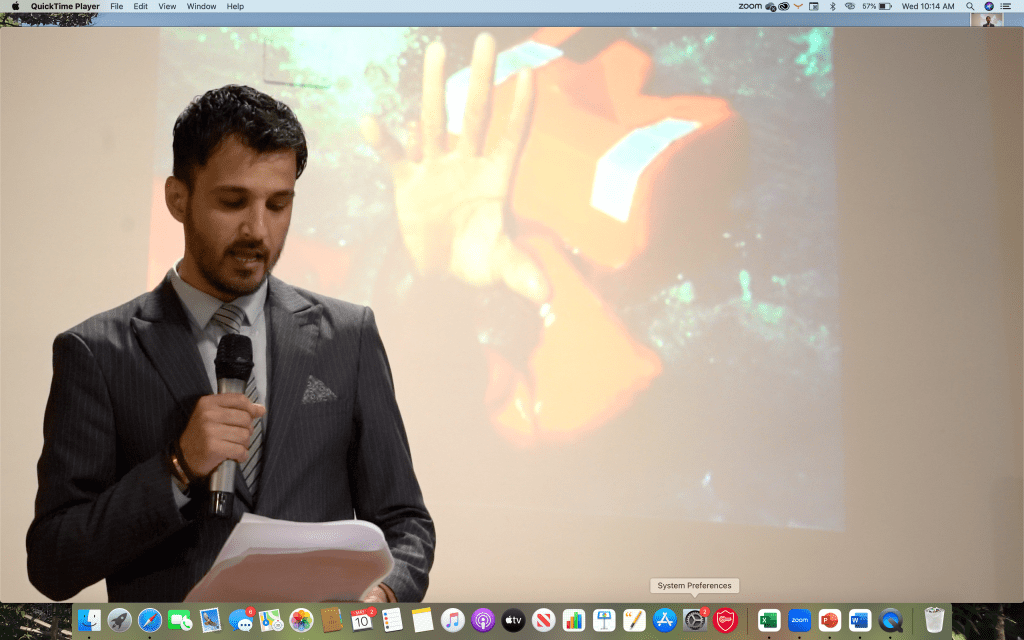
    Sanaz, from Afghanistan, commented: “Contributing to Dante on the Move has been a profound experience that has enabled me to embrace my identity and journey, both as a student of global humanities and as a refugee seeking safety in a new world. Through engaging with Italy’s top poet, I have gained new perspectives, moving metaphorically from my own personal mental health Inferno to Paradiso. As I sat reading the Divine Comedy in the asylum accommodation centre, surrounded by violence and frankly terrified, I found myself in Dante’s words, something I never would have expected as an Afghan woman.”

    Alina, from Ukraine, added, “working with fellow refugees and allies to explore what Dante means to us today was exceptionally enlightening. The solidarity within our group of co-authors
    fostered a sense of peace and purpose that goes against the all-too-present racist agenda of contemporary politics. Now, inspired by the works of Dante, I have a deep understanding of the
    true meaning of exile and success and I’m ready to move forwards. Dante heals.”